低空经济

Search documents
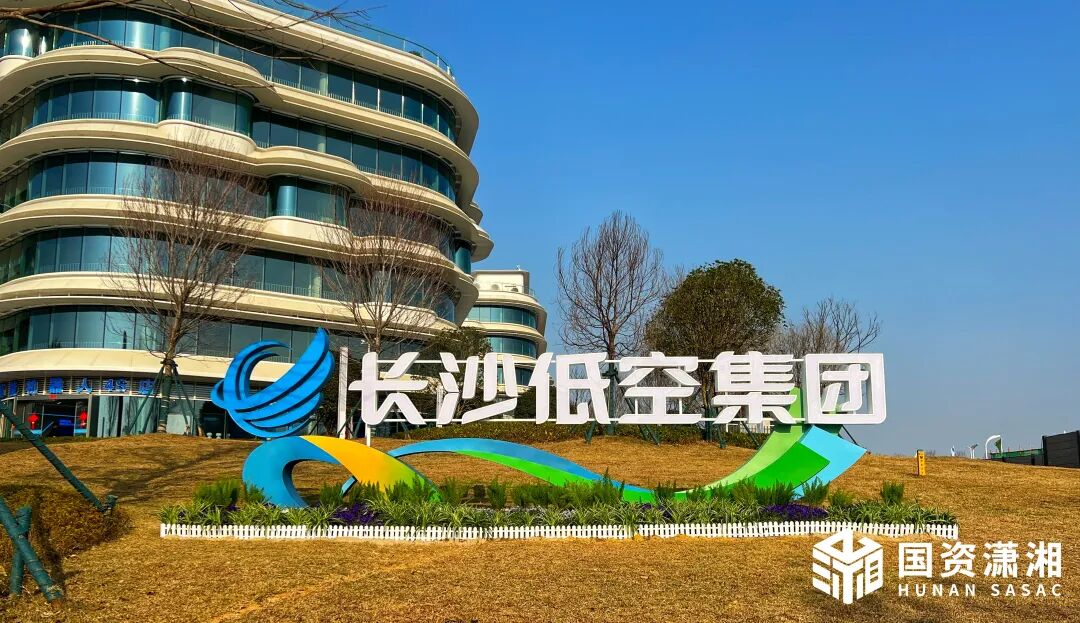
长沙低空集团正式亮相!欲造“低空之城”
Xin Lang Cai Jing· 2026-01-12 12:28
Core Viewpoint - The establishment of Changsha Low Altitude Economic Development Group marks a significant step in the development of low-altitude economy in Hunan, positioning it as a key player in this emerging industry [1][10]. Group 1: Company Formation and Structure - Changsha Low Altitude Group was formed by four state-owned enterprises in Changsha with a registered capital of 200 million yuan, where Changsha Jiao Investment Group holds 85% of the shares [3][12]. - The group aims to integrate the professional advantages of its shareholders, focusing on low-altitude infrastructure construction, operational services, and industry cultivation [4][13]. Group 2: Strategic Importance of Low Altitude Economy - The low-altitude economy is recognized as a strategic emerging industry, essential for fostering new productive forces and driving economic transformation [3][12]. - Hunan has been designated as the first province in China for comprehensive low-altitude airspace management reform, achieving 12 pioneering reform results [3][12]. Group 3: Market Potential and Growth Projections - By 2035, the market size for aerospace and low-altitude economy in China is expected to exceed 10 trillion yuan and 3.5 trillion yuan, respectively, indicating a vast development potential in the low-altitude economy [6][15]. - The low-altitude industry in Changsha is projected to surpass 10 billion yuan by 2024, accounting for two-thirds of the province's total [6][15]. Group 4: Infrastructure and Ecosystem Development - Changsha is developing a comprehensive low-altitude ecosystem, including the establishment of a low-altitude flight service platform and a network of take-off and landing points [4][18]. - The city has signed strategic cooperation agreements with leading enterprises and financial institutions to enhance technology, scene construction, and data sharing [9][18]. Group 5: Future Goals and Applications - The city aims to create a "Low Altitude City" that covers the entire low-altitude field, leveraging its strengths in engineering machinery, artificial intelligence, and navigation technology [7][16]. - By 2030, the low-altitude economy in Changsha is expected to exceed 100 billion yuan, with applications in tourism, logistics, emergency rescue, and urban governance [7][16].

开局即冲刺!南山“科技+金融”双轮驱动新质生产力 |南山半月谈
Sou Hu Cai Jing· 2026-01-12 11:44
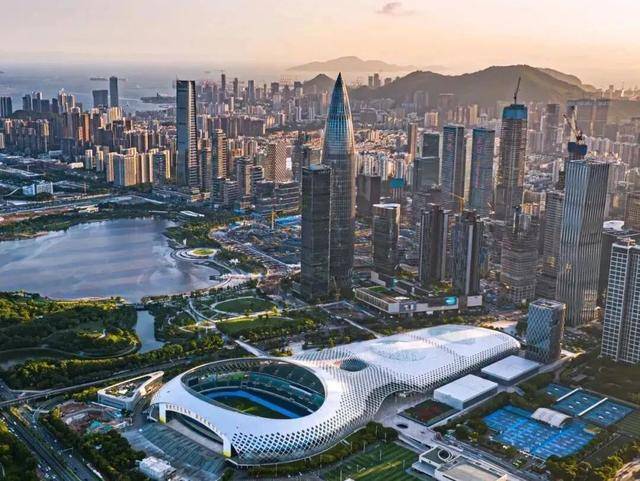
Core Viewpoint - The article highlights the vibrant synergy between technology and finance in Nanshan, Shenzhen, showcasing significant developments in the AI and biotechnology sectors, which align with national strategies for innovation and productivity enhancement [1][14]. Group 1: Capital Market Activity - In early January, Nanshan's technology finance sector experienced a surge in activity, marked by significant listings and financing events, including the IPO of AI data leader Xunce Technology, which raised HKD 1.08 billion [3]. - Another notable financing event involved Jindu Biotechnology, which secured a substantial investment from leading institutions, indicating strong capital inflow into Nanshan's future industries [3]. Group 2: Project Incubation and Support - The "X-Day" event on January 9 showcased six promising projects, emphasizing the role of platforms in accelerating incubation and connecting startups with investors [5]. - The "Six Ones" policy in Nanshan supports young entrepreneurs by providing essential resources, fostering a high-density talent and information environment conducive to rapid innovation [5]. Group 3: Industrial Collaboration and Ecosystem - The "Shenzhen Robot Valley" is rapidly forming a trillion-yuan industrial cluster, with companies like Yuejiang Technology achieving mass production of humanoid robots and securing global orders [7]. - Nanshan is also a national pilot zone for low-altitude economy development, attracting key enterprises and establishing a comprehensive industrial chain from R&D to operational scenarios [7]. Group 4: Capital Ecosystem and Investment Philosophy - Nanshan has developed a multi-faceted capital ecosystem, including a CNY 50.45 billion fund aimed at early-stage projects, ensuring seamless capital support throughout the lifecycle of hard tech companies [8]. - The investment philosophy in Nanshan emphasizes patience and long-term innovation over immediate financial returns, fostering a supportive environment for early-stage hard tech investments [10]. Group 5: Government and Market Interaction - The government in Nanshan adopts a "no interference" approach, providing timely support when needed while allowing businesses to focus on growth, exemplified by the establishment of a dedicated quantum computing facility [10]. - The market mechanism in Nanshan facilitates efficient collaboration between academic institutions and industry, enhancing the conversion of technological achievements into marketable products [12]. Group 6: Systematic Innovation Framework - Nanshan's innovative framework includes a unique fault-tolerance mechanism for government funds, shifting focus from short-term returns to long-term innovation effectiveness, thereby encouraging investment in early-stage hard tech [12]. - This systematic approach positions Nanshan as a model for regional implementation of national strategies, particularly in emerging sectors like AI, synthetic biology, and low-altitude economy [14].
800亿元!上海低空经济亮出冲刺目标
Guo Ji Jin Rong Bao· 2026-01-12 08:33
Core Viewpoint - Shanghai aims to establish itself as the "world eVTOL capital" by 2028, targeting a core industry scale of over 80 billion yuan and nurturing 10 leading enterprises in the sector [1][2]. Industry Development - The implementation of the new policy marks a transition from nurturing the low-altitude economy to a phase of scaling and commercialization [2]. - By the end of 2025, Shanghai is expected to have at least 251 low-altitude economy startups, with 66 of them focusing on eVTOL and drones [2]. - Over 50% of the leading eVTOL companies in China have chosen to establish their operations in Shanghai, with five key players referred to as the "eVTOL Five Dragons" [2]. Regional Collaboration - The low-altitude economy industry alliance in Minhang District has gathered over 40 member units, covering the entire industry chain from core components to complete manufacturing [3]. - Yangpu District has introduced measures to promote low-altitude economic development, attracting over 130 related enterprises and initiating several innovative drone delivery routes [3]. Technological and Financial Support - Shanghai's comprehensive aviation industry chain, including large aircraft R&D and manufacturing, positions it advantageously in the low-altitude economy sector [4]. - The new measures include 16 support initiatives focusing on equipment R&D, industrial ecology, regional collaboration, and application scenarios [5]. - Financial support is emphasized, with initiatives to guide low-altitude industry funds to attract social capital for equity investments [7]. Future Outlook - The low-altitude economy is projected to reach a scale of over 100 billion yuan by the end of the 14th Five-Year Plan, with a focus on technological innovation and commercial demonstration [4]. - The policy aims to address key industry challenges, such as airworthiness certification, which is crucial for commercial operations [6]. - The collaboration within the Yangtze River Delta region is expected to enhance resource integration and optimize industry layout, facilitating long-term development [8].
央视聚焦南京低空经济成果
Nan Jing Ri Bao· 2026-01-12 03:16
Core Insights - The article highlights the development of low-altitude economy in Nanjing, showcasing its innovative applications and smart operational models that inject new momentum into urban life [1][2] Group 1: Low-Altitude Flight Services - Nanjing's low-altitude flight service platform has gathered 228 operational units since its trial run began at the end of 2024, facilitating over 400,000 compliant flights and managing 188 airspace sectors and 197 flight routes [1] - The platform serves as the "smart brain" for Nanjing's low-altitude economy, optimizing flight paths and ensuring safety through an intelligent scheduling system [2] Group 2: Innovative Applications - The launch of "aerial delivery" services on the Yangtze River in August 2025 allows for uninterrupted supply to vessels, marking a significant low-altitude application in Nanjing [1] - A low-altitude blood transport route has been established, enabling rapid delivery between key medical nodes, with a single trip taking as little as 11 minutes and averaging 20 flights per day [1] Group 3: Regulatory Framework - Nanjing is developing a comprehensive policy framework to support the regulated growth of the low-altitude economy, with various departments issuing guidelines and safety management measures [2] - The implementation of the new Public Security Administration Punishment Law on January 1, 2026, will include regulations against unauthorized flights, promoting the integration of civilian drones into the low-altitude flight service platform for dynamic monitoring [2]
广州市黄埔区举行低空经济新年第一会 百亿基金官宣
Zheng Quan Shi Bao Wang· 2026-01-12 03:09
Group 1 - The Guangzhou Huangpu District Low Altitude Economy Industry Association held its first member meeting and fund promotion event, marking a significant step in accelerating the low altitude economy in the region [1] - The association aims to foster collaboration among over 50 core enterprises in the low altitude economy sector, with an industry scale of approximately 15 billion yuan [1] - The event featured the introduction of two major industry funds: the Low Altitude Economy Science and Technology Innovation Fund and a direct investment fund, with participation from over 80 related enterprises [1] Group 2 - The director of the Zhongda Consulting Industry Research Institute highlighted that the collaborative ecosystem and integration of the upstream and downstream supply chain are key advantages for the Huangpu low altitude industry [2] - The "Low Altitude and Aerospace 11 Articles" will be revised in 2025 to focus on project implementation, infrastructure, industry clustering, airworthiness certification, and application scenarios [2] - The construction of the Knowledge City Aerospace Intelligent Manufacturing Equipment Park is underway, aiming to create a benchmark for the national low altitude economy industry with a complete testing facility for flying vehicles [2]
难忘中国经济的发展印记
Xin Lang Cai Jing· 2026-01-11 22:25
Core Viewpoint - The year 2025 is pivotal for China's economy, showcasing resilience and vitality amidst various challenges, while 2026 marks the beginning of the "14th Five-Year Plan" [1] Economic Development - China is committed to high-quality development, responding calmly to unprecedented challenges such as trade wars, and is determined to expand its openness [1] - The construction of a unified national market is crucial for promoting high-quality development and efficient resource allocation [3][4] Market Dynamics - The establishment of a unified national market is seen as a key support for the new development pattern, facilitating smoother flow of goods and resources [3] - Despite progress, hidden barriers still exist in market access and regulatory enforcement, necessitating ongoing efforts to address these issues [4] Policy Initiatives - The "14th Five-Year Plan" emphasizes breaking down barriers to market construction and improving the regulatory framework [4][5] - The introduction of the "Private Economy Promotion Law" in May 2025 marks a significant step in supporting the private sector, ensuring equal treatment in market competition [6] Consumer Demand - Expanding domestic demand is a central theme for 2025, with a focus on boosting consumption and investment efficiency [9][10] - Policies aimed at stimulating consumption have shown positive results, with retail sales increasing by 4% year-on-year in the first eleven months of 2025 [10] Investment Trends - Investment demand has weakened, particularly in real estate, but there is a shift towards high-quality investments in advanced manufacturing and green transformation [11] - The focus is on optimizing investment structure, moving from scale-based to efficiency-based investments [11] International Trade and Cooperation - China's high-level opening-up is characterized by mutual benefit and cooperation, with significant growth in service trade and foreign investment [13][15] - The number of international trade agreements and the expansion of the Belt and Road Initiative have strengthened China's position in global trade [14] Private Sector Engagement - Regular breakfast meetings between government officials and private sector leaders have facilitated effective communication and problem-solving [7] - New policies have been introduced to lower barriers for private enterprises in key sectors, enhancing their role in national projects [8]
秦淮区:“一城一带一中心”引领动能转换
Xin Hua Ri Bao· 2026-01-11 20:42
Group 1 - The core development strategy for Qinhuai District is established as "One City, One Belt, One Center," integrating technological innovation with historical culture to create new advantages in urban competition [1] - "One City" refers to the International Science and Technology Innovation City focusing on new productive forces, "One Belt" represents the Qinhuai River Industry Integration Development Belt emphasizing cultural economy, and "One Center" is the vibrant center area supported by commerce and trade [1] - The strategy aims to address spatial constraints in urban centers, promote functional restructuring, and enhance overall capabilities [1] Group 2 - In the past year, the cultivation of new productive forces in Qinhuai District has shown initial success, with projected industry scales for the Internet of Things and low-altitude economy reaching 30 billion and 16.5 billion respectively by 2025, alongside a network security industry revenue exceeding 3.95 billion [2] - The cultural economy has also thrived, with over 90 million tourists received and total cultural tourism consumption exceeding 92 billion, both ranking first in the city [2] - The report sets a target for the regional GDP to exceed 200 billion by 2030, with a focus on enhancing the technological innovation system and accelerating the gathering of strategic emerging industries by 2026 [2]
低空经济“飞”出新高度
Xin Lang Cai Jing· 2026-01-11 18:13
Core Insights - The low-altitude economy in Hohhot is emerging as a significant growth engine for the city, supported by resources, policies, and project aggregation [1][3] - Hohhot has established a comprehensive support system for the low-altitude economy, including a "1+2+3+N" service model and a "first investment, then equity" policy for technology transformation [1] - The city aims to attract service-oriented enterprises and has streamlined construction permit processes, resulting in an 82.4% reduction in required documentation [1] Group 1 - Hohhot signed 25 key projects within 45 days during the "Winter Campaign" in 2025, with over 70 projects valued at more than 1 billion yuan and total agreements exceeding 30 billion yuan, focusing on low-altitude economy [1] - The Hohhot Aerospace Economic and Technological Development Zone has become a crucial area for low-altitude industry development, with 18 projects and a total investment of 7.59 billion yuan [1] - Companies like Kuailun Technology are establishing production lines for low-altitude vehicles, with expected annual output values between 200 million to 300 million yuan [1] Group 2 - The establishment of training bases with local vocational schools has helped address talent shortages in the low-altitude sector, with over 50 students gaining practical skills [2] - Innovative technologies, such as the vertical takeoff and landing technology developed by local educators, are enhancing the capabilities of drones in the region [2] - Hohhot has built a total computing power of 109,000 P, with 96,000 P in intelligent computing, facilitating cost reductions for AI companies and fostering a comprehensive ecosystem for low-altitude applications [3] Group 3 - The low-altitude economy in Hohhot has transitioned from individual project implementation to a full-chain ecosystem, with increasing industrial clustering effects [3] - The ongoing development of quality projects and diverse application scenarios is expected to make the low-altitude economy a prominent feature of Hohhot's high-quality development [3]
上海先进制造业转型文件出炉,引导企业投资五大新增长点
Di Yi Cai Jing· 2026-01-11 12:12
Core Insights - Shanghai aims to accelerate the transformation and upgrading of its advanced manufacturing industry over the next three years, targeting the establishment of 100 new manufacturing enterprises with an annual output value exceeding 1 billion yuan by 2028 [2] - The plan emphasizes the development of emerging sectors such as low-altitude economy, commercial aerospace, embodied intelligence, biomanufacturing, and smart terminals, positioning them as new growth points for the industry [2][3] Group 1: Advanced Manufacturing Transformation - The action plan outlines structural optimization and upgrading actions, including enhancing traditional industries and promoting the growth of key and emerging sectors [2] - Shanghai has established five national-level industrial clusters and four trillion-yuan industrial clusters, focusing on integrated circuits, biomedicine, new energy vehicles, large aircraft, and marine engineering equipment [2][3] Group 2: New Growth Areas - The plan identifies five new growth areas: low-altitude economy, commercial aerospace, embodied intelligence, biomanufacturing, and smart terminals, with a goal for these sectors to reach a scale of 1 trillion yuan by the end of the 14th Five-Year Plan [3] - Specific targets include achieving a scale of 100 billion yuan in the low-altitude economy and 500 billion yuan in embodied intelligence by 2027, with projections of 1 trillion yuan by 2030 for the latter [3][4] Group 3: Financial Support and Innovation - The plan includes financial incentives for companies increasing their R&D investments, with subsidies ranging from 200,000 to 1 million yuan based on the level of investment [5] - It also promotes the "AI + manufacturing" initiative, aiming for full coverage of intelligent applications in large enterprises by 2027 and increasing robot density to 600 units per 10,000 people by 2028 [5][6] Group 4: Industrial Ecosystem and Talent Development - The Shanghai Industrial Internet Association emphasizes the need for collaboration among government, industry, academia, and research to tackle challenges in the "AI + manufacturing" sector [6] - The initiative aims to build a comprehensive standard system for "AI + manufacturing" and enhance the cultivation of industrial intelligent talent [6]
手握低空经济王牌矩阵 上海向世界eVTOL之都迈进
Xin Lang Cai Jing· 2026-01-11 10:59
Core Viewpoint - The article emphasizes the development of the low-altitude economy in Shanghai, aiming to establish it as a global hub for electric vertical takeoff and landing (eVTOL) aircraft by 2028, with a projected industry scale of approximately 80 billion yuan. Group 1: Industry Development - The "14th Five-Year Plan" suggests creating emerging pillar industries and accelerating the development of strategic emerging industry clusters, including the low-altitude economy [1] - Shanghai has gathered over half of the country's leading eVTOL companies, leveraging its advanced manufacturing capabilities and complete industrial chain [1] - The total order value for eVTOL companies in Shanghai's Minhang District exceeded 15 billion USD in 2025 [5] Group 2: Technological Advancements - The eVTOL aircraft acts as a "supermarket" for airborne systems, integrating supply chain, R&D, manufacturing, and operational services, significantly reducing the R&D time for manufacturers from several months to about one month [7] - A new generation of lightweight transponder products has been launched, reducing weight to 300-400 grams and costs from over 100,000 yuan to 20,000-30,000 yuan, making eVTOLs more affordable [10] Group 3: Policy Support and Infrastructure - Shanghai's recent support measures include financial incentives for R&D and assembly projects, with up to 100 million yuan for complete manufacturing projects and 5 million and 2 million yuan for key technology breakthroughs and pilot verification platforms, respectively [13] - The establishment of a technology R&D joint center and other facilities is planned to enhance collaboration between state-owned and private enterprises in the low-altitude industry [14] Group 4: Testing and Application Scenarios - Shanghai is accelerating the implementation of application scenarios, transforming urban areas into supply chains, testing grounds, and future markets, with 30 companies having applied for test flights at two urban testing sites [16] - The city plans to create a matrix of testing sites, including various scenarios to explore a comprehensive "Shanghai solution" for standards, airworthiness, and testing [18][20]