畜牧养殖

Search documents
中国乳用种公牛遗传评估结果公布:优然牧业赛科星种公牛GCPI排名第一
Nei Meng Gu Ri Bao· 2025-08-20 04:48
Core Insights - The genetic evaluation results for dairy bulls in China for 2025 have been released, with the bull No. 15522027 from YouRan MuYe SaiKeXing achieving the highest score of 2905 in the Chinese Cow Genomic Performance Index (GCPI) among 803 evaluated bulls, ranking first nationally [1] - YouRan MuYe SaiKeXing demonstrated significant advantages in the evaluation, securing 3 out of the top 5 positions, 5 out of the top 20, and 12 out of the top 50 bulls, continuing to lead the industry [1] - Among the top 100 Holstein young bulls in China, YouRan MuYe SaiKeXing has the highest representation with 28 bulls [1] Investment and Development - In recent years, YouRan MuYe SaiKeXing has increased investments in research facilities, high-end talent development, and core technology research and innovation, establishing a comprehensive and efficient dairy cattle breeding technology system and innovative management mechanism [1] - These efforts have laid a solid foundation for cultivating world-class dairy bulls [1]
农业农村部扎实推进优势特色产业科技创新
Zhong Guo Chan Ye Jing Ji Xin Xi Wang· 2025-08-19 22:30
Group 1 - The core viewpoint emphasizes the importance of modern agricultural industrial parks in promoting high-quality agricultural development through policy support and resource optimization [1] - The Ministry of Agriculture and Rural Affairs has cumulatively supported the construction of 400 modern agricultural industrial park projects from 2017 to 2025, establishing a leading pattern for agricultural modernization [1] - The initiative encourages the integration of various industries, promoting rural leisure tourism and the development of diverse agricultural-related industries [1] Group 2 - The Ministry of Agriculture and Rural Affairs is advancing technological innovation in key industries such as peanuts and broilers, with over 40 new peanut varieties created since 2024 and a market share of over 28% for domestic white-feathered broilers [2] - The promotion of mechanization in peanut production is being supported through subsidies for relevant machinery, enhancing the overall equipment level in the industry [2] - The establishment of a national peanut processing technology research center aims to improve processing techniques and expand product categories in the meat chicken sector [2] Group 3 - The Ministry is focused on building a regional peanut trading center and enhancing the agricultural product market system, with significant improvements in infrastructure and market management [3] - Since 2011, the Ministry has collaborated with 20 provinces to establish 33 national agricultural product markets, facilitating the development of regional and local markets [3] - Future plans include continued support for modern agricultural industrial park projects and the development of a high-quality agricultural product market system [3]
德康农牧(02419.HK):轻资产、低成本、高回报 实现高质量盈利
Ge Long Hui· 2025-08-19 18:38
Core Viewpoint - Dekang Agriculture and Animal Husbandry reported 1H25 results that met expectations, with significant revenue and profit growth driven by improved management efficiency and reduced pig costs [1][2]. Group 1: Financial Performance - Revenue increased by 24.3% year-on-year to 11.7 billion yuan, while net profit surged by 250.6% to 1.27 billion yuan, aligning with the company's performance forecast [1]. - The pig business showed strong growth, with revenue up 32.6% to 9.88 billion yuan and sales volume rising 27.1% to 5.1174 million heads [1]. - The average selling price of market pigs decreased by 1.3% to 15.02 yuan per kilogram [1]. Group 2: Business Segments - The poultry business experienced stable development, with revenue down 13.5% to 1.34 billion yuan, while yellow feather chicken sales increased by 7.2% to 43 million heads [1]. - The slaughtering and auxiliary products segment saw revenue growth of 16.1% to 480 million yuan, with slaughter volume increasing by 18.5% to 249,000 heads [1]. Group 3: Cost and Efficiency - The company maintained a leading cost advantage in the industry, with the complete cost of pig production estimated below 12.5 yuan per kilogram [2]. - The company achieved a PSY (pigs per sow per year) of 27, indicating industry-leading efficiency [2]. - The asset-liability ratio improved to 59.9%, down 14.3 percentage points from 1H24, reflecting effective profit release and a light asset model [2]. Group 4: Growth Strategy - The company adopted a light asset model through innovative pig breeding practices, resulting in lower capital expenditure and deeper partnerships with breeding farmers [3]. - The company is expected to continue generating excess profits due to its strong cost advantages in breeding technology and health management [3]. - Recent improvements in liquidity and growth narrative recognition have led to a potential valuation recovery, with an estimated market value of 2,623 yuan per head, indicating room for further valuation enhancement compared to industry leaders [3]. Group 5: Profit Forecast and Valuation - The company maintains profit forecasts for 2025 and 2026, with current stock prices reflecting P/E ratios of 10.9 and 6.4 times, respectively [3]. - A target price of 111 HKD is set, corresponding to P/E ratios of 14.5 and 8.5 for 2025 and 2026, suggesting a 33% upside potential from current prices [3].
宁夏农产品出口十年增近四倍 逾50项农业技术惠及亚非国家
Zhong Guo Xin Wen Wang· 2025-08-19 18:27
Core Insights - Ningxia has made significant progress in agricultural foreign exchange cooperation through various initiatives, including agricultural exchange platforms, upgrading agricultural product export trade, and modernizing agricultural industries [1][2] Group 1: Agricultural Exchange and Cooperation - Ningxia has successfully hosted six agricultural activities at the China-Arab Expo and established two national-level platforms to support agricultural foreign cooperation [1] - The total import and export value of Ningxia's agricultural products reached 2.39 billion yuan in 2024, nearly quadrupling since 2012, with exports amounting to 1.76 billion yuan, a year-on-year increase of 23.3% [1] Group 2: Industry Development and Branding - Ningxia focuses on six national-level advantageous specialty industry clusters, including wine, goji berries, milk, beef, and cool-season vegetables, achieving a processing conversion rate of 73% for agricultural products [1] - Three brands, including Helan Mountain wine, Zhongning goji berries, and Yanchi sheep, rank among the top 25 in China's regional brand value [1] Group 3: Technology Transfer and International Cooperation - Ningxia has introduced over 20 foreign high-quality varieties of melons, vegetables, and forage, and established 12 Sino-foreign cooperative smart agriculture demonstration zones [2] - The region has promoted over 50 applicable agricultural technologies to developing countries, enhancing local agricultural development in regions such as Africa, West Asia, and Central Asia [2]

*ST天山: 关于控股股东所持部分公司股份第二次公开拍卖的进展公告
Zheng Quan Zhi Xing· 2025-08-19 10:12
新疆天山畜牧生物工程股份有限公司(以下简称"公司")控股股东湖州皓 辉企业管理咨询有限公司(以下简称"湖州皓辉")和湖州中植融云投资有限公 司(以下简称"湖州中植")于 2025 年 8 月 8 日发布竞买公告,将湖州皓辉持有 的 53,861,312 股公司股票和湖州中植对公司享有的 7,649 万元债权及项下权益于 二次公开拍卖。上述内容详见公司于 2025 年 7 月 18 日、2025 年 8 月 5 日、2025 年 8 月 8 日在巨潮资讯网发布的 2025-031、2025-032、2025-033 号公告。 截至本公告日,本次公开拍卖已完成竞拍。现将相关情况公告如下: 一、本次拍卖的进展情况 证券代码:300313 证券简称:*ST天山 公告编号:2025-035 新疆天山畜牧生物工程股份有限公司 本公司及董事会全体成员保证信息披露的内容真实、准确、完整,没有虚假 记载、误导性陈述或重大遗漏。 特别提示: 所持股份数量的 77.82%,占公司总股本的 17.21%)及湖州中植对公司享有的债权 (本金 7,649 万元及利息)。若本次拍卖成功,将可能导致公司控制权发生变更。 敬请广大投资者审慎决 ...

山东农担泰安管理中心:300万元“鲁担惠农贷”助力新百利合作社解难题
Qi Lu Wan Bao Wang· 2025-08-19 08:50
Core Insights - The Feicheng Xinbaili Dairy Cattle Breeding Cooperative was established in September 2008 and has developed into a provincial-level cooperative integrating dairy cattle breeding, fresh milk sales, beef cattle fattening and sales, new vocational farmer training, and employment solutions for rural poverty alleviation [1] Financial Support - The cooperative faced challenges with cash flow, hindering plans for expansion and facility upgrades [1] - The Shandong Agricultural Guarantee Tai'an Management Center provided a loan of 3 million yuan, which alleviated the cooperative's financial pressure and ensured normal operations such as feed procurement, disease prevention, and payroll [1] Future Development - The cooperative's management expressed that the "Ludang Huinong Loan" support not only addressed immediate financial needs but also boosted their confidence in future development [1] - The cooperative plans to utilize the funds to enhance breeding efficiency, expand job opportunities, and contribute more to rural revitalization [1] - Shandong Agricultural Guarantee aims to continue serving as a bridge to provide precise financial services to more cooperatives and agricultural enterprises, supporting high-quality agricultural development [1]
晓鸣股份半年大赚1.85亿创历史新高 外资机构悉数退出
Chang Jiang Shang Bao· 2025-08-18 08:59
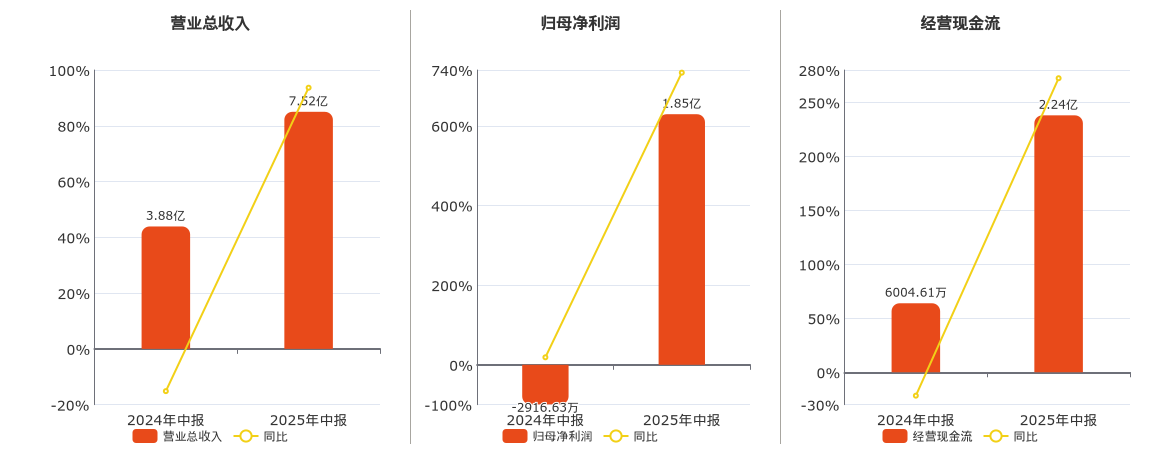
Core Viewpoint - Xiaoming Co., Ltd. has successfully turned around its financial performance in the first half of 2025, achieving significant revenue and profit growth compared to previous years [1][2] Financial Performance - In the first half of 2025, the company reported revenue of 752 million yuan, a year-on-year increase of 93.65% [1] - The net profit attributable to shareholders reached 185 million yuan, an increase of 214 million yuan compared to the same period last year, marking a historical high for the company [1] - The gross profit margin improved to 33.99%, while the net profit margin reached 24.57% [1] - The weighted average return on equity rose to 21.27%, an increase of 25.31 percentage points year-on-year [1] - The price of commodity chicks increased to 4.44 yuan per chick, a 45% year-on-year rise [1] Historical Context - The company experienced significant losses in 2023, with a net loss of 155 million yuan due to high feed costs, low downstream replenishment, and avian influenza outbreaks [1] - In 2024, the industry supply-demand dynamics improved, leading to a strong recovery with a net profit of 44.81 million yuan, marking a turnaround from losses [1] Cash Flow and Financial Health - As of the end of the first half of 2025, the company reported a net cash inflow from operating activities of 224 million yuan, a year-on-year increase of 272.39% [1] - The latest debt-to-asset ratio stood at 45.35%, a decrease of 10 percentage points compared to the same period last year [1] Shareholder Activity - During the company's performance surge, significant shareholders have been reducing their stakes, with major shareholder Xiamen Chentu Venture Capital and its affiliates selling 1.8566 million shares, amounting to approximately 37 million yuan [2] - Foreign institutional investors such as Morgan Stanley, UBS, and Goldman Sachs have exited the top ten shareholders list, while domestic index funds have entered [2] - This shift in shareholder composition reflects differing views on the industry's cyclical peak [2]
中金:维持德康农牧跑赢行业评级 目标价111港元
Zhi Tong Cai Jing· 2025-08-18 04:01
Core Viewpoint - CICC maintains the earnings forecast for Dekang Agriculture (02419) for 2025/26, with a target price of HKD 111, indicating a 33% upside potential from the current price [1] Group 1: Financial Performance - Dekang Agriculture reported 1H25 revenue of CNY 11.7 billion, a year-on-year increase of 24.3%, and net profit of CNY 1.27 billion, up 250.6%, aligning with CICC's expectations [2] - The significant growth in performance is attributed to improved management efficiency and a decrease in pig costs [2] Group 2: Business Segments - The swine business continues to expand with high quality, contributing to revenue growth; 1H25 swine revenue increased by 32.6% to CNY 9.88 billion, with sales volume up 27.1% to 5.1174 million heads [3] - Poultry business remains stable, with 1H25 revenue of CNY 1.34 billion and a 7.2% increase in yellow feather chicken sales to 43 million birds [3] - The slaughtering and ancillary products segment also saw growth, with revenue up 16.1% to CNY 480 million and slaughter volume increasing by 18.5% to 249,000 heads [3] Group 3: Cost and Financial Health - Dekang Agriculture maintains a leading cost advantage in the industry, with 1H25 swine production costs below CNY 12.5 per kilogram, and a PSY of 27 heads per year, also industry-leading [4] - The company's asset-liability ratio improved to 59.9% in 1H25, down 14.3 percentage points from 1H24, indicating ongoing financial health [4] Group 4: Growth Strategy and Value Recovery - The company employs a light-asset model with a unique breeding farm system, achieving lower capital expenditure and binding closely with cooperative farmers; the average breeding fee reached CNY 800,000 per farm, up 15.5% [5] - Dekang Agriculture leverages superior breeding technology and precise nutrition to maintain low-cost advantages, with expectations for continued excess profits per head [5] - Following the release of the 2024 annual report, the company's growth narrative has gained recognition, and liquidity improvements have led to value recovery, with an estimated market value of CNY 2,623 per head, indicating potential for further valuation enhancement [5]
供强需弱!山东猪肉价格环比回落0.62%,羊肉价格持续走低
Sou Hu Cai Jing· 2025-08-18 03:54
牛肉价格震荡回升,主要是受市场阶段性调节影响所致。受产能去化、海外牛肉价格回暖,以及国内进 口牛肉调整政策加码影响,2025年牛肉进口预计量减价增,牛肉产业来自低价进口牛肉的压力边际趋 弱。据中国海关统计数据显示,截至2025年上半年我国进口牛肉130万吨,同比减少9.5%。预计未来我 国牛肉供给端出现明显下降,牛肉价格有望再创新高。 山东省畜牧总站最新统计数据显示,受供强需弱等因素影响,本周猪肉价格承压走低,最新统计肉价为 25.68元/公斤,同比降低22.60%,环比回落0.62%。此外,受市场供需影响,牛肉价格持续小幅向上, 羊肉价格承压弱势回落。鸡蛋价格承压,前期低位回升后本周再度回落,跌破"7"元。 鉴于现阶段出栏均重仍处历史同期高位,且近期天气炎热或加速前期压栏大猪出栏,生猪整体供应充足 对价格形成压制,预计8月中下旬生猪二次育肥受限,出栏体重调减,生猪供应或集中上量,生猪价格 或进一步震荡略偏弱运行,呈季节性走弱趋势。 据全省监测样本县数据,本周全省肥猪出栏均价为14.25元/公斤,同比降低29.66%,环比降低1.86%。 消费回暖不及预期,猪肉价格回落走低,本周猪肉均价为25.68元/公斤, ...

晓鸣股份(300967.SZ):2025年中报净利润为1.85亿元,同比扭亏为盈
Xin Lang Cai Jing· 2025-08-18 01:59
2025年8月18日,晓鸣股份(300967.SZ)发布2025年中报。 公司营业总收入为7.52亿元,较去年同报告期营业总收入增加3.64亿元,同比较去年同期上涨93.65%。归母净利润为1.85亿元,较去年同报告期归母净利润 增加2.14亿元,实现2年连续上涨。经营活动现金净流入为2.24亿元,较去年同报告期经营活动现金净流入增加1.64亿元,同比较去年同期上涨272.39%。 | 序号 | 股东名称 | 持股 | | --- | --- | --- | | l | 魏晓明 | 42.6. | | 2 | 正大投资股份有限公司 | 12.0. | | 3 | 广州谢诺辰途股权投资管理有限公司-厦门辰途创业投资合伙企业(有限合伙) | 3.84 | | ব | 广州谢诺辰途股权投资管理有限公司-辰途第一产业股权投资基金 | 1.16 | | 5 | 北京大北农科技集团股份有限公司 | 0.70 | | 6 | 浙商银行股份有限公司-国泰中证畜牧养殖交易型开放式指数证券投资基金 | 0.57 | | 7 | 石玉盞 | 0.53 | | 8 | 杜建峰 | 0.53 | | g | 王学强 | 0.45 | ...