
装备制造

Search documents
中国经济2025年增长5%总量突破140万亿元
Sou Hu Cai Jing· 2026-01-08 13:08
Core Development Trends: Structural Optimization and Resilience Enhancement - China's GDP is projected to reach 140 trillion yuan in 2025, with a year-on-year growth of approximately 5%, exceeding annual targets [3] - The industrial structure continues to optimize, with high-tech manufacturing value-added growth reaching 10%, and equipment manufacturing contributing over 55% to industrial growth [3] - New production sectors such as new energy vehicles and industrial robots see output growth exceeding 30% [3] Internal and External Demand Synergy - Consumption contributes 52% to economic growth, with retail sales of consumer goods expected to grow by 5% to 6.4% year-on-year [4] - Emerging consumption trends include "emotional consumption" and green health consumption, with increased penetration of new energy vehicles [4] - Exports are expected to grow by 9.3%, with Hainan Free Trade Port's first-year cargo throughput exceeding 80 million tons, indicating diversification in foreign trade to mitigate external risks [4] Core Support Elements: Innovation Drive and Policy Coordination - Significant breakthroughs in frontier technologies include the "China Fusion Reactor" achieving 150 million degrees ion temperature, with AI and quantum communication leading global innovation [4] - R&D investment intensity rises to 2.68%, with China entering the top ten in the global innovation index and improved patent conversion efficiency [4] Policy Precision and Macro Policy Initiatives - Monetary policy measures such as interest rate cuts and targeted support for "new infrastructure, new urbanization, and major projects" are aimed at reducing financing costs [6] - Comprehensive removal of foreign investment restrictions in manufacturing and alignment of Hainan Free Trade Port operations with international rules promote higher levels of openness [6] New Growth Points: Green Economy and Regional Coordination - Rapid acceleration of green transformation, with leading global installed capacity for wind and solar clean energy [6] - Regions like the Qaidam Basin leverage solar and wind resources to develop ecological industries, while PM2.5 concentration continues to decline [6] Regional Coordinated Development - Economic contributions from regions such as Beijing-Tianjin-Hebei, Yangtze River Delta, and Guangdong-Hong Kong-Macao Greater Bay Area are increasing [7] - County economies, exemplified by the sugar orange industry in Qingyuan, Guangdong, drive rural revitalization, increasing farmer income and employment [7] Challenges and Responses: Addressing Deep-Seated Contradictions - There are notable pressures from insufficient demand, with some sectors experiencing a mismatch between supply and demand, particularly in consumer spending recovery [8] - The recovery rate for tourism consumption is at 88.5%, indicating a lag in per capita consumption recovery compared to the increase in visitor numbers [8] Long-Term Transformation - Ongoing challenges include addressing "bottleneck" technologies in the industrial chain, such as high-end chips, and resolving real estate risks [9] - Key reforms in income distribution and social security are essential for unleashing domestic demand [9] Future Layout: "14th Five-Year Plan" Anchoring High Quality - Focus on core technology breakthroughs in AI and integrated circuits, with plans to establish three major international innovation centers in Beijing-Tianjin-Hebei [10] - Implementation of income increase plans for urban and rural residents to expand the middle-income group [10] Upgraded Openness - Deepening the international hub function of Hainan Free Trade Port and promoting trade diversification under the "Belt and Road" initiative are expected to enhance foreign trade resilience by 2026 [11] - The essence of China's economic shift towards "new and superior" is a dynamic process driven by innovation, optimized open systems, and solidified social welfare foundations [11]

连云港高新区:55个项目入选省级拟立项清单
Yang Zi Wan Bao Wang· 2026-01-08 10:17
下一步,连云港高新区将以此次拟立项为重要契机,深化双高协同试点建设,进一步扩大省内外高校院 所合作范围与内容,升级科技副总模式并出台成果转化激励制度,通过推广省数字平台、举办细分领域 路演等方式提升对接效率。同时,持续完善产学研合作质效评估体系,打通校企直接沟通渠道,推动合 作从项目对接向生态共建转型,让更多创新成果转化为实实在在的发展动能,为区域科技创新与产业高 质量升级注入更强劲的动力。 通讯员李丹辛玲扬子晚报/紫牛新闻记者张凌飞 校对陶善工 近日,江苏省科学技术厅公布2025年江苏省产学研合作项目拟立项清单,连云港高新区凭借扎实的合作 基础、创新的合作模式与强劲的产业需求,共有55个项目入选,充分彰显了区域产学研协同创新的深厚 底蕴与蓬勃活力。 作为连云港市科技创新与产业融合的核心引擎,高新区近年来始终将产学研合作作为激活创新动能、赋 能产业升级的关键抓手。区内集聚2所本科院校、2个部省属科研院所,拥有7个国家级企业技术中心及 90多个省级以上重点实验室、工程(技术)研究中心,12万各类技术人才构筑起全方位的智力支撑体系。 通过搭建校地合作联盟,常态化举办连云港北大化院产业发展大会、"双高协同"创新发展 ...

钟才平:向新向优发展,中国经济向好
Ren Min Ri Bao· 2026-01-08 07:44
Core Viewpoint - China's economy is resilient and capable of overcoming significant challenges, with a focus on high-quality development and internal strengthening to address external pressures [1][3]. Group 1: Economic Performance - The expected economic growth for 2025 is around 5%, with a total economic output projected to reach 140 trillion yuan [3]. - Exports to ASEAN and the EU increased by 14.6% and 8.9% respectively, while exports to Belt and Road countries grew by 11.3% [2]. - Despite an 18.3% decline in exports to the US, total exports in dollar terms still grew by 5.4% [2]. Group 2: Industrial Development - The added value of equipment manufacturing and high-tech manufacturing industries grew by 9.3% and 9.2% respectively, outpacing overall industrial growth [3]. - The share of equipment manufacturing and high-tech manufacturing in total industrial output reached 36.4% and 16.7%, showing an increase from 2020 [3]. Group 3: Innovation and Reform - High-tech product exports, particularly integrated circuits, reached 1.29 trillion yuan, growing by 25.6% [4]. - New policies to promote the private economy and reduce market entry barriers have been implemented, enhancing the business environment [4]. Group 4: Environmental and Social Progress - Significant improvements in environmental quality, with PM2.5 concentration in the Beijing-Tianjin-Hebei region dropping to 31 micrograms per cubic meter, a 54% decrease from ten years ago [5]. - Social security spending as a percentage of GDP has doubled from 4% in 2012 to approximately 8%, aligning with levels in middle-income countries [5]. Group 5: Economic Indicators - The industrial profit of large enterprises increased by 0.1% year-on-year, maintaining growth for four consecutive months [6]. - The manufacturing purchasing managers' index rose to 50.1 in December, indicating expansion, while the non-manufacturing business activity index also returned to expansion territory [6].
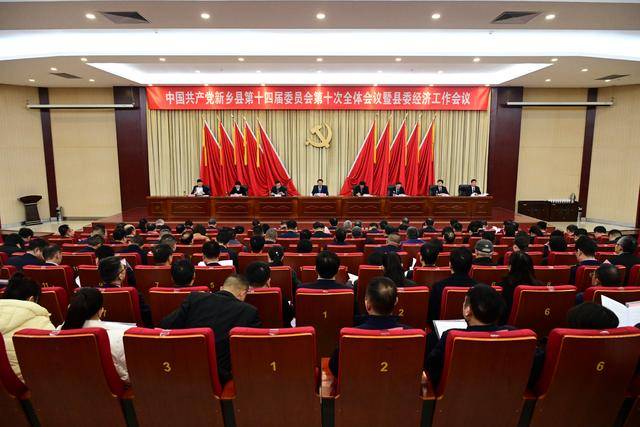
确保“十五五”开好局 新乡县提出“八个关键着力点”
Sou Hu Cai Jing· 2026-01-08 07:12
Economic Growth and Development - During the "14th Five-Year Plan" period, the GDP of Xinxiang County increased from 21.77 billion to 31.8 billion, with per capita GDP exceeding 90,000, ranking first among eight counties and cities [2] - The general public budget revenue rose from 1.06 billion to 1.4 billion, with an average annual growth of 5.8%, maintaining an 80% tax ratio, also ranking first among eight counties and cities [2] - By the end of the "14th Five-Year Plan," the per capita disposable income of residents reached 35,000, which is 1.3 times that of the end of the "13th Five-Year Plan," maintaining the absolute first position among eight counties and cities [2] Strategic Focus for Future Development - Xinxiang County has identified eight key focus areas for economic work in 2026 to ensure a strong start for the "15th Five-Year Plan" [2] - The county aims to enhance domestic demand, integrate into the national unified market, and promote efficient governance reforms [3] - There is a focus on strengthening the real economy and building a modern industrial system, with plans to implement a "special industry cluster excellence upgrade plan" [3] Innovation and Industrial Development - The county plans to promote innovation-driven development and enhance the integration of technological and industrial innovation [3] - Efforts will be made to establish an industrial innovation alliance centered around leading enterprises and to develop the "Xinxiang Manufacturing" regional brand [3] - The goal is to attract and cultivate significant projects in sectors such as industrial robotics, artificial intelligence, biomanufacturing, and new energy [3] Rural Revitalization and Environmental Protection - Xinxiang County is committed to comprehensive rural revitalization, ensuring food security, and enhancing agricultural productivity [4] - The county aims to strengthen pollution prevention and accelerate the transition to a green and low-carbon economy, with specific targets for reducing emissions and increasing green manufacturing enterprises [4] - There is a focus on improving public services in education, healthcare, and social security to enhance the quality of life for residents [5] Governance and Safety - The county emphasizes the importance of balancing high-quality development with safety, implementing effective governance through party leadership and data-driven approaches [5] - There are measures in place to mitigate financial risks and ensure compliance with land protection policies [5] - The county aims to enhance community safety and maintain social stability through ongoing efforts against crime and illegal land use [5]
事关超5万家企业智能升级,工信部发布行动方案
Huan Qiu Wang· 2026-01-08 05:24
Core Viewpoint - The Ministry of Industry and Information Technology has released an action plan to promote the integration of artificial intelligence and industrial internet, aiming to upgrade over 50,000 enterprises by 2028, enhancing the capabilities of industrial internet and AI integration [1]. Group 1: Infrastructure Upgrade Actions - Accelerate the intelligent upgrade of industrial networks by utilizing technologies such as 5G, edge computing, and cloud control to support new industrial intelligent demands [1]. - Focus on developing new industrial network products like programmable logic controllers (PLC) and AI routers to enhance self-organizing and self-optimizing network capabilities [2]. Group 2: Enhancing Industrial Internet Platform Intelligence - Strengthen the capabilities of industrial internet platforms through deep learning and large models, encouraging low-code and no-code innovations to improve app development efficiency [3]. - Explore the creation of a "model pool" on industrial internet platforms to foster the development of industrial model products [4]. Group 3: Strengthening Industrial Computing Power Supply - Accelerate the integration of industrial internet with computing centers to provide public computing services to industrial enterprises [5]. - Encourage the deployment of edge computing devices and smart gateways to enhance real-time data processing capabilities [6]. Group 4: Data Model Interoperability Actions - Promote the application of information models in industrial enterprises to facilitate the sharing of heterogeneous industrial data [7]. - Establish a national industrial data directory by aggregating key supply chain and industrial data [8]. Group 5: Accelerating Industrial Model Development - Guide industrial internet platform companies to standardize and encapsulate industrial knowledge into models, enhancing their reasoning and data processing capabilities [9]. - Encourage the development of interconnected interfaces for industrial models to improve collaboration between large and small models [9]. Group 6: Application Model Transformation Actions - Encourage industrial enterprises to leverage industrial internet for data flow between consumption and production, and to adopt AI for intelligent analysis [10]. - Develop AI-based virtual production lines to enhance decision-making capabilities in production activities [10]. Group 7: Promoting Key Industry Applications - Implement "chain-network collaboration" projects in key industries such as steel, aviation, and electronics to facilitate digital transformation and intelligent upgrades [12]. Group 8: Strengthening Key Enterprise Cultivation - Promote the development of intelligent system integration capabilities among industrial enterprises and encourage the emergence of specialized service providers in industrial data and models [13]. Group 9: Accelerating Technological Product Innovation - Encourage collaboration among AI, industrial internet, and control enterprises to advance the intelligent upgrade of industrial communication technologies [14]. - Optimize industrial software development processes using AI to reduce costs and improve efficiency [15].
工信部等八部门联合印发《“人工智能+制造”专项行动实施意见》
中汽协会数据· 2026-01-08 05:13
Core Viewpoint - The article discusses the implementation of the "Artificial Intelligence + Manufacturing" initiative, aiming to enhance the integration of AI technologies in the manufacturing sector by 2027, establishing China as a global leader in AI technology and application [1][6]. Group 1: Overall Requirements - By 2027, China aims to achieve secure and reliable supply of key AI technologies, maintaining a leading position in industry scale and empowerment levels globally. The initiative includes the application of 3-5 general large models in manufacturing, the launch of 1,000 high-level industrial intelligent entities, and the creation of 100 high-quality industrial data sets [6][5]. Group 2: Innovation Foundation - The initiative emphasizes strengthening AI computing power supply, supporting the development of intelligent chips and high-level computing facilities, and promoting the establishment of a national integrated computing network [7]. - It also focuses on developing high-performance algorithm models tailored for the manufacturing sector, encouraging the creation of industry-specific models and enhancing data governance capabilities [8][7]. Group 3: Application Empowerment - The initiative promotes the deep integration of AI in key manufacturing sectors, facilitating the development of intelligent factories and enhancing capabilities in design, production, and management processes [9][10]. - It encourages the establishment of AI application platforms to match supply and demand accurately, and supports the digital transformation of small and medium-sized enterprises [11][12]. Group 4: Product Breakthrough - The initiative aims to accelerate the iteration of intelligent equipment and the upgrade of smart terminals, including industrial robots and AI-driven medical devices, to enhance decision-making and operational capabilities [13][14]. - It also focuses on fostering new business models around intelligent entities and promoting the integration of AI with traditional software products [15][16]. Group 5: Ecological Growth - The initiative emphasizes the importance of standardization in AI development, encouraging participation in international standardization efforts and promoting an open-source ecosystem for AI projects [17][18]. - It aims to strengthen talent cultivation in the AI sector, ensuring a skilled workforce that understands both AI and manufacturing applications [19][18]. Group 6: Safety Assurance - The initiative outlines measures to enhance safety and security in AI applications, including the development of safety governance mechanisms and risk monitoring systems [20][21]. Group 7: International Cooperation - The initiative encourages international collaboration in AI, supporting enterprises in customizing AI products for different markets and participating in global AI discussions [21][20]. Group 8: Support Measures - The initiative calls for a comprehensive policy support system to facilitate the development of AI in manufacturing, including funding and resource allocation to promote new technologies and applications [22][23].

骏启新章 跃赴新程,东莞市上市公司协会2026年度大会举行
Quan Jing Wang· 2026-01-08 01:40
Core Insights - The annual conference of Dongguan Listed Companies Association aims to summarize past achievements, recognize outstanding entities, and explore new opportunities in the context of the "14th Five-Year Plan" for high-quality development [1][3] Group 1: Market Development - Dongguan's capital market has experienced rapid growth during the "14th Five-Year Plan," with the number of A-share listed companies increasing from 36 in 2021 to 64, and total market capitalization rising from 300 billion to 800 billion [2] - The city now has 87 listed companies and over 525 recognized listing candidates, indicating a more comprehensive multi-level capital market system [2] Group 2: Association Activities - Dongguan Listed Companies Association has organized over 40 events in the past year, enhancing its service quality and addressing member companies' core needs through initiatives like merger summits and investment institution research [2] - The association aims to improve member satisfaction and support the growth of Dongguan's capital market by focusing on member needs and optimizing services [4] Group 3: Government and Regulatory Support - The conference was attended by key government officials, highlighting the importance of collaboration between government and enterprises in building a new capital market ecosystem [5] - The Vice Director of the Guangdong Regulatory Bureau emphasized the systematic improvements in China's capital market, which have laid a solid foundation for supporting technological innovation and new production capabilities [3] Group 4: Awards and Recognition - The conference recognized several companies for their achievements, including awards for best listed companies, ESG best practices, and most innovative companies [6][9][10] - Notable awardees include Guangdong Shengyi Technology Co., Ltd. and Guangdong Ding Tai High-Tech Co., Ltd. for their outstanding performance [9][10] Group 5: Future Outlook - The conference featured a keynote speech on the "15th Five-Year Plan," discussing the strategic opportunities and challenges facing China's economy, emphasizing the need for steady progress and quality improvement [7][8] - The speaker highlighted the importance of maintaining strategic focus and leveraging the advantages of China's market economy to navigate uncertainties and seize opportunities [8]
这些行业迎利好!八部门重磅发布
Mei Ri Jing Ji Xin Wen· 2026-01-07 23:23
Group 1 - The core viewpoint of the article is the implementation of the "AI + Manufacturing" initiative, aiming to enhance the application of AI in the manufacturing sector by 2027, including the development of general large models and high-quality data sets [1][2] - The initiative outlines the goal to cultivate 2 to 3 globally influential leading enterprises and a number of specialized small and medium-sized enterprises, as well as to establish a global leading open-source ecosystem [1][2] - The document emphasizes the importance of strengthening AI computing power supply and promoting the development of intelligent chips and core technologies [2][3] Group 2 - The initiative prioritizes the empowerment of five key industries: raw materials, equipment manufacturing, consumer goods, electronic information, and software and information technology services [4][5] - Specific applications of AI in the equipment manufacturing sector include the intelligent upgrade of the automotive industry, focusing on real-time simulation and optimization of design parameters [4][5] - The initiative aims to address the urgent need for digital transformation in these industries, leveraging AI to enhance production efficiency and reduce defect rates in manufacturing processes [5]
护企安商:滋养发展“沃土”
Xin Lang Cai Jing· 2026-01-07 20:18
Group 1 - The core viewpoint emphasizes the importance of optimizing the legal business environment as a political responsibility of the courts, responding to enterprise expectations, and focusing on judicial execution as a necessary requirement and important measure [1] - In 2025, the municipal court will implement the latest directives for business environment construction, aiming to enhance the sense of security, gain, and belonging for enterprises and entrepreneurs investing in Shenyang [1] Group 2 - The judicial optimization of the business environment should focus not only on case handling but also on service provision, with initiatives like legal guidance for high-tech enterprises and the establishment of mobile judicial service stations [2] - The Shenyang court will conduct a series of themed activities aimed at improving judicial service precision and personalization, addressing legal risks in contract signing and labor employment [2] Group 3 - Execution is crucial for enhancing enterprises' sense of judicial gain, with innovative measures such as forced management introduced to resolve complex cases [3] - The Shenyang court will assess the entire process of enterprise-related cases, predict risks, and implement expedited procedures to minimize the impact of judicial activities on business operations [3] Group 4 - Innovation is driven by protecting intellectual property, with the establishment of a judicial blockchain platform for intellectual property in Northeast China, attracting over 20 key enterprises to participate [4] - The use of the blockchain platform has significantly reduced litigation costs for companies, exemplified by a case where a company saved over 1 million yuan in litigation expenses [4] Group 5 - Municipal representatives commend the court's proactive extension of judicial services to enterprises, enhancing legal risk prevention capabilities and demonstrating responsibility in optimizing the business environment [5] - The court's innovative execution methods and the establishment of the blockchain platform for intellectual property protection have effectively lowered the cost of rights protection for enterprises and improved judicial efficiency [5]
八部门聚力推出“人工智能+制造”专项行动
Xin Lang Cai Jing· 2026-01-07 18:14
Core Viewpoint - The integration of artificial intelligence (AI) with the real economy is set to profoundly change the production models and economic forms in the manufacturing industry, as outlined in the "AI + Manufacturing" action plan issued by multiple government departments [1]. Group 1: Goals and Objectives - By 2027, China aims to achieve secure and reliable supply of key AI technologies, maintaining a leading position in industry scale and empowerment levels globally [1]. - The plan includes the deep application of 3 to 5 general large models in manufacturing, the creation of 100 high-quality industrial data sets, and the promotion of 500 typical application scenarios [1]. - The initiative seeks to cultivate 2 to 3 globally influential ecosystem-leading enterprises and a number of specialized small and medium-sized enterprises, while establishing 1,000 benchmark enterprises [1]. Group 2: Key Industries and Applications - Key industries targeted for AI empowerment in new industrialization include raw materials, equipment manufacturing, consumer goods, electronic information, software, and information technology services [2]. - The plan encourages leading enterprises and state-owned enterprises to explore new models and applications of AI in manufacturing, alongside implementing digital empowerment initiatives for small and medium-sized enterprises [2]. Group 3: Implementation Strategies - The action plan emphasizes strengthening AI computing power supply, promoting the development of intelligent chips, and supporting breakthroughs in key technologies such as high-end training chips and AI servers [2]. - It outlines the need for an integrated mechanism for data collaboration, model training, application development, and security assurance through the "model-number resonance" initiative [2]. - The plan also focuses on upgrading intelligent equipment and terminals, fostering new business forms like humanoid robots, and enhancing the integration of AI with industrial software [2]. Group 4: International Cooperation and Funding - The initiative promotes high-level international cooperation, encouraging the export of advantageous industries and participation in AI discussions within multilateral cooperation frameworks [3]. - It proposes the establishment of a collaborative work mechanism involving departments, central and local governments, and industry to guide enterprises in differentiated development and prevent internal competition [3]. - The plan aims to leverage existing funding channels to support AI-related technology research and application tasks, utilizing the national AI industry investment fund to attract more social capital [3].
