
农产品贸易

Search documents
云南畹町口岸开放提速 缅甸优质农产品加速进入中国市场
Zhong Guo Xin Wen Wang· 2025-09-12 06:11
Core Insights - The Yunnan Wanding Port has accelerated the entry of high-quality agricultural products from Myanmar into the Chinese market, including fresh pineapples and edible konjac slices [1][2] - The port is a key channel for these imports, with significant growth in agricultural product volumes noted in recent months [2] Group 1: Agricultural Product Imports - The first batch of 6.4 tons of fresh pineapples from Myanmar entered China through Wanding Port in July, marking the first import of this product since it was approved for entry in late 2024 [1] - The import volume of agricultural products at Wanding Port reached 207,000 tons in the first half of this year, representing a year-on-year increase of 183.4% [2] Group 2: Regulatory and Facilitation Measures - To ensure smooth customs clearance for imported konjac slices and fresh pineapples, the port has strengthened inspection and supervision, enhancing food safety measures [2] - The introduction of a "green channel" for fresh agricultural products aims to minimize customs clearance times, promoting efficiency in the import process [2] Group 3: Market Demand and Product Characteristics - Myanmar's fresh pineapples are highly anticipated by Chinese consumers due to their sweet and juicy flavor, as well as their delicate texture [1] - The "King of Mangoes," the Saint Delong mango from Myanmar, is also favored in the Chinese market for its high sweetness, low fiber, thin skin, and thick flesh [2]

期货赋能托举中国贸易强国梦
Qi Huo Ri Bao Wang· 2025-09-11 18:37
Group 1 - The core viewpoint of the articles emphasizes the transition of China's trade focus from scale expansion to quality and efficiency enhancement, with futures markets playing a crucial role in this transformation [1][15][18] - The rise of "Chinese futures" is enabling domestic companies to establish pricing power in international trade, moving away from reliance on international price indices [2][3][17] - The integration of futures tools into trade practices is enhancing negotiation efficiency and reducing risks associated with price volatility, thereby fostering a more collaborative environment between upstream and downstream partners [4][8][12] Group 2 - The application of futures in various sectors, such as chemicals and agricultural products, is leading to a significant shift in pricing strategies, with domestic futures prices becoming benchmarks for international transactions [5][6][10] - Companies are increasingly adopting innovative trading models, such as basis trading and rights trading, which allow for more flexible pricing and risk management tailored to specific needs [7][9][16] - The use of futures tools is helping to stabilize supply chains by providing mechanisms for price management and risk mitigation, thus enhancing overall resilience against market fluctuations [10][11][14] Group 3 - The transition from a focus on scale to value-driven trade is seen as essential for building a strong trade nation, with futures markets serving as a foundational infrastructure for this shift [15][18] - There is a growing recognition that participation in futures markets not only aids in risk management but also serves as a means to gain competitive advantage and influence in global trade [17][18] - The development of a robust network of trade companies is crucial for enhancing China's position as a trade power, with an emphasis on improving the use of futures and derivative tools in international trade [18]
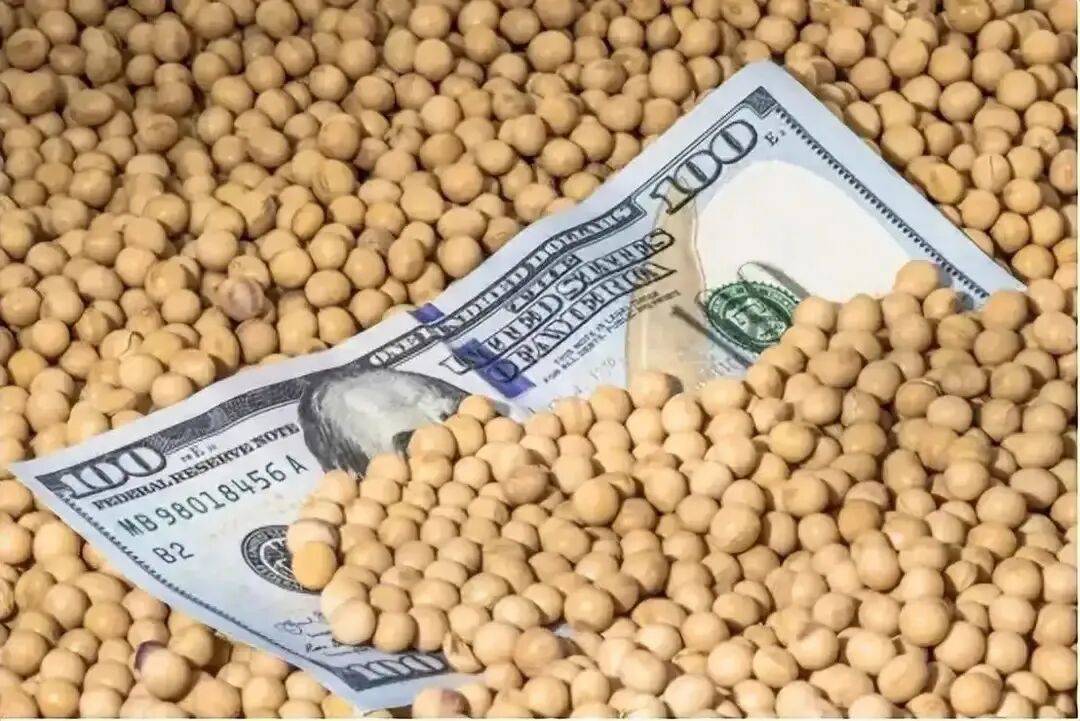
进口大豆数量公布,巴西躺赢!特朗普坐不住,有求于华:很快面谈
Sou Hu Cai Jing· 2025-09-10 09:44
Group 1 - In August 2025, China's soybean imports reached 12.279 million tons, with a cumulative total of 73.312 million tons from January to August, indicating a significant shift in global soybean trade dynamics [1] - Brazil now accounts for 71% of China's total soybean imports, with a monthly share reaching 86.6%, while the U.S. share has plummeted from 21% in 2024 to a "very low level" [1][3] - The U.S.-China trade conflict has severely impacted U.S. soybean exports, with tariffs leading to a 94% effective tax burden on U.S. soybeans, making them uncompetitive in the Chinese market [3][4] Group 2 - Brazil has emerged as the biggest winner in the U.S.-China soybean trade war, with exports to China reaching $19 billion in the first half of 2025, accounting for 75.2% of Brazil's total exports [3] - The price advantage of Brazilian soybeans is a key factor in their success, with U.S. soybean prices at $776 per ton compared to Brazil's stable price of $380-$400 per ton, creating a price gap exceeding $30 [3] - U.S. soybean prices have fallen below $10 per bushel on the Chicago futures exchange, leading to severe financial pressure on farmers in traditional agricultural states like Illinois and Iowa [3][4] Group 3 - China has proactively prepared for the trade war by implementing a three-pronged strategy of high tariffs, technical barriers, and alternative supply chains, including long-term contracts with South American countries [6] - China's domestic "Soybean Revitalization Plan" aims for a production target of 21 million tons by 2025, while also adjusting feed formulations to reduce reliance on soybean meal [6] - The trade conflict extends beyond soybeans, with the U.S. heavily reliant on China for rare earth processing, and potential tariffs on rare earth magnets causing supply chain disruptions for U.S. industries [6][8] Group 4 - The ongoing soybean trade war is reshaping the global agricultural landscape, diminishing the U.S.'s historical dominance in agricultural exports and pricing power [9]

加拿大总理发表罕见涉华言论,引爆国际舆论
Sou Hu Cai Jing· 2025-09-08 02:48
Core Viewpoint - The announcement by China's Ministry of Commerce to impose a 75.8% anti-dumping deposit on Canadian canola imports highlights significant trade tensions and potential disruptions in the agricultural sector, particularly affecting Canada's canola industry and its supply chain [2][10]. Group 1: Trade Impact - The anti-dumping measure is based on an investigation that concluded Canadian canola was being sold at unfairly low prices, causing substantial harm to China's domestic canola industry [2]. - Canada imports approximately 4 million tons of canola annually, accounting for over 40% of its total production, indicating a heavy reliance on the Chinese market [2]. - The Canadian Canola Council expressed that such a high tax rate would effectively block Canadian canola from entering China, leading to inventory buildup and price drops in Canada [2]. Group 2: Industry Chain Repercussions - Farmers in Saskatchewan are calculating potential losses due to unsold canola contracts, with limited storage capacity for new harvests if exports remain blocked [4]. - Agricultural machinery suppliers are concerned about payment recovery, while banks are reassessing the risk of bad debts in agricultural loans [4]. - The processing sector faces challenges as domestic capacity is insufficient to handle the entire canola output, leading to potential overcapacity and fierce competition if they shift focus to the domestic market [4]. Group 3: Political Responses - Saskatchewan's Premier announced a trade delegation to China to negotiate and present evidence against the anti-dumping claims, indicating a proactive approach to mitigate the crisis [6]. - The provincial government allocated special funds for this initiative, highlighting the urgency of the situation [6]. Group 4: International Market Dynamics - Australian canola producers are seizing the opportunity to fill the market gap left by Canadian canola, with a significant increase in orders from Chinese buyers [8]. - Other canola-producing countries, such as Russia and Ukraine, are also adjusting their strategies to increase exports to China, putting additional pressure on Canada [8]. Group 5: Governmental Intervention - The Canadian Prime Minister has taken personal charge of the crisis, forming a special task force to coordinate responses across various government departments [9]. - The task force aims to negotiate a reduction in the anti-dumping deposit in the short term, manage quotas in the medium term, and push for an upgrade of bilateral trade agreements in the long term [9]. Group 6: Structural Trade Issues - The trade dispute underscores structural contradictions in the international trade system, where countries may prioritize national interests over external reactions, complicating resolution efforts [10]. - The swift repositioning of competitors like Australia illustrates the fragility and fluidity of global supply chains, suggesting that the outcome may lead to a fundamental shift in trade patterns rather than a simple win-lose scenario [10].
昆明翔运商贸有限公司成立 注册资本30万人民币
Sou Hu Cai Jing· 2025-09-06 20:34
Core Viewpoint - A new company, Kunming Xiangyun Trading Co., Ltd., has been established with a registered capital of 300,000 RMB, focusing on various agricultural and retail services [1] Company Summary - The legal representative of the company is Zhang Jicui [1] - The registered capital of the company is 300,000 RMB [1] - The company operates in a wide range of sectors including wholesale and retail of fresh vegetables, fruits, and various agricultural products [1] - The company also provides delivery services, technical services, supply chain management, and other related services [1] Business Scope - The company’s business scope includes: - Wholesale and retail of fresh vegetables and fruits [1] - Retail and wholesale of edible agricultural products, including fresh eggs and meat [1] - Processing and sales of agricultural products [1] - Sales of daily necessities and non-food agricultural products [1] - Technical services, consulting, and project planning [1] - Food internet sales, limited to pre-packaged food [1] - Various licensed activities including food sales and catering services [1]
昆明云滋味商贸有限责任公司成立 注册资本10万人民币
Sou Hu Cai Jing· 2025-09-06 08:44
Group 1 - A new company named Kunming Yunziwei Trading Co., Ltd. has been established with a registered capital of 100,000 RMB [1] - The legal representative of the company is Zou Chengle [1] - The company's business scope includes retail and wholesale of edible agricultural products, vegetable planting, import and export of goods, and various technical services [1] Group 2 - The company is authorized to engage in food sales, specifically pre-packaged food, and internet sales of pre-packaged food [1] - It also provides management consulting services, information technology consulting, and ordinary cargo transportation services [1] - The company is allowed to operate without needing special approval for most of its activities, as long as it adheres to its business license [1]
RCEP生效三载:广西架起中国—东盟经贸合作“黄金桥”
Zhong Guo Xin Wen Wang· 2025-09-05 13:52
Core Viewpoint - The RCEP has significantly enhanced trade and economic cooperation between Guangxi and ASEAN countries, establishing Guangxi as a vital trade hub and facilitating the dual circulation of domestic and international markets [1][2]. Policy Mechanism - Guangxi has implemented several policy documents, including the "Measures for Accelerating the Alignment with RCEP Economic and Trade New Rules," providing clear guidelines for rule implementation [1]. - A working joint meeting mechanism has been established, led by responsible leaders and covering multiple departments and 14 cities, promoting coordinated implementation [1]. Regional Cooperation - Guangxi has signed trade cooperation memorandums with ASEAN countries such as Cambodia and Laos, innovating cooperation mechanisms and upgrading the Guangxi-Brunei Economic Corridor cooperation agreement [1]. - The negotiations for the China-ASEAN Free Trade Area 3.0 have achieved preliminary results, enhancing regional economic collaboration [1]. Trade and Logistics Achievements - In 2024, the import and export volume between Guangxi and RCEP member countries is projected to reach 446.51 billion yuan [2]. - Guangxi issued nearly 3,000 RCEP certificates of origin in 2024, with a visa amount of 4.58 billion yuan [2]. - From January to July this year, Guangxi ports imported 1.6 million tons of ASEAN fruits, valued at 21.6 billion yuan, with a notable increase in durian imports [2]. - The Beibu Gulf Port has opened 36 container shipping routes to RCEP countries, and Nanning Airport's international cargo routes cover ASEAN and Northeast Asia [2]. Platform Development - Guangxi has hosted the RCEP Economic and Trade Cooperation Business Summit Forum for four consecutive years since 2021, expanding the services of the China-ASEAN Expo to enhance RCEP functionalities [2]. - By May 2025, RCEP member countries had established 1,242 enterprises in Guangxi, with actual foreign investment reaching 2.22 billion USD [2]. - Guangxi enterprises have set up 537 non-financial investment entities in RCEP member countries, with a cumulative investment of 2.96 billion USD [2]. Industry Chain Collaboration - Guangxi is focusing on developing cross-border industrial chains in sectors such as automotive and electronic information, with the China-Malaysia Qinzhou Industrial Park establishing the first cross-border bird's nest industrial chain [3]. - The scale of cross-border financial innovation pilot projects has reached 47.6 billion yuan, and cross-border e-commerce overseas warehouses have expanded to Vietnam and Japan [3]. Upcoming Events - The RCEP Economic Cooperation High-Level Dialogue is scheduled for September 17, 2025, in Nanning, focusing on the collaborative development of RCEP and the China-ASEAN Free Trade Area 3.0 [3]. - An international trade supply chain quality certification cooperation alliance will be established, and a joint statement to maintain industrial chain stability will be released [3].
【早间看点】MPOA马棕8月产量增2.07%至185万吨 StoneX预计美豆单产降至53.2蒲/英亩-20250905
Guo Fu Qi Huo· 2025-09-05 08:37
Report Summary 1. Report Industry Investment Rating No relevant information provided. 2. Core Viewpoints The report presents a comprehensive analysis of the futures market, including overnight and spot prices, important fundamental information, international and domestic supply - demand situations, macro - news, fund flows, and arbitrage tracking. It covers various commodities such as palm oil, soybeans, and related products, as well as macro - economic indicators from both the US and China [1][2][3]. 3. Summary by Directory 3.1 Overnight行情 - Overnight prices and price changes of various futures are presented, including Malaysian palm oil, Brent crude oil, US crude oil, US soybeans, soybean meal, and soybean oil, along with currency exchange rates [1]. 3.2 Spot行情 - Spot prices, basis, and basis changes of DCE palm oil, DCE soybean oil, and DCE soybean meal in different regions are provided, and import soybean CNF quotes are also given [2]. 3.3 Important Fundamental Information - **Weather Outlook**: US soybean - producing states' future weather shows varying temperatures and precipitation levels. The Midwest has local or sporadic precipitation in the near - term and will be dry later, with potential early frost in some areas [3][4][5]. - **International Supply - Demand**: Malaysian palm oil production in August increased by 2.07% to 1.85 million tons. The drought - affected area of US soybeans increased to 16%. StoneX lowered the US soybean yield forecast. Brazil's soybean exports in August increased, and its September export volume is expected to rise [7][8][9]. - **Domestic Supply - Demand**: On September 4, the trading volume of domestic edible oils decreased, and the trading volume of soybean meal changed. The开机 rate of oil mills increased slightly. Agricultural product prices showed different trends [11]. 3.4 Macro News - **International**: The probability of the Fed cutting interest rates is high. US economic data such as initial jobless claims, ADP employment, and Challenger corporate lay - offs are presented. Eurozone retail sales decreased [13][14][15]. - **Domestic**: The RMB appreciated against the US dollar on September 4. The central bank conducted reverse - repurchase operations, with net回笼 on September 4 and a planned large - scale买断式逆回购 on September 5 [17]. 3.5 Fund Flows - Fund flows of various futures are provided, with positive flows into some futures like CSI 500 index futures and negative flows into many others such as crude oil, gold, and silver [19]. 3.6 Arbitrage Tracking No specific content provided.
油菜籽出口中国遇阻,加拿大急了
Huan Qiu Shi Bao· 2025-09-04 22:58
Group 1 - Canadian Prime Minister Carney is committed to resolving the trade dispute with China regarding canola seeds, involving the international trade and foreign ministers [1] - China has implemented a temporary anti-dumping measure on Canadian canola seeds, requiring a 75% deposit, signaling a significant reduction in demand for Canadian canola [1] - Reports indicate that China has begun to order Australian canola seeds, with approximately 50,000 tons booked, marking the first import from Australia since 2020 [1] Group 2 - Historically, Canadian canola has dominated the Chinese import market, but now faces significant uncertainty as Australian canola may capture a substantial market share [2] - The Premier of Saskatchewan, Scott Moe, plans to visit China to discuss the canola seed issue, indicating proactive measures to address the trade challenges [2]
中储粮网电子商务平台定于2025年9月5日组织国产大豆竞价销售专场
Xin Hua Cai Jing· 2025-09-03 08:14
Group 1 - The core event is the scheduled auction for domestic soybeans organized by the China National Grain Reserves Corporation's e-commerce platform on September 5, 2025 [1] - A total of 45,299 tons of domestic soybeans will be auctioned during this event [1]