云计算

Search documents
英伟达加大对CoreWeave投资,布局AI工厂战略
Sou Hu Cai Jing· 2026-02-06 14:54
Core Insights - Nvidia has invested $2 billion in GPU cloud service provider CoreWeave, reflecting confidence in CoreWeave's business, team, and growth strategy, which is built on Nvidia's infrastructure [2] - This investment will increase Nvidia's ownership stake in CoreWeave from approximately 6% to about 9%, as Nvidia aims to actively participate in CoreWeave's operations rather than being a passive shareholder [2][6] Investment Strategy - The investment will accelerate CoreWeave's progress in land, power, and infrastructure procurement for building AI factories [3] - Nvidia plans to integrate its latest computing architectures, including the Vera CPU, Rubin GPU, and BlueField storage systems, into CoreWeave's platform [3] Market Position - CoreWeave is the first customer to gain independent unit access to Nvidia's Vera CPU chips [4] - Nvidia has previously considered becoming a cloud service provider but has shelved this idea due to the significant investment required to compete with major players like AWS [4][6]



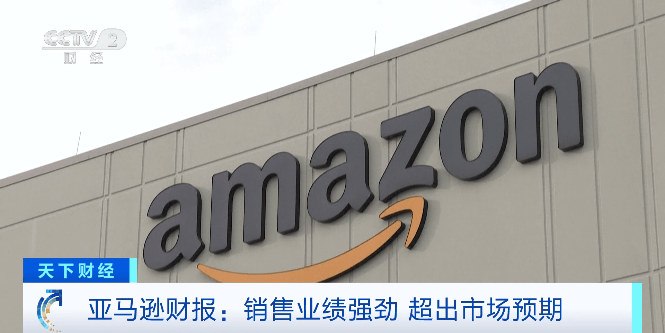
亚马逊公布财报 销售业绩强劲
Sou Hu Cai Jing· 2026-02-06 14:05
Core Viewpoint - Amazon's strong sales performance in Q4 2025 was overshadowed by significant capital expenditures in AI, leading to a stock price drop of over 10% in after-hours trading [1][5]. Group 1: Financial Performance - For Q4 2025, Amazon reported net sales of $213.4 billion, a 14% year-over-year increase, exceeding market expectations [3]. - The cloud computing service revenue grew by 24% to $35.6 billion, marking the fastest growth in 13 quarters, although the operating profit margin decreased to 35%, down from the previous year [3]. Group 2: Capital Expenditures - Amazon anticipates capital expenditures of approximately $200 billion for the year, primarily directed towards cloud computing infrastructure, significantly higher than analyst expectations and other major tech companies [5]. - The projected operating profit for Q1 2026 is between $16.5 billion and $21.5 billion, which is considerably lower than market expectations, raising concerns about the impact of high spending on short-term profits [5]. Group 3: Industry Context - Major U.S. tech companies, including Amazon, Microsoft, Google, and Meta, are collectively expected to exceed $500 billion in capital expenditures this year for AI infrastructure [7]. - Wall Street has indicated that sustained investor support for current spending levels is contingent upon achieving tangible commercial returns [7].

亚马逊(AMZN.US)2000亿资本开支吓跌自身股价,却点燃英伟达(NVDA.US)、迈威尔(MRVL.US)等供应商行情
Zhi Tong Cai Jing· 2026-02-06 13:50
Group 1 - Alphabet announced a capital expenditure of $175 billion to $185 billion for 2026, which was followed by Amazon revealing a significantly higher capital expenditure of $200 billion for the same year, exceeding Wall Street's expectation of $150 billion [1] - Amazon's CEO Andy Jassy emphasized strong demand for existing products and highlighted "pioneering opportunities" in AI, semiconductors, robotics, and low Earth orbit satellites, despite investor concerns over high capital spending [1] - Amazon's stock fell over 8% in pre-market trading following the announcement, indicating investor apprehension regarding the high capital expenditure [1] Group 2 - Marvell Technology is identified as a potential beneficiary of Amazon's capital spending, as it produces Trainium processors for the company [1] - AT&T is expected to benefit from a partnership with Amazon, utilizing Amazon's low Earth orbit satellite internet services to provide stable network connections in signal blind spots across the U.S. [2] - Nvidia and AMD are also potential beneficiaries due to their established partnerships with Amazon, supplying chip products to meet the computing needs in cloud computing and AI [2]
资本开支引发信任危机?大摩等机构力挺:亚马逊(AMZN.US)是最被低估的AI全能赢家
智通财经网· 2026-02-06 13:20
Core Viewpoint - Following Amazon's update on capital expenditure guidance, which led to a decline in its stock price, Wall Street analysts quickly defended their bullish stance on the company [1] Group 1: Analyst Ratings and Price Targets - Bank of America maintains a "Buy" rating on Amazon but lowers the target price to $275, emphasizing that capital expenditure return rates are the primary driver of stock performance [1] - Morgan Stanley keeps its "Overweight" rating and $300 target price unchanged, highlighting accelerated growth in AWS and ongoing efficiency improvements in retail [1] - Royal Bank of Canada reaffirms its "Outperform" rating and $300 target price, noting that Amazon remains one of the most undervalued large-cap stocks in the tech sector [1] - Wedbush Securities maintains an "Outperform" rating but lowers the target price to $300, suggesting that management's guidance may be conservatively optimistic [1] Group 2: Financial Expectations and Insights - Analysts express optimism about Amazon's financial outlook, with adjustments made to revenue forecasts due to an increase in AWS revenue guidance [1] - There is a slight downward adjustment in EBIT and EPS expectations due to cost optimization in the low Earth orbit satellite project, alongside a moderate reduction in free cash flow expectations due to increased capital expenditure [1] - Analysts identify structural opportunities for sustainable profit margin improvement, including enhanced fulfillment network efficiency and a shift towards higher-margin AWS cloud services and advertising [1] Group 3: Stock Performance - As of the report, Amazon's stock price fell over 8% in pre-market trading, reaching $204.88 [1]
“烧钱最猛”的亚马逊:2000亿美元开支,“信心”来自哪?
2 1 Shi Ji Jing Ji Bao Dao· 2026-02-06 11:21
21世纪经济报道记者董静怡 美东时间2月5日盘后,亚马逊发布了2025年第四季度财报。 其中,两个关键数字引人关注:核心云业务AWS营收同比增长24%,创下十三个季度以来最快增速;同时,公司宣布将在2026年投入约2000亿 美元用于资本支出,较2025年约1310亿美元的资本支出大幅跃升。 消息公布后,公司盘后股价应声下跌超过11%。 资本市场用脚投票的背后,是投资者对短期利润与长期投入之间平衡的疑虑。亚马逊首席执行官安迪.贾西(Andy Jassy)在财报电话会议上花了 大量时间解释这笔开支的必要性,强调AI带来的需求是真实的、巨大的。 "我们持续看到,新增的AI产能一经部署,就能迅速实现货币化。"安迪.贾西表示,"我们有信心这些投资将产生强劲的投资资本回报率。" 这考验着投资者对亚马逊长期战略的耐心。过去,亚马逊曾通过大规模投资物流网络和云基础设施建立起竞争壁垒,现在,它希望用同样的方 式赢得AI时代。不同的是,这次竞争更激烈,投入更集中,而回报周期可能更长。 AWS增长强劲 整体来看,亚马逊最新季度的财报还算亮眼。 2025年第四季度,亚马逊实现营收2134亿美元,同比增长14%,高于市场预期的211 ...

AWS 收入 8939 亿、营业利润 3165 亿
Xin Lang Cai Jing· 2026-02-06 11:20
Core Viewpoint - Amazon Web Services (AWS) reported a revenue of $35.6 billion in Q4, representing a year-over-year growth of 24% with an operating profit of $12.5 billion [1][6]. Financial Performance - AWS's revenue for the first three quarters of 2025 is projected to be $29.3 billion, $30.9 billion, and $33.0 billion, with operating profits of $11.5 billion, $10.2 billion, and $12.5 billion respectively [1][6]. - The total revenue for AWS in 2025 is expected to reach $128.8 billion (approximately 893.9 billion RMB), with an operating profit of $45.6 billion (approximately 316.5 billion RMB) [1][6]. Capital Expenditure - Amazon anticipates capital expenditures to reach $200 billion in 2026, driven by strong market demand for existing products and services, as well as opportunities in artificial intelligence, chips, robotics, and near-Earth orbit satellites [1][6]. - The capital expenditure for 2025 is estimated to be around $131 billion, which is expected to significantly impact Amazon's stock price, leading to a drop of over 11% in after-hours trading [1][6]. Market Capitalization - As of the latest report, Amazon's market capitalization stands at $2.38 trillion [1][6].

亚马逊Q4财报解读:市场反应过度,经营状况依旧稳健
美股研究社· 2026-02-06 10:55
Core Viewpoint - Despite exceeding revenue expectations, Amazon's stock price fell approximately 8% after the release of its Q4 2025 earnings report, primarily due to slightly lower-than-expected earnings per share and a significant capital expenditure guidance for 2026 [1] Financial Performance - Q4 2025 net sales reached $213.4 billion, a year-over-year increase of 14%, surpassing market expectations of $211.23 billion [1] - Diluted earnings per share were $1.95, a 5% year-over-year increase, slightly below the expected $1.96 [1] - Amazon's operating cash flow for the trailing twelve months (TTM) grew 20% year-over-year to $139.5 billion, but TTM free cash flow dropped 71% year-over-year to $11.1 billion due to rising capital expenditures [2] Business Segment Performance - Amazon Web Services (AWS) revenue for the quarter was $35.6 billion, a significant year-over-year increase of 24% [1] - Advertising services revenue reached $21.3 billion, growing 22% year-over-year [2] - Retail business showed stable growth in the high single digits [1] Capital Expenditure Guidance - Amazon's CEO Andy Jassy indicated that capital expenditures for 2026 are expected to reach $200 billion, which is higher than Alphabet's guidance of $175-185 billion [3] - The anticipated capital expenditure has raised concerns among investors regarding the return on investment [5] Market Reaction and Analyst Outlook - Following the earnings report, Amazon's stock price has retraced approximately 20% [9] - Analysts believe that despite short-term valuation concerns, Amazon remains a dominant player in multiple trillion-dollar markets and is well-positioned for long-term growth [9] - The five-year expected compound annual growth rate for Amazon has surpassed the TQI 15% investment threshold, leading analysts to upgrade the stock rating to "Buy" [10]

盘前大跌超7%!华尔街评亚马逊财报:2000亿资本开支太吓人,将对利润造成压力
美股IPO· 2026-02-06 10:33
Core Viewpoint - The company has provided a capital expenditure outlook of approximately $200 billion for 2026, significantly exceeding the market's previous expectations of around $146 billion to $149 billion. This higher-than-expected investment is anticipated to pressure profit margins and cash flow in the short term, but demand and order commitments for AWS are expected to support long-term growth [1][3]. Group 1: Financial Performance - In Q4, the company reported net sales of $213.4 billion, a year-over-year increase of 14%, with a GAAP operating profit of $25 billion. AWS revenue reached $35.6 billion, growing 24% year-over-year, marking the fastest growth rate in 13 quarters [3]. - The adjusted operating profit for Q4 was $27.4 billion, a 29.2% increase year-over-year, driven primarily by AWS. AWS's Q4 sales were $35.6 billion, up 23.7% year-over-year, exceeding market expectations by approximately 2.2% [4]. - The company expects Q1 net sales to be between $173.5 billion and $178.5 billion, reflecting a year-over-year growth of 11% to 15%, with a midpoint of $176 billion, aligning closely with market expectations [5]. Group 2: Guidance and Capital Expenditure - The company's Q1 operating profit guidance is significantly below market expectations, with a range of $16.5 billion to $21.5 billion, and a midpoint of $19 billion, which is about 15% lower than the consensus of $22.1 billion to $22.5 billion [5]. - The capital expenditure forecast for 2026 is projected to reach $200 billion, a 52% increase year-over-year and 34% higher than market expectations. This increase is attributed to the growth in AWS and AI demand, as well as investments in computing capacity [6]. Group 3: Market Reactions and Analyst Opinions - Analysts have mixed views on the company's performance. HSBC has lowered its target price from $300 to $280 due to the weak Q1 guidance and increased costs associated with the Amazon Leo project, while maintaining a Buy rating [7]. - UBS also maintains a Buy rating with a target price of $311, indicating a potential upside of about 40%, but acknowledges that the weak Q1 operating profit guidance and higher capital expenditures may pressure the stock price [7]. - Citi believes that the acceleration in AWS growth and improvements in retail efficiency justify a valuation premium, maintaining a Buy rating with a target price of $320, suggesting a 44% upside [7]. Group 4: Future Focus Areas - Market participants are expected to closely monitor disclosures related to performance obligations and AWS capacity utilization in upcoming communications [9]. - Analysts emphasize the importance of understanding the cost implications of growth and the timing of translating high investment levels into more predictable profit and cash flow improvements [10].

谷歌翻倍注资猛攻AI
2 1 Shi Ji Jing Ji Bao Dao· 2026-02-06 10:18
Core Insights - 2025 is a landmark year for Google, with Alphabet reporting annual revenue of $402.84 billion, marking its first time surpassing the $400 billion threshold [1][3] - Despite strong performance, significant investments are impacting financial results, with capital expenditures expected to double in 2026 to between $175 billion and $185 billion [1][7] Financial Performance - Alphabet's total revenue for 2025 reached $402.84 billion, a 15% year-over-year increase, while net profit rose to $132.17 billion, up 32% [3][4] - In Q4 2025, revenue was $113.83 billion, reflecting an 18% increase, and net profit was $34.46 billion, a 29.8% rise, exceeding market expectations [3][4] Cloud Business Growth - Google Cloud revenue grew by 48% in Q4 2025, reaching $17.664 billion, significantly outperforming analyst expectations [3][4] - By the end of 2025, Google Cloud's annualized revenue is projected to exceed $70 billion, with unfulfilled orders amounting to $240 billion, more than doubling year-over-year [4] Search Business Performance - Search revenue increased by 17% to $63.1 billion, surpassing analyst expectations, and remains a core revenue driver [5] - AI has significantly enhanced search business performance, with record usage levels reported in Q4 2025 [5] AI Investments and Strategy - Google is heavily investing in AI infrastructure, with capital expenditures in Q4 2025 reaching $27.9 billion, nearly double from the previous year [7][8] - The company is focusing on expanding data center capacity and acquiring NVIDIA chips, alongside developing its own TPU chips to meet AI demand [7][9] Efficiency and Cost Management - To balance investments and profitability, Google is implementing efficiency improvement plans, with nearly 50% of its code now generated by AI [8] - Despite these efforts, there are concerns that high capital expenditures may compress profit margins in the short term [8] Competitive Landscape - Google faces intense competition from Microsoft Azure and Amazon AWS, with significant capital investments necessary to maintain its market position [8][9] - The ongoing capital expenditure race among major cloud service providers could reshape the technology industry landscape [8][9]


跌崩!黑天鹅重演?
格隆汇APP· 2026-02-06 10:08
Core Viewpoint - The article discusses a significant downturn in the U.S. stock market, precious metals, and cryptocurrencies, indicating a potential major adjustment in the market dynamics, particularly in the tech sector driven by AI investments [3][4][5][8]. Group 1: Market Performance - U.S. stock indices fell over 1%, with the Nasdaq experiencing its worst three-day sell-off since April of the previous year [5]. - Precious metals like silver and gold saw drastic declines, with silver dropping over 20% and gold over 4% [4]. - The recent earnings reports from major tech companies like Google and Amazon, despite showing strong growth, did not excite the market and instead led to significant stock price drops [5][10][13]. Group 2: Capital Expenditure Concerns - Google reported a remarkable 48% growth in cloud business but indicated a capital expenditure guidance for 2026 of $175-185 billion, nearly double its 2025 spending [10]. - Amazon's capital expenditure plan for 2026 is projected at $200 billion, yet its stock also faced a 10% drop post-earnings [13]. - The combined planned investment of $660 billion by major tech firms for AI infrastructure by 2026 raises concerns about the efficiency of such massive capital expenditures, especially if they yield only marginal growth in cloud services [18]. Group 3: AI Investment Dynamics - The article highlights a shift from a "honeymoon phase" of AI investment to a more critical phase where the market questions the return on investment for high capital expenditures in AI infrastructure [17]. - The physical limitations of infrastructure, such as the U.S. power grid's inability to support explosive growth in data center capabilities, further complicate the situation [18][19]. - The emergence of autonomous AI applications threatens traditional software business models, as companies may reduce their reliance on SaaS products due to AI's ability to perform tasks previously done by human employees [22][23]. Group 4: Macroeconomic Factors - The nomination of Kevin Warsh as the Federal Reserve Chair has created uncertainty in the market, with fears of tighter monetary policy leading to higher long-term interest rates, which could negatively impact tech stock valuations [24][30]. - Warsh's hawkish stance on monetary policy contrasts with market expectations for continued liquidity support, raising concerns about the future of tech stock valuations [26][32]. - The potential for a liquidity crunch, combined with the current market dynamics, suggests an increased likelihood of a significant market correction [38][41].