Internet

Search documents
Google’s quarterly results highlight growing strength in the AI age
BusinessLine· 2026-02-05 02:28
Google's latest quarterly report provided further evidence that its internet empire is withstanding an artificial intelligence shakeup that's turning into another potential boon for the company.The numbers released on Wednesday marked Google's third consecutive quarter of digital ad growth of more than 10 per cent from the previous year, while also posting more than 30 per cent sales growth in its division that powers data centres for AI services.Those increases during the October-December period propelled ...


中国互联网行业展望 - 回应投资者关切:聚焦 AI 投资策略、监管与政策等核心领域-Navigating China Internet_ Addressing investor questions_focus areas around AI investment strategies, regulations and policies
2026-02-05 02:22
Summary of Key Points from the Conference Call Industry Overview - The focus is on the **China Internet** sector, particularly regarding **AI investments** and the competitive landscape among major players like **Tencent**, **Alibaba**, and **ByteDance** [1][3]. Core Insights and Arguments - **AI Investment Strategies**: 2026 is expected to be a pivotal year for AI investments, with increased capital expenditures (capex) and operational expenditures (opex) from major internet companies [1][3]. - **Competition**: There is an intensified competition for consumer AI super apps, with seamless transaction capabilities being crucial for user retention [1][3]. - **Regulatory Concerns**: Investors are worried about potential regulatory tightening similar to the 2020-21 cycle, which has contributed to a recent decline in sector share prices (HSTECH down by 10% in the past week) [1][9]. - **Tax Policies**: Recent changes in VAT and income tax rates are expected to impact profit growth and sector valuations. A sensitivity analysis indicates that a 1% increase in VAT could reduce pre-tax profits for major companies like Alibaba and Tencent by approximately 0.4% to 0.8% [31][34][41]. Upcoming Catalysts - Key events to watch include further AI model launches around the **Chinese New Year (CNY)**, developments in **anti-trust investigations** by SAMR, and the upcoming earnings season [2][3]. Stock Recommendations - **Valuation Metrics**: The median P/E ratio for China Internet companies is noted at 17X for 2026E, which is lower compared to US peers like META and GOOG [3][56]. - **Top Picks**: Alibaba and Tencent are highlighted as the best-positioned mega-cap stocks for long-term growth. Other recommended stocks include GDS, VNET, and Kuaishou, focusing on themes like EPS growth and shareholder returns [8][3]. Regulatory Landscape - Ongoing investigations by SAMR into the food delivery sector are aimed at promoting fair competition and may impact profit margins for companies like Meituan, Alibaba, and JD [45][46]. - The government is expected to support the healthy development of industries, particularly small to medium-sized enterprises (SMEs) [9]. Financial Performance and Projections - **Capex Forecasts**: Significant increases in capex are anticipated for Alibaba (Rmb454 billion) and ByteDance (Rmb300 billion) due to AI advancements [50][51]. - **Profitability Trends**: Tencent's cloud business has achieved profitability, and the company is optimistic about its Interactive and Entertainment Group's performance [27]. Conclusion - The China Internet sector is at a critical juncture with substantial investments in AI, regulatory challenges, and evolving competitive dynamics. Companies are advised to navigate these complexities while focusing on innovation and user engagement strategies to maintain market leadership [1][3][9].

30亿请客 vs 社交派对:这个春节,AI在如何“算计”你的生活?
Huan Qiu Wang· 2026-02-05 02:09
Core Insights - Major Chinese internet companies are shifting their focus to AI applications during the Spring Festival, aiming to dominate the AI assistant market and establish a strong ecosystem for the future [1][15] - The competition has evolved from a parameter-based race to a practical application phase, with the Spring Festival serving as a critical testing ground for user acceptance and engagement with AI products [1][15] Group 1: Tencent's Strategy - Tencent launched its AI assistant "Yuanbao" and introduced the "Yuanbao Party," integrating AI deeply into its social platforms QQ and WeChat, aiming to enhance user interaction and engagement [2][6] - The company seeks to leverage its extensive social network to provide a strong initial user base for AI, positioning itself as a leader in redefining social interactions in the AI era [6] Group 2: Alibaba and Ant Group's Approach - Ant Group's "Qianwen" app is investing 3 billion yuan in a "Spring Festival Treat" initiative, promoting its AI capabilities to streamline consumer experiences and encourage direct interactions with AI for transactions [7][9] - The integration of health-focused AI services into traditional activities like the "Ji Fu" event reflects a strategic move to address public health concerns while embedding AI into familiar user experiences [10][12] Group 3: Baidu and ByteDance's Tactics - Baidu is offering a 500 million yuan red envelope campaign to encourage users to engage with its AI features, aiming to solidify its position in the AI and information retrieval space [13] - ByteDance is partnering with major events like the CCTV Spring Festival Gala to showcase its AI capabilities, focusing on brand positioning and technology leadership in the AI sector [13][14] Group 4: Industry Trends and Future Challenges - All companies recognize the shift of AI from a novelty to a necessity in digital life, with the Spring Festival providing an optimal opportunity for user education and habit formation [15] - The challenge lies in retaining users post-subsidy, ensuring that AI products deliver unique value that transcends traditional offerings [15] - Future competition will revolve around defining the next generation of human-computer interaction, with various companies exploring different paradigms of AI engagement [15]


我国网民规模达11.25亿人 互联网普及率突破80%
Yang Shi Xin Wen· 2026-02-05 02:00
Group 1 - The core viewpoint of the report indicates that by December 2025, China's internet user base is expected to reach 1.125 billion, with an internet penetration rate exceeding 80%, showcasing significant digital development achievements [1] - The digital economy in China is steadily growing, with the core industry's added value accounting for 10.5% of GDP, and the pace of industrial digital transformation accelerating [2] - The user base of generative artificial intelligence is projected to reach 602 million by December 2025, representing a 141.7% increase from the end of 2024, with a penetration rate of 42.8%, marking a substantial rise of 25.2 percentage points year-on-year [3] Group 2 - There are over 60 million small and medium-sized enterprises (SMEs) in China, with more than 17,600 "specialized and innovative" SMEs cultivated, primarily in industrial foundational sectors [4] - Artificial intelligence is identified as a transformative tool for SMEs, addressing challenges such as high costs and low efficiency, with examples of significant improvements in production processes [4] - In the first quarter of 2025 alone, 254,000 new AI software development SMEs were established, focusing on vertical industry models and becoming key players in technological innovation [4] Group 3 - The integration of new technologies like artificial intelligence is facilitating a transition in China's industry from scale growth to value enhancement, contributing to the global dissemination of Chinese culture and solutions [5] - AI technologies are enabling cultural products to achieve rapid global distribution, allowing for quick synchronization of content like web literature and short dramas [6] - The development of a global dissemination ecosystem is being fostered through AI, transforming quality intellectual property into various forms such as animation and games, enhancing the vitality and communicative power of Chinese culture [6]
花30亿血拼春节,阿里能否“烧”出“超级App”?
Xin Lang Cai Jing· 2026-02-05 01:54
文 | 雷达财经 彭程 编辑 | 孟帅 随着马年春晚的脚步愈发临近,AI行业掀起的"红包大战"愈演愈烈。 不过,目前,千问暂未对外披露具体的活动规则及细节。从宣传海报来看,千问此次发起的"春节请客 计划"并非单一的补贴活动,而是与阿里生态下多个业务深度绑定的场景化服务拓展。 据悉,此次"春节请客计划",千问将联动阿里旗下淘宝、闪购、飞猪、大麦、高德、盒马等众多应用共 同参与。 2月2日,阿里旗下千问高调官宣,其将豪掷30亿元启动"春节请客计划"。而千问这一金额也将一举超越 腾讯元宝、百度文心助手等同行,成为目前马年春节AI"红包大战"的"烧钱王"。 据悉,千问这场规模高达30亿级别的"春节请客计划",并非单纯的现金补贴,而是千问联动阿里旗下全 生态的战略布局,淘宝、闪购、飞猪、大麦、高德、盒马等核心业务悉数参战。 相较于同行——腾讯元宝侧重社交裂变、百度文心助手主打娱乐互动、字节豆包聚焦春晚联动,千问则 走出了一条不一样的营销之路,将生态协同作为核心抓手,打造"AI+实体"服务闭环。 有分析认为,阿里千问烧钱换流量的打法,是其在AI C端市场与字节、腾讯、百度等互联网巨头围绕用 户心智占领和流量入口地位展开的 ...
爆表的资本开支!谷歌盘后闪跌7.5%,爆惊慌半小时
Ge Long Hui· 2026-02-05 01:23
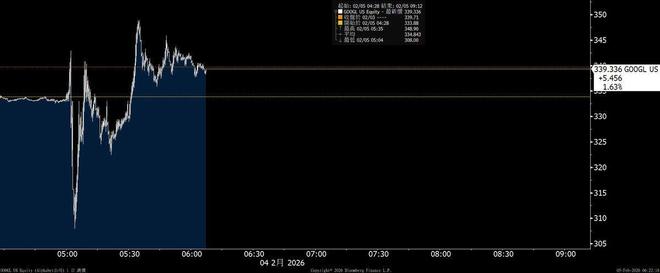
Alphabet收入1138.28亿美元,同比升18%,超预期的1114.3亿美元,纯利344.55亿美元,每股盈利2.82美 元,升31%,超预期的2.63美元。 谷歌母公司Alphabet去年第四季业绩披露,预期2026年的资本开支将达到1750亿至1850亿美元,以捕捉 AI投资与基础设施带动增长的机遇,金额较2025年大增91%-102%。盘后A股股价一度闪跌7.5%至308美 元,之后仅跌0.7%,报332美元。 ...
Baidu Announces New Share Repurchase Program and Dividend Policy
Prnewswire· 2026-02-05 01:00
Core Viewpoint - Baidu, Inc. has announced a new US$5 billion share repurchase program and the adoption of a dividend policy to enhance shareholder returns [1][4]. Share Repurchase Program - The Board has authorized a share repurchase program for up to US$5 billion, effective through December 31, 2028, with periodic reviews and potential adjustments [2][3]. - Repurchases may occur through open market transactions or other legally permissible means, subject to market conditions [4]. Dividend Policy - For the first time, Baidu has approved a dividend policy for its ordinary shares, which may include regular and/or special distributions [4][5]. - Future dividend distributions will be supported by sustainable funding sources, primarily from operating profits, and potentially supplemented by proceeds from non-core asset disposals [5]. - The Board expects to declare the first dividend payment in 2026, with the timing and amount subject to the Board's discretion based on various factors [6].

心智观察所:春节里一场不得不打、且必须此刻打响的战役
Guan Cha Zhe Wang· 2026-02-05 00:55
Core Insights - The article discusses the escalating competition among major Chinese tech companies in the AI space, particularly during the 2026 Lunar New Year, with significant financial investments aimed at capturing user engagement and establishing a dominant position in the AI ecosystem [1][2][7]. Group 1: Competitive Landscape - Major players like Alibaba, Tencent, Baidu, and ByteDance are investing heavily in AI initiatives, with Alibaba committing 30 billion yuan, Tencent 10 billion yuan, and Baidu 5 billion yuan for marketing during the Spring Festival, totaling over 45 billion yuan [1][5]. - The competition is not just about financial incentives but about establishing a "super entry point" for how users interact with machines and the digital world [1][2]. Group 2: Strategic Timing and User Engagement - The timing of this competition is critical, as the user base for generative AI in China surpassed 500 million by mid-2025, indicating a shift from niche interest to mainstream usage [5][6]. - The Spring Festival is seen as an optimal time for companies to introduce AI to a broad audience, leveraging the high engagement and willingness to try new technologies during this period [5][6]. Group 3: Differentiated Strategies - Alibaba's approach focuses on integrating its AI assistant "Qianwen" into its extensive commercial ecosystem, aiming to transition from mere conversation to transactional capabilities [8]. - Tencent aims to replicate its past success with WeChat by leveraging social networks to distribute its AI features, emphasizing user experience while evolving its ecosystem [9]. - ByteDance is taking a more aggressive stance by becoming the exclusive AI cloud partner for the CCTV Spring Festival Gala, positioning its AI assistant "Doubao" as a central figure in national interactions [10]. - Baidu's strategy involves embedding its AI features into its existing app, facilitating a seamless transition for users from traditional search to AI-driven interactions [11]. Group 4: Long-term Challenges - The competition is expected to extend beyond initial user acquisition to long-term user retention, with companies needing to ensure that AI becomes an integral part of daily life rather than just a seasonal novelty [12][13]. - The ultimate success will depend on the ability to create sustainable business models that convert user engagement into long-term value, as the industry currently relies heavily on substantial investments [12][13].


春节里一场不得不打、且必须此刻打响的战役
Guan Cha Zhe Wang· 2026-02-05 00:27
Core Insights - The article discusses the escalating competition among major Chinese tech companies in the AI space, particularly during the 2026 Lunar New Year, marking a shift from mobile payment to AI-driven interactions [1][3][10] - The total marketing expenditure by these companies for the New Year exceeds 4.5 billion yuan, indicating a significant investment in AI as a strategic priority [1][3] Group 1: Market Dynamics - The user base for generative AI in China surpassed 500 million by mid-2025, indicating a critical mass for widespread adoption [3] - The 2026 Lunar New Year is seen as an optimal time for companies to engage users and establish new habits, reminiscent of the 2015 WeChat red envelope phenomenon [3][4] - The competitive landscape is rapidly evolving, with shorter windows for technological advantage compared to previous eras [4] Group 2: Company Strategies - Alibaba's approach involves a record 3 billion yuan "Spring Festival invitation plan," integrating its AI assistant "Qianwen" into its extensive ecosystem, aiming to transition from mere conversation to transactional capabilities [5] - Tencent's strategy focuses on leveraging its social networks through a 1 billion yuan red envelope initiative, aiming to replicate past successes in user engagement [6] - ByteDance's strategy is more aggressive, positioning itself as the exclusive AI cloud partner for the CCTV Spring Festival, aiming to establish credibility and visibility for its AI capabilities [7] - Baidu's approach integrates its 500 million yuan red envelope initiative seamlessly into its existing app, promoting a smooth transition from traditional search to AI-driven interactions [8] Group 3: Future Challenges - The competition is shifting from user acquisition to ecosystem positioning, with a focus on real-world applications and user retention [9] - The sustainability of AI applications remains a critical concern, as companies must find viable business models beyond initial user engagement [10] - The ultimate success will depend on the ability to integrate AI into daily life, creating a robust and enduring ecosystem [10]

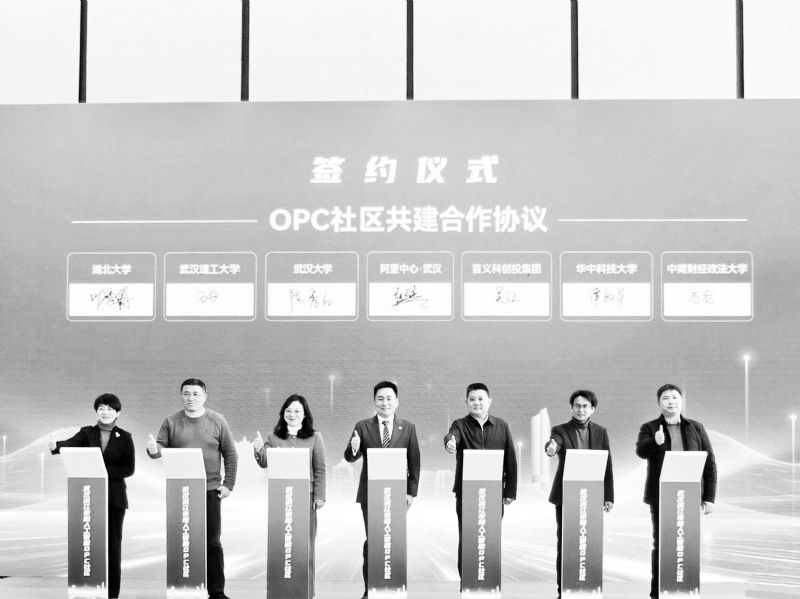
阿里携手湖北开启合作新征程 全省最大OPC社区落子武昌
Chang Jiang Shang Bao· 2026-02-05 00:18
Core Viewpoint - The establishment of the "Wuhan Binjiang Qincheng AI OPC Community" in collaboration with Alibaba Group marks a significant step in promoting the One Person Company (OPC) model, enabling individual entrepreneurs to leverage AI tools for innovation and profitability [3][4]. Group 1: OPC Community Development - The OPC community in Wuhan is set to become the largest in Hubei, with plans to exceed 4,000 square meters and provide over 400 shared workspaces by August 2026 [3]. - The community aims to inject new momentum into the AI industry development in Wuchang District, Wuhan City, and Hubei Province [3]. - The current shared workspace, Y/OUR SPACE, has nearly full occupancy with over 100 shared workstations, with 70% of tenants being typical OPCs, and more than 30% focusing on AI-related ventures [3]. Group 2: Strategic Collaboration - The collaboration involves the Wuchang District Economic and Technological Bureau, Wuhan Shiyi Innovation and Investment Group, and Wuhan Alibaba Center, each responsible for policy coordination, resource linkage, and capability provision [5]. - The government will coordinate resources such as venues, data, talent, and scenarios, while Alibaba will provide cloud services and community activities to support the OPC ecosystem [5]. - The partnership aims to create a robust service system that facilitates the rapid growth of entrepreneurs from initial ideas to successful businesses [4][5]. Group 3: Future Plans and Vision - Future plans include a larger shared office space exceeding 3,000 square meters with nearly 300 workstations and a 2,000 square meter shared conference room, expected to be completed by August 2026 [5]. - The initiative is seen as a key move for Wuchang to embrace the AI era and support the development of the digital economy, focusing on investing in human resources rather than just physical assets [6]. - The launch event included a call for applications from aspiring entrepreneurs to join the community, emphasizing the collaborative spirit and resource sharing [6].