
资本市场

Search documents
刘世锦:中国资本市场增量资金来源,或已发生转折性变化
券商中国· 2025-09-27 07:52
Core Viewpoint - China has accumulated a significant amount of social net wealth, and with low bank savings rates, the growth of net wealth can only be achieved through capital markets. This marks a transformative change in the sources of incremental funds for capital markets [1]. Group 1: Economic Challenges and Consumption - The Chinese economy has shown a recovery trend post-pandemic, achieving growth rates of 5.2% and 5% in the past two years, placing it among the leading global economies [2]. - The macroeconomic environment faces increasing pressure from declining demand, with the GDP deflator index experiencing negative growth for nine consecutive quarters. The shift in economic growth has moved from supply constraints to demand constraints, primarily due to insufficient consumption [2][3]. - There is a significant structural deviation in consumption, particularly in service consumption, which is lagging behind international averages. This deviation is attributed to various factors, including low levels of public services, urbanization challenges, income disparities, and a long-standing policy focus on investment over consumption [2][3]. Group 2: Structural Reforms to Boost Consumption - To effectively expand consumption, it is crucial to address the structural issues related to low consumption ratios. The focus should be on enhancing the consumption capacity of low-income groups, particularly in areas such as education, healthcare, housing, social security, and elderly care [4][5]. - Three key areas for structural reform are identified: 1. Addressing housing shortages for new urban residents, particularly migrant workers, through government initiatives to convert unsold properties into affordable housing [6]. 2. Reforming the rural pension system to significantly increase pension income for rural residents, thereby unlocking consumption potential for a large segment of the population [6]. 3. Promoting a new wave of urbanization by facilitating the smooth flow of production factors between urban and rural areas, which includes enhancing the market allocation of rural land resources [6]. Group 3: Financial Market Development - A strong financial market is essential for supporting both consumption and manufacturing sectors. The establishment of a robust monetary and capital market is necessary for fostering a consumption-driven economy [7][8]. - The capital market is expected to enter a new development phase, focusing on nurturing large-scale innovative enterprises and creating an attractive investment environment. This will enhance resource utilization efficiency and support pension expenditures in an aging society [8]. - A strategic shift towards balancing imports and exports is recommended, with an emphasis on increasing the internationalization of the Renminbi through substantial imports, thereby enhancing its status as a reserve currency [8].


资金“狂飙”流入,证券ETF(512880)规模超540亿元
Mei Ri Jing Ji Xin Wen· 2025-09-26 02:16
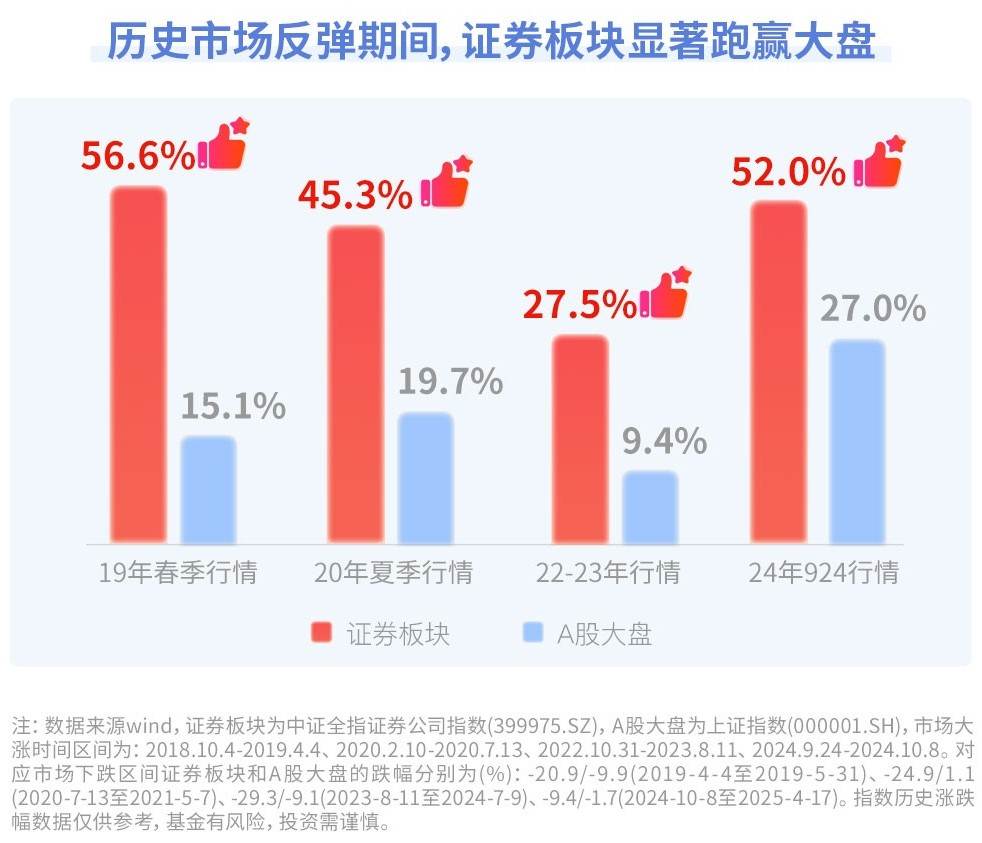
Core Viewpoint - Recent inflows into securities ETFs indicate strong investor interest, with over 22.1 billion yuan flowing into 19 ETFs tracking securities company indices in the past month, highlighting the sector's potential for recovery and growth [1][4]. Group 1: Market Performance - The largest securities ETF (512880) attracted nearly 10 billion yuan, bringing its total size to over 54 billion yuan, making it the largest among 13 similar ETFs [1][7]. - The securities sector has a strong beta attribute, with its performance closely tied to capital market trends, often outperforming the broader market during rebounds [1]. - Despite a relatively lower year-to-date increase, the securities sector has not yet surpassed the high point from last year's market rally on September 24 [1]. Group 2: Future Outlook - The valuation of the securities sector is expected to continue recovering, supported by active market transactions and improving fundamentals [4]. - In the first half of the year, 39 listed securities firms reported a total net profit of 102.1 billion yuan, a year-on-year increase of 63.1%, with a non-recurring profit increase of 51% [4]. - The third quarter is anticipated to show positive market trends, with the potential for earnings growth to exceed expectations due to a low performance base [4]. Group 3: New Opportunities - The development of stablecoins and virtual assets is expected to create new business opportunities for leading securities firms, particularly with the upgrade of licenses in Hong Kong [6]. - The frequency of mergers and acquisitions in the securities industry has increased since 2024, which may accelerate resource integration and improve profitability for listed companies [6]. - The securities ETF (512880) tracks the CSI All Share Securities Company Index, encompassing leading A-share brokerage firms, presenting potential investment opportunities for interested investors [6].
刘纪鹏:资本市场在等待年轻人,但“一定要控制好风险的比例”
Xin Lang Zheng Quan· 2025-09-25 09:54
Core Viewpoint - The A-share market is gradually showing a slow bull trend one year after the "924" policy was introduced, indicating that it remains a value investment opportunity [1] Group 1: Market Dynamics - The number of new stock accounts is increasing, with more "post-00s" and "post-10s" entering the market, suggesting a shift towards a younger investor base [1] - The A-share market is compared to the US market, where the US stock market recently reached a historical high of 46,000 points, while the A-share market's recent high was only about 3,899 points, highlighting a significant gap [2] - China's GDP growth rate is significantly higher than that of the US, which theoretically should allow for a higher price-to-earnings (P/E) ratio in the A-share market [2] Group 2: Valuation Insights - The current P/E ratio of the Shanghai Composite Index is approximately 15 times, while the overall market P/E ratio is around 30 times, including high-valuation sectors like the Sci-Tech Innovation Board and the Growth Enterprise Market [2] - The overall P/E ratio of the US stock market exceeds 30 times, particularly for high-performing stocks, indicating that A-shares could be undervalued [2] - Given China's economic growth potential, a P/E ratio below 40 times for A-shares is considered reasonable, with further upward potential [2] Group 3: Investment Considerations - The younger generation is encouraged to explore the capital market as a means to increase property income, but they must also be cautious of financial risks [2][3] - Historical experiences of successful investors often include significant risks, emphasizing the importance of risk management in capital market investments [2][3]

股民亏钱抵扣个税,赚钱交20%的所得税?吴晓求:保持政策的稳定性很重要
Feng Huang Wang Cai Jing· 2025-09-25 07:36
凤凰网财经讯9月23-24日,由凤凰卫视、凤凰网主办的"凤凰湾区财经论坛2025"在广州举行,本届论坛以"新格局·新路径"为主题,汇聚全球政商学界精英, 共同洞察变局脉络、探寻发展新机。 中国人民大学国家金融研究院院长、国家一级教授吴晓求 中国人民大学国家金融研究院院长、国家一级教授吴晓求出席本次论坛。就近期市场讨论"股民投资亏损可抵扣个人所得税,盈利则缴纳20%资本利得税"的 相关话题,他表示:"千万不要瞎提这些主意,这会严重损害资本市场发展的基石。提政策一定要慎重、要理性、要有逻辑,千万不能这么提"。 吴晓求表示,"目前市场采取的政策比较合适,财政政策的空间有限。我不希望这个市场的涨跌过度受所得税和印花税的影响,印花税保持现在这样的水平 非常好。至于其他的制度,我也不认为现在是合适的推出时机,希望这个市场的外部环境相对稳定"。 他强调,资本市场的良性发展需要可预期、稳定的外部环境,频繁的政策变动反而会扰乱市场信心和运行节奏。 中国政法大学商学院院长刘纪鹏也持相近观点。他认为,当前首要任务是提振股市活力。他指出,中国长期以来未开征资本利得税,根本原因在于市场长期 处于牛短熊长的状态,投资者盈利面较窄。 刘纪 ...

十大维度透视“十四五”资本市场新变化,这份“成绩单”亮眼!
Zhong Guo Zheng Quan Bao· 2025-09-24 03:32
Core Insights - The capital market reforms during the "14th Five-Year Plan" period have made significant progress, including the full implementation of the registration system for stock issuance and the enhancement of investor protection [1][3][21]. Group 1: Registration System Reform - The registration system reform has been deeply advanced, with total financing in the stock and bond markets reaching 57.5 trillion yuan, and the proportion of direct financing increasing by 2.8 percentage points to 31.6% compared to the end of the "13th Five-Year Plan" [3]. Group 2: Establishment of Beijing Stock Exchange - The China Securities Regulatory Commission (CSRC) has promoted the establishment of the Beijing Stock Exchange (BSE) to serve innovative small and medium-sized enterprises, with 276 companies currently listed on the BSE and over 14,000 companies served by the New Third Board [4][5]. Group 3: Market Stability and Investor Protection - The CSRC has prioritized maintaining market stability, implementing new policies and reforms in key areas such as issuance, listing, mergers and acquisitions, trading, and delisting [7][8]. - The cash dividends from A-share listed companies reached 10.6 trillion yuan over the past five years, which is 2.07 times the amount raised through IPOs and refinancing during the same period [8]. Group 4: Support for Technological Innovation - Over 90% of newly listed companies during the "14th Five-Year Plan" period are high-tech enterprises, with strategic emerging industries now accounting for over half of the A-share market [10]. - The market capitalization of technology companies among the top 50 companies has increased from 18 to 24 since the end of the "13th Five-Year Plan" [11]. Group 5: Growth of ETF Products - The number of listed ETFs has grown from 370 to 1,282, with total assets increasing from 1.1 trillion yuan to over 5 trillion yuan, making it the largest ETF market in Asia [14]. Group 6: Long-term Capital Inflows - By the end of August this year, various long-term funds held approximately 21.4 trillion yuan of A-share circulating market value, a 32% increase compared to the end of the "13th Five-Year Plan" [15]. Group 7: High-level Opening Up - The capital market has seen significant progress in high-level institutional opening up, with the number of foreign-controlled institutions increasing and the investment scope for qualified foreign institutional investors expanding [21][22][23]. - By the end of August 2025, 907 foreign institutions had obtained qualified foreign institutional investor status, holding a total of 949.3 billion yuan [26].
资本市场从规模驱动迈向质量驱动
Shang Hai Zheng Quan Bao· 2025-09-23 18:04
Group 1 - The core viewpoint emphasizes the importance of attracting and retaining long-term capital in creating a high-quality market ecosystem, with regulatory measures aimed at addressing the imbalance between short-term assessments and long-term goals [1] - The China Securities Regulatory Commission (CSRC) has implemented a series of policies to enhance the weight of long-term assessments for state-owned insurance companies and to shift pension fund evaluations from current yield to cumulative yield over three years, thereby promoting active engagement of long-term capital [1] - As of August 2025, the market value of A-shares held by long-term capital is projected to reach 21.4 trillion yuan, reflecting a 28% increase from the beginning of the year [1] Group 2 - The active participation of private equity and venture capital funds is highlighted as a significant aspect of the optimized investment environment during the 14th Five-Year Plan period, with these funds supporting early-stage innovation [2] - By the end of Q2, the scale of private equity and venture capital funds in China reached 14.4 trillion yuan, with 74% of investments directed towards small and medium-sized enterprises and 50% towards high-tech enterprises [1][2] - The optimization of the investment environment is seen as a release of institutional dividends, with measures such as the establishment of the Sci-Tech Innovation Board and improvements in the ETF product ecosystem enhancing market attractiveness [2] Group 3 - The CSRC is focusing on improving the quality of listed companies through a new three-year action plan aimed at combating financial fraud and enhancing corporate governance [3] - Since the beginning of 2023, there has been a one-third increase in the number of financial fraud leads reported, and companies have been mandated to repurchase shares in cases of illegal selling [3] - The reforms are creating a virtuous cycle of resource allocation efficiency, with significant advancements in sectors like artificial intelligence and commercial aerospace, and the ETF market becoming the largest in Asia [3]
从10.6万亿元“红包”看A股新生态
Zheng Quan Ri Bao· 2025-09-23 16:20
Core Viewpoint - The awareness of listed companies in China regarding returning value to investors has significantly increased during the "14th Five-Year Plan" period, with a total of 10.6 trillion yuan distributed through dividends and buybacks, representing an over 80% increase compared to the "13th Five-Year Plan" period, and equivalent to 2.07 times the amount raised through IPOs and refinancing during the same period [1] Group 1: Policy Ecosystem - The explosive growth in dividends and buybacks is attributed to systematic upgrades in the capital market's foundational systems during the "14th Five-Year Plan" period [2] - The regulatory framework has shifted from sporadic encouragement to a comprehensive institutional framework, including restrictions on major shareholders' sell-offs for companies with low or no dividends [2] - Policies have evolved from merely requiring returns to facilitating and cultivating a culture of returns, establishing a solid institutional foundation for a normalized dividend mechanism [2] Group 2: Listed Company Ecosystem - The concept of sharing profits has transitioned from merely accumulating funds, with dividends moving from passive compliance to active return [3] - In 2024, nine companies are expected to distribute over 50 billion yuan in dividends, and 33 companies over 10 billion yuan, indicating a significant increase in dividend scale [3] - The behavior of listed companies has evolved, with a notable increase in share buybacks aimed at enhancing per-share earnings, reflecting a collective awareness among companies regarding shareholder value [3] Group 3: Investor Ecosystem - The surge in dividends and buybacks corresponds with a shift in investor structure and philosophy, with a growing preference for high-dividend assets [4] - Investors are increasingly focused on returns, prompting companies to establish long-term shareholder return plans with higher-than-historical dividend rates [4] - The transformation from speculative trading to value sharing has led to a more rational market environment, enhancing the stability of the capital market [4]
“9·24新政”一周年:资本市场生态焕新 托举千万家庭财富梦
Mei Ri Jing Ji Xin Wen· 2025-09-23 15:57
Group 1 - The A-share market has experienced a strong rebound driven by a series of policy reforms known as the "9.24" new policy, which aims to reshape the ecological structure of China's capital market [1] - The new policy focuses on enhancing investor confidence through comprehensive reforms in investment, financing, and corporate governance, positioning the capital market as a "new reservoir" for safeguarding residents' wealth [1] - By January 2025, a multi-department plan will be implemented to encourage long-term funds, such as insurance and pension funds, to enter the market, indicating a shift from policy text to market momentum [1] Group 2 - The financing sector has seen revitalization through optimized review rules, supporting 230 major asset restructurings in one year, which aids in the integration of listed companies [2] - The introduction of the "Technology Board" in the bond market has opened new financing channels for innovative enterprises, particularly in sectors like chips, biomedicine, and new energy, fostering a positive cycle of industry-market-resident wealth growth [2] - The implementation of new delisting regulations aims to enhance the overall quality of listed companies by removing "zombie" firms and improving investor protection, thereby increasing the value of quality stocks and funds held by residents [2] Group 3 - The transformation of the capital market from a speculative to a value-oriented market reflects a commitment to an investor-centric approach, allowing ordinary people to share in economic growth and achieve asset preservation and appreciation [3] - The capital market serves not only as a financial platform but also embodies the aspirations of millions of families for a better life [3]
怎么看?吴清总结资本市场“十四五”成就;怎么干?专家建言“十五五”发力方向
Zhong Guo Jing Ying Bao· 2025-09-23 04:00
Core Insights - During the "14th Five-Year Plan" period, China's capital market has achieved steady quantitative growth and effective qualitative improvement, laying a solid foundation for high-quality development in the "15th Five-Year Plan" period [1][2] Group 1: Achievements in the Past Five Years - The China Securities Regulatory Commission (CSRC) has made significant progress in risk prevention, strong regulation, and promoting high-quality development, contributing to a stable market environment [2][3] - Key achievements include notable improvements in institutional construction and regulatory reforms, a more comprehensive multi-level market system, enhanced service capabilities for technological innovation, and increased market resilience and risk resistance [2][3] - The implementation of the new Securities Law and the introduction of over 60 supporting rules have established a robust legal framework for the capital market, addressing long-standing institutional shortcomings [2][3] Group 2: Regulatory Environment - The CSRC has maintained a high-pressure regulatory stance, with a total of 2,214 administrative penalties issued during the "14th Five-Year Plan," amounting to 41.4 billion yuan, reflecting a 58% increase in the number of penalties and a 30% increase in the amount compared to the "13th Five-Year Plan" [6][7] - The regulatory framework has been enhanced to include a comprehensive system for tackling financial fraud, market manipulation, and insider trading, thereby improving market transparency and ecological health [6][7] Group 3: Future Directions - In the "15th Five-Year Plan" period, the CSRC aims to deepen comprehensive reforms in investment and financing, enhancing the adaptability and inclusiveness of foundational systems, market functions, and regulatory enforcement [8][9] - Recommendations for the future include solidifying the institutional foundation for investment and financing coordination, enhancing the attractiveness and competitiveness of the capital market, and promoting a multi-level capital market system [8][9] - There is a focus on improving the regulatory framework to address new challenges and optimizing the market's foundational systems and regulatory logic to better serve technological self-reliance and the construction of a modern industrial system [9][10]
月日国新会点评:政策定调明朗,股指震荡上行可期:发布会核心要点:从成就总结到改革深化的政策信号
Chang Jiang Qi Huo· 2025-09-23 03:00
Report Industry Investment Rating No relevant content provided. Core View of the Report The report suggests that the stock index (centered on the Shanghai Composite Index) will consolidate in the short term and show a clear upward trend in the long term. Attention should be paid to the traction of structural forces on the index weights [17]. Summary by Related Catalogs 1. Press Conference Core Points: Policy Signals from "Achievement Summary" to "Reform Deepening" (1) Five - year Report Card of "Stable Quantity and Improved Quality" in the Capital Market - **Mature institutional system**: With the new Securities Law as the core, relevant regulations have been implemented, and the legal foundation for the capital market has been solidified [2]. - **Deepened multi - level market**: Reforms in the Sci - tech Innovation Board, ChiNext, and the high - quality expansion of the Beijing Stock Exchange have improved the multi - level market system, with 964 futures and options varieties covering major industries [2]. - **Coordinated investment and financing functions**: In the past five years, equity and bond financing totaled 57.5 trillion yuan, and the direct financing ratio increased to 31.6%. Over 90% of newly listed companies are technology - related, and the market value of the technology sector in A - shares exceeds 1/4 [2]. - **Enhanced market resilience**: The annualized volatility of the Shanghai Composite Index dropped to 15.9%, and the total market value of A - shares increased by 10 trillion yuan in the past year [4]. - **Effective supervision**: Fines for illegal activities increased by 30% compared to the "13th Five - Year Plan", and regulatory measures such as delisting and mergers have maintained market order [4]. (2) Expansion of the "Circle of Friends" in Reform and Opening - up: Full - chain Breakthroughs from the Financing End to the Investment End - **Investment end**: By the end of the month, long - term funds held 21.4 trillion yuan of A - share floating market value, a 32% increase from the end of the "13th Five - Year Plan" [5]. - **Financing end**: The registration system has been fully implemented, and reforms on the Sci - tech Innovation Board have improved resource allocation efficiency [5]. - **Quality of listed companies**: Dual - wheel drive of information disclosure and governance, and active mergers and acquisitions have improved the overall quality of listed companies [5]. - **Open end**: Foreign ownership restrictions have been lifted, and the internationalization of the capital market has increased, with foreign investors holding 3.4 trillion yuan of A - share market value [5]. (3) Current Policy Tone The regulatory authorities focus on "long - term healthy and stable" development, emphasizing zero - tolerance for violations and leaving room for subsequent policies, which helps stabilize market expectations [7]. 2. Market Reaction and Short - term Logic - **Policy expectation shift**: The market is expected to enter a consolidation phase as there is no strong stimulus, and the index is at a relatively high level [9]. - **Technology and high - end manufacturing as the main lines**: The market has responded to policies supporting technology, making the technology sector a core area for long - term capital allocation [10]. - **Limited short - term incremental funds**: Long - term funds prefer to "buy on dips", and short - term incremental funds mainly come from portfolio rebalancing [11]. 3. Long - term Outlook - **Resilient economic fundamentals**: New economic drivers such as high - tech manufacturing will improve corporate profitability and support the stock index [13]. - **Adequate policy tools**: The regulatory authorities have a mechanism to stabilize the market, and global liquidity improvement will enhance the attractiveness of RMB assets [14]. - **Deepened capital market reform**: The capital market's "market - oriented, legal, and international" level has been improved, and foreign investors' willingness to allocate A - shares will increase [15]. 4. Overall Judgment - **Short - term**: The Shanghai Composite Index is expected to consolidate around 3800 points, with a fluctuation range of 3700 - 3900 points [17]. - **Long - term**: Driven by economic fundamentals, policies, and reforms, the stock index has an upward trend [18].