
国际贸易

Search documents
截至2025年9月19日,美元兑人民币最新汇率解读
Sou Hu Cai Jing· 2025-09-21 20:01
Core Viewpoint - The recent depreciation of the US dollar against the Chinese yuan, with the exchange rate reaching 7.11 yuan per dollar, indicates a shift in purchasing power favoring the yuan, impacting consumer behavior and economic opportunities [1][2][3]. Currency Exchange Impact - The current exchange rate allows consumers to purchase imported goods at lower prices, enhancing the affordability of overseas products such as electronics and cosmetics [3][4]. - A specific example illustrates that a $500 headphone, previously costing approximately 3,650 yuan at a 7.3 exchange rate, now costs about 3,555 yuan at the new rate, saving consumers nearly 100 yuan [4]. Opportunities for Travelers and Students - The favorable exchange rate presents economic advantages for students and travelers planning to study or travel abroad, as they can obtain more local currency for the same budget, thus covering more expenses [5][7]. Business and Investment Considerations - For businesses, particularly export-oriented companies, the appreciation of the yuan may reduce revenue when converted to yuan, necessitating hedging strategies to mitigate potential profit losses [7][9]. - Conversely, import-oriented businesses may benefit from lower procurement costs, enhancing profitability [7]. Future Exchange Rate Observations - Key indicators to monitor for future exchange rate trends include China's economic performance metrics such as GDP growth, export figures, and consumer market vitality, which could influence the yuan's strength [11]. - The US Federal Reserve's monetary policy, especially interest rate adjustments, will significantly impact the dollar's value [11]. - Global market dynamics, including stock market fluctuations and geopolitical tensions, may also affect short-term exchange rate movements [11].

蓝厅观察丨全球动荡之下 东盟选择看向中国
Yang Shi Xin Wen Ke Hu Duan· 2025-09-21 01:46
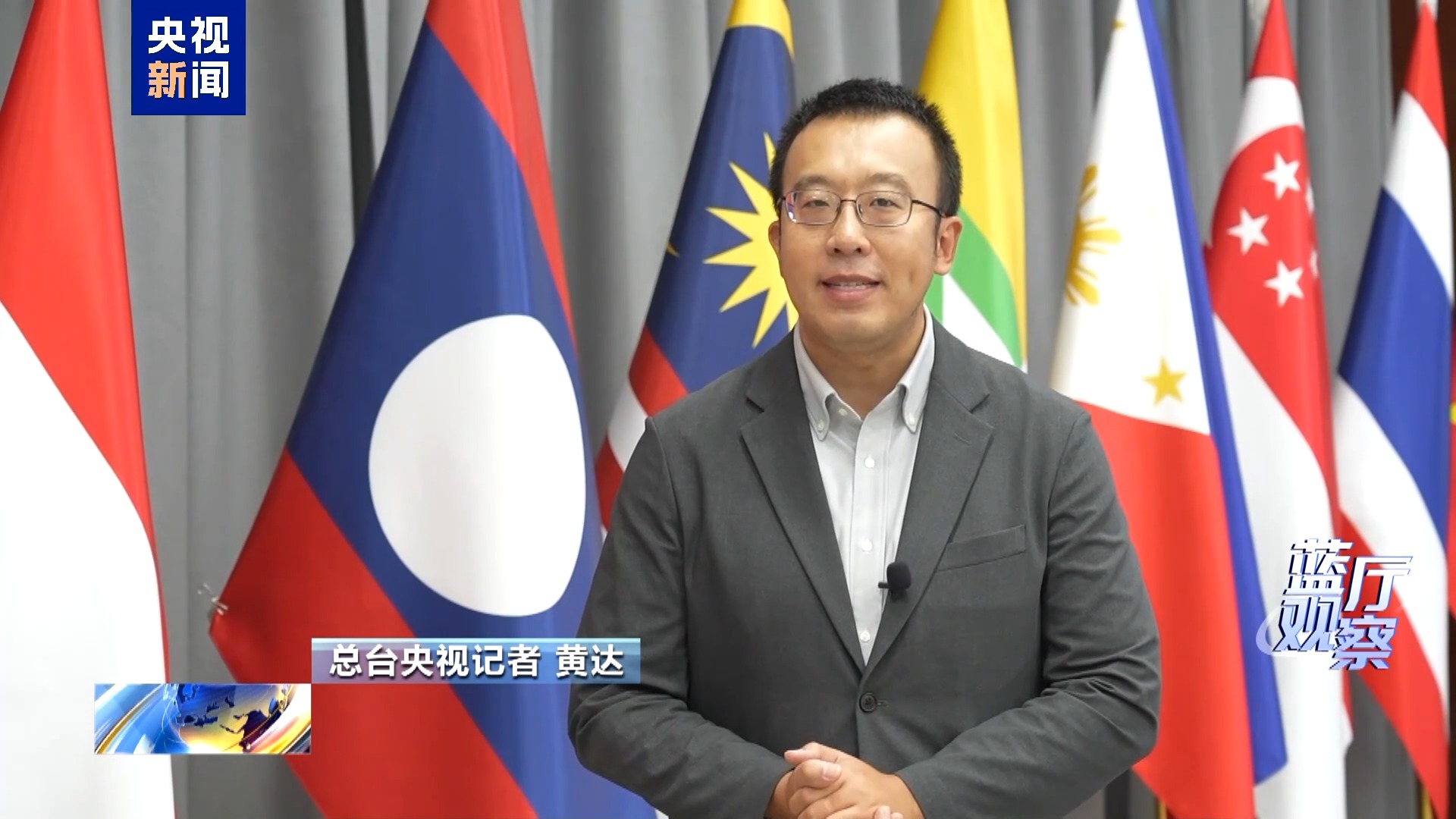
Core Insights - The China-ASEAN Expo has seen over 260,000 visitors on its first public day, reflecting the growing interest in China-ASEAN cooperation [1][3] - The expo features participation from 45 countries and regions, with over 3,000 enterprises showcasing their offerings, indicating a robust trade and investment environment [3] - China has maintained its position as ASEAN's largest trading partner for 16 consecutive years, with ASEAN being China's largest trading partner for five years [5] Trade and Economic Cooperation - In the first eight months of this year, trade between China and ASEAN reached a historical high, driven by China's technological and production advantages in sectors like equipment manufacturing and renewable energy [5][7] - The ongoing collaboration in emerging fields such as digital economy, artificial intelligence, and green technology is enhancing the synergy between China and ASEAN [7][12] Strategic Partnerships and Initiatives - The establishment of the China-ASEAN Free Trade Area 3.0 and the implementation of the Regional Comprehensive Economic Partnership (RCEP) are key milestones in deepening economic ties [12][20] - ASEAN Secretary-General emphasized the importance of shared prosperity and the need for continued cooperation to address challenges, highlighting the extensive cooperation mechanisms between ASEAN and China [11][20] Regional Stability and Development - The collaboration between China and ASEAN is seen as a stabilizing force in the region, promoting peace and prosperity amid global uncertainties [12][20] - Initiatives such as the China-ASEAN Railway and the Jakarta-Bandung High-Speed Railway are examples of practical measures enhancing regional connectivity and economic growth [16] Future Outlook - The new five-year action plan between China and ASEAN aims to strengthen cooperation in areas of mutual interest, contributing to regional peace and sustainable development [20] - The focus on cooperation over confrontation and the commitment to open and inclusive partnerships are expected to set a new standard for regional collaboration [20]
南共市同欧洲自由贸易联盟签署自贸协定
Shang Wu Bu Wang Zhan· 2025-09-20 04:16
Core Points - The signing of a free trade agreement between Mercosur and the European Free Trade Association (EFTA) marks a significant step in expanding Brazil's trade agreement network [1] - Mercosur and its member countries reaffirm their support for rules-based trade amidst challenging international conditions, aiming to help domestic companies expand their markets [1] - In 2023, Mercosur has already signed a free trade agreement with Singapore and completed negotiations for a free trade agreement with the European Union, with plans to sign it later this year [1] - Brazil is committed to quickly concluding negotiations with the UAE, resuming talks with Canada, and expanding existing agreements with Mexico and India [1]
中国将与东南亚扩充自贸协定
日经中文网· 2025-09-20 00:33
Core Viewpoint - ASEAN has become China's largest export destination, with an expanded free trade agreement focusing on nine key areas including digital trade and renewable energy to counteract U.S. tariff measures [2][5][6]. Group 1: Free Trade Agreement Expansion - The free trade agreement between China and ASEAN, effective since 2005, has reduced tariffs and is now being expanded to include digital trade, renewable energy, and streamlined customs procedures [4][5]. - The digital trade aspect aims to digitize settlement and documentation processes, enhancing system interoperability and infrastructure [4][5]. - China is accelerating the expansion of its Cross-Border Interbank Payment System (CIPS) to increase the use of the Renminbi in settlements within ASEAN [4][5]. Group 2: Renewable Energy and Customs Procedures - The agreement will expedite transactions related to new energy vehicles, including electric vehicles (EVs) and photovoltaic power generation, while increasing investments in these sectors [5]. - A new mechanism will be introduced to allow trade applications to be processed at a single window, simplifying customs procedures [5]. Group 3: Trade Dynamics and U.S. Tariffs - As of August 2025, trade between China and ASEAN is projected to account for 17% of China's total trade, remaining above the levels of 2024 [8]. - In response to U.S. tariffs, China is enhancing "roundabout exports" through ASEAN, where components are sent to ASEAN for assembly before being exported to the U.S. [8]. - ASEAN countries are also looking to strengthen ties with China to offset the impact of U.S. tariffs, with some countries seeking to increase exports to China as a substitute for the U.S. market [8].
成都“一带一路”供应链海外服务站将增至20个 五大洲都有蓉企“娘家人”
Sou Hu Cai Jing· 2025-09-19 20:24
Group 1 - Chengdu has established 30 "Belt and Road" supply chain service stations, including 14 overseas stations, with plans to build 6 more this year to enhance support for enterprises going global [1] - The State Council has emphasized the need to improve the overseas comprehensive service system to support enterprises in international cooperation and competition [1] - Chengdu initiated the "Belt and Road" supply chain service station construction last year, providing a "one-stop" service for local enterprises to expand internationally [1] Group 2 - The Wanxiang Supply Chain Service Station facilitated a cooperation agreement worth over 100 million RMB between a local company and a Laotian group, marking a breakthrough in export business for the company [2] - The service station has helped local companies connect with overseas resources and demands, resulting in over 4 million RMB in export revenue last year [2] - The service station is also promoting the establishment of an export center for Sichuan products in Vientiane and assisting in building a medical training branch with the Laotian Ministry of Health [3] Group 3 - The "Belt and Road" supply chain service stations provide essential services such as resource connection, logistics organization, and policy consultation, reducing costs and risks for enterprises going abroad [4] - A local international trade company has successfully resolved logistics challenges through the service station, enhancing its export capabilities to Central Asia [4] - The establishment of a new multi-modal transport route has reduced transportation time for agricultural products from Chengdu to Russia by one-third, facilitating increased exports [5] Group 4 - The number of overseas service stations is set to increase to 20 by the end of the year, covering all five continents and enhancing the overseas comprehensive service system [6] - The service stations operate with a model of "5 centers + 1 station," providing effective matching services for domestic and foreign enterprises [6] - The service stations have already facilitated 5 major categories and 10 subcategories of trade opportunities, resulting in an additional trade volume of 500 million RMB [7]
世贸组织总干事伊维拉:多边主义受到打击,但还活着
Sou Hu Cai Jing· 2025-09-19 11:46
Core Points - The global trade system has been impacted by unilateral tariff actions from the United States, yet it retains a resilient multilateral core [3][7][8] - Ngozi Okonjo-Iweala, the first female and African Director-General of the WTO, emphasizes the need for reform and addressing key issues within the organization [5][9] - The WTO's Fisheries Subsidies Agreement, which took 21 years to negotiate, has recently come into effect, marking a significant achievement for multilateral trade [7][8] Group 1: Current Trade Environment - The WTO predicts a 0.9% growth in global merchandise trade for the year, a decrease from the pre-tariff forecast of 2.7% [8] - Despite challenges, approximately 72% of global trade is still conducted under WTO rules, down from 80% before the tariffs [7][8] Group 2: Reform and Challenges - Reform is identified as a critical task for the WTO, with a focus on addressing member concerns regarding fairness, transparency, and inclusivity in the trade system [9][10] - The decision-making process within the WTO, which requires consensus among all 166 members, is a significant point of contention, often hindering timely decisions [10] Group 3: Dispute Resolution Mechanism - The WTO's dispute resolution mechanism remains operational despite the suspension of the appellate body since 2019, with ongoing consultations for 16 cases [11][12] - A temporary multilateral appeal arrangement (MPIA) has been established by several members to address the lack of functioning appellate judges, covering 57.6% of global trade [12]

2025年上半年泰国自由贸易协定贸易额近450亿美元
Shang Wu Bu Wang Zhan· 2025-09-18 16:41
Core Insights - Thailand's trade benefits under free trade agreements (FTAs) are expected to expand significantly in the first half of 2025, with a total utilization value of $44.79 billion, accounting for 79.6% of eligible FTA trade, marking a 10.2% increase compared to the same period last year [1] FTA Utilization Rankings - The top five FTAs by utilization amount are: - ASEAN Trade in Goods Agreement (ATIGA): $15.73 billion, utilization rate of 68% [1] - ASEAN-China Free Trade Agreement (ACFTA): $12.62 billion, utilization rate of 93% [1] - ASEAN-India Free Trade Agreement (AIFTA): $5.53 billion, utilization rate of 75% [1] - Thailand-Japan Economic Partnership Agreement (JTEPA): $3.18 billion, utilization rate of 77% [1] - Thailand-Australia Free Trade Agreement (TAFTA): $2.75 billion, utilization rate of 58% [1] Popular Products under FTAs - The five most popular products under FTAs driving Thailand's exports are fresh durians, motor vehicles, synthetic rubber, unrefined platinum, and sugar, which continue to support Thailand's export growth in various markets [1]
中马“两国双园”探索构建更为紧密的跨境产业链供应链
Zhong Guo Xin Wen Wang· 2025-09-18 12:42
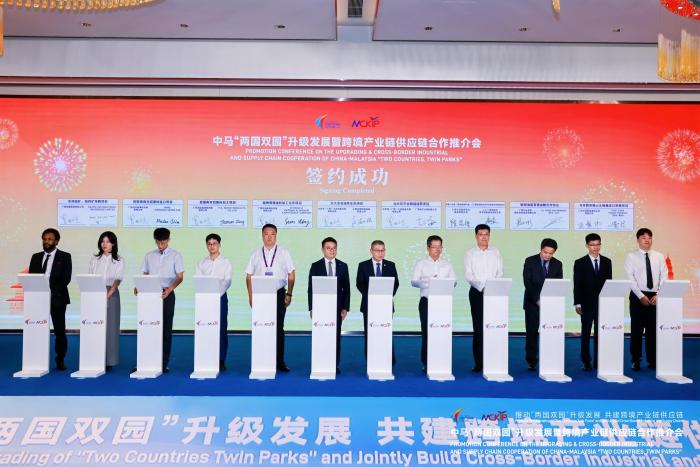
Core Viewpoint - The "Two Countries, Twin Parks" initiative between China and Malaysia is advancing towards a more integrated cross-border industrial and supply chain, with significant investment commitments and international collaboration [1][3]. Investment and Projects - A total of 50 investment projects and cooperation agreements were signed during the promotion conference, with a total investment exceeding 42.4 billion RMB [1]. - The projects span various sectors including artificial intelligence, food processing, international trade, port logistics, new energy materials, and equipment manufacturing [1][3]. International Collaboration - The initiative has attracted investors from various regions including Asia and Africa, indicating a shift from bilateral to multilateral cooperation [3]. - The "Two Countries, Twin Parks" platform is expanding its international cooperation network, marking a new phase of deep integration in the industrial and supply chain [3]. Historical Context - The China-Malaysia Qinzhou Industrial Park and Malaysia-China Kuantan Industrial Park are recognized as the world's first international "sister parks," pioneering the establishment of national-level industrial parks between China and ASEAN countries [3][4]. - Over the past decade, both parks have facilitated significant projects, creating complementary cross-border industrial chains in sectors such as bird's nest, palm oil, recycled metals, and new chemical materials [3][4]. Economic Impact - As of mid-2023, the Qinzhou Industrial Park has attracted 373 projects with a cumulative industrial output value of 121 billion RMB, while the Kuantan Industrial Park has signed 16 projects with an output value exceeding 100 billion RMB [4]. Future Developments - The current phase of the "Two Countries, Twin Parks" initiative focuses on quality enhancement, including strengthening industrial layout, accelerating smart port and customs construction, and innovating supply chain financial services [4]. - The integration of artificial intelligence into industrial development is a key focus, with several AI-related projects already established in the Qinzhou Industrial Park [4].
海南亭云国际贸易有限责任公司成立 注册资本100万人民币
Sou Hu Cai Jing· 2025-09-18 11:44
Group 1 - Hainan Tingyun International Trade Co., Ltd. has been established with a registered capital of 1 million RMB [1] - The legal representative of the company is Zhang Chenghua [1] - The company's business scope includes tea product production, food internet sales, food sales, import and export of goods, and technology import and export [1] Group 2 - The company is also involved in investment activities using its own funds, conference and exhibition services, and sales of agricultural products [1] - Additional activities include tea planting, wholesale and retail of edible agricultural products, tea utensils sales, daily necessities sales, and trade brokerage [1] - The company operates under a general business scope that allows it to conduct activities autonomously, as per the regulations [1]
Unlike EU and Japan, India refused U.S. demands for a unilateral trade deal in July: Former diplomat
Youtube· 2025-09-18 08:33
Group 1 - The mixed messaging between the US and India is part of the negotiation process, aimed at stabilizing the relationship despite existing differences [1][4] - The US and India have maintained various cooperative efforts, including the 2+2 meetings and military exercises, indicating a commitment to their partnership [2][6] - India is recognized as a crucial partner for the US in technological competition against China, with a significant presence of global capability centers in India [3][9] Group 2 - The geopolitical and domestic political factors are increasingly influencing trade talks between the US and India, moving beyond purely economic considerations [8][10] - The US aims to reorder global supply chains due to concerns over manufacturing concentration in China, which holds 18% of global GDP and 32% of manufacturing value added [9][10] - The India-US trade agreement is viewed as balanced, contrasting with other US agreements that have been perceived as unilateral concessions [12]