基建

Search documents
周期ETF单周吸金77亿元 机构:“反内卷”反转行情待验证
2 1 Shi Ji Jing Ji Bao Dao· 2025-07-30 11:09
Group 1 - The "anti-involution" policy is driving significant inflows into cyclical theme ETFs, with notable net inflows of over 18 billion yuan for Penghua Chemical ETF, 14 billion yuan for Guotai Steel ETF, and 13 billion yuan for GF Infrastructure 50 ETF from July 21 to July 29 [1][4] - The performance of cyclical theme ETFs has been outstanding, with rare earth ETFs and rare metals ETFs returning 42% and 36% year-to-date, respectively, leading the industry theme ETFs [1][3] - The recent market performance indicates a structural market shift, with traditional industries like coal and steel, as well as emerging sectors like photovoltaics and electric vehicles, benefiting from the "anti-involution" policy [1][7] Group 2 - Major industry indices such as steel, building materials, and non-ferrous metals have seen significant increases, with the steel index rising by 20.39% and the building materials index by 14.46% over the past month [2] - Several ETFs, including rare earth ETFs and steel ETFs, have shown impressive returns, with some rare earth ETFs exceeding 25% returns in the last month [3][4] - The "anti-involution" policy aims to optimize market competition and is expected to create a long-term mechanism for enterprise transformation, moving away from simple administrative interventions [5][6] Group 3 - The sustainability of the "anti-involution" market trend is still under observation, with analysts suggesting that if demand-side policies are insufficient, the current trend may only represent a temporary rebound [7] - The market performance will vary across sectors, with traditional industries like steel and coal having clearer capacity constraints, while emerging sectors like photovoltaics will need to demonstrate technological advancements [8] - Investment opportunities are identified in cyclical stocks at the bottom of their cycles, particularly in steel and cement, as well as in leading companies in chemical, non-ferrous, and machinery sectors that can benefit from improved industry dynamics [9][10]
贵司是否涉及工程咨询服务及基建能力?苏州高新:公司不涉及相关业务
Mei Ri Jing Ji Xin Wen· 2025-07-30 10:56
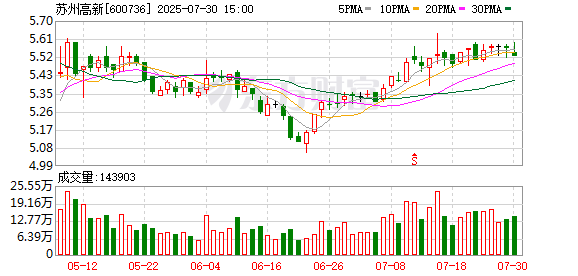
每经AI快讯,有投资者在投资者互动平台提问:贵司是否涉及工程咨询服务及基建能力? 苏州高新(600736.SH)7月30日在投资者互动平台表示,公司不涉及相关业务。 (文章来源:每日经济新闻) ...


财税观察:基建投资增速放缓系短期扰动 四季度有望显著加速
Zheng Quan Shi Bao Wang· 2025-07-29 23:55
对外经济贸易大学国家对外开放研究院研究员陈建伟判断,本轮基建投资的承压状态预计在三季度末将 有明显改善,四季度在资金和项目双重驱动下,有望迎来一轮显著的加速,以确保完成全年经济稳定增 长的目标。 在受访专家看来,极端天气与价格因素阶段性影响基建投资增速,上半年财政对基建投资的支持力度相 对近年偏弱。随着下半年财政加大稳增长力度,新一批的重大项目开工,叠加新型政策性金融工具等增 量政策的支持,基建投资增速仍将保持韧性。 人民财讯7月30日电,今年上半年,国家统计局统计口径下的狭义基础设施建设投资(不含电力、热力、 燃气及水生产和供应业)同比增长4.6%,较前5个月回落1个百分点。6月基建投资增速的放缓成为拉低上 半年增速的主因,多个基建高频指标同步走弱。 ...
基建投资增速放缓系短期扰动,四季度有望显著加速
Sou Hu Cai Jing· 2025-07-29 23:30
Core Viewpoint - In the first half of the year, infrastructure investment in China showed a year-on-year growth of 4.6%, but this was a decline of 1 percentage point compared to the first five months, with a slowdown in June being the main contributor to the overall decrease in growth [1] Group 1: Infrastructure Investment Performance - The infrastructure investment growth rate has slowed down, primarily due to extreme weather and price factors impacting the investment pace [1] - The support from fiscal policies for infrastructure investment has been relatively weaker compared to previous years in the first half of the year [1] Group 2: Future Outlook - Experts believe that with increased fiscal efforts to stabilize growth in the second half of the year, new major projects will commence, supported by new policy financial tools and other incremental policies, which will help maintain resilience in infrastructure investment growth [1]
绿地控股集团股份有限公司 2025年第二季度基建业务经营情况简报
Zheng Quan Ri Bao· 2025-07-29 23:19
Group 1 - The company guarantees that the announcement content does not contain any false records, misleading statements, or major omissions, and assumes legal responsibility for its authenticity, accuracy, and completeness [1] - The announcement includes the new project situation of the company's infrastructure business for the second quarter of 2025, indicating that there may be discrepancies between the operational data and the data disclosed in periodic reports due to various uncertainties [2] - The announcement is made by the board of directors of Greenland Holdings Group Co., Ltd. on July 30, 2025, providing a summary of new projects for the first half of 2025 [2] Group 2 - The new project situation is categorized by business segments and regional segments for both the second quarter and the cumulative data for January to June 2025 [2]

基建投资增速放缓系短期扰动 四季度有望显著加速
Zheng Quan Shi Bao· 2025-07-29 21:59
今年上半年,国家统计局统计口径下的狭义基础设施建设投资(不含电力、热力、燃气及水生产和供应 业)同比增长4.6%,较前5个月回落1个百分点。6月基建投资增速的放缓成为拉低上半年增速的主因, 多个基建高频指标同步走弱。 专项债支持传统基建比例下降 基建投资由政府主导。上半年,全国发行新增地方政府专项债券2.16万亿元,同比增长45%,发行使用 进度明显加快。为何较大规模的新增专项债券未能支撑6月基建投资增速走稳?浙商证券(601878)宏 观联席首席分析师廖博向记者指出,6月基建投资增速回落主要系置换债券发行高峰已过,叠加城投债 净融资偏低和天气因素扰动,导致基建分项中公共设施管理业(市政工程)增速继续回落,拖累狭义基 建增速。 实际上,前4个月地方政府债券发行主要以置换债券为主,5月新增专项债券发行虽然开始提速,但廖博 指出,专项债券资金拨付到项目开工环节、项目申报发行环节,均有可能出现暂时性的堵点,对实物工 作量的产出造成影响。 在受访专家看来,极端天气与价格因素阶段性影响基建投资增速,上半年财政对基建投资的支持力度相 对近年偏弱。随着下半年财政加大稳增长力度,新一批的重大项目开工,叠加新型政策性金融工具等 ...
亚洲联合基建控股(00711)7月29日斥资32.16万港元回购74.8万股
智通财经网· 2025-07-29 11:38
智通财经APP讯,亚洲联合基建控股(00711)发布公告,于2025年7月29日斥资32.16万港元回购股份74.8 万股。 ...
亚洲联合基建控股7月29日斥资32.16万港元回购74.8万股
Zhi Tong Cai Jing· 2025-07-29 11:36
亚洲联合基建控股(00711)发布公告,于2025年7月29日斥资32.16万港元回购股份74.8万股。 ...
建材、建筑及基建公募REITs周报(7月19日-7月25日):《价格法》修正草案征求意见,反内卷政策持续深化落实-20250729
EBSCN· 2025-07-29 05:03
2025 年 7 月 29 日 行业研究 《价格法》修正草案征求意见,反内卷政策持续深化落实 ——建材、建筑及基建公募 REITs 周报(7 月 19 日-7 月 25 日) 要点 《价格法》修正草案征求意见,反内卷相关政策持续深化落实。24 年 7 月中央 政治局会议首次提出防止"内卷式"恶性竞争以来,相关政策持续深化落实。24 年 12 月中央经济工作会议亦提出综合整治"内卷式"竞争,规范地方政府和企 业行为;25 年 3 月政府工作报告指明要综合整治"内卷式"竞争;7 月 1 日中 财委第六次会议再次强调,依法依规治理企业低价无序竞争,引导企业提升产品 品质,推动落后产能有效退出;在 7 月 16 日-17 日中央企业负责人研讨班上, 国资委提出国资央企要超越内卷竞争维护产业价值;7 月 18 日国新办新闻发布 会上,工信部表示,近期将陆续发布新一轮钢铁、有色金属、石化、建材等十大 重点行业稳增长具体工作方案,推动重点行业着力调结构、优供给、淘汰落后产 能;在 7 月 23 日-24 日地方国资委负责人研讨班上,国资委强调要带头抵制"内 卷式"竞争,加强重组整合;7 月 24 日《中华人民共和国价格法修 ...
年中财政的观察和思考——上半年财政数据点评
一瑜中的· 2025-07-28 15:53
Core Viewpoint - The article discusses the fiscal performance in the first half of the year, highlighting strong fiscal spending but a general lack of perceived impact on the economy, suggesting a need for targeted policies to enhance the effectiveness of fiscal measures [5][10][34]. Group 1: Fiscal Strength in the First Half - The broad fiscal expenditure growth rate in the first half of the year was 8.9%, exceeding the annual target growth rate of approximately 3.4% to 5.1% [5][18]. - The fiscal strength observed in the first half is considered the strongest since 2022, with historical comparisons showing varied growth rates from 2018 to 2024 [5][18]. Group 2: Perception of Fiscal Impact - Despite strong fiscal spending, the perceived impact on the economy was limited, attributed to insufficient project construction despite rapid government debt issuance [6][10]. - The net financing of government bonds reached 7.69 trillion yuan in the first half, marking a 55.5% progress rate, the highest since 2022 [6][20]. Group 3: Government Debt Structure - The structure of government debt issuance showed a preference for special refinancing bonds (90%) over general bonds and special bonds for project construction, which were lower at 47.5% and 49.1% respectively [7][22]. - The issuance of special bonds for project capital was 191.7 billion yuan, a 16% increase year-on-year, but significantly lower than the overall growth of special bonds [7][23]. Group 4: Fiscal Expenditure Structure - Fiscal expenditure focused on technology and livelihood, with infrastructure spending declining by 5.5% [8][26]. - Public fiscal expenditure growth rates were 9.2% for science and technology, 6.4% for livelihood, and negative for infrastructure [8][26]. Group 5: Credit Expansion and Local Government Actions - Local credit expansion showed a contraction in major provinces, indicating a cautious approach to financing [9][31]. - The reduction in the number of financing platforms was noted, which supports the transformation of these platforms towards more sustainable financing models [9][32]. Group 6: Outlook for the Second Half - The focus for the second half of the year is on incremental policies, with expectations of improved fiscal perception due to new policy tools and project support [10][35]. - Historical patterns suggest that when fiscal revenues fall short, incremental policies are typically introduced to compensate [13][41]. Group 7: June Fiscal Data Review - In June, fiscal revenue showed a slight decline of 0.3%, with tax revenue increasing for three consecutive months, driven by specific sectors like transportation and scientific research [15][46]. - Government fund income growth was notably high at 20.8%, primarily due to increased land sales [15][66].