
氢能

Search documents
镇海政府深度参与!2025年势银氢燃年会迎3大重磅升级
势银能链· 2025-12-23 03:24
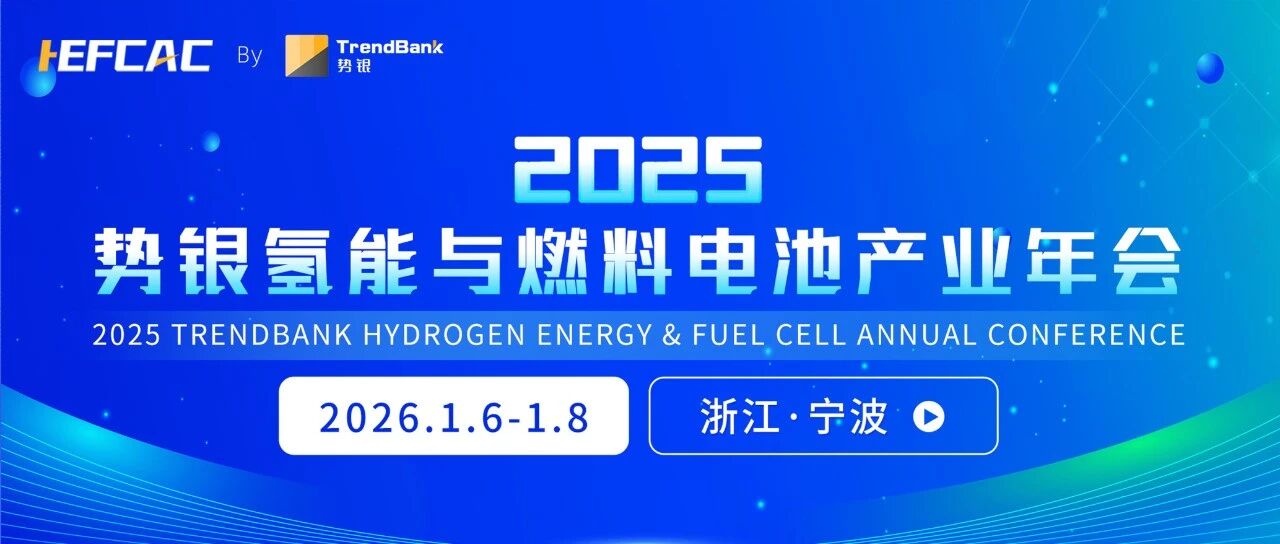
Core Viewpoint - The article discusses the upcoming "2025 TrendBank Hydrogen Energy and Fuel Cell Industry Annual Conference" scheduled for January 6-8, 2026, in Ningbo, highlighting its upgraded format to include government participation and enhanced collaboration opportunities in the hydrogen energy sector [1][2]. Group 1: Conference Details - The conference will take place at the Ningbo Nanyuan Wanghai Hotel, with an expected attendance of over 400 participants [3]. - The event will feature a new name and theme, focusing on policy insights and collaboration in the hydrogen energy industry [1][2]. - Key activities include a government-led hydrogen industry promotion, project roadshows, and various forums addressing industry challenges and solutions [2][3]. Group 2: Organizational Structure - The conference is organized by TrendBank and the Zhentai District People's Government, with support from various local institutions and companies [5][6]. - Notable co-organizers include the Ningbo Institute of Materials Technology and Engineering and several industry-related enterprises [6]. Group 3: Conference Agenda - The agenda includes a series of forums and discussions on topics such as fuel cell supply chains, hydrogen storage and transportation, and the latest research reports on hydrogen energy [9]. - Special events include a hydrogen industry tour and a friendly football match to promote networking among participants [9][10]. Group 4: Registration and Pricing - The registration fee is set at RMB 2,500 per person, with early bird discounts available [10]. - Accommodation options are provided at the conference hotel, with rates starting at RMB 340 per room [10].

注资1亿元!又一氢能公司成立
Qi Cha Cha· 2025-12-23 01:34
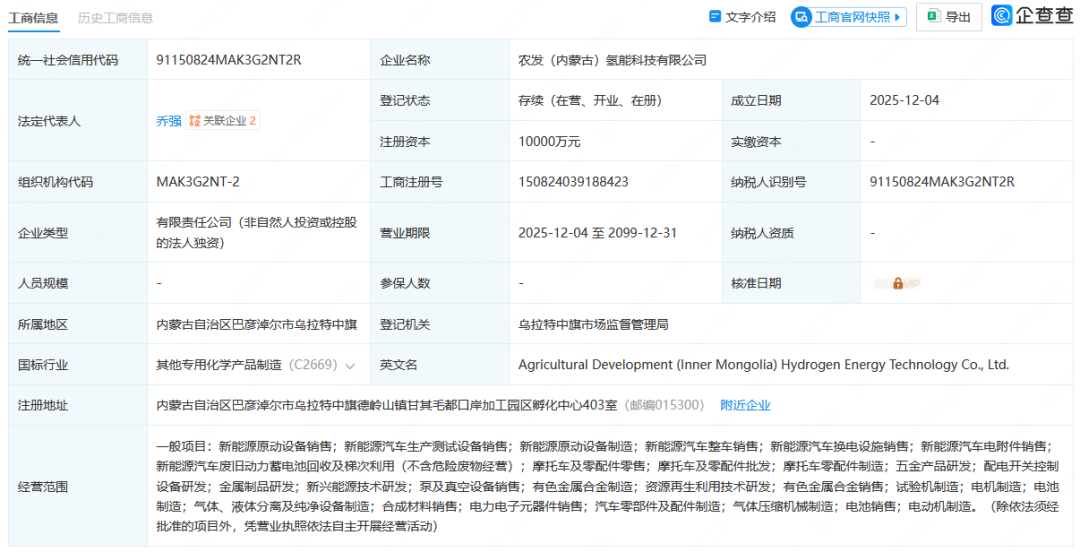
Core Viewpoint - The establishment of Agricultural Development (Inner Mongolia) Hydrogen Energy Technology Co., Ltd. marks a significant step in the hydrogen energy sector, with a registered capital of 100 million yuan and full ownership by Agricultural Development Urban Construction Development (Xining) Co., Ltd. [1][2] Company Information - Agricultural Development (Inner Mongolia) Hydrogen Energy Technology Co., Ltd. was founded on December 4, 2025, with a registered capital of 100 million yuan [1][2] - The company is fully controlled by Agricultural Development Urban Construction Development (Gansu) Group Co., Ltd., which is under the China Agricultural Industry Development Fund Co., Ltd. [2] Project Development - On December 19, 2025, the company announced a new construction project for the production of alloy solid-state hydrogen storage materials [4] - The project was officially registered on December 18, 2025, and has been approved as compliant with industry policies and market access standards [5][9] - The total investment for the project is approximately 353.4 million yuan, with 70.68 million yuan from self-funding and 282.72 million yuan from bank loans [5][9] - The project is set to be constructed over a period from March 2026 to May 2027, with a total building area of 114,196 square meters and a planned annual production capacity of 15,000 tons of alloy solid-state hydrogen storage materials [5][9] Project Specifications - The production facility will include 8 production workshops, waste storage, finished product storage, raw material storage, and various utility facilities [5][9] - The manufacturing process will utilize over ten types of metals and non-metals, including lanthanum, magnesium, nickel, cobalt, and titanium, with an environmentally friendly approach that generates no waste [5][9]
2025年全球氢能指南报告(英文版)-麦肯锡
Sou Hu Cai Jing· 2025-12-23 00:36
Core Insights - The report indicates that the global clean hydrogen industry has transitioned from an initial hype phase to a more mature phase focused on practical implementation, driven by policy support and demand certainty [1][4][22] Investment and Project Scale - Global clean hydrogen investments have surpassed $110 billion, increasing by $35 billion from the previous year, with a compound annual growth rate exceeding 50% [1][22][29] - There are over 1,700 clean hydrogen projects globally, with 510 projects having reached final investment decision (FID), under construction, or operational [1][22][29] - The cumulative committed capacity has reached 6 million tonnes per year (mtpa), with 1 mtpa already operational [22][31] Regional Development Disparities - China leads in renewable hydrogen electrolysis deployment, accounting for 55% of global committed capacity, with project sizes significantly larger than those in Europe and North America [2][39] - North America dominates low-carbon hydrogen production, holding 85% of global capacity, supported by low-cost natural gas and existing infrastructure [2][39] - Europe is expected to account for 65% of global policy-driven demand by 2030, although it currently relies on smaller domestic projects [2][41] Demand Dynamics - Traditional sectors such as refining and ammonia production currently dominate hydrogen demand, with 70% of the 360 mtpa of binding offtake secured in these areas [3][34] - By 2030, demand in key markets could reach 8 mtpa, with additional potential demand of 1,300 mtpa if infrastructure and cost reductions are achieved [3][34][25] Challenges and Success Factors - The industry faces challenges including high project cancellation rates, policy delays, and rising financing costs, with over 50 projects canceled in the past 18 months [3][23] - Successful projects typically exhibit six key characteristics, including strategic location, optimized capital expenditure, and strong policy support [3][4] Future Trends - The industry is expected to see a continued maturation of project pipelines, with a mix of successful project launches and the elimination of less viable projects [4][24] - Demand is anticipated to extend from traditional sectors to emerging applications, with policy implementation and infrastructure development being critical for growth [4][62]

攀枝花发布氢能“三份清单” 拟采购700辆氢能公交车
Xin Lang Cai Jing· 2025-12-22 23:03
Group 1 - The core message of the conference is the promotion of the hydrogen energy industry in Panzhihua, highlighting its potential for investment and development [1] - Panzhihua has significant renewable resources for low-cost green hydrogen production and a large demand for hydrogen in transportation and industrial sectors [1] - The local government has established a 3 billion yuan green low-carbon industry fund and a 20 million yuan special fund for hydrogen industry development to support enterprises [1] Group 2 - The newly released industrial policy list focuses on reducing hydrogen costs, expanding application promotion, equipment manufacturing, and technological innovation [1] - A notable announcement during the conference was the commitment to procure 700 hydrogen-powered buses, indicating strong governmental support for hydrogen energy initiatives [1]
“青氢一号”首航!探秘全球最大氢氨醇项目如何“链”接绿色未来
中国能源报· 2025-12-22 14:24
Core Viewpoint - The article emphasizes the emergence of a new era of green energy, driven by the dual carbon goals and the need for a reliable replacement of fossil fuels, with hydrogen energy being a key solution [5][6][7]. Group 1: Hydrogen Energy as a Solution - Hydrogen energy is identified as a crucial element in addressing the dual challenges of energy security and green transition [6][7]. - The launch of the world's largest integrated green hydrogen and ammonia project in Songyuan marks a significant step towards transforming natural energy into green hydrogen [9]. Group 2: Technological Innovations - The project employs a "wind-solar-storage-hydrogen-ammonia matching optimization technology," which involves extensive system simulations to ensure economic viability and reliability over decades [12][14]. - A "green electricity exclusive fast track" is established, ensuring that 100% of the electricity used for hydrogen production comes from renewable sources [19]. Group 3: Flexible Production Capabilities - The introduction of "green flexible hydrogen synthesis technology" allows for a production load adjustment range of 30%-110%, enabling the system to respond to fluctuations in renewable energy supply [21][23]. - This flexibility allows for continuous production even when renewable energy sources are variable, marking a breakthrough in chemical production [21][23]. Group 4: System Integration and Efficiency - The "scale-up wind-solar-storage-hydrogen-ammonia integrated control technology" acts as a central brain, coordinating thousands of devices for optimal operation [25][28]. - The project achieves significant green benefits, producing 666 tons of liquid ammonia daily and reducing carbon emissions by approximately 1,967 tons per day, equivalent to the carbon sequestration of 29,400 acres of forest [29]. Group 5: Broader Implications and Future Outlook - The company has over 50 "Qing Hydrogen No. 1" projects planned across the country, indicating a robust national strategy for hydrogen energy development [29]. - The vision is to create a leading brand in green hydrogen, contributing to a zero-carbon future and positioning China as a key player in global energy transition [38][40].

比黄金还猛!它,身价为何能一年翻倍?
Xin Lang Cai Jing· 2025-12-22 10:57
Core Insights - The spot platinum price has surpassed $2000 per ounce for the first time since 2008, with a cumulative increase of over 120% in 2025, significantly outpacing gold [1][7]. Group 1: Factors Driving Platinum Price Surge - The surge in platinum prices is attributed to a "triple resonance" of industrial demand expectations, supply-demand gaps, and financial attributes [2][8]. - Industrial demand is the cornerstone of the price increase, driven by the hydrogen energy sector, where platinum is essential for hydrogen production, storage, and utilization [2][8]. - The automotive industry's recovery, particularly in fuel vehicles, has also contributed to stable platinum demand, with increased platinum load in catalysts and a rise in light vehicle production [2][8]. Group 2: Supply-Demand Dynamics - A significant supply-demand gap supports the price increase, with approximately 70% of global platinum production coming from South Africa, where production is constrained by underinvestment, power shortages, aging infrastructure, and extreme weather [2][8]. - The World Platinum Investment Council (WPIC) reports a projected global platinum supply of 45.3 tons in Q1 2025, a 10% year-on-year decline, with an expected annual shortfall of about 20 tons [2][8]. Group 3: Financial Market Influences - Financial attributes have amplified the price increase, with expectations of Federal Reserve interest rate cuts and global liquidity easing driving funds into precious metals [3][9]. - Platinum's long-standing valuation gap compared to gold has attracted significant capital inflows, further supported by the launch of domestic platinum and palladium futures [3][9]. Group 4: Future Outlook and Key Indicators - Key indicators to monitor for platinum price trends include South African monthly production and power supply data, global hydrogen electrolyzer and fuel cell vehicle installations, Federal Reserve interest rate movements, and London platinum leasing rates [4][11]. - The core logic supporting platinum price increases remains unchanged, with persistent supply pressures and strong demand growth expected in the hydrogen sector and traditional automotive catalyst markets [4][11]. Group 5: Impact on Downstream Industries - The sharp rise in platinum prices has led to differentiated impacts on downstream industries, particularly in automotive manufacturing, jewelry, and hydrogen chemical sectors [6][12]. - In the automotive sector, rising platinum costs will increase production costs for fuel vehicles, potentially adding hundreds of dollars per vehicle for companies without hedging measures [6][12]. - Jewelry manufacturers face raw material cost pressures, with larger brands better positioned to manage costs compared to smaller ones, which may lead to market consolidation [6][12]. - In the hydrogen and chemical industries, rising platinum costs will increase marginal production costs, potentially delaying the launch of smaller projects, although major companies may manage these costs effectively due to the irreplaceable nature of platinum catalysts [6][12].
比黄金还猛,它,身价为何能一年翻倍?
3 6 Ke· 2025-12-22 10:12
供需缺口是铂金价格大涨的重要支撑。全球铂金产量高度集中,约70%的铂金产自南非,不过该国矿山 因长期投资不足、电力供应短缺、基础设施老化以及极端天气影响,产量严重受限。世界铂金投资协会 (WPIC)的数据显示,2025年第一季度全球铂金总供应量为45.3吨,同比下降10%,预计2025年全年缺口 高达约20吨。 本轮铂金价格的史诗级上涨并非单一因素主导,而是工业需求爆发预期、供需缺口支撑与金融属性助推 的"三重共振"结果。 工业需求构成铂金价格大涨的核心基石。随着全球能源转型加速推进,氢能产业发展为铂金需求提供了 强大支撑。铂金作为质子交换膜电解槽和燃料电池的关键催化剂,在制氢、储氢和用氢全产业链中发挥 着不可替代的作用。随着各国氢能战略的落地实施,相关领域对铂金的需求呈现快速扩容态势。根据香 橙会研究院的预测,到2030年,中国氢能领域的铂族金属使用量将达到近8吨,其中铂仍然将是主要使 用材料。与此同时,汽车工业的持续复苏也为铂金需求提供了稳定支撑,燃油车催化剂铂载量的提升与 轻型车产量的回升共同推动了铂金工业需求的增长。 金融属性则起到了放大效应。在美联储降息预期升温、全球流动性宽松的背景下,黄金价格持续 ...
新旧动能加速转换,科技企业如何拥抱AI时代
第一财经· 2025-12-22 10:12
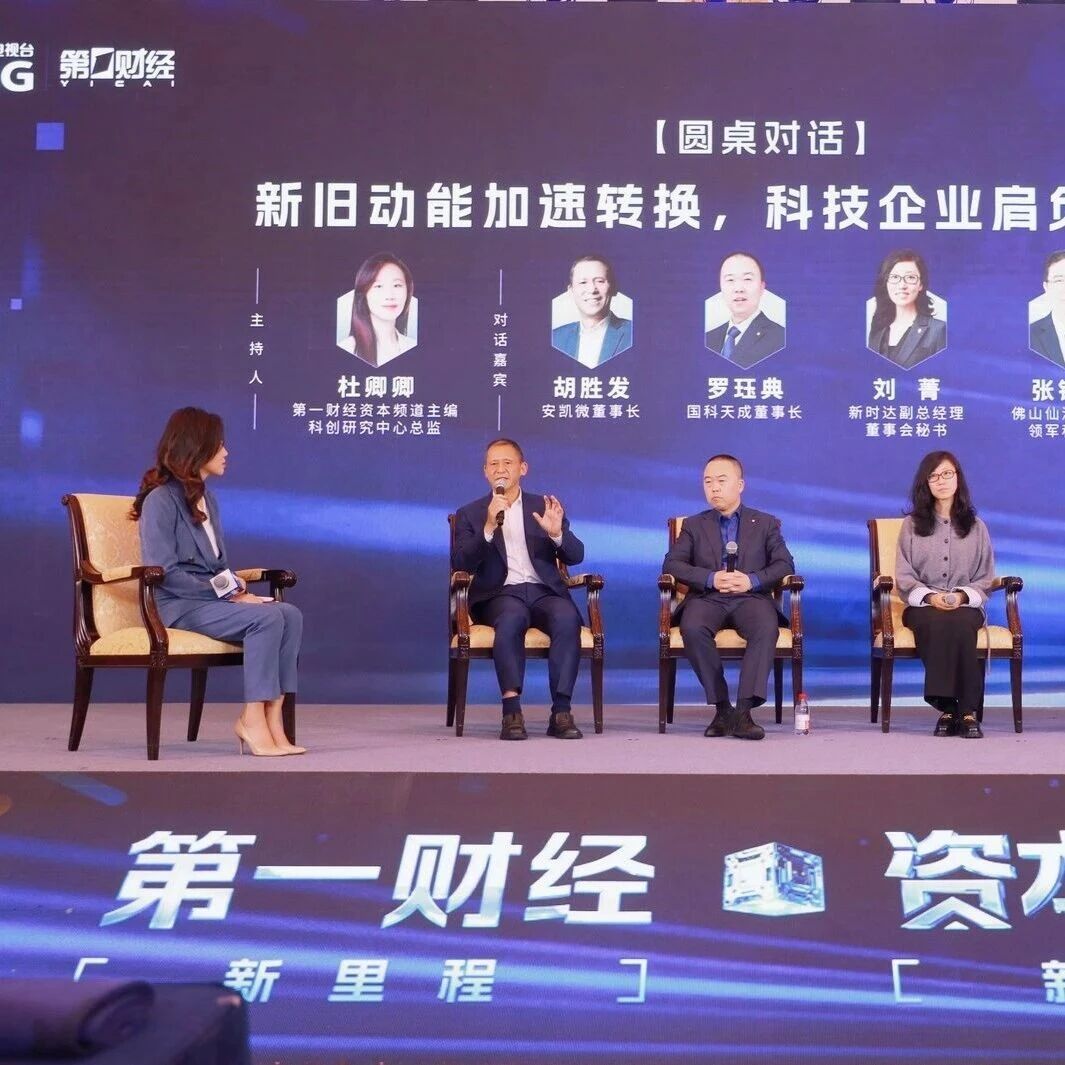
Core Viewpoint - Innovation is the lifeline for technology companies and a new mission to serve national strategies, with a focus on fostering new momentum in line with national policies [1] Group 1: Opportunities in Technology Innovation - The current era presents unprecedented policy opportunities for technology companies, emphasizing the need for innovation and investment [5] - Three major opportunities for technology companies include: 1. Transitioning from domestic substitution to leading internationally, with nearly 600 companies listed on the Sci-Tech Innovation Board [6] 2. The rise of local technology talent due to ongoing reforms and investments in the tech sector [6] 3. Increased policy support for companies going global, whether through business expansion or overseas listings [6] Group 2: Perspectives on AI and Market Dynamics - There is a debate on whether AI has a bubble; however, some experts believe that AI is just beginning, with potential for significant growth in the future [3][13] - The importance of distinguishing between large and small AI models is highlighted, with small models showing clear benefits in industrial efficiency [15] - The AI industry is expected to follow a cycle of volatility, consolidation, and resurgence, similar to trends seen in the electric vehicle market [16] Group 3: Capital and Investment Strategies - Continuous innovation requires both policy and capital support, with a focus on long-term investment strategies from both entrepreneurs and investors [10] - Companies need to build a systematic risk management and value expression framework to gain capital recognition, referred to as the "capital strategy diamond model" [12] - The current market offers many innovative startups with strong potential for mergers and acquisitions, presenting opportunities for strategic partnerships [11]
中国旭阳集团(01907)氢能业务:全链闭环释放系统竞争优势
智通财经网· 2025-12-22 09:23
Core Viewpoint - The company, China Xuyang Group, is making significant advancements in its hydrogen energy business, leveraging a comprehensive "production-storage-transportation-refueling-application" model to establish a leading position in the industry, with projected hydrogen sales expected to grow by 15%-20% in 2025 compared to 2014 [1] Group 1: Production and Supply Chain - The company has established four high-purity hydrogen production bases in Datong, Xingtai, Tangshan, and Hohhot, with a total capacity of 34 tons per day, focusing on low-cost, high-quality hydrogen supply for North China [1] - A comprehensive "gas hydrogen + liquid hydrogen" storage and transportation network is being developed, with a hydrogen supply capacity of 5.3 tons per day and a liquid hydrogen demonstration project nearing completion [1] Group 2: Application and Market Integration - The company has successfully launched hydrogen heavy-duty truck freight lines in key areas such as Dingzhou to Xinjikou, Tangshan, and Tianjin Port, and has collaborated with strategic partners to deploy hydrogen buses and sanitation vehicles in Dingzhou [2] - The hydrogen energy business is providing a replicable and scalable solution for the green transformation of industries in the Beijing-Tianjin-Hebei region, establishing itself as a benchmark for low-carbon development [3] Group 3: Research and Development - The company has established a hydrogen energy research institute and laboratory to address key challenges in core material production and the high cost of renewable hydrogen production, enhancing the competitiveness of its entire hydrogen energy chain [2] - The company is actively involved in drafting national hydrogen energy standards, contributing practical experience and systematic recommendations to promote healthy industry development [2] Group 4: Strategic Expansion and Collaboration - The company is aligning its hydrogen energy business with national energy strategies, expanding into green hydrogen, green ammonia, and green methanol sectors, and participating in regional renewable energy consumption [4] - A significant breakthrough in hydrogen liquefaction technology has been achieved, with the establishment of China's first integrated hydrogen production, storage, transportation, and refueling demonstration project [4] Group 5: Value Creation and Ecosystem Development - The company is converting industrial by-product hydrogen into high-purity hydrogen, creating a synergistic effect in the chemical sector to assist clients in their low-carbon transitions [6] - The company aims to build a comprehensive hydrogen energy ecosystem, enhancing its competitive edge through a networked layout and diversified applications [7]
中国旭阳集团氢能业务:全链闭环释放系统竞争优势
Zhi Tong Cai Jing· 2025-12-22 09:21
Core Viewpoint - The company, China Xuyang Group, is making significant advancements in its hydrogen energy business, leveraging a comprehensive approach across the entire hydrogen value chain, which is expected to solidify its leading position in the industry by 2025 with a projected 15%-20% increase in hydrogen sales volume compared to 2024 [1] Group 1: Business Operations - The company has established itself as the second-largest high-purity hydrogen production and supply base in China, focusing on the integration of production, storage, transportation, refueling, and research [2] - It has built four high-purity hydrogen production bases with a total capacity of 34 tons per day, utilizing by-product hydrogen from coking processes to meet the hydrogen demand in North China [2] - The company is developing a comprehensive storage and transportation network for both gaseous and liquid hydrogen, with a transportation capacity of 5.3 tons per day and a liquid hydrogen demonstration project nearing completion [2] Group 2: Application and Market Integration - The company has successfully launched hydrogen heavy-duty truck freight routes in key areas and has partnered with strategic allies to deploy hydrogen buses and sanitation vehicles, promoting a virtuous cycle of production and application [2][4] - The hydrogen energy business aligns with national energy strategies, contributing to the development of integrated bases for wind, solar, hydrogen, and ammonia [5] Group 3: Research and Development - The company has established a hydrogen energy research institute to address key challenges in core material production and the high costs of renewable hydrogen production, enhancing the competitiveness of its entire hydrogen value chain [3] - It is actively involved in drafting national hydrogen energy standards, contributing practical experience and recommendations to promote healthy industry development [3] Group 4: Environmental Impact and Sustainability - The company's hydrogen energy practices provide a replicable solution for industrial green transformation in the Beijing-Tianjin-Hebei region, establishing it as a benchmark for low-carbon industrial development [4] - The company aims to create a comprehensive hydrogen energy ecosystem that enhances its competitive edge and supports the transition to a low-carbon economy [8]