资本市场

Search documents
数说“十四五”丨国新办举行新闻发布会介绍“十四五”时期金融业发展成就
Yang Guang Wang· 2025-09-23 01:25
Group 1 - The core viewpoint of the news is that during the "14th Five-Year Plan" period, China's financial sector has achieved significant accomplishments, with a stable financial system and improved financial services for the real economy [1] - As of June 2023, China's banking sector total assets reached nearly 470 trillion yuan, ranking first in the world; the stock and bond market sizes rank second globally; and foreign exchange reserves have maintained the world's largest position for 20 consecutive years [1] - The average annual growth rates for loans to technology-based SMEs, inclusive finance for small and micro enterprises, and green loans exceeded 20% during the "14th Five-Year Plan" period [1] Group 2 - Over the past five years, the banking and insurance sectors have provided an additional 170 trillion yuan in funding to the real economy through various means such as credit, bonds, and equity [1] - The average annual growth rates for loans in scientific research technology, medium to long-term loans for manufacturing, and infrastructure loans were 27.2%, 21.7%, and 10.1%, respectively [1] - The capital market is accelerating its service to technological innovation, with the market capitalization of the A-share technology sector exceeding 25% [2] - The number of technology companies among the top 50 by market capitalization in the A-share market increased from 18 at the end of the "13th Five-Year Plan" to 24 currently [2]
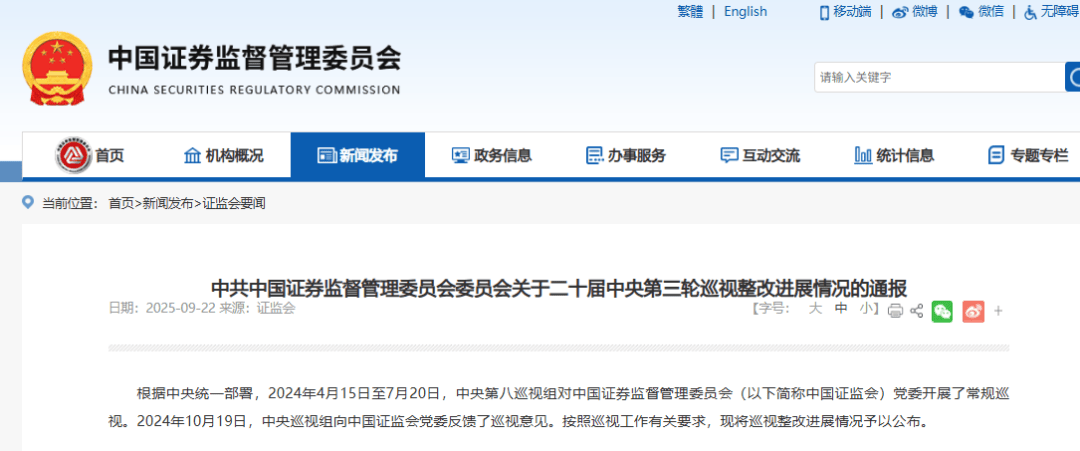
证监会、沪深交易所,最新发布
Sou Hu Cai Jing· 2025-09-23 00:21
Core Viewpoint - The China Securities Regulatory Commission (CSRC), Shanghai Stock Exchange (SSE), and Shenzhen Stock Exchange (SZSE) have released updates on the progress of the third round of inspections by the 20th Central Committee, emphasizing the importance of continuous reform and improvement in the capital market [1][3][4]. Group 1: Regulatory Reforms - The CSRC aims to deepen reforms in the Sci-Tech Innovation Board, ChiNext, and Beijing Stock Exchange, enhancing the issuance and listing mechanisms to cultivate patient capital [4][5]. - The focus is on accelerating the implementation of comprehensive capital market reforms, particularly in service to new productive forces and expanding the multi-level bond market [4][5]. Group 2: Risk Management and Supervision - There is a commitment to enhance risk resolution and regulatory enforcement capabilities, promoting the entry of various long-term funds into the market and improving the effectiveness of inspections [5][6]. - The establishment of a comprehensive regulatory system covering "entry—ongoing supervision—exit" is emphasized to better manage daily oversight and enforcement [5][6]. Group 3: Party Leadership and Governance - The importance of maintaining the Party's comprehensive leadership over the capital market is highlighted, with a focus on implementing Xi Jinping's thoughts and directives [4][8]. - The SSE and SZSE are tasked with ensuring that the Party's leadership is integrated into all aspects of market policy formulation, regulatory enforcement, and internal governance [8][12]. Group 4: Long-term Rectification and Accountability - The exchanges are required to develop long-term mechanisms for rectification, ensuring that reforms are sustained and effective over time [6][10]. - Regular assessments of completed and ongoing rectification tasks will be conducted to prevent regression and ensure accountability [6][10]. Group 5: Development of Investment Channels - The SZSE emphasizes the need to develop equity funds and facilitate channels for long-term capital to enter the market, supporting the growth of quality technology innovation enterprises [11][12]. - The focus is on maintaining a stable market environment and enhancing the quality and investment value of listed companies [12][13].

21社论丨金融服务实体经济质效齐升,积极助力高质量发展
2 1 Shi Ji Jing Ji Bao Dao· 2025-09-22 23:41
Core Insights - The financial sector in China has achieved significant accomplishments during the "14th Five-Year Plan" period, focusing on high-quality service for economic and social development, deepening financial reforms, and enhancing governance capabilities [1][4] - By June 2023, China's banking sector total assets reached nearly 470 trillion yuan, ranking first globally, with stock and bond market sizes ranking second [1] - The financial services' capacity and quality to support the real economy have significantly improved, with a focus on technology innovation, advanced manufacturing, green development, and support for small and micro enterprises [1][2] Financial Support to the Real Economy - Over the past five years, the banking and insurance sectors have provided an additional 170 trillion yuan in funding to the real economy through various means [2] - Loans for scientific research, long-term manufacturing, and infrastructure have seen annual growth rates of 27.2%, 21.7%, and 10.1% respectively [2] - The balance of inclusive loans for small and micro enterprises reached 36 trillion yuan, which is 2.3 times that of the end of the "13th Five-Year Plan" [2] Support for Technological Innovation - The financial system is increasingly focused on supporting technology innovation, with over 90% of newly listed companies being technology-oriented [2] - The market capitalization of the A-share technology sector exceeds 25%, significantly higher than the combined market capitalization of banking, non-banking financial, and real estate sectors [2] - Insurance funds have invested over 5.4 trillion yuan in stocks and equity funds, an 85% increase from the end of the "13th Five-Year Plan" [2] Financial Market Reforms and Internationalization - The financial sector has deepened reforms and opened up, with high-level institutional openness in capital markets and steady progress in the internationalization of the renminbi [2][3] - By the end of July 2023, foreign institutions and individuals held over 10 trillion yuan in domestic stocks, bonds, and deposits [2] - The issuance of panda bonds by foreign institutions exceeded 1 trillion yuan, enhancing the internationalization of China's financial markets [2] Risk Management and Financial Stability - The period has also focused on preventing and mitigating financial risks, with significant achievements in cracking down on illegal financial activities and managing high-risk small financial institutions [3] - By June 2023, the number of financing platforms had decreased by over 60%, and the scale of financial debt had dropped by over 50% compared to the beginning of the year [3] - Policies have been adjusted to stabilize the real estate market, ensuring reasonable financing needs for various types of real estate enterprises [3] Future Outlook - The financial sector aims to maintain a prudent policy framework and a systematic risk prevention mechanism, enhancing service quality and efficiency to support the real economy and technological innovation [4] - The ongoing efforts in high-level financial openness and the steady advancement of renminbi internationalization are expected to lay a stronger foundation for high-quality development in the "15th Five-Year Plan" [4]
今日视点:32%增长背后的“长钱”改革
Zheng Quan Ri Bao· 2025-09-22 23:21
Core Insights - The article highlights the significant achievements in China's capital market reforms during the "14th Five-Year Plan" period, particularly the increase in long-term funds holding A-share market value to approximately 21.4 trillion yuan, a 32% growth compared to the end of the "13th Five-Year Plan" [1] Group 1: Long-term Capital Inflow - Systematic reforms have accelerated the entry of long-term capital into the market, with diverse sources including social security funds, pension funds, and insurance funds [2] - The establishment of a robust policy framework and the introduction of specific measures have created a solid foundation for long-term capital inflow [2] - Reforms in institutional assessment mechanisms have encouraged long-term investments by allowing insurance companies to adopt long-cycle performance evaluations [2][3] Group 2: Market Confidence and Vitality - The continuous inflow of long-term capital has enhanced market liquidity and stability, reducing the volatility caused by short-term capital movements [4] - The shift towards long-term value investment is changing market dynamics, with institutional investors focusing on companies' long-term profitability and competitive advantages [4] Group 3: Positive Cycle Between Capital Market and Real Economy - The influx of long-term capital provides essential funding for companies, enabling them to invest in innovation and growth, which in turn benefits long-term investors [5] - The "long money, long investment" strategy is fostering a high-quality development transition in the capital market, enhancing its resource allocation and risk pricing capabilities [6]
资本市场实现量的稳步增长和质的有效提升
Zheng Quan Ri Bao· 2025-09-22 23:21
Core Insights - The Chinese capital market has achieved steady quantitative growth and effective qualitative improvement during the "14th Five-Year Plan" period, laying a solid foundation for high-quality development in the "15th Five-Year Plan" [1] Regulatory and Institutional Developments - The regulatory framework has been significantly enhanced, with the implementation of the new Securities Law and the introduction of over 60 supporting rules, establishing a more robust legal system for the capital market [2][3] - The market system has become more comprehensive, with the successful establishment of the Beijing Stock Exchange and ongoing reforms in the Sci-Tech Innovation Board and the Growth Enterprise Market [2] Market Performance and Financing - Total financing through the exchange market reached 57.5 trillion yuan over the past five years, with direct financing's proportion increasing by 2.8 percentage points to 31.6% [3] - Listed companies have distributed a total of 10.6 trillion yuan in dividends and buybacks over the past five years, representing an increase of over 80% compared to the "13th Five-Year Plan" period [3] Enforcement and Market Integrity - A total of 2,214 administrative penalties were issued for financial fraud and market manipulation, with fines totaling 41.4 billion yuan, marking increases of 58% and 30% respectively compared to the previous five-year period [4] Investment and Financing Reforms - Significant breakthroughs in investment-side reforms have been achieved, with various long-term funds holding approximately 21.4 trillion yuan in A-share market value, a 32% increase from the end of the "13th Five-Year Plan" [5] - The capital market has seen a steady expansion of high-level institutional openness, with 13 foreign-controlled securities and fund companies approved to operate in China during the "14th Five-Year Plan" [5] Risk Management and Regulatory Effectiveness - The China Securities Regulatory Commission (CSRC) has focused on maintaining market stability and enhancing regulatory effectiveness, with over 700 cases referred to law enforcement agencies in the past five years [6] Future Directions for Market Development - The CSRC aims to enhance the adaptability of the multi-tiered market system and improve the quality and investment value of listed companies, while also increasing the precision and effectiveness of regulation [7]

外资持有A股市值3.4万亿元,269家企业境外上市 中国资本市场“朋友圈”越来越大
Shen Zhen Shang Bao· 2025-09-22 23:13
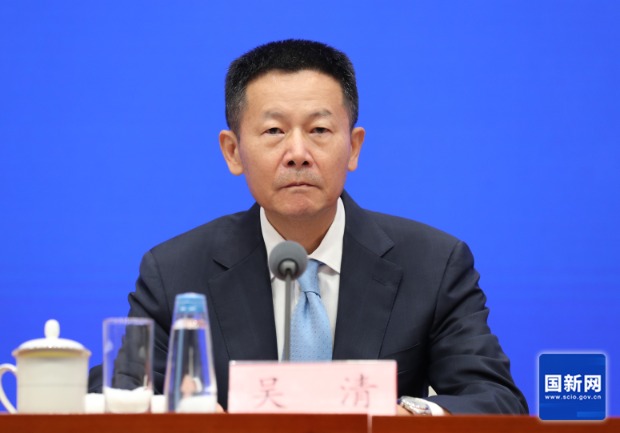
深圳商报记者 钟国斌 潘功胜表示,"十四五"期间,科技型中小企业贷款、普惠小微贷款、绿色贷款年均增速超过20%。特别 是2024年9月中央政治局会议以来,人民银行按照中央部署,出台了一系列货币金融政策举措,有效稳 定市场预期、提振信心,推动经济持续回升向好和高质量发展。 同时,我国在绿色金融、普惠金融、数字金融等方面走在世界前列,基本建成多渠道、广覆盖、安全高 效的人民币跨境支付清算网络,移动支付处于国际领先水平。 为实体经济提供资金170万亿元 李云泽介绍,"十四五"以来,金融运行总体稳健,不良贷款、资本充足、偿付能力等主要监管指标稳中 向好。五年来,我国银行业保险业总资产超过500万亿元,五年来平均增长近9%,全球最大信贷和第二 大保险市场地位更加稳固。 A股科技板块市值占比超过1/4 国务院新闻办公室9月22日下午3时举行"高质量完成'十四五'规划"系列主题新闻发布会,中国人民银行 行长潘功胜,金融监管总局局长李云泽,证监会主席吴清,中国人民银行副行长、国家外汇局局长朱鹤 新介绍"十四五"时期金融业发展成就,并答记者问。 我国银行业总资产位居世界第一 潘功胜介绍,"十四五"期间,我国金融事业取得新的重大 ...
中国证监会主席吴清:资本市场实现量的稳步增长和质的有效提升
Zheng Quan Ri Bao· 2025-09-22 16:42
Core Insights - The Chinese capital market has achieved steady growth in both quantity and quality during the "14th Five-Year Plan" period, laying a solid foundation for high-quality development in the "15th Five-Year Plan" [1] Group 1: Market Development - The China Securities Regulatory Commission (CSRC) has implemented a comprehensive regulatory framework, enhancing the legal system for the capital market, including the introduction of new securities laws and regulations [2] - The A-share market's total market capitalization surpassed 100 trillion yuan for the first time in August 2023, indicating a robust market environment [2] - Over the past five years, the total financing through stock and bond markets reached 57.5 trillion yuan, with the proportion of direct financing increasing by 2.8 percentage points to 31.6% [3] Group 2: Investor Engagement - Listed companies have significantly increased their return to investors, distributing a total of 10.6 trillion yuan in dividends and buybacks over the past five years, which is more than double the amount raised through IPOs and refinancing during the same period [3] - The awareness of listed companies regarding investor returns has notably improved, with over 90% of new listings being technology-related or high-tech companies [3] Group 3: Regulatory Enhancements - The CSRC has intensified its enforcement actions, issuing 2,214 administrative penalties for financial fraud and market manipulation, resulting in fines totaling 41.4 billion yuan, reflecting a 58% increase in cases and a 30% increase in fines compared to the previous five-year period [4] - The regulatory framework has been strengthened to enhance market transparency and deter illegal activities, contributing to a healthier market ecosystem [4] Group 4: Investment and Financing Reforms - Significant breakthroughs in investment-side reforms have been achieved, with various long-term funds holding approximately 21.4 trillion yuan in A-share market value, a 32% increase from the end of the "13th Five-Year Plan" [5] - The CSRC has approved 13 foreign-controlled securities and fund companies to operate in China, with foreign ownership in A-shares reaching 3.4 trillion yuan [5] Group 5: Future Directions - The CSRC aims to enhance the adaptability of the multi-tiered market system, focusing on reforms in the Sci-Tech Innovation Board and the Growth Enterprise Market to better support high-quality enterprises [7] - There is a commitment to improving the quality and investment value of listed companies, emphasizing the importance of corporate governance and investor relations [7]
四部门介绍“十四五”时期金融业发展成就 金融体制改革全面深化 顶层设计更加完善
Zheng Quan Ri Bao· 2025-09-22 16:28
Group 1 - The Chinese financial sector has achieved significant accomplishments during the "14th Five-Year Plan" period, with comprehensive reforms and improvements in the financial governance system [1][2] - The People's Bank of China aims to ensure ample liquidity and support economic recovery by utilizing various monetary policy tools, while maintaining the stability of the RMB exchange rate [1][2] - The National Financial Regulatory Administration emphasizes the importance of risk prevention and resolution, successfully reducing the number of high-risk institutions and assets [2] Group 2 - The China Securities Regulatory Commission has focused on enhancing market stability and investor confidence, leading to a steady growth in both the quantity and quality of the capital market [2] - The foreign exchange sector has effectively balanced development and security, maintaining foreign exchange reserves above $3 trillion and improving services to the real economy [3] - Looking ahead to the "15th Five-Year Plan," the foreign exchange management system will be further enhanced to support China's modernization efforts [3]
32%增长背后的“长钱”改革
Zheng Quan Ri Bao· 2025-09-22 16:19
Group 1 - The core achievement of the "14th Five-Year Plan" is the significant increase in long-term funds in the A-share market, with a total market value of approximately 21.4 trillion yuan, representing a 32% growth compared to the end of the "13th Five-Year Plan" [1] - Systematic reforms have accelerated the entry of long-term funds into the market, with a diverse composition of long-term funds including social security funds, pension funds, and insurance funds [2] - The establishment of a robust policy framework and reform of institutional assessment mechanisms have facilitated the transformation of long-term funds into long-term investments, enhancing their willingness to invest in equities and high-volatility assets [2][3] Group 2 - The continuous inflow of long-term funds has significantly improved market liquidity, stabilizing the A-share market's liquidity structure and ensuring efficient resource allocation [5] - Long-term funds are shifting the market's investment logic from short-term speculation to value investing, focusing on the long-term profitability and core competitiveness of companies [5] - The entry of long-term funds is fostering a virtuous cycle between the capital market and the real economy, providing essential capital for long-term corporate development and innovation [6]
“十四五”期间我国资本市场实现了量的稳步增长和质的有效提升
Xin Hua Cai Jing· 2025-09-22 15:25
Core Viewpoint - The Chinese capital market has achieved steady growth in both quantity and quality during the "14th Five-Year Plan" period, laying a solid foundation for high-quality development in the "15th Five-Year Plan" period [1][5]. Group 1: Achievements in the Capital Market - The regulatory framework has been significantly improved, with the implementation of the new Securities Law and the introduction of over 60 supporting rules, enhancing the legal system of the capital market [2][4]. - The multi-layered market system has been further developed, with the A-share market's total market value surpassing 100 trillion yuan for the first time in August [3][4]. - The market's investment and financing functions have been strengthened, with total financing through stock and bond markets reaching 57.5 trillion yuan over the past five years, and the direct financing ratio increasing to 31.6% [4][5]. Group 2: Market Stability and Fairness - A collaborative mechanism for market stability has been established, enhancing the resilience and risk resistance of the A-share market, with the Shanghai Composite Index's annualized volatility decreasing by 2.8 percentage points [5]. - A fair and just market environment has been fostered, with significant increases in penalties for financial misconduct, including 2,214 administrative penalties and 41.4 billion yuan in fines during the "14th Five-Year Plan" period [5]. Group 3: Expansion of the Capital Market - The capital market has expanded its international reach, with significant reforms aimed at enhancing market openness and attracting foreign investment, including the removal of foreign ownership limits in various sectors [6][8]. - The total market value held by foreign investors in A-shares reached 3.4 trillion yuan, reflecting the growing international presence in the Chinese capital market [8]. Group 4: Future Directions - The regulatory body aims to enhance the adaptability and inclusiveness of the capital market, supporting high-quality enterprises and various types of capital to thrive [10][13]. - There is a focus on improving the quality and investment value of listed companies, ensuring a stable and vibrant market environment [12][13].