
制造业

Search documents
32个省市重点项目年度投资完成率超115%
Qi Lu Wan Bao· 2026-01-30 11:24
Economic Performance - The Tianqiao District has shown steady economic progress, achieving a general public budget revenue of 4.35 billion yuan, with a tax revenue ratio of 90.1% [1] - The total import and export volume reached 7.6 billion yuan, while the per capita disposable income of urban residents increased by 4.2% [1] Project Development - A total of 156 key projects with an investment of 168.4 billion yuan are being advanced, with 32 provincial and municipal key projects exceeding an annual investment completion rate of 115% [1] - There are 139 planned reserve projects with a total investment of 194 billion yuan, and policy funds of 2.52 billion yuan have been secured, with 1.74 billion yuan already in place [1] - Land supply of 1,503 acres has been achieved, with 898 acres of idle land revitalized and 232 acres of inefficient land cleared [1] - 34 projects with investments over 100 million yuan have been signed, totaling 19.2 billion yuan, with 20 projects already implemented, amounting to 8.3 billion yuan [1] Industrial Development - The industrial economy is steadily developing, focusing on the "3+2" leading industrial chains, which now account for 5.8 percentage points more of the total industrial output value compared to the previous year [1] - 28 enterprises have been recognized as national "little giants," and provincial specialized and innovative enterprises have been established [1] - Manufacturing investment has increased by 33.2%, and the revenue of the regulated service industry has exceeded 90 billion yuan [1] Technological Innovation - The district has added 98 new high-tech enterprises and nurtured 4 leading industry talents and over 20,000 young talents, achieving a technical contract transaction volume of 11.66 billion yuan, which is a growth of 20.5% [1] Consumer Activity - Consumer vitality continues to enhance, with over 30 promotional activities such as the 2025 Jinan Fashion Week, leading to a total retail sales of social consumer goods of 43.8 billion yuan [2] - Eight new specialty stores have been opened, and seven convenient living circles have been established [2] Business Environment - The business environment has been continuously optimized, with 96 measures implemented to enhance the business environment, helping enterprises secure financing of 11 billion yuan [2] - There have been 16,500 new registered business entities, and 43 projects have been completed efficiently throughout the year [2]
解释城市|纽约市城市服务型制造对上海发展制造业有哪些参考
Xin Lang Cai Jing· 2026-01-30 10:23
Core Insights - The article discusses the economic structure and industrial layout of New York City, highlighting the distribution of major industry sectors and their impact on the regional economy [2][7]. - It emphasizes the concentration of economic activity in a few key sectors while many others contribute relatively less, illustrating a dual characteristic of concentration and dispersion in New York's economy [7][8]. Economic Structure - In 2023, New York City's total economic output was $1,285.74 billion, with a clear distinction between "core pillar industries" (over 10% contribution), "mid-tier supporting industries" (3%-10%), and "specialty supplementary industries" (below 3%) [7][8]. - The "core pillar industries" include finance and insurance, real estate, information, and professional and technical services, collectively contributing $785.84 billion, or 61.1% of the city's GDP [8]. Key Industries - The finance and insurance sector alone accounts for approximately 25% of New York City's GDP, underscoring its status as a global financial center [8]. - Real estate and rental services are significant contributors, primarily driven by transactions, property management, and related services concentrated in Manhattan [8]. - The information sector has seen rapid growth, increasing from 10% to 12.4% of GDP over the past 20 years, while professional and technical services contribute around 10% [8]. Supporting Industries - "Mid-tier supporting industries" encompass public administration, wholesale and retail trade, healthcare, and accommodation and food services, collectively making up 23.3% of the economy [9][10]. - These industries are essential for maintaining the city's operational stability and resilience against economic fluctuations, as they are less affected by short-term economic changes [10]. Specialty Industries - "Specialty supplementary industries" include agriculture, mining, utilities, construction, manufacturing, transportation, management services, education, and arts and entertainment [11]. - Although these industries have a lower economic contribution, they play a vital role in supporting core industries and enhancing the city's cultural vibrancy [11]. Manufacturing Sector - Manufacturing's share of New York City's GDP has drastically declined to only 0.8% in 2023, reflecting a broader trend of urban centers moving away from manufacturing towards service-oriented economies [14][19]. - The historical context shows that manufacturing was once a significant part of New York's economy, particularly post-World War II, but has since diminished due to the rise of the service sector [15][18]. Current Manufacturing Landscape - The remaining manufacturing in New York is characterized by "urban service-oriented manufacturing," focusing on light industries such as food and apparel, which cater directly to local consumer needs [22][23]. - The manufacturing sector is primarily composed of food manufacturing (26.9%), apparel manufacturing (15.0%), and printing (13.4%), indicating a strong alignment with urban consumption patterns [25][22].


为什么是他们?40年激流,10座高峰,10个造舟者
新浪财经· 2026-01-30 09:24
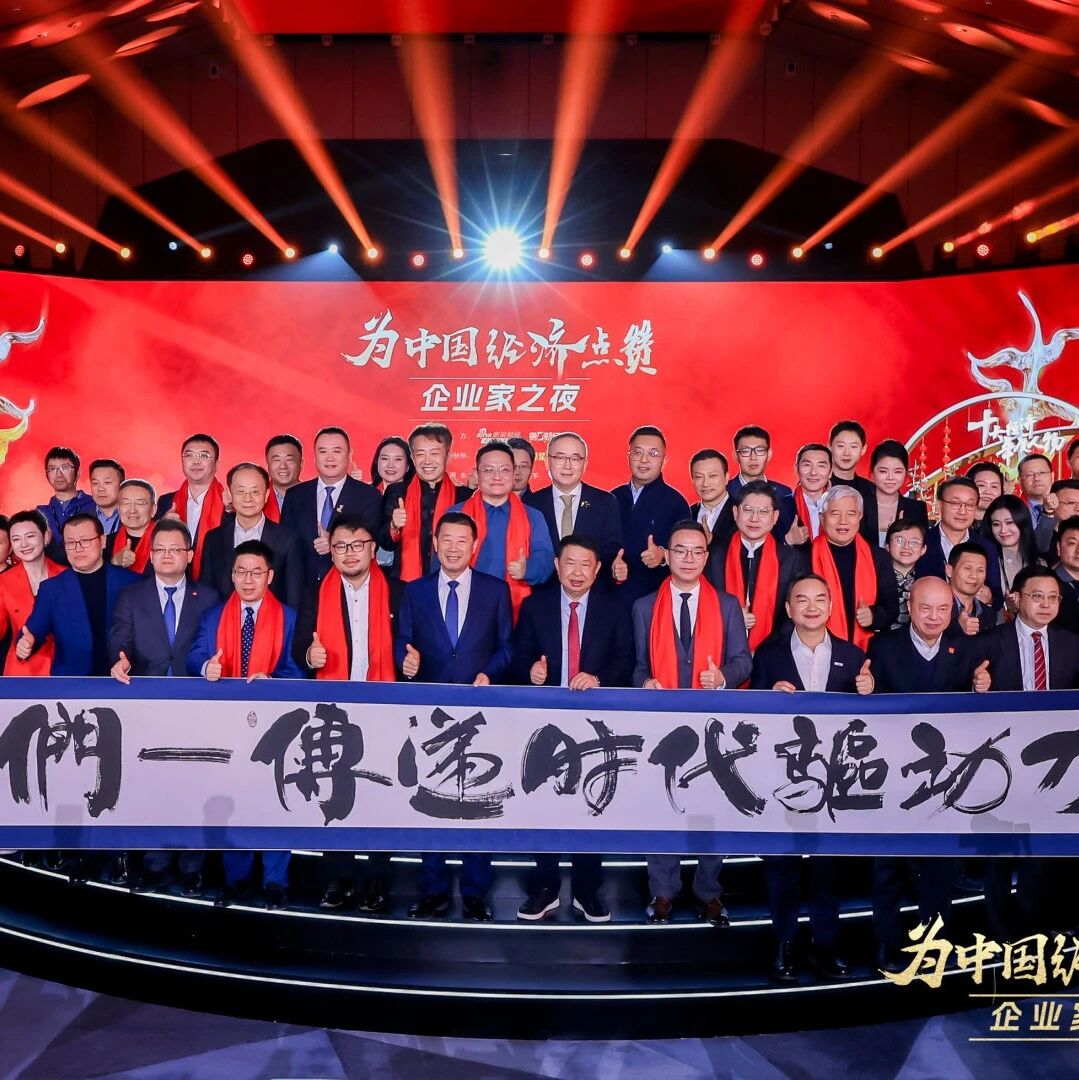
Core Insights - The article highlights the achievements of ten exemplary entrepreneurs who have significantly contributed to China's economic landscape, showcasing their courage, vision, and resilience in various industries [3][4]. Group 1: Industrial Leadership - The emergence of great companies often begins with leaders who possess a profound insight into the "certainty" of their times, as exemplified by Ma Changhai of Weichai Power and Chen Jinghe of Zijin Mining [6]. - Chen Jinghe transformed Zijin Mining from a struggling company into a global mining giant by focusing on independent research and development, overcoming external competition and internal technical challenges [7][9]. - Ma Changhai led Weichai Power through comprehensive reforms and innovations, emphasizing the importance of mastering core technologies to strengthen China's industrial autonomy [11]. Group 2: Commitment to Excellence - Entrepreneurs like Leng Youbin of Feihe Dairy and Wu Xiangdong of Zhenjiu demonstrate the depth and warmth of "Made in China" through their commitment to quality and cultural heritage [13][16]. - Leng Youbin's strategic decisions during a crisis in the dairy industry led to the establishment of a complete supply chain for infant formula, enhancing safety and quality [14]. - Wu Xiangdong's acquisitions in the liquor industry allowed him to transition from brand management to controlling core production capabilities, thus preserving cultural heritage while achieving commercial success [17][19]. Group 3: Innovation and New Frontiers - Entrepreneurs such as Peng Jun of Xiaoma Zhixing and Zhao Deli of XPeng Huitian are pioneering new avenues in transportation, focusing on autonomous driving and flying cars, respectively [25][27]. - Liu Debing of Zhipu and Han Bicheng of Qiangnao Technology are exploring the intersection of artificial intelligence and life sciences, contributing to China's shift from application-driven innovation to foundational research [27][30]. - The article emphasizes the importance of these entrepreneurs in driving technological advancements and establishing China as a leader in global innovation [30].

GDP同比增长3.8%,中山发布2025年经济运行简况
Nan Fang Du Shi Bao· 2026-01-30 07:37
Economic Overview - In 2025, the GDP of Zhongshan reached 426.06 billion yuan, with a year-on-year growth of 3.8% at constant prices [2] - The primary industry added value was 9.818 billion yuan, growing by 6.3%; the secondary industry added value was 218.906 billion yuan, growing by 3.9%; and the tertiary industry added value was 197.332 billion yuan, growing by 3.6% [2] Agricultural Performance - The total output value of agriculture, forestry, animal husbandry, and fishery in Zhongshan was 16.08 billion yuan, with a year-on-year increase of 6.3% [3] - Key agricultural products showed stable growth, with fruit production at 128,100 tons (up 2.8%) and vegetable and edible fungus production at 373,000 tons (up 0.8%) [3] - Aquaculture production improved, totaling 447,000 tons, with a year-on-year growth of 7.1% [3] Industrial Growth - The industrial added value above designated size in Zhongshan grew by 5.4% year-on-year [3] - Manufacturing sector growth was 5.9%, while the electricity, heat, gas, and water production and supply sector saw a decline of 3.5% [3] - Among 34 industrial sectors, 61.8% experienced growth, with notable increases in pharmaceutical manufacturing (46.3%), instrument manufacturing (31.8%), and computer and communication equipment manufacturing (10.2%) [3] Service Sector Development - The added value of the service industry in Zhongshan increased by 3.6% year-on-year [4] - Key sectors such as information transmission, software, and IT services grew by 8.6%, while accommodation and catering services grew by 4.0% [4] - Revenue from large-scale service enterprises increased by 0.5% year-on-year [4] Investment Trends - Fixed asset investment in Zhongshan decreased by 22.6% year-on-year [5] - Industrial investment fell by 14.6%, with advanced manufacturing investment down by 27.0% and high-tech manufacturing investment down by 22.6% [5][6] - Infrastructure investment also saw a decline of 26.0%, while real estate development investment dropped by 30.5% [6] Consumer Market Insights - The total retail sales of consumer goods in Zhongshan grew by 3.4% year-on-year [6] - Significant growth was observed in categories such as household appliances and audio-visual equipment (78.2%), communication equipment (61.1%), and food and oil (16.0%) [6] - Online retail remained active, with a year-on-year increase of 56.8% in sales through public networks [6] Income and Price Levels - The per capita disposable income in Zhongshan was 66,837 yuan, reflecting a year-on-year growth of 2.7% [7] - Urban residents had a per capita disposable income of 69,138 yuan (up 2.5%), while rural residents had 50,326 yuan (up 4.6%) [7] - The consumer price index (CPI) in Zhongshan decreased by 0.4% year-on-year, with service prices down by 0.5% and consumer goods prices down by 0.3% [7]

2025年乌兹别克斯坦固定资产投融资接近470亿美元
Shang Wu Bu Wang Zhan· 2026-01-30 07:13
按投资主体统计,超过90%的投资为国家预算外资金,表明私人资本的信心增强,外国直接投融资占比 达到40.5%,较上年增长46.9%。按货币计算,外国直接投融资239.4万亿苏姆(190.35亿美元);中央财政 投融资62.6万亿苏姆(49.77亿美元),增长13.6%,占比10.6%;企业投融资147.8万亿苏姆(109.4亿美元), 增长7.7%;个人投融资38.4万亿苏姆(30.53亿美元),增长12.3%;商业银行贷款22.1万亿苏姆(17.57亿美 元)。按行业统计,制造业160.8万亿苏姆(127.85亿美元),占比27.2%,能源和天然气供应占比14.0% (65.8亿美元)及采矿业占比10.8%(50.76亿美元),农业投资规模几乎翻番,占比8.8%(41.36亿美元)。 乌兹日报网1月26日报道,乌兹别克斯坦固定资本投资呈现强劲增长态势,据国家统计委员会统计, 2025年固投591.1万亿苏姆(约合470亿美元),按实际价值计算较去年增长10.5%。 ...
2025年乌兹别克斯坦工业产值超过900亿美元
Shang Wu Bu Wang Zhan· 2026-01-30 07:13
Core Insights - The industrial output of Uzbekistan is projected to reach 11,011 trillion soums (approximately 90.2 billion USD) in 2025, reflecting a growth of 6.8% compared to the previous year [1] Industry Overview - As of January 1, 2026, there are a total of 59,800 industrial enterprises in Uzbekistan, with the following distribution: - Food industry: 11,900 companies (20%) - Non-metallic mineral products: 8,300 companies (13.8%) - Apparel: 6,000 companies (10%) - Metal products: 4,800 companies (8%) - Furniture: 4,100 companies (6.9%) - Textiles: 3,700 companies (6.2%) - Rubber and plastic products: 2,800 companies (4.7%) [1] Manufacturing and Mining Contributions - The manufacturing sector's output is estimated at 9,472 trillion soums (approximately 77.64 billion USD), accounting for 86% of the total industrial output - The mining sector's output is projected at 770 trillion soums (approximately 6.31 billion USD) - The electricity and gas sector is expected to generate 708 trillion soums (approximately 5.8 billion USD) - The water supply, sewage, and waste management sector is anticipated to produce 61 trillion soums (approximately 510 million USD) [1] Resource Production - In 2025, Uzbekistan is expected to extract 42.3 billion cubic meters of natural gas, 655,700 tons of oil, and 8.9 million tons of coal - The production of gasoline is projected to be 1.2002 million tons, diesel 1.1581 million tons, Portland cement 20.2 million tons, and yarn 592.9 thousand tons [1]
格尔木经济总量突破500亿元大关
Sou Hu Cai Jing· 2026-01-30 07:06
Economic Overview - In 2025, the total economic output of Golmud City is projected to exceed 50 billion yuan, reaching 50.732 billion yuan, with a year-on-year growth of 10.8% at constant prices, marking a successful conclusion to the 14th Five-Year Plan and laying a solid foundation for the 15th Five-Year Plan [1] - The three industrial sectors contributed to the GDP as follows: primary industry added value of 0.904 billion yuan (growth of 4.1%), secondary industry added value of 37.574 billion yuan (growth of 13.6%), and tertiary industry added value of 12.254 billion yuan (growth of 4.3%) [1] Agriculture and Livestock - The total output value of agriculture, forestry, animal husbandry, and fishery reached 1.358 billion yuan, with a comparable growth of 4.1%. Agricultural output value was 1.001 billion yuan (growth of 5.4%) and livestock output value was 0.318 billion yuan (growth of 2.2%) [2] - The number of livestock and poultry reached 383,400 heads (an increase of 8.8% year-on-year), with 213,900 heads slaughtered [2] - The area for goji berry cultivation increased to 105,300 acres (growth of 4.3%), with a production of 26,800 tons (growth of 7.7%) [2] Industrial Growth - The added value of industrial enterprises above designated size grew by 18% year-on-year, with manufacturing value-added increasing by 24.2%, contributing 18.2 percentage points to the overall industrial growth [3] - Significant increases in production were noted for gold (5,448.3 kg, growth of 1,233%), silver (241.08 tons, growth of 340%), lead (154,100 tons, growth of 3.3%), zinc (13,200 tons, growth of 2.7%), lithium carbonate (148,100 tons, growth of 26.7%), and potassium fertilizer (684,050 tons, growth of 1%) [3] - Fixed asset investment decreased by 4.9%, while private investment surged by 62.1%, and infrastructure investment increased by 170% [3] Consumer Market - The total retail sales of consumer goods reached 6.063 billion yuan, with a slight year-on-year increase of 0.2%. The wholesale sector saw a decline of 8.3%, while retail and catering sectors showed mixed results [4] - Local public finance budget revenue was 2.413 billion yuan (growth of 2.5%), while expenditure was 5.212 billion yuan (decrease of 11.5%) [4] Financial and Transport Sector - The balance of deposits in financial institutions was 48.009 billion yuan, a decrease of 6.5% year-on-year [5] - Passenger transport volume reached 4.6562 million people (growth of 6.3%), with significant increases in civil aviation (growth of 10.7%) [5] Consumer Prices and Income - The per capita disposable income for residents was 44,561 yuan, with an increase of 5.5%. Urban residents had an income of 46,488 yuan (growth of 5.0%), while rural residents had 28,671 yuan (growth of 6.3%) [6] - Consumer prices showed a mixed trend with seven categories increasing and one decreasing, overall consumer prices rose by 0.4% year-on-year [6]
两座GDP超五万亿城市的故事
Xin Lang Cai Jing· 2026-01-30 06:14
Group 1 - Beijing's GDP is projected to reach 5.2 trillion yuan by 2025, making it the second city in China to surpass this milestone after Shanghai, which is expected to reach 5 trillion yuan in 2024 and 5.67 trillion yuan in 2025 [1] - The economic growth in both cities is expected to be 5.4% year-on-year by 2025, which is higher than the national average [1] - In Beijing, the information, software, IT services, and financial sectors contribute over 80% to the economic growth, with these industries accounting for 51.8% of the city's GDP [1] Group 2 - In Shanghai, the service sector remains the primary growth engine, with significant contributions from the financial and IT industries, as well as strong growth in high-tech manufacturing sectors like integrated circuits and artificial intelligence [2] - Shanghai's retail sales are projected to grow by 4.6% year-on-year in 2025, driven by government initiatives and a surge in inbound tourism, with inbound consumption expected to reach $15 billion, a 35% increase [2] - Both cities are prioritizing innovation as a key growth driver, with Beijing planning to invest over 1.5 billion yuan in high-tech industries and set ambitious targets for computing power by 2027 [2][3] Group 3 - Shanghai's Pudong New Area has announced 50 key projects with a total investment exceeding 70 billion yuan, covering various sectors including finance, technology, and tourism [3] - The Shanghai government aims to establish the city as an "international consumption center" to boost inbound consumption and sustain growth over the next five years [3]
2025年南京市经济运行情况发布,全市地区生产总值19428.78 亿元
Yang Zi Wan Bao Wang· 2026-01-30 06:06
1月30日,南京市统计局、国家统计局南京调查队发布2025年南京市经济运行情况。根据地区生产总值 统一核算结果,2025年全市地区生产总值19428.78亿元,按不变价格计算,同比增长5.2%。分产业看, 第一产业增加值338.50亿元,同比增长3.4%;第二产业增加值5873.07亿元,增长3.7%;第三产业增加 值13217.21亿元,增长6.0%。 农业生产形势稳定 粮食产量实现增长 2025年,全市农林牧渔业增加值可比增长3.8%。粮食产量稳步增长。全年粮食播种面积214.70万亩,增 长0.6%;总产量100.78万吨,增长0.5%。畜牧业产能提升。全年生猪出栏37.39万头,增长5.0%;家禽 出栏1741.20万只,增长10.1%。 工业生产总体平稳 2025年,全市社会消费品零售总额8135.85亿元,同比增长3.5%。促消费政策带动明显。限额以上单位 家用电器和音像器材类商品零售额增长9.8%,其中智能家用电器和音像器材增长78.2%;汽车类商品零 售额增长3.4%,高于全国平均水平4.9个百分点,其中新能源汽车增长33.1%。网上零售蓬勃发展。限额 以上单位实物商品网上零售额增长17.7% ...
2025年广东GDP超14.58万亿元 同比增长3.9%
Jing Ji Guan Cha Wang· 2026-01-30 05:17
经济观察网据央视新闻客户端消息,广东省统计局1月30日发布的数据显示,2025年广东全省经济运行 稳中有进、稳中提质,高质量发展取得新进展。 根据地区生产总值统一核算结果,2025年,广东实现地区生产总值145846.76亿元,按不变价格计算, 比上年增长3.9%。其中,第一产业增加值5891.80亿元,增长4.5%;第二产业增加值54993.50亿元,增 长2.4%;第三产业增加值84961.46亿元,增长4.7%。 01 农业生产形势较好 现代服务业增速较好 分门类看,采矿业增加值增长3.0%,制造业增长3.2%,电力、热力、燃气及水生产和供应业增长 0.3%。重点行业支撑稳定,计算机、通信和其他电子设备制造业增加值增长7.1%,电气机械和器材制 造业增长4.0%,通用设备制造业增长5.3%,汽车制造业增长10.1%、增速比前三季度提高1.9个百分点, 专用设备制造业增长7.6%、增速比前三季度提高2.3个百分点。新动能产业增势良好,先进制造业、高 技术制造业增加值分别增长5.1%、6.2%,增速比规模以上工业高2.1个、3.2个百分点,占规模以上工业 比重56.2%、34.7%,比前三季度提高0.7个、 ...