
核能

Search documents
燃料从“铀”到“钍”!我国实现钍基熔盐堆研发突破
Xin Hua Wang· 2025-10-31 23:31
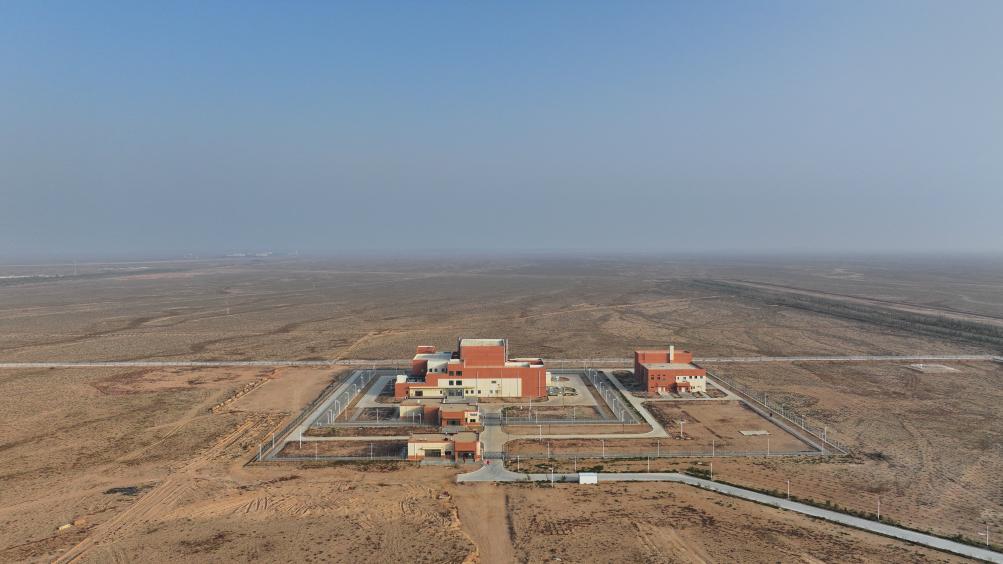
Core Insights - The 2 megawatt liquid fuel thorium-based molten salt experimental reactor, led by the Shanghai Institute of Applied Physics under the Chinese Academy of Sciences, has achieved thorium-uranium fuel conversion, marking the first time in the world that experimental data has been obtained from a thorium molten salt reactor after operation, establishing it as the only operational molten salt reactor utilizing thorium fuel globally [1][4] Group 1 - Thorium is a weakly radioactive silver metal that naturally occurs in rocks, and the thorium-based molten salt reactor is a fourth-generation advanced nuclear energy system that uses thorium as fuel and high-temperature molten salt as a coolant, offering advantages such as no water cooling, operation at atmospheric pressure, and high-temperature output [1][4] - This technology aligns with China's abundant thorium resources and can deeply integrate with solar energy, wind energy, high-temperature molten salt energy storage, high-temperature hydrogen production, and coal-to-chemical industries, constructing a low-carbon composite energy system with multi-energy complementarity [1] Group 2 - The development of the thorium molten salt reactor began in 2011 with the launch of a pilot technology project by the Chinese Academy of Sciences, which gathered a collaborative innovation team to overcome various technical challenges and achieve significant advancements from laboratory research to experimental reactor engineering validation [4][5] - The experimental reactor construction started in January 2020, achieving full power operation in June 2024, and completed the world's first thorium addition to a molten salt reactor in October 2024, establishing a unique research platform for molten salt reactors and thorium-uranium fuel cycles [4][5] - The team aims to build a 100 megawatt thorium-based molten salt reactor demonstration project by 2035, accelerating technology iteration and engineering transformation to provide a safe and reliable new path for thorium-based energy generation in the country [5]

我国首次实现基于熔盐堆的钍铀核燃料转换
Xin Hua She· 2025-10-31 23:18
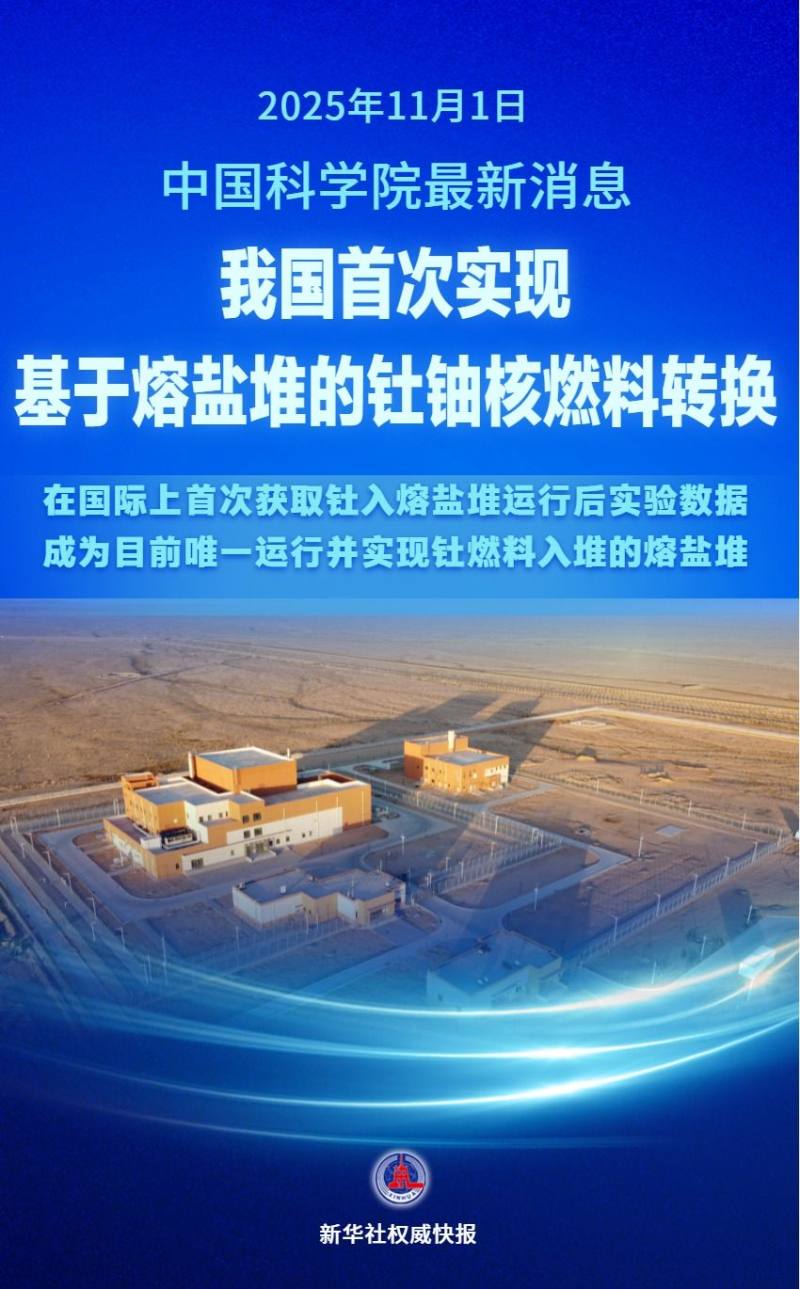
Core Insights - China has achieved a significant milestone by successfully converting thorium-uranium nuclear fuel based on molten salt reactors, marking the first time such data has been obtained internationally [3] - The 2 megawatt liquid fuel thorium-based molten salt experimental reactor, led by the Shanghai Institute of Applied Physics, is currently the only operational molten salt reactor that has achieved thorium fuel insertion [3] - This development reinforces China's leading position in the international molten salt reactor research field and provides core technological support for the large-scale development and utilization of thorium resources in the future [3] Summary by Categories - **Technological Achievement** - The successful conversion of thorium-uranium nuclear fuel represents a major technological breakthrough in the field of molten salt reactors [3] - The reactor has provided experimental data after the insertion of thorium fuel, which is a first in the international arena [3] - **Strategic Importance** - This milestone is crucial for the future large-scale development and utilization of thorium resources in China [3] - It supports the advancement of the fourth generation of nuclear energy systems, highlighting the potential for sustainable energy solutions [3] - **International Positioning** - The achievement solidifies China's leading role in molten salt reactor research globally, showcasing its capabilities in innovative nuclear technology [3]
新华鲜报|燃料从“铀”到“钍”!我国实现钍基熔盐堆研发突破
Xin Hua She· 2025-10-31 23:16
Core Insights - The successful construction of a new experimental reactor has enabled the diversification of nuclear fuel from "uranium" to "thorium" [1] - The thorium-based molten salt reactor has achieved the world's first thorium-uranium fuel conversion and has become the only operational molten salt reactor utilizing thorium [1] - This technology aligns with China's abundant thorium resources and can integrate with renewable energy sources, creating a low-carbon composite energy system [1] Group 1 - The thorium molten salt reactor operates at high temperatures using liquid salt as a coolant, eliminating the need for high-pressure vessels and large amounts of water for cooling, making it safer and more efficient [1] - The project began in 2011 under the Chinese Academy of Sciences, focusing on advanced nuclear fission energy systems, with a collaborative team overcoming numerous technical challenges [2] - The experimental reactor construction started in January 2020, with plans for full power operation by June 2024 and the completion of the world's first thorium addition to a molten salt reactor by October 2024 [2] Group 2 - The research team aims to establish a 100-megawatt thorium molten salt reactor demonstration project by 2035, accelerating technology iteration and engineering transformation [2] - The project has involved nearly a hundred domestic research institutions, universities, and industrial groups, marking a significant leap from laboratory research to engineering validation [2]
新华社权威快报|我国首次实现基于熔盐堆的钍铀核燃料转换
Xin Hua She· 2025-10-31 23:09
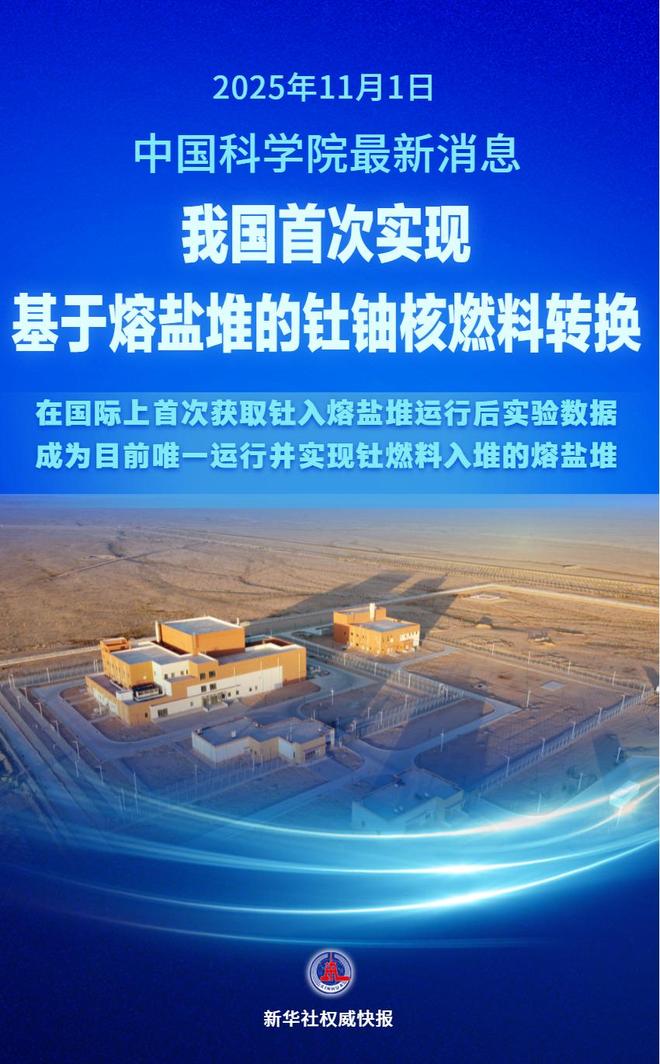
Core Insights - China has achieved a significant milestone by successfully converting thorium-uranium nuclear fuel in a molten salt reactor, marking the first time such data has been obtained internationally [3] - This development reinforces China's leading position in the global molten salt reactor research field and demonstrates the technical feasibility of utilizing thorium resources in nuclear energy systems [3] Group 1 - The 2 megawatt liquid fuel thorium-based molten salt experimental reactor was constructed by the Shanghai Institute of Applied Physics, part of the Chinese Academy of Sciences [3] - The reactor is currently the only operational molten salt reactor that has successfully incorporated thorium fuel [3] - This achievement is a crucial step towards the large-scale development and utilization of thorium resources in China, providing core technological support for the advancement of fourth-generation nuclear energy systems [3]
核心设备完全国产化 我国钍基熔盐实验堆建成并首次实现堆内钍铀转化
Yang Shi Xin Wen· 2025-10-31 23:04
Core Insights - The Chinese Academy of Sciences announced the successful construction and operation of a thorium-based molten salt experimental reactor in Wuwei City, Gansu Province, marking a significant step in the feasibility of utilizing thorium resources for nuclear energy [1][2] - This experimental reactor is China's independently developed fourth-generation advanced fission nuclear energy system and is currently the only molten salt reactor in the world that has achieved thorium fuel loading [1] - The reactor utilizes thorium as nuclear fuel and liquid fluoride salt as a coolant, offering advantages such as safety, no water cooling, operation at atmospheric pressure, and high-temperature output [1] Technological Advancements - Since the project's initiation in 2011, the research team has made breakthroughs in core technologies related to materials, instruments, equipment development, and system integration [1] - The reactor features an innovative integrated design that combines the core, fuel salt pump, heat exchanger, and other key components within the main reactor vessel, significantly reducing the risk of radioactive leakage and enhancing safety [1] - The overall domestic production rate of the thorium-based molten salt experimental reactor exceeds 90%, with 100% of key core equipment being domestically produced, ensuring a controllable supply chain [1] Strategic Importance - The thorium-based molten salt reactor represents a clean and efficient energy system that can complement high-temperature molten salt energy storage, hydrogen production, solar energy, wind energy, and coal gasification, contributing to a low-carbon chemical system [2] - Given China's abundant thorium resources, the establishment of thorium-based molten salt reactors can promote national energy independence and provide crucial support for energy security and sustainable development in the country [2]
氢能、核能、新型储能写入规划 “十五五”能源产业要怎么干?
2 1 Shi Ji Jing Ji Bao Dao· 2025-10-30 23:08
Core Insights - The "14th Five-Year Plan" has significantly advanced China's energy transition, with a focus on enhancing energy supply capacity, accelerating green transformation, and optimizing energy layout [1] - The "15th Five-Year Plan" aims to achieve carbon peak targets and establish a clean, low-carbon, safe, and efficient new energy system [1] Energy Sector Development - The "15th Five-Year Plan" emphasizes the cultivation of emerging and future industries, particularly in new energy, new materials, aerospace, and low-altitude economy [2] - New energy is recognized as a key component of strategic emerging industries, with a shift towards improving industry quality and efficiency during the "15th Five-Year Plan" [2] - Hydrogen energy and nuclear fusion are highlighted as future industries, with plans to explore diverse technological routes and applications [2] Hydrogen Energy and Nuclear Fusion Progress - By the end of 2024, China's hydrogen production capacity is expected to exceed 50 million tons per year, with over 600 renewable energy hydrogen production projects planned [3] - The country has promoted 28,000 fuel cell vehicles and built over 500 hydrogen refueling stations, leading in the commercial vehicle sector [3] Modern Infrastructure Development - The "15th Five-Year Plan" calls for the construction of a modern infrastructure system, optimizing energy backbone channel layouts and enhancing new energy infrastructure [4] - Significant projects include high-voltage transmission channels and natural gas pipeline networks to support clean energy development [4][5] National Unified Market and Competition - The plan aims to eliminate barriers to building a national unified market and address "involution" competition, promoting a healthy market order [6] - The establishment of a unified electricity market is crucial for energy transition and resource optimization [6] New Energy System and Carbon Peak Goals - The plan focuses on building a new energy system, increasing the share of renewable energy, and ensuring the orderly replacement of fossil fuels [7] - By mid-2025, China's renewable energy installed capacity is projected to reach 2.159 billion kilowatts, accounting for 59.2% of total installed capacity [7][8] - The nuclear power sector is also expanding, with operational capacity reaching 60.91 million kilowatts, making China the world leader [8]
财经观察:“核能时代落幕”,德国电力靠什么保障
Huan Qiu Shi Bao· 2025-10-30 22:44
Core Viewpoint - Germany has officially abandoned nuclear power, marking the end of an era that has provided electricity for approximately 60 years, raising concerns about rising electricity costs for consumers and the impact on energy-intensive industries [1][2]. Group 1: Germany's Nuclear Phase-Out - Germany is the first major industrial nation to completely phase out nuclear power, which has been a significant source of electricity since the 1960s [1]. - The decision to abandon nuclear energy was solidified after the Fukushima disaster in 2011, leading to the closure of the last three nuclear plants in April 2023 [2]. - The closure of nuclear plants has resulted in increased carbon emissions, as Germany has had to rely more on coal to meet electricity demands, creating a conflict between environmental goals and energy policy [2][3]. Group 2: Public Sentiment and Economic Impact - A significant portion of the German public opposes the nuclear phase-out, with surveys indicating that nearly two-thirds of Germans are against closing the remaining nuclear plants [4]. - Since 2011, German consumers have incurred an additional cost of €57 billion due to the transition away from nuclear energy [4]. - The high electricity prices are prompting energy-intensive companies to relocate production to Eastern Europe or Asia, contributing to a decline in Germany's industrial competitiveness [5]. Group 3: Energy Transition Challenges - Germany aims for 80% of its electricity to come from renewable sources by 2030, but currently, renewables only account for about 57% of the energy supply, leading to instability [6]. - The country has become a net importer of electricity, with significant imports recorded in the second quarter of 2023, highlighting the challenges of domestic energy production [6]. - The reliance on gas-fired power plants is increasing, with plans to invest €20 billion in new gas plants to ensure energy security, but this may not lower electricity costs significantly [7]. Group 4: Future of Nuclear Energy in Europe - The EU plans to increase nuclear capacity from 98 GW to 109 GW by 2050, requiring an investment of €205 billion for new plants and €36 billion for extending existing reactors [3]. - Countries like Poland are moving forward with nuclear projects, contrasting Germany's phase-out, as the EU seeks to reduce dependence on foreign energy and achieve climate goals [2][3].
财报前瞻:Oklo 200亿美元估值背后的泡沫风险
美股研究社· 2025-10-30 10:16
Core Viewpoint - Oklo, a nuclear power startup, has seen its market value soar to $20 billion despite lacking binding contracts and revenue, raising questions about the sustainability of its valuation, which appears to be driven by "promises" rather than fundamentals [1][2]. Group 1: Valuation and Market Sentiment - The current market enthusiasm for Oklo is reminiscent of Tesla's stock surge in 2014, where revolutionary promises led to inflated valuations that far exceeded actual production capabilities [2]. - Oklo claims a project reserve value of $30 billion but has not clarified how many of these projects have a solid economic basis, lacking clear pricing per megawatt (MW) and timelines for cash flow conversion [2][4]. - The company's potential project reserve is stated to be 14 GW, but these agreements are non-binding, meaning actual demand hinges on investor belief rather than contractual obligations [4]. Group 2: Financial Health and Cash Flow - Oklo's first reactor, Aurora, is not expected to be operational until 2027-2028, making revenue generation unrealistic in the near term [5]. - The company has approximately $682.9 million in cash and securities, but it is burning through cash rapidly, with a trailing twelve-month cash flow of approximately -$56 million [7][9]. - Even if the company maintains current spending without new investments, its cash reserves could be depleted in 8-10 years, especially with plans to build a $1.68 billion fuel refining facility that lacks revenue support [9][11]. Group 3: Management Actions and Risks - Recent insider selling by management, including significant sales by co-founders and the CFO, raises concerns about their confidence in the company's short-term profitability [12][13][14]. - The management's plan to build a fuel manufacturing plant is still in the planning stages, and the company currently lacks its own fuel production capacity, relying on external sources for initial fuel [15]. - Oklo's timeline for reactor development is unrealistic, with the U.S. Department of Energy requiring critical milestones to be met by mid-2026, which the company is unlikely to achieve [16][21]. Group 4: Potential Catalysts and Future Outlook - The recent inclusion of Oklo in the U.S. Department of Energy's reactor pilot program may provide regulatory support, potentially facilitating faster financing and approval processes [17]. - Strategic partnerships with companies like KHNP and Liberty Energy indicate efforts to secure supply chains, but many agreements remain non-binding and could be canceled at any time [18]. - Oklo is positioning itself as a solution provider for AI and data center energy needs, which could drive stock price increases despite unclear financial details [19]. Group 5: Upcoming Financial Reporting - Analysts will focus on cash burn rates and reserves, progress on fuel and reactor development, and the existence of binding customer contracts or power purchase agreements (PPAs) in the upcoming Q3 2025 financial report [20][21].
美联储再次降息25个基点;英伟达总市值破5万亿美元|南财早新闻
2 1 Shi Ji Jing Ji Bao Dao· 2025-10-29 23:27
1、据央视新闻,当地时间29日,美联储宣布将联邦基金利率目标区间下调25个基点到3.75%至4.00%之 间。这是美联储继9月17日降息25个基点后再次降息,也是自2024年9月以来第五次降息。 2、英伟达总市值突破5万亿美元,成为史上首家市值跨越这一里程碑的上市公司。高达5万亿美元的总 市值,超过英、法、德等国家的股市总市值,且正逼近印度股市总价值(5.3万亿美元)。截至周三收 盘,英伟达涨近3%,报207.04美元,盘中一度涨超5%。 1、29日,国家外汇管理局对外发布贸易便利化政策"双扩围"、贸易新业态结算便利"再升级"等3方面9 条政策举措,进一步促进跨境贸易收支便利化。 2、29日,商务部等5部门发布《城市商业提质行动方案》,提出21项具体举措,包括推动步行街(商 圈)设施改造和业态升级,扩大国货潮品、外贸优品等多元化商品供给等,更好满足人民美好生活需 要。 4、北京并购重组规则落地,鼓励上市公司围绕战略性新兴产业、未来产业等开展并购重组;鼓励通过 并购重组加大产业整合力度,减少"内卷式"竞争。支持符合条件的外国投资者对上市公司进行战略投 资。 5、知名私募宁泉资产发布公告称,决定自10月30日起, ...


潜在投资项目清单公布,企业态度犹豫凸显担忧,高市政府3900亿美元给美国送“诚意”
Huan Qiu Shi Bao· 2025-10-29 23:12
Core Points - Japan and the U.S. have made progress on a $550 billion investment mechanism, with a list of 21 "potential" projects announced, focusing on energy, AI, and critical minerals [1][2] - The total estimated business scale of 16 out of the 21 projects is approximately $393.45 billion, accounting for 71.5% of the overall investment plan [2] - The final decision-making authority for these investments lies with the U.S., raising concerns about whether the projects will align with Japan's strategic interests [3][4] Group 1: Investment Mechanism Overview - The investment mechanism is part of a trade framework agreement signed in September, aimed at enhancing economic cooperation between Japan and the U.S. [1] - The announced projects involve over 20 companies from both countries, with a significant focus on AI infrastructure enhancement [2] Group 2: Project Details - Notable projects include nuclear reactor construction led by Westinghouse, potentially involving Japanese firms like Mitsubishi Heavy Industries and Toshiba, with a business scale of up to $100 billion [2] - The U.S. government has signed an $80 billion agreement with Westinghouse for nuclear reactors, with some funding expected from Japan [2] Group 3: Strategic Implications - The investment framework has evolved to be more U.S.-centric, with Japan's initial proposal now subject to U.S. control, which may not favor Japanese interests [3][4] - Japanese officials express concern that the U.S. may select projects that do not align with Japan's strategic goals, leading to difficult choices for Japan [3] Group 4: Economic Pressures - Japan faces pressure to increase investments in the U.S. as part of the trade agreement, with officials indicating that presenting a list of potential projects is crucial for maintaining relations with the U.S. [5][6] - The complexity of the investment structure and the need for high returns are significant factors influencing Japanese companies' willingness to participate [6]