预制菜

Search documents
“预制菜之王”冲上热搜第一!不怕你预制 就怕……
Zhong Guo Ji Jin Bao· 2025-09-14 04:30
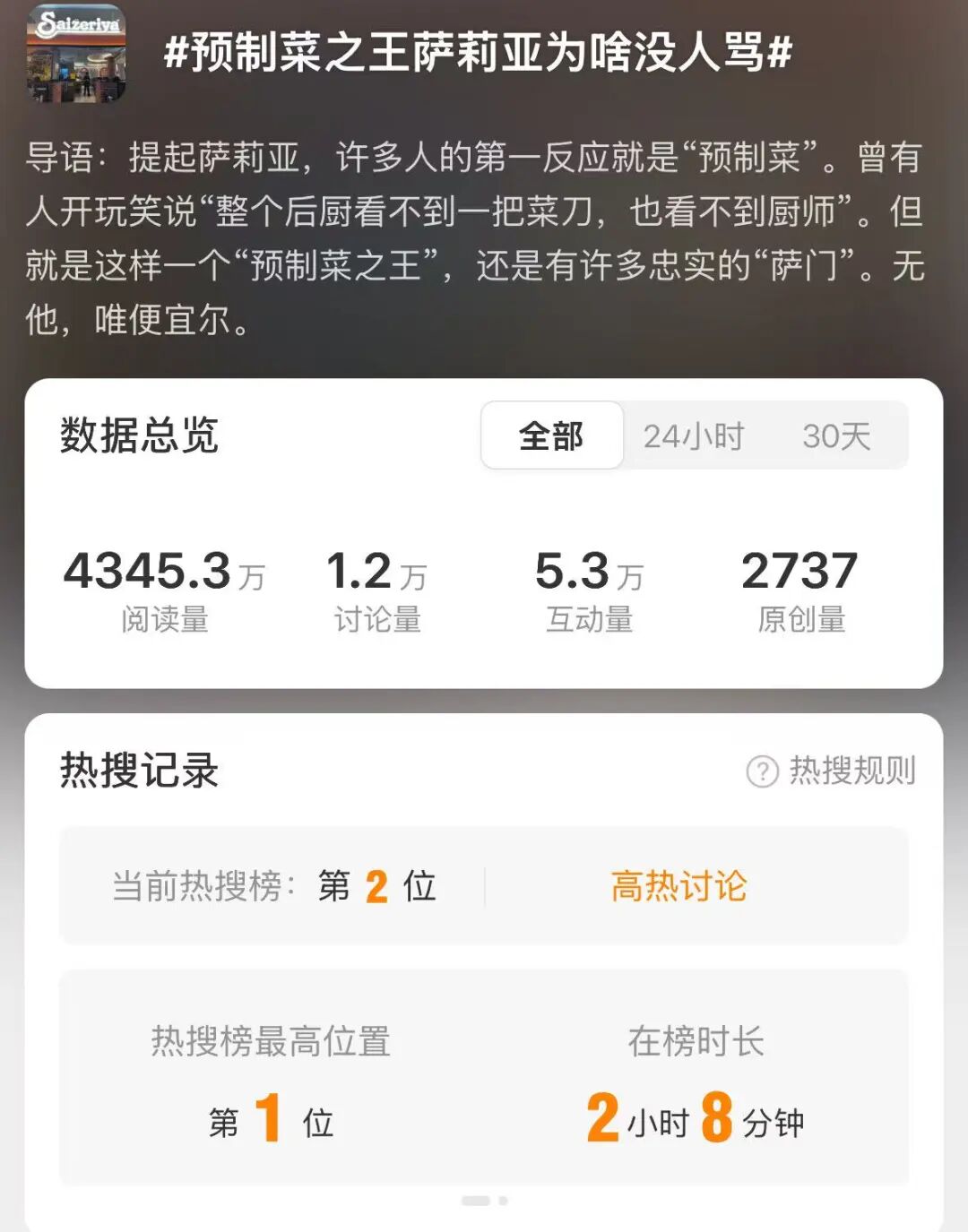
来源:中国青年报综合中青评论、南方日报、新华社、网友评论 9月13日晚,话题#预制菜之王萨莉亚为啥没人骂#冲上热搜。 不怕你预制,怕你不告诉我 南方日报报道,提起萨莉亚,许多人的第一反应就是"预制菜"。曾有人开玩笑说"整个后厨看不到一把菜刀,也看不到厨师"。但就是这样一个"预制菜之 王",还是有许多忠实的"萨门"。无他,唯便宜尔。 这种"低价不低质"的策略,精准切中了打工人和学生党的需求——花小钱也能享受"体面一餐"。反观一些使用半成品、料理包的连锁中餐品牌,50块钱吃 不饱、不好吃的事情十分常见。 新华社消息,近期,"预制菜"话题备受消费者关注—— 根据2024年市场监管总局等部门联合发布的《关于加强预制菜食品安全监管促进产业高质量发展的通知》,预制菜是以一种或多种食用农产品及其制品为 原料,使用或不使用调味料等辅料,不添加防腐剂,经工业化预加工(如搅拌、腌制、滚揉、成型、炒、炸、烤、煮、蒸等)制成,配以或不配以调味料 包,符合产品标签标明的贮存、运输及销售条件,加热或熟制后方可食用的预包装菜肴。 相较于完全现场烹饪,预制菜有着显著优势。从事餐饮行业多年的卢星(化名)告诉记者,使用预制菜能够提高餐饮企业的运 ...

“预制菜之王”冲上热搜第一!不怕你预制,就怕……
中国基金报· 2025-09-14 04:12
来源: 中国青年报综合中青评论、南方日 报、新华社、网 友评论 9月13日晚,话题 #预制菜之王萨莉亚为啥没人骂 # 冲上热搜。 南方日报报道,提起萨莉亚,许多人的第一反应就是"预制菜"。曾有人开玩笑说"整个后厨看 不到一把菜刀,也看不到厨师"。但就是这样一个"预制菜之王",还是有许多忠实的"萨门"。 无他,唯便宜尔。 这种"低价不低质"的策略,精准切中了打工人和学生党的需求——花小钱也能享受"体面一 餐"。 反观一些使用半成品、料理包的连锁中餐品牌,50块钱吃不饱、不好吃的事情十分常 新华社消息,近期,"预制菜"话题备受消费者关注—— 根据2024年市场监管总局等部门联合发布的《关于加强预制菜食品安全监管 促进产业高质量 发展的通知》, 预制菜 是以一种或多种食用农产品及其制品为原料,使用或不使用调味料等 辅料, 不添加防腐剂, 经工业化预加工(如搅拌、腌制、滚揉、成型、炒、炸、烤、煮、蒸 等)制成,配以或不配以调味料包,符合产品标签标明的贮存、运输及销售条件, 加热或熟 制后方可食用的预包装菜肴。 其一,部分小规模餐饮企业食品安全难以保障, 透支公众对于预制菜的信任。 在日常生活 中,时常可以见到加热预制 ...
大战西贝获得90%支持,爱对线的老罗为何这次占尽上风?
首席商业评论· 2025-09-14 04:08
Core Viewpoint - The ongoing dispute between Luo Yonghao and Xibei over prepared dishes highlights the critical issues of consumer trust and the right to information [2][3][28]. Group 1: Background of the Dispute - Luo Yonghao's live response to the Xibei prepared dishes controversy on September 12 garnered 90% support from viewers, shifting the focus from questioning Xibei to advocating for transparency in the entire prepared food industry [5][3]. - Xibei's attempts to counter the narrative, including inviting media to their kitchens, backfired as issues such as the 18-month shelf life of their products were exposed, reinforcing negative consumer perceptions [7][12]. Group 2: Luo Yonghao's Strategy - Luo Yonghao's success in the public discourse can be attributed to his established "confrontation style," which positions him as a representative of the underdog, effectively capturing public sentiment and elevating individual disputes to broader societal issues [14][25]. - His past confrontations, such as the 2011 Siemens refrigerator incident and the 2014 debate with Wang Ziru, showcase his ability to transform personal grievances into collective consumer advocacy, thereby resonating with a wider audience [16][18][20]. Group 3: Xibei's Response and Challenges - Xibei's founder, Jia Guolong, initially responded proactively but ultimately struggled to shift public opinion, as their crisis management efforts revealed more issues than solutions [7][12]. - The debate over the definition of prepared dishes is less about the product itself and more about the struggle for narrative control, with Xibei appearing to be at a disadvantage [12][28]. Group 4: Consumer Trust and Corporate Responsibility - The current media environment emphasizes that consumer trust is paramount for brand survival, overshadowing mere compliance with regulations [25][30]. - Xibei could benefit from a collaborative approach with Luo Yonghao, leveraging his influence to address consumer concerns directly and transparently [25][30]. Group 5: Broader Implications for the Industry - The conflict serves as a reminder for companies that understanding and addressing consumer needs is essential, rather than solely focusing on regulatory compliance [30][32]. - The discourse should shift from a binary debate on prepared dishes to addressing practical issues such as clear labeling and consumer rights, ultimately fostering industry improvement [32].

新华社发文:不怕你预制,怕你不告诉我
财联社· 2025-09-14 01:49
9月13日,新华社微信公众号发布文章《不怕你预制,怕你不告诉我》,全文如下: 记者来信:讨论预制菜时,我们在关心什么? 近期,"预制菜"话题备受消费者关注。 各方讨论背后,是消费者对于知情权的关切以及对提高餐饮质量的诉求。 当"锅气"成为评价菜肴好坏的 重要标准之一,餐饮从业者们也应该思考,"预制菜"如何更好辅助行业发展,成为令人安心的美味。 预制菜到底是什么 其二, 长期以来,"预制菜"缺乏较为明晰的概念界定, 行业发展也难以依循统一标准,传导到消费端就令消费者对预制菜心里没底。 其三,最令消费者难以接受的,是部分商家打着现做现炒的幌子,却是"微波炉厨房"。 以预制代替现做,却按照现做现炒的价格收取费用,侵害 消费者权益。 通知中明确, 大力推广餐饮环节使用预制菜明示,保障消费者的知情权和选择权。 事实上,更多理性的消费者也并非反对预制,而是反对隐瞒 和欺诈。 根据2024年市场监管总局等部门联合发布的《关于加强预制菜食品安全监管 促进产业高质量发展的通知》,预制菜是以一种或多种食用农 产品及其制品为原料,使用或不使用调味料等辅料,不添加防腐剂,经工业化预加工(如搅拌、腌制、滚揉、成型、炒、炸、烤、煮、蒸 ...
餐厅须明示 不加防腐剂!预制菜国标将公开
Nan Fang Du Shi Bao· 2025-09-14 01:38
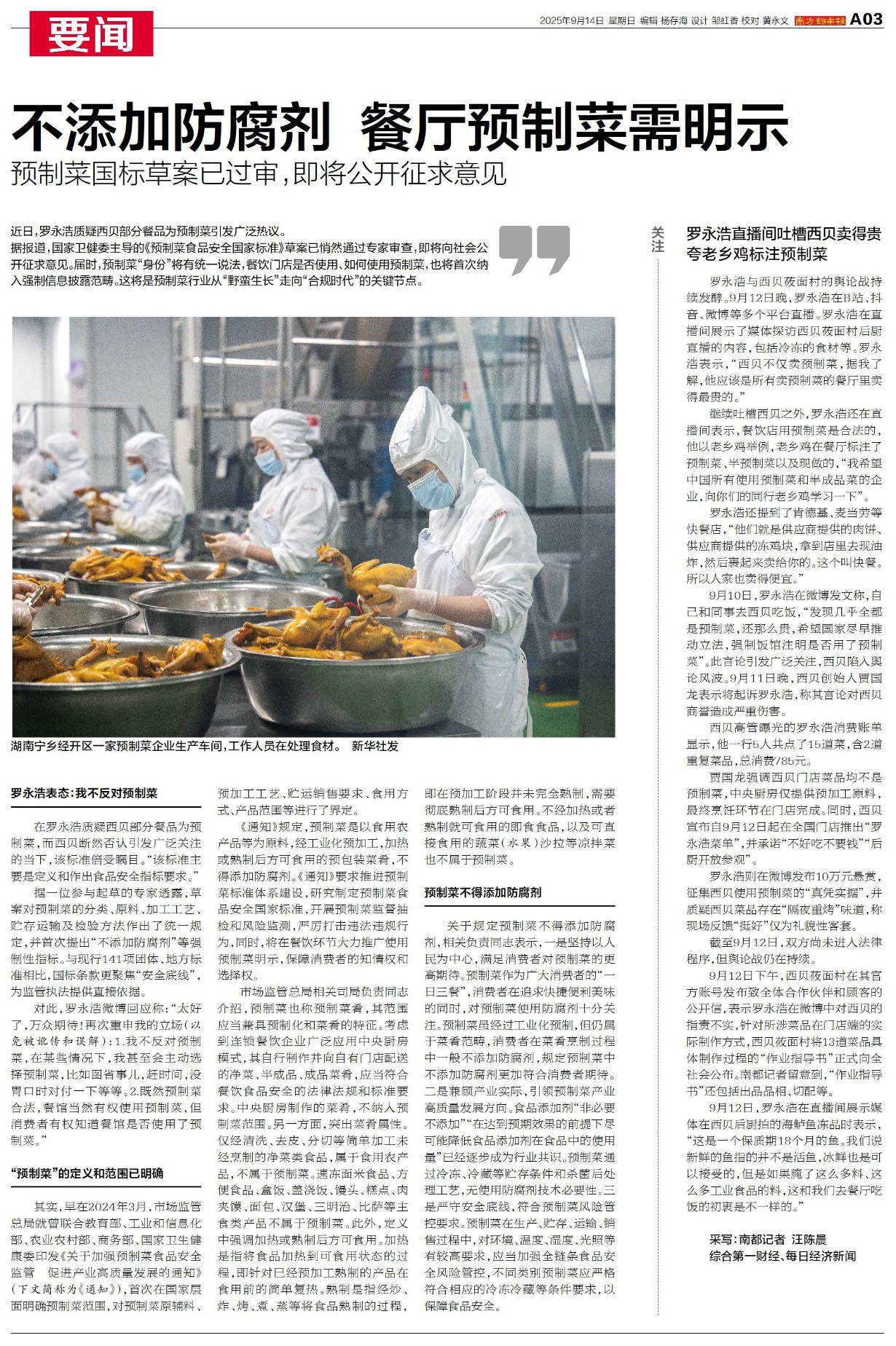
Core Viewpoint - The draft national standard for pre-prepared dishes in China has passed expert review and will soon be open for public consultation, marking a significant shift towards regulatory compliance in the industry [1][7]. Group 1: National Standard Development - The draft standard, led by the National Health Commission, aims to define pre-prepared dishes and establish food safety indicators, including a prohibition on preservatives [2][8]. - The new standard will provide a unified definition and classification for pre-prepared dishes, addressing aspects such as raw materials, processing methods, storage, transportation, and inspection [2][9]. - This standard represents a move from "wild growth" to a "compliance era" for the pre-prepared dish industry, emphasizing safety and regulatory enforcement [1][7]. Group 2: Consumer Rights and Transparency - The new regulations will require restaurants to disclose whether they use pre-prepared dishes, thereby enhancing consumer rights to know and choose [2][3]. - The standard aims to ensure that consumers are informed about the use of pre-prepared dishes in restaurants, aligning with their expectations for food safety and quality [4][9]. Group 3: Industry Implications - The regulations will not apply to dishes made in central kitchens, which are not classified as pre-prepared dishes, thus differentiating between various food preparation methods [3][10]. - The focus on not adding preservatives in pre-prepared dishes reflects a growing consumer demand for healthier food options, which could influence industry practices and product offerings [4][8].
09月13日早间新闻精选
Sou Hu Cai Jing· 2025-09-14 00:16
Group 1 - The prepared food industry is set to clarify its scope in 2024, but consumer doubts about the industry remain unresolved [1][2] - The Beijing Stock Exchange will switch new codes for 248 existing stocks on October 9, 2025 [1][2] - A merger carnival is planned for 2025, with an initiative to support the development of the Shanghai merger market [1][2] Group 2 - Aerospace Electronics is planning an asset swap worth 800-1,000 million to enhance its industrial chain [1][2] - The dispute between Luo Yonghao and Xibei has escalated, with a reward of 100,000 offered, indicating ongoing controversies in the prepared food sector [1][2] - Tianji Co., Ltd. saw its stock price hit the limit up while a major shareholder reduced holdings; the company reported a 19.16% increase in revenue for the first half of the year [1][2] Group 3 - Tuojing Technology plans to raise 4,600 million for expansion and research, with a compound annual growth rate of 55.08% in revenue over the past three years [1][2] - Aimei Ke has made progress in arbitration regarding the AestheFill agency rights, showing a divergence in performance compared to ST Suwu [1][2] - Zhou Hei Ya reported a 228% increase in mid-term net profit, prompting several brokerages to raise their target prices [1][2] Group 4 - Unilever and other foreign enterprises are focusing on opportunities in the Chinese market during the investment promotion conference [1][2] - The investment promotion conference highlights the investment potential of the Chinese market, attracting attention from foreign companies [1][2]
概念股总数超30只 被罗永浩骂惨的预制菜到底有多赚钱?
Di Yi Cai Jing· 2025-09-13 23:40
Core Viewpoint - The ongoing debate between Luo Yonghao and Xibei has brought the prepared food sector into the spotlight, highlighting the market potential and performance of related stocks in the A-share market [2][3]. Prepared Food Sector Overview - There are currently 31 A-share companies in the prepared food sector, with major players including Jinlongyu (金龙鱼, 300999.SZ), Shuanghui Development (双汇发展, 000895.SZ), and Sanquan Foods (三全食品, 002216.SZ). Most of these companies are listed on the main board, with 29 on the main board and 2 on the ChiNext board [2]. - Jinlongyu is the only company in the prepared food sector with a market capitalization exceeding 100 billion yuan, reaching 179.726 billion yuan as of September 12. Shuanghui Development and New Hope (新希望, 000876.SZ) follow with market capitalizations of 89.076 billion yuan and 46.647 billion yuan, respectively [2]. Market Performance - The prepared food sector has seen a 10.27% increase in stock prices from early July to September 12, with over 90% of the stocks in this sector experiencing price increases during this period. The highest gain was recorded by Bubugao (步步高), with a 36.55% increase [5]. - Year-to-date, the prepared food sector has risen by 17.88%, with Bubugao achieving a remarkable 68.35% increase and Babi Foods (巴比食品, 605338.SH) rising by 42.66% [5]. Financial Performance - In the first half of the year, Jinlongyu reported the highest revenue in the sector, achieving 115.682 billion yuan, a year-on-year increase of 5.67%, and a net profit of 1.756 billion yuan, up 60.07% [7]. - New Hope and Shuanghui Development also reported significant revenues, with New Hope generating 51.625 billion yuan (up 4.13%) and Shuanghui Development recording 28.414 billion yuan (up 2.97%) [7].



网友:这波我站西贝,因为老罗那边已经站不下了。新华社:不怕你预制,就怕你不告诉我
程序员的那些事· 2025-09-13 23:22
Core Viewpoint - The ongoing debate between Xi Bei and Luo Yonghao highlights the complexities and misunderstandings surrounding the concept of "pre-prepared dishes" in the Chinese food industry, with implications for consumer rights and industry transparency [3][10][17] Definition of Pre-prepared Dishes - The National Market Supervision Administration, along with five other departments, officially defined "pre-prepared dishes" on March 18, 2024, as dishes made from one or more food products that undergo industrial pre-processing and are packaged for sale, requiring heating or cooking before consumption [3][4] Central Kitchen Clarification - The dishes produced in central kitchens by chain restaurants do not fall under the category of pre-prepared dishes, as they must comply with food safety laws and standards [4][5] Legal Context - Xi Bei's legal action against Luo Yonghao may have a basis in the definitions provided by regulatory authorities, suggesting a potential for Xi Bei to win the case [6] Public Perception and Criticism - Xi Bei's management appears to misunderstand the source of public criticism, which is not solely directed at Luo Yonghao but rather at the broader issues of transparency and consumer rights in the pre-prepared food sector [7][9] Media Exposure and Backlash - A media visit to Xi Bei's kitchen revealed concerning practices, including the use of genetically modified soybean oil, frozen meats, and the admission of using overnight dishes, which led to significant public backlash [14][15] Consumer Rights Advocacy - Luo Yonghao's stance emphasizes the importance of consumer awareness regarding the nature of pre-prepared dishes, advocating for transparency in the food industry [10][12][17]

预制菜争论升级,2025年规模将突破6000亿!
Wind万得· 2025-09-13 22:28
Core Viewpoint - The ongoing dispute between internet celebrity Luo Yonghao and Xibei founder Jia Guolong regarding the use of pre-prepared dishes in restaurants highlights consumer rights and the need for regulatory clarity in the pre-prepared food industry. The market for pre-prepared dishes is projected to reach 617.3 billion yuan by 2025, indicating significant growth potential [1][6][17]. Industry Growth - The pre-prepared food market is expected to grow significantly, with a projected market size of 617.3 billion yuan by 2025, reflecting a year-on-year growth of 27.3% [6]. - The increasing pace of urban life and consumer demand for convenience are driving the popularity of pre-prepared dishes, which are becoming an essential part of the convenient food segment [6]. Pricing and Consumer Options - Pre-prepared dishes are generally affordable, with prices ranging from a few yuan to several dozen yuan per serving, making them accessible to a wide range of consumers [7]. - Various cuisines are available in pre-prepared formats, including popular regional dishes, catering to diverse consumer preferences [7]. Market Performance - The total market capitalization of the A-share pre-prepared food sector has surpassed 500 billion yuan, with 30 listed companies in this space. However, the sector has only seen a cumulative increase of 5.66% this year, underperforming compared to the Shanghai Composite Index's 15.48% rise [13]. Regulatory Developments - A national standard for pre-prepared food safety has been approved and is set to be publicly solicited for opinions. This standard will establish uniform definitions and safety requirements, marking a significant shift towards regulatory compliance in the industry [17].

不怕你预制,怕你不告诉我
21世纪经济报道· 2025-09-13 15:17
Core Viewpoint - The article discusses the growing consumer interest in "pre-prepared dishes" and emphasizes the need for transparency and quality in the food industry, highlighting that pre-prepared dishes can enhance operational efficiency in restaurants while addressing consumer demands for quality and safety [1][6]. Summary by Sections Definition of Pre-prepared Dishes - Pre-prepared dishes are defined as meals made from one or more food products, processed industrially without preservatives, and packaged for storage, transport, and sale, requiring heating or cooking before consumption [3]. - The concept of pre-prepared dishes has historical roots in the food industry, with methods like marinating and curing being traditional practices [3]. Safety and Nutrition Concerns - Fresh ingredients retain more nutrients, but pre-prepared dishes can meet nutritional needs if produced and handled according to safety standards [4]. - The use of pre-prepared dishes is common among large chain restaurants due to safety regulations and cost efficiency, particularly in fast-food settings [6]. Consumer Trust and Transparency Issues - There are concerns regarding food safety in small-scale restaurants, leading to a general distrust of pre-prepared dishes among consumers [6]. - The lack of clear definitions and standards for pre-prepared dishes contributes to consumer uncertainty [6]. - Some businesses misrepresent pre-prepared dishes as freshly cooked, which undermines consumer trust and violates rights [6]. Industry Development and Future Directions - The pre-prepared dish industry is recognized as a vital part of the food sector, necessitating thoughtful development to meet diverse consumer needs [8]. - Various regions are implementing measures to promote high-quality development in the pre-prepared dish industry, such as establishing cold chain logistics and creating quality raw material bases [8]. - Experts suggest that standardization, transparency, and innovation are essential for the future of the pre-prepared dish industry [8]. Regulatory Recommendations - There is a call for the establishment of national standards for the production and handling of pre-prepared dishes to guide industry practices [8]. - A notification system for consumers regarding the use of pre-prepared dishes in restaurants is recommended to enhance consumer awareness [8]. - Legal frameworks should be strengthened to protect consumers from deceptive practices related to pre-prepared dishes [9].