
建筑业

Search documents
美联储“褐皮书”:加征关税拉动物价继续上涨
Xin Hua Wang· 2025-10-16 00:38
美国联邦储备委员会15日发布的全国经济形势调查报告显示,受加征关税影响,9月初到10月中旬美国 所有联邦储备区物价继续上涨。 根据美国《联邦储备法》,美国全国划分为12个联邦储备区,每区设立一家联邦储备银行。该报告根据 12家联邦储备银行的最新调查结果编制而成,也称"褐皮书"。 报告显示,自9月初到10月中旬,许多联邦储备区由于进口成本以及保险、医疗保健和技术解决等服务 成本上升,导致投入成本增速加快。一些制造业和零售业公司已将更高进口成本完全转嫁给客户。 许多联邦储备区报告预计,经济不确定性加剧将拖累经济活动。有联邦储备区报告明确指出,政府长 期"关门"将给经济增长带来下行风险。 劳动力市场方面,"褐皮书"显示各地区、各行业劳动力需求普遍低迷。大多数联邦储备区报告称,由于 需求疲软、经济不确定性加剧和对人工智能技术投资增加,更多雇主通过裁员和自然减员的方式减少员 工人数。同时,由于近期移民政策变化,多地酒店业、农业、建筑业和制造业出现劳动力供应紧张状 况。 美联储每年发布8次"褐皮书",通过联邦储备银行对全美经济形势进行摸底。该报告是美联储货币政策 会议的重要参考资料。 由世界贸易组织和国际货币基金组织联合 ...
【省住房城乡建设厅】陕西加快建设“好房子”
Shan Xi Ri Bao· 2025-10-15 00:29
Group 1 - The core focus of the news is on the efforts of the Shaanxi provincial government to stabilize and improve the real estate market while enhancing housing conditions for residents [1] - The province is implementing a new model for real estate development, emphasizing tailored strategies for different cities and ensuring the alignment of housing supply and financing [1] - In the first eight months of the year, real estate development investment in the province reached 217.73 billion yuan, a year-on-year increase of 0.3%, while the sales area of new commercial housing was 14.05 million square meters, up 1.8% year-on-year [1] Group 2 - The province is actively advancing the renovation of old urban residential communities, with plans to start renovating 870 communities by 2025, benefiting over 101,900 households [2] - As of now, 743 communities have commenced renovation, covering 88,800 households, achieving an opening rate of 85.4% [2] - The total output value of the construction industry in the province reached 435.31 billion yuan in the first half of 2025, reflecting a year-on-year growth of 2.2%, surpassing the national average growth rate by 2 percentage points [2] - The smart construction industry chain in the province generated a value of 47.39 billion yuan in the first nine months of the year, marking a year-on-year increase of 12.17% [2]
德国政府上调经济增长预期
Shang Wu Bu Wang Zhan· 2025-10-14 15:49
Core Viewpoint - The German economy is expected to experience a slight growth of 0.2% in 2025, following two years of economic contraction, with further growth projected at 1.3% in 2026 and 1.4% in 2027 [1] Economic Forecast - The German government has revised its growth expectations for the next two years, aligning with the joint assessment report released by major economic research institutions on September 25 [1] - The construction sector is projected to see a decline in investment by 2.3% this year, but is expected to rebound with growth rates of 2.0% in 2026 and 3.7% in 2027 [1] - Exports are anticipated to recover in the next two years, with expected growth rates of 1.2% and 1.6% respectively [1]
9月中小企业发展指数同比上升,企业效益有所好转
Sou Hu Cai Jing· 2025-10-13 02:17
Core Insights - The Small and Medium Enterprises Development Index (SMEDI) for September in China is reported at 89.0, a slight decrease of 0.1 points from the previous month, but higher than the same period last year [2][5] Summary by Categories Overall Index - The overall index decreased from 89.1 in August to 89.0 in September, indicating a slight decline in the business environment for SMEs [3][5] Sub-Indices - Among the sub-indices, 2 increased while 6 decreased. The labor index rose by 0.1 points to 105.8, and the efficiency index increased by 0.2 points to 74.0. Other indices such as macroeconomic sentiment, comprehensive operation, market, cost, funding, and investment indices all saw declines ranging from 0.1 to 0.4 points [3][5] Industry Performance - In terms of industry performance, three sectors (construction, transportation, and wholesale retail) saw increases in their indices, while four sectors (industry, real estate, information transmission software, and accommodation catering) experienced declines [3][5] Regional Performance - Regionally, the western region's index rose by 0.1 points to 88.4, while the eastern and northeastern regions saw declines of 0.2 and 0.1 points, respectively. The central region remained stable [4][5] Key Characteristics - Development expectations have been adjusted downward, with the macroeconomic sentiment index at 97.8, down 0.2 points. The market index is stable at 81.1, with five out of eight surveyed industries showing an increase [5][6] - Funding conditions are tightening, with the funding index at 100.3, down 0.2 points, and seven out of eight industries reporting a decrease in funding [5][6] - Labor demand has slightly decreased while supply has increased, with the labor index at 105.8, reflecting a demand index of 97.3 and a supply index of 114.2 [5][6] - Investment willingness remains stable, with the investment index at 82.4, down 0.1 points, and four out of eight industries reporting an increase [5][6] - Cost pressures are improving, with the cost index at 111.7, down 0.1 points, and six out of eight industries reporting a decrease in costs [5][6] - Overall, corporate efficiency has slightly improved, with the efficiency index at 74.0, up 0.2 points, supported by ongoing cost reduction and efficiency enhancement policies [5][6] External Environment - The external environment remains complex and challenging, with slow domestic demand growth. However, there are opportunities for SMEs as some indicators show a stable upward trend. Recent macro policies and regional efforts to boost consumption are aimed at creating more growth opportunities for SMEs [6][7]


数智转型打开房地产新赛道
Jing Ji Ri Bao· 2025-10-12 21:55
Core Viewpoint - The construction and real estate industries are undergoing a critical digital and intelligent transformation, which is essential for sustainable development and high-quality economic growth in China [1] Group 1: Intelligent Construction System - Intelligent construction is a key aspect of the transformation in the construction industry, with pilot projects launched in 24 cities including Beijing and Shenzhen to accelerate its application [1] - Key technological advancements in intelligent construction include the development of BIM software, smart production lines, and intelligent construction equipment, with 11 innovative technologies successfully implemented in Beijing [1] - Cities like Qingdao and Hefei are supporting the application of technological research outcomes, while Wuhan has authorized 181 patents related to intelligent construction over the past five years [1] Group 2: Standards and Industry System - New technical standards for intelligent construction are being introduced, such as the selection directory for construction robots in the Sichuan-Chongqing region, which outlines over 40 applicable scenarios [2] - An industrial system for intelligent construction is being rapidly established, with cities like Wuhan and Shenzhen creating mechanisms to integrate upstream and downstream enterprises [2] - In 2024, the sales revenue from the construction robot industry cluster in Foshan is expected to exceed 50 million yuan, driven by a leading enterprise and several collaborative companies [2] Group 3: Digital Home Construction - The construction of digital homes is being accelerated, with new national standards requiring smart features in residential buildings, such as communication systems and mobile signal coverage [4] - Digital homes are seen as a key initiative for expanding domestic demand and developing the digital economy, with 18 pilot regions making significant progress [4] - Infrastructure and platform development are crucial for digital home construction, with cities like Yaan and Zhangjiagang implementing requirements for digital community hardware and comprehensive information platforms [5] Group 4: Innovation and Application - Innovative applications in digital home construction include the installation of IoT devices for monitoring utilities and enhancing safety, with significant engagement from local governments [6] - The integration of smart home technology is being promoted through various initiatives, such as the "one-click help" button for elderly residents in Huzhou [6] - The digital home industry is seeing substantial sales growth, with over 50 related companies participating in promotional activities in Guangzhou, achieving sales exceeding 50 million yuan [6] Group 5: Digital Transformation in Real Estate - The real estate industry is shifting from traditional resource-driven models to a new model based on digital technology and new productive forces [7] - Companies like Longfor Group are utilizing digital tools to significantly reduce project timelines and improve operational efficiency [7] - Despite over half of real estate companies having digital transformation strategies, many still struggle to achieve measurable improvements in operational efficiency [8] Group 6: Future Trends - The digital transformation in real estate requires a fundamental restructuring of organizational culture and data capabilities to adapt to the digital age [8] - Technologies such as AI, IoT, and big data are reshaping the real estate ecosystem, enhancing operational efficiency and creating new growth opportunities [8] - The integration of advanced technologies is expected to transform buildings into intelligent entities, opening new pathways for value creation in the industry [8]
新房子建成好房子,老房子改成好房子(权威发布·高质量完成“十四五”规划)
Ren Min Ri Bao· 2025-10-12 01:02
Core Viewpoint - The "14th Five-Year Plan" period has seen significant achievements in high-quality development in housing and urban-rural construction, improving living conditions and urban environments, accelerating industry transformation, and deepening reforms in the sector [1]. Group 1: Housing Supply and Demand - Over 7.5 million units of difficult-to-deliver housing have been successfully delivered during the "14th Five-Year Plan" period, emphasizing the government's commitment to ensuring housing for the public [2]. - A multi-tiered housing security system has been established, catering to various groups such as new citizens and youth, with over 11 million units of various types of affordable housing constructed, benefiting over 30 million people [2]. - Policies have been implemented to support diverse housing needs, including lowering down payment ratios and interest rates for loans, providing tax rebates for home purchases, and offering local subsidies, resulting in approximately 5 billion square meters of new residential sales [3]. Group 2: Quality of Living and Community Development - The renovation of old urban communities has been a key initiative, with over 240,000 communities improved, benefiting over 40 million households and 110 million residents [3]. - The government has focused on enhancing the quality of living through the renovation of old neighborhoods, including the addition of community service facilities and recreational spaces [3]. - Historical building protection initiatives have been launched in over 70 cities, integrating cultural heritage with modern living, and creating new tourism and commercial opportunities [4]. Group 3: Construction Industry Growth - The construction industry is projected to reach a value of 32.7 trillion yuan by 2024, marking a 24% increase from 2020, with significant infrastructure projects completed during this period [5]. - The industry has also seen a substantial increase in international contracts, with over $1 trillion signed from 2021 to 2024, showcasing the global competitiveness of Chinese construction [6]. Group 4: Real Estate Development Reform - The government is reforming the real estate sector to adapt to changing market dynamics, focusing on a new development model that balances market forces with government support [7]. - A new mechanism for coordinating housing development has been established, with over 7 trillion yuan in loans approved for "white list" projects, enhancing the security of housing delivery [7]. Group 5: Technological Advancements - The housing and construction sector is advancing in technology, focusing on breakthroughs in key areas such as smart construction and green building practices [8]. - New technologies and materials are being developed, with initiatives like the "urban brain" project aimed at improving urban management and service delivery [8].
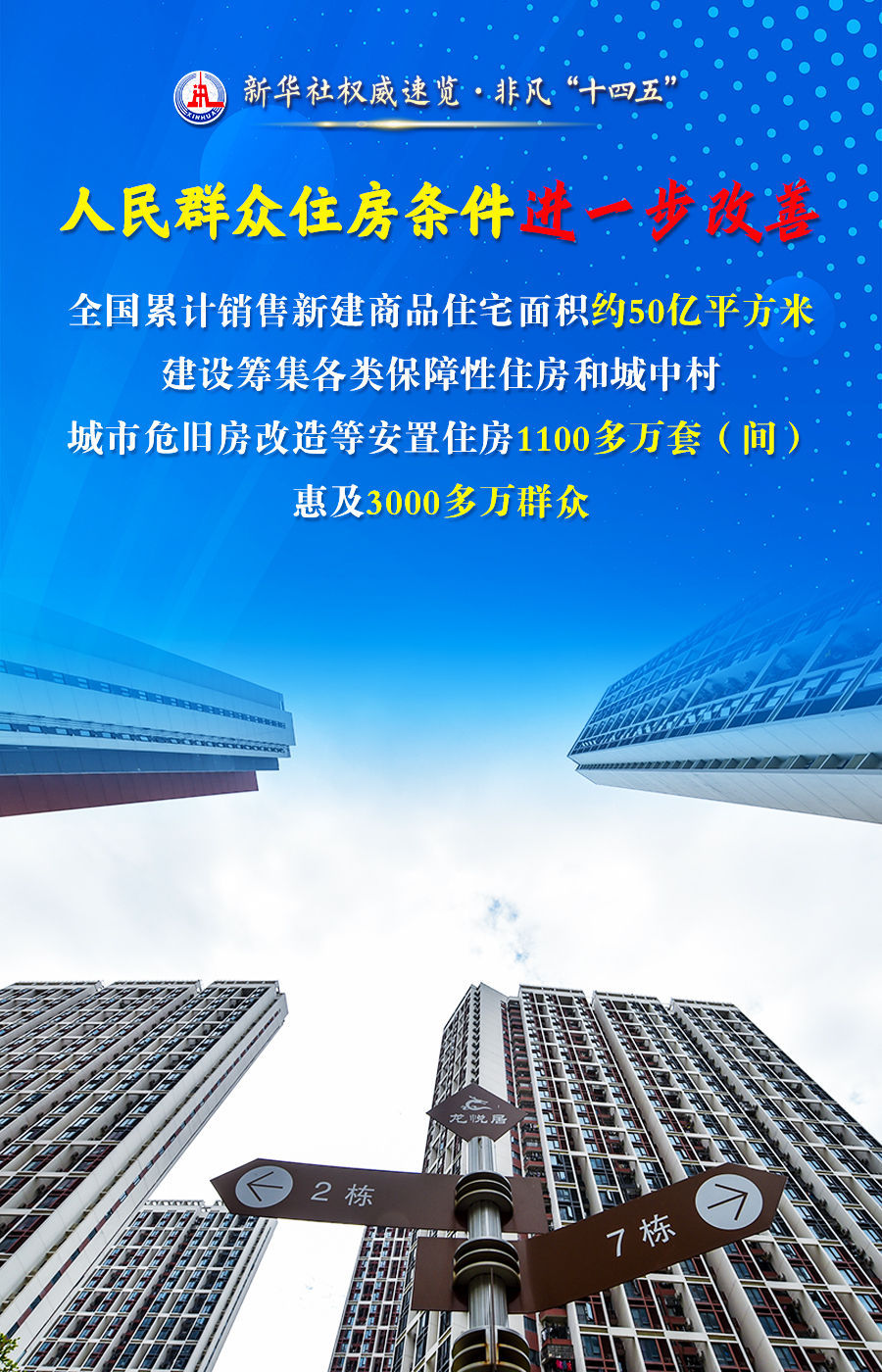
全国累计销售新建商品住宅约50亿平方米|“十四五”成绩单
Zhong Guo Jing Ying Bao· 2025-10-11 14:03
住房和城乡建设部部长倪虹在会上表示,"十四五"时期,人民群众住房条件进一步改善。五年来,住房 和城乡建设部牢牢抓住"安居"这一人民群众幸福生活的基点,适应房地产市场供求关系发生重大变化的 新形势,适时调整优化房地产政策,扎实推进保交楼工作,坚决打好保交房攻坚战,加快构建房地产发 展新模式,增加保障性住房供给,稳步推进城中村和城市危旧房改造,积极发挥住房公积金作用,系统 推进安全、舒适、绿色、智慧的"好房子"建设,不断满足人民群众基本住房需求和多样化改善性住房需 求。 同时,城市人居环境质量进一步提升。五年来,住房和城乡建设部全面开展城市体检,大力实施城市更 新,统筹推进好房子、好小区、好社区、好城区建设,加强历史文化保护传承,持续提升城市治理效 能,使城市的天更蓝、水更清、环境更优美,人民群众在城市生活得更加方便、舒心、美好。 "十四五"期间,全国累计改造城镇老旧小区24万多个,惠及4000多万户、约1.1亿人;加装电梯12.9万 部,新增停车位340多万个、养老托育等社区服务设施6.4万个;更新改造供水、燃气、供热等地下管网 84万公里;打造"口袋公园"1.8万多个、城市绿道2.5万公里,以"小切口"改善" ...
住建部:五方面推动“好房子”建设
Zhong Guo Xin Wen Wang· 2025-10-11 10:13
Core Viewpoint - The Ministry of Housing and Urban-Rural Development aims to promote the construction of "good houses" that are safe, comfortable, green, and smart through five key aspects: good standards, good design, good materials, good construction, and good maintenance [1] Group 1: Good Standards - The national standard "Residential Project Specification" was officially implemented on May 1 this year, requiring all new residential projects to comply with this new standard [2] - The new standard includes 14 enhancements, such as increasing the floor height from 2.8 meters to no less than 3 meters, mandating elevators in buildings with four or more floors, and reducing sound insulation requirements by 10 decibels [2] Group 2: Good Design - A national residential design competition has been launched, with the proposal collection phase completed by the end of September, gathering nearly 2,000 proposals [2] - The initiative focuses not only on new houses but also on the renovation of old houses to align them with the "good house" concept [2] Group 3: Good Materials - The ministry promotes the research and development of new building materials suitable for "good houses" through a "reveal the list and take the lead" approach, enhancing the application of green materials, smart security, and whole-house intelligence [2] Group 4: Good Construction - Many construction companies and design units are actively researching to address public concerns regarding housing quality [2] Group 5: Good Maintenance - A comprehensive safety management system for the entire lifecycle of buildings will be established [2] - An action plan for enhancing property services will be implemented to address key issues that affect the public [2]
新华社权威速览·非凡“十四五”| 从这四个关键词,看百姓“安居”成绩单!
Xin Hua She· 2025-10-11 09:28
Group 1 - The core message emphasizes the achievements of the housing and urban-rural construction system during the 14th Five-Year Plan, focusing on improving, enhancing, accelerating, and deepening efforts to contribute to economic and social development [1] - The housing and urban construction system has adhered to a people-centered approach, emphasizing practical actions, professionalism, and respect for science and reality, while tackling challenges and promoting growth, livelihood improvement, risk prevention, and transformation [1] Group 2 - Over 240,000 urban old residential communities have been renovated, benefiting more than 40 million households and 110 million people [2] - A total of 129,000 elevators have been added, along with over 3.4 million parking spaces and 64,000 community service facilities for elderly care and childcare [2] - The underground utility networks for water, gas, and heating have been updated and renovated over 840,000 kilometers [2] - More than 18,000 "pocket parks" and 25,000 kilometers of urban greenways have been created [2] Group 3 - The total output value of the construction industry is projected to reach 32.7 trillion yuan in 2024, with an added value of 9 trillion yuan [4] - Major projects such as the Shenzhen-Zhongshan Corridor and venues for the Beijing Winter Olympics have gained international recognition [4] - Significant construction machinery like shield machines, bridge erecting machines, and building machines have been developed [4] Group 4 - Reforms in the housing and real estate sector are being deepened, establishing a new mechanism for the interconnection of people, housing, land, and finance [6] - Urban construction reforms are being advanced, including the integration of urban health assessments and urban renewal [6] - The construction sector is promoting the application of Building Information Modeling (BIM) technology throughout the entire process, fostering the development of a modern construction industry [6]
住房城乡建设部部长倪虹:着力稳增长、惠民生、防风险、促转型
Xin Hua Cai Jing· 2025-10-11 05:23
Core Insights - The Ministry of Housing and Urban-Rural Development emphasizes the significant achievements in housing and urban development during the 14th Five-Year Plan period, focusing on improving living conditions, urban environment, construction industry transformation, and deepening reforms [1][2][5]. Group 1: Housing Conditions Improvement - The government has focused on ensuring housing security, adapting real estate policies to market changes, and increasing the supply of affordable housing, resulting in approximately 50 billion square meters of new residential sales and over 11 million units of various types of housing constructed [2]. Group 2: Urban Living Environment Enhancement - Significant improvements in urban living conditions have been achieved, including the renovation of over 240,000 old urban communities benefiting more than 110 million people, installation of 129,000 elevators, and the creation of 18,000 pocket parks and 2,500 kilometers of urban greenways [3]. Group 3: Construction Industry Transformation - The construction industry has accelerated its transformation towards smart, green, and aesthetic building practices, with a total output value reaching 32.7 trillion yuan and an added value of 9 trillion yuan in 2024, showcasing major projects that have gained international recognition [4]. Group 4: Deepening Reforms in Housing and Urban Development - The government has deepened reforms in housing and real estate, establishing a new mechanism for the interaction of key factors such as people, housing, land, and finance, while also enhancing urban governance and promoting the integration of advanced technologies in the construction sector [5].