低空经济

Search documents
上海发力低空经济 产业迈向万亿级蓝海市场
Zheng Quan Shi Bao· 2026-01-05 18:38
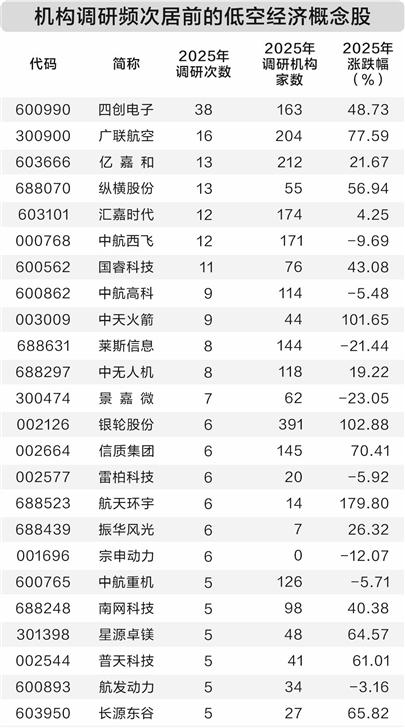
工业和信息化部数据显示,"十四五"时期,我国低空装备产业规模不断扩大,产业产值保持年均10%以 上的增速。截至2025年12月30日,已有1081家企业完成登记注册,备案产品3623种、超529万架。 中信建投表示,未来中国低空经济市场将成为万亿元蓝海。《通用航空装备创新应用实施方案(2024— 2030年)》明确提出,到2030年我国将形成万亿元级通用航空装备市场规模。 | | | 机构调研频次居前的低空经济概念股 | | | | --- | --- | --- | --- | --- | | 代码 | 简称 | 2025年 调研次数 | 2025年 调研机构 家数 | 2025年 涨跌幅 (%) | | 600990 | 四创电子 | 38 | 163 | 48.73 | | 300900 | 广联航空 | 16 | 204 | 77.59 | | 603666 | 亿嘉和 | 13 | 212 | 21.67 | | 688070 | 纵横股份 | 13 | 55 | 56.94 | | 603101 | 汇嘉时代 | 12 | 174 | 4.25 | | 000768 | 中航西飞 | 12 | 1 ...

国内现存低空经济相关企业15.94万家
Zhong Guo Jing Ying Bao· 2026-01-05 15:44
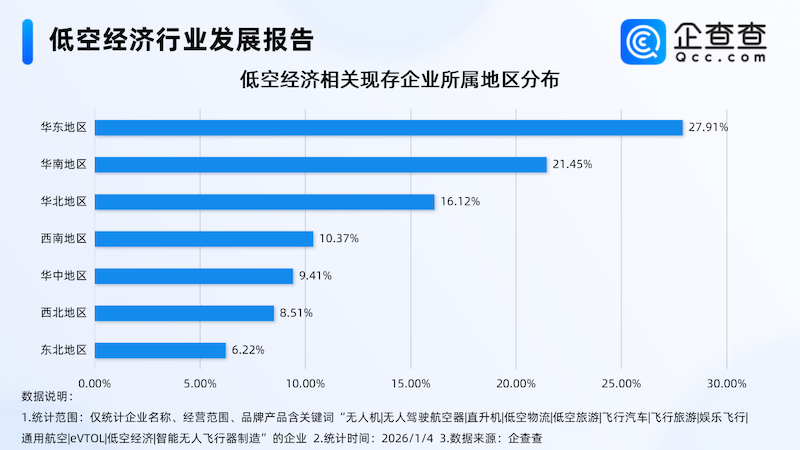
所谓低空经济是以eVTOL、工业级无人机等新型航空器研制为核心竞争力,强化颠覆性技术创新引领,广泛开展 有人驾驶和无人驾驶航空器的低空飞行活动,驱动设计制造、运营、消费多领域融合发展的创新性经济形态。 近日,上海市印发《上海市关于链接长三角加快建设低空经济先进制造业集群的若干措施》,提出到2028年,上 海低空经济核心产业规模达到800亿元左右,形成低空新型航空器完整产业链体系,建设低空经济国家先进制造业 集群,加快迈向比较优势凸显的"世界eVTOL之都"。 企查查数据显示,截至2026年1月4日,国内现存低空经济相关企业15.94万家,主要分布在华东地区、华南地区, 分别占比27.91%、21.45%。注册资本上,近五成相关企业注册资本在200万元以下。注册量方面,2023年以来低 空经济相关企业注册量呈逐年增长趋势,2025年注册量同比增长142.26%至4.9万家,达近十年来注册量及增速双 高峰。 eVTOL方面,截至目前,国内现存eVTOL相关专利达450项,其中70%相关专利申请于2024年及以后。 从分布区域来看,国内现存低空经济相关企业15.94万家,主要分布在华东地区、华南地区,分别占比27. ...
2025阳江企业界的高光时刻,你对哪个印象最深刻?
Sou Hu Cai Jing· 2026-01-05 14:53
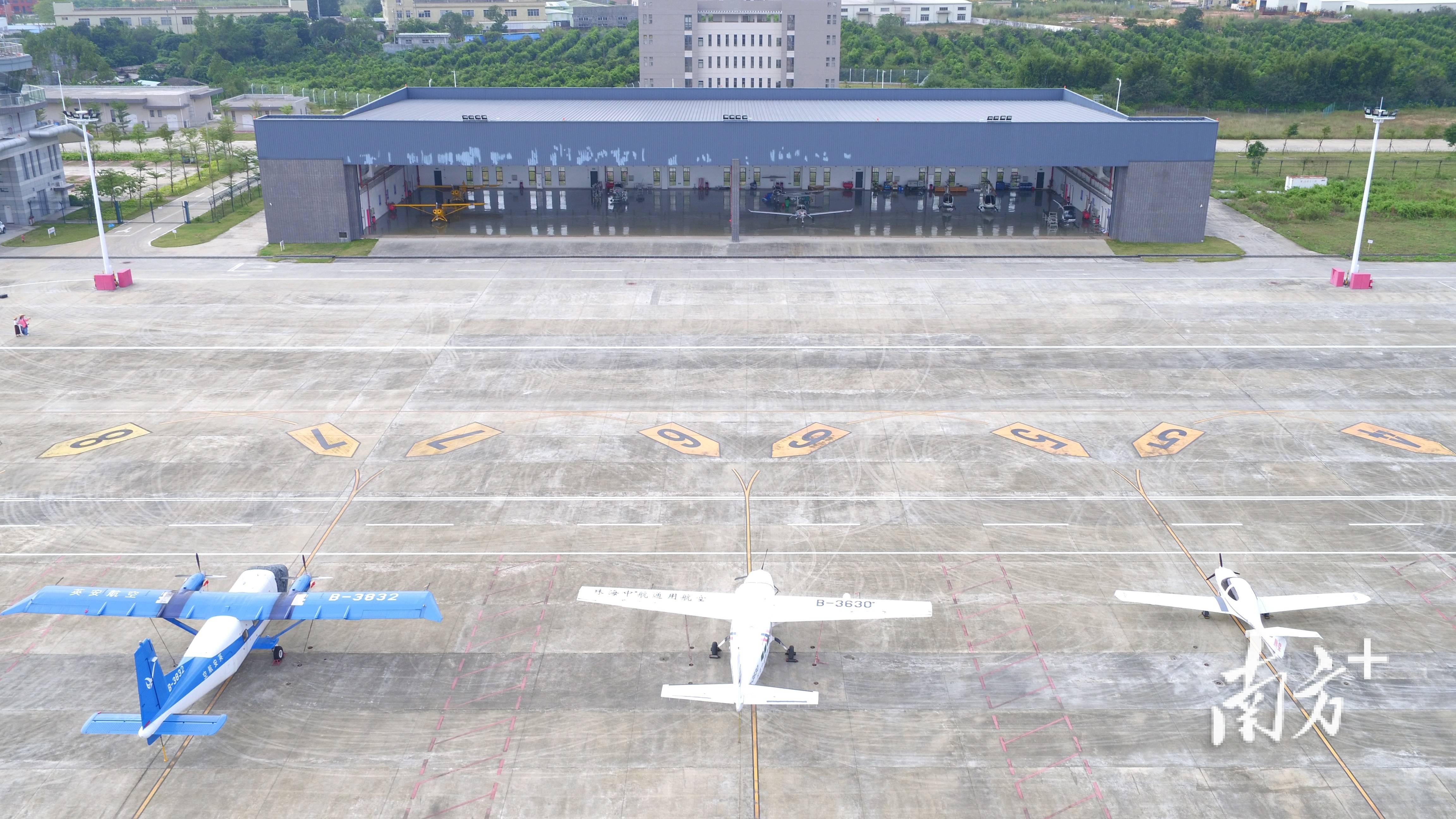
Core Insights - In 2025, Yangjiang is experiencing rapid innovation and development across various sectors, including low-altitude economy, marine economy, and renewable energy, showcasing a significant acceleration in growth. Group 1: Low-altitude Economy - Yangdong has introduced several low-altitude economy projects with a total planned investment of approximately 480 million yuan, including partnerships with Zhuhai Guangheng Technology and Tianjin Quadrant Aviation [5][7]. Group 2: Marine Economy - The establishment of the Marine Communication Navigation Remote Sensing Academy Workstation, led by Chinese Academy of Engineering academician Liu Jingnan, aims to enhance marine communication, navigation, and remote sensing technologies, providing high-precision support for marine ranching and disaster prevention [7]. Group 3: Renewable Energy - The Guangdong (Yangjiang) Wind Power Industry Alliance was formed to foster collaboration among enterprises, research institutions, and financial organizations, promoting the transition of Yangjiang's offshore wind power industry from aggregation to an ecological model [9]. - The first local wind turbine shipment to Europe, valued at over 130 million yuan, marks a significant milestone for Yangjiang's manufacturing sector, opening new international markets [17]. - The first containerized hydrogen production system in Yangjiang, which is also the first seawater hydrogen production device, supports the exploration of green hydrogen production [19]. Group 4: Agricultural Products - The Yangjiang lychee promotion event facilitated the signing of purchase agreements for 22,000 tons of lychee, generating sales worth 260 million yuan, highlighting the region's agricultural potential [12]. Group 5: Industry Recognition - Yangjiang secured two spots in the 2025 Guangdong Top 500 Enterprises list, with Guangdong Guangqing Metal Technology Co., Ltd. and Yangchun New Steel Co., Ltd. being recognized for their sustained performance [25]. Group 6: Innovation and Standards - The launch of the Zero Carbon Park standard during the Greater Bay Area Science Forum signifies Yangjiang's leadership in green energy practices, aiming for national recognition [28].
新劲刚:公司高度关注国家低空经济等新兴产业政策的发展导向
Zheng Quan Ri Bao· 2026-01-05 13:38
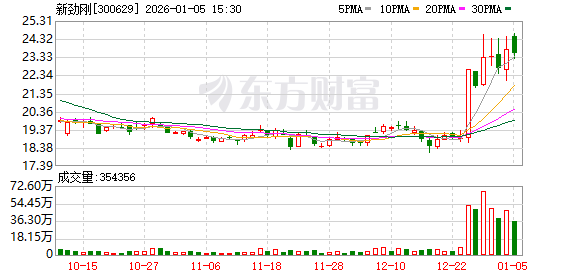
Core Viewpoint - The company is actively engaging in the low-altitude economy sector, responding to national policies and aiming for high-quality growth in this emerging industry [2] Group 1: Company Developments - The company’s subsidiary, Kaiji Intelligent, is a key player in the low-altitude economy and has achieved significant milestones in its business development [2] - In October 2024, Kaiji Intelligent signed a strategic cooperation agreement with Shenzhen Zhisheng High Technology Research Institute, indicating deepening collaboration [2] - In September 2025, Kaiji Intelligent invested 8 million yuan in Guangzhou Jinkong Technology Innovation Co., Ltd. to jointly develop drone countermeasure products, enhancing the commercialization process of low-altitude regulation systems [2] Group 2: Market Strategy - The company plans to closely monitor the development trends in the low-altitude economy industry and leverage Kaiji Intelligent's technological expertise and project experience [2] - The company aims to actively expand its market presence in the low-altitude economy sector, striving for improved operational performance to benefit investors [2]

低空经济寻路:商业化加速与资本分化并行
2 1 Shi Ji Jing Ji Bao Dao· 2026-01-05 12:40
Group 1: Core Insights - The E40H unmanned aerial vehicle system developed by Yufeng Future's subsidiary, Fukun, has successfully obtained a Type Certificate (TC) from the Civil Aviation Administration of China (CAAC) [1][2] - E40H is the first medium composite wing and hybrid power unmanned aerial product to receive TC certification in China, marking a significant milestone in the country's low-altitude economy [1][2] - The certification indicates that E40H meets the stringent airworthiness standards set by the CAAC, enabling it for large-scale commercial operations [1][2] Group 2: Industry Developments - The low-altitude economy sector is accelerating its airworthiness certification process, with several models expected to complete TC certification by 2026, including Yufeng Future's M1B and others [1][3] - The low-altitude economy market in China is projected to reach 1.5 trillion yuan by 2025 and is expected to exceed 2 trillion yuan by 2030, indicating strong growth potential [3][4] Group 3: Investment Trends - In 2025, the low-altitude economy is experiencing a "capital explosion year," with 244 financing events totaling 220.89 billion yuan reported by November 24, 2025 [4][5] - Major investments are concentrated in leading companies within the industry, with significant single financing amounts reported for companies like Xiaopeng Huitian and Yufeng Future [5] Group 4: Market Dynamics - Despite the robust activity in the primary market, the secondary market for low-altitude economy stocks has cooled, with leading companies experiencing stock price declines of over 20% [5][7] - Industry experts highlight ongoing challenges such as insufficient infrastructure, complex airspace management, and the need for improved safety guarantees as critical issues facing the low-altitude economy [7]

【研报行业】无光不AI!硅光产业投资全梳理:从Fab厂到光模块,这些公司卡位算力新基建
第一财经· 2026-01-05 11:27
Group 1 - The article emphasizes the significance of AI and the new computing power revolution, highlighting a potential 10x market expansion with profits concentrating in specific segments of the supply chain [1] - A forecast suggests that 2026 may mark the year for China's commercial rocket reusable launch, urging attention to core "shovel stocks" and new 3D printing technology routes in commercial aerospace investments [1] - The low-altitude economy in Shanghai is undergoing an upgrade, indicating that the eVTOL (electric Vertical Take-Off and Landing) industry chain is at a critical juncture [1] - Elon Musk has accelerated production in the brain-computer interface industry, signaling a pivotal turning point for this sector [1]

低空经济梦碎,木林森的下一个增长点在哪?
Tai Mei Ti A P P· 2026-01-05 11:09
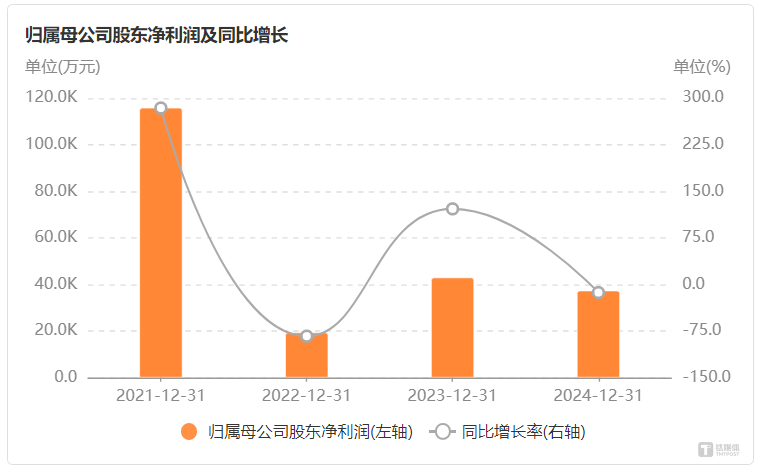
Core Insights - The company Mulinson Co., Ltd. attempted to enter the low-altitude lighting market to create a second growth curve but ultimately failed in its plans after a year of efforts [1][3]. Group 1: Low-altitude Economic Landscape - The low-altitude economy was officially recognized as a national strategic emerging industry in 2024, with a projected market size of 1.5 trillion yuan by 2025 and expected to exceed 3.5 trillion yuan by 2035 [2]. - Nearly 30 provinces in China have included the development of the low-altitude economy in their government work reports or related policies, leading to significant stock performance in related companies [2]. Group 2: Mulinson's Strategic Moves - In January 2025, Mulinson signed a cooperation agreement with New Aviation Technology Co., Ltd. to acquire 51% of its shares, aiming to gain resources and capabilities in low-altitude lighting [2]. - The agreement included profit commitments from New Aviation Technology, with net profits promised to be no less than 50 million yuan, 60 million yuan, and 70 million yuan from 2025 to 2027 [2]. Group 3: Termination of Cooperation - In January 2026, Mulinson announced the termination of the cooperation agreement due to a lack of consensus on core arrangements, marking the failure of its initial attempt to enter the low-altitude economy [3]. Group 4: Financial Performance Challenges - Mulinson has faced ongoing performance pressure, with net profits dropping from 1.05 billion yuan in 2021 to 155 million yuan in 2022, followed by a recovery in 2023 and another decline to 311 million yuan in 2024 [4]. - For the first three quarters of 2025, Mulinson reported a slight revenue decline of 0.10% year-on-year, with net profits plummeting by 42.36% to approximately 209 million yuan [6]. - The company attributed the significant drop in profits to increased expenses, particularly in sales and R&D, as it continues to invest in overseas sales channels and new product development [7].

北京剑指前沿领域!新质生产力成“必答题”,20余省份如何破局?
Bei Jing Shang Bao· 2026-01-05 06:50
Core Viewpoint - The article emphasizes the importance of "new quality productivity" as a core driver for economic transformation and high-quality development in China, underpinned by regional differentiation based on local resources and industrial foundations [1][2]. Group 1: New Quality Productivity - New quality productivity integrates technological innovation, industrial upgrading, and green transformation, becoming a key strategy for regions to break away from traditional growth paths and establish competitive advantages [1][5]. - The "14th Five-Year Plan" and subsequent directives highlight the need for localities to develop new quality productivity tailored to their unique resources and industrial bases, fostering a unified yet differentiated approach across provinces [1][2]. Group 2: Technological Innovation - There is a consensus among provinces on the critical role of technological innovation in cultivating new quality productivity, with many regions prioritizing the enhancement of innovation capabilities [2][5]. - Specific initiatives include Beijing's focus on AI and quantum technology, Shanghai's development of a global innovation hub, and Hubei's commitment to becoming a national technology innovation center [2][3]. Group 3: Strategic Emerging Industries - The article notes a strategic focus on clusters of emerging industries such as AI, biomedicine, integrated circuits, and renewable energy, with provinces like Guangdong aiming to create trillion-yuan industry clusters [3][4]. - Regions are shifting from broad industrial bases to developing competitive advanced manufacturing clusters that leverage local strengths [3][4]. Group 4: Traditional Industry Transformation - The transformation of traditional industries through intelligent and digital upgrades is highlighted as a key measure to stimulate new quality productivity [4][5]. - Provinces like Liaoning and Jilin are implementing initiatives to enhance traditional sectors through digital technologies, aiming to improve core competitiveness [4][5]. Group 5: Regional Differentiation - The principle of "developing according to local conditions" is crucial for fostering differentiated strategies that avoid homogenization and encourage unique development paths [6][9]. - Eastern coastal provinces are focusing on high-end manufacturing, while central and western regions are leveraging their resource advantages to develop specialized industries [6][7][8]. Group 6: Innovation Ecosystem - The article discusses the importance of creating a robust innovation ecosystem that connects technology, industry, and finance, with many provinces establishing high-level innovation platforms [10][11]. - Collaborative efforts between enterprises, universities, and research institutions are emphasized to enhance the integration of education, technology, and talent [11][12]. Group 7: Future Industries - There is significant enthusiasm for laying the groundwork for future industries, with terms like low-altitude economy and quantum technology frequently appearing in regional plans [12][13]. - These initiatives are seen as strategic foresight to ensure sustainable growth and competitiveness in the long term [12][13]. Group 8: Legal and Policy Framework - The article highlights the need for a supportive legal and policy environment to facilitate the transformation of new quality productivity into a core driver of high-quality development [14]. - Recommendations include enhancing legal protections for innovation, improving market mechanisms, and creating a conducive ecosystem for technological advancement [14].
AI赋能低空经济:三大高潜力赛道即将引爆万亿市场
Tai Mei Ti A P P· 2026-01-05 04:05
Core Insights - The article discusses the evolution of China's low-altitude economy, highlighting a shift from traditional real estate to a new digital asset paradigm involving airspace below 1000 meters, which is expected to become a high-frequency trading asset by 2025 [1][2] Group 1: Low-altitude Economy Development - The low-altitude economy has transitioned from policy relaxation to industrial infrastructure development, marking a significant turning point in 2025 where applications are moving from single-point tests to large-scale clusters [2] - The explosion of the low-altitude economy relies on system-level scheduling capabilities rather than individual operators [3] Group 2: Core Drivers of Low-altitude Market - The core driver of the trillion-level low-altitude market is not merely the extension of the aviation manufacturing industry but rather an AI-driven "air operating system" that manages airspace operations [4] - Key technologies supporting this system include digital twins for airspace management, edge intelligence for autonomous decision-making, and swarm intelligence algorithms for coordinated operations [5] Group 3: Market Dynamics and Future Trends - As the industry matures, strict commercial rules will re-emerge in the low-altitude sector, leading to diminishing profits in hardware manufacturing, similar to the early smartphone market [6] - The future competitive landscape is likely to exhibit a "dumbbell structure," with one end focusing on core algorithms and platforms, while the other end specializes in vertical applications, leaving traditional aircraft manufacturers in a precarious position [7] Group 4: Strategic Focus for Businesses - Companies are advised to shift focus from hardware manufacturing to leveraging AI across traditional industries, including the low-altitude economy [8] - Understanding the data and algorithmic frameworks that underpin operations is more critical than merely achieving higher flight altitudes [9][10] Group 5: Infrastructure and Service Opportunities - The low-altitude economy requires invisible infrastructure, emphasizing the need for computational and communication capabilities, including low-altitude sensing networks and high-precision mapping services [12] - High-frequency vertical service providers that offer comprehensive solutions in high-risk and efficiency-demanding sectors will command premium pricing [12] - The post-operation market surrounding drones is expected to explode, with services like maintenance, AI pilot training, and automated positioning becoming vital segments [12]
上海再出新政发展低空经济
第一财经· 2026-01-05 03:27
Core Viewpoint - Shanghai aims to become the "world eVTOL capital" by 2028, targeting a core industry scale of approximately 80 billion yuan in the low-altitude economy, supported by new policies to enhance high-end manufacturing capabilities and attract leading eVTOL and drone companies [3][4][5]. Group 1: Policy Measures - The newly released measures propose to cultivate and attract 10 leading companies in eVTOL, industrial drones, and new energy aircraft, aiming for a manufacturing capacity of over 500 new aircraft and an additional investment of over 20 billion yuan in the industry [3]. - The measures emphasize regional collaboration, aiming to establish a national-level testing platform for new low-altitude aircraft and enhance cooperation between urban and regional areas in the Yangtze River Delta [3][4]. Group 2: Industry Development - Shanghai has a strong industrial foundation for low-altitude economy, with over 50% of the country's leading eVTOL companies based in the city, forming a comprehensive ecosystem for low-altitude economic activities [5]. - The city plans to focus on low-altitude economy, commercial aerospace, embodied intelligence, biological manufacturing, and smart terminals as new growth points, targeting an overall industry scale of 1 trillion yuan by the end of the 14th Five-Year Plan [4][5]. Group 3: Infrastructure and Collaboration - The establishment of the East China Drone Base as a national pilot zone for civil unmanned aerial vehicles is highlighted, which integrates R&D, manufacturing, flight services, and training into a low-altitude industry ecosystem [8]. - The Minhang District has formed a low-altitude economic industry alliance with 41 member units, achieving a total order amount of over 15 billion dollars since 2025, while the Yangpu District has over 130 related companies focusing on low-altitude R&D and applications [8].