航空航天

Search documents
科产融三重赋能 成都先进投资公司实现“开门红”
Xin Lang Cai Jing· 2026-01-27 18:56
Core Insights - Chengdu Advanced Investment Company has achieved a strong start in 2023 by leveraging the integration of science, industry, and finance to drive industrial development [1][2] Group 1: Industrial Development - The company aims to establish itself as a "national advanced manufacturing base" by focusing on high-end equipment and core sectors [1] - The production base for reusable liquid launch vehicles, developed by Star Glory, is progressing steadily and is expected to be completed by 2026, with an annual production capacity of 20 rockets [1] - Chengdu Kenen and the China Aero Engine Research Institute have successfully developed a third-generation industrial axial flow compressor, high-performance gas turbines, and gear assembly compressors, contributing to "Chengdu Intelligent Manufacturing" [1] Group 2: Investment Activities - In the beginning of the year, the company completed investments exceeding 650 million yuan in projects such as BOE Technology Group and Hub Power [1] - The company is leading the investment in the Jetta Technology headquarters project, which will promote the aggregation of the intelligent connected new energy vehicle industry chain in Chengdu, accelerating the formation of a billion-level industrial cluster [1] Group 3: Integration of Science and Industry - The Chengdu Heavy Industry Fund has extended its investment reach through a "mother fund + sub-fund" dual-drive model, targeting key enterprises in electronic information and aerospace while also preparing for future sectors like humanoid robots and advanced nuclear energy [1]
湖北:加速重构发展模式和增长动力 努力塑造更多依靠创新驱动、更多发挥先发优势的引领型发展
Shang Hai Zheng Quan Bao· 2026-01-27 18:36
Core Viewpoint - Hubei Province aims for a GDP growth of approximately 5.5% by 2025 and 2026, focusing on a green transformation and innovation-driven development to enhance its economic strength and competitiveness [1][2]. Economic Growth Targets - Hubei's GDP is projected to grow by 5.5% in both 2025 and 2026, with a consumer price increase of around 2% in 2026 [1]. - The government emphasizes a dual focus on supply and demand to stabilize economic growth through increased consumption, effective investment, and export stability [1][2]. Development Strategies - The province plans to cultivate new consumption growth points such as the primary economy, exhibition economy, and silver economy, while enhancing project planning and construction to support economic growth [2]. - Hubei will promote over 12,200 projects worth over 100 billion yuan to drive high-quality development through effective investment [2]. Innovation and Industry Upgrades - Hubei aims to accelerate the transformation of traditional industries like automotive while developing emerging sectors such as integrated circuits, aerospace, and biomedicine [3]. - The province will focus on future industries including low-altitude economy, green smart ships, and quantum technology, aiming to create world-class enterprises and industrial clusters [3]. Collaborative Development - Hubei will enhance cooperation with countries involved in the Belt and Road Initiative and RCEP members to boost trade and explore new trade forms like cross-border e-commerce [2]. - The integration of technological, industrial, and financial innovations is a priority to reshape the modern technology finance system and improve collaborative innovation frameworks [2][3].
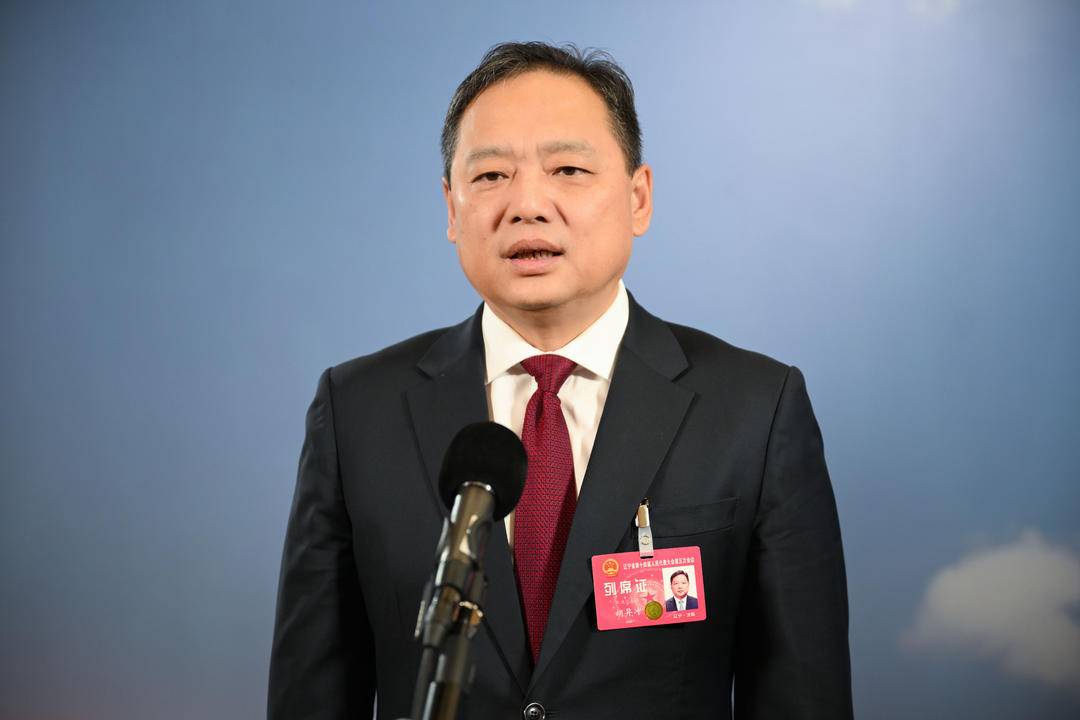
厅局长访谈丨胡异冲:加快构建具有辽宁特色的“2211”产业体系
Xin Lang Cai Jing· 2026-01-27 16:55
Core Viewpoint - The article emphasizes the importance of deepening "baseline management" and enhancing industrial operation scheduling and analysis to stabilize key sectors such as transportation, oil, and steel in Liaoning Province as it embarks on its "14th Five-Year Plan" [1] Group 1: Industrial Strategy - The provincial industrial and information technology system will focus on strengthening the foundation, building platforms, aggregating resources, and enhancing services to implement "foundation service" initiatives [1] - There will be a push for the transformation and upgrading of traditional industries, alongside the cultivation and expansion of strategic emerging industries, aiming to establish a distinctive "2211" industrial system in Liaoning [1] Group 2: Technological Innovation - The government plans to promote the intelligent transformation and digital transition of traditional industries, while also reinforcing the integration of technological and industrial innovation [1] - There is a focus on nurturing new industries such as integrated circuit equipment and aerospace, as well as forward-looking sectors like advanced energy storage and atomic-level manufacturing [1] Group 3: Enterprise Development - The strategy includes fostering high-quality enterprises and creating a batch of specialized, innovative "little giants," manufacturing champions, and high-tech enterprises [1] - The government aims to enhance the matching of production, demand, finance, and innovation through quality services and a favorable industrial ecosystem to create a first-class business environment [1]

国内首个!星际航行学院,正式成立
DT新材料· 2026-01-27 16:05
Core Viewpoint - The establishment of the Interstellar Navigation Institute at the University of Chinese Academy of Sciences marks a significant step in advancing China's aerospace capabilities and talent development in the field of interstellar navigation [3][4]. Group 1: Institute Establishment and Structure - The Interstellar Navigation Institute was officially inaugurated on January 27, 2023, and is a collaboration led by the Institute of Engineering Thermophysics of the Chinese Academy of Sciences [3]. - The institute focuses on key areas such as spacecraft design, propulsion, and intelligent control, and comprises four departments covering various research fields including space science and aerodynamics [3]. - The institute boasts a strong faculty with 6 academicians and over 30 high-level national talents, supported by five major aerospace research institutes [3][4]. Group 2: Funding and Talent Recruitment - The institute is actively recruiting overseas talents and offers substantial research funding, with project funding ranging from 10 million to 100 million yuan, matched by the Chinese Academy of Sciences [4]. - The funding is aimed at supporting both fundamental research and critical technology development, ensuring ample financial resources for high-level scientific innovation [4]. - The establishment of the institute is seen as a strategic move to meet national demands for deep space exploration and space science research over the next 10 to 20 years [4]. Group 3: Upcoming Events - The Future Industries New Materials Expo will take place from June 10 to June 12, 2026, at the Shanghai New International Expo Center, featuring over 800 exhibitors and 30 thematic forums [2][9]. - The expo will cover various sectors including robotics, aerospace, and advanced materials, highlighting the innovation and development in new materials [9][10].

时隔8年英国首相再访华 多位部长和50余家企业随访
2 1 Shi Ji Jing Ji Bao Dao· 2026-01-27 15:58
Group 1 - The visit of UK Prime Minister Starmer to China from January 28 to 31 marks the first visit by a UK Prime Minister since Theresa May in February 2018, highlighting the importance of UK-China relations amid increasing geopolitical tensions [1][2] - The UK delegation includes over 50 executives from major British companies across various sectors such as finance, pharmaceuticals, and manufacturing, indicating a strong interest in enhancing bilateral economic ties [2][6] - The Chinese Ministry of Commerce is preparing to sign trade and investment cooperation documents during the visit, aiming to create new growth points in UK-China economic cooperation [2][6] Group 2 - The visit is seen as a significant step towards restoring UK-China relations, which had faced challenges since the "Golden Era" began in 2015, with the current government seeking to improve bilateral ties [3][4] - Economic cooperation is a primary focus, with the UK aiming to revitalize its economy and improve living standards through enhanced trade with China, which is a key trading partner [6][7] - The UK is looking to diversify its partnerships and strengthen its economic position in light of tensions with the US, making cooperation with China increasingly vital [4][5] Group 3 - The UK has over 500 Chinese enterprises operating within its borders, showcasing the diverse and growing nature of UK-China economic collaboration [7] - Key areas for cooperation include traditional manufacturing, financial services, and emerging sectors like green transformation and digital economy, which align with China's high-level opening-up strategy [7][8] - The UK's ability to formulate an independent China policy post-Brexit allows it to focus on sectors where it can gain the most benefit, such as healthcare and renewable energy [8]

波音(BA.US)复苏中:Q4收入与现金流超预期,年度交付量创7年新高,“特朗普红利”带来创纪录积压订单
Zhi Tong Cai Jing· 2026-01-27 13:53
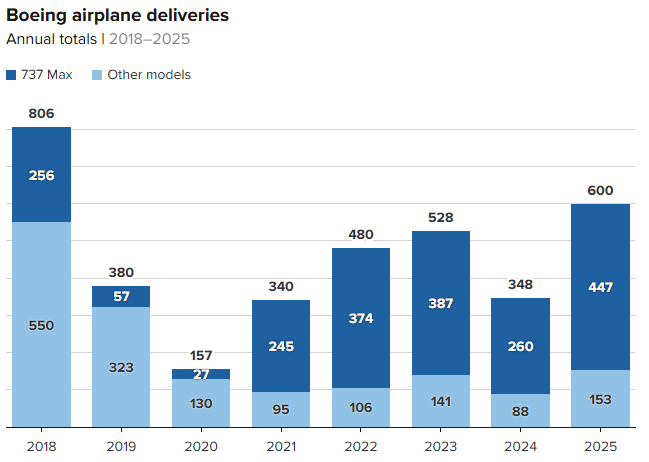
Core Insights - Boeing has achieved positive cash flow for the second consecutive quarter and reported significant sales growth for the last three months of 2025, benefiting from a surge in orders [1] - The company’s CEO, Kelly Ortberg, expressed optimism about the progress made and the heightened expectations from customers and stakeholders for the upcoming year [1] - Boeing is recovering from a five-year operational and quality crisis, increasing production rates for the 737 and 787 Dreamliner, and has seen a nearly threefold increase in aircraft deliveries in the last quarter [1] Financial Performance - In Q4, Boeing reported a free cash flow of $375 million, exceeding analyst expectations, with revenue increasing by 56.8% year-over-year to $23.95 billion, also above forecasts [1] - The adjusted earnings per share for Q4 reached $9.92, the highest quarterly level in over a decade, primarily due to a $9.6 billion gain from the sale of its digital aviation subsidiary, Jeppesen [2] - Excluding this gain, Boeing's per-share loss was worse than analysts' predictions, indicating underlying challenges [2] Production and Orders - The monthly production rate for the 737 program increased to 42 aircraft, while the 787 program's rate rose to 8 aircraft, with Boeing committed to maintaining these levels [2] - In Q4, Boeing received 336 net orders and delivered 160 aircraft, with a backlog exceeding 6,100 aircraft valued at over $500 billion [2] - Boeing delivered 600 aircraft last year, nearly double the expected deliveries for 2024, marking the highest delivery year since 2018 [2] Competitive Landscape - Boeing's commercial aircraft revenue surpassed Wall Street expectations at $11.38 billion, a nearly 140% increase year-over-year, while its defense segment revenue grew by 37% to $7.42 billion [3] - Despite Boeing's recovery, Airbus delivered more aircraft than Boeing last year, with 793 deliveries, although this was below Airbus's record of 863 deliveries in 2019 [6] - Boeing's net orders for 2025 exceeded those of Airbus, with 1,173 net orders compared to Airbus's 889, as airlines plan for growth and replacement of older aircraft [6] Challenges Ahead - Boeing still faces significant challenges, including the need for FAA approval to increase the monthly production of the Max models beyond 42 aircraft following a near-disastrous incident in January 2024 [6] - The company is under pressure to provide clearer timelines for the certification of the 737 Max 7, Max 10, and 777X models, as well as updates on its defense business, which has faced delays [7] - Boeing is also working to integrate its acquisition of Spirit AeroSystems and may face labor disputes as contracts for 16,000 engineers and technicians are set to expire in October [7]

独家揭秘中国首个星际航行学院:从近地到深空 星际航行梦何以照进现实
Xin Jing Bao· 2026-01-27 13:13
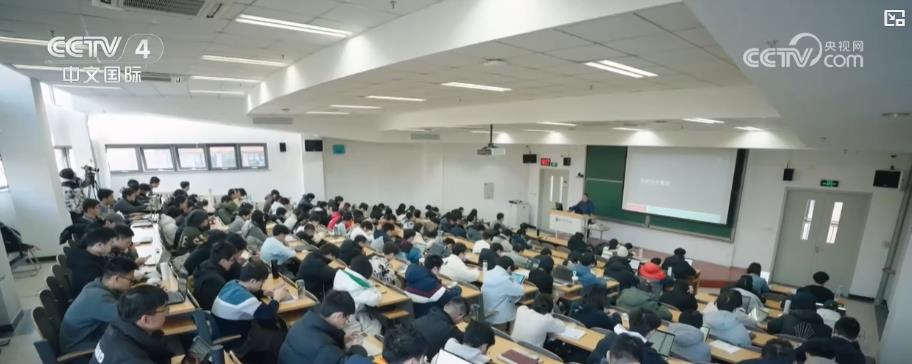
Core Insights - The establishment of the "Interstellar Navigation" college at the University of Chinese Academy of Sciences marks a significant step in addressing the shortage of top interdisciplinary talent in China's space exploration efforts [1][2][4] - The college aims to integrate various disciplines, including aerospace engineering, physics, chemistry, biology, artificial intelligence, and materials science, to foster collaboration among scientists and engineers [2][3] - A total of 22 new core courses have been added to the curriculum, focusing on cutting-edge topics such as interstellar dynamics, planetary habitability, and interstellar sociology [3][5] Talent Acquisition and Funding - The college is actively recruiting talent with substantial funding support, offering project funding ranging from 10 million to 100 million yuan for individual projects [4][5] - Innovative training models will be implemented, emphasizing real-world problem-solving and practical skills, while moving away from traditional publication-centric evaluation [5] Educational Infrastructure - The college will leverage existing platforms and establish new ones, such as drone simulation and space science satellite teaching platforms, to provide immersive training environments for students [5] - The curriculum will cover a comprehensive knowledge system from space engineering to interstellar navigation, preparing students for various roles in the aerospace sector [5][6] Future Prospects - The next 10 to 20 years are seen as a critical window for breakthroughs in interstellar navigation, with foundational research and technological advancements expected to reshape deep space exploration [6][7] - The college's establishment is anticipated to lead to a surge in innovative outcomes in the aerospace field, contributing to China's competitive edge in space exploration [7]
通光线缆:公司是国家电网、南方电网等单位的主要合格供应商
Zheng Quan Ri Bao Wang· 2026-01-27 13:12
证券日报网讯1月27日,通光线缆(300265)在互动平台回答投资者提问时表示,公司是国家电网、南 方电网、通信运营商、中航集团、航天科技(000901)集团、航天科工集团和中国电子科技集团的各主 机单位和科研院所等单位的主要合格供应商。 ...

布局未来20年关键窗口期:星际航行学院点燃太空探索“人才引擎”
Yang Shi Wang· 2026-01-27 13:06
Core Perspective - The establishment of China's first Interstellar Navigation Academy aims to cultivate interdisciplinary talents needed for deep space exploration, focusing on areas such as interstellar propulsion and deep space communication [1][14]. Group 1: Academy Overview - The Interstellar Navigation Academy was officially inaugurated on January 27, focusing on cutting-edge fields like interstellar propulsion and deep space navigation [1]. - The academy will create six specialized platforms for experimental teaching and innovation, providing an immersive training environment [1]. Group 2: Academic Focus - The core discipline of the academy is Aerospace Science and Technology, with key areas including spacecraft design and intelligent control [2][4]. - The academy is structured into four departments, covering research fields such as space science, aerodynamics, and materials mechanics [4]. Group 3: Faculty and Resources - The academy boasts a faculty of six academicians and over 30 high-level national talents, supported by five major aerospace research institutes [5][7]. - It has access to various advanced national experimental platforms in areas like aerospace engines and manned space stations, providing a solid foundation for academic development and research innovation [7]. Group 4: Theoretical Framework - Qian Xuesen's work "Introduction to Interstellar Navigation" lays out a comprehensive theoretical framework for interstellar travel, distinguishing between interplanetary and interstellar navigation [10]. - The concept of interstellar navigation involves both exploring the solar system and venturing beyond it into deep space [10]. Group 5: Talent Development - The academy aims to develop versatile talents capable of addressing the full spectrum of challenges in interstellar navigation, including operating spacecraft and solving scientific and survival issues in deep space [11][13]. Group 6: Future Outlook - The next 10 to 20 years are seen as a critical window for significant advancements in the field of interstellar navigation, with original innovations and technological breakthroughs expected to profoundly impact deep space exploration and national competitiveness [14].