可再生能源

Search documents
42.1%!日本油气自给率升至2009年以来最高水平!背后有何布局?
Sou Hu Cai Jing· 2026-02-17 09:38
Core Insights - Japan's oil and gas self-sufficiency rate has surged to 42.1%, the highest level since 2009, marking a significant recovery from a low of under 10% post-Fukushima disaster [2][3] Group 1: Background - Japan is heavily reliant on energy imports, previously exceeding 92% dependency, and has been the world's third-largest oil and gas importer [3] - Following the Fukushima nuclear disaster in 2011, Japan's nuclear power generation halted, leading to increased reliance on imported oil and gas, resulting in substantial trade deficits [3] Group 2: Reasons for the Surge - The increase in self-sufficiency is attributed to three main actions: - Significant investment in domestic oil and gas production, with over a trillion yen spent on upgrading technology in local oil fields, leading to a projected 28% increase in domestic crude oil production and a 22% increase in natural gas production by 2025 [5] - Acceleration of nuclear power plant restarts, with over 10 reactors back online, raising nuclear's share in the energy mix from under 3% to 18% [6][7] - Implementation of energy-saving technologies and growth in renewable energy, with industrial energy consumption down by 11% and renewable energy generation exceeding 25% [7][9] Group 3: Economic Implications - The rise in self-sufficiency is expected to reverse Japan's trade deficit, potentially saving over ten trillion yen annually on energy imports, thus stabilizing the yen [10] - The manufacturing sector, particularly in automotive and electronics, will benefit from reduced energy costs, improving profit margins and retaining jobs [11] - Enhanced energy self-sufficiency increases Japan's economic resilience against global geopolitical tensions and energy supply disruptions [12] Group 4: Broader Context - Japan's energy self-sufficiency surge reflects a broader global shift from prioritizing efficiency to ensuring energy security, indicating a significant transformation in global energy dynamics [14]

China Hits Renewable Milestone, But Coal Isn’t Going Anywhere
Yahoo Finance· 2026-02-17 00:00
For the first time ever, China now has more operating power capacity from clean energy sources than capacity running on fossil fuels, thanks to a decade of booming solar and wind installations. China, the undisputed global leader in clean energy investment, has 52% of operating power capacity coming from non-fossil fuel sources as of February 2026, while 48% of installed capacity is fossil fuel-based, according to data tracked by Global Energy Monitor. For years, China, the world’s biggest greenhouse g ...
Brookfield Renewable Corporation (NYSE: BEPC) Overview
Financial Modeling Prep· 2026-02-16 02:00
Core Insights - Brookfield Renewable Corporation (NYSE:BEPC) is a significant player in the renewable energy sector, with a diverse portfolio including hydroelectric, wind, and solar power plants, and an installed capacity of approximately 12,723 megawatts [1][5] - The consensus price target for BEPC's stock has remained stable at an average of $36, with Morgan Stanley setting a higher target of $39, indicating positive expectations for the company's future performance [2][5] - The company's strong operational performance and strategic positioning in the renewable energy market contribute to its stable price target, with a noted structural shift in global power markets driven by increased electricity demand [3][5] Market Trends and Future Outlook - Investors should keep an eye on upcoming company news or earnings reports that may influence analysts' perspectives and impact BEPC's stock target price [4] - Broader market trends in renewable energy and potential regulatory changes are crucial factors that could shape future price targets for BEPC, as the world increasingly embraces sustainable energy solutions [4]


中印燃煤发电量半世纪来首次同步减少
日经中文网· 2026-02-16 00:33
Core Insights - China and India, the world's largest coal consumers, are expected to reduce their reliance on coal-fired power generation for the first time in nearly 50 years by 2025, with China's coal power generation decreasing to 5735 TWh (down 1.6%) and India's to 1472 TWh (down 3%) [6][7] - The rapid growth of renewable energy sources, particularly solar and wind, is driving this shift, with China's solar power expected to increase by 43% and wind power by 13% in 2025 [6][7] - The decline in coal demand is impacting coal prices, leading to a supply surplus and prompting major coal-exporting countries like Indonesia to cut production targets and impose export limits [6] Group 1 - The increase in renewable energy generation is expected to create a turning point in the trend of rising global CO2 emissions, with over 90% of the increase from 2015 to 2024 attributed to the power sectors of China and India [4][7] - Despite the reduction in coal power generation, China is projected to add 78 GW of new coal power capacity by 2025, the highest in the past decade, which raises concerns about potential increases in global CO2 emissions if operational rates remain unchanged [7] - The transition to a low-carbon society hinges on whether coal power can shift from being a primary energy source to a supportive role for variable renewable energy sources [7]
【环球热评局】以对话促合作,CMP二十年见证中美工商界“双向奔赴”
Sou Hu Cai Jing· 2026-02-15 05:56
Core Insights - GE Aviation's business trajectory in China over the past two decades reflects the evolution of Sino-U.S. economic and industrial cooperation, transitioning from engine and maintenance services to involvement in domestic aircraft projects like ARJ21 and C919, and establishing joint ventures with local partners [1] - The 20th anniversary of the China-U.S. Enterprise Cooperation Project (CMP) serves as a platform for enhancing dialogue and collaboration between the two countries, with high expectations expressed by business leaders for strengthened cooperation this year [1] - The CMP has facilitated over 3000 companies from both nations through numerous events, highlighting the rapid development and upgrading of Sino-U.S. economic and trade relations over the past two decades [1] Trade Growth - The total trade volume between China and the U.S. increased from $211.6 billion in 2005 to $688.3 billion in 2024, marking significant growth [2] - U.S. exports to China reached $143.55 billion in 2024, a 648.4% increase from $19.18 billion in 2001, significantly outpacing the overall U.S. export growth of 183.1% during the same period [2] - Service trade between the two countries expanded from $8.95 billion in 2001 to $66.86 billion in 2023, reflecting a sixfold increase [2] Emerging Cooperation Areas - The CMP is focusing on expanding cooperation in emerging fields such as green technology, low-carbon initiatives, rail transportation, and financial investment [5] - Chinese companies are actively exploring global opportunities in clean fuel and green technology, indicating a shift towards international promotion of these sectors [3] Foundation of Cooperation - The foundation of Sino-U.S. relations is rooted in strong grassroots exchanges, with the CMP serving as a significant platform for enhancing cooperation between businesses [6] - The American Chamber of Commerce in China reports that 52% of surveyed companies still view China as one of the top three investment destinations globally, indicating continued interest in the Chinese market [7] Future Directions - Looking ahead, the CMP aims to enhance service efficiency and facilitate deeper cooperation in industrial and supply chains, with plans for high-profile economic activities and events [10] - The fourth Chain Expo in Beijing is set to further strengthen Sino-U.S. collaboration through this platform [10]
1亿美元贷款用于帮助泰国工业园区减少排放
Shang Wu Bu Wang Zhan· 2026-02-14 15:59
Core Viewpoint - The Thailand Industrial Estate Authority (IEAT) has secured a $100 million loan from the World Bank to support projects aimed at reducing carbon dioxide emissions in industrial parks and facilitating carbon credit trading [1] Group 1: Loan and Financial Support - The $100 million budget is part of a larger $200 million loan from the World Bank aimed at supporting Thailand's low-carbon city and carbon market development plans [1] - The Thai cabinet approved the plan at the end of last year and instructed the Ministry of Finance to guarantee the loan provided to the Export-Import Bank of Thailand [1] Group 2: Carbon Credit Trading and Renewable Energy - IEAT aims to promote the use of ground-mounted solar power plants, floating solar power plants, and rooftop solar panels [1] - Carbon credits, which represent the amount of greenhouse gas emissions reduced by environmental projects, can be sold to companies looking to offset their emissions, making them a crucial tool in global climate strategies [1] - The carbon credits will be certified under the Gold Standard, a recognized benchmark for measuring the quality and integrity of carbon reduction projects [1] Group 3: Potential and Goals - A preliminary study by the World Bank identified the Map Ta Phut and Laem Chabang industrial zones as having potential for carbon credit trading-related projects [1] - The Ministry of Energy is preparing to select development areas and invite investors to participate in renewable energy projects [1] - Thailand aims to reduce cumulative greenhouse gas emissions by 2.33 million tons of CO2 equivalent within the next ten years [1]
直通部委|市监总局约谈7家平台企业 三部门推动酿酒产业提质升级
Xin Lang Cai Jing· 2026-02-14 10:20
Group 1: Regulatory Actions - The State Administration for Market Regulation (SAMR) has summoned seven platform companies including Alibaba, Douyin, Baidu, Tencent, JD.com, Meituan, and Taobao Shanguo to enforce compliance with various laws and regulations, aiming to standardize promotional activities and eliminate "involution" competition [1] - The People's Bank of China and other financial regulatory bodies have issued guidelines to establish a regular financial support mechanism to prevent poverty and promote rural revitalization, focusing on optimizing small loans for impoverished populations and enhancing financial resources for underdeveloped areas [1] Group 2: Water Resource Management - The Pearl River Basin has dispatched nearly 9 billion cubic meters of water to ensure water supply for the Guangdong-Hong Kong-Macao Greater Bay Area, significantly improving the average flow rate at key monitoring stations [2] Group 3: Elevator Safety Standards - The National Market Supervision Administration is seeking public opinion on the draft of the "Elevator Safety Technical Regulations," which aims to enhance safety standards for elevators across their entire lifecycle, addressing issues like manufacturing quality control and maintenance management [3] Group 4: Renewable Energy Certificates - In January 2026, China issued 196 million green certificates related to renewable energy projects, with 151 million being tradable, indicating a significant increase in the development and utilization of renewable energy [4] Group 5: Tax Incentives for Agriculture - From January 1, 2026, to December 31, 2030, there will be a tax exemption on the import of seeds and military working dogs to enhance agricultural quality and competitiveness [5] Group 6: Wine Industry Development - The Ministry of Industry and Information Technology has released guidelines for the wine industry, aiming for significant improvements in product quality, brand reputation, and the establishment of large-scale production areas by 2030 [6] Group 7: Tea Industry Growth - The tea industry aims to reach a total scale of 1.5 trillion yuan by 2030, with significant growth in revenue from refined tea processing and the establishment of a modernized tea industry system [7]
阿尔及利亚与欧盟深化能源伙伴关系,巩固天然气与氢能合作
Shang Wu Bu Wang Zhan· 2026-02-14 08:32
Core Viewpoint - Algeria reaffirms its position as a reliable energy supplier to Europe during the sixth high-level energy political dialogue with the EU, focusing on natural gas, hydrogen, and electricity cooperation [1] Group 1: Energy Cooperation - Algeria and the EU reached a new consensus on cooperation in natural gas, hydrogen, and electricity under the framework of the 2013 Energy Strategic Partnership Memorandum [1] - The EU acknowledges Algeria's critical role in ensuring the security of natural gas supply to Europe and encourages increased investment in Algeria's oil and gas sector [1] - Both parties emphasized the development of renewable energy and low-carbon technologies, leveraging Algeria's abundant resources and infrastructure [1] Group 2: Specific Projects and Initiatives - The meeting highlighted the SoutH2Corridor cross-border hydrogen project and electricity interconnection [1] - The TaqatHy+ renewable energy support program, set to launch in 2025, was also discussed, marking a shift in bilateral energy cooperation towards low-carbon transition and diversified collaboration [1]
2026年1月绿证核发1.96亿个,2025年电量绿证均价5.51元远超2024年的1.25元
Sou Hu Cai Jing· 2026-02-14 06:02
Core Insights - The National Energy Administration reported that in January 2026, a total of 196 million green power certificates (referred to as "green certificates") were issued, covering 832,000 renewable energy generation projects, with 151 million certificates eligible for trading, accounting for 76.79% of the total issued [1][2] - The trading activity remained robust, with a total of 102 million green certificates traded in January, including 33.69 million through green power trading and 68.37 million in separate transactions [1] - The price differentiation in separate transactions was notable, with 6.5 million certificates corresponding to 2024 generation sold at an average price of 1.25 yuan per certificate, while 61.88 million certificates for 2025 generation sold at an average price of 5.51 yuan per certificate, indicating a significant increase in both transaction volume and price for the latter [1] Industry Developments - Green certificates serve as the sole proof of the environmental attributes of renewable energy generation in China, with each certificate corresponding to 1,000 kilowatt-hours of renewable energy [2] - A recent meeting by the National Energy Administration emphasized the implementation of energy law requirements and the introduction of policies to set minimum consumption targets for renewable energy, aiming to enhance responsibility among key energy-consuming industries and enterprises [2] - By 2025, the newly installed capacity of renewable energy is expected to reach 452 million kilowatts, representing a year-on-year growth of 20.7%, with total renewable energy capacity projected to be 2.337 billion kilowatts, accounting for approximately 60% of the national power generation capacity [2]
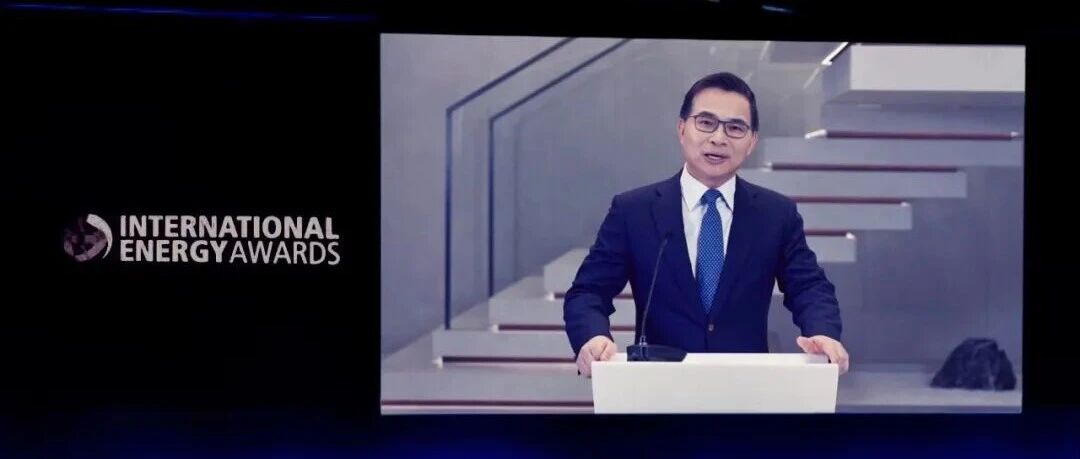
中国企业家首获能源界顶级殊荣
鑫椤锂电· 2026-02-14 02:07
Core Viewpoint - The article highlights the recognition of Zhang Lei, Chairman of Envision Technology, as the first entrepreneur to receive the President's Award from the Energy Institute, marking a significant acknowledgment of China's renewable energy contributions on a global scale [2][4]. 2025 Market Overview - The article outlines various market segments related to lithium batteries and renewable energy, including lithium carbonate, electrolytes, copper foil, lithium cobalt oxide, ternary materials, lithium iron phosphate, manganese lithium, and sodium-ion batteries, among others, indicating a comprehensive analysis of the industry's future [1]. Recognition and Leadership - Zhang Lei's leadership is emphasized, showcasing his vision in transforming the global energy landscape through innovative solutions, particularly in AI-powered energy systems, which are deemed replicable and scalable [2][4][6]. Renewable Energy Cost Reduction - The article notes that China's innovations have led to a 90% reduction in the costs of wind and solar energy, making renewable energy a competitive and accessible option globally [4][8]. Historical Context and Misinterpretation - Zhang Lei draws parallels between historical misconceptions of Chinese innovations, such as paper-making, and current misunderstandings of China's renewable energy technologies, asserting that these technologies are not merely surplus but rather abundant and essential for future civilization [9][10]. Future Energy Vision - The vision for future energy systems is outlined, emphasizing the need for sustainability, intelligence, and inclusivity, which are seen as critical for supporting the anticipated tenfold increase in global electricity demand over the next 50 years [8][11]. Global Impact and Market Expansion - Envision Technology's subsidiary, AESC, is highlighted for its significant role in the global lithium battery market, with production facilities established in multiple countries and successful collaborations with leading automotive companies [5][6]. Sustainable Development Advocacy - The article stresses the importance of sustainable development as the only path to robust and secure growth, with Envision's solutions providing practical examples for global energy transition [4][10].