快消品

Search documents
共探品牌价值新未来:第二十三届杰出品牌营销奖终审会将于明日举行
经济观察报· 2025-11-12 12:38
Core Insights - The 2025 Outstanding Brand Marketing Award has received over 200 entries from more than 70 companies, with over 90 entries making it to the final review stage [1][2] - The award, co-hosted by the Economic Observer and the Hong Kong Management Association, focuses on innovation and transformation in Chinese marketing practices, with this year's theme being "The Collision of Brand Economy and Traffic Economy" [2][8] Summary by Sections Award Overview - The award has a history of over 20 years and aims to highlight representative value cases in the industry, promoting a shift from "traffic competition" to "value cultivation" [2][8] - The final review will feature a diverse panel of experts from academia, institutions, and brands to select benchmark cases [8] Entries and Categories - The entries cover various sectors including home, travel, dining, food, apparel, and beauty, showcasing new scenarios and applications [1][2] - A total of 91 cases have been shortlisted for the final review, focusing on the deep integration of brand content and market insights [2] Upcoming Events - The 2024-2025 Annual Marketing Conference and the 23rd Outstanding Brand Marketing Annual Meeting will be held on December 10, 2024, in Beijing [12]


巴菲特:穿越周期的智者
2 1 Shi Ji Jing Ji Bao Dao· 2025-11-11 04:06
Core Insights - Warren Buffett officially announced his retirement as CEO of Berkshire Hathaway, marking the end of over 60 years of leadership and leaving behind a legacy of wisdom that transcends monetary value [2][5] Company Overview - Buffett's plan includes converting 1,800 shares of Class A stock into 2.7 million shares of Class B stock, which will be donated to four family charitable foundations [2] - The main differences between Class A and Class B shares lie in their price, voting rights, and liquidity, with Class B shares having only one ten-thousandth of the voting power of Class A shares [2] - This strategic move is seen as a way to mitigate stock price volatility while balancing future company operations with family wealth transfer [2] Philanthropic Commitment - Buffett has committed to donating 99% of his wealth to charitable causes, focusing on poverty alleviation, education, health, food and water security, and gender equality [3] - Since 2006, Buffett has donated approximately 5% of his Berkshire stock annually, aiming to witness the impact of his donations during his lifetime [3] Investment Performance - Under Buffett's leadership from 1965 to 2022, Berkshire Hathaway achieved an annualized return of 20.3%, significantly outperforming the S&P 500's 9.7% during the same period [4] - The price of Class A shares has surpassed $700,000, illustrating the immense growth of the company [4] Investment Philosophy - Buffett advocates for a long-term investment approach, famously stating that if one does not intend to hold a stock for ten years, they should not hold it for ten minutes [4] - His investment criteria include companies with core technology, strong cost control, and good brand recognition, emphasizing the importance of a "margin of safety" when purchasing stocks [4] Legacy and Influence - Buffett's retirement signifies the end of an era, but his principles of kindness, wisdom, cycles, and value investing continue to resonate in the global capital markets [5] - His approach aligns with Eastern philosophies that emphasize the benefits of good deeds and the avoidance of misfortune, garnering him a large following in the investment community [5]
解构单身经济Vol.2:独居青年消费省字诀—精打细算里的小日子
凯度消费者指数· 2025-11-11 03:52
Core Insights - The article highlights the growing trend of single-person households in China, particularly among young adults under 29, and their unique consumption patterns in the fast-moving consumer goods (FMCG) sector [1][2][3] Consumption Behavior - Single youths exhibit a "frugal and restrained" consumption trend, with a decrease in average purchase prices across 69% of FMCG categories, reflecting a focus on cost-effectiveness and careful decision-making [2][3] - Despite their frugality, there is a strong preference for high-quality, small-sized products that enhance their living experience, indicating that their restraint does not compromise their quality expectations [2][4][12] Demographic Trends - The population of single youths in urban areas has nearly doubled from 2010 to 2020, making them a significant target demographic for brands looking to expand their consumer base [1][3] Product Preferences - Single youths show a diverse range of product preferences, with a higher consumption share in functional beverages and lifestyle-enhancing products like cat food and scented candles, which contribute to a more enjoyable living environment [4][7] - They prefer smaller packaging sizes for convenience and flexibility, allowing them to try different flavors without sacrificing quality [7][9] Channel Preferences - Online shopping remains the primary channel for single youths, with traditional e-commerce platforms like Taobao and JD experiencing slower growth, while platforms like Douyin are seeing double-digit growth due to their engaging content and social shopping experiences [8][9] - Proximity stores and convenience stores are favored for their immediate availability, catering to the quick replenishment needs of single youths [9][12] Brand Strategy - Brands targeting single youths should focus on appropriate pricing strategies and packaging sizes that align with their consumption habits, emphasizing quality and value [12][13] - Understanding the unique consumption needs of single youths is crucial for brands to effectively capture this growing market segment [13]

上海、深圳等一线城市,已出现四大现象,值得大家深思
Sou Hu Cai Jing· 2025-11-08 14:58
Core Insights - Major cities like Shanghai and Shenzhen are experiencing significant changes, reflecting deeper market logic shifts that require attention to the real needs and feelings of residents rather than just economic metrics [1][9] Employment Market - The job market in Shanghai and Shenzhen is polarized, with high-end positions facing intense competition, while basic manufacturing and service jobs struggle to attract workers [3] - For example, a factory in Shenzhen offers a monthly salary of 8,000 yuan but still cannot find workers, indicating a mismatch between educational output and industry demand [3] Real Estate Market - There is a stark divide in the real estate market, with luxury properties in Shanghai seeing a 15% increase in sales volume year-on-year, while demand for affordable housing has dropped by 22% [3] - In Shenzhen, the average price of second-hand homes has decreased from 83,000 yuan per square meter at its peak to 65,000 yuan, yet ordinary buyers still find it unaffordable [3] Consumer Behavior - There is a trend of consumption downgrade and increased savings, with luxury goods sales in Shanghai dropping by 8% year-on-year, while sales of fast-moving consumer goods under 100 yuan rose by 25% [5] - The proportion of residents saving money has increased to 38%, with families saving an average of 2,000 yuan more per month compared to before [5] Talent Migration - A "reverse siphon" effect is occurring, with more young people leaving first-tier cities for second-tier cities, as evidenced by a 45% increase in those returning to seek jobs in second-tier cities from Shenzhen [7] - The willingness of fresh graduates in Shanghai to stay has fallen below 60%, driven by high living costs and pressures in first-tier cities [7] Conclusion - The four phenomena observed in Shanghai and Shenzhen are indicative of a fundamental change in market dynamics, emphasizing the need for urban development to balance economic growth with the well-being of residents [9]

聚焦进博|“中马合作远超贸易数据本身”
Guo Ji Jin Rong Bao· 2025-11-08 08:57
Group 1 - The Malaysia International Halal Showcase (MIHAS) is the largest trade promotion activity in China to date, coinciding with the 8th China International Import Expo (CIIE) [1] - Malaysia has been China's largest trading partner for 16 consecutive years, highlighting the deep-rooted trust and cooperation beyond mere trade data [1][6] - The Malaysian delegation at MIHAS consists of over 250 companies and institutions, with 800 representatives and more than 200 exhibition booths, aiming for a trade total of 2.5 billion MYR [3][4] Group 2 - The CIIE serves as a crucial platform for Malaysian companies, especially SMEs, to connect with high-quality consumers and partners in China and East Asia [3][4] - The Malaysia External Trade Development Corporation (MATRADE) plans to leverage the CIIE to introduce more high-value agricultural products to the Chinese market [4] - The signing of the China-ASEAN Free Trade Area 3.0 upgrade protocol in Kuala Lumpur is expected to enhance Malaysia-China cooperation in digital economy, green economy, and supply chain connectivity [6][7] Group 3 - Malaysia aims to deepen cooperation with China in high-value products and services, particularly in high-end manufacturing sectors like electronics and semiconductors [7] - The 3.0 upgrade protocol establishes comprehensive digital trade rules and emphasizes the importance of supply chain fluidity post-pandemic, enhancing Malaysia's strategic position in the China-ASEAN supply chain [6][7] - The ongoing partnership is built on 50 years of diplomatic trust, with expectations for balanced, diversified, and resilient growth in Malaysia-China trade [7]
中马合作远超贸易数据本身
Guo Ji Jin Rong Bao· 2025-11-08 08:09
Core Insights - Malaysia is leveraging the China International Import Expo (CIIE) to promote its largest trade initiative in China, the Malaysia International Halal Showcase (MIHAS) [1][2] - The event aims to connect Malaysian companies, especially SMEs, with high-quality consumers and partners in China and East Asia, with a target trade volume of 2.5 billion MYR [2][4] - The bilateral trade between China and Malaysia reached 212.03 billion USD in 2024, marking an 11.4% year-on-year increase, with China being Malaysia's largest trading partner for 16 consecutive years [4] Group 1: Trade Promotion and Participation - MIHAS features over 250 companies and institutions, with 800 representatives attending, showcasing more than 200 booths in a 2,000 square meter exhibition area [2] - The event serves as a platform for Malaysian fast-moving consumer goods companies to engage with Chinese distributors, leading to local product adaptations and nationwide distribution agreements [2][3] Group 2: Future Cooperation and Economic Growth - The signing of the upgraded China-ASEAN Free Trade Area 3.0 agreement in Kuala Lumpur is expected to enhance Malaysia-China cooperation beyond traditional trade, focusing on digital economy, green economy, and supply chain connectivity [4][5] - Malaysia aims to deepen collaboration with China in high-value products and services, particularly in high-end manufacturing sectors like electronics and semiconductors [5][6] Group 3: Strategic Frameworks - The Malaysia External Trade Development Corporation (MATRADE) emphasizes the importance of the Belt and Road Initiative and the 3.0 upgrade as frameworks supporting balanced and resilient trade growth between Malaysia and China [6]
搜索时代的品牌信任营销:“百科+软文”双引擎的底层逻辑与行业价值
Sou Hu Cai Jing· 2025-11-07 15:46
Core Insights - In the digital age, consumer decision-making is significantly reshaped by search behavior, with over 85% of consumers verifying brand information through search engines before making a purchase, leading to a 70% potential customer loss for brands lacking authoritative exposure [1][3] - The combination of "encyclopedia + soft articles" has evolved from an optional marketing strategy to a necessary digital infrastructure for brands, establishing a "trust identity" in the online world [1][3] Group 1: Market Challenges and Solutions - The current market faces dual challenges: users encounter over 5000 commercial messages daily with a blocking rate exceeding 70% for hard ads, while emerging brands struggle with the "not found, not trusted" dilemma [3] - The "encyclopedia + soft articles" model addresses these issues by providing authoritative certification through encyclopedic content and precise penetration via soft articles, filling the information gap in the search ecosystem [3][4] - Brands with authoritative backing see a 60% reduction in user decision costs and a conversion rate over 30% higher than those without such backing, while companies implementing this dual-entry strategy experience an average 120% increase in search engine exposure [3][4] Group 2: Value of Encyclopedia and Soft Articles - The encyclopedia serves as a "digital trust cornerstone" due to its third-party authoritative nature, which cannot be replaced by self-owned channels [4] - The encyclopedia's value is reflected in three dimensions: search positioning, trust endorsement, and public opinion protection, enhancing user trust from below 30% to 60%-80% [4] - Soft articles act as a "dynamic value transmitter," focusing on value-first content that naturally integrates the brand into user experiences, contrasting with hard ads [5][6] Group 3: Industry Applicability and Future Trends - The "encyclopedia + soft articles" strategy is applicable across various industries, ensuring users can find and trust brands while broadening their understanding [7] - The value of this strategy is shifting from short-term exposure to long-term asset accumulation, with a focus on content refinement and AI-driven enhancements [8] - Brands can leverage tools like Baidu Index to capture user search needs and adjust keyword strategies dynamically, transitioning from experience-driven to data-driven approaches [8] Group 4: Sector-Specific Strategies - Consumer brands should emphasize scenario-based soft articles and product entries, addressing "pain points + solutions" to reduce consumer decision concerns [9] - Technology brands can strengthen their professional image through technical entries and in-depth soft articles, focusing on "technical principles + industry applications" [9] - B2B companies should highlight qualification entries and industry solution soft articles to lower trust costs in partnership and bidding scenarios [9]

寿仙谷:今年公司与娃哈哈前销售总经理沈建刚成立了合资企业,共同开发快消品市场
Mei Ri Jing Ji Xin Wen· 2025-11-06 11:44
Core Viewpoint - The company is actively developing derivative products and has launched items like Shouxiangu Iron Skin Pomelo Juice and Eight Treasure Porridge, indicating a focus on product development and market entry in the fast-moving consumer goods (FMCG) sector [1]. Group 1 - The company has established a joint venture with Shen Jiangang, former sales general manager of Wahaha, to explore opportunities in the FMCG market, aiming for a combination of research and market application [1]. - The company has been continuously engaged in the development of derivative products as a form of technical validation and product reserve [1]. Group 2 - An investor raised concerns about the lack of marketing and advertising for the newly launched products, comparing them to successful beverage brands that heavily invest in advertising [3]. - The investor suggested that the company should consider hiring marketing professionals from successful brands like Nongfu Spring to enhance its marketing efforts [3].

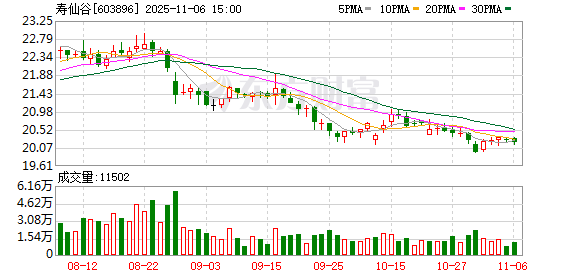
寿仙谷:除近期推出的铁皮石斛文旦汁、铁皮石斛寿仙粥外,计划推出灵芝咖啡、中药茶饮等储备产品
Mei Ri Jing Ji Xin Wen· 2025-11-06 11:44
Core Viewpoint - The company has established a joint venture with former Wahaha sales general manager Shen Jiangang to expand into the fast-moving consumer goods market, leveraging its research capabilities and professional marketing team [1]. Group 1: Business Development - The joint venture, named Hangzhou Shouxian Valley Food Co., Ltd., is controlled by the company and aims to develop new products such as Ganoderma coffee and traditional Chinese herbal teas to attract younger consumers [1]. - Recent product launches include Iron Skin Dendrobium pomelo juice and Iron Skin Dendrobium congee, indicating a focus on diversifying product offerings [1]. Group 2: Strategic Initiatives - The company is committed to expanding its upstream and downstream industry presence and is actively seeking suitable acquisition targets [1]. - There is a suggestion from investors for the company to establish a beverage division with a professional team and distribution system to enhance its commitment to the beverage market [3].
金佰利拟收购Kenvue;星巴克中国60%股权花落博裕
Sou Hu Cai Jing· 2025-11-04 14:43
Acquisition Dynamics - Kimberly-Clark plans to acquire Kenvue for approximately $48.7 billion, including debt, with an equity value of about $40 billion [3] - Kenvue shareholders will receive $21.01 per share, representing a 46.2% premium over the previous closing price [3] Strategic Partnerships - Starbucks has entered a strategic partnership with Boyu Capital to form a joint venture for its retail operations in China, with Boyu holding up to 60% equity [5] - The enterprise value of the joint venture is estimated at $4 billion, and Starbucks expects its total retail business value in China to exceed $13 billion [5] - The joint venture aims to expand Starbucks' store count in China from 8,000 to 20,000 [5] Company Developments - Simplot has completed the acquisition of Belgian fries company Clarebout, enhancing its global production base to 23 facilities [7] - A2 Milk Company has sold a 75% stake in Mataura Valley Milk to Open Country Dairy, with plans for a NZ$100 million investment to boost capacity [10] Brand Dynamics - ZARA has opened its first Zacaffè coffee shop in Japan, aiming to strengthen customer engagement [12] - SSENSE has entered bankruptcy protection, owing approximately CAD 93 million to various fashion brands, highlighting vulnerabilities in the luxury e-commerce sector [15] - Ele.me has officially rebranded to Taobao Shanguo, part of Alibaba's strategy to unify its instant retail branding [18] Operational Changes - Coucou has launched a dual-point model nationwide, focusing on high-quality offerings to attract new customers and enhance repurchase rates [20] - Sam's Club has responded to user complaints regarding its app update, committing to improve the display of product information [23] Personnel Changes - JAB has appointed José Cil as the global consumer business leader, bringing over 30 years of experience in the sector [26]