
数字文创

Search documents
以奋进之姿开启崭新征程 把成都现代化建设事业不断推向前进
Xin Lang Cai Jing· 2025-12-31 19:00
Group 1: Economic Development - Chengdu aims for high-quality economic development, focusing on stabilizing growth and improving quality [1] - The city has over 14,500 high-tech enterprises and is implementing a "chain leader + special class" approach to strengthen 17 key industrial chains [1] - Chengdu's foreign trade remains the highest in Central and Western China, with international direct flight routes reaching 83 [2] Group 2: Social Welfare and Urban Development - The city is implementing reforms to improve education and healthcare access, including integrated childcare and flexible schooling for migrant children [3] - Urban governance is being enhanced through smart city initiatives and extensive urban infrastructure projects, including over 750 kilometers of operational metro lines [3] - Chengdu has been recognized as one of the most livable cities for 17 consecutive years, enhancing its brand as a "Park City" [3] Group 3: Governance and Reform - The city is committed to deepening reforms in various sectors, including service industry openness and market-oriented resource allocation [2] - Efforts are being made to improve the business environment through direct communication between government and enterprises [2] - The focus is on grassroots governance and reducing bureaucratic burdens to better serve the community [4] Group 4: Cultural and Technological Achievements - Chengdu showcased its technological capabilities during significant events, including the World University Games and military parades [5] - The city is promoting its cultural products globally, with notable successes in the animation industry [5] - Chengdu is positioning itself as a center for innovation and cultural creativity, aiming to be a hub for advanced manufacturing and digital cultural industries [6]
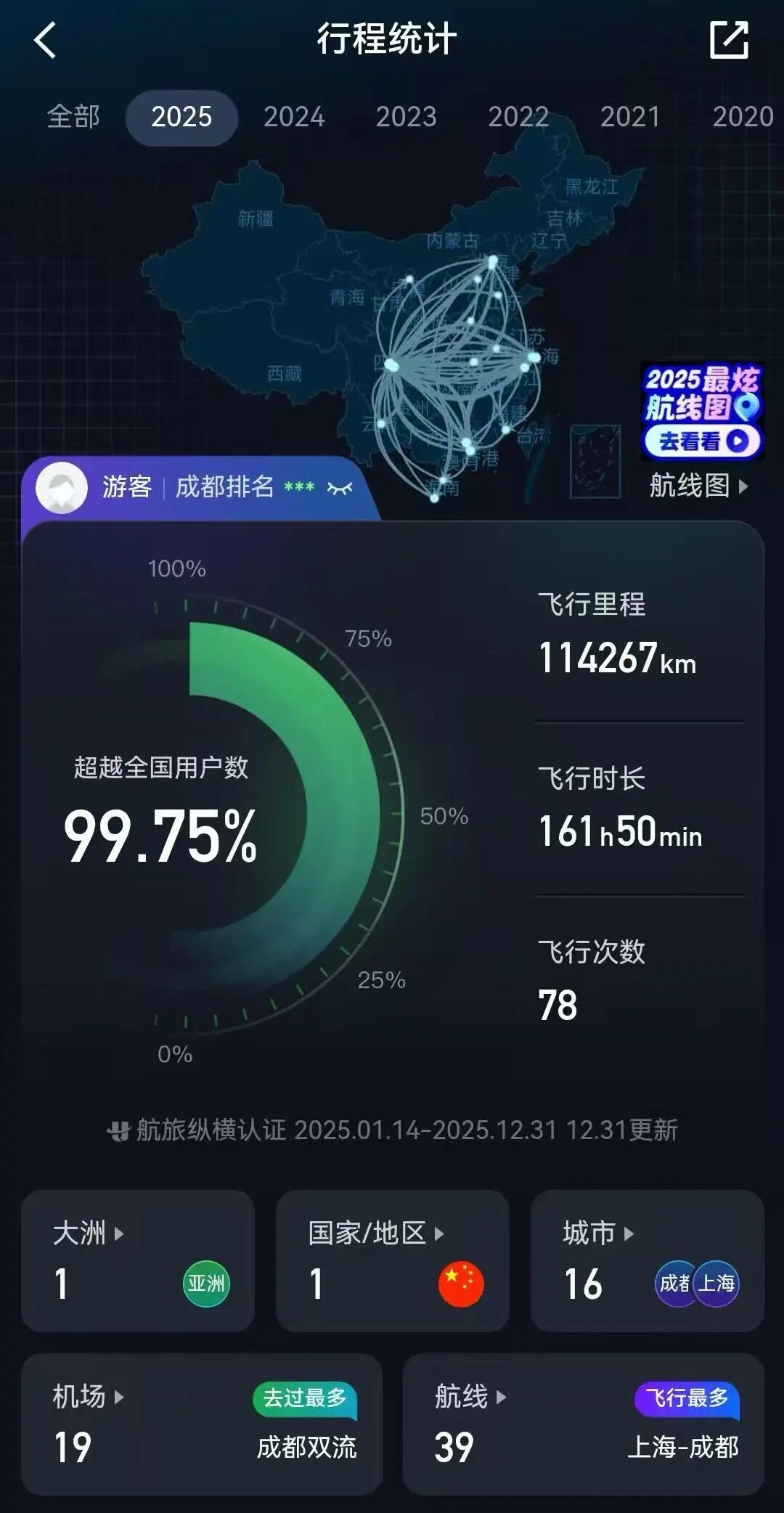
一位成都文创企业家的年度飞行图:11万公里,绕地球2.8圈
Mei Ri Jing Ji Xin Wen· 2025-12-31 15:05
Core Insights - The article highlights the significant growth and opportunities within Chengdu's digital cultural and creative industry, projecting a total scale exceeding 410 billion yuan in 2025 [1][9]. Group 1: Industry Growth and Trends - Chengdu's digital cultural and creative industry is experiencing a "big year" in 2025, with notable successes such as the film "Ne Zha" topping global animated film box office charts and the continued popularity of local IPs like "Honor of Kings" [9]. - The industry is witnessing a shift in mindset among Chengdu's creative professionals, moving from a perspective of inferiority when engaging with top-tier cities to a more confident, equal footing [10]. - The article emphasizes the importance of physical presence and face-to-face communication in building trust and enhancing service efficiency within the industry [4][7]. Group 2: Individual Experiences and Insights - The founder of a creative group, Liu Rui, recorded a total flight distance of 114,267 kilometers in 2025, reflecting the intense pace of business activities and the necessity for constant engagement with clients and partners [1][6]. - Liu Rui's experiences illustrate the critical role of deep thinking and strategic discussions during travel, highlighting the need for innovation and adaptation in the face of market changes, particularly regarding AI technology [8][10]. - The article notes that many Chengdu-based creative professionals are expanding their business reach nationally, leveraging their local expertise to attract interest from larger enterprises outside the region [10].

50个数字文创人,眼中的“成都”
Mei Ri Jing Ji Xin Wen· 2025-12-31 05:48
Core Insights - Chengdu has emerged as a favored hub for the digital cultural and creative industry, showcasing a vibrant ecosystem that combines historical culture with modern creativity, attracting numerous global enterprises and talents [1][2][3]. Group 1: Industry Potential - Chengdu is recognized for its potential in the creative industry due to its young talent pool, lower market costs, and a relatively complete policy framework [2]. - The city has become a prominent global creative economy center among major cities in mainland China [3]. - Chengdu's unique ability to blend historical culture with modern creativity provides a competitive edge in its creative industry [4]. Group 2: Cultural and Creative Ecosystem - The city is likened to "Digital Hollywood," offering a relaxed creative environment and a complete industrial chain [1]. - Chengdu's vibrant young market attracts numerous domestic and international brands, fostering a dynamic commercial ecosystem [11]. - The local government has implemented various supportive policies for the digital cultural and creative industry, enhancing its strength in the national landscape [13][14]. Group 3: Opportunities in Specific Sectors - Chengdu is seen as a fertile ground for the film industry, with increasing interest from film companies to establish a presence in the city [12]. - The city is also recognized for its potential in the esports sector, with major companies choosing to launch events there due to its cultural depth and infrastructure [7][15]. - The local market's enthusiasm for cultural trends, such as the潮玩 (trendy toys) industry, is significant, with a strong consumer base willing to invest in unique products [18][52]. Group 4: Creative Talent and Innovation - Chengdu is home to a diverse range of creators and innovators, with many expressing a desire to establish their projects in the city due to its supportive environment [6][28]. - The city encourages a culture of innovation and inclusivity, making it an attractive location for young professionals seeking a balance between work and life [32][34]. - The presence of unique cultural IPs, such as the giant panda and historical sites, enhances the city's appeal in the creative sector [18][50].
宜居宜业 向善向上彰显人文城市温度
Xin Lang Cai Jing· 2025-12-30 20:11
Core Viewpoint - Chengdu is focusing on creating a livable and culturally rich city, emphasizing humanistic values and sustainable development as it approaches the end of the 14th Five-Year Plan and the beginning of the 15th Five-Year Plan [2][8]. Group 1: Urban Environment and Infrastructure - Chengdu has implemented a comprehensive urban environment improvement initiative, targeting ten key areas of public concern, which has enhanced the city's aesthetics and livability [3]. - The city has expanded its metro network, with the total operational mileage exceeding 750 kilometers, improving urban connectivity and commuting experiences [3]. - Traffic management innovations, such as "AI traffic lights" and "variable lanes," have significantly reduced congestion and improved commuting efficiency [3]. Group 2: Housing and Health - Chengdu is developing a multi-tiered supply system for affordable rental housing, with 224,000 housing units planned and approximately 75,000 units operational, providing support for young residents and new citizens [4]. - The city has established 13 smart rehabilitation centers and initiated six major health actions for the elderly, contributing to a modern healthcare infrastructure [4]. - The local modern traditional Chinese medicine industry is approaching a market value of 30 billion yuan [4]. Group 3: Sustainable Development - Chengdu's annual electricity sales have surpassed 100 billion kilowatt-hours, marking it as the first provincial capital in central and western China to achieve this milestone, reflecting its commitment to green and low-carbon development [5]. - The city has been recognized for its outdoor sports destinations, enhancing its appeal as a nature-friendly urban environment [5]. Group 4: Cultural and Creative Industries - Chengdu has been designated as the first "City of Chinese Bookstores," with over 3,600 bookstores and reading spaces, enriching the cultural landscape [6][7]. - The city has made significant strides in the digital cultural and creative industry, with the animated film "Ne Zha" achieving a box office of 15.9 billion yuan, ranking among the top five globally [7]. - A comprehensive policy package to support the digital cultural and creative industry has been introduced, establishing a solid foundation for its growth [7]. Group 5: Tourism and Civil Society - Chengdu's tourism sector has received accolades, with several destinations recognized for their quality, enhancing the city's reputation as a tourist hub [8]. - The city has been acknowledged for its overall civilizational achievements, with a county-level city receiving a national award for its civilizational standards [8]. - Chengdu aims to harmonize development outcomes with the aspirations of its citizens, focusing on creating a warm and inviting urban environment [8].
“蓉耀青年”第四轮宣讲活动举办
Xin Lang Cai Jing· 2025-12-30 20:11
Group 1 - The event "Rong Yao Youth" aims to facilitate dialogue between young students and urban development, focusing on the high-quality development of Chengdu's digital cultural and creative industry [1][2] - The theme of the event is "Digital Cultural Innovation Engine, New Driving Force for Rongcheng Development," highlighting the importance of digital transformation in cultural industries [1] - The event featured discussions on the integration of traditional craftsmanship into modern gaming, copyright protection in the AIGC era, and new opportunities in the IP industry chain development [2] Group 2 - The event included a presentation by a member of the Sichuan Provincial Scientific Socialism Society, emphasizing the importance of cultural innovation and the development of new productive forces as outlined in the 20th National Congress of the Communist Party [2] - Interactive sessions allowed young participants to engage with industry experts on topics such as career development, technological trends, and the role of cultural innovation in urban empowerment [2] - Attendees also visited the Tianfu Long Island Digital Cultural and Creative Industry Service Platform, showcasing the practical applications of the discussed themes [2]
真抓实干推动“十五五”开好局起好步 在服务全国全省发展大局中展现更大作为
Xin Lang Cai Jing· 2025-12-30 20:11
转自:成都日报锦观 市委经济工作会议举行 会议强调,习近平总书记在中央经济工作会议上发表的重要讲话,总结工作实事求是,分析形势深刻透 彻,设定目标科学清晰,部署任务纲举目张,具有极强的思想穿透力、时代洞察力和实践指导力,为做 好当前和今后一个时期经济工作提供了根本遵循。李强总理的总结讲话,对贯彻落实习近平总书记重要 讲话精神、做好明年经济工作提出要求。省委经济工作会议对做好明年全省经济工作进行了系统部署。 我们要深入学习领会、一体贯彻落实,切实把思想和行动统一到党中央和省委决策部署上来,努力在服 务全国全省发展大局中展现更大作为。 会议强调,2025年对成都来讲是很不平凡的一年。面对国内外形势的深刻复杂变化,我们深入贯彻党中 央、国务院决策部署,全面落实省委、省政府支持成都做优做强极核功能、加快高质量发展部署要求, 全力以赴拼经济搞建设,培育发展新质生产力,经济社会发展取得新成效。回顾"十四五"时期,我们始 终牢记嘱托、感恩奋进,推动高质量发展、高品质生活、高效能治理取得新进展、迈出新步伐。 会议强调,当前,世界百年变局加速演进,国内外形势深刻复杂变化。我们既要正视困难,更要坚定信 心,充分认识到我国经济长期 ...
天津红桥区建设数字文创产业高地再添硬核力量
Zhong Guo Fa Zhan Wang· 2025-12-30 13:54
Group 1 - The strategic cooperation agreement was signed between Tianjin Hongqiao District and Shourong Interactive Technology (Beijing) Co., Ltd, focusing on "digital cultural creativity empowering regional development and cross-border cooperation to build an industrial ecosystem" [1] - The collaboration aims to leverage the advantages of the Beijing-Tianjin-Hebei integrated business district and the development of game IPs, as well as the cross-border transformation of cultural resources to create a digital cultural industry cluster that integrates IP incubation, e-sports events, and cultural tourism [1] - The Tianjin Municipal Propaganda Department expressed strong support for cultural technology enterprises, particularly in game publishing and promotion, to enhance the city's cultural industry development and innovation capabilities [2] Group 2 - The chairman of Shourong Technology expressed confidence in the future development in Hongqiao District, highlighting its significant location advantages, strong innovation atmosphere, and great development potential [2] - The cooperation with Korean Yumi De Company aims to deepen collaboration and introduce high-quality overseas industry resources to accelerate the landing of premium game projects in Hongqiao [3] - The Hongqiao District government emphasized the importance of this cooperation as a significant measure to implement the national cultural digitalization strategy, aiming to foster digital economy cultivation and cross-border industrial linkage [3]
增速引领经济大市,成都2026年如何继续“挑大梁”?
Mei Ri Jing Ji Xin Wen· 2025-12-30 13:20
Core Insights - Chengdu's economic work meeting highlighted the city's strong GDP growth of 5.8% in the first three quarters of 2025, surpassing national and provincial averages, positioning it as a leading economic city [1] - The focus for 2026 is on expanding domestic demand, which is deemed crucial for maintaining competitive advantages in urban development [1][2] - Chengdu aims to build an international consumption center, leveraging new consumption trends and tax reforms to stimulate growth [2][3] Group 1: Economic Performance - Chengdu's GDP growth rate of 5.8% is 0.6 percentage points higher than the national average and 0.3 percentage points higher than the provincial average, making it the top city among the ten largest economies [1] - The city has established itself as the fourth-largest consumer market in China, with retail sales reaching 1.03 trillion yuan from January to November 2025 [1][2] Group 2: Policy and Strategic Initiatives - The 20th National Congress emphasized the importance of shifting consumption tax collection to local levels, which will benefit Chengdu's high consumption economy [2] - Chengdu plans to enhance its consumption landscape by focusing on new supply, creating new demand, and integrating traditional and new consumption [2][3] Group 3: New Consumption Trends - The city is targeting differentiated consumer needs by promoting new business models and products in sectors like healthcare, elder care, and entertainment [3] - Chengdu is set to capitalize on inbound tourism, ranking fifth in national inbound tourist spending, and aims to improve its international consumption environment [3] Group 4: Industrial Development - Chengdu recognizes the role of consumption upgrades in driving industrial upgrades, with a focus on creating over 100 industrial products [4][5] - The city has established a Scene Innovation Promotion Center to accelerate the commercialization of new technologies and products [5][6] Group 5: Future Goals - Chengdu's "Stand Garden Full Garden" initiative aims to cultivate national-level emerging industry demonstration bases and increase the number of specialized enterprises [6] - The city is targeting a digital cultural industry scale of over 600 billion yuan by 2030, emphasizing the importance of cultural and creative industries [6]
圆桌对话:跨界联名不止“流量互换”,数字文创加速走向“二次破圈”
Xin Lang Cai Jing· 2025-12-30 09:04
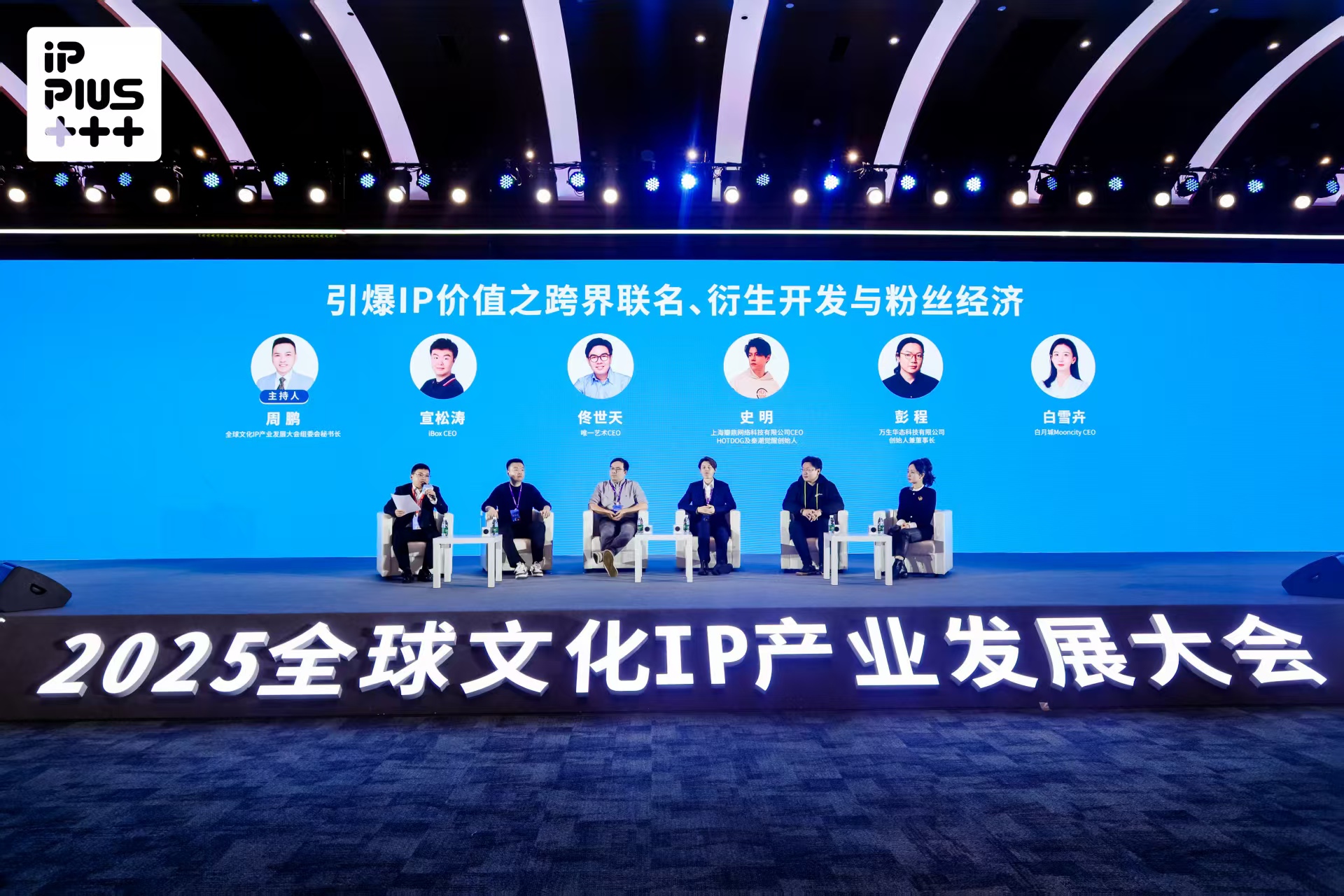
Core Insights - The 2025 Global Cultural IP Industry Development Conference will be held in Shanghai on December 26-27, focusing on cross-border collaboration, derivative development, and fan economy [1][11] - The roundtable discussion emphasized that the underlying logic of cross-border collaboration is "value resonance" rather than mere "traffic exchange" [7][10] Group 1: Cross-Border Collaboration - The key to successful brand collaboration lies in understanding user profiles and mentalities, aiming for a co-creation approach that achieves "1+1 greater than 2" [5][9] - Successful partnerships should not focus on one-way traffic but rather on creating a sustainable symbiotic relationship through shared values [5][10] Group 2: Digital Asset Transformation - The process of transforming real assets into digital assets involves meticulous planning, scanning, and standardization to ensure multi-platform adaptability [6][10] - The digitalization process can be likened to film production, where pre-selection and planning determine the value of the material, and rigorous scanning processes are essential [6][9] Group 3: Productization and Commercialization - The transition from "hit products" to a "product matrix" allows for the extension of cultural narratives into related product categories, enhancing capabilities across various fields [10] - Platforms should select IP based on user demographics, with a focus on anime and second-dimensional content for younger audiences [10] Group 4: Future Outlook - Industry experts foresee a shift towards breaking boundaries and ecological collaboration, moving beyond single digital collectible forms to a combination of virtual and real-world interactions [10] - The emphasis on compliance and standardization will lead to broader participation in digital cultural creation, viewed as a viable business opportunity [10]
城变新机,业涌潮头:2025年十大城市热词,透视发展逻辑之变
Mei Ri Jing Ji Xin Wen· 2025-12-28 02:28
Group 1 - The year 2025 marks the conclusion of the "14th Five-Year Plan," with urbanization transitioning from rapid growth to stable development amid increasing international uncertainties and internal economic transformation [7][20] - The emergence of annual buzzwords reflects the transformation logic of local economies, indicating new investment and employment opportunities [7][20] Group 2 - The "Six Little Dragons" in Hangzhou symbolize a significant surge in urban technological innovation, prompting other cities to rethink their paths to technological advancement [8] - The record-breaking box office of "Nezha 2" has shifted perceptions about Chengdu, highlighting its competitiveness in digital culture and technology despite lacking inherent advantages [9] - Shanghai aims to become the "first stop for inbound tourism" as China continues to upgrade its visa policies, enhancing its appeal as an international gateway [10] - The "Su Super" football league in Jiangsu showcases the potential of sports events to drive local consumption and economic growth [11] - Shenzhen and Shanghai are in a competitive race to be recognized as the "foreign trade capital," reflecting the resilience of China's foreign trade amid changing global conditions [12] Group 3 - Dalian is expected to become the first city in Northeast China to achieve a GDP of over 1 trillion yuan, marking a significant milestone for regional revitalization [16][17] - The official closure of Hainan Free Trade Port represents a new milestone in China's commitment to higher levels of openness and institutionalized reforms [18][19] - The Central Urban Work Conference has set a new direction for urban development, emphasizing a shift from rapid expansion to quality improvement [20] - The "15th Five-Year Plan" is being formulated to outline future development priorities, with a focus on high-quality growth and the associated investment and employment opportunities [21]
