新型储能

Search documents
“十五五”国家电网将投资4万亿元,特高压、新型储能、“能源金属”有望受益(附股)
Mei Ri Jing Ji Xin Wen· 2026-01-16 00:45
Investment Plan Overview - The State Grid's "14th Five-Year" investment plan is set to reach 4 trillion yuan, a 40% increase compared to the "13th Five-Year" period, focusing on green transformation, new power system construction, and technological empowerment [1][6] - The average annual investment during the "15th Five-Year" period is projected to be 800 billion yuan, with a compound annual growth rate of 7% expected from 2026 to 2030 [1][6] Industry Impact - Wind and solar power sectors are expected to see an annual increase of approximately 20 million kilowatts in new installed capacity, contributing to a rise in non-fossil energy consumption to 25% [2][7] - The ultra-high voltage and transformer sectors will enhance the energy transmission network, with cross-regional transmission capacity expected to increase by over 30% compared to the end of the "14th Five-Year" period [2][7] - The smart grid industry will advance urban, rural, and remote area distribution network construction, exploring microgrid models and implementing AI initiatives [2][7] - The new energy storage sector will optimize pumped storage station layouts and support the large-scale development of new energy storage [2][7] - The charging station industry will cater to the needs of 35 million charging facilities, enhancing electrification levels in end-use energy [2][7] Metal Demand - The photovoltaic industry will significantly drive demand for silver and antimony, both of which are in tight supply [3][8] - The energy storage sector will increase the demand for vanadium, lithium carbonate, and sodium, with solid-state batteries emerging as a key technology in the market [3][8] - The copper and aluminum industries will benefit from the investment, with forecasts indicating a refined copper shortage of 160,000 tons, 360,000 tons, and 610,000 tons from 2026 to 2028, supporting copper price increases [3][9] Related Companies - Guodian NARI Technology Co., Ltd. is a leading smart grid enterprise under the State Grid, focusing on new power system segments including smart grid and energy low-carbon [4][9] - XJ Electric Co., Ltd. is a major player in the power equipment sector, concentrating on ultra-high voltage, smart grid, and new energy businesses [5][9] - Pinggao Group Co., Ltd. specializes in high and ultra-high voltage switchgear, with products meeting international standards and widely used in key power projects [5][9]
肇庆“十四五”期间打造2个千亿级产业集群 新能源汽车产业加快崛起
Nan Fang Ri Bao Wang Luo Ban· 2026-01-15 10:08
Group 1: Economic Development and Industry Growth - During the "14th Five-Year Plan" period, Zhaoqing has developed two trillion-level industries in new energy vehicles and metal processing, along with four five-hundred billion-level industry clusters in new energy storage, electronic information, green building materials, and new materials, leading to a strategic reshaping of its industrial landscape [1] - Zhaoqing has ranked among the top 100 advanced manufacturing cities in China for two consecutive years and has been recognized as an excellent investment destination in the province for three years [1] - The new energy vehicle industry is rapidly growing, with XPeng Motors producing over 500,000 vehicles in Zhaoqing, equating to one vehicle rolling off the production line every six minutes, supported by over 100 large-scale auto parts companies integrated into the national supply chain [1] Group 2: Traditional Industry Transformation - Zhaoqing's metal processing enterprises have shifted towards high-end equipment manufacturing, achieving an annual output value exceeding 120 billion [2] - The building materials industry is advancing in cluster development and green transformation, with an annual output value surpassing 50 billion [2] - The food and beverage industry in Zhaoqing has reached an annual output value of over 20 billion, with notable companies such as Jian Tian Bai Sui Shan and China Resources Beverage establishing operations in the region [2] Group 3: Infrastructure Investment - Zhaoqing has invested approximately 65 billion in transportation during the "14th Five-Year Plan," a 31% increase compared to the previous five-year period, with major projects like the Guang-Zhan high-speed rail and the new Guangzhou airport underway [2] - The port's annual handling capacity has doubled to 176 million tons, facilitating a one-hour access to Guangzhou, Shenzhen, Hong Kong, and Macau [2] Group 4: Agricultural Development - Zhaoqing's agricultural sector has reached a scale of 80 billion, ranking third in the province, with six agricultural clusters each exceeding 10 billion [3] - The region boasts 68 nationally recognized special agricultural products and has achieved the highest number of geographical indication products and certification trademarks in the province, totaling 50 [3] Group 5: Environmental and Social Initiatives - Zhaoqing has implemented a "three-long linkage" mechanism to protect its environment, maintaining air quality in the top 20 nationwide and stabilizing water quality in major rivers [3] - Over the past five years, Zhaoqing has created more than 210,000 urban jobs and facilitated the transfer of over 150,000 rural laborers, with a per capita disposable income growth exceeding 5% [3] - The city has invested over 6 billion in building and renovating 134 public schools and kindergartens, adding 113,000 public school places, and has allocated 19.1 billion for 51 healthcare projects, increasing hospital beds by over 3,000 [3]
许晓雄:肇庆连续四年制造业引资超千亿 构建现代产业体系
Nan Fang Du Shi Bao· 2026-01-14 13:04
Core Viewpoint - Zhaoqing is focusing on building a modern industrial system centered on the real economy and manufacturing, with significant investments in emerging industries such as new energy vehicles, new energy storage, new materials, and electronic information [1][2] Group 1: Investment and Economic Development - Zhaoqing has introduced manufacturing projects with planned investments exceeding 100 billion yuan for four consecutive years [1] - The "Three New and One Electric" projects account for one-third of the total investment, with over 100 large-scale component enterprises in the new energy vehicle sector [1] - A total of nearly 50 billion yuan has been allocated to an industrial fund to enhance the quality of investment attraction [1] Group 2: Industrial Park Development - Zhaoqing has established a new development pattern with 13 provincial industrial parks and special parks, led by Zhaoqing High-tech Zone and Zhaoqing New District [1] - The large industrial cluster area has over 40,000 acres of land available for development, with more than 300 projects introduced and a total planned investment exceeding 90 billion yuan [1] - Nearly 30% of the projects have already been put into production, indicating the initial formation of a "ten-thousand-acre, hundred-billion" platform [1] Group 3: Business Environment and Growth - Zhaoqing adheres to the "enterprise first" philosophy, continuously optimizing the "All Zhaoqing Office" service system for enterprises, maintaining a top position in the provincial business environment evaluation for five consecutive years [2] - The number of business entities in the city has surpassed 400,000, representing a 1.5 times increase compared to the end of the 13th Five-Year Plan [2] - Zhaoqing is becoming an important advanced manufacturing base in the Guangdong-Hong Kong-Macao Greater Bay Area, injecting strong momentum into high-quality development [2]
从“房山制造”到“房山智造”:新质生产力引擎点燃发展新动能
Zhong Guo Jin Rong Xin Xi Wang· 2026-01-14 12:09
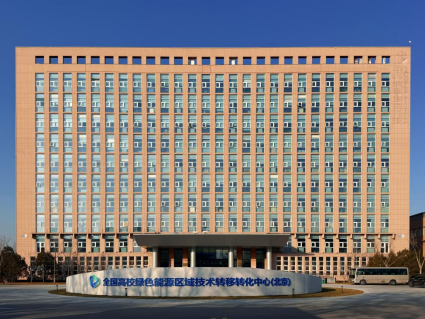
Core Viewpoint - The article highlights the ongoing industrial transformation in Fangshan District, driven by new productive forces, with a projected industrial output exceeding 80 billion yuan by 2025, primarily fueled by the green energy and new materials sectors. Group 1: Green Energy Sector - Fangshan District is positioned as a major hub for green energy, with 91 companies contributing to an output value of 22.5 billion yuan by the end of 2025, showcasing a growing industrial cluster effect [1][4]. - Leading companies in the energy storage sector, such as Haibo Shichuang and Xinyuan Zhichu, are expanding, with Haibo Shichuang recognized as a national enterprise technology center [1][2]. - The district has been approved for the establishment of a new energy storage power station application demonstration area and a green energy industry park, facilitating the large-scale application of storage technology [1][4]. Group 2: Hydrogen Energy Development - Fangshan is accelerating its hydrogen energy industry, with Yanshan Petrochemical's hydrogen purification facility now operational, providing a stable and high-purity hydrogen source for downstream applications [2]. - The district has initiated the use of hydrogen energy vehicles and established integrated energy stations, forming a comprehensive hydrogen energy industry chain [2]. Group 3: New Materials Sector - The new materials industry is positioned as a core driver of "new quality manufacturing," with the goal of establishing a competitive industrial cluster known as the Capital Materials Valley [5][6]. - The district has attracted 179 companies to the Zhongguancun Materials Industrial Park, achieving an output value of 18 billion yuan, further enhancing the Capital Materials Valley's industrial concentration [5][6]. Group 4: Innovation and Collaboration - Fangshan's development is rooted in a strategic design that emphasizes innovation-driven growth and the integration of education and industry, fostering a strong internal momentum for high-quality regional development [7][9]. - The district has established a unique technology transfer center for green energy at Liangxiang University Town, promoting collaboration between academia and industry, and has successfully transformed 25 technological achievements into practical applications [4][9]. Group 5: Future Outlook - As Fangshan enters the 14th Five-Year Plan, it aims to elevate its green energy and new materials sectors to higher levels, constructing a modern industrial system to support the high-quality development of the capital [9].

速览!政府工作报告中的能源要点
Zhong Guo Neng Yuan Wang· 2026-01-14 08:13
Core Insights - The government work report emphasizes the importance of pollution prevention, ecological construction, and the development of a green low-carbon economy, alongside the promotion of carbon peak and carbon neutrality initiatives. Energy Highlights from the Past Year - The production of new energy vehicles exceeded 13 million units [2] - The average concentration of PM2.5 in cities at the prefecture level and above decreased by 2.7%, with the proportion of days rated as good rising to 87.2%, and the proportion of surface water with good quality increasing to 90.4% [2] - The energy consumption per unit of GDP decreased by over 3% [2] - Renewable energy installations increased by 370 million kilowatts [3] Energy Work Highlights for This Year - The target for energy consumption per unit of GDP is a reduction of around 3%, with continuous improvement in ecological environment quality [12] - Structural monetary policy tools will be optimized and innovated to promote healthy development in the real estate and stock markets, with increased support for technological innovation, green development, and small and micro enterprises [12] - The government aims to enhance policy coordination across various sectors, including finance, employment, industry, and environmental protection [12] - The promotion of "Artificial Intelligence+" initiatives will integrate digital technology with manufacturing advantages, supporting the development of smart connected new energy vehicles and intelligent terminals [13][14] - The establishment of a comprehensive standard system for green finance, inclusive finance, and digital finance will be prioritized [15] - The government will continue to advance the construction of high-standard farmland and improve urban renewal projects [15] Green and Low-Carbon Development Initiatives - The government will accelerate the development of a green low-carbon economy and improve the policy and standard system supporting this sector [21][22] - The implementation of advanced technology demonstration projects for green low-carbon initiatives will be prioritized, fostering new growth points such as green buildings [23] - The promotion of waste recycling and the use of recycled materials will be emphasized [24] - A green consumption incentive mechanism will be established to encourage low-carbon production and lifestyle [25] - The government will actively promote carbon peak and carbon neutrality, establishing pilot projects for zero-carbon parks and factories [25] - The construction of a dual control system for carbon emissions will be accelerated, expanding the coverage of the national carbon trading market [26] - Initiatives for low-carbon transformation of coal and electricity will be launched, alongside planning for major projects addressing climate change [27]
广东肇庆新能源汽车产业加快崛起 迈向千亿元产值
Zhong Guo Xin Wen Wang· 2026-01-14 05:41
许晓雄表示,小鹏汽车在肇庆累计下线整车超50万辆、相当于不到6分钟就有1辆汽车驶出肇庆工厂;该 市100多家规上汽配企业深度嵌入全国新能源汽车供应链。 中新网广州1月14日电 (记者 程景伟)广东省肇庆市委副书记、市长许晓雄14日在广州表示,"十四五"期 间,肇庆新能源汽车产业加快崛起,加快迈向千亿元产值。 广东省人民政府新闻办公室当日举行"'十四五'广东成就"肇庆专场新闻发布会,许晓雄在会上介绍,"十 四五"期间,肇庆在产业发展新动能上迈出一大步,精准对接新质生产力需求,在"新三样"产业风口中 抓住了新能源汽车和新型储能这"两样",打造出新能源汽车、金属加工2个千亿级的产业以及新型储 能、电子信息、绿色建材、新材料4个五百亿级产业集群,产业格局实现战略性重塑。 同时,肇庆从无到有建成华南地区最大的储能生产基地,年产值已达400亿元,瑞庆时代累计达成电池 产量近100GWh(吉瓦时),璞泰来等头部企业落地发展,金晟新能源冲进全球独角兽榜单。 此外,肇庆传统产业也找到了转型升级的发展路径,当地金属加工企业往高端装备金属部件方向转型, 年产值超1200亿元;建材产业加快集群化、绿色化发展,年产值超500亿元,"含 ...

高特电子创业板IPO过会 储能BMS龙头迈入发展新阶段
Zheng Quan Ri Bao Wang· 2026-01-13 13:49
Core Viewpoint - Hangzhou Gaote Electronics Co., Ltd. has received approval for its initial public offering (IPO) and listing on the ChiNext board, indicating strong market confidence in the company's growth potential in the energy storage sector [1] Group 1: Company Overview - Gaote Electronics is a national high-tech enterprise focused on the research, production, and sales of Battery Management Systems (BMS) for new energy storage [2] - The company has shown steady growth in revenue and net profit from 2022 to 2025, with revenues of 346 million yuan, 779 million yuan, 919 million yuan, and 507 million yuan, and net profits of 53.75 million yuan, 88.23 million yuan, 98.42 million yuan, and 51.42 million yuan respectively [2] Group 2: R&D Investment and Competitive Edge - The company has consistently increased its R&D investment, with expenditures of 23.89 million yuan, 38.64 million yuan, 63.78 million yuan, and 32.28 million yuan from 2022 to 2025, representing 6.91%, 4.96%, 6.94%, and 6.36% of revenue respectively [3] - R&D efforts focus on enhancing the safety, stability, and operational efficiency of BMS, supporting product performance improvements and business sustainability [3] Group 3: Industry Trends - The new energy storage industry is experiencing rapid growth, driven by increasing demand for energy storage systems that enhance power system regulation and support renewable energy integration [4] - BMS plays a critical role in energy storage systems, acting as the "nervous system" for data collection, state diagnosis, safety management, and proactive maintenance [4] Group 4: Future Growth and Investment Plans - The IPO proceeds will be used for the construction of an intelligent manufacturing center for BMS and to supplement working capital, with a total investment of approximately 674 million yuan [6] - The new manufacturing center will enhance production capacity and automation, allowing the company to better meet growing customer demand and optimize cost structures [6][7] - The investment is expected to strengthen Gaote Electronics' competitive position in the new energy storage BMS market and support its long-term development [7]

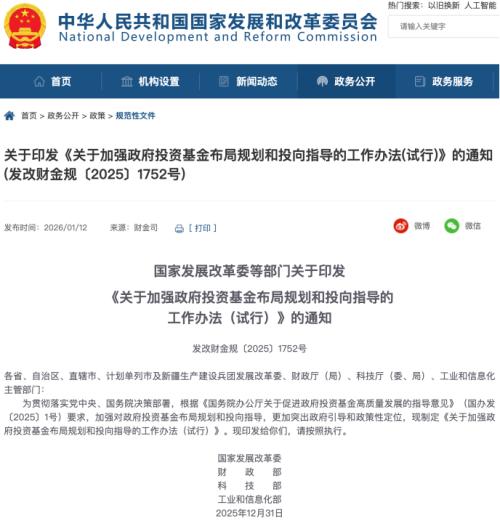
新型储能纳入政府投资基金投向!国家首次作出系统规范
中关村储能产业技术联盟· 2026-01-13 12:15
Core Viewpoint - The article discusses the implementation of a new regulatory framework for government investment funds in China, aimed at optimizing their layout and guiding investment directions to support national strategies and industrial upgrades [2][3][4]. Group 1: Government Investment Fund Overview - Government investment funds are established by various levels of government to guide social capital in supporting industry development and innovation through market-oriented methods such as equity investment [2][12]. - The new framework includes a systematic approach to fund layout and investment direction, marking the first national-level regulation of government investment funds [2][4]. Group 2: Supported Investment Areas - The framework identifies key investment areas, including: - Emerging and future industries such as information technology, new energy, advanced manufacturing, and artificial intelligence [2][3]. - Upgrading traditional industries and supporting high-quality development in manufacturing [3][4]. - Promoting the digital economy through initiatives like "AI+" and the application of 5G technology [3][4]. Group 3: Policy Measures - The framework outlines 14 policy measures focusing on three main aspects: where to invest, how to invest, and who manages the funds [3][4]. - It emphasizes early, small, long-term investments in hard technology and aims to prevent homogeneous competition and crowding out of social capital [11][12]. Group 4: Evaluation Management - An evaluation management method has been established to assess the investment direction of government funds, focusing on compliance with national planning and industry directories [4][5]. - The evaluation system includes three main indicators: policy compliance (60% weight), optimization of productivity layout (30% weight), and policy execution capability (10% weight) [6][7]. Group 5: Specific Evaluation Indicators - The evaluation indicators cover aspects such as support for new productivity, technology innovation, green development, and the promotion of private investment [29][33]. - Specific metrics include the proportion of investments in encouraged industries, the effectiveness of fund management, and the impact on social welfare [29][33][40].
“十四五”时期茂名GDP突破4000亿元 “五链共建”带动工业投资四年翻一番
Nan Fang Ri Bao Wang Luo Ban· 2026-01-13 09:06
Core Insights - During the "14th Five-Year Plan" period, Maoming's economy has reached a new milestone with a total economic output surpassing 400 billion yuan, maintaining its leading position in the Guangdong's western and northern regions [1] - The city is expanding from "five-chain co-construction" to "multi-chain co-construction," establishing a modern industrial system characterized by "3336" [1] - Traditional industries remain robust, with the petrochemical sector's total output value stabilizing around 180 billion yuan, and agricultural output exceeding 120 billion yuan [1] Economic Performance - Maoming's industrial investment and technological transformation are expected to double from 2020 to 2024, with the added value of advanced manufacturing accounting for 74% of the industrial output [2] - The main platform for industrial transfer has been optimized, achieving an "excellent" rating in the provincial industrial park monitoring for 2024, with the industrial output value from this platform expected to account for 80.1% of the city's total [2] - High-tech manufacturing investment is projected to grow at an annual rate of 46.9% during the "14th Five-Year Plan" period, with significant advancements in strategic emerging industries [2] Development Resilience - A total of 241 enterprises have achieved "small to standard" status, and 757 enterprises have undergone technological upgrades, indicating a strong push towards digital transformation [3] - Maoming has been recognized as one of the new pilot cities for inclusive financial reform, enhancing its economic resilience [3] - The city aims to reach a total economic output of 500 billion yuan during the "15th Five-Year Plan" period, focusing on new industrialization and urbanization [3]
重磅利好!万亿级“国家队”投向明确了
Zhong Guo Jing Ji Wang· 2026-01-13 02:32
Core Viewpoint - The Chinese government has established a systematic framework for the development and direction of government investment funds, marking the first time such guidelines have been issued at the national level [1]. Group 1: Policy Framework - The "Work Method" outlines three main aspects: where to invest, how to invest, and who manages the funds, proposing 14 policy measures [3]. - The framework emphasizes supporting major strategies and key areas, particularly in sectors where market resources are insufficient, promoting deep integration of technological and industrial innovation, and focusing on nurturing emerging pillar industries [3]. Group 2: Investment Guidance - Funds must align with national major plans and encourage industries listed in the national industrial directory, while avoiding investments in restricted, eliminated, or prohibited sectors [3]. - Provincial development and reform departments are tasked with creating lists of key investment areas to optimize fund allocation [3]. Group 3: Evaluation Metrics - The "Management Method" establishes three primary indicators: 1. Policy compliance (60% weight), assessing the fund's role in supporting new productive forces, technological innovation, and green development [4]. 2. Optimization of productive layout (30% weight), evaluating alignment with national regional strategies and effective capacity utilization [5]. 3. Policy execution capability (10% weight), focusing on fund efficiency and the professional level of fund managers [5]. Group 4: Focus Areas - The investment focus includes emerging industries such as next-generation information technology, new energy, high-end equipment, and green technology, as well as future industries like the metaverse, brain-computer interfaces, and generative artificial intelligence [5].