游戏电竞

Search documents
上海发布系列“政策包” 支持游戏电竞产业发展
Zhong Guo Xin Wen Wang· 2025-12-19 14:06
Core Insights - Shanghai is set to release a series of policies, termed "Game Shanghai Ten Measures," aimed at supporting the development of the gaming and esports industry, providing comprehensive services to gaming companies and enhancing the quality of the gaming industry in Shanghai and China [1][2] Group 1: Policy Initiatives - The "Game Shanghai Ten Measures" will include systematic support policies focusing on key areas such as technology research and development, game development tools, and multi-terminal game development possibilities [2] - Specific measures will involve the establishment of influential gaming and esports industry clusters in districts like Xuhui, Yangpu, and Jing'an, as well as financial support through the encouragement of industry investment funds [2] Group 2: Industry Growth Projections - The Shanghai gaming industry is projected to achieve sales revenue of 170.7 billion yuan in 2025, reflecting a year-on-year growth of 9.57%, with overseas revenue expected to reach 30.3 billion yuan, growing by 13.7% [2] - The city aims to create a globally influential industry ecosystem, promoting original high-quality games and cultural exports [1][2] Group 3: Local Developments - Shanghai has become a hub for major gaming companies, with projects like Tencent's East China headquarters and Riot Games' global R&D center establishing a strong presence in the city [1] - The local gaming industry has produced notable titles such as "Genshin Impact" and "Naraka: Bladepoint," contributing to Shanghai's reputation in the global gaming landscape [1]
晓数点|“游戏沪十条”来了 每年扶持5000万
Di Yi Cai Jing· 2025-12-19 13:39
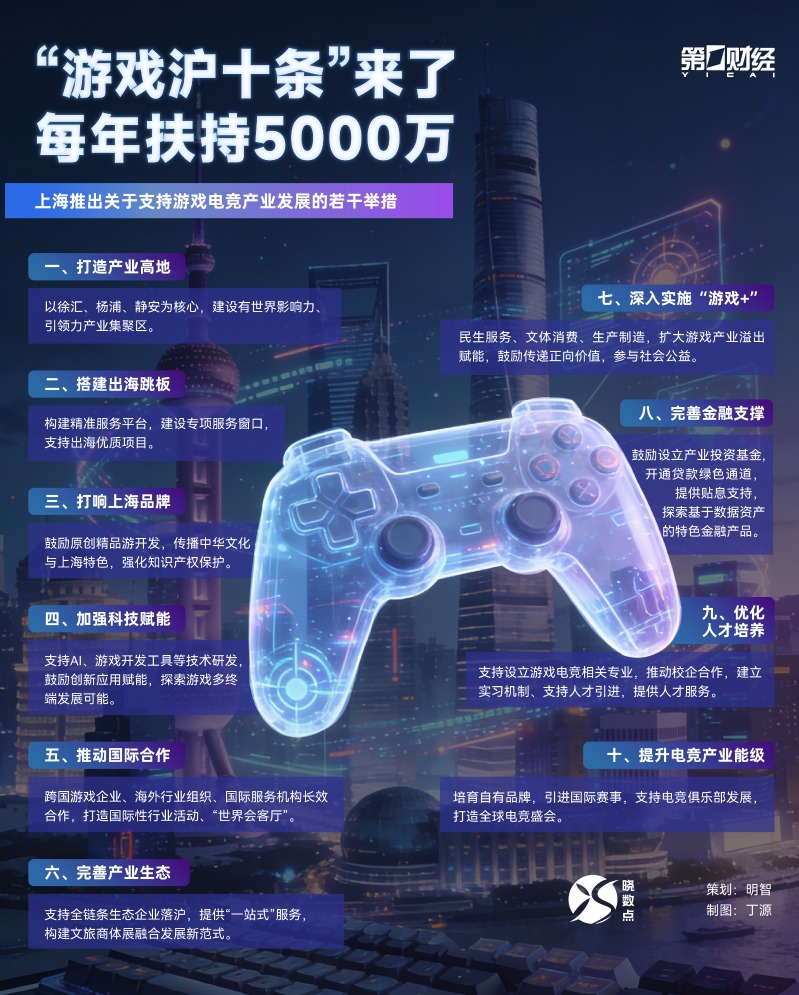
"游戏沪十条"来. 每年扶持5000万 构建精准服务平台,建设专项服务窗口, 支持出海优质项目。 三、打响上海品牌 鼓励原创精品游开发,传播中华文化 与上海特色,强化知识产权保护。 四、加强科技赋能 支持AI、游戏开发工具等技术研发, 鼓励创新应用赋能,探索游戏多终 端发展可能。 五、推动国际合作 跨国游戏企业、海外行业组织、国际服务机构长效 合作,打造国际性行业活动、"世界会客厅"。 上海推出关于支持游戏电竞产业发展的若干举措 、打造产业高地 以徐汇、杨浦、静安为核心、建设有世界影响力. 引领力产业集聚区。 二、搭建出海跳板 八、完善金融支撑 鼓励设立产业投资基金。 开通贷款绿色通道, 提供贴息支持, 探索基于数据资产 的特色金融产品。 支持设立游戏电竞相关专业,推动校企合作,建立 实习机制、支持人才引进,提供人才服务。 、提升电竞产业能级 培育自有品牌,引进国际赛事,支持电竞俱乐部发展, 打造全球电竞盛会。 六、完善产业生态 支持全链条生态企业落沪,提供"一站式"服务, 构建文旅商体展融合发展新范式。 七、深入实施"游戏+" 民生服务、文体消费、生产制造,扩大游戏产业溢出 赋能,鼓励传递正向价值,参与社会 ...

晓数点|“游戏沪十条”来了,每年扶持5000万
Di Yi Cai Jing Zi Xun· 2025-12-19 12:49
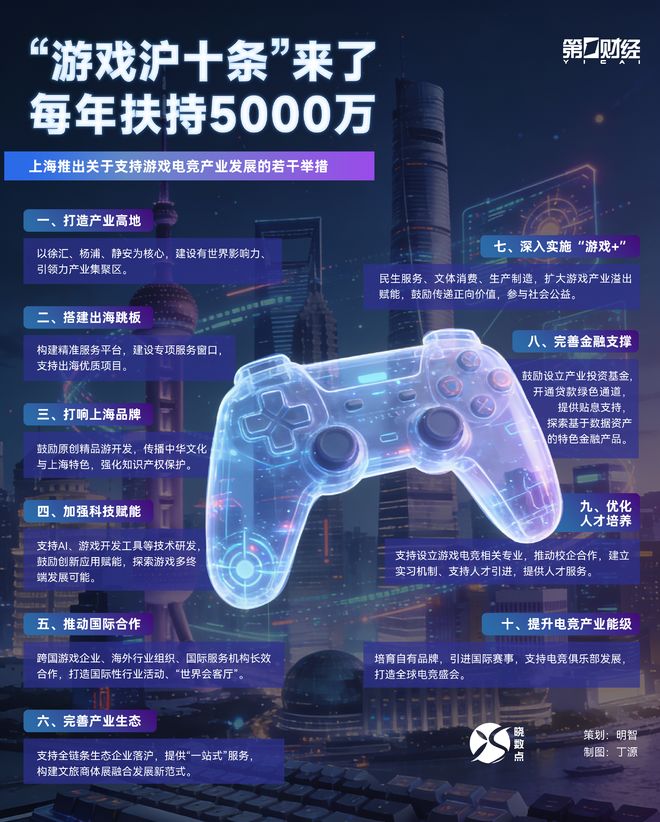
"游戏沪十条"来. 每年扶持5000万 支持AI、游戏开发工具等技术研发 鼓励创新应用赋能,探索游戏多终 端发展可能。 五、推动国际合作 上海推出关于支持游戏电竞产业发展的若干举措 一、打造产业高地 以徐汇、杨浦、静安为核心,建设有世界影响力。 引领力产业集聚区。 二、搭建出海跳板 构建精准服务平台,建设专项服务窗口, 支持出海优质项目。 三、打响上海品牌 鼓励顾创精品游开发,传播中华文化 与上海特色,强化知识产权保护。 四、加强科技赋能 九、优化 支持设立游戏电竞相关专业,推动校企合作,建立 实习机制、支持人才引进,提供人才服务。 、提升电竞产业能级 培育自有品牌,引进国际赛事,支持电竞俱乐部发展, 打造全球电竞盛会。 跨国游戏企业、海外行业组织、国际服务机构长效 合作,打造国际性行业活动、"世界会客厅"。 六、完善产业生态 支持全链条生态企业落沪,提供"一站式"服务, 构建文旅商体展融合发展新范式。 七、深入实施"游戏+" 民生服务、文体消费、生产制造,扩大游戏产业溢出 赋能,鼓励传递正向价值,参与社会公益。 八、完善金融支撑 鼓励设立产业投资基金, 开通贷款绿色通道, 提供贴息支持, 探索甚于数据资产 ...
王者荣耀超级IP亮相 深圳南山区游戏电竞产业规模超千亿
2 1 Shi Ji Jing Ji Bao Dao· 2025-12-19 12:12
(原标题:王者荣耀超级IP亮相 深圳南山区游戏电竞产业规模超千亿) 如在11月,两大省级平台——广东(深圳)游戏企业服务中心、广东(深圳)游戏出海服务中心正式揭 牌成立,落地南山。 其中,广东(深圳)游戏企业服务中心重点围绕资源对接、政策梳理、版号咨询和合规服务四大方向开 展工作:依托南山在创新、高校、资本等方面的集聚优势,搭建技术、人才与融资对接平台,推动区内 优质资源向全省游戏企业开放共享;系统梳理各级产业政策,为企业量身定制政策包,推动政策红 利"应享尽享";在上级主管部门指导下,联动广东网络游戏出版联盟等资源,提供从版号申报、防沉迷 系统接入到网络文化经营备案的全流程"一对一"咨询服务,提升运营效率;联合专业法律机构,提供针 对内容审核、数据出海等领域的合规咨询,助力企业规避前端风险。 广东(深圳)游戏出海服务中心落地前海深港现代服务业合作区内的南山街道辖区,将打造集市场研 究、政策咨询、创业孵化、发行运营、人才赋能等功能于一体的士游戏出海服务平台,构建专业化、标 准化出海服务模式,为企业提供适配的解决方案,推动出海企业数量与规模稳步增长,争取游戏出海成 为区域经济潜在的新增长点。 《深圳市南山区推动 ...
上海即将推出支持游戏电竞产业发展十条举措
Ge Long Hui· 2025-12-19 11:31
格隆汇12月19日|据一财,12月19日,2025游戏产业大会上传来重磅消息:上海即将推出支持游戏电竞 产业发展十条举措(简称"游戏沪十条"),将优质的资源精准投向关键环节,支持上海乃至中国游戏产 业的高质量发展。 ...
上海“游戏沪十条”要来了!迎政策“春风”,游戏电竞行业怎么看?
Di Yi Cai Jing· 2025-12-19 11:12
Core Insights - Shanghai is launching ten measures to support the development of the gaming and esports industry, termed "Game Shanghai Ten Measures," aimed at enhancing the quality of the gaming industry in Shanghai and China [1][3] Group 1: Industry Development - The gaming industry in Shanghai is projected to achieve sales revenue of 170.7 billion yuan in 2025, with a year-on-year growth of approximately 9.6%, and overseas revenue expected to reach 30.3 billion yuan, growing by 13.7% [3] - The "Game Shanghai Ten Measures" focuses on building industrial clusters, enhancing technology empowerment, talent cultivation, and financial support, among other areas [4][6] - The policy aims to attract more game entrepreneurs to Shanghai, enhancing the city's overall competitiveness [3][4] Group 2: Investment and Financial Support - The measures include the establishment of an industrial investment fund to support key enterprises and small teams in the gaming industry [4][6] - The Shanghai Gaming Industry Special Fund is being established to support single-player game development and related cultural sectors, with a focus on both state-owned and market-driven capital [6][11] - The policy is expected to boost confidence among investors and entrepreneurs in the gaming sector, as it provides clear support and reduces uncertainties [6][12] Group 3: IP and Esports Development - The policy emphasizes the cultivation of IP ecosystems, encouraging the development of original game products that promote traditional Chinese culture and Shanghai's unique characteristics [8][9] - Shanghai is recognized as a leading esports hub, with plans to enhance its global esports event profile and support local esports clubs [9][11] - The measures aim to create a self-branded esports event system with global influence, indicating a long-term commitment to developing the esports industry [9][12] Group 4: International Expansion - The "Game Shanghai Ten Measures" propose the creation of a comprehensive service platform for international expansion, addressing localization, compliance, and financial services for gaming companies [11][12] - Shanghai's gaming companies have shown strong demand for international market entry, despite facing challenges such as intellectual property issues abroad [11][12] Group 5: Talent and Ecosystem - Shanghai's unique cultural and talent advantages position it as a favorable environment for the gaming and esports industry [12][16] - The measures include optimizing talent cultivation by supporting the establishment of gaming-related academic programs and attracting talent [12][16] - The city has developed a complete gaming ecosystem, with major companies and emerging players contributing to a vibrant industry landscape [12][15]
2025年中国数字文娱大会在广州举办
Zhong Guo Jing Ji Wang· 2025-12-19 05:34
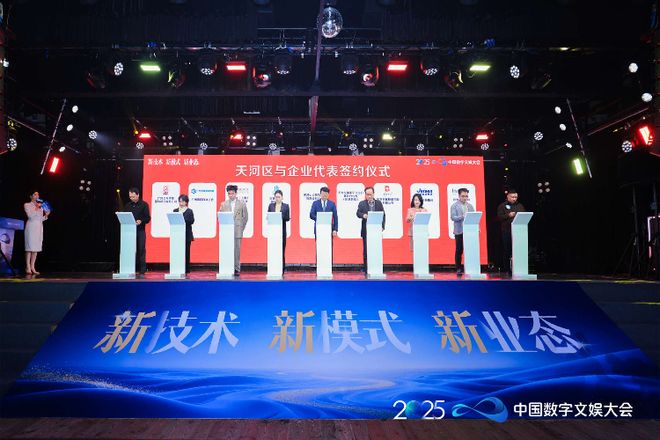
Group 1 - The 2025 China Digital Entertainment Conference opened in Guangzhou, focusing on "new technologies, new models, and new business formats" [1] - The conference aims to create a platform for the digital entertainment industry to promote high-quality development in China, with a permanent location in Guangzhou starting in 2024 [1] - Guangzhou's government has approved a policy to support the gaming and esports industry, which will soon be announced to the public [1] Group 2 - The Vice President of Pop Mart International Group emphasized that IP is the core driving force for the company's development and connects global consumers emotionally [2] - The micro-short drama industry is transitioning from "traffic-driven" to "value cultivation," with high-quality content being essential for sustainable industry growth [2] - The "China Entertainment Industry AI Application Development Report" indicates that the digital entertainment market in China will reach 1.75 trillion yuan in 2024, with short video users making up 93.6% of the audience [2]
“缺席”全国前20名榜单,浙江急了?
Mei Ri Jing Ji Xin Wen· 2025-12-18 23:47
Group 1: Education and Talent Development - The latest "China Statistical Yearbook 2025" indicates that Zhengzhou ranks second in the number of college students, with over 1.432 million, following Guangzhou [1] - The total number of college students in the top 20 cities increased from 17.0392 million in 2023 to 17.3746 million in 2024, a growth of 1.97%, representing 44.65% of all college students in China [1] - Zhejiang province, particularly Hangzhou, faces challenges in educational resources despite having Zhejiang University, with plans to establish new universities to enhance talent supply [2][3] Group 2: Policy Initiatives - Guangzhou is set to introduce its first special policy to support the gaming and esports industry, which will be announced soon [4] - The establishment of the first "Emerging Industries Bureau" in Wenzhou aims to promote investment and development in emerging industries [5][6] Group 3: Economic Development Strategies - Jiangxi's provincial leadership emphasizes the importance of county-level economic development, advocating for focused resource allocation to develop key industries [7] - Hangzhou has become the first city in China to legislate for public health promotion, indicating a proactive approach to health and wellness [8] Group 4: Manufacturing and Urban Development - The "2025 Research Report on High-Quality Development of Urban Manufacturing" identifies ten cities with strong manufacturing capabilities, with new entrants like Binzhou and Huizhou [13] - The report highlights that eastern regions continue to lead in manufacturing, with cities in Jiangsu, Shandong, Zhejiang, and Guangdong remaining at the forefront [13]
城市24小时 | “缺席”全国前20名榜单,浙江急了?
Mei Ri Jing Ji Xin Wen· 2025-12-18 16:03
每经记者|杨欢 每经编辑|刘艳美 据大象新闻消息,最新发布的《中国统计年鉴2025》显示,高校本专科在校生人数超过100万的城市 中,郑州市以143.2万余人位列第二位,紧随广州市之后。武汉、成都、重庆的本专科在校生也超过百 万,位列第三至第五位。 数据显示,从本专科在校生人数排名前20位的城市来看,总体人数继续增加,从2023年的1703.92万 人,增加到2024年的1737.46万人,增长1.97%。这些城市的在校生总数,占我国全部本专科在校生人数 的44.65%。 比起排名前20位的在榜城市,未上榜的城市引发了更多的关注。据浙江"潮新闻"报道,浙江多城在这一 数据上的表现则显得平淡。即便是省内本专科在校生最多的杭州,连续两年未进入全国前20名榜单。 2024年排名第20名的长春,其本专科在校生也已超过54万人。 解读:人才因产业而聚、产业因人才而兴,"抢人"大战表面上看是人才政策之争,实际上是创新生态之 争,更是未来发展竞争力之争。一个对比数据常常被提及:世界著名大学的毕业生创业比例达30%,而 这个比例在中国大概只有1%到2%。 在今年的大众视角下,这样的困境对于浙江,特别是杭州来说,或许并非难解。 ...
稳居全国文化产业第一梯队!广州天河加码发力数字文娱新赛道
Nan Fang Du Shi Bao· 2025-12-18 10:37
Core Insights - Guangzhou Tianhe District is positioning itself as a hub for the digital entertainment industry, launching a series of initiatives and policies to support the sector [2][3] - The digital entertainment market in China is projected to reach 1.75 trillion yuan in 2024, driven by advancements in AI technologies [3] - Tianhe District has established a complete industrial chain in the cultural sector, from research and development to monetization, making it a key player in the national landscape [6] Industry Overview - Tianhe District has 1,164 cultural enterprises above designated size, an increase of 210, generating revenue of 226.66 billion yuan, accounting for 37.5% of Guangzhou's total [4] - The gaming industry in Tianhe is particularly strong, contributing 33.8% of the national gaming revenue, and is recognized as a training ground for talent in the sector [5] Technological Integration - The integration of AI in various fields such as gaming, film, and music is reshaping the production and consumption models within the digital entertainment industry [3][6] - The district aims to enhance collaboration between original content production and leading tech companies to boost innovation capabilities [6] Policy Support - Tianhe District has introduced policies to promote high-quality development in the digital cultural industry, including financial support for gaming companies up to 8 million yuan annually [7] - The district also offers substantial funding for hosting major esports events, with support based on actual expenditures [7] Upcoming Events - A series of music performances and events are scheduled in Tianhe, including 53 large concerts featuring popular artists from December 2025 to March 2026 [8]