
自行车

Search documents
48小时风暴再起!欧盟核选项出击,冯德莱恩:12家中企只是开头
Sou Hu Cai Jing· 2025-10-26 16:22
Group 1 - The European Union has unexpectedly included 12 Chinese companies in its latest round of sanctions against Russia, raising concerns about the implications for China-EU relations [2][6][16] - The sanctions target companies involved in oil-related activities, with no substantial evidence provided to justify the accusations against these firms [4][9] - The EU's actions appear to be politically motivated, aiming to align with U.S. interests while creating challenges for Chinese enterprises [11][13] Group 2 - The impact of these sanctions on European manufacturing is significant, with companies facing increased costs and potential supply chain disruptions [21] - Some affected Chinese companies have proactively adapted by relocating production and seeking new markets, demonstrating resilience in the face of adversity [21] - The ongoing tensions and sanctions could lead to a broader economic fallout, affecting various industries and prompting a reevaluation of trade relationships [19][21]


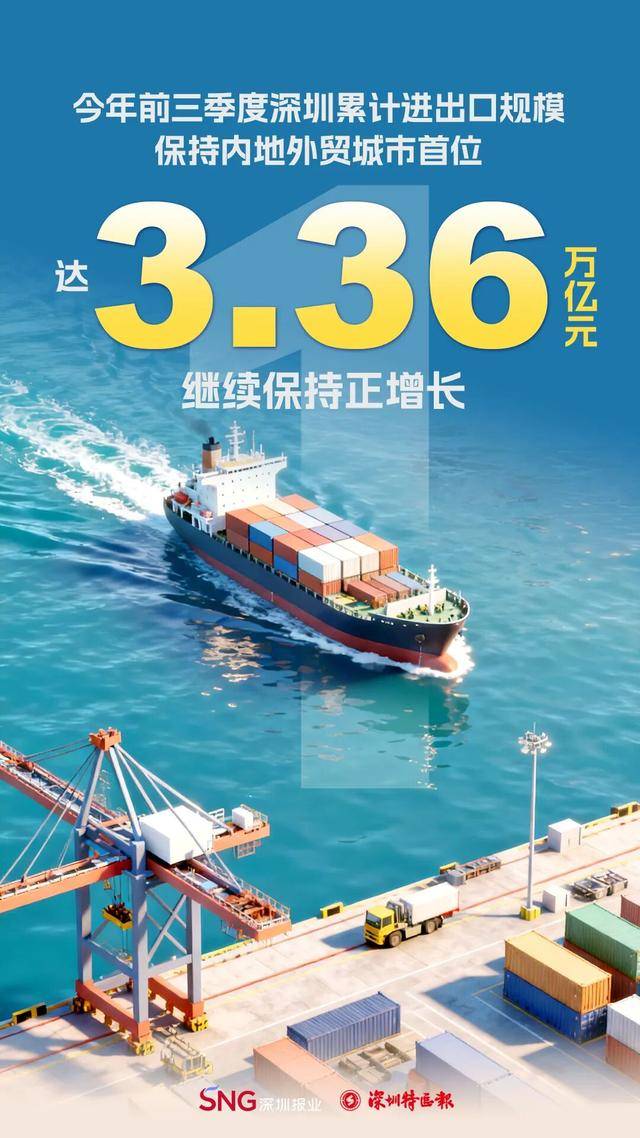
3.36万亿元,保持首位!深圳外贸韧性何来?
Sou Hu Cai Jing· 2025-10-20 05:49
Core Viewpoint - Despite a challenging external environment, Shenzhen's foreign trade continues to show resilience and maintain a steady growth momentum, with a total import and export scale of 3.36 trillion yuan in the first three quarters of the year, marking a year-on-year increase of 0.1% [1][3]. Group 1: Trade Performance - Shenzhen's total import and export volume reached 3.36 trillion yuan, maintaining its position as the leading foreign trade city in mainland China [1]. - Exports amounted to 2.04 trillion yuan, while imports reached 1.32 trillion yuan, with imports growing by 8.4% [1]. - In the first three quarters, Shenzhen's private enterprises accounted for 68.9% of total imports and exports, amounting to 2.32 trillion yuan [9]. Group 2: Role of Private Enterprises - Private enterprises, which make up 97% of the market, are the main force in stabilizing Shenzhen's foreign trade and driving market expansion [5]. - Traditional industries are actively transforming by aligning with diverse overseas demands and moving up the value chain [5]. - Innovations such as the V'mo fingerprint lock bag, which won the 2025 German iF Design Award, exemplify the technological advancements and market adaptability of Shenzhen brands [5][6]. Group 3: Product Innovation - Product innovation is identified as the core competitive advantage for brands going global, with many Shenzhen companies achieving significant breakthroughs [6]. - Shenzhen's bicycle manufacturer, Xidesheng, has developed a carbon fiber bike frame weighing only 560 grams, showcasing its technological prowess [7]. - In the first three quarters, Shenzhen exported bicycles worth 770 million yuan, reflecting a year-on-year growth of 34.5% [7]. Group 4: Export Structure and New Industries - The general trade method, characterized by longer supply chains and higher added value, accounted for 53.8% of Shenzhen's total import and export value, amounting to 1.81 trillion yuan [10]. - Emerging industries, including 3D printing and lithium batteries, are driving export growth, with lithium battery exports increasing by 36.6% [11]. - Shenzhen's traditional electronic information products, such as computers and audio-visual equipment, also maintained a competitive edge, with exports growing by 10.6% and 6.3% respectively [11]. Group 5: Expanding Trade Partnerships - Shenzhen's foreign trade partnerships are expanding, with total imports and exports to the top ten trading partners reaching 2.63 trillion yuan, a growth of 2.2% [13]. - The ASEAN region has become a significant trading partner, providing more export opportunities, especially for high-value products [13]. - The 22nd China-ASEAN Expo facilitated significant orders for Shenzhen's innovative products, further solidifying its influence in the ASEAN market [13]. Group 6: Import Trends - Imports of electromechanical products reached 1.08 trillion yuan, growing by 10.7% and accounting for 81.4% of total imports [15]. - Agricultural product imports also saw a growth of 9.3%, amounting to 752.3 million yuan [15].
海口唤域皓轮胎有限公司成立 注册资本1万人民币
Sou Hu Cai Jing· 2025-10-18 10:11
Core Viewpoint - Haikou Huanyu Haolun Tire Co., Ltd. has been established with a registered capital of 10,000 RMB, indicating a new player in the automotive and renewable energy sectors [1] Company Summary - The legal representative of the company is Zhang Xinzhi [1] - The company’s business scope includes retail of automotive parts, motorcycle and bicycle parts, tire sales, and sales of electric vehicle charging facilities [1] - The company is also involved in the research and development of automotive components and sales of new energy vehicle production testing equipment [1] Industry Summary - The establishment of this company reflects the growing market for electric vehicles and related infrastructure, such as charging stations and battery swapping facilities [1] - The inclusion of various retail activities, including daily necessities and second-hand goods, suggests a diversified business model aimed at capturing multiple market segments [1]
广州市乾麦车品有限公司成立 注册资本1万人民币
Sou Hu Cai Jing· 2025-10-18 06:45
Core Viewpoint - Guangzhou Qianmai Automotive Products Co., Ltd. has been established with a registered capital of 10,000 RMB, indicating a new player in the automotive and related technology sectors [1] Company Overview - The company is engaged in a wide range of activities including import and export of goods, wholesale of bicycles and accessories, sales of lighting fixtures, and sales of smart vehicle-mounted devices [1] - It also focuses on wholesale and retail of automotive parts, sales of new energy vehicle production testing equipment, and sales of artificial intelligence hardware [1] - Additional operations include research and development of automotive components, internet sales (excluding licensed goods), and information consulting services (excluding licensed consulting services) [1] Industry Focus - The company is involved in new material technology research and development, sales of new membrane materials, and sales of plastic products [1] - It also deals in leather and leather products, second-hand daily necessities, and general daily necessities sales [1]
国泰海通晨报-20251016
GUOTAI HAITONG SECURITIES· 2025-10-16 04:55
Macro Research - The core CPI continued to rise year-on-year in September, reaching -0.3%, while the PPI decreased year-on-year by 2.3%. The overall price level still requires support for recovery [6] - Recent price trends show two main characteristics: first, the core CPI's rise is driven by external factors such as consumption subsidies and rising gold prices, with no significant improvement in endogenous consumer demand [6] - The market has strong expectations for the effects of anti-involution policies, but the recent rise in industrial product prices has been structural and mainly in raw materials and upstream sectors [6] Investment Banking and Brokerage Industry - The performance of listed brokerages is expected to maintain rapid growth in Q1-Q3 2025, with a year-on-year increase in net profit of 58.63% [8] - Adjusted operating revenue for 42 listed brokerages is projected to grow by 32.02% year-on-year to 395.48 billion yuan, with net profit reaching 165.15 billion yuan [8] - The brokerage business is expected to contribute the most to revenue growth, driven by a significant increase in market trading volume [8] Insurance Industry - The net profit of listed insurance companies is expected to grow significantly in Q3 2025, with a forecasted growth rate of 57.0% for New China Life Insurance [13] - The growth in life insurance premiums is driven by the optimization of asset allocation and increased equity asset configuration [14] - The combined ratio (COR) for property insurance is expected to improve despite pressures from natural disasters, with a projected COR of 96.1% for China Property Insurance [15] Shipping Industry - China's countermeasures against the US 301 investigation are expected to alleviate the impact on Chinese shipyards and shipping companies [17] - The new regulations impose special port fees on US-owned vessels docking at Chinese ports, which may lead to a reduction in effective shipping capacity and increased freight rates [19] - The shipping market is expected to see a rise in freight rates due to the countermeasures, with a projected increase in oil shipping rates [19] Company Coverage: Zhongxin Co., Ltd. - The company is expected to achieve EPS of 3.23, 5.47, and 7.08 yuan from 2025 to 2027, with a target price of 96.97 yuan based on a 30X PE ratio [21] - The company is focusing on global expansion and enhancing its overseas production capacity, with significant progress in its biodegradable product projects [24] - Continuous investment in technology and innovation is expected to enhance the company's core competitiveness and production efficiency [24] Company Coverage: 361 Degrees - The company is leading the industry in revenue growth, with a projected net profit of 12.9 billion yuan for 2025 [25] - The rapid expansion of the "super premium store" model is expected to drive further growth, with a target of opening 100 new stores [26] - The company is well-positioned for continued growth in the upcoming quarters, supported by strong product offerings and market demand [26] Company Coverage: Small Commodity City - The global trade center project is accelerating its leasing process, significantly boosting market revenue from rentals and services [27] - The company has raised its EPS forecasts for 2025-2027, reflecting strong performance and market demand [30] - The digital trade ecosystem is rapidly growing, with a significant increase in cross-border payment transactions [30]
久祺股份:目前主要销售地区为海外市场,国内暂未销售相关产品
Zheng Quan Ri Bao Wang· 2025-10-13 12:11
证券日报网讯久祺股份(300994)10月13日在互动平台回答投资者提问时表示,公司目前主要销售地区 为海外市场,国内暂未销售相关产品。 ...
从上海凤凰看中华老字号品牌高端化升级的道法术
Jing Ji Guan Cha Bao· 2025-09-30 09:12
Core Viewpoint - The article discusses the challenges and opportunities faced by traditional Chinese brands, particularly focusing on Shanghai Phoenix's high-end transformation strategy amidst rising consumer demand for quality and individuality in products [1][2]. Industry Overview - Traditional Chinese brands are experiencing pressure from low-cost competition, particularly from Southeast Asian countries, and are struggling with low profit margins due to a "value for money" perception [3][4]. - The need for high-end transformation is emphasized as a strategy to differentiate brands, enhance brand image, and expand profit margins [2][6]. Company Analysis: Shanghai Phoenix - Shanghai Phoenix, a well-known century-old brand, is undergoing a high-end transformation strategy termed "strategic flywheel, six-line chain movement," which serves as a model for other traditional brands [2][22]. - The company is focusing on three key product categories for high-end development: children's bicycles, mid-to-high-end sports bicycles, and lithium electric bicycles [7][12]. Product Categories 1. **Children's Bicycles**: The market for children's bicycles is growing, with a projected compound annual growth rate of 36% to reach $25 billion by 2032. Shanghai Phoenix is launching a premium children's bicycle series to capitalize on this trend [8][9]. 2. **Mid-to-High-End Sports Bicycles**: The post-pandemic cycling trend has led to a significant increase in demand for mid-to-high-end bicycles, with sales of high-end road bicycles growing by 530% year-on-year [10][11]. 3. **Lithium Electric Bicycles**: The global market for electric bicycles is expected to grow at a compound annual growth rate of around 10%, with Europe being a key market. Shanghai Phoenix is focusing on this segment as a core strategy for high-end transformation [12][13]. Challenges and Strategies - Shanghai Phoenix faces challenges such as low profit margins and a lack of high-end product lines, which necessitates a shift from low-cost competition to quality and uniqueness [4][5]. - The company is advised to enhance product quality control, innovate product designs, and improve customer satisfaction to support its high-end transformation [26][29]. Market Positioning - The brand aims to reposition itself by focusing on fashion and lifestyle elements, appealing to younger consumers who prioritize aesthetics and comfort in their purchasing decisions [23][24]. - The company plans to expand its retail presence, particularly through offline channels, to enhance customer experience and support its high-end product offerings [31][32]. Organizational Changes - Organizational restructuring is essential for effective implementation of the high-end strategy, including optimizing decision-making processes and enhancing market responsiveness [38][39]. International Expansion - Shanghai Phoenix is shifting its focus to high-value markets in Europe and North America, particularly in the lithium electric bicycle segment, to improve profit margins and market presence [34][35].

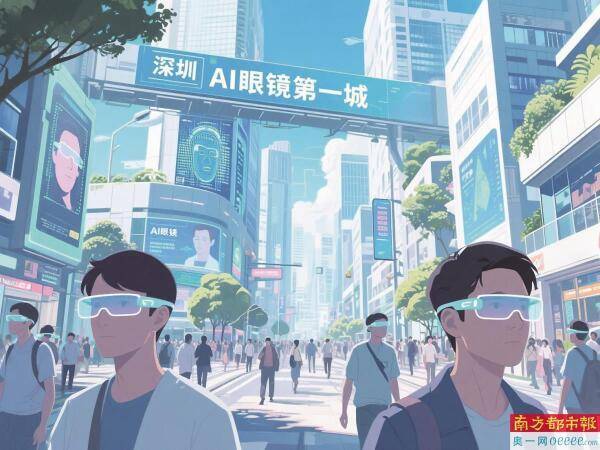
用好50亿基金 打造“AI眼镜第一城”
Sou Hu Cai Jing· 2025-09-29 23:13
Core Viewpoint - Shenzhen is transforming its traditional industries through digitalization and artificial intelligence, aiming to enhance the overall scale of traditional industries to over 700 billion yuan in the next three years [2][4][5]. Group 1: Traditional Industry Development - Shenzhen has a strong presence in high-end women's clothing, jewelry, and eyewear, with significant contributions to the global market [2]. - The city aims to optimize and upgrade traditional industries by leveraging new technologies, resulting in the emergence of new products, brands, services, and business models [2][4]. - The government is focusing on a multi-faceted policy approach to support various sectors, including clothing, jewelry, furniture, eyewear, watches, and leather [4]. Group 2: Artificial Intelligence Integration - Shenzhen plans to harness artificial intelligence to empower traditional industries, emphasizing the importance of AI in driving innovation and efficiency [5]. - The city has established major projects like Pengcheng Cloud Brain and Shenzhen Open Intelligent Computing Center to enhance AI service resources [5]. - Financial support mechanisms, such as "training vouchers" and "model vouchers," will be introduced to help companies reduce costs associated with AI implementation [5][6]. Group 3: Regional Initiatives - The Luohu District is enhancing its jewelry industry by integrating AI technologies into design, manufacturing, and retail, aiming to elevate the value creation process [7]. - The Longhua District is focusing on digital transformation in the fashion industry, promoting local brands on international platforms like Milan Fashion Week [8]. - Collaborative efforts with tech companies like Huawei are being made to establish smart centers that will further integrate AI into traditional sectors [7][8].
剑指7000亿产值!深圳12条新政力推传统产业升级
2 1 Shi Ji Jing Ji Bao Dao· 2025-09-29 11:19
Core Insights - Shenzhen aims to explore new paths for the high-quality transformation of traditional industries, contributing "Shenzhen wisdom" and "Shenzhen solutions" to the nation [1] - The city targets a total scale of over 700 billion yuan for traditional industries [2] Group 1: Traditional Industry Transformation - Traditional industries are seen as the foundation of a modern industrial system, connecting numerous enterprises and households [3] - The integration of digital technology and artificial intelligence is reshaping the industrial landscape, leading to the emergence of new products, brands, services, and business models [3] - Examples of innovation include the collaboration between Chow Tai Fook and SenseTime in the jewelry sector, and the development of AI-driven solutions in various fields such as bicycles, eyewear, and smart home products [3] Group 2: Policy Measures and Goals - Shenzhen plans to implement 12 policy measures to support the optimization and upgrading of traditional industries, aiming to exceed 700 billion yuan in total scale within three years [4] - The measures include policies on industry support, funding, core technology development, AI integration, and brand promotion [4] - Specific initiatives include the "Action Plan for Accelerating the Development of AI Terminal Industries" and support for over 100 traditional enterprises in digital transformation within three years [4] Group 3: Regional Development and Collaboration - The Luohu District aims to enhance the jewelry industry through five empowerment strategies: brand, digital intelligence, platform, design, and culture [6] - A collaboration with Huawei Cloud will establish a digital empowerment center for the jewelry industry, focusing on AI applications in design, manufacturing, supply chain, and retail [7] - The Longhua District emphasizes a dual approach of "digital + fashion" to revitalize the clothing industry, promoting local brands on international platforms like Milan Fashion Week [8]
深圳12条,力推传统产业向“新”向“智”!
Nan Fang Du Shi Bao· 2025-09-29 10:50
Core Viewpoint - Shenzhen is leveraging technological advancements, particularly in artificial intelligence, to optimize and upgrade its traditional industries, aiming for a significant increase in the overall scale of these sectors to over 700 billion yuan within three years [2][3][8]. Group 1: Traditional Industry Development - Traditional industries are seen as the foundation of a modern industrial system, connecting numerous enterprises and households [2]. - Shenzhen's traditional industries are experiencing rapid innovation with new products, brands, services, and business models emerging, particularly in sectors like gold jewelry, bicycles, and eyewear [2][3]. - The city plans to implement 12 policy measures to support the growth of traditional industries, focusing on sectors such as apparel, gold jewelry, furniture, eyewear, watches, and leather [3][5]. Group 2: Technological Integration - Shenzhen aims to enhance traditional industries through technological empowerment, including AI and digital transformation initiatives [4][8]. - The city has established significant projects like the Pengcheng Cloud Brain and Shenzhen Open Intelligent Computing Center to bolster AI resource supply [8][9]. - A focus on digital transformation will see over 100 traditional enterprises adopting digital solutions within three years [5][9]. Group 3: Investment and Funding - The government will support the establishment of various funds to encourage investment in traditional industries, including mergers and acquisitions [3][4]. - A multi-faceted investment model involving government guidance, listed companies, and professional investment institutions will be developed to nurture high-potential enterprises [3][4]. Group 4: Market Expansion and Promotion - Shenzhen will enhance its traditional industry branding through media engagement and promotional activities, including collaborations with influencers and advertising in major cities [5][6]. - The city will host international design competitions and exhibitions to elevate the profile of its traditional industries [6][10]. Group 5: Talent Development and Infrastructure - The city plans to cultivate skilled talent in traditional industries through training centers and partnerships with educational institutions [7][10]. - Upgrading industrial spaces and creating specialized parks for various sectors, such as jewelry and eyewear, is a priority to foster industry clustering [7][10]. Group 6: Regional Initiatives - Specific districts like Luohu and Longhua are implementing tailored strategies to enhance their traditional industries, focusing on digital empowerment and international exposure [10][11]. - Luohu aims to integrate AI into the gold jewelry sector, while Longhua emphasizes a dual approach of digital and fashion innovation [10][11].