
邮轮

Search documents
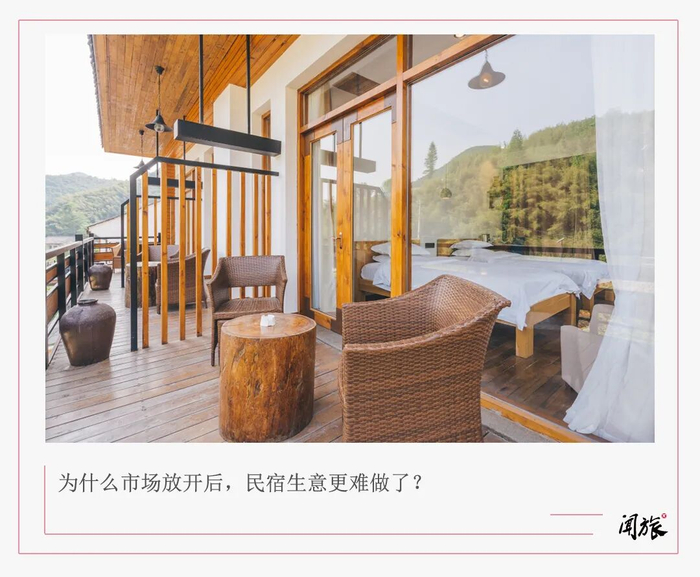
2026年最先凉掉的是民宿生意
Xin Lang Cai Jing· 2026-01-12 21:16
Group 1 - The core viewpoint of the article highlights a paradox in the homestay industry, where overall industry data appears to show growth, but many individual operators are closing down due to intense competition and declining profitability [2][18]. - As of the end of 2025, there are 383,000 homestay-related enterprises in China, with 86,000 new registrations since 2025, indicating a saturated market, particularly in popular tourist areas [8][10][14]. - During the 2026 New Year holiday, homestay orders on platforms like Tujia increased by 160% year-on-year, suggesting a strong demand for unique travel experiences despite the struggles of some operators [11][12]. Group 2 - The competition in the homestay market has intensified, leading to price wars, with some operators reporting average room rates as low as 100 yuan, which is unsustainable for profitability [15][18]. - The shift in consumer preferences indicates that younger travelers are now prioritizing unique experiences over cost, seeking emotional and social value from their stays rather than just affordable lodging [19][20][25]. - The article suggests that homestays that fail to evolve from being mere "hotel substitutes" to "experience containers" are likely to be eliminated from the market [25][26].

打造“雨林式”科技创新生态
Xin Lang Cai Jing· 2026-01-06 22:38
Group 1 - The core viewpoint emphasizes China's accelerated innovation and technological advancements, aiming to establish itself as a technological powerhouse by 2035 [1][3][4] - The "14th Five-Year Plan" has seen significant achievements in various fields, including space exploration, 5G communication, and renewable energy, marking a transition from quantitative accumulation to qualitative leaps in technological strength [2][3] - The upcoming "15th Five-Year Plan" is identified as a critical period for achieving high-level technological self-reliance and supporting modernization through technological advancements [3][4] Group 2 - Research and development (R&D) investment is projected to exceed 3.6 trillion yuan in 2024, reflecting a 48% increase from 2020, with R&D intensity reaching 2.68%, surpassing the EU average [3] - China's comprehensive innovation capability ranking has improved from 14th in 2020 to 10th in 2024, with key innovation clusters like Shenzhen-Hong Kong-Guangzhou leading globally [3] - The integration of technological innovation and industrial innovation is crucial for building a modern industrial system, as demonstrated by the successful commercial operation of the C919 aircraft and the development of the domestic cruise ship industry [7][8] Group 3 - The establishment of international technology innovation centers in Beijing and Shanghai is set to expand, fostering regional collaboration and resource sharing [8] - Companies are recognized as the main drivers of innovation, with a focus on enhancing their role in technology development and application [8] - The promotion of "Artificial Intelligence +" initiatives aims to integrate cutting-edge technologies into various sectors, thereby creating new industries and enhancing traditional ones [8]
元旦假期出行活力足
Zhong Guo Zheng Quan Bao· 2026-01-04 20:07
Group 1: Travel Market Overview - The travel market experienced significant growth during the New Year holiday, with a total of 595 million cross-regional trips, averaging 198 million trips per day, representing a 19.62% increase compared to the same period last year [1] - Railway passenger volume reached 48.1 million during the holiday, with a daily average of 16.02 million, marking a 52.66% year-on-year increase [1] - Self-driving remains the dominant mode of travel, with non-commercial small passenger car trips reaching 442 million, averaging 147 million per day, a 14.6% increase year-on-year [1] Group 2: Car Rental Market Growth - Didi Car Rental reported a 243% year-on-year increase in bookings during the New Year holiday, with about half of users planning 2 to 4-day self-driving trips [2] - The rental car market is projected to grow significantly, with the total number of small and micro passenger car rentals reaching 4 million, and an expected annual growth rate of around 15% during the 14th Five-Year Plan period [4] Group 3: Transportation Innovations - The introduction of L4 autonomous driving services in Hainan is enhancing the self-driving experience, with vehicles designed for tourism that integrate smart navigation and entertainment [3] - The "China Snow City: My Altay" themed train service was launched to promote ice and snow tourism, optimizing travel routes to connect various winter attractions [2] Group 4: Emerging Trends in Travel Consumption - The trend of self-driving tourism is becoming a new hotspot in travel consumption, with many roads becoming popular "check-in" locations, driving consumer demand and improving road service quality [5] - The cruise and yacht sectors are identified as growth points in transportation consumption, with Aida Cruises offering unique cultural experiences during the New Year [3]
“蓝梦之歌”的真相:不仅要停,还要被卖
3 6 Ke· 2026-01-04 02:59
Core Viewpoint - The article discusses the decline of the cruise ship "Blue Dream Song," highlighting its operational failures, market challenges, and the implications for the cruise industry as a whole. Group 1: Company Overview - "Blue Dream Song" was initially seen as a valuable asset for Blue Dream Cruises, having been purchased from a previous operator and launched in 2024, but it ceased operations by 2026, marking a rapid decline [6]. - The ship, with a capacity of over 1,500 passengers, is considered small compared to other operational cruise ships in China, which limited its appeal despite some operational advantages [7]. Group 2: Operational Challenges - The cruise faced significant operational issues, including poor customer experiences due to its small size, limited amenities, and inadequate dining options, leading to negative passenger feedback [9]. - The initial strategy focused on Japanese routes, which later faced setbacks, forcing the company to shift to less popular routes in Southeast Asia, resulting in further declines in passenger interest [9][10]. Group 3: Market Dynamics - The cruise industry is increasingly competitive, dominated by larger ships with better facilities and services, making it difficult for smaller operators like "Blue Dream Song" to attract customers [15]. - The company's reliance on a passive business model, where it leased the ship to travel agencies without investing in marketing or direct sales, contributed to its inability to generate sufficient passenger traffic [11][12]. Group 4: Financial Implications - The company reportedly incurred losses, particularly due to the failure of its Japanese routes and the subsequent shift to less profitable Southeast Asian routes, which were already saturated [6][9]. - The financial strain led to discussions about employee layoffs and the potential sale of the ship, indicating a lack of investor confidence in the company's future [15]. Group 5: Industry Insights - The situation of "Blue Dream Song" serves as a cautionary tale for smaller cruise operators, emphasizing that competing solely on price without enhancing product quality and customer experience is unsustainable [16]. - The article suggests that the cruise market's future remains uncertain, particularly for the 2026 season, as both international and domestic brands face similar challenges [16].
上海立法促进邮轮经济发展 首试首设首创多项保障政策
Jie Fang Ri Bao· 2026-01-04 01:41
Core Viewpoint - Shanghai is actively developing a first-class cruise port, becoming a benchmark for the cruise industry in China through various innovative policies and regulations aimed at enhancing the cruise economy [1] Group 1: Legislative Developments - The Shanghai Municipal People's Congress has passed the "Regulations on Promoting the Development of the Cruise Economy," which will take effect on March 1, 2026, providing a legal framework for the cruise economy [1] - The regulations emphasize the importance of cruise tourism as a key driver for the cruise economy, encouraging cruise companies to develop international cruise routes and multi-homeport operations to attract more foreign tourists [2] Group 2: Product and Service Innovation - The regulations aim to diversify cruise tourism products, enhancing competitiveness and extending the consumption chain by supporting the development of "cruise + exhibition" and "cruise + wellness" tourism products [2] - Efforts will be made to enrich the supply of cruise products, focusing on new routes and projects that enhance passenger stay and consumption, including non-destination sea tours and multi-point docking for foreign-flagged cruise ships [3] Group 3: Port and Customs Enhancements - The regulations outline measures to improve the cruise port and customs service capabilities, including optimizing customs processes and enhancing the service environment for cruise operations [4] - There will be a focus on implementing advanced port entry and exit guarantees, improving infrastructure, and supporting the use of green fuels and new technologies in port operations [4] Group 4: Employment and Talent Development - The cruise economy is expected to create significant employment opportunities, with one cruise potentially impacting thousands of jobs across its supply chain [5] - The regulations emphasize the importance of talent development in the cruise industry, encouraging educational institutions to establish relevant programs and training bases to meet industry needs [5]
上海邮轮经济新规2026年3月施行 “三港联动”撬动全产业链
Xin Hua Cai Jing· 2025-12-31 12:38
Core Viewpoint - Shanghai is set to enhance its cruise economy by implementing new regulations aimed at establishing a high-quality development framework and positioning itself as a key player in the Asia-Pacific cruise market, with a focus on a "three-port linkage" model [1][2] Group 1: Strategic Positioning - The new regulations define Shanghai's role beyond a traditional passenger hub, aiming to integrate "hub port, headquarters port, and manufacturing port" into its cruise economy development model [2] - This strategic shift is intended to attract global cruise companies to establish regional headquarters and create a world-class cruise design, construction, and maintenance base [2] Group 2: Product Innovation - The regulations promote innovative cruise offerings, including support for "multi-point docking" for foreign cruise ships and the exploration of "destination-less sea cruises," which could stimulate new short-term leisure markets [3] - There is an emphasis on developing combined travel products that integrate air, land, and sea transport, enhancing the overall cruise experience for both domestic and international tourists [3] Group 3: Operational Efficiency - To improve international competitiveness, the regulations propose measures to enhance operational efficiency, such as prioritizing cruise ship entry and exit at ports and optimizing immigration policies [4] - The establishment of a list for low-risk supplies for cruise ships and the potential creation of customs supervision zones are also highlighted to reduce operational costs [4] Group 4: Industry Ecosystem - The regulations focus on strengthening the cruise manufacturing sector by enhancing assembly capabilities and expanding repair services, aiming to build a world-class cruise design and manufacturing base [5] - There is a push for the integration of port and city development, transforming port areas into comprehensive "cruise-themed tourism and vacation zones" to enhance cultural and commercial interactions [5] Group 5: Talent and Support Environment - The regulations encourage educational institutions to develop relevant programs and training centers, while also promoting financial products tailored to the cruise industry [6] - A comprehensive dispute resolution mechanism is proposed to facilitate efficient handling of complex issues related to the cruise sector [6] Group 6: Industry Insights - The introduction of these regulations coincides with a recovery phase for the global cruise market, providing clear guidance and policy expectations for industry players [7] - Data indicates a significant increase in cruise product offerings and bookings, with platforms reporting growth rates of nearly 40% and 30% for various cruise products [8] - The Chinese cruise economy is characterized by stability and resilience, with projections indicating a substantial increase in international cruise traffic in the coming years [8]
上海立法促进邮轮经济发展 多措并举、多元创新
Zhong Guo Xin Wen Wang· 2025-12-30 11:49
Core Viewpoint - Shanghai has passed regulations to promote the cruise economy, establishing a framework for development and implementation of supporting policies, effective from March 1, 2026 [1][2]. Group 1: Regulatory Framework - The newly passed regulations provide a basic framework for the development of the cruise economy in Shanghai, facilitating the formulation and implementation of related supporting systems [1]. - The regulations emphasize innovation in cruise tourism policies and market cultivation, including the establishment of a demonstration zone for cruise tourism development and the exploration of trial cruise routes without specific destinations [1][2]. Group 2: Economic Impact and Market Growth - The cruise economy is recognized as a vibrant and potential-rich sector within modern services, with Shanghai receiving over 3,500 cruise ships and more than 18 million tourists from 2006 to 2025, accounting for over 60% of the national cruise market share [2]. - Shanghai is the first and only designated cruise tourism development demonstration zone in China, having pioneered various policies such as standardized port services and cruise ticket systems [2]. Group 3: Industry Development and Infrastructure - The regulations aim to enhance the competitiveness of the entire cruise industry chain by promoting the integration of port and city development, improving the service environment at cruise ports, and implementing preferential measures for cruise companies [1][3]. - Shanghai plans to improve its port quality and develop themed cruise tourism resorts, while also enhancing various facilitation measures for customs, communication, and payment systems to improve the overall experience for cruise visitors [3]. Group 4: Future Directions - The city will focus on stimulating consumer potential by expanding cruise product offerings and developing new routes and projects that enhance visitor engagement and spending [2][3]. - Continuous tracking and evaluation of the implementation of the regulations will be conducted, with a focus on addressing challenges in the cruise sector and fostering institutional innovation [3].
第一艘停业的国内母港邮轮出现了
3 6 Ke· 2025-12-26 03:31
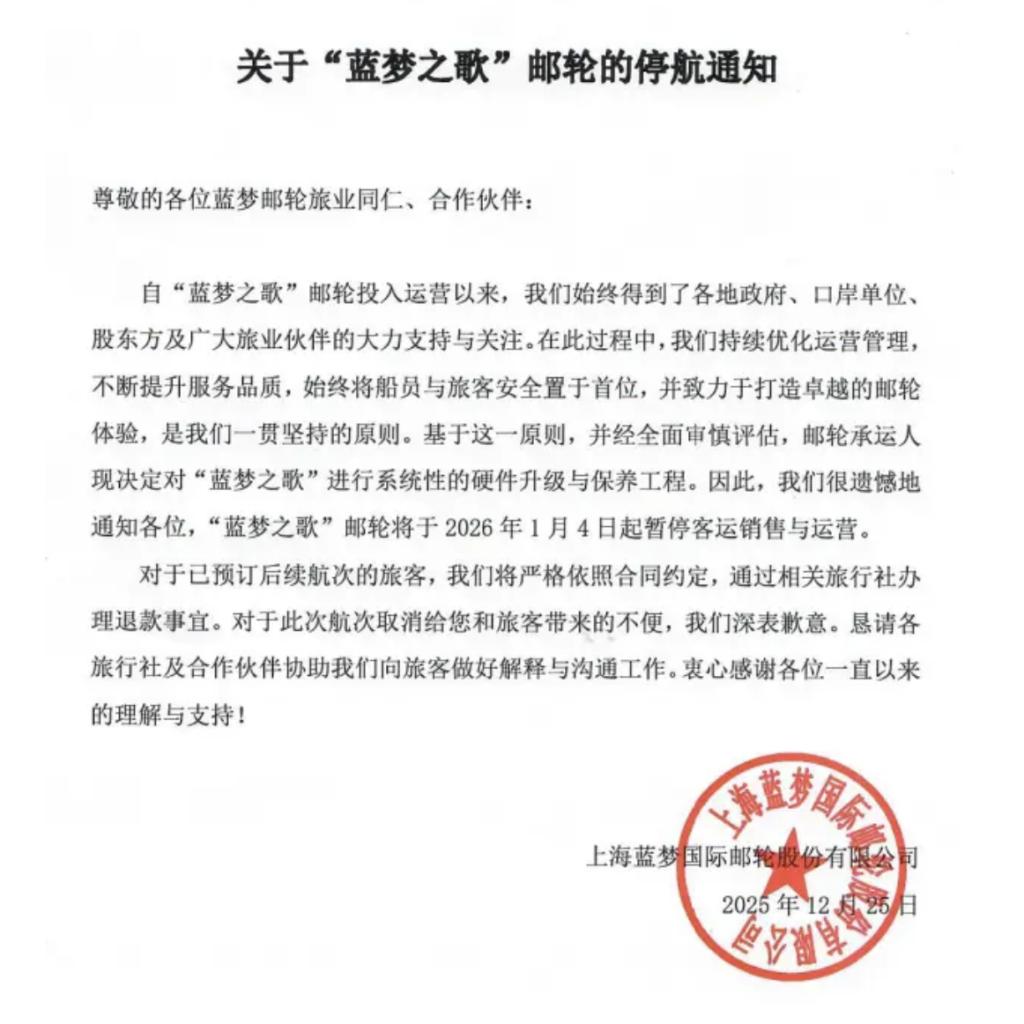
Core Viewpoint - Blue Dream Cruise has announced a systematic hardware upgrade and maintenance project for its ship, Blue Dream Song, leading to the cancellation of upcoming voyages and refunds for booked passengers, indicating potential operational challenges within the company [1][4]. Company Overview - Blue Dream Cruise operates two ships: Blue Dream Star, a small vessel with a displacement of 25,000 tons, and Blue Dream Song, a second-hand ship with a displacement of 42,000 tons and a capacity of approximately 1,200 passengers [5][8]. - The company has faced difficulties due to its limited fleet and resources, leading to the cessation of operations for Blue Dream Star since November of the previous year [6][12]. Market Context - The cruise industry in China is experiencing significant challenges, particularly for smaller operators like Blue Dream, which struggle to compete against larger vessels that offer superior experiences and amenities [13][20]. - The pricing strategy of Blue Dream, which includes extremely low ticket prices, has resulted in a lack of profitability and limited market appeal, especially during peak seasons [26][27]. Financial Implications - The company is facing a cash flow crisis, exacerbated by geopolitical factors affecting short-haul routes, which are crucial for maintaining operational liquidity [32][34]. - Industry experts predict that Blue Dream is likely heading towards bankruptcy restructuring due to its inability to generate revenue from its aging fleet [38][40]. Industry Trends - The Chinese cruise market is shifting towards larger, more capital-intensive operators that can provide enhanced experiences, leaving smaller companies like Blue Dream at a disadvantage [44][48]. - The current market dynamics suggest a harsh culling of weaker players, with only those backed by substantial capital and advanced operational capabilities likely to survive [49].
新“黄金十年”,北方大市机会来了
Sou Hu Cai Jing· 2025-12-24 15:42
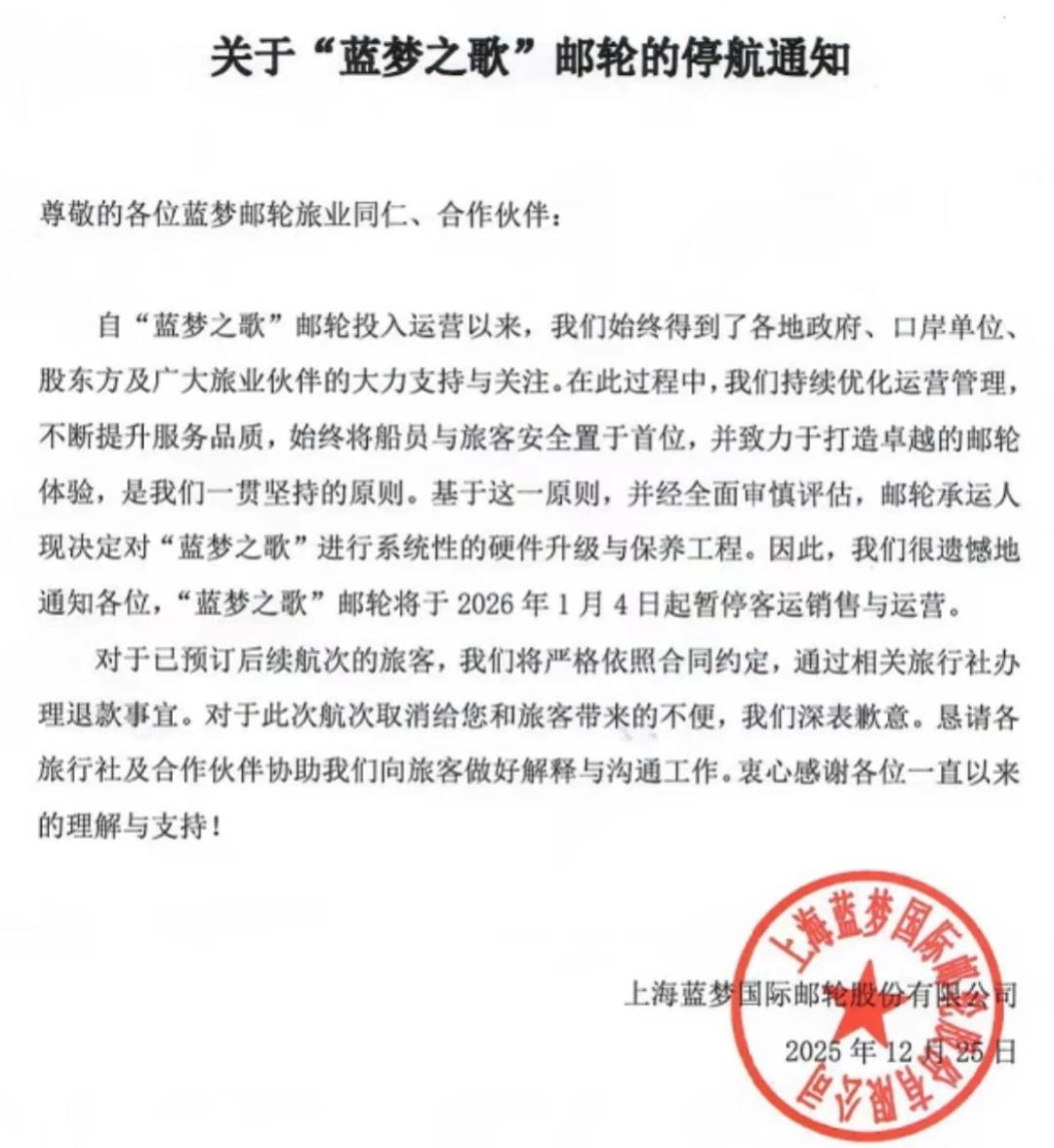
Core Viewpoint - The cruise economy is recognized as a new economic growth point with strong driving effects, and it is expected to enter a "golden decade" in China as the global cruise market recovers [2][4]. Industry Overview - The cruise industry is described as a "golden industry floating on golden waterways," with significant economic value derived from the interconnectedness of various sectors, including high-end manufacturing, transportation, tourism, trade, financial services, and cultural creativity, exhibiting a multiplier effect of 1:10 to 1:14 [4]. - The Chinese cruise economy officially began in 2006, experiencing rapid growth from 2008 to 2017, with a peak in cruise passenger numbers and the establishment of several international cruise brands [6][8]. Current Trends - After a slowdown in growth post-2017, the Chinese cruise market is now showing signs of recovery, with projections indicating that 2025 could mark the beginning of a second "golden decade" for the industry [8][10]. - Data from the Shanghai International Cruise Economy Research Center indicates that the cruise passenger volume in China has already surpassed 85% of the 2019 levels, with a year-on-year increase of 27.8% in the first 11 months of the current year [8]. Regional Development - Various provinces, including Shandong, are actively promoting the cruise economy as a key component of their development strategies, with Qingdao positioned as a central player in this initiative [13][14]. - Qingdao's development plan aims to establish a comprehensive cruise industry cluster worth hundreds of billions, with ambitious targets for passenger numbers and cruise ship arrivals by 2028 and 2035 [14][15]. Economic Impact - The cruise economy is expected to significantly contribute to the local economy, with Qingdao's marine economy projected to reach a gross value of 551.32 billion yuan, accounting for 33% of the city's GDP [21][22]. - The integration of cruise tourism with local cultural and commercial activities is anticipated to create new economic scenarios and enhance the overall marine economy [23].

数览交通运输“促消费+惠民生”向智向绿发展答卷
Yang Shi Wang· 2025-12-24 07:29
Group 1: Cruise Economy Development - The cruise economy is identified as a new economic growth point, with passenger transport volume reaching 1.265 million, a year-on-year increase of 27.8% from January to November this year [1] - The Ministry of Transport has implemented measures to address issues such as the inability of certain cruise ships to dock due to lack of electrical facilities and the limited variety of cruise routes [1] - Ten measures have been proposed to enhance cruise service quality, including allowing ships without electrical facilities to dock at ports until the end of 2029 and expanding cruise routes and products [1] Group 2: Highway Service Area Upgrades - The Ministry of Transport plans to launch a nationwide upgrade action for highway service areas next year, focusing on increasing the number of charging stations and improving facilities for elderly travelers [2] - By 2026, over 10,000 charging guns are planned to be installed in highway service areas, with at least 25% being high-power chargers [2] - The Ministry aims to enhance the accessibility of service areas for elderly travelers and improve the standardization of "Driver's Home" facilities for truck drivers [2] Group 3: Driver Support Initiatives - The Ministry of Transport has launched the 12328 hotline for truck drivers, achieving a response rate of 97%, a resolution rate of 85%, and a satisfaction rate of 89% [4] - The Ministry has taken action against issues such as freight payment delays, assisting 188,000 truck drivers in recovering 1.25 billion yuan in overdue payments [4] - A "Guarding Action" has been initiated to provide support for truck drivers facing emergencies during transport [4] Group 4: Transportation Equipment Upgrades - The transportation sector is undergoing significant upgrades, with over 450 old railway locomotives replaced and 114,000 old city buses and their batteries scrapped [5] - The Ministry has implemented policies to support the scrapping and updating of old freight vehicles, enhancing the green and intelligent levels of transportation equipment [5] - The focus is on expanding consumption scenarios in the transportation sector, particularly in yacht and cruise consumption and small micro-car rentals [5][6] Group 5: Multi-Modal Transport Cooperation - The China National Railway Group has signed agreements with seven shipping companies to expand container multi-modal transport services [7] - This initiative aims to enhance the efficiency of logistics by allowing customers to track their shipments through a unified platform [7] - The collaboration has already resulted in the establishment of six multi-modal transport channels, with 38,000 standard containers shipped [7]