
PCB

Search documents
长城基金:市场主线逐渐清晰,硬科技与顺周期机会凸显
Xin Lang Cai Jing· 2026-02-27 11:51
Core Viewpoint - The A-share market has shown a continuation of the risk appetite recovery observed before the Spring Festival, characterized by "increased volume and structural differentiation" in the first trading week after the holiday [1][3]. Market Performance - The overall market trend is influenced by rising overseas uncertainties, with geopolitical and tariff narratives resurfacing, leading to a pullback in the Hong Kong stock market while energy and resource sectors perform relatively well [1][3]. - A-shares exhibit a stronger internal momentum, maintaining high trading volumes with total turnover exceeding 2 trillion yuan [1][3]. Market Structure - The market style has shifted from a focus on "pure software/AI applications" to "hard technology + cyclical stocks" [1][3]. - The cyclical sector has shown a phase of strength, driven by geopolitical risk premiums pushing up energy prices and uncertainties around tariffs leading to "re-inflation trades" [1][3]. - The hard technology sector is characterized by a "discerning" approach, with funds favoring companies with verifiable orders and performance in the computing hardware chain (e.g., optical communication, PCB, liquid cooling), while being sensitive to AI software themes lacking performance validation [1][3]. Investment Strategy - The first week after the holiday has reinforced market risk appetite, but variables such as overseas geopolitical issues, tariffs, and interest rate expectations may amplify volatility [4]. - The current investment focus is clear, transitioning from narrative-driven to performance-driven, with attention on the following areas: - Emphasis on "performance verification" and "domestic substitution," particularly in AI computing hardware chains, semiconductor equipment, and materials, while avoiding high-volatility stocks without performance support [4]. - Focus on cyclical and resource sectors, leveraging the "hedging attributes" of geopolitical premiums and re-inflation, with potential value in energy, precious metals, and non-ferrous metals, while also considering traditional industries benefiting from "anti-involution" [4]. - Defensive and thematic directions, suggesting high-dividend sectors may offer some "anti-volatility" value amid increased fluctuations, with recommendations to base themes on policy documents and industry progress, avoiding purely conceptual extrapolations [4].
天承科技(688603.SH)2025年度归母净利润8363.39万元 同比增长11.99%
智通财经网· 2026-02-27 11:12
Group 1 - The core viewpoint of the article highlights that Tiancheng Technology (688603.SH) reported a total operating revenue of 471 million yuan for the fiscal year 2025, representing a year-on-year increase of 23.72% [1] - The net profit attributable to the parent company reached 83.63 million yuan, reflecting a year-on-year growth of 11.99% [1] - The company's performance improvement is driven by the recovery in the PCB industry and the release of technological dividends, leading to a robust enhancement in its business results [1] Group 2 - The company has successfully penetrated the high-end market by leveraging its deep technological foundation, breaking through market barriers, and entering the supply chains of leading clients [1] - The surge in demand for high-end products has led to an increase in the sales proportion of high value-added products, which has significantly contributed to product structure optimization and profit margin expansion [1]

生益科技2025年净利润暴增91.76% 双轮驱动战略成效显著
Ju Chao Zi Xun· 2026-02-27 09:05
Group 1 - The company reported a total operating revenue of 28,431.14 million yuan for the year 2025, representing a year-on-year growth of 39.45% [1] - The net profit attributable to shareholders reached 3,333.99 million yuan, showing a significant year-on-year increase of 91.76% [1] - The basic earnings per share stood at 1.39 yuan [1] Group 2 - The copper-clad laminate business performed well, with both sales volume and prices increasing year-on-year, leading to a significant rise in product revenue [1] - The company optimized its product structure and improved gross margin levels, effectively enhancing overall profitability [1] - Subsidiary Shengyi Electronics became another key driver of performance growth, focusing on high-end market expansion and increasing R&D investment [1] Group 3 - The PCB industry is experiencing growth driven by sustained demand for AI servers and high-performance computing, with HDI and high-layer boards performing particularly well [1] - Shengyi Electronics capitalized on market opportunities, achieving substantial revenue and profit growth compared to the previous year, further solidifying its competitive advantage in the mid-to-high-end market [1] Group 4 - In 2025, global AI computing infrastructure construction continues to expand, with strong demand for high-layer boards and advanced HDI boards for AI servers and high-speed switches [2] - The PCB industry is entering a cyclical upturn, with global semiconductor sales expected to grow by 25.6% year-on-year to reach $791.7 billion, setting a new historical high [2] - Shengyi Electronics aims to achieve breakthroughs in market coverage by focusing on high-end product line capacity and upgrading technology for high-frequency, high-speed, and high-density PCBs [2]

天承科技:2025年净利润8363.39万元,同比增长11.99%
Ge Long Hui· 2026-02-27 08:28
Core Viewpoint - Tiancheng Technology (688603.SH) reported a robust performance for the fiscal year 2025, driven by the recovery in the PCB industry and the release of technological dividends [1] Financial Performance - The company achieved total operating revenue of 470.96 million yuan, representing a year-on-year increase of 23.72% [1] - Net profit attributable to the parent company reached 83.63 million yuan, up 11.99% year-on-year [1] - The net profit attributable to the parent company after deducting non-recurring gains and losses was 71.24 million yuan, reflecting a year-on-year growth of 14.70% [1] - Basic earnings per share were 0.67 yuan, an increase of 11.67% compared to the previous year [1] Market Dynamics - The company's performance was supported by the dual drivers of recovery in the PCB industry and the release of technological advantages [1] - The surge in demand for high-end markets, particularly due to the boom in AI large models and computing infrastructure, allowed the company to break into the supply chains of leading clients [1] - The increasing sales proportion of high value-added products significantly contributed to product structure optimization and profit margin expansion [1]
A股超3200股上涨,稀有金属掀涨停潮,算力人气股月内飙涨115%,港股科网股集体拉升
2 1 Shi Ji Jing Ji Bao Dao· 2026-02-27 08:00
Group 1 - The A-share market showed mixed performance with the Shanghai Composite Index up by 0.39% closing at 4162 points, while the Shenzhen Component Index fell by 0.06% and the ChiNext Index dropped by 1.04% [1] - Rare metal stocks experienced a surge, with several stocks hitting the daily limit up, including Hunan Gold, Zhangyuan Tungsten, and Xianglu Tungsten, among others [1] - Tungsten prices have skyrocketed, prompting downstream hard alloy manufacturers to raise prices, with companies like Xinrui Co. and Huarui Precision announcing price adjustments [1] Group 2 - The computing power leasing sector continued its strong performance, with stocks like Yuntian Lifa and Tuowei Information hitting the daily limit up [2] - Hetzner, a major European data center operator, announced a price increase for all products and services effective April 1, marking the second price hike within the month [2] Group 3 - YN Energy Holdings saw a significant increase of 115%, ranking first in monthly gains [3] - Limin Co., a leading pesticide manufacturer, announced a long-term supply contract with Bayer, with an estimated contract value of 800 million yuan over three years [3] - The glass fiber sector faced declines, with companies like International Composites dropping nearly 10% [3] Group 4 - Hong Kong's innovative drug sector rebounded, with companies like WuXi AppTec and CanSino Biologics seeing gains of nearly 8% and over 6% respectively [4] - The recent adjustment in the innovative drug and CRO sectors is viewed as a short-term correction, not affecting the long-term growth prospects of the industry [4]


A股收评:沪指低开高走涨0.39%,有色、电力板块掀涨停潮
2 1 Shi Ji Jing Ji Bao Dao· 2026-02-27 07:35
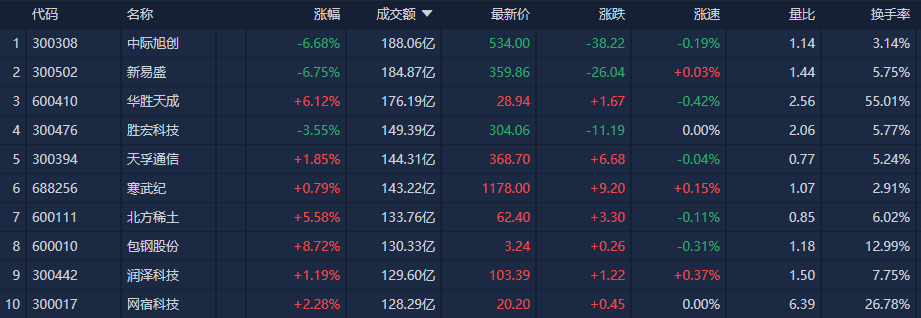
Market Overview - The A-share market showed mixed performance with the Shanghai Composite Index rising by 0.39%, while the Shenzhen Component Index fell by 0.06%, and the ChiNext Index decreased by 1.04% [1] Sector Performance - Over 3,200 stocks in the market experienced gains, with notable increases in sectors such as rare earths, non-ferrous metals, small metals, electricity, coal, steel, gas, computing power leasing, photovoltaic equipment, cultivated diamonds, education, and diversified finance [2] - The rare earth and small metal prices have been on the rise recently, leading to significant gains in related sectors, with companies like Zhangyuan Tungsten, Yunnan Zhenyi, Xianglu Tungsten, and Northern Rare Earth reaching historical highs [2] Notable Stocks - Electric power stocks showed strong performance in the afternoon, with companies like Jiawei New Energy hitting the 20% daily limit, alongside nearly 10 other stocks such as Fuling Power and Mindong Power also reaching their limits [3] - The computing power leasing sector also performed well, with stocks like Yuntian Lifei and Tuo Wei Information hitting their daily limits [4] - Other sectors such as steel, coal, and cultivated diamonds also saw upward movements during the trading session [5] Declining Sectors - The paper, PCB, CPO, storage chip, engineering machinery, and airport shipping sectors experienced the largest declines [6] - Stocks in the PCB and CPO sectors, along with other computing hardware stocks, saw corrections, with companies like Xinyisheng, Zhongji Xuchuang, and Yuanjie Technology dropping over 5% during the session [7] Trading Volume - The total market trading volume exceeded 2.5 trillion yuan [8] - The highest trading volume was recorded for Zhongji Xuchuang at 18.806 billion yuan, followed by Xinyisheng, Huasheng Tiancheng, Shenghong Technology, and Tianfu Communication [8]

收盘丨沪指涨0.39%,小金属板块掀涨停潮
Di Yi Cai Jing· 2026-02-27 07:24
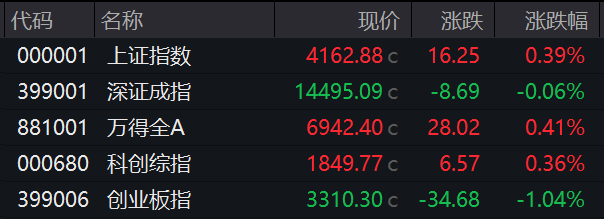
Market Overview - The A-share market showed mixed performance on February 27, with the Shanghai Composite Index rising by 0.39% to close at 4162.88 points, while the Shenzhen Component Index fell by 0.06% to 14495.09 points, and the ChiNext Index decreased by 1.04% to 3310.30 points [1][2]. Sector Performance - The small metals, electricity, and coal sectors led the gains, while the paper, PCB, and airport shipping sectors experienced declines [1][2]. - A surge in the small metals sector was noted, with several stocks hitting the daily limit, including Dongfang Zirconium, Xianglu Tungsten, Huaxi Nonferrous, and Xiamen Tungsten [2]. Notable Stocks - Top gainers in the small metals sector included: - Dongfang Zirconium (+10.03% to 15.58) - Xianglu Tungsten (+10.01% to 41.56) - Huaxi Nonferrous (+10.01% to 64.76) - Xiamen Aluminum (+10.00% to 70.15) [3]. - Conversely, notable decliners in the PCB sector included: - Guoji Composites (-9.68% to 14.09) - Mingyang Circuit (-8.11% to 32.31) - Honghe Technology (-6.74% to 79.79) [4]. Trading Volume - The total trading volume in the Shanghai and Shenzhen markets reached 2.49 trillion yuan, with over 3200 stocks rising [4]. Capital Flow - Main capital inflows were observed in the computer, non-ferrous metals, and public utilities sectors, while outflows were noted in electronics, building materials, and banking sectors [6]. - Specific stocks with significant net inflows included: - Huasheng Tiancheng (net inflow of 4.67 billion yuan) - Baogang Co. (net inflow of 3.014 billion yuan) - Tuo Wei Information (net inflow of 2.332 billion yuan) [6]. Institutional Insights - CITIC Construction pointed out that AIDC development will drive demand for supporting equipment, focusing on gas turbines and engines [7]. - CITIC Securities emphasized that Chinese battery companies will maintain a strong competitive edge in the global power and energy storage battery sectors [7]. - Huatai Securities expressed optimism regarding the simultaneous increase in overseas gas turbine prices and volumes, domestic supply chain expansion, and gas turbine supply overflow [7].
帮主郑重午评:指数绿了却有肉吃?午后A股操作全梳理
Sou Hu Cai Jing· 2026-02-27 04:30
Market Overview - The three major indices showed a decline, with the ChiNext Index down by 1.46%, the Shenzhen Component Index down by 0.68%, and the Shanghai Composite Index down by 0.17% [3] - Despite the index declines, over 2300 stocks in the market experienced gains, indicating that the overall market sentiment remains positive [4] Trading Volume and Market Behavior - The trading volume in the Shanghai and Shenzhen markets reached 15.966 trillion, a decrease of 532 billion from the previous trading day, but still maintained at a high level, suggesting that funds are not leaving the market but are reallocating [4] Sector Performance - Rare metal sectors, such as tungsten and rare earths, saw significant gains, with multiple stocks reaching historical highs, driven by supply-demand mismatches [4] - The AI-related sectors, including computing power leasing and cloud computing, also experienced a surge, supported by a notable increase in domestic AI token usage surpassing that of the U.S. for the first time [4] Declining Sectors - The computing hardware sectors, including CPO, PCB, and storage chips, faced significant declines, largely influenced by NVIDIA's 5.47% drop, marking its largest single-day decline in nearly a year [5] - This decline is viewed as a normal correction following substantial short-term gains, rather than a sign of a downturn in the AI or computing hardware market [5] Investment Strategy - Investors are advised to avoid chasing high-priced stocks, particularly in sectors that have recently seen significant increases, to prevent potential losses from profit-taking [6] - Focus should be on AI industry leaders with real performance support and cyclical products with price increase logic, such as coal and steel, which are also showing signs of activity [6] Index Analysis - The Shanghai Composite Index showed resilience with only a minor decline, while the ChiNext Index's drop was primarily due to heavyweight stocks dragging it down [6] - The market's current behavior is characterized by index differentiation, which is seen as a healthy correction before the upcoming March trading period [7]
A股午盘|创业板指跌1.46% 算力租赁板块走强
Xin Lang Cai Jing· 2026-02-27 03:59
Market Performance - The Shanghai Composite Index closed at 4139.53 points, down 0.17% [1] - The Shenzhen Component Index ended at 14405.76 points, declining by 0.68% [1] - The ChiNext Index reported a decrease of 1.46%, closing at 3296.23 points [1] - The Sci-Tech Innovation Board Index fell by 0.52% [1] Sector Performance - The computing power leasing sector showed strength, with notable gains [1] - Small metals, rare earth permanent magnets, electricity, and diversified financial sectors led the gains [1] - The photovoltaic equipment and coal sectors were active [1] - The paper-making, PCB concept, CPO, and semiconductor chip sectors experienced declines [1]

午评:创业板指半日跌1.46%,稀有金属、算力租赁板块集体爆发
Xin Lang Cai Jing· 2026-02-27 03:33
Market Overview - The three major A-share indices collectively declined in the morning session, with the Shanghai Composite Index down 0.17%, the Shenzhen Component Index down 0.68%, and the ChiNext Index down 1.46% [1] - The total trading volume in the Shanghai, Shenzhen, and Beijing markets reached 15,966 billion yuan, a decrease of 532 billion yuan compared to the previous day [1] - Over 2,300 stocks in the market experienced gains [1] Sector Performance - Sectors with notable gains included small metals, computing power leasing, cloud computing, coal mining and processing, cross-border payments, steel, photovoltaic equipment, AI applications, and tourism and hotel industries [1] - Conversely, sectors that saw significant declines included paper making, PCB, CPO, storage chips, batteries, photolithography machines, and PET copper foil [1] Notable Stock Movements - Rare metals such as tungsten and rare earths surged due to price increases, with companies like Zhongtung High-tech, Zhangyuan Tungsten, and Zhong Rare Metals reaching historical highs [1] - The demand for cloud computing is reflected in the first-time surpassing of AI Token usage in China over the US, leading to a significant rise in the computing power leasing sector, with stocks like Yuntian Lifei and Chengdi Xiangjiang hitting the daily limit [1] - The space photovoltaic sector also performed well, with Jun Da Co. and Shuangliang Energy both reaching the daily limit [1] External Influences - Nvidia experienced its largest single-day drop since April 16 of last year, impacting the CPO and PCB sectors, with many computing hardware stocks like Xinyisheng, Zhongji Xuchuang, and Shenghong Technology declining over 5% [1]