
电动自行车

Search documents
8点1氪:特朗普称想让可口可乐配方改回蔗糖;宗庆后未在香港汇丰银行为三子女设立信托;蜜雪冰城旗下幸运咖下半年主战场转向一二线城市
36氪· 2025-07-18 00:03
Group 1 - President Trump is in discussions with Coca-Cola to revert the sweetener in its U.S. cola formula back to cane sugar, which he claims is a "better" choice [1][2] - Coca-Cola stated that any changes to the formula will only apply to the U.S. market and not to China, and they will soon announce details about "innovative products" [2][3] - Currently, Coca-Cola uses corn syrup as the sweetener in its U.S. products, and it remains unclear if they will modify the existing formula or introduce new products [2] Group 2 - The founder of Wahaha, Zong Qinghou, has not established a trust for his three children at HSBC in Hong Kong, despite previous rumors [4][5] - A lawsuit filed in Hong Kong did not mention any trust-related information, and the core content of the lawsuit included a transfer of $1.085 million from an HSBC account without specifying its origin [3][5] Group 3 - Lucky Coffee, a subsidiary of Mixue Ice Cream, aims to reach 10,000 stores by 2025, with nearly 7,000 stores currently, focusing on first and second-tier cities for expansion [4][5] - The average product price at Lucky Coffee is between 6-8 yuan, and they plan to strengthen their presence in urban commercial streets [4][5] - Lucky Coffee's expansion strategy has shifted from lower-tier markets to more competitive urban areas, with a goal of achieving a 150% growth rate if targets are met [4] Group 4 - The beverage brand Dayao has been acquired by KKR, with the deal for 85% of its shares now moving forward after the public notice period [6] - Following the acquisition, Dayao plans to focus on national and potentially international expansion while maintaining a stable management team [6] Group 5 - The Chinese government has discovered a new rare earth mineral named "Ned Yellow River Mineral," which has been approved for naming by the International Mineralogical Association [11] - This new mineral is characterized by a unique enrichment of neodymium, which is in high demand for applications in electric vehicles, wind power, and electronics [11]




充电地图、智能充电柜……解决电动自行车充电难题还有哪些招?
Yang Shi Xin Wen Ke Hu Duan· 2025-07-15 05:42
Core Insights - The article highlights the growing reliance on electric bicycles for the "last mile" of urban transportation, particularly in Beijing, where the number of electric bicycles is increasing at a rate of 1 million per year [1][2] - The charging difficulties faced by electric bicycle owners are a significant concern, with many residents struggling to find available charging stations despite the presence of charging facilities in communities [2][3] Group 1: Electric Bicycle Usage - In Beijing, over 200 electric bicycles were observed parked near the Jiulongshan subway station during peak hours, indicating high usage [1] - The proportion of people choosing electric bicycles for trips between 2 to 7 kilometers exceeds 30% [1] - As of mid-2023, over 140,000 electric bicycles have been exchanged for new ones in Beijing, generating sales exceeding 380 million yuan, reflecting strong consumer demand [1] Group 2: Charging Infrastructure Challenges - Many communities have charging facilities, but issues such as insufficient numbers and malfunctioning equipment persist, leading to "charging difficulties" for users [2][3] - Instances of "full battery, no parking" highlight the inefficiencies in the current charging infrastructure, where available charging stations are not utilized effectively [2] - Some charging stations are reported to be out of service for extended periods, creating additional challenges for residents [3] Group 3: Innovative Solutions - Various regions are exploring solutions to the charging problem, including the introduction of smart charging cabinets, which are becoming more common in busy areas [4][5] - Beijing has launched a "charging map" to help residents locate nearby charging points and check their availability [5] - In Shanghai, government subsidies are being used to introduce smart charging cabinets that accommodate various brands of batteries, with 210 units already installed in 25 communities [5] Group 4: Expert Opinions - Experts suggest that charging cabinets offer better space utilization and safety compared to traditional charging stations, making them a more convenient option for users [7] - The ideal ratio of electric bicycles to charging facilities is recommended to be 3:1, emphasizing the need for increased infrastructure to meet growing demand [7]
今年前6个月电动自行车售出总额达247.7亿元 是2024年的6.6倍
Zhong Guo Chan Ye Jing Ji Xin Xi Wang· 2025-07-15 00:41
近日,记者从商务部例行新闻发布会获悉,今年全国以旧换新方式销售电动自行车规模持续扩大,1-6 月,销售月均环比增长113.5%;截至6月30日,全国电动自行车收旧、换新各846.5万辆,是2024年的 6.1倍,江苏、河北、浙江3个省份销量均超100万辆,安徽、山东等16个省份销量超过10万辆。 电动自行车以旧换新成为今年消费品以旧换新工作的一个重要亮点,受到城乡群众欢迎。 电动自行车以旧换新促进行业发展作用明显。从生产端看,今年1-6月,前10大品牌电动自行车产量同 比增长27.6%。从销售端看,全国共有8.2万家销售门店参加电动自行车以旧换新,其中大多为小微企业 和个体工商户,平均拉动单店销售增长30.2万元,促进了广大小微商户经营发展。 同时,电动自行车以旧换新充分发挥了安全导向作用。2024年9月,电动自行车以旧换新工作启动以 来,全国累计通过以旧换新方式交售并报废旧车近985万辆,换购的新车均具备符合现行国家标准要求 的产品合格证和强制性产品认证(CCC认证)证书,民众用车更安全、更放心。 据商务部新闻发言人何咏前介绍,今年,根据消费品以旧换新及全国电动自行车安全隐患全链条整治有 关部署,商务部牵头 ...
西藏打出促消费“组合拳”亿元补贴激活市场新动能
Shang Wu Bu Wang Zhan· 2025-07-14 14:23
Core Insights - The article discusses the implementation of the Tibet 2025 National Subsidy Policy and the "Happy Tibet, Enjoy Life" consumption promotion activities, which are aimed at stimulating the consumer market through various subsidies and initiatives [1] Group 1: National Subsidy Policy - The Tibet 2025 National Subsidy Policy focuses on "trade-in" incentives across five key consumption areas, including automobiles, home appliances, and home decoration [2] - As of June 30, 2023, the policy has allocated a total of 440 million yuan in subsidies, with 260 million yuan utilized for 320,000 trade-in transactions, resulting in retail sales of 1.59 billion yuan [1][2] - Specific subsidies for automobile purchases include up to 20,000 yuan for trading in older vehicles and additional incentives for purchasing new energy vehicles [2] Group 2: "Happy Tibet, Enjoy Life" Activities - The "Happy Tibet, Enjoy Life" initiative has organized 202 events by June 30, 2023, utilizing 380 million yuan in subsidies and directly stimulating consumption by 3.2 billion yuan [1][6] - The program offers tiered subsidies for new vehicle purchases, with additional benefits for new energy vehicles, enhancing affordability for consumers [3] - The initiative also includes broad consumer engagement through discounts and promotional activities in sectors like dining and retail, with single transaction discounts reaching up to 20% [6] Group 3: Home Appliances and Other Products - The national subsidy covers a wide range of home appliances, providing 15% to 20% discounts based on energy efficiency ratings, with a maximum subsidy of 2,000 yuan per item [4] - In the 3C digital product category, consumers can receive a 15% subsidy on items priced under 6,000 yuan, with a cap of 500 yuan per item [4] - For electric bicycles, a 30% subsidy is available for trade-ins, capped at 1,000 yuan, while home improvement products receive a 20% subsidy, with higher rates for low-income households [5]
山东开展“黄河大集”“运河大集”“海洋大集”系列活动,丰富夏季消费场景——在烟火大集里探寻消费密码
Da Zhong Ri Bao· 2025-07-14 01:04
Core Viewpoint - The summer "Daji" (large market) events in Shandong are enhancing local consumption and cultural experiences, attracting a significant number of young participants and showcasing regional products [1][2][3]. Group 1: Event Highlights - The "2025 Shandong Vibrant Summer Consumption Season" was launched in Yantai, featuring five themed exhibition areas with 126 booths, showcasing over 1,400 products across 12 categories, attracting nearly 10,000 attendees, primarily young people [3]. - The "Daji" events are not limited to Yantai; they are being held across Shandong, emphasizing local specialty products, such as "Dongchang Good Products" from various towns in Liaocheng [5]. - The "Daji" events are designed to create a continuous consumption pattern with over 100 activities planned in Yantai, focusing on themes like robotics competitions and local cuisine [4]. Group 2: Economic Impact - The "Daji" events have facilitated significant sales, with the "Good Products Entering the City" initiative in Dongchangfu District generating 3 million yuan in sales from 29 events this year [6]. - In Ju County, the electric bicycle trade-in program has led to the sale of 36,200 electric bicycles, generating over 72 billion yuan in sales, indicating strong consumer engagement [7]. - Ju County has seen sales of 7,367 electric bicycles this year, amounting to 2.37383 million yuan, with subsidies provided to consumers totaling 338,680 yuan [8]. Group 3: Cultural Integration - The "Daji" events serve as a platform for cultural consumption, with activities like the "Cultural Promotes Consumption · Youth Carnival" in Longkou City, where traditional crafts like Henan face sculpture are showcased and sold [9]. - The integration of culture and consumption at these events has led to a sales figure exceeding 320,000 yuan for the non-heritage market in Longkou City since June [9]. - The events are seen as a way to promote local culture and products, enhancing rural consumption and creating immersive shopping experiences [9].


新闻调查丨治理电池、打击改装!电动自行车全链条安全加码
Yang Shi Wang· 2025-07-12 22:04
Core Viewpoint - The rapid increase in electric bicycle-related fire incidents in China highlights significant safety issues across the entire production, sales, usage, and management chain, prompting the government to initiate comprehensive safety rectification actions starting in April 2024 [1] Group 1: Fire Incidents and Safety Concerns - The number of fire incidents caused by electric bicycles rose from 18,000 in 2021 to 25,000 in 2023, indicating a critical safety concern [1] - Approximately 90% of these fire incidents are attributed to electrical issues, with 70-80% specifically linked to battery failures [3][4] Group 2: Battery Quality and Standards - The primary types of batteries used in electric bicycles are lead-acid and lithium-ion batteries, with lithium-ion batteries being favored for their higher energy density and longer range, despite safety concerns [4] - The quality of lithium-ion batteries varies significantly among manufacturers, leading to frequent fire incidents [7] - In response to safety issues, the Beijing Bicycle and Electric Vehicle Industry Association has developed group standards for lithium-ion batteries, which have been adopted to improve safety [8] Group 3: Regulatory Actions and Standards Implementation - The newly released national standard for lithium-ion batteries (GB 43854-2024) will be implemented on November 1, 2024, mandating unique coding for battery packs and clear labeling of safety usage limits [8] - The revised national standard for electric bicycles (GB 17761-2024) will take effect on September 1, 2025, introducing a safety usage lifespan requirement for manufacturers [12] Group 4: Usage and Modification Issues - Improper modifications, such as altering battery capacity and speed limits, are significant contributors to fire risks, particularly in the delivery industry where high-performance demands lead to unsafe practices [14][16] - The practice of "unlocking" speed limits has become a common but risky behavior among consumers, complicating regulatory enforcement [17] Group 5: Charging Infrastructure and Management - Beijing has established over 1.36 million charging interfaces for electric bicycles, achieving a 3:1 ratio of bicycles to charging points, but challenges remain in ensuring usage [27] - New charging facilities, including simplified charging boxes and cabinets, are being developed to address the needs of residents, although adoption rates are still low [29]
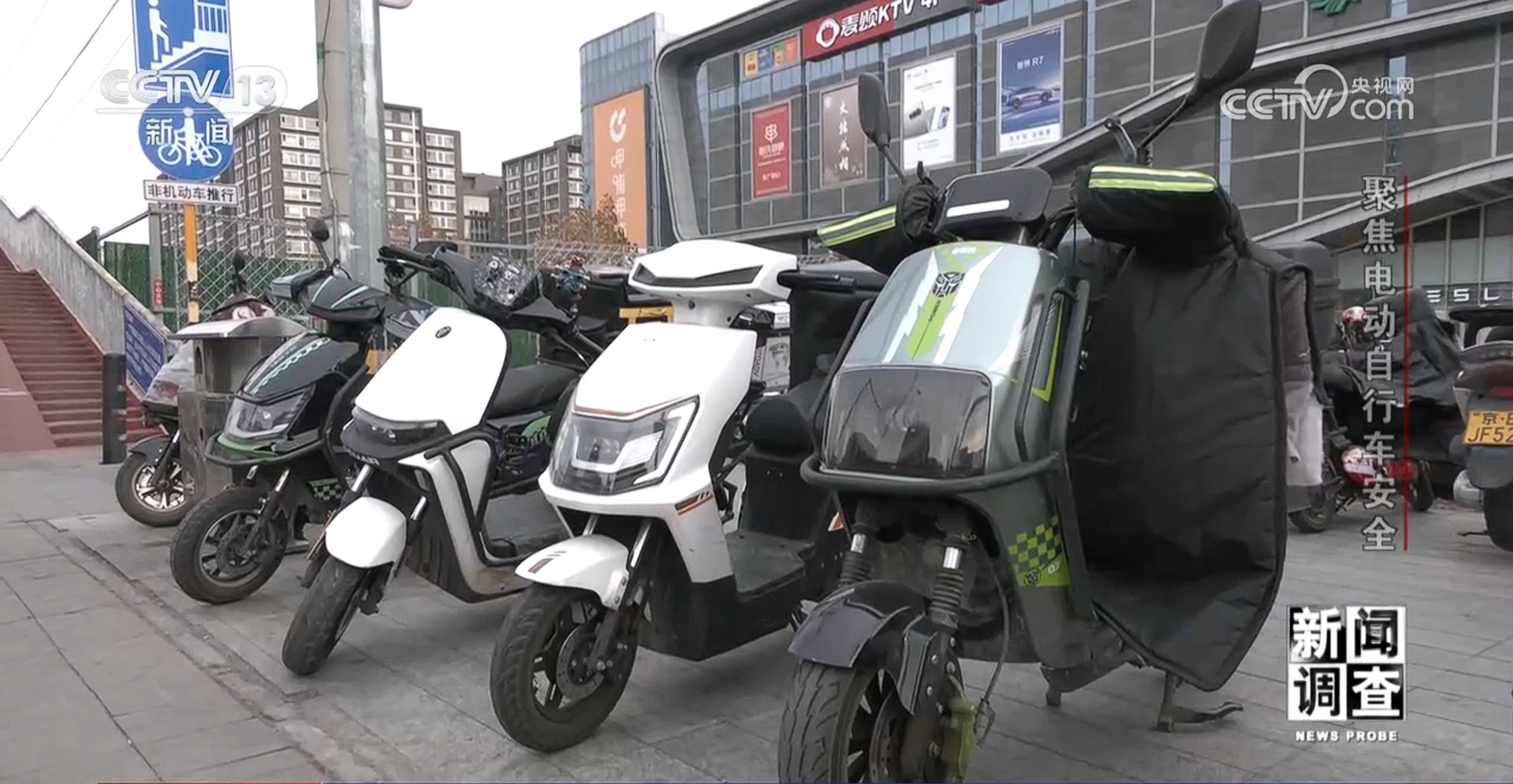
新规下仍敢飙80km/h?记者暗访电动自行车非法改装一条街
Huan Qiu Wang Zi Xun· 2025-07-12 07:23
Core Viewpoint - The newly revised mandatory national standard for electric bicycles, effective from September 1, 2024, maintains the maximum speed limit of 25 km/h, yet illegal modifications to increase speed and range are prevalent, with some areas developing into modification hubs [1][2]. Group 1: New Regulations - The new national standard for electric bicycles will be implemented on September 1, 2024, continuing the 25 km/h speed limit established in 2018 [1]. - Despite the upcoming regulations, illegal modifications remain widespread, with some locations even establishing modification "streets" or "industrial parks" [1]. Group 2: Modification Industry - Numerous businesses are promoting modifications that can increase electric bicycle speeds to 75-80 km/h and extend battery life to 200 km [2][5]. - Some shops offer comprehensive services for electric bicycle modifications, including upgrades to motors, controllers, and batteries, claiming that modifications can be done easily and quickly [5]. Group 3: Market Dynamics - In Nanning, Guangxi, a concentration of shops is engaged in the sale and modification of electric bicycles, with many indicating that modifications should be completed before the new regulations take effect [4][5]. - Some stores are selling pre-modified electric bicycles that exceed the new standards for motor power and battery specifications [5]. Group 4: Regulatory Challenges - The illegal modification issue persists due to regulatory challenges, including the lack of oversight on the production and sale of non-compliant electric bicycles and parts [6]. - The current market has a large number of existing vehicles that require a clear timeline for phasing out, along with potential trade-in programs for new purchases [6].
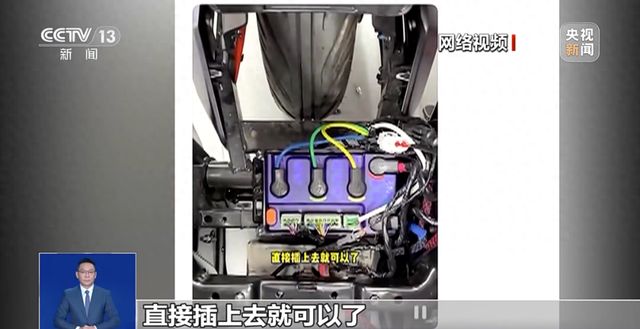
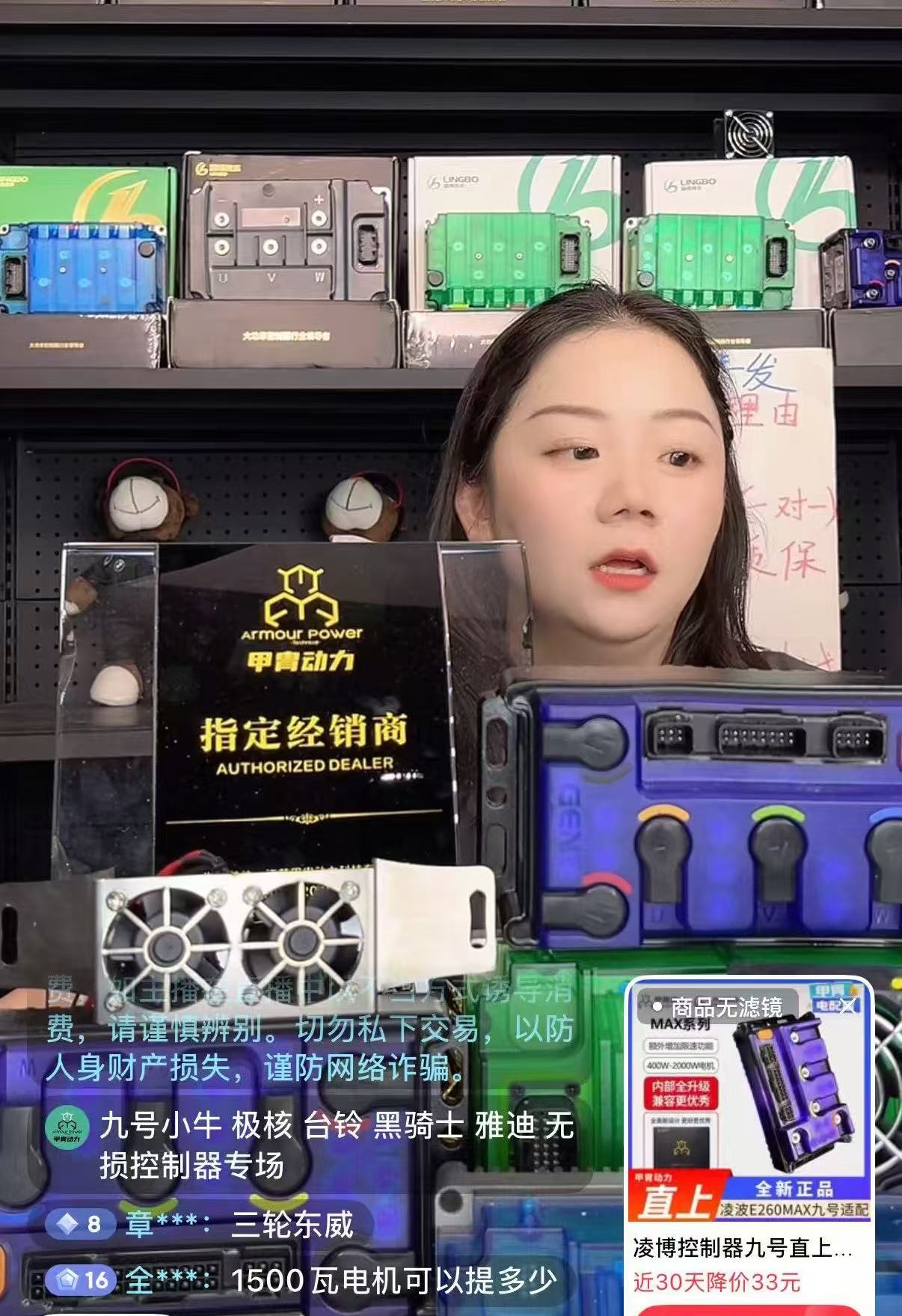
中国之声特别报道丨自行车的牌照摩托车的速度 记者调查广西南宁电动自行车非法改装产业链
Yang Guang Wang· 2025-07-11 09:35
Core Viewpoint - The new national standard for electric bicycles (GB17761—2024) aims to enhance safety and control illegal modifications, set to be implemented on September 1, 2024, amid ongoing issues with unauthorized modifications in the industry [1][21]. Group 1: New National Standard - The new standard includes stricter requirements for battery packs, controllers, and speed limiters to prevent tampering [1]. - The standard is expected to address the ongoing problem of illegal modifications, which have been prevalent despite regulatory challenges [1][21]. Group 2: Illegal Modification Industry - There are reports of numerous illegal modification shops in Nanning, where electric bicycles can be altered to reach speeds of up to 80 km/h and extended ranges of 200 km [1][11]. - Merchants are actively promoting modification kits and services on social media platforms, showcasing how to increase speed and performance [2][5]. - Some shops offer complete modification services, including high-power batteries and controllers that exceed the new standard's limits [6][18]. Group 3: Market Dynamics - The modification market is characterized by a competitive environment where businesses cater to consumer demand for higher speeds and performance, often leading to unsafe practices [18][21]. - Merchants claim that modified electric bicycles can perform similarly to electric motorcycles, creating a loophole in regulatory compliance [18][21]. - The proliferation of modification services has led to a situation where even legitimate electric bicycle retailers are engaging in or facilitating illegal modifications to meet consumer expectations [18][21].
以旧换新和行业全链条整治的核心 在于提升质量安全和行业升级
Xiao Fei Ri Bao Wang· 2025-07-08 02:48
Core Insights - The Ministry of Commerce announced that the electric bicycle trade-in program has significantly boosted industry sales and production, contributing positively to consumer spending, public welfare, and safety [1][2] - The China Bicycle Association emphasizes the importance of improving product quality and safety standards through the trade-in program and the implementation of the new national standards for 2024 [1] Industry Performance - From January to June, the average monthly sales of electric bicycles through the trade-in program increased by 113.5% [1] - As of June 30, a total of 8.465 million electric bicycles were exchanged, which is 6.1 times the amount expected for 2024 [1] - The total sales value of electric bicycles sold through the trade-in program reached 24.77 billion yuan, which is 6.6 times the expected amount for 2024 [1] - The top ten electric bicycle brands saw a production increase of 27.6% year-on-year in the first half of the year [2] Consumer Impact - Approximately 8.402 million consumers benefited from subsidies under the electric bicycle trade-in policy [1] - The program has involved 82,000 sales outlets, primarily small and micro enterprises, with an average increase in sales of 302,000 yuan per store [2] - The trade-in program has led to the scrapping of nearly 9.85 million old bicycles, with new purchases meeting current national safety standards [2]
商务部:围绕打造“投资中国”品牌持续推出系列投资促进活动
Zheng Quan Ri Bao· 2025-07-03 16:14
Group 1 - The Ministry of Commerce has been actively promoting the "Invest in China" brand through various investment promotion activities, including hosting international conferences and visiting countries to showcase China's investment policies [1] - In the second half of the year, the Ministry plans to hold the 25th China International Investment and Trade Fair in Xiamen and support local governments in targeted investment activities to highlight regional industrial characteristics [1] - The Ministry aims to attract more high-quality foreign investment projects by continuing investment promotion efforts in key countries [1] Group 2 - The Ministry of Commerce is working with local governments to implement policies aimed at enhancing the effectiveness of free trade zones and national-level economic and technological development zones [2] - The Ministry is focused on improving the "1+N+X" policy support system for national-level development zones to create more growth opportunities for enterprises and attract foreign investment [2] - The Ministry is also leading initiatives for the recycling and replacement of electric bicycles, which is expected to boost consumption and enhance safety in the industry [2] Group 3 - From January to June, the sales of electric bicycles through the recycling program saw a month-on-month increase of 113.5%, with a total of 8.465 million bicycles exchanged [3] - The total sales value of electric bicycles sold through the recycling program reached 24.77 billion yuan, significantly higher than in 2024 [3] - The top ten electric bicycle brands experienced a production increase of 27.6% year-on-year, and the program has positively impacted small and micro enterprises, with average sales growth of 302,000 yuan per store [3]