贸易

Search documents
上海味顺实业有限公司成立 注册资本2000万人民币
Sou Hu Cai Jing· 2025-10-27 21:15
Core Viewpoint - Shanghai Weishun Industrial Co., Ltd. has been established with a registered capital of 20 million RMB, indicating a new player in the market focusing on various business activities [1] Company Summary - The legal representative of Shanghai Weishun Industrial Co., Ltd. is Chen Chuncheng [1] - The company has a registered capital of 20 million RMB [1] - The business scope includes general projects such as import and export of goods and technology, property management, and various specialized services [1] Business Activities - The company is involved in wholesale of edible agricultural products, sales of food additives, and sales of specialized equipment for agricultural by-products processing [1] - Additional activities include sales of machinery and equipment, sales of packaging materials and products, and sales of metal packaging containers and materials [1] - The company also offers machinery equipment leasing, packaging services, information technology consulting, and various technical services [1] - Other activities include internet sales (excluding goods requiring permits), landscaping engineering construction, and advertising design and production [1]
能特科技:10月27日召开董事会会议
Mei Ri Jing Ji Xin Wen· 2025-10-27 15:50
Core Viewpoint - Nengte Technology announced a board meeting held via telecommunication to discuss a proposal for its subsidiary to apply for comprehensive credit from financial institutions and for the company to provide guarantees [1] Group 1: Company Financials - For the first half of 2025, Nengte Technology's revenue composition was as follows: bulk trade accounted for 91.39%, pharmaceutical intermediates 8.39%, and park operations 0.22% [1] - As of the report date, Nengte Technology's market capitalization was 9.7 billion yuan [1]

鹏欣资源:10月24日召开董事会会议
Mei Ri Jing Ji Xin Wen· 2025-10-27 10:54
Group 1 - The core point of the article is that Pengxin Resources announced the convening of its 14th meeting of the 8th Board of Directors on October 24, 2025, to review the Q3 2025 report and other documents [1] - For the first half of 2025, the revenue composition of Pengxin Resources was as follows: trade business accounted for 51.07%, manufacturing accounted for 48.68%, and other businesses accounted for 0.25% [1] - As of the time of reporting, the market capitalization of Pengxin Resources was 18.2 billion yuan [1]

华升股份:10月27日召开董事会会议
Mei Ri Jing Ji Xin Wen· 2025-10-27 10:17
Group 1 - The core point of the article is that Huasheng Co., Ltd. announced the convening of its 23rd meeting of the 9th Board of Directors on October 27, 2025, to discuss the proposal for the 4th extraordinary shareholders' meeting of 2025 [1] - For the year 2024, Huasheng Co., Ltd.'s revenue composition is as follows: trade business accounts for 80.97%, textile production accounts for 16.6%, other businesses account for 2.16%, and pharmaceutical machinery accounts for 0.27% [1] - As of the report date, Huasheng Co., Ltd. has a market capitalization of 3.5 billion yuan [1]

云图控股:10月27日召开董事会会议
Mei Ri Jing Ji Xin Wen· 2025-10-27 08:51
截至发稿,云图控股市值为123亿元。 每经AI快讯,云图控股(SZ 002539,收盘价:10.19元)10月27日晚间发布公告称,公司第七届第四次 董事会会议于2025年10月27日以通讯方式召开。会议审议了《关于公司<2025年第三季度报告>的议 案》等文件。 2025年1至6月份,云图控股的营业收入构成为:化肥行业占比63.35%,贸易占比18.85%,化工行业占 比12.57%,其他行业占比5.23%。 每经头条(nbdtoutiao)——独家丨民营船王入主杉杉集团横生枝节 重整联合体浮现神秘组局人 (记者 王晓波) ...

刚刚,暴涨超1000点!特朗普,大消息!
券商中国· 2025-10-27 08:32
Core Viewpoint - The Japanese stock market experienced a significant surge, with the Nikkei 225 index rising over 1200 points, marking a historic first-time breach of the 50,000-point threshold, largely driven by the upcoming visit of U.S. President Trump and the economic policies of Japan's new Prime Minister, Kishi Sanae [2][4]. Group 1: Market Reactions - The Nikkei 225 index closed up 1212 points, a 2.46% increase, while the Tokyo Stock Exchange index rose by 1.7% [4]. - Major companies such as SoftBank Group and Advantest saw their stocks rise over 6%, while Hitachi, Fast Retailing, Mitsubishi Corporation, and Itochu Corporation increased by over 2% [4]. - The South Korean stock market also saw gains, with the KOSPI index rising 2.6%, surpassing 4000 points for the first time, driven by significant increases in stocks like Hyundai Heavy Industries and SK Hynix [4]. Group 2: Economic Policies and Implications - Kishi Sanae's economic policies are seen as a continuation of "Abenomics," advocating for government intervention in the Bank of Japan's interest rate policies and maintaining an accommodative monetary policy [2][9]. - The Prime Minister's focus on "responsible active fiscal policy" aims to promote industries like artificial intelligence and provide support for low- and middle-income groups through local subsidies and energy assistance [9]. - Concerns have been raised regarding the potential impact of Kishi's policies on the independence of the Bank of Japan, especially in light of her previous criticisms of the central bank's interest rate hikes [10]. Group 3: U.S.-Japan Relations - Trump's visit is expected to cover a wide range of topics, including economic and security issues, with an emphasis on deepening the U.S.-Japan alliance [6][7]. - The meeting is viewed as a critical test for Kishi, as a successful outcome could solidify her early governance foundation and garner U.S. support for regional security policies [7]. - Trump is anticipated to press Japan to adhere to a previous agreement regarding tariffs and investments, which could impose a significant burden on Japan's economy, equating to nearly 10% of its annual GDP [7].


贸易板块10月27日涨1.11%,怡亚通领涨,主力资金净流入8110.04万元
Zheng Xing Xing Ye Ri Bao· 2025-10-27 08:25
Core Insights - The trade sector experienced a rise of 1.11% on October 27, with Yi Yatong leading the gains [1] - The Shanghai Composite Index closed at 3996.94, up 1.18%, while the Shenzhen Component Index closed at 13489.4, up 1.51% [1] Trade Sector Performance - Yi Yatong (002183) closed at 5.29, with a gain of 3.12% and a trading volume of 1.2389 million shares, resulting in a transaction value of 653 million yuan [1] - Su Meida (600710) closed at 10.62, up 1.92%, with a trading volume of 263,800 shares and a transaction value of 279 million yuan [1] - Zhongxin Metal (601061) closed at 11.76, gaining 1.55%, with a trading volume of 501,100 shares and a transaction value of 584 million yuan [1] - Other notable performers include Wukuang Development (600058) and Zhongcheng Co. (000151), with respective gains of 1.32% and 1.18% [1] Capital Flow Analysis - The trade sector saw a net inflow of 81.1 million yuan from main funds, while retail investors experienced a net outflow of 56.9 million yuan [2] - Main funds showed significant interest in Zhongxin Metal, with a net inflow of 76.57 million yuan, representing 13.11% of the total [3] - Yi Yatong also attracted main fund inflows of 31.02 million yuan, but faced a net outflow from retail investors of 11.97 million yuan [3]

大唐西市公布业务探索方向:布局 RWA 代币化与重振现有业务
Zhi Tong Cai Jing· 2025-10-27 07:02
Group 1 - The company is exploring different possibilities for business development in light of the overall business environment and group conditions [1] - Two main preliminary directions for further exploration and feasibility studies include the tokenization of Real World Assets (RWA) and the revitalization and development of existing businesses [1] - The company is in initial discussions with external experts in blockchain, digital finance, and compliance to assist in exploring RWA tokenization opportunities [1][2] Group 2 - The company is primarily engaged in property investment and development, auction business, and trade commerce, including liquor sales [2] - Initial discussions have taken place with Outlets Asset Management Group and several large state-owned enterprises to explore possibilities for revitalizing and developing existing business operations [2] - The discussions regarding business development are still in the preliminary stage, with no decisions or specific plans made as of the announcement date [2]
48小时风暴再起!欧盟核选项出击,冯德莱恩:12家中企只是开头
Sou Hu Cai Jing· 2025-10-26 16:22
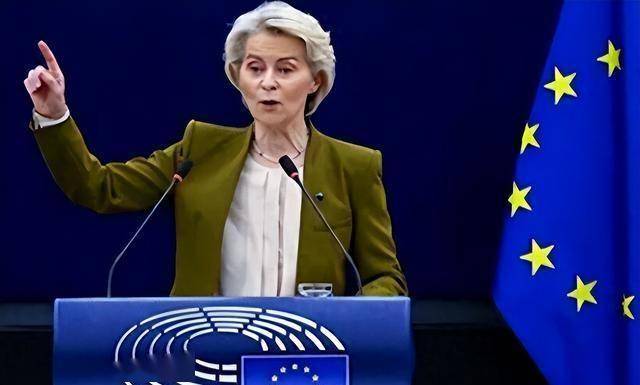
Group 1 - The European Union has unexpectedly included 12 Chinese companies in its latest round of sanctions against Russia, raising concerns about the implications for China-EU relations [2][6][16] - The sanctions target companies involved in oil-related activities, with no substantial evidence provided to justify the accusations against these firms [4][9] - The EU's actions appear to be politically motivated, aiming to align with U.S. interests while creating challenges for Chinese enterprises [11][13] Group 2 - The impact of these sanctions on European manufacturing is significant, with companies facing increased costs and potential supply chain disruptions [21] - Some affected Chinese companies have proactively adapted by relocating production and seeking new markets, demonstrating resilience in the face of adversity [21] - The ongoing tensions and sanctions could lead to a broader economic fallout, affecting various industries and prompting a reevaluation of trade relationships [19][21]
特朗普,关税大消息!
中国基金报· 2025-10-26 16:05
Group 1 - The United States signed a series of trade agreements with four Southeast Asian countries, including Malaysia, Cambodia, and Thailand, focusing on tariffs and key minerals [1] - The agreements maintain a 19% tariff rate on exports to Malaysia and Cambodia, with some products gradually reducing to zero tariffs, while Vietnam currently faces a 20% tariff [1] - Vietnam has committed to significantly increasing its purchases of American products to reduce the trade surplus, which reached $123 billion last year [1] Group 2 - Thailand agreed to eliminate tariffs on approximately 99% of goods and relax foreign ownership restrictions in its telecommunications sector [2] - Malaysia will simplify regulations for American cosmetics and pharmaceuticals, and has secured tariff exemptions for aerospace equipment and commodities like palm oil and cocoa [2] - Thailand committed to purchasing 80 American aircraft worth $18.8 billion and will buy around $5.4 billion in energy products annually, including LNG and crude oil [2]