
融资租赁

Search documents
南财观察|“水大鱼大”,前海引“四大资本”赋能实体经济
2 1 Shi Ji Jing Ji Bao Dao· 2025-06-26 02:41
Core Viewpoint - The establishment of a financial high-level open corridor in the Guangdong Free Trade Zone is aimed at supporting the high-quality development of the real economy through financial openness and innovation [1][2]. Group 1: Financial Development in Qianhai - Qianhai is positioned as a crucial link between Hong Kong and the mainland, focusing on attracting international capital and supporting enterprises to list in Hong Kong [2][3]. - Over the past decade, Qianhai has attracted a total of $38.2 billion in foreign investment, accounting for 67% of the Guangdong Free Trade Zone's total [2]. - The number of customs-registered enterprises in Qianhai has increased to over 11,000, a growth of 5.7 times since its establishment [2]. Group 2: Capital Market and Listing Support - Qianhai aims to become a nurturing base for companies planning to list in Hong Kong, leveraging Hong Kong's international legal and regulatory framework alongside Shenzhen's industrial advantages [3][4]. - In the first half of this year, the Hong Kong Stock Exchange led global IPO financing with 40 new listings raising HK$102.1 billion [4]. - By 2025, the Hong Kong market is expected to see 80 new listings, with a total financing amount projected to reach HK$200 billion [4]. Group 3: Financial Infrastructure and Cross-Border Finance - The Qianhai Equity Exchange Center is designed to facilitate enterprises in listing in Hong Kong, with a focus on enhancing the listing nurturing mechanism [5]. - Qianhai has established six cross-border financial brands, including cross-border RMB loans and dual-currency bond issuance, to attract international capital [5]. - As of the end of 2024, Qianhai's FT accounts have surpassed ¥1 trillion in cross-border receipts and payments [5]. Group 4: Support for Small and Medium Enterprises - The development of "patient capital" and "bold capital" is emphasized to improve the financing environment for small and medium-sized enterprises and technology companies [6][7]. - The "Technology Startup Pass" credit product has served over 3,200 enterprises, with 80% being early-stage tech companies, providing loans totaling ¥3.8 billion at a low interest rate of 3.45% [6]. - The first private equity fund management license for insurance capital has been issued in Qianhai, with an initial fund size of ¥30 billion [7]. Group 5: Supply Chain Finance - Qianhai is recognized as a major hub for supply chain finance, aiming to support the transformation of the manufacturing sector and promote inclusive finance [9][10]. - The region has launched the first national action plan to promote the development of the factoring industry, establishing itself as a model for supply chain finance innovation [9]. - By May 2025, Shenzhen is expected to have 11,000 specialized small and medium enterprises, providing a strong market for supply chain financing [10].
融资租赁开启多元布局
Jin Rong Shi Bao· 2025-06-25 03:09
Group 1: Industry Transformation - The financing leasing industry is focusing on professional transformation, emphasizing the dual attributes of "financing + asset" to address service pain points and build a new ecosystem of industry-finance collaboration [1] - Companies are shifting towards specialized, differentiated, and characteristic operations through systematic restructuring of strategic logic, resource allocation, operational models, and technological iteration [1] - Financing leasing is positioned to empower industrial transformation and support the development of real enterprises, from large project construction to small and micro enterprise operations [1] Group 2: Green Energy Projects - The Ningxia Tengger Desert Energy Base, with a combined installed capacity of 13 million kilowatts, is a key project under the "14th Five-Year" electricity planning, aimed at transforming desert areas into green energy sources [2][3] - The "Ningxia-Taiwan Direct Current" project, with an investment scale of approximately 28.1 billion yuan, will have a maximum delivery capacity of 8 million kilowatt-hours upon operation [3] - State Grid International Leasing Company played a crucial role in alleviating funding pressures for the project by providing a financing limit of up to 500 million yuan, with the first tranche of 207 million yuan already disbursed [3] Group 3: Green Finance and Services - The financing leasing industry is increasingly leaning towards green energy sectors such as renewable energy, pumped storage, electric transportation, and green data centers, promoting a diversified development of "green finance + direct leasing" [4] - Companies are enhancing their services by embedding financial solutions deeply into the industrial chain, leveraging their ecological advantages [3][4] Group 4: Support for Small and Micro Enterprises - Financing leasing companies are targeting small and micro enterprises by addressing their financing needs, particularly in the context of equipment leasing and upgrades [5][6] - The industry is aligning with policy directives that encourage the development of products and services tailored to small and micro enterprises, facilitating equipment updates and innovation [6] - A new leasing model, known as vendor leasing, is emerging, which integrates manufacturers' sales needs with financial services, marking a significant direction for industry transformation [7] Group 5: Vendor Leasing Model - Vendor leasing focuses on aligning the sales demands of manufacturers with the financial services of leasing companies, promoting a shift from "capital-driven" to "industry service-driven" models [7] - Companies are establishing dedicated vendor leasing departments to explore high-end manufacturing and intelligent manufacturing sectors [7] - A recent vendor leasing project by Chouzhou Jin Leasing, involving electric forklifts, has seen an investment of over 80 million yuan, with a total credit approval of nearly 1 billion yuan for key manufacturers [7]
上工申贝: 关于上海证券交易所对公司2024年年度报告信息披露监管问询函的回复公告
Zheng Quan Zhi Xing· 2025-06-23 10:19
Core Viewpoint - The company received an inquiry letter from the Shanghai Stock Exchange regarding its 2024 annual report, prompting a detailed response addressing various investment and financial disclosure issues [1]. Group 1: Long-term Equity Investments - The company's long-term equity investment balance at the end of the reporting period was CNY 397 million, a year-on-year decrease of 15.89%, with an impairment provision of CNY 14.12 million [1]. - The long-term equity investments included CNY 324 million in Shanghai Feiren Technology Co., CNY 46.84 million in Shanghai Lingang Financing Leasing Co., and CNY 25.27 million in Shanghai Jizan Industrial Co. [1]. - The company recognized an investment loss of CNY 62.33 million for the reporting period, compared to CNY 127 million in the previous year, and an adjustment loss of CNY 12.61 million in other comprehensive income [1][2]. Group 2: Investment Project Details - The company was asked to provide detailed information on its investments in Feiren Technology, Lingang Financing, and Jizan Company, including investment background, amounts, and progress [2]. - Feiren Technology was established in November 2020, focusing on introducing overseas carbon fiber composite manufacturing technology to China [3]. - Lingang Financing was initially set up to provide financing through sale-leaseback arrangements but has since seen limited business volume [5]. - Jizan Company, established in April 2020, has invested in companies related to infrared thermal imaging and new energy vehicles [6]. Group 3: Investment Losses and Impairments - Jizan Company faced significant investment losses due to guarantees provided for bank loans that have since defaulted, leading to a complete halt in construction at its associated company, Taizhou Wanxiang [9]. - The company confirmed substantial investment losses in Jizan and Lingang Financing due to the involvement of a strategic investor in a criminal case, impacting their financial performance [8][9]. - The company did not recognize further impairment for long-term equity investments in 2024, as the recoverable amount of Jizan's equity was assessed to be higher than its book value [12]. Group 4: Logistics and Trade Business - The logistics business, primarily conducted through Shanghai Shensi Enterprise Development Co., generated revenues of CNY 1.165 billion, CNY 1.291 billion, and CNY 1.361 billion from 2022 to 2024, with a gross margin of around 8% [13]. - The trade business, managed by Shanghai Shenbei Import and Export Co., focuses on exporting office supplies, with revenues constituting only 0.59% of total revenue in 2024 [15]. - The company confirmed that both logistics and trade operations adhere to relevant accounting standards and do not lack commercial substance [16].

融资租赁资产处置的多维困境与破局思考
Sou Hu Cai Jing· 2025-06-19 18:21
Group 1 - The core issue in the financing leasing industry is the complexity of asset disposal, which is significantly higher than traditional credit assets due to the dual legal attributes of property rights and debt rights [2] - Current industry faces four main asset disposal challenges: inability to locate assets, high costs of removal, difficulty in selling, and price suppression in the buyer's market [3][4] - Specific examples highlight the challenges, such as a solar energy company losing 320 million yuan worth of equipment due to improper asset tracking and the inability to recover costs from dismantling specialized equipment [3][5] Group 2 - The root causes of these issues can be analyzed from subjective and objective perspectives, including a deviation from business logic and market constraints [5][6] - Subjective reasons include a focus on scale expansion over the intrinsic properties of leased assets, leading to poor asset selection [5] - Objective pain points involve market and technical limitations, where some leasing companies accept non-disposable assets due to industry norms, resulting in assets becoming "paper rights" [6] Group 3 - Strategies for asset disposal should shift from passive responses to proactive planning, utilizing macroeconomic indicators to guide decisions [7] - A classification matrix for asset management is proposed, categorizing assets into high liquidity, strong cyclical, and specialized equipment, each with tailored disposal strategies [7] - The approach should evolve from single-line asset management to a comprehensive strategy that integrates various asset control measures [8] Group 4 - Future trends in asset disposal include leveraging high-tech solutions for asset tracking and monitoring, such as AI-assisted due diligence and real-time GPS monitoring [10][11] - Building cross-industry ecological alliances is essential for enhancing asset disposal efficiency and mitigating risks through resource integration [12] - The essence of financing leasing asset disposal is to transform risk exposure into value opportunities, emphasizing the need for a full value chain capability from precise pricing to dynamic monitoring and diversified exit strategies [13]

从“关税之困”到“租赁高地”
Jin Rong Shi Bao· 2025-06-19 03:12
Core Insights - The Tianjin Free Trade Zone (FTZ) has transformed into a significant financial leasing hub, with a total leasing asset scale of 2.2 trillion yuan, accounting for one-fourth of the national total [3][5] - The FTZ has introduced 40 innovative leasing business models, with cross-border leasing of aircraft, ships, and offshore platforms dominating over 70% of the national market share [1][3] - The financing leasing industry in Tianjin has evolved from a nascent stage to a leading position, becoming the second-largest global center for aircraft leasing, just behind Ireland [3][4] Industry Development - The establishment of the Tianjin FTZ in 2015 aimed to create a national leasing innovation demonstration zone, leading to the implementation of various supportive policies [3][4] - The FTZ has developed a "1+3+4" cross-border financial policy system, enhancing foreign investment channels and attracting quality capital [5] - The financing leasing sector has expanded beyond aviation, with significant developments in shipping and green industries, showcasing a diversified growth model [6][7] Policy and Innovation - The FTZ has implemented policies such as allowing operational leasing to collect foreign currency rent, which has significantly boosted the leasing industry [3][4] - The introduction of a green financing leasing development plan has established a national first for green leasing evaluation mechanisms, promoting sustainable practices [6] - The collaboration between government and enterprises has been crucial in overcoming initial challenges and fostering a supportive environment for the leasing industry [4][6]
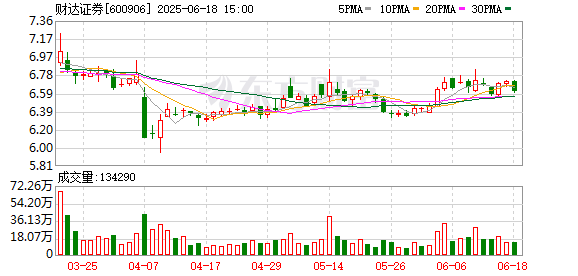
财达证券成功设立“金源华兴租赁致远1期资产支持专项计划(长江经济带)”
Zheng Quan Ri Bao· 2025-06-18 08:39
Group 1 - The core viewpoint of the news is the successful establishment of the Jin Yuan Huaxing Leasing Zhi Yuan Phase 1 Asset-Backed Special Plan, with a total scale of 9.58 billion yuan, marking a significant achievement for Caida Securities in the asset securitization business related to the Yangtze River Economic Belt [2][3] - The special plan has three priority levels: Priority A1, A2, and B, with credit ratings of AAA, AAA, and AA+ respectively, and corresponding coupon rates of 2.63%, 3.00%, and 3.98% [2] - Jin Yuan Huaxing Leasing, established in November 2016, focuses on financing leasing services in sectors such as new energy, infrastructure, and engineering machinery manufacturing, and is a subsidiary of Shangrao Investment Holding Group [2] Group 2 - The successful issuance of this project is supported by Caida Securities' deep expertise in the financing leasing asset securitization field, with the A1 priority coupon rate of 2.63% being the lowest ever for Jin Yuan Huaxing Leasing's fixed-income products [3] - The plan's alignment with the Yangtze River Economic Belt highlights the financial capital's role in supporting national strategic initiatives, showcasing the responsibility and commitment of financial institutions [3] - Caida Securities aims to leverage this business as an opportunity to further innovate in the asset securitization sector, providing efficient and low-cost financing solutions while directing capital towards key areas and regions supported by national strategies for high-quality economic development [3]

融资租赁公司如何筑牢船舶资产风险“防护墙”
Jin Rong Shi Bao· 2025-06-18 03:11
Core Viewpoint - The collaboration between Guoyin Financial Leasing and five leasing companies with Golar LNG marks a significant milestone in the maritime leasing sector, with a total investment of nearly $1.8 billion for the leasing of the 1000th vessel, setting a record for domestic financing amounts and participant numbers in international joint leasing projects [1] Group 1: Project Overview - The total investment for the vessel leasing project is approximately $1.8 billion, with leasing financing amounting to about $1.2 billion [1] - This project is noted for being the largest in terms of financing amount and the most participants involved in an international joint leasing project in China [1] Group 2: Industry Characteristics - The marine equipment industry is characterized by its advanced nature, foundational role, and cyclical trends, necessitating a corresponding medium to long-term financing system to support the development of the marine economy [1] - The expansion of the vessel leasing market and the continuous growth of demand in emerging markets are accompanied by intensified competition and rapid technological changes, presenting new challenges for vessel asset management [1] Group 3: Risks in Vessel Financing - Financial institutions often face information asymmetry regarding the actual operation and control of vessels after they are handed over to shipowners or bareboat charterers, which poses potential risks [2] - Vessel assets must contend with various risks, including exchange rate fluctuations, market volatility, technological updates, stricter environmental regulations, and digital transformation [2] - Risk management in financing leasing for vessels spans the entire lifecycle, starting from construction quality risks at delivery to maritime liability risks during operation and residual value handling upon return [2] Group 4: Credit Risk and Mitigation Strategies - Credit risk is significant in vessel asset transactions, as financial difficulties faced by lessees can lead to late rent payments or defaults, resulting in economic losses for lessors [3] - The core of risk control in shipping financing leasing is the vessel asset itself, with its value and cash flow serving as primary defenses against risks [3] - To mitigate risks during market fluctuations, it is recommended to conduct thorough investigations of all parties involved and assess the economic and operational status of lessees before establishing leasing contracts [3]
狮桥融资租赁:产融深度实践 核心数据印证实体赋能实效
Sou Hu Cai Jing· 2025-06-12 09:09
Core Insights - Lionbridge Financing Leasing (China) Co., Ltd. focuses on commercial vehicles and green finance, showcasing strategic determination and innovative momentum in its operations since 2023 [1] Key Operational Indicators - The registered capital of the company is 3.3 billion RMB, maintaining a capital adequacy ratio among the industry leaders [4] - Cumulative financing leasing for commercial vehicles has exceeded 170 billion RMB, with an average annual new investment of over 20 billion RMB in the past two years [4] - The compound annual growth rate for financing of new energy commercial vehicles exceeds 50%, with the proportion of new investments rising to over 35% [4] - The company serves over 85% of small and micro enterprises and individual operators [4] - The non-performing loan ratio remains stable at below 1.5%, lower than the industry average of 2.2% [4] Innovation-Driven Engine - The company has supported the deployment of over 20,000 electric heavy trucks, resulting in an annual carbon reduction of 500,000 tons [3] - It has provided inclusive employment services to over 300,000 individual vehicle owners, indirectly stabilizing employment for 1 million people [3] - The supply chain stability covers over 8,000 logistics companies, with carrying capacity accounting for 15% of trunk logistics [3] Strategic Evolution Directions - The company aims to expand financing for charging and battery swapping station equipment, targeting a green asset proportion of over 50% by 2025 [5] - Development of AI asset pricing models is underway to enhance the efficiency of second-hand commercial vehicle disposal [5] - Pilot projects for wind-solar-storage equipment leasing are being tested to serve the incremental market for energy transition [5] Financial and Social Impact - Lionbridge has established a new paradigm of integrated production and finance with 170 billion RMB in tangible investments, an 85% inclusive coverage rate, and a 1.5% non-performing loan ratio [6] - The data closed-loop validates the effectiveness of financial tools in supporting national strategies such as carbon neutrality and small business development [6]

天津东疆综合保税区落地第1000艘租赁船舶
news flash· 2025-06-11 15:14
Core Insights - The signing of the 1000th leased vessel in Tianjin Dongjiang Comprehensive Bonded Zone marks a significant milestone in the region's leasing industry [1] - The vessel, a floating liquefied natural gas (LNG) production and storage unit, represents a total investment of nearly $1.8 billion, with approximately $1.2 billion financed through leasing [1] - The leased vessels include various mainstream trade transport types, such as bulk carriers, container ships, and oil tankers, which play a crucial role in ensuring food and energy security [1] Investment and Financing - The total investment for the newly signed vessel is close to $1.8 billion [1] - The leasing financing amount for this vessel is around $1.2 billion [1] Industry Impact - The 1000 leased vessels in the Dongjiang Comprehensive Bonded Zone contribute significantly to global trade and logistics, particularly in the context of food and energy security [1] - The types of vessels leased include bulk carriers, container ships, and oil tankers, indicating a diverse portfolio that supports various sectors [1]
天津证监局等部门举办租赁和保理企业债券融资培训会
Zheng Quan Ri Bao Wang· 2025-06-11 11:35
Group 1 - The Tianjin Securities Regulatory Bureau, in collaboration with the Shanghai Stock Exchange and other local financial authorities, held a training session on bond financing for leasing and commercial factoring companies, attended by nearly 40 enterprises [1] - Experts from the Shanghai Stock Exchange introduced the types and characteristics of bond financing tools for leasing and commercial factoring companies, focusing on asset securitization review policies and typical case studies [1] - Participating companies expressed that the training was highly targeted, content-rich, and authoritative, providing strong guidance for practical bond financing work [1] Group 2 - Tianjin City places great importance on the development of the leasing and commercial factoring industries, positioning them as key components of financial innovation and operational demonstration zone construction [2] - By the end of 2024, the asset scale of leasing (including financial leasing) in Tianjin is expected to exceed 2.3 trillion yuan, with cross-border leasing businesses accounting for over 90% nationally, further solidifying its status as the world's second-largest aircraft leasing hub [2] - The asset scale of commercial factoring is projected to exceed 300 billion yuan, with factoring financing balances surpassing 250 billion yuan, maintaining a leading position nationwide [2] - Companies in the leasing and commercial factoring sectors are encouraged to deepen their understanding and application of bond market tools to achieve stable growth and support high-quality development of the real economy [2] - Specific bond types such as green bonds, low-carbon transition bonds, technology innovation bonds, and small and micro-enterprise support bonds are recommended to serve industries in green, low-carbon, and technological innovation [2] - It is essential to ensure that the underlying assets of asset-backed securities are genuine, legal, and effective, adhering strictly to legal regulations and self-discipline rules to protect investors' rights [2] - High-quality leasing and factoring companies are encouraged to explore practices in areas such as renewable asset-backed securities, non-credit-enhanced issuance, and data asset securitization products [2]