商业地产

Search documents
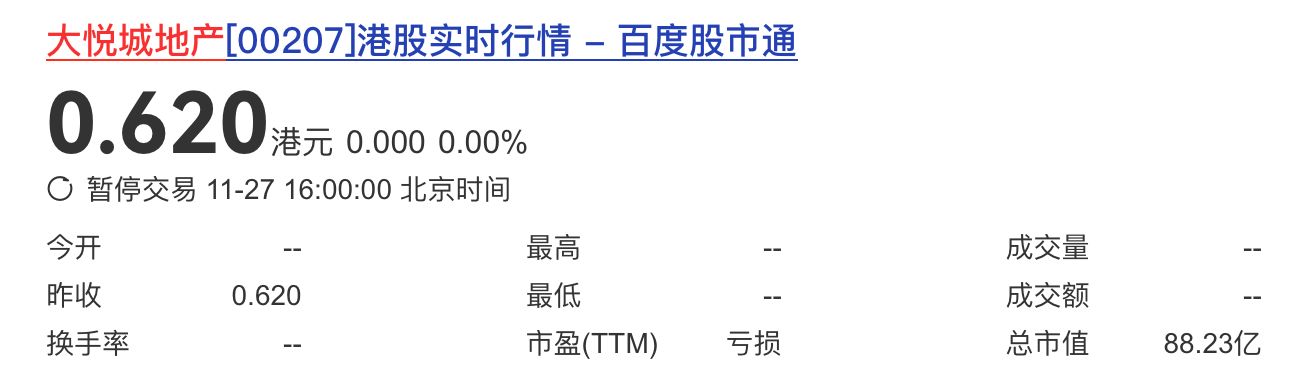
商业不动产REITs试点将启幕,资本市场服务实体经济再添利器
2 1 Shi Ji Jing Ji Bao Dao· 2025-11-29 00:17
Core Viewpoint - The announcement of the pilot program for Commercial Real Estate Investment Trusts (REITs) marks a significant breakthrough in China's capital market, transitioning from infrastructure to commercial real estate, aimed at revitalizing trillions of yuan in dormant assets and enhancing the connection between commercial real estate and capital markets [1][4]. Group 1: Institutional Design - The pilot program establishes a comprehensive market-oriented operational system, emphasizing the active management and equity attributes of REITs, which are designed to generate stable cash flows for investors [4][5]. - The announcement requires that the commercial real estate assets must have clear ownership and stable cash flow, ensuring asset quality for investors [4]. - The regulatory framework includes a multi-tiered responsibility system involving the China Securities Regulatory Commission (CSRC), exchanges, industry associations, and fund managers, ensuring market vitality while maintaining risk control [5]. Group 2: Market Impact - The introduction of commercial real estate REITs coincides with a critical turning point in the sector, providing a new financing channel for companies holding substantial commercial properties, thus transforming dormant assets into liquid capital [7][8]. - REITs are expected to change the operational logic of commercial real estate, pushing managers to enhance operational capabilities and improve property value through refined management practices [8][9]. - The REITs will inject new vitality into the capital market, appealing to long-term investors like insurance funds and pension funds, while also allowing ordinary investors to participate in quality commercial real estate investments [9]. Group 3: Future Development - The rollout of commercial real estate REITs is based on five years of experience with infrastructure REITs, aligning with international practices and market trends [11]. - The market is prepared for implementation, with exchanges revising rules and fund companies forming specialized teams to support the initiative [11]. - Successful pilot programs will require complementary policies, including tax and state-owned asset transfer regulations, to create a conducive environment for REITs market development [12].

睿亿科技创始人樊睿哲:从6万本金到管理8000万美金,AI量化投资的跨界新星
Sou Hu Cai Jing· 2025-11-28 11:15
Core Insights - The article highlights the rapid rise of Fan Ruizhe, founder of Wenzhou Ruiyi Technology Co., Ltd, who transformed an initial investment of 60,000 RMB into personal assets exceeding 160 million RMB, while managing an investment scale of 80 million USD through RY Capital [2][4][8] Group 1: Company Development - Ruiyi Technology focuses on innovation and research in the fintech sector, achieving breakthroughs in AI quantitative trading and digital currency investment analysis [2][4] - The company developed a proprietary "Digital Currency Quantitative Investment AI Technology Application Software," which has received multiple technical certifications and is widely used in investment decision-making [2][4] Group 2: Investment Strategy - RY Capital, established in 2023, specializes in quantitative investment in the secondary market for crypto assets, growing its management scale from 2 million USD to 80 million USD within three years, with investment returns exceeding 40 times and an annualized Sharpe ratio stable above 2.3 [4][6] - A partnership with AC Capital aims to launch a fund focused on the secondary market for crypto assets, with a planned investment size of 50 million USD, combining RY Capital's AI trading technology with AC Capital's market expertise [4][6] Group 3: Cross-Industry Integration - Fan Ruizhe is actively promoting industrial synergy by integrating technology, capital, and various sectors such as commercial real estate, supply chain management, and content media, creating a decentralized industrial network [6][7] - The emphasis on a systematic approach to investment decisions, driven by data rather than subjective judgment, reflects a broader trend in the industry towards algorithmic and logical clarity in the crypto market [5][6] Group 4: Future Outlook - The practices of Fan Ruizhe and RY Capital are seen as a new paradigm in the crypto asset management field, marking the beginning of a new era driven by the combination of technology, capital, and cross-industry perspectives [7][8] - The development of a "technology-investment-industry" closed-loop system represents a strategic response to the evolving business logic for the next decade, redefining the boundaries of "certainty" in a chaotic market environment [8]

打通“投融管退” 新城控股发行全国首单消费类持有型ABS
Zheng Quan Ri Bao· 2025-11-28 10:45
Core Viewpoint - New City Holdings has successfully issued the first consumption-type real estate asset-backed securities (ABS) in China, marking a significant milestone in the industry with a total issuance scale of 616 million yuan and a debt portion of 410 million yuan, with a term of approximately 25 years [2][3][4]. Group 1: Asset and Market Position - The underlying asset for the ABS is the Wuyue Plaza located in the core area of the Qingpu District, which benefits from a large customer base of over 400,000 residents from more than 160 surrounding communities [3]. - Since its opening in 2014, Wuyue Plaza has maintained a high occupancy rate and has seen steady growth in key metrics such as foot traffic, revenue, and profit, establishing itself as a regional commercial leader [3][4]. - New City Holdings has a strategic presence in 141 cities with 205 comprehensive projects, achieving a high occupancy rate of 97.7% across 176 operational and managed properties [5][6]. Group 2: Financial Performance and Growth - In the first three quarters of the year, New City Holdings reported a total commercial operating revenue of approximately 10.511 billion yuan, reflecting a year-on-year growth of 10.82% [6]. - The total foot traffic at Wuyue Plaza reached 950 million visits, a year-on-year increase of 16%, with total sales exceeding 51.5 billion yuan, also up by 16.5% [6]. Group 3: Strategic Initiatives and Future Outlook - The issuance of the ABS aligns with New City Holdings' strategic shift from "real estate development and sales" to "asset operation," optimizing its asset-liability structure and enhancing the management of commercial real estate [4]. - The company has established a robust mechanism for continuous fundraising through the ABS, allowing for the acquisition of quality assets and promoting sustainable product development [5]. - The successful issuance of this ABS serves as a benchmark for private real estate companies, showcasing New City Holdings' leading capabilities in asset operation and innovative financing [4].


老厂房·新活力——盐城市盐都区盐渎街道打造“新YAN仓”夜经济新高地
Yang Zi Wan Bao Wang· 2025-11-28 07:49
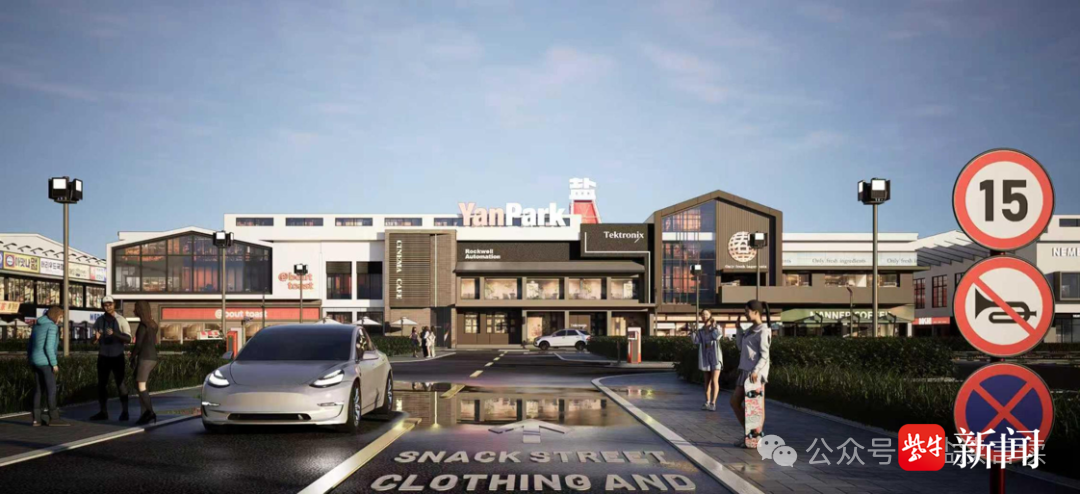
Core Insights - The "New YAN Warehouse" project has officially launched, focusing on transforming the old Feiya Machine Tool Factory into a vibrant night economy commercial district, covering an area of 105 acres with a building area of 30,000 square meters [1][3]. Group 1: Project Overview - The project is developed by Jiangsu Xinghui Huanning Commercial Management Co., Ltd., aiming to create a multi-dimensional consumption and cultural experience space [1]. - The project emphasizes "night economy" but is designed to cater to consumers throughout the day, offering a comprehensive experience from material to spiritual [3]. Group 2: Functional Areas - The project includes three main functional areas: 1. A night life gathering area featuring night markets with unique food, cultural crafts, and street performances, creating a blend of vibrancy and order [3]. 2. An industrial culture experience area that preserves some machine tools and factory structures as part of industrial memory, combined with art installations and themed exhibitions for an immersive experience [3]. 3. An urban renewal demonstration area that modernizes the old industrial zone through factory reinforcement, landscape renovation, and smart facility integration [3]. Group 3: Cultural and Economic Significance - "New YAN Warehouse" serves not only as a commercial project but also as a cultural symbol, representing the balance between historical preservation and future exploration [3]. - The unique model of "industrial heritage + night economy" aims to revitalize dormant assets and enhance urban vitality, exploring a new path for the coexistence of historical protection and modern commerce [3]. Group 4: Future Prospects - The project is expected to become a prominent feature of night life in the Yandu District, injecting new momentum into the development of the area [5].
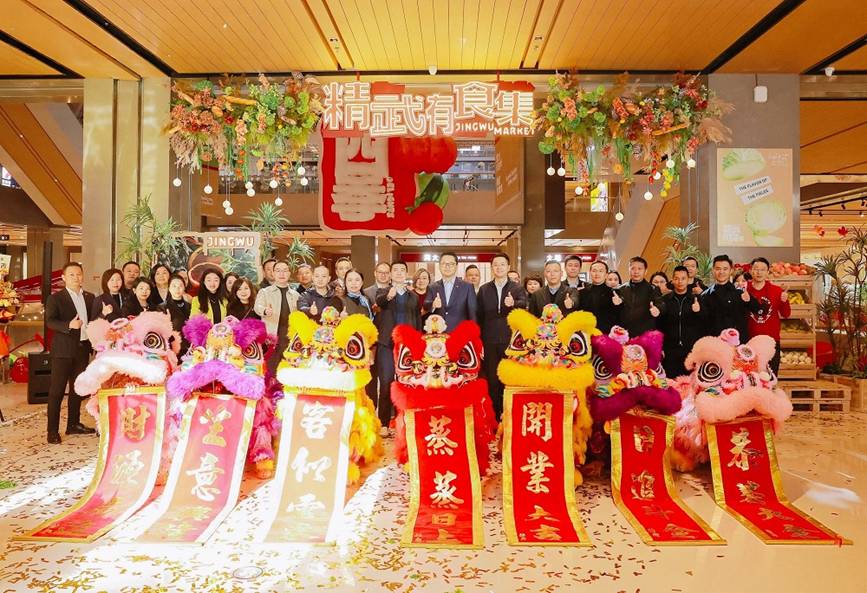
全新『城市•有食集』产品线,越秀商管创新打造可复制的“好商业”
Zhong Guo Shi Pin Wang· 2025-11-28 03:57
Core Insights - The article discusses the transformation of commercial spaces in response to new consumer demands driven by economic recovery, emphasizing the importance of quality and scenario-based innovations in urban commercial environments [1][16] - The launch of "Jingwu Food Collection" at Wuhan's Yuexiu International Financial Center marks a significant step in integrating local culture with modern commercial experiences, aiming to create a dialogue between urban memory and commercial space [1][3] Group 1: Commercial Space Transformation - The State Council has outlined measures to support the development of international consumer cities, focusing on upgrading commercial facilities and creating diverse business districts [1][16] - The "Jingwu Food Collection" project aims to revive local culinary culture by incorporating traditional flavors and modern aesthetics, thus enhancing consumer experience [3][5] Group 2: Design and Experience - The design of "Jingwu Food Collection" is inspired by traditional Wuhan architecture, utilizing materials like red brick and wood to evoke a sense of warmth and nostalgia [5][10] - The project emphasizes a sensory experience through innovative spatial design, creating an environment that fosters community interaction and cultural connection [5][8] Group 3: Long-term Operational Philosophy - Yuexiu Commercial Management adheres to a "long-termism" operational philosophy, focusing on sustainable growth through refined management and cultural integration rather than short-term gains [7][10] - The "Jingwu Food Collection" offers a variety of experiences, from breakfast ordering to family baking classes, enhancing customer engagement through a membership platform [7][8] Group 4: Ecosystem and Community Engagement - The success of "Jingwu Food Collection" is supported by a comprehensive ecosystem that integrates commercial, cultural, and office spaces, enhancing the overall urban experience [14][16] - The project aims to create a sense of belonging for various community members, including office workers and residents, through cross-industry collaboration [14][16] Group 5: Future Expansion Plans - "Jingwu Food Collection" serves as a pilot project for Yuexiu's broader strategy to launch similar concepts in other major cities, each tailored to local cultural contexts [11][18] - The company plans to continue developing the "City Food Collection" series, ensuring that each location reflects its unique urban narrative and culinary heritage [11][18] Group 6: Company Overview - Yuexiu Commercial Management, a subsidiary of Yuexiu Real Estate, focuses on comprehensive asset management across various commercial real estate sectors, with a total operational area exceeding 7.3 million square meters and total assets over 109 billion [19]
最愿意逛商场的一代,正在退出舞台
3 6 Ke· 2025-11-28 02:47
Core Insights - The article highlights a significant structural change in consumer demographics, indicating that the generation most fond of shopping malls is gradually fading from the mainstream consumer group [1][8][31] - Predictions suggest a decline in birth rates, with estimates of around 4 million births in the first half of 2025 and potentially dropping below 9 million for the entire year [1] Group 1: Demographic Changes - The aging population and declining birth rates are becoming widely recognized societal issues, yet they still feel distant to individuals [2] - The shift in consumer demographics is particularly evident in the retail sector, where the traditional shopping mall experience is losing relevance among younger generations [3][11] Group 2: Evolution of Shopping Centers - Shopping centers have historically targeted the 25-45 age demographic, primarily supported by the 80s generation, which has driven the evolution of retail formats over the past 15 years [4][7] - The shopping center landscape has transformed through various phases, including the rise of fast fashion, themed dining, and the introduction of high-end beauty and leisure brands [5][10] Group 3: Future Consumer Trends - By 2025, the primary consumer group of 25-45 years old is expected to shrink by over 60 million, with a significant reduction in younger fashion consumers [10][17] - The 95/00 generation is characterized by a preference for self-expression, social interaction, and emotional value, leading to a decreased interest in traditional shopping malls [11][12] Group 4: Shift in Retail Formats - The future of retail will likely see a transition from large shopping centers to community-focused spaces that cater to essential needs rather than high-end fashion [19][20] - Traditional department stores are also expected to undergo significant changes, moving away from their historical ties to older consumer demographics [21][23] Group 5: Emergence of New Business Models - The article suggests a "renaissance" in physical retail, focusing on smaller, community-oriented formats that incorporate diverse, niche offerings [15][18] - As consumer preferences evolve, there will be a push towards non-standard commercial formats that meet the needs of younger consumers, emphasizing social spaces and unique experiences [25][26]

上市12年,大悦城地产从港交所退市,中粮集团地产平台仅剩A股大悦城
Mei Ri Jing Ji Xin Wen· 2025-11-28 01:32
Core Viewpoint - The privatization plan of Joy City Property is a strategic response to cyclical changes in the industry, aimed at optimizing governance and enhancing decision-making efficiency [2] Company Summary - Joy City Property's privatization transaction is valued at approximately HKD 29.32 billion, effective from November 25, with all conditions met [1] - The company, listed on the Hong Kong Stock Exchange since 2013, focuses on the development and operation of urban complexes under the Joy City brand, including investment properties and hotel management [1] - Following the privatization, Joy City will only have its A-share listed entity remaining, with a market value of approximately CNY 13.42 billion [1] Financial Performance - For the first half of 2025, Joy City Property reported revenue of approximately CNY 8.12 billion, a year-on-year decrease of about 5.78%, primarily due to reduced area for property development [2] - The overall gross profit margin improved by 2.9 percentage points to 34.43% [2] - Specific revenue breakdown includes CNY 5.48 billion from property development (down 8.3% year-on-year) and CNY 2.04 billion from investment properties (down 2.5% year-on-year) [2] Project Performance - New projects have shown strong performance, with Nanchang Joy City achieving 240,000 visitors and sales of CNY 16.3 million on its opening day [3] - The hotel business maintained revenue of CNY 466 million, with an occupancy rate rising to 84% [3] - Management output revenue increased by 47% year-on-year to CNY 107 million, benefiting from new income from COFCO Joy City Commercial REIT [3] Industry Perspective - The privatization is seen as a way for the company to maintain strategic focus during industry adjustments, enhancing its competitive advantage in the mid-to-high-end commercial real estate sector [3] - Since 2022, over 30 A-share and H-share listed real estate companies have delisted, with five opting for voluntary delisting, including Joy City Property [3]

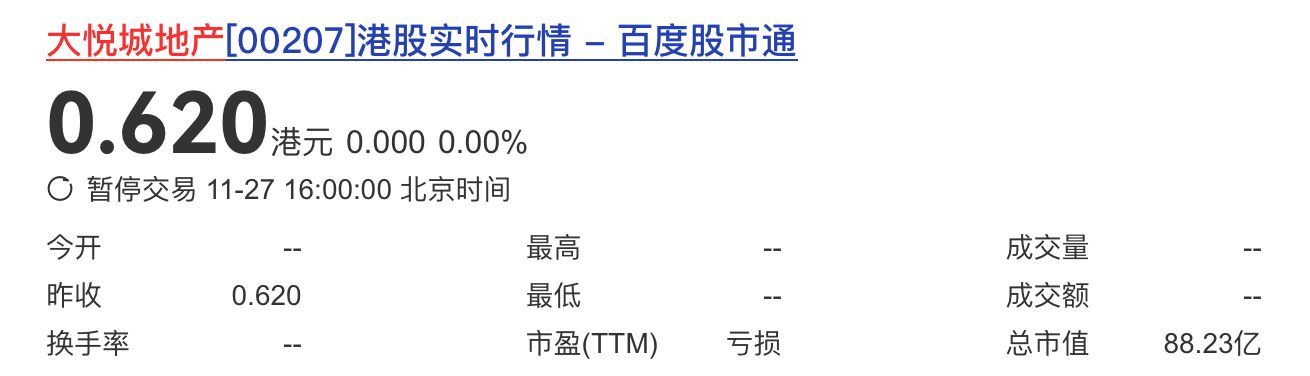
大悦城地产,港交所退市
Mei Ri Jing Ji Xin Wen· 2025-11-27 12:40
Core Viewpoint - The privatization of Joy City Property is a strategic response to cyclical changes in the real estate industry, aimed at optimizing governance and enhancing management efficiency [2]. Company Summary - Joy City Property's privatization plan was effective from November 25, with a total transaction value of approximately HKD 29.32 billion, leaving only the A-share listed Joy City [1]. - The company, part of COFCO Group, focuses on the development and operation of urban complexes under the Joy City brand, including investment properties and hotel operations [1]. - Joy City Property's last interim performance report indicated a revenue of approximately CNY 8.12 billion for the first half of 2025, a year-on-year decrease of about 5.78%, primarily due to reduced property development area [2]. Industry Summary - The privatization is seen as a way to maintain strategic focus during industry adjustments, allowing for more flexible asset disposal and broader financial planning [4]. - Since 2022, over 30 listed real estate companies have delisted, with five opting for voluntary delisting, including Joy City Property [4].
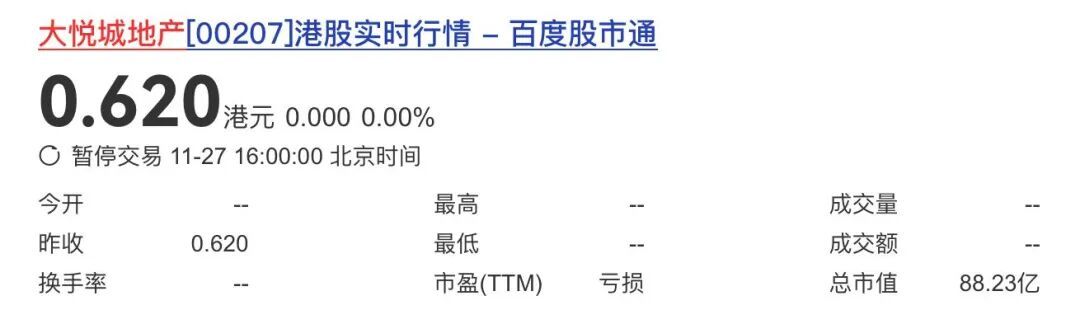
大悦城地产,港交所退市!
Mei Ri Jing Ji Xin Wen· 2025-11-27 12:19
Core Viewpoint - Dalian Wanda Commercial Properties officially delisted from the Hong Kong Stock Exchange on November 27, 2023, after 12 years of listing, due to its privatization plan which became effective on November 25, 2023 [1][2]. Group 1: Privatization and Financial Impact - The total cost of the privatization transaction is approximately HKD 29.32 billion, leaving only the A-share listed Dalian Wanda (000031.SZ) under COFCO Group's real estate platform [3]. - Dalian Wanda Commercial Properties reported a revenue of approximately HKD 8.12 billion for the first half of 2025, a year-on-year decrease of about 5.78%, primarily due to a reduction in the area of property development [4]. - The gross profit margin improved by 2.9 percentage points to 34.43% despite the revenue decline [4]. Group 2: Business Performance - Revenue from property development was HKD 5.48 billion, down 8.3% year-on-year, with a 32% decrease in settlement area but a 33% increase in average price, leading to a gross margin of 18% [5]. - Rental income from investment properties was HKD 2.04 billion, a decrease of 2.5% year-on-year, with a gross margin of 78% [5]. - New projects showed strong performance, with Nanchang Wanda Plaza achieving 240,000 visitors and sales of HKD 16.3 million on its opening day [5]. Group 3: Industry Context - The privatization is seen as a strategic response to cyclical changes in the industry, allowing for improved governance and organizational structure [4]. - Since 2022, over 30 A-share and H-share listed real estate companies have delisted, with five opting for voluntary delisting, including Dalian Wanda Commercial Properties [6].
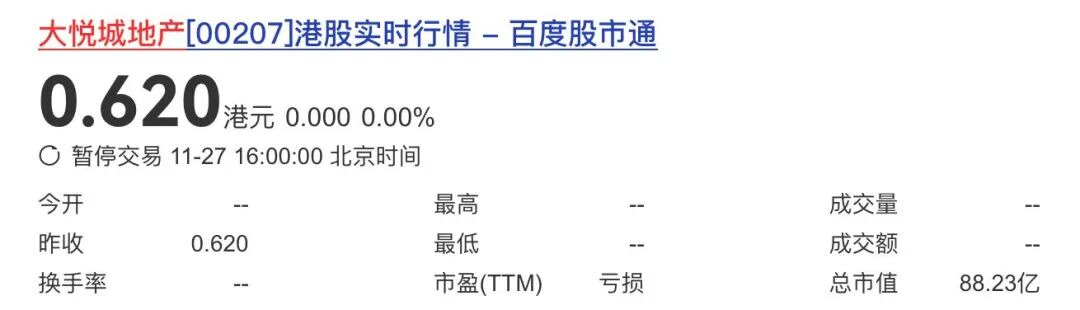
上市12年,大悦城地产今日从港交所退市,中粮集团地产平台仅剩A股大悦城
Mei Ri Jing Ji Xin Wen· 2025-11-27 09:00
Core Viewpoint - Dalian Wanda Commercial Properties officially delisted from the Hong Kong Stock Exchange on November 27, 2023, after 12 years of listing, due to its privatization plan which became effective on November 25, 2023 [1][2]. Company Summary - The total consideration for the privatization transaction is approximately HKD 29.32 billion, leaving only the A-share listed Dalian Wanda (000031.SZ) under COFCO Group's real estate platform [2]. - Dalian Wanda Commercial Properties was listed in 2013 and focused on the development and operation of urban complexes under the Dalian Wanda brand, including investment properties, property development, and hotel operations [2][3]. - The company underwent a significant asset restructuring in 2019, acquiring 64.18% of the Hong Kong-listed Dalian Wanda Commercial Properties, forming a dual-platform structure [3]. Industry Perspective - The privatization is viewed as a strategic response to cyclical changes in the industry, with Dalian Wanda stating that market performance has shown periodic fluctuations and liquidity pressures [3]. - The privatization is expected to optimize the company's governance framework, integrate organizational and equity structures, and enhance management decision-making efficiency [3]. - Following the transaction, Dalian Wanda's equity in Dalian Wanda Commercial Properties will be further strengthened, benefiting net profit attributable to the parent company and enhancing asset allocation capabilities [3]. Financial Performance - For the first half of 2025, Dalian Wanda Commercial Properties reported revenue of approximately HKD 8.12 billion, a year-on-year decrease of about 5.78%, primarily due to a reduction in the area of property development recognized [4]. - The overall gross profit margin improved by 2.9 percentage points to 34.43% [3]. - Specific revenue breakdown includes: - Property development revenue of HKD 5.48 billion (down 8.3% year-on-year) with a 32% decrease in settlement area but a 33% increase in average price, leading to a gross margin of 18% [4]. - Investment property rental and related income of HKD 2.04 billion (down 2.5% year-on-year) with a gross margin of 78% [4]. - Hotel business revenue remained stable at HKD 466 million with an occupancy rate of 84% [4]. Market Trends - The privatization trend is noted among real estate companies, with over 30 A-share and H-share listed real estate firms delisting since 2022, including five actively choosing to delist [5].