电池

Search documents
钠电如何推进新能源汽车后50%渗透?
高工锂电· 2026-02-06 11:53
Core Viewpoint - The article emphasizes the critical role of sodium batteries in the future of electric vehicles, particularly in cold climates, and highlights the collaboration between CATL and Changan Automobile to validate sodium battery performance in extreme conditions [3][4][5]. Group 1: Market Trends and Projections - By 2025, the penetration rate of new energy vehicles in China's total auto sales is expected to exceed 50%, reaching 50.8%, with some months last year seeing nearly 60% penetration [3]. - CATL's sodium batteries are positioned as essential for the second half of the electrification process, particularly in northern markets where low-temperature performance is crucial [4][5]. Group 2: Product Development and Performance - CATL has developed various sodium battery products, including those for heavy-duty trucks and passenger vehicles, showcasing significant performance improvements in low-temperature conditions [7][9]. - In tests, sodium batteries demonstrated nearly three times the discharge power compared to conventional lithium iron phosphate models at -30°C, with over 90% capacity retention at -40°C [4][9]. Group 3: Commercialization and Strategic Partnerships - CATL has been actively delivering sodium battery products and has a clear commercialization strategy, moving from commercial vehicles to passenger cars and conducting winter tests to validate performance [5][6]. - The collaboration with Changan Automobile aims to produce models with over 400 km range, with future upgrades targeting 500 km to 600 km [10]. Group 4: Supply Chain and Industry Impact - The entry of CATL into the sodium battery market is expected to drive significant changes in the supply chain, leveraging similarities between lithium and sodium supply systems [13][14]. - CATL's partnership with Rongbai Technology for sodium battery materials is set to expand production capacity significantly, with a projected 101% year-on-year increase in sodium battery cathode material production by 2025 [15][16]. Group 5: Future Applications and Market Expansion - CATL plans to apply sodium batteries extensively in the energy storage sector by 2026, aligning with market reforms that enhance investment returns in storage solutions [17][18]. - The introduction of a new capacity pricing mechanism for independent storage stations is expected to reduce investment uncertainties in sodium battery storage [18]. Group 6: Technological Innovations - CATL has introduced the "sodium-iron" dual-core battery, combining sodium and lithium technologies, which offers a total energy capacity of 75 kWh and a range of 700 km [19].



龙虎榜复盘丨题材整体散乱,电池板块迎来机构集体买入
Xuan Gu Bao· 2026-02-06 09:51
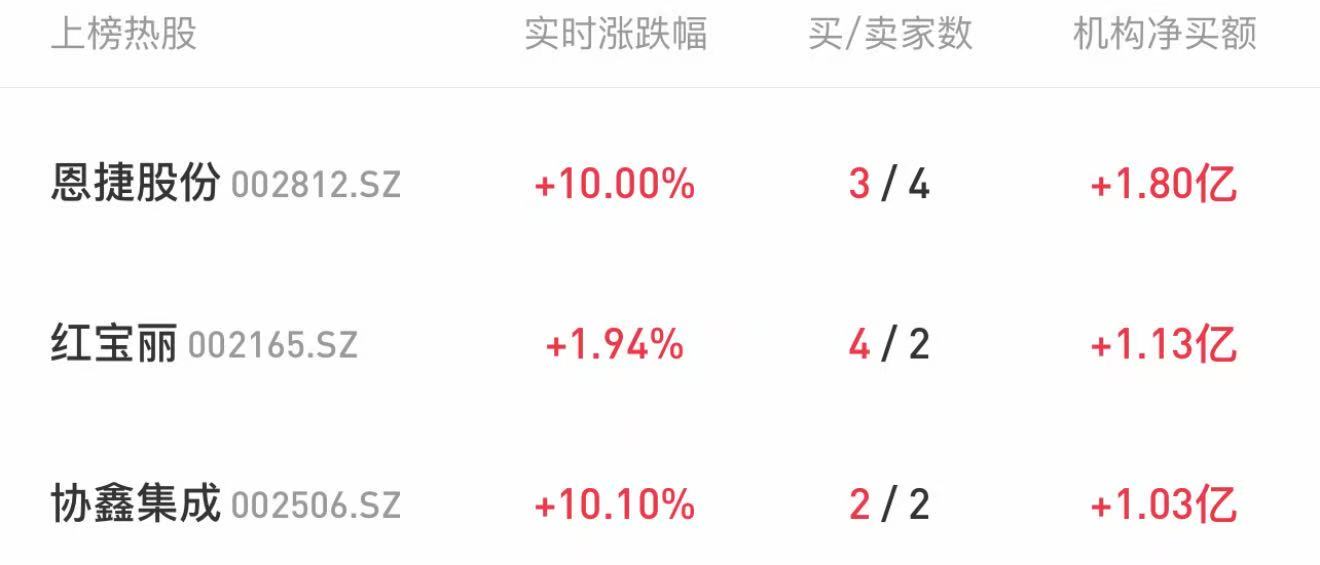
Group 1 - The core point of the news is that 29 stocks were listed on the institutional trading leaderboard today, with 19 stocks experiencing net buying and 10 stocks facing net selling [1] - The top three stocks with the highest net buying by institutions are Enjie Co., Ltd. (1.8 billion), Hongbaoli (1.13 billion), and GCL-Poly Energy Holdings (1.03 billion) [1] - Enjie Co., Ltd. saw a price increase of 10.00%, while Hongbaoli and GCL-Poly Energy Holdings had price increases of 1.94% and 10.10%, respectively [2] Group 2 - GCL-Poly Energy Holdings had a net buying of 1.03 billion from three institutions, and there are rumors that Elon Musk's team recently visited several photovoltaic companies in China [3] - GCL Group confirmed the news regarding Musk's research visit [3] - On February 5, Changan Automobile, in collaboration with CATL, launched a global sodium battery strategy, unveiling the world's first mass-produced sodium battery passenger vehicle, expected to be launched mid-year [3]



麻省理工发布十大突破性技术榜单 能源领域两项入选!
Ren Min Wang· 2026-02-06 09:38
Group 1: Breakthrough Technologies - The 2026 "Top Ten Breakthrough Technologies" list by MIT Technology Review highlights sodium-ion batteries and next-generation nuclear energy as key advancements in the energy sector, indicating a global shift towards safer, more economical, and sustainable energy systems [1] - Both sodium-ion batteries and next-generation nuclear technologies are expected to achieve large-scale mature applications within the next 3 to 5 years [1] Group 2: Sodium-Ion Batteries - Sodium-ion batteries are emerging as a significant alternative to lithium-ion batteries in electric vehicles and grid storage due to their abundant raw materials, lower costs, and enhanced safety [2] - China is leading the development of sodium-ion batteries, with companies like CATL launching their Naxtra product line in 2025 and BYD constructing large production facilities [2] - Applications of sodium-ion batteries are already in progress, with Jiangling Group offering sodium-ion battery options for its EV3 model in 2024, and several Chinese cities piloting sodium-ion battery swap stations [2] - Despite currently having lower energy density than high-end lithium-ion batteries, sodium-ion batteries are improving in performance and are expected to significantly impact grid storage due to their low cost, high safety, and long lifespan [2] Group 3: Next-Generation Nuclear Technologies - Next-generation nuclear technologies aim to address the high costs and long construction times associated with traditional nuclear power by utilizing new fuels, coolants, and small modular designs, potentially leading to the largest nuclear power expansion since the 1970s [3] - These technologies include fourth-generation reactors and small modular reactors, which can produce less than one-thousandth of the output of traditional designs while enhancing safety and providing diverse energy outputs [3] - Various companies and institutions are actively advancing these technologies, with initial demonstration projects entering late planning or construction phases, crucial for meeting the growing global electricity demand driven by AI, data centers, and electric vehicles [3]

市场分析:电池电子行业领涨,A股先抑后扬
Zhongyuan Securities· 2026-02-06 09:36
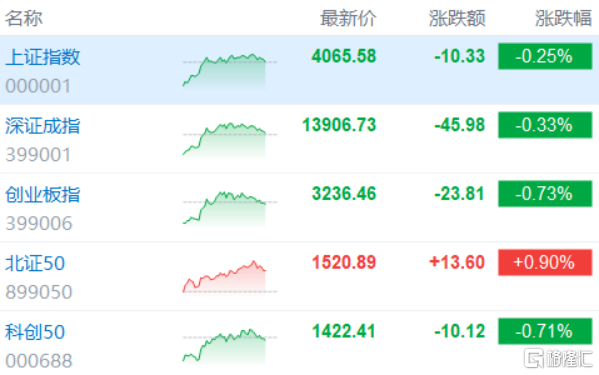
Investment Rating - The industry is rated as "outperforming the market," indicating an expected increase of over 10% in the industry index relative to the CSI 300 index over the next six months [15]. Core Insights - The A-share market experienced a slight fluctuation, with the Shanghai Composite Index finding support around 4029 points before rebounding. Key sectors such as batteries, electronic components, consumer electronics, and general equipment showed strong performance, while sectors like liquor, retail, aerospace, and tourism lagged behind [2][3][7]. - The average price-to-earnings (P/E) ratios for the Shanghai Composite Index and the ChiNext Index are currently at 16.75 times and 51.98 times, respectively, which are above the median levels of the past three years, suggesting a favorable environment for medium to long-term investments [3][14]. - The total trading volume on the two exchanges was 21,636 billion, which is above the median trading volume of the past three years, indicating robust market activity [3][14]. - Despite a slight decline in the official manufacturing PMI for January, the PMI for equipment manufacturing and high-tech manufacturing remains in the expansion zone, reflecting ongoing structural optimization in the industry [3][14]. - The report anticipates that the effects of growth-stabilizing policies will gradually manifest in the first quarter, which is typically a period of the year with the most abundant liquidity [3][14]. - Investors are advised to adopt a balanced allocation strategy, focusing on technology growth sectors such as AI and high-end manufacturing while also considering investment opportunities in certain consumer sectors [3][14]. Summary by Sections A-share Market Overview - On February 6, the A-share market showed a pattern of initial decline followed by a rebound, with the Shanghai Composite Index closing at 4065.58 points, down 0.25%. The Shenzhen Component Index closed at 13,906.73 points, down 0.33% [7][8]. - Over 50% of stocks in the two markets saw gains, particularly in sectors like mining, energy metals, jewelry, batteries, and chemical raw materials, while sectors such as retail, liquor, tourism, aerospace, and media experienced declines [7][9]. Future Market Outlook and Investment Recommendations - The report suggests that the Shanghai Composite Index is likely to maintain a slight upward trend, and investors should closely monitor macroeconomic data, changes in overseas liquidity, and policy developments [3][14]. - Short-term investment opportunities are highlighted in the battery, electronic components, consumer electronics, and general equipment sectors [3][14].
摩根大通对宁德时代的多头持仓比例降至8.57%
Guo Ji Jin Rong Bao· 2026-02-06 09:22
据香港交易所披露,摩根大通(JPMorgan)对宁德时代新能源科技股份有限公司-H股的多头持仓比例于 2026年2月2日从8.62%降至8.57%。 ...

摩根大通(JPMorgan)对宁德时代的多头持仓比例降至8.57%
Xin Lang Cai Jing· 2026-02-06 09:13
据香港交易所披露,摩根大通(JPMorgan)对宁德时代新能源科技股份有限公司 - H股的多头持仓比例 于2026年2月2日从8.62%降至8.57%。 ...
化工板块走强、电池板块上涨、医药股活跃……今天A股蓄力中→
Xin Lang Cai Jing· 2026-02-06 08:35
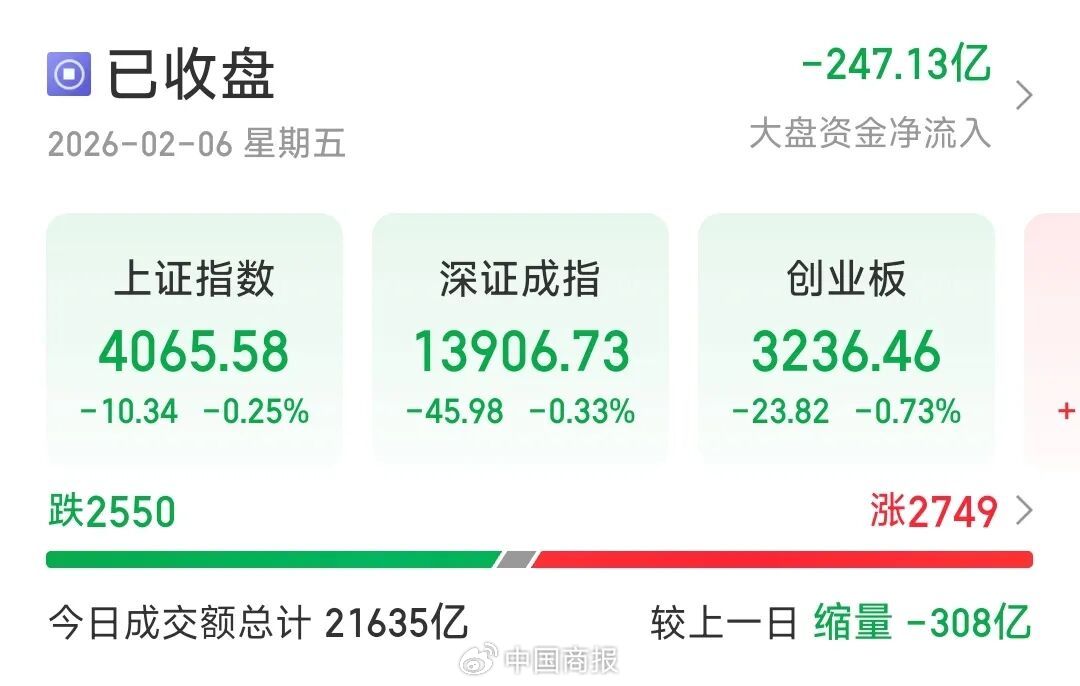
Market Overview - The A-share market experienced a collective decline, with the Shanghai Composite Index down by 0.25%, the Shenzhen Component Index down by 0.33%, and the ChiNext Index down by 0.73%. The North Star 50 Index, however, increased by 0.9%. The total trading volume in the Shanghai and Shenzhen markets was 21,635 billion yuan, a decrease of 308 billion yuan from the previous day, with over 2,700 stocks rising [1]. Sector Performance Chemical Sector - The basic chemical sector showed strong performance, with significant increases in fluorine chemicals, phosphorus chemicals, and chemical raw materials, leading to multiple stocks hitting the daily limit. BASF announced a price increase of $200 per ton for TDI products in the Asia-Pacific region (excluding mainland China) due to rising transportation, energy, and regulatory costs. By January 2026, 24% of global TDI production capacity is expected to be offline for maintenance, leading to a continued supply gap in overseas markets [3]. - Huafu Securities reported that the chemical industry is expected to see a recovery in profitability by 2026 after experiencing a downturn in 2025. Supply-side policies are reshaping the competitive landscape, while advancements in AI computing power and humanoid robots are anticipated to drive a new growth cycle [3]. Battery Sector - The battery sector rose by 2.12%, with several constituent stocks reaching their daily limit. Recent advancements in solid-state battery technology were reported by a research team from Qingdao Energy Research Institute, which proposed a "pre-lithiation-bastion" strategy to enhance the performance of silicon anodes in all-solid-state batteries. CITIC Construction Investment indicated that 2026 will be a critical year for the industrialization of solid-state batteries, with multiple automakers and battery companies planning to complete vehicle testing and small-scale production [4]. Pharmaceutical Sector - The pharmaceutical sector was active in the morning but saw a decline in the afternoon. The traditional Chinese medicine sector rose by 1.55%. The Ministry of Industry and Information Technology recently released a development plan for the traditional Chinese medicine industry, aiming for a collaborative development system by 2030, with enhanced supply capabilities and significant technological breakthroughs [5]. - Wanlian Securities noted that since 2025, the traditional Chinese medicine sector has faced performance pressure due to weak sales in pharmacy and hospital channels. The industry is undergoing a transformation period, with a focus on diversified channels, strong brand power, and high clinical value being crucial for future success [6].
电池板块技术迭代与产业链布局加速推进,电池ETF嘉实(562880)表现亮眼
Jin Rong Jie· 2026-02-06 07:45
Group 1 - The core viewpoint of the articles highlights the strong performance of the battery sector, driven by technological advancements and accelerated industry chain development, with significant gains in stock prices for key companies [1][2] - The CS battery index increased by 2.61%, with notable individual stock performances including Multi-Flor and Zhenyu Technology, which rose over 8% and 7% respectively [1] - The battery ETF managed by Jiashi (562880) saw a 2.44% increase, with a trading volume of 22.759 million yuan and a turnover rate of 2.18%, reflecting a 64.95% increase over the past year [1] Group 2 - Citic Securities indicates that the solid-state battery sector is supported by improvements in the fundamentals of related companies and accelerated industry development, suggesting strong sustainability and investment value [2] - The top ten weighted stocks in the Jiashi battery ETF include CATL, Sungrow Power, and EVE Energy, collectively accounting for over 50.68% of the fund [2] - The current management fee for the Jiashi battery ETF is 0.50% annually, with a custody fee of 0.10% annually [2]




A股收评:三大指数齐跌!白酒股重挫,化工股逆市爆发
Ge Long Hui· 2026-02-06 07:30
Market Overview - The A-share market experienced slight declines on February 6, with the Shanghai Composite Index down 0.25% to 4065 points, the Shenzhen Component Index down 0.33%, and the ChiNext Index down 0.73% [1][2] - The total market turnover was 2.16 trillion yuan, a decrease of 30.8 billion yuan compared to the previous trading day, with over 2700 stocks rising [1] Sector Performance - The mining and oil sectors saw gains, with stocks like Tongyuan Petroleum and Zhun Oil Co. hitting the daily limit [2] - The fluorine chemical sector was strong, with Tianji Co. also reaching the daily limit [2] - The lithium mining and battery sectors were active, with Enjie Co. hitting the daily limit [2] - Conversely, the liquor sector faced widespread declines, with Huangtai Liquor hitting the daily limit down [2] - The retail sector fell, led by Baida Group, which dropped nearly 10% [11] - The tourism sector weakened, with Dalian Shengya leading the decline, down over 8% [12] Notable Stocks - In the battery sector, stocks such as Zhenyu Technology and Enjie Co. saw significant gains, with Zhenyu Technology rising 13.39% [4][5] - The chemical sector was active, with stocks like Shanshan Co. and Yongtai Technology also hitting the daily limit [7] - The small metals sector rose, with Xianglu Tungsten Industry hitting the daily limit and Zhangyuan Tungsten Industry up over 9% [8] Economic Indicators - The China Bulk Commodity Price Index (CBPI) for January was reported at 125.3 points, a month-on-month increase of 6.3% and a year-on-year increase of 12.7%, marking the highest level since July 2022 [6] - The chemical price index also saw a significant rise, reporting a month-on-month increase of 3.8% [6] Liquor Industry Outlook - Recent forecasts from several liquor companies, including Huangtai Liquor and Jiu Gui Liquor, predict declines in net profits for 2025, with expectations of a bottoming out in the industry by 2026 [9] - The liquor sector is currently at historical low valuations, presenting strong bottom-fishing opportunities [9] Market Sentiment - Analysts from Guosen Securities noted that the market is currently under pressure due to hawkish sentiments, leading to a contraction in liquidity [17] - Despite short-term pressures on indices, the release of liquidity is expected to alleviate the impact on other sectors and reduce long-term bubble risks [17]
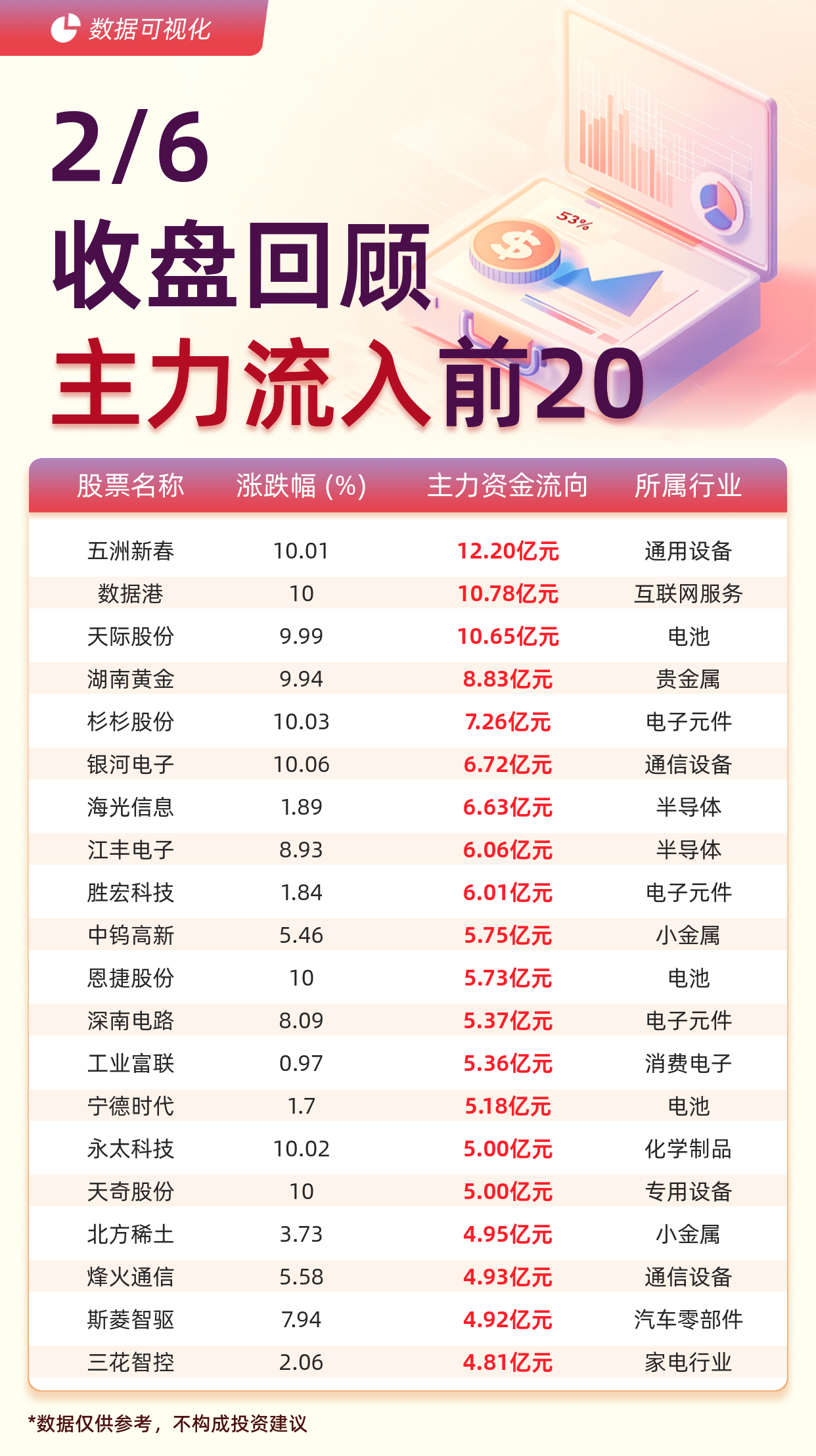
主力资金流入前20:五洲新春流入12.20亿元、数据港流入10.78亿元
Jin Rong Jie· 2026-02-06 07:29
Core Insights - The main focus of the news is on the top 20 stocks with significant capital inflow as of February 6, highlighting their respective amounts and performance in terms of percentage change. Group 1: Capital Inflow - The stock with the highest capital inflow is Wuzhou Xinchun, attracting 1.22 billion yuan [1] - Data Port follows closely with an inflow of 1.078 billion yuan [1] - Tianji Co. has an inflow of 1.065 billion yuan, marking a strong performance [1] Group 2: Stock Performance - Wuzhou Xinchun shows a price increase of 10.01% [2] - Data Port has a price increase of 10% [2] - Tianji Co. reports a price increase of 9.99% [2] Group 3: Industry Breakdown - Wuzhou Xinchun belongs to the General Equipment sector [2] - Data Port is categorized under Internet Services [2] - Tianji Co. is part of the Battery industry [2] Group 4: Additional Stocks - Hunan Gold has a capital inflow of 883 million yuan with a price increase of 9.94% [1][2] - Shanshan Co. sees an inflow of 726 million yuan and a price increase of 10.03% [1][2] - Galaxy Electronics has an inflow of 672 million yuan with a price increase of 10.06% [1][2] Group 5: Other Notable Stocks - The stock with the lowest inflow in the top 20 is Sanhua Intelligent Control, with an inflow of 481 million yuan and a price increase of 2.06% [3] - Other notable stocks include Northern Rare Earth with an inflow of 495 million yuan and a price increase of 3.73% [3] - Fenghuo Communication has an inflow of 493 million yuan with a price increase of 5.58% [3]