
船舶制造

Search documents
回望2025 多个“大国重器”取得新突破 “中国力量”闪耀寰宇
Yang Shi Wang· 2026-01-01 11:20
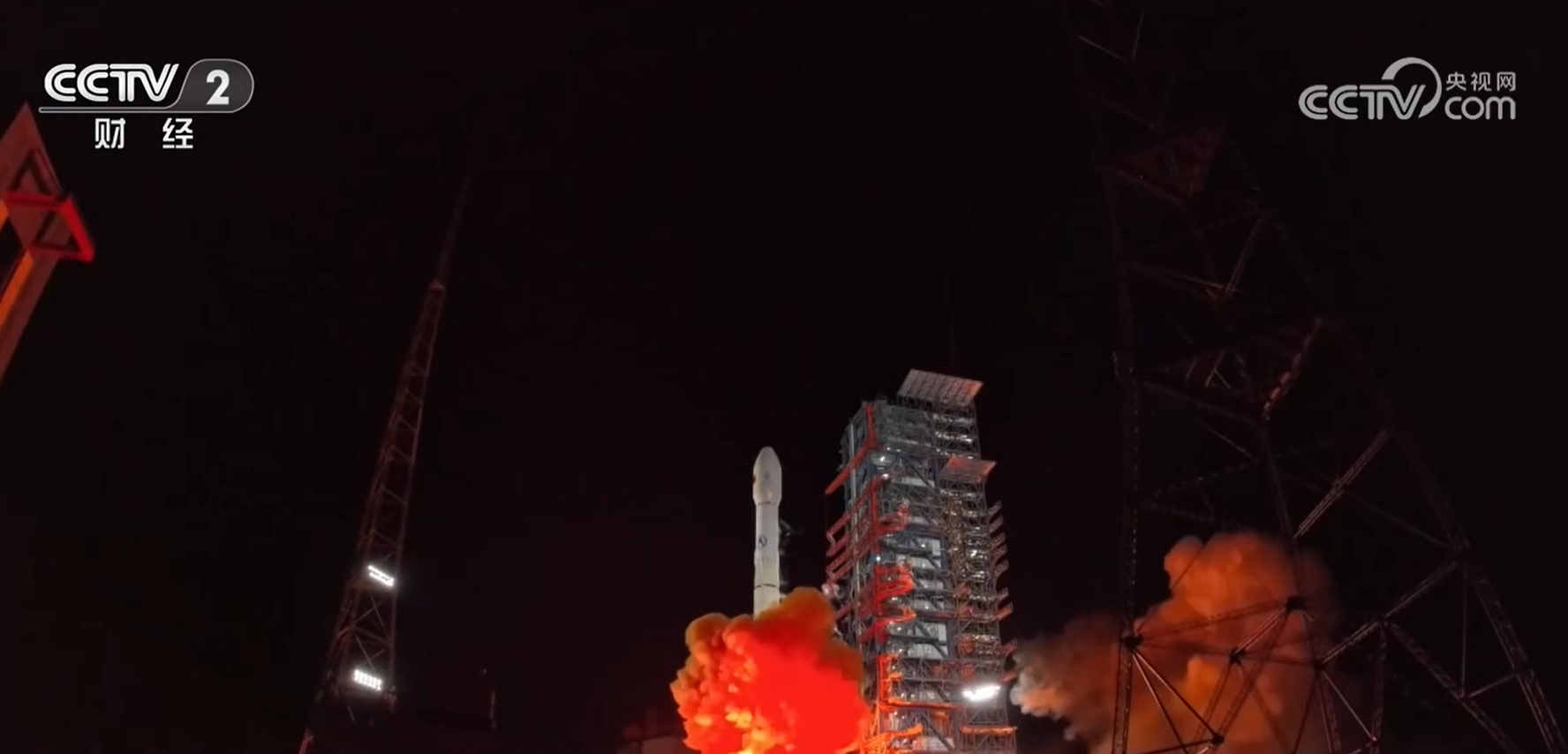
Group 1 - China's space exploration has achieved significant milestones with the successful launch of the Tianwen-2 asteroid probe, which aims to conduct dual-target exploration of asteroid 2016HO3 and comet 311P [3] - The Long March 3B rocket successfully launched the Tianwen-2 probe, marking a breakthrough in China's planetary exploration capabilities [3] - The successful launch of the Lijian-1 rocket, which deployed nine satellites in a single mission, signifies the scaling up of international business in China's commercial space sector [5] Group 2 - China's manned submersible technology continues to advance, with the Jiaolong submersible completing its first dive in the Arctic region, showcasing a new collaborative underwater operation model [7] - Two ultra-large dredging vessels, Tongjun and Jun Guang, have been launched, featuring the largest dredging capacity in Asia and world-leading loading efficiency [9] Group 3 - The world's largest 26 MW offshore wind turbine has successfully connected to the grid in Shandong, capable of generating up to 100 million kWh annually under optimal conditions [12] - The first unit of the "Hualong One" nuclear power plant in Fujian has successfully connected to the grid, with an expected annual output of 20 billion kWh [14] Group 4 - China's largest diameter shield tunneling machine has been completed and is set for export, featuring advanced intelligent technologies and a diameter of 15.7 meters [15] - The AG600 amphibious aircraft has entered mass production, becoming the world's largest civil amphibious aircraft, enhancing China's aerial rescue capabilities [16] Group 5 - The CR450 high-speed train has set a new record with a speed of 453 km/h, marking a significant advancement in China's high-speed rail technology [17] - The Jiangmen neutrino experiment facility has commenced operations, achieving a major milestone in measuring solar neutrino oscillation parameters with improved precision [18] - The AIMS telescope has successfully measured solar magnetic fields, providing new capabilities for solar observation [19]

全球首艘24000标准箱甲醇双燃料集装箱船下水
Zheng Quan Shi Bao Wang· 2026-01-01 10:12
人民财讯1月1日电,据科技日报,2025年12月31日,全球首艘24000标准箱甲醇双燃料集装箱船在南通 下水。该船是目前全球载箱量最大、技术最先进的绿色清洁能源集装箱船之一,标志着我国在船舶智能 制造与绿色航运领域实现重大突破。 本次下水的24000标箱甲醇双燃料集装箱船,由南通中远海运川崎船舶工程有限公司自主研发设计。该 船采用先进的甲醇双燃料动力系统,兼具高效能与低排放特性,在全程运营中可实现"碳中和"目标。 该船的成功建造,填补了我国在甲醇双燃料超大型集装箱船设计领域的空白。 ...
中船集团武昌造船新签9艘集装箱船订单正式生效
Xin Lang Cai Jing· 2026-01-01 08:43
Group 1 - China Shipbuilding Group's Wuchang Shipbuilding has signed contracts for the construction of 5 units of 1100TEU container ships and 4 units of 1800TEU container ships, effective from January 1 [1][2] - Wuchang Shipbuilding has initiated preparatory work for this series of ships, employing a phased construction model to ensure high-quality and timely delivery [2] - In recent years, Wuchang Shipbuilding has developed a series of benchmark projects, including LNG-powered offshore vessels and methanol-powered ro-ro ships, achieving high-quality and timely delivery for domestic and international shipowners [2] Group 2 - Wuchang Shipbuilding's self-designed 1320TEU methanol dual-fuel container ship and 1900TEU Bangkok-type container ship have received AIP certification from classification societies, expanding its range of feeder container ships [2] - The company has also received certification for its self-designed 18600DWT special coating oil chemical ship, 26000DWT duplex stainless steel oil chemical ship, and 29000DWT ammonia fuel duplex stainless steel chemical ship, completing model tests [2] - The self-developed chemical ship designs cover a range from 7000DWT to 29000DWT, and the oil chemical ship design series is essentially formed [2]
探底回升但整体弱势,关门红还在吗?
Ge Long Hui· 2025-12-31 13:03
Market Performance - The three major indices experienced slight declines, with the Shanghai Composite Index down by 0.07%, the Shenzhen Component down by 0.67%, and the ChiNext Index down by 1.1% [1] - Over 3,000 stocks in the two markets fell, with a total trading volume of 1.31 trillion [1] Sector Performance - AI application stocks continued to rise, with companies like Wanshili, Desheng Technology, and BlueFocus hitting the daily limit [3] - The commercial aerospace sector remained active, highlighted by LeiKe Defense achieving three consecutive limit-ups, along with Shunhao Shares, Beidou Star, and Changjiang Communication also hitting the limit [3] - The robotics sector showed localized activity, with Fenglong Shares achieving six consecutive limit-ups and Wuzhou Xinchun reaching a historical high with three consecutive limit-ups [3] - The Fujian sector saw declines, with Luyan Pharmaceutical hitting the limit down, and Pingtan Development, Hexing Packaging, and Haixia Innovation experiencing significant drops [3] - The noise control sector opened lower and fell by 1.81%, with Evergrande High-tech hitting the limit down; other sectors like shipbuilding, PLC, blade batteries, and pharmaceutical commerce followed suit [3] Policy and Investment Trends - The Ministry of Education announced plans to further promote AI in education, aiming to release relevant policy documents by 2026 to systematically deploy AI education and applications [3] - Early trading saw net inflows into cultural media, non-ferrous metals, and industrial metals sectors, while net outflows were observed in machinery, electronics, and new energy sectors [3]
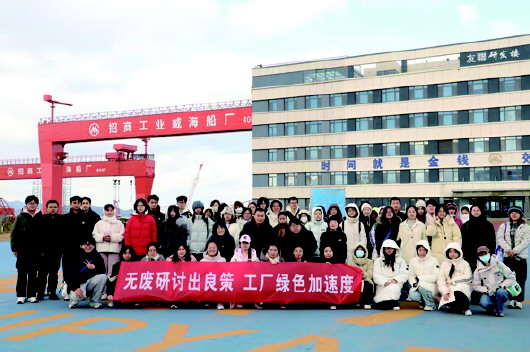
“无废细胞”激活全域新生态 绿色治理绘就“无废”新蓝图多元共治、科技赋能与循环共生的崮山实践
Qi Lu Wan Bao· 2025-12-31 11:55
Core Viewpoint - The article highlights the successful implementation of the "waste-free" initiative in Weihai, showcasing the integration of AI technology and community efforts in creating a sustainable urban environment [2][9]. Policy Guidance - Weihai was selected as one of the first pilot cities for "waste-free" urban construction in April 2019, incorporating this initiative into its development framework [3]. - The city has established a "4+2" pilot system focusing on industrial solid waste reduction, agricultural waste utilization, urban waste resource management, and safety control of hazardous waste, along with marine and tourism green development goals [3]. Government Demonstration - The local government has transitioned to an air-source heat pump system for heating, replacing traditional biomass boilers, resulting in annual savings of 150,000 yuan and a reduction of 66 tons of CO2 emissions [4]. Technological Empowerment - The招商局工业集团威海船舶有限公司 has integrated "waste-free" principles into its operations, including an 8MW distributed photovoltaic project that reduces CO2 emissions by 7,600 tons annually [5]. - The company has implemented energy-saving technologies, achieving a 20% overall energy efficiency improvement and receiving multiple green certifications [5]. Circular Economy - In邵家庄村, a comprehensive waste management system has been established, converting waste into high-quality organic fertilizer, which enhances crop yields by 10%-15% [6][7]. - The village serves as a model for resource recycling and utilization, demonstrating the effectiveness of the "waste-free" concept in rural areas [7]. Collaborative Ecosystem - The东浦湾 "waste-free" scenic area has initiated creative workshops that transform marine waste into art, promoting environmental awareness among visitors [8]. - A symbiotic relationship has been developed between the scenic area and local villages, facilitating a circular economy where organic waste is processed in villages and green products are supplied to the scenic area [8]. Conclusion - Weihai's "waste-free" initiative exemplifies a comprehensive approach to sustainable urban development, integrating policy, technology, and community engagement to create a model for similar regions [9].
中远海特(600428.SH):拟投资建造4艘4万吨级多用途重吊船
Ge Long Hui A P P· 2025-12-31 09:52
Core Viewpoint - China COSCO Shipping Specialized Carriers Co., Ltd. (中远海特) is advancing its strategic transformation by investing in the construction of four 40,000-ton multi-purpose heavy-lift vessels, with a total investment of 1.492 billion RMB [1] Group 1 - The investment will be executed through the wholly-owned subsidiary, COSCO Shipping (Hong Kong) Investment Development Co., Ltd. [1] - The construction will take place at China Shipbuilding Chengxi Shipyard Co., Ltd. [1] - The decision was approved during the fifth meeting of the ninth board of directors [1]

3.06亿主力资金净流入,中船系概念涨2.30%
Zheng Quan Shi Bao Wang· 2025-12-31 09:32
Group 1 - The core viewpoint of the news is that the China Shipbuilding sector has shown a positive performance, with a 2.30% increase, ranking third among concept sectors on the trading day [1][2] - Within the China Shipbuilding sector, six stocks experienced gains, with Jiuzhiyang leading at a 20% increase, followed by China Haifang, China Ship Han Guang, and China Ship Special Gas, which rose by 1.26%, 1.06%, and 0.70% respectively [1][2] - The sector saw a net inflow of 306 million yuan from main funds, with Jiuzhiyang receiving the highest net inflow of 305 million yuan, followed by China Shipbuilding, China Haifang, and China Ship Special Gas with net inflows of 31.41 million yuan, 14.66 million yuan, and 4.89 million yuan respectively [2][3] Group 2 - The main fund inflow ratios for Jiuzhiyang, China Haifang, and China Ship Special Gas were 16.09%, 4.89%, and 3.43% respectively, indicating strong investor interest in these stocks [3] - The trading data shows that Jiuzhiyang had a turnover rate of 14.27%, while China Shipbuilding and China Haifang had turnover rates of 0.52% and 1.55% respectively [3][4] - Conversely, stocks like Kunshan Intelligent and China Power experienced declines of 0.32% and 0.48%, with negative net fund flows of -403.85 thousand yuan and -476.41 thousand yuan respectively [4]




市场分析:航天软件行业领涨,A股震荡上行
Zhongyuan Securities· 2025-12-31 08:22
Investment Rating - The industry is rated as "stronger than the market," indicating an expected increase of over 10% relative to the CSI 300 index in the next six months [17]. Core Views - The A-share market experienced slight fluctuations with a small upward trend, with notable performance in the aerospace, software development, non-ferrous metals, and internet services sectors, while sectors like pharmaceutical commerce, precious metals, shipbuilding, and batteries underperformed [2][3]. - The average price-to-earnings ratios for the Shanghai Composite Index and the ChiNext Index are 16.28 times and 50.28 times, respectively, which are above the median levels of the past three years, suggesting a favorable environment for medium to long-term investments [3][16]. - The recent Central Economic Work Conference emphasized a shift in macro policy focus from total expansion to a balance of quality and sustainability, highlighting future industries such as artificial intelligence, commercial aerospace, quantum technology, and 6G as key investment directions [3][16]. - The market anticipates a continuation of a "moderately loose" domestic monetary policy, with expectations of the Federal Reserve maintaining a rate-cutting cycle in 2026, contributing to a more favorable global liquidity environment [3][16]. - The strengthening of the RMB is expected to enhance the attractiveness of RMB-denominated assets, facilitating capital inflows [3][16]. Summary by Sections A-share Market Overview - On December 31, the A-share market showed a slight upward trend, with the Shanghai Composite Index closing at 3968.84 points, up 0.09%, while the Shenzhen Component Index fell by 0.58% [7][8]. - The total trading volume for the day was 20,659 billion, which is above the median of the past three years [3][7]. Future Market Outlook and Investment Recommendations - The report suggests that investors should closely monitor macroeconomic data, changes in overseas liquidity, and policy developments, with a short-term focus on investment opportunities in aerospace, software development, non-ferrous metals, and internet services sectors [3][16].

国泰海通:二手船价延续上行趋势 我国绿色船舶改装取得阶段性进展
智通财经网· 2025-12-31 08:01
Core Viewpoint - The report from Guotai Junan indicates that the second-hand ship price index continues to rise, while new ship prices remain under pressure [1] Group 1: Second-Hand Ship Prices - The second-hand ship price index reached 189.90 points in November, reflecting a year-on-year increase of 7.12% and a month-on-month increase of 0.88% [1] - Prices for five-year and ten-year old second-hand ships increased by 0.50% and 0.71% month-on-month, respectively [1] Group 2: New Ship Prices - The global new ship price index was 184.33 points in November, showing a year-on-year decrease of 2.56% and a month-on-month decrease of 0.29% [1] - New ship prices for oil tankers and bulk carriers saw slight month-on-month increases of 0.33% and 0.26%, while container ships and gas carriers experienced declines of 0.51% and 0.26% [1] Group 3: Global Order Trends - From January to November, the total value of new global orders was $146.668 billion, a year-on-year decrease of 31.33% [2] - The new order and delivery tonnage from China decreased by 47.19% and increased by 2.13% year-on-year, respectively, with corresponding global market shares of 59% and 51% [2] Group 4: Green Ship Technology - The first domestically produced large mobile rotary sail was delivered, expected to reduce fuel consumption by approximately 10% and cut CO2 emissions by over 1,500 tons annually [4] - The first retrofit project for a rotary sail was successfully completed, marking a significant step into the high-end green ship retrofit market [4] - A new type of rotary sail developed by Shanghai Shipbuilding Equipment Research Institute received recognition from the French classification society, with fuel-saving effects ranging from 5% to 25% [4] Group 5: Cost Trends - The comprehensive price index for Chinese steel was 91.95 points, showing a year-on-year decrease of 4.79% but a month-on-month increase of 0.48% [2]

全球首艘!24000标箱甲醇双燃料集装箱船在南通下水
Yang Zi Wan Bao Wang· 2025-12-31 07:35
Group 1 - The world's first 24,000 TEU methanol dual-fuel container ship was launched in Nantong, marking a significant breakthrough in intelligent manufacturing and green shipping in China [1] - The ship, developed by Nantong COSCO Shipping Kawasaki, integrates multiple leading technologies and features an advanced methanol dual-fuel power system, achieving carbon neutrality during operation [1] - The successful construction of this vessel fills a gap in China's design capabilities for large methanol dual-fuel container ships and represents an important milestone in the transition of the shipbuilding industry towards green, low-carbon, and intelligent manufacturing [1] Group 2 - Nantong COSCO Shipping Kawasaki has been a benchmark enterprise in shipbuilding since its establishment in 1995, focusing on innovation and lean manufacturing to deliver various high-end vessels [2] - The company has actively promoted intelligent manufacturing and green transformation, establishing automated and intelligent production lines to upgrade shipbuilding processes and management [2] - Moving forward, Nantong COSCO Shipping Kawasaki aims to continue its commitment to green, innovative, and efficient development, providing more environmentally friendly and intelligent maritime equipment to support the construction of a green shipping system and promote global sustainable development [2]