人形机器人

Search documents
国家发展改革委:积极推动基础设施REITs进一步扩围
Zhong Guo Zheng Quan Bao· 2025-11-27 23:45
Group 1: Infrastructure REITs Expansion - The National Development and Reform Commission (NDRC) is actively promoting the expansion of infrastructure REITs to include urban renewal facilities, hotels, sports venues, and commercial office facilities [1][2] - Since the launch of infrastructure REITs in 2020, the NDRC has collaborated with the China Securities Regulatory Commission (CSRC) to expand the market, initially including logistics, toll roads, municipal facilities, and industrial parks, and later adding clean energy, data centers, affordable rental housing, water conservancy, cultural tourism, and consumer infrastructure [2] - Currently, the issuance scope covers 12 major industries and 52 asset types, with 18 asset types from 10 industries having completed their first issuance [2] Group 2: Development of Embodied Intelligence Industry - The embodied intelligence industry, represented by humanoid robots, is experiencing rapid growth at over 50% due to innovation and demand [3] - There are currently over 150 humanoid robot companies in China, but there are concerns about product redundancy and limited R&D space [3][4] - The NDRC is working on establishing industry standards and an entry-exit mechanism to ensure fair competition and orderly development of the industry [4] Group 3: Reform Initiatives - The 14th Five-Year Plan suggests focusing on emerging industries like low-altitude economy, biomanufacturing, and embodied intelligence [5] - The NDRC plans to promote reforms in three areas: market entry, application scenarios, and resource elements to address barriers to industry development [5] - Efforts will be made to optimize the market entry environment, support the cultivation of application scenarios, and enhance the resource guarantee mechanism to facilitate the flow of advanced resources towards new productive forces [5]
2026年十大科技市场趋势预测发布:人形机器人全球出货量预估年增逾七倍
Sou Hu Cai Jing· 2025-11-27 19:06
Group 1: Key Trends in Technology Markets - The "2026 Top Ten Technology Market Trends" report predicts significant advancements across various sectors, including AI chips, energy storage, data centers, humanoid robots, consumer electronics, AR glasses, and assisted driving [1] - AI chip competition is intensifying, with liquid cooling technology expected to penetrate AI data centers on a large scale [1] - The report highlights breakthroughs in bandwidth limitations, enabling high-speed transmission through HBM and optical communication, which will establish a new intelligent computing framework [1] Group 2: Storage Chip Market Insights - NAND Flash suppliers are enhancing AI solutions to accelerate inference tasks and reduce storage costs, addressing the performance gap with existing technologies [3] - Key products include Storage-Class Memory (SCM) SSD/KV Cache SSD/HBF technology, which offers ultra-low latency and high bandwidth, ideal for real-time AI inference workloads [3] - Nearline QLC SSD technology is rapidly being adopted for AI's warm/cold data storage layers, with QLC's per-chip storage capacity exceeding TLC by 33%, significantly lowering the unit cost of storing large AI datasets [3] - By 2026, QLC SSD is expected to achieve a 30% market penetration in Enterprise SSDs [3] Group 3: Humanoid Robot Market Forecast - The year 2026 is projected to be pivotal for the commercialization of humanoid robots, with global shipments expected to increase over sevenfold, surpassing 50,000 units [5] - Market momentum will focus on AI adaptivity technology and application-oriented scenarios, enabling robots to learn and make decisions in unstructured environments [5] - New humanoid robots will prioritize specific scenario value from the design phase, targeting applications such as manufacturing, warehousing, and inspection assistance, marking a shift towards AI-driven, application-centric industry development [5]


国家发展改革委回应市场热点:建立健全具身智能行业准入和退出机制 积极推动基础设施REITs扩围扩容
Shang Hai Zheng Quan Bao· 2025-11-27 18:20
Group 1 - The core viewpoint emphasizes the rapid growth of the humanoid robot industry in China, with over 150 companies currently operating, more than half of which are startups or from other sectors, indicating a need to prevent market saturation and ensure healthy development [1][2] - The National Development and Reform Commission (NDRC) plans to accelerate the establishment of industry standards and evaluation systems, as well as a mechanism for entry and exit in the humanoid robot sector to foster a fair competitive market environment [2][3] - The humanoid robot industry is projected to grow at a rate exceeding 50%, potentially reaching a market size of 1 trillion yuan by 2030, driven by innovation and demand [2] Group 2 - The NDRC is actively promoting the expansion of infrastructure Real Estate Investment Trusts (REITs) to include more asset types such as urban renewal facilities, hotels, and sports venues, enhancing the support for the real economy [4][5] - Since the launch of infrastructure REITs in 2020, the NDRC has expanded the issuance scope to cover 12 major industries and 52 asset types, with 18 asset types already achieving their first issuance [4] - The NDRC aims to improve the project application process and support more qualified projects for issuance while ensuring risk management and quality control [5] Group 3 - The "Two Heavy" construction initiative is being integrated into the broader "14th Five-Year" and "15th Five-Year" plans, with significant funding allocated to support various infrastructure projects [6][7] - Key projects include urban infrastructure improvements, major transportation developments along the Yangtze River, and enhancements in food security and education facilities [7] - The NDRC will continue to collaborate with relevant departments to advance the "Two Heavy" construction initiative, providing stronger support for China's modernization efforts [6][7]
“两重”建设进展如何?如何推动具身智能产业发展?——国家发展改革委解读经济热点
Xin Hua She· 2025-11-27 13:31
Group 1: "Two Heavy" Construction Progress - The "Two Heavy" construction has achieved phased progress, with 7 trillion yuan and 8 trillion yuan allocated for special bonds to support 1,465 and 1,459 "hard investment" projects in the last two years [2] - In new urbanization, there is a focus on improving urban underground pipeline networks and enhancing urban safety resilience [2] - The initiative also supports the construction and renovation of 664 high schools, adding over 1 million ordinary high school seats, and renovating 15,000 hospital wards to improve healthcare conditions [2] Group 2: Energy Supply and Demand Balance - The energy supply and demand for the heating season are generally balanced, with sufficient resource supply [3] - From January to October, industrial raw coal and natural gas production increased by 1.5% and 6.3%, respectively, with total installed power generation capacity reaching 3.75 billion kilowatts, an increase of 5.6 billion kilowatts year-on-year [3] - As of November 26, coal reserves at national regulated power plants exceeded 230 million tons, with an available duration of about 35 days [3] Group 3: Development of Embodied Intelligence Industry - The embodied intelligence industry, represented by humanoid robots, is growing at a rate exceeding 50%, with a projected market size of 100 billion yuan by 2030 [4] - There are currently over 150 humanoid robot companies in China, indicating a growing market presence [4] - Future plans include establishing industry standards, accelerating core technology development, and promoting infrastructure for training and pilot testing platforms [4][5] Group 4: Credit Repair Management Measures - The National Development and Reform Commission has issued the "Credit Repair Management Measures," effective from April 1, 2026, to enhance the legal rights of credit subjects [6] - The measures categorize credit information into "minor, general, and serious" types, with minor information generally not being publicly disclosed [7] - A unified application process for credit repair will be established through the "Credit China" website, simplifying procedures and improving efficiency [7]
事关人形机器人,国家发改委回应
Zhong Guo Ji Jin Bao· 2025-11-27 12:48
Core Insights - The rapid development of humanoid robots in China is experiencing over 50% growth, with projections indicating the industry could reach a market size of 1 trillion yuan by 2030 [1] - There are currently over 150 humanoid robot companies in China, with more than half being startups or entrants from other industries, raising concerns about product redundancy and market saturation [1] - The National Development and Reform Commission (NDRC) emphasizes the need for balanced development to prevent excessive competition and ensure innovation [1] Industry Development Plans - The NDRC plans to accelerate the establishment of industry standards and evaluation systems to create a fair competitive environment and ensure orderly industry development [2] - Key technological breakthroughs will be supported, focusing on collaborative models and data integration to address bottlenecks in industry development [2] - Infrastructure for training and pilot testing will be promoted to facilitate the integration and sharing of resources across the country, enhancing real-world applications of humanoid technology [2] Market Performance - The humanoid robot index has seen a maximum increase of 186.3% since September 2024, although it has been on a downward trend in recent months [3]
国家发改委发声!将建立健全具身智能行业准入和退出机制
Zhong Guo Zheng Quan Bao· 2025-11-27 12:01
Core Viewpoint - The National Development and Reform Commission (NDRC) is focusing on promoting the healthy and standardized development of the embodied intelligence industry, emphasizing the establishment of industry standards, evaluation systems, and mechanisms for market entry and exit [1][3]. Group 1: Industry Development - The NDRC aims to prevent the oversaturation of humanoid robot products in the market, as over 150 humanoid robot companies currently exist in China, with more than half being startups or from other industries [2][3]. - The NDRC will accelerate the construction of industry standards and evaluation systems, creating a fair competitive market environment to ensure orderly industry development [3]. - There is a focus on addressing key technological challenges and promoting the integration of technology and application scenarios to facilitate the practical application of embodied intelligence [3][7]. Group 2: Infrastructure and Investment - The NDRC is actively promoting the expansion of infrastructure REITs to include more sectors such as urban renewal facilities, hotels, sports venues, and commercial office facilities [6]. - Since the launch of infrastructure REITs in 2020, the NDRC has progressively included various sectors, enhancing the support for the real economy [6]. - The NDRC plans to allocate significant special bonds for hard investment projects, reflecting a strategic and forward-looking approach to infrastructure development [4][5]. Group 3: Regulatory Reforms - The NDRC will collaborate with relevant departments to advance reforms in market access, application scenarios, and resource allocation to remove barriers to industry development [7]. - There is an emphasis on optimizing the market access environment and supporting the cultivation of application scenarios to enhance efficiency and effectiveness [7]. - The NDRC aims to explore innovative market mechanisms for resource allocation, ensuring that advanced resources flow smoothly to support new productive forces [7].
变局中寻路:中国银河把脉2026,勾勒“十五五”投资新蓝图
2 1 Shi Ji Jing Ji Bao Dao· 2025-11-27 11:58
Core Insights - The current stability mechanism of China's capital market has shifted from "crisis response" to "proactive governance," significantly enhancing the market's inherent stability [1] - The 2026 economic outlook is framed around the theme of "ReNew," highlighting the coexistence of global "new patterns and cycles" with domestic "new blueprints and new productive forces" [1][2] Group 1: Economic Challenges and Trends - The economic landscape is characterized by three layers of challenges: long-term "3D challenges" (aging population, debt crisis, de-globalization), mid-term "spiral downward" mechanisms, and recent "three inflection points" (U.S. political shift, China's economic transformation, global technological leap) [2] - Global economic growth is expected to continue a slight decline, but the growth gap between developed economies and emerging markets is predicted to narrow [2] - By 2026, Asia's economic scale is projected to surpass that of North America and Europe for the first time, indicating a profound shift in the global economic landscape [2] Group 2: Investment Opportunities and Strategies - China must seize opportunities presented by "creative destruction," with the government playing dual roles as "investor" and "insurer" to stimulate innovation and buffer transformation shocks [3] - The future of China's economy is summarized by "three news" (new blueprint, new starting point, new productive forces) and "three rebalances" (external vs. internal demand, supply vs. demand, nominal vs. real variables) [3] - The capital market is undergoing a paradigm shift from "cyclical fluctuations" to "structural changes," necessitating a comprehensive update of traditional analytical frameworks [4] Group 3: Asset Pricing and Market Dynamics - The traditional correlation between asset prices and economic fundamentals is being restructured, with economic drivers shifting from traditional inputs to innovation-driven growth [4] - The capital market in 2026 is expected to exhibit "economic rebalancing and moderate re-inflation," with fiscal policy maintaining necessary spending intensity and monetary policy remaining prudent [4] - Investors are advised to focus on the changes in "three prices": RMB exchange rate, Sino-U.S. interest rate differentials, and stock-bond relative prices, as these will influence asset performance [4] Group 4: Sector-Specific Insights - In the AI sector, a shift from "model-driven" to "application-driven" development is anticipated, with 2026 being a critical year for AI applications [5] - The communication industry is expected to upgrade due to AI computing power demands, with significant growth in AI capital expenditures by cloud vendors [5] - The pharmaceutical sector is undergoing a "hard technology" transformation, with a focus on innovative drug companies and medical device firms that possess genuine innovation capabilities [6] - The consumer market is evolving into a "dual-driven" new pattern, with continuous innovation in technology consumption and emerging new consumption scenarios [6]

浙江荣泰(603119):深度报告:全球云母制品引领者,卡位核心客户,深度布局具身智能
ZHONGTAI SECURITIES· 2025-11-27 11:06
Investment Rating - The report assigns an "Accumulate" rating for the company [3]. Core Views - The company is a global leader in mica products, focusing on high-temperature insulation mica products, with a significant market share in the electric vehicle (EV) sector. It is expected to benefit from the growing demand in the new energy sector, particularly through partnerships with major clients like Tesla and CATL [5][6]. - The company is projected to achieve revenues of 16.4 billion, 26.5 billion, and 37.4 billion yuan for the years 2025, 2026, and 2027, respectively, with year-on-year growth rates of 45%, 61%, and 41% [7]. Company Overview - The company specializes in the research, production, and sales of high-temperature insulation mica products, holding the largest market share globally. Its products are widely used in the new energy vehicle, home appliance, and wire and cable sectors [5][11]. - The company has established a strong customer base, including major players in the EV market such as Tesla, Volkswagen, and BMW, contributing to rapid growth in revenue [14][15]. Industry Analysis - The demand for mica materials is driven by regulations, electric vehicles, and energy storage, with the market expected to grow significantly due to stricter safety standards and increased penetration of electric vehicles [7][39]. - The global mica materials market is projected to grow from 9.67 billion yuan in 2017 to 41.81 billion yuan by 2027, with a compound annual growth rate (CAGR) of 18% from 2023 to 2027 [39][40]. Competitive Advantages - The company has a technological edge with its three-dimensional molding process, enhancing the performance of its materials compared to traditional two-dimensional products [58]. - The company has established deep partnerships with leading clients in the EV sector, positioning itself as a comprehensive solution provider rather than just a product manufacturer [64]. Financial Forecast and Valuation - The company is expected to see a significant increase in both revenue and net profit over the next few years, with net profit projected to reach 2.83 billion, 4.36 billion, and 5.78 billion yuan from 2025 to 2027, respectively [7][8].

人形机器人产业是否有“泡沫”?国家发展改革委回应
新华网财经· 2025-11-27 10:04
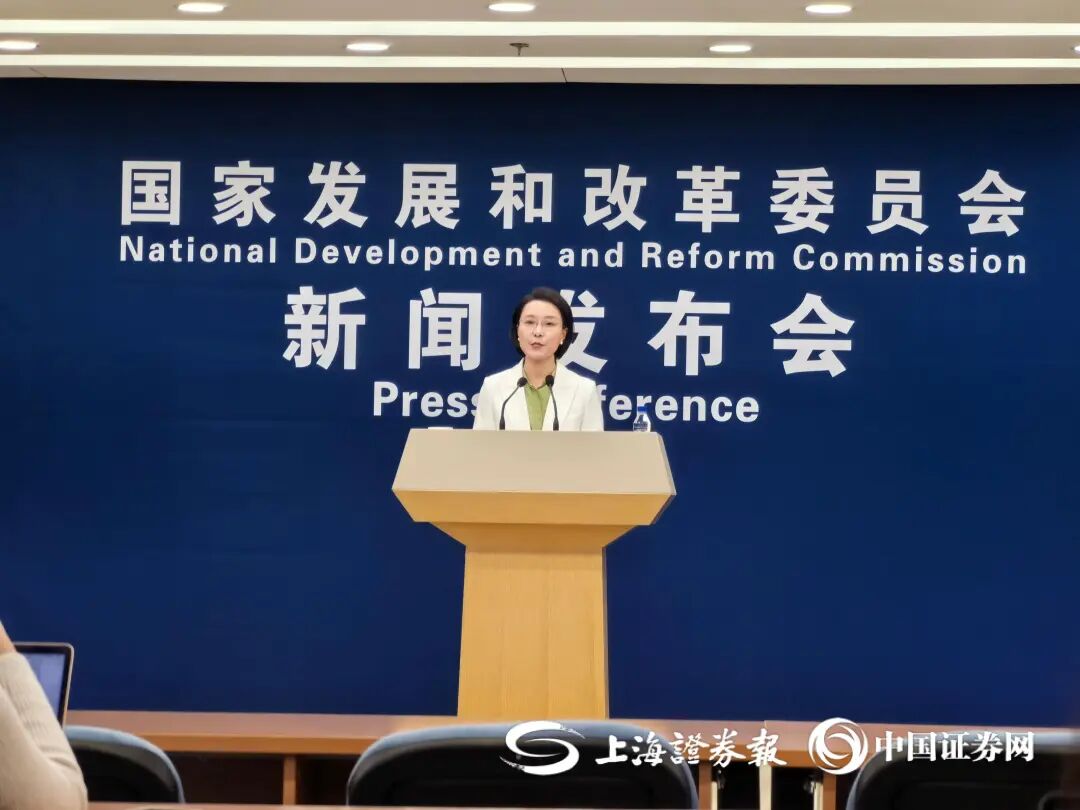
在11月27日举行的国家发展改革委11月份新闻发布会上,国家发展改革委相关负责人对人形机器人、基础设施REITs项目发行扩围扩容等 市场热点问题给出回应。 其中,对于人形机器人产业是否有"泡沫"的问题,国家发展改革委表示,着力防范重复度高的人形机器人产品"扎堆"上市,推动具身智能 产业健康规范发展。 具身智能产业2030年将达到千亿元市场规模 国家发展改革委政策研究室副主任、新闻发言人李超在新闻发布会上表示,"速度"与"泡沫"一直是前沿产业发展过程中需要把握和平衡的 问题,这对于具身智能产业来讲,也是一样的。近年来,在创新引领和需求释放的双重作用下,以人形机器人为代表的具身智能产业规 模,正在以超50%的增速跨越式发展。根据市场调研机构预测,2030年将达到千亿元市场规模。 上证报记者 于祥明 摄 李超表示,当前人形机器人在技术路线、商业化模式、应用场景等方面尚未完全成熟,随着新兴资本加速入场,我国目前已有超过150家人 形机器人企业,这个数量还在不断增加,其中半数以上为初创或"跨行"入局,这对鼓励创新来讲是一件好事;但也要着力防范重复度高的 产品"扎堆"上市、研发空间被压缩等风险。面对机遇与挑战并存的局面, ...

人形机器人产业是否有“泡沫”?国家发展改革委回应
Shang Hai Zheng Quan Bao· 2025-11-27 09:08
Group 1: Humanoid Robot Industry - The National Development and Reform Commission (NDRC) emphasizes the need to prevent a "bubble" in the humanoid robot industry by avoiding the oversaturation of similar products in the market, promoting healthy and regulated development of the embodied intelligence industry [1][5] - The embodied intelligence industry, represented by humanoid robots, is experiencing rapid growth, with a projected market size reaching 100 billion yuan by 2030, driven by innovation and demand [2][3] - Currently, there are over 150 humanoid robot companies in China, with more than half being startups or companies from other sectors, indicating a positive trend for innovation but also highlighting the risk of product redundancy [5] Group 2: Policy and Infrastructure Development - The NDRC is conducting in-depth research to strengthen policy guidance, accelerate technological breakthroughs, and promote the application of results in the embodied intelligence industry [5] - Key initiatives include establishing industry standards and evaluation systems, accelerating core technology development, and promoting the construction of training and pilot testing platforms to facilitate the integration and sharing of resources across the industry [5] - The NDRC encourages various innovative entities to participate in the construction and operation of national artificial intelligence application pilot bases, which are crucial for technology innovation and result transformation [7][8] Group 3: Infrastructure REITs - The NDRC is actively promoting the expansion of infrastructure Real Estate Investment Trusts (REITs) to include more asset types such as urban renewal facilities, hotels, sports venues, and commercial office facilities [10] - Since the launch of infrastructure REITs in 2020, the NDRC has expanded the issuance scope to cover 12 major industries and 52 asset types, with 18 asset types from 10 industries already achieving their first issuance [10] - The NDRC plans to continue collaborating with the China Securities Regulatory Commission to optimize the project application process and support more eligible projects for issuance, thereby enhancing the role of infrastructure REITs in supporting the real economy [10]