咖啡

Search documents
补短板强产业,工会部门牵头打出一套“组合拳”,成就了这里的大“咖”云集局面
Yang Zi Wan Bao Wang· 2025-11-07 11:42
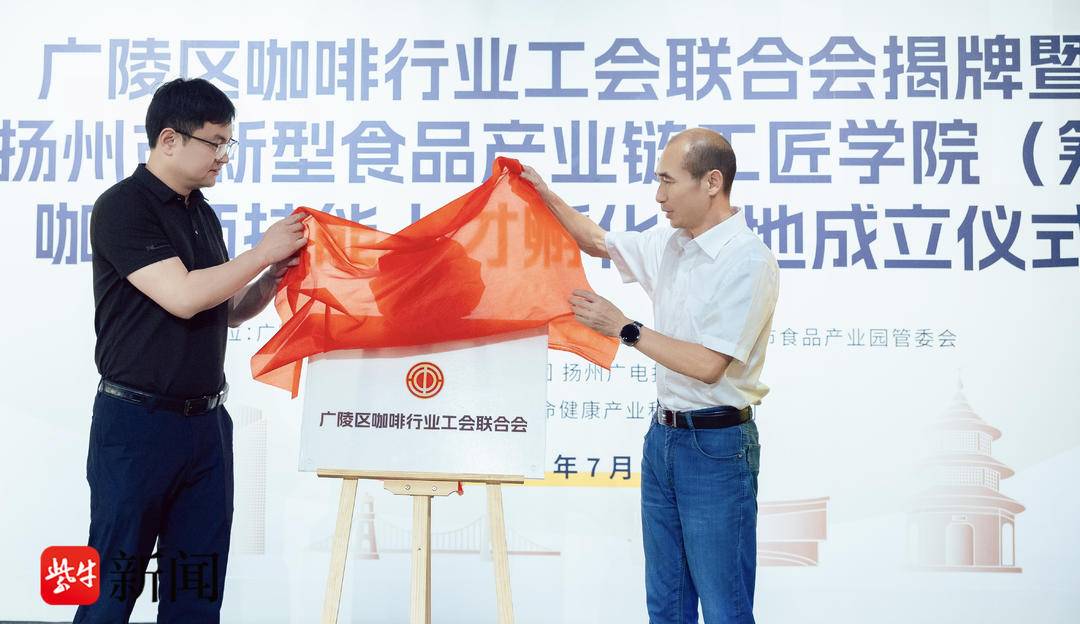
成立仪式 广陵,"世界美食之都"扬州的主城区,大大小小的咖啡店星罗棋布,从业人员和技能型人才集聚,咖啡产业发展迅速。打通产业链、培育好人才、提振消 费力,如何让"小咖啡"撬动"大经济",让匠心技艺赋能产业升级?扬子晚报/紫牛新闻记者11月7日在当地采访获悉,广陵区总工会找准助力咖啡产业发展 的着力点,通过成立行业工会联合会、搭建人才孵化基地、举办职业技能竞赛、构建权益保障体系等系列举措,探索出一条"人才+产业+IP"深度融合的产 业工会发展路径,推动咖啡行业产业健康快速发展。 自信展示 记者了解到,从小型独立咖啡馆到中型连锁咖啡品牌,再到大型咖啡工厂,广陵已形成大"咖"云集局面。位于广陵区食品产业园的中福生物技术有限公 司,其旗下"小满咖啡"成长为国内精品咖啡行业的标杆性品牌。近年来,广陵区举办了20余场次咖啡市集,吸引数十万名市民游客参与。今年7月,区总 工会联合区人社局、食品产业园管委会等单位组建广陵区咖啡行业工会联合,首批就有34家会员企业申请加入,151名会员代表共同为行业发声。上月, 区总工会和区人社局主办2025年广陵区"小满杯"咖啡师职业技能竞赛,对综合成绩排名前三的选手给予物质奖励;为理论与实 ...

(第八届进博会)外企话进博:中国超大规模市场兼具活力、潜力、创新力
Zhong Guo Xin Wen Wang· 2025-11-07 10:31
Group 1 - The China International Import Expo (CIIE) showcases China's vast consumer market, which is characterized by strong growth, vitality, and innovation, providing significant opportunities for global enterprises [1][2] - China has maintained its position as the world's second-largest import market for 16 consecutive years, with over 800 million people expected to join the middle-income group in the next decade, further releasing market potential [1] - Major companies, such as Johnson & Johnson and Amway, highlight their success in the Chinese market, with projections indicating that the medical device market could reach $140 billion by 2030, accounting for 20% of the global market [1][2] Group 2 - The CIIE introduces new themes like the "silver economy," with a significant elderly population of 310 million expected by the end of 2024, representing about 22% of the total population [2] - Companies like IKEA are designing products specifically for the elderly, demonstrating a focus on adapting to the needs of this demographic [2] - Edwards Lifesciences is targeting young patients in China, emphasizing the importance of early detection and treatment in healthcare innovation [2] Group 3 - The diverse consumer demands in China are driving continuous innovation across various industries, with companies like Philips and Rockwell Automation introducing tailored products for the Chinese market [3] - Schneider Electric views the Chinese market as a source of innovation and development, with China being its second-largest market and a key R&D hub [3] - Companies like Herbalife and Toshiba are leveraging the high acceptance of new products among Chinese consumers to foster innovation and adapt their offerings to local preferences [3]
#进博会里人手一杯的中国咖啡#
Jing Ji Guan Cha Wang· 2025-11-07 07:32
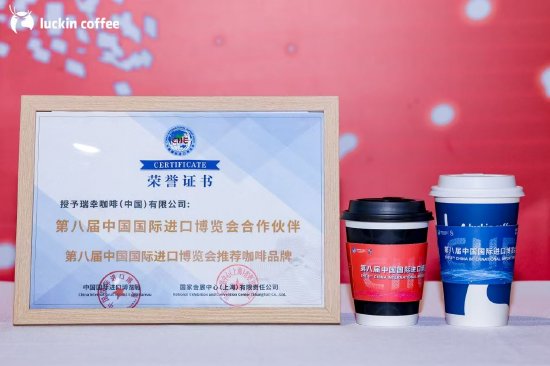
Core Insights - The 8th China International Import Expo (CIIE) opened on November 5 in Shanghai, showcasing a vibrant atmosphere with participants from around the world [1] - Luckin Coffee, recognized as a recommended coffee brand at the expo for the second time, is enhancing its global presence by providing high-quality coffee and establishing itself in various national pavilions [1] - The company signed a memorandum with Brazil for a coffee bean procurement worth billions, secured raw materials in Indonesia, and initiated support programs for coffee farmers, exemplifying a strategic global sourcing approach [1] - Luckin Coffee's internationalization reflects a trend where Chinese enterprises focus on collaborative capabilities across the supply chain, linking global resources with domestic consumption demands [1] Company Strategy - Luckin Coffee's global strategy includes establishing offices in coffee-producing regions and launching initiatives to support local farmers, which enhances its brand visibility and operational footprint [1] - The company's approach aligns with the theme of the expo, "New Era, Shared Future," indicating a shift in how Chinese brands engage in global economic cooperation [1] Industry Trends - The trend of dual empowerment in the industry is highlighted, where companies connect high-quality global resources with the growing domestic consumption needs, moving beyond mere product exports [1] - This strategy signifies a broader movement among Chinese brands to leverage their supply chain capabilities for international growth and market penetration [1]

星巴克中国的「新合伙人」,博裕资本是什么来头?
首席商业评论· 2025-11-07 04:11
Core Insights - Starbucks has announced a strategic partnership with Boyu Capital to jointly manage its retail business in China, aiming to increase the number of stores from 8,011 to 20,000 by the end of 2025 [4][16] - Boyu Capital will hold up to 60% of the joint venture, while Starbucks retains 40% and continues to own the brand and intellectual property [4][7] - The total value of Starbucks' retail business in China is projected to exceed $13 billion, which includes the value of the joint venture and ongoing licensing fees [7][17] Group 1: Boyu Capital Overview - Boyu Capital is defined as an "alternative asset management company," focusing on non-traditional assets such as private equity and venture capital [9] - Founded in 2011 by former executives from Ping An Group and TPG Capital, Boyu manages a fund size of $10 billion and has invested in over 200 companies [10] - The firm has made significant investments in the consumer retail sector, including acquiring a stake in Beijing SKP, a top luxury department store, and investing in various leading projects in the Chinese economy [10][9] Group 2: Starbucks' Strategic Shift - Starbucks' CEO, Brian Niccol, emphasized the need for a fundamental strategic change to restore growth in China, indicating a shift towards exploring long-term partnerships [11][14] - The partnership with Boyu Capital is seen as a way to leverage local market knowledge and reduce operational risks in a rapidly changing market environment [14][15] - Historically, Starbucks has utilized joint ventures and partnerships in various markets to adapt to local conditions and enhance operational efficiency [15] Group 3: Future Goals and Market Potential - Starbucks aims to expand aggressively in China, particularly in smaller cities and emerging regions, with the new partnership expected to accelerate this growth [17][16] - The coffee market in China remains competitive, with Luckin Coffee as a strong rival, boasting over 27,000 stores and aiming for 30,000 by year-end [7][4] - The strategic partnership marks a new chapter for Starbucks in China, transitioning from a focus on introducing coffee culture to capturing differentiated market segments [17]

出海案例分享:瑞幸“杀”入新加坡,但不靠9块9!
首席商业评论· 2025-11-07 04:11
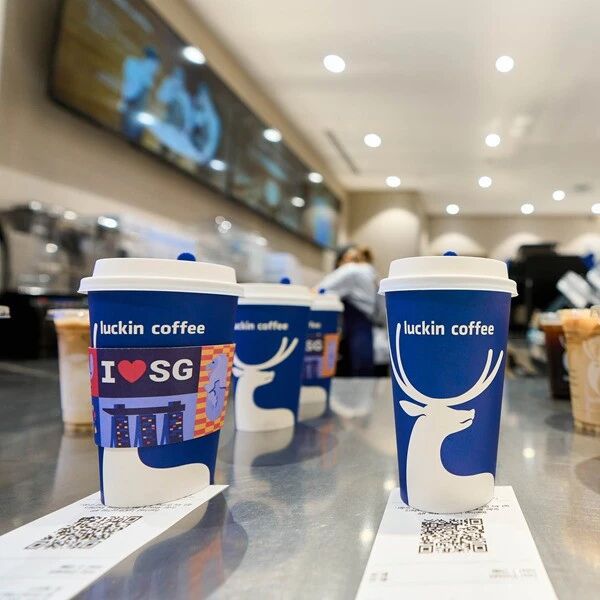
Core Insights - The article discusses Luckin Coffee's strategic expansion into Singapore, highlighting its departure from aggressive pricing strategies used in China to a more refined approach tailored to the new market [2][4]. Group 1: Market Context - In 2023, the Chinese retail and service industry is experiencing a surge in overseas expansion, with brands like Luckin Coffee, Heytea, and others aggressively entering Southeast Asia [4]. - Luckin Coffee holds nearly 40% of China's coffee supply chain, benefiting from significant economies of scale and an efficient supply chain, which provides a competitive cost advantage domestically [4]. Group 2: Strategic Framework - The "Strategic Compass" matrix indicates that when entering a high-attractiveness but high-difficulty market like Singapore, companies must choose between cost leadership and innovation leadership [7][9]. - Luckin Coffee opted for innovation leadership, avoiding a low-cost strategy that could harm its brand in a quality-focused market [7]. Group 3: Innovation Strategies - **Product Innovation**: Luckin introduced unique products like Coconut Latte and Velvet Latte, filling a gap in Singapore's coffee market where such offerings were previously unavailable [11]. - **Pricing Strategy**: The company adopted a smart pricing strategy, positioning its products 10-20% lower than Starbucks for common items while pricing unique offerings 10-20% higher, signaling quality without being perceived as cheap [14]. - **Marketing Approach**: Instead of traditional celebrity endorsements, Luckin leveraged user-generated content (UGC) to engage local consumers, focusing on social media interactions and community events [18][20]. Group 4: Lessons for Other Brands - Luckin's success in Singapore illustrates that domestic advantages can be restructured for higher profit margins abroad rather than relying on low pricing [22]. - The company demonstrates that innovation can create new market segments rather than competing directly with established players [22]. - The shift from expensive marketing strategies to cost-effective UGC approaches can resonate better with local consumers, maximizing impact while minimizing costs [22].
咖啡和空间,谁才是130亿美元星巴克中国的原点?
Xin Lang Cai Jing· 2025-11-07 03:36
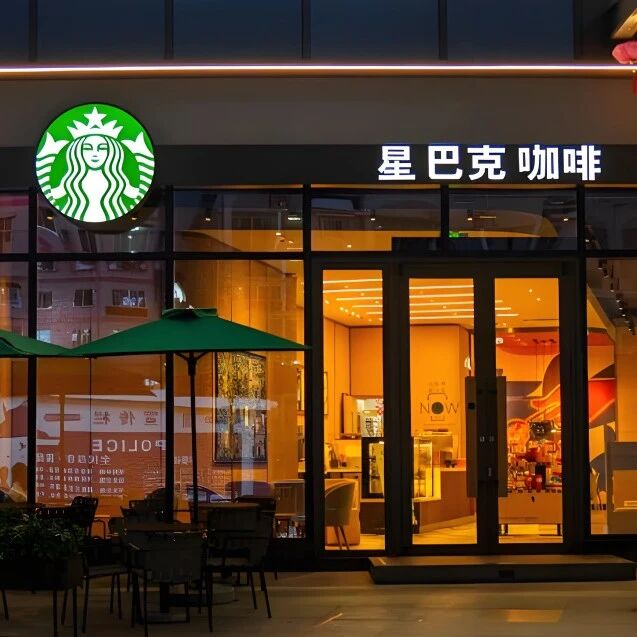
Core Insights - Starbucks has finalized a strategic partnership with Boyu Capital to establish a joint venture in China, with a valuation of $4 billion, where Boyu will hold up to 60% equity and Starbucks will retain 40% [1] - The average store valuation for Starbucks in China is approximately $500,000, significantly lower than the global average of $2.24 million, indicating underutilization of store value [1] - Starbucks aims to expand its store count in China to 20,000, with a projected retail business value exceeding $13 billion [4] Financial Performance - Starbucks China reported a revenue of $3.105 billion for the fiscal year 2025, a 5% year-on-year increase, with same-store sales growing by 2% [4] - Despite growth in same-store transactions by 9%, the average transaction value has declined for 12 consecutive quarters, with a 7% drop in Q4 2025 [5][9] - The overall same-store sales for fiscal year 2025 saw a 1% decline, attributed to a 5% decrease in average transaction value [9][10] Market Dynamics - The competitive landscape in China's coffee market has intensified, with local brands like Luckin and Manner outperforming Starbucks in product innovation and cost control [6][7] - Coffee has transitioned into a low-margin retail business in China, challenging Starbucks' traditional high-margin model [7][11] - The shift in consumer behavior towards affordable coffee options has diminished Starbucks' competitive edge in the coffee segment [12][13] Strategic Focus - Starbucks' core business model revolves around creating a "third space" experience, emphasizing the importance of store ambiance over just coffee sales [12][14] - The company is exploring new themes for its stores, such as community spaces focused on interests like pets and outdoor activities, to enhance customer engagement [16] - Starbucks needs to redefine its value proposition in high-tier cities, where consumer perception of its space and experience has weakened [15][17]

瑞幸咖啡入驻2025年进博会多个国家馆,与世界共享中国咖啡产业发展机遇
IPO早知道· 2025-11-07 02:07
Core Viewpoint - The article highlights the significant role of the China International Import Expo (CIIE) in linking global coffee production areas with the Chinese market, showcasing the growth of coffee consumption in China and the proactive strategies of Chinese coffee brands like Luckin Coffee to enhance international trade and cultural exchange [2][4][10]. Group 1: CIIE and Global Coffee Trade - The 8th CIIE commenced on November 5 in Shanghai, featuring Luckin Coffee as a recommended coffee brand, which is actively participating in global coffee trade and cultural cooperation [2]. - China's coffee consumption has seen an annual growth rate of 21% since the 2010-2011 coffee year, significantly outpacing the global average of 1.8%, positioning China as a potential leading coffee market [4]. - Ethiopia's coffee authority reported that China has become the fourth-largest importer of Ethiopian coffee, up from seventh place in the previous two years, indicating a shift in global coffee consumption dynamics [4]. Group 2: Luckin Coffee's Strategic Initiatives - Luckin Coffee has established a procurement memorandum with Brazil for 240,000 tons of coffee beans valued at 10 billion yuan over five years, becoming the largest buyer of Brazilian coffee beans in China, accounting for approximately 60% of Brazil's coffee exports to China in 2024 [6]. - The company is also expanding its supply chain by setting up a "Luckin Coffee Exclusive Coconut Island" in Indonesia, planning to procure 1 million tons of high-standard coconuts over the next five years [6]. - Luckin Coffee is investing in local coffee production in Yunnan, establishing a processing plant and providing training to local farmers, which is expected to boost sustainable development in the domestic coffee industry [6]. Group 3: Cultural Exchange and Community Building - Luckin Coffee is committed to promoting coffee culture exchange, having hosted two Brazilian coffee culture festivals in 2024 and establishing Brazilian coffee-themed stores and museums [7]. - The company aims to create a "value community" through various origin-themed activities, leveraging its 26,000 stores to connect consumers with coffee-producing regions [7]. - These initiatives align with China's "14th Five-Year Plan" to share opportunities and foster mutual development with countries worldwide, enhancing the global coffee industry's collaboration [10].
30强城市三季报出炉,这3个城市今年将冲击万亿GDP;马斯克近万亿美元薪酬分12批发放,每解锁一批约获1%股权;英国国王签署诏书,正式剥夺安德鲁王子头衔|早报
Di Yi Cai Jing· 2025-11-07 00:13
Group 1 - Three cities in China are expected to surpass a GDP of 1 trillion yuan this year, namely Wenzhou, Xuzhou, and Dalian, following the release of the third-quarter GDP data [2] - Wuxi achieved a GDP of 11,885.74 billion yuan in the first three quarters, marking a year-on-year growth of 5.0% [2] Group 2 - Elon Musk's compensation plan includes 12 tranches of stock, potentially increasing his ownership in Tesla from approximately 13% to 25% if all performance targets are met [3] - Tesla's current market value is around 1.5 trillion dollars, and Musk can unlock stock options if the company's valuation reaches 2 trillion dollars and sales hit 11.5 million vehicles [3] Group 3 - The Chinese Ministry of Commerce stated that China's accession to the Comprehensive and Progressive Agreement for Trans-Pacific Partnership (CPTPP) will bring economic benefits to member regions and globally [5] - The Ministry is analyzing the macroeconomic impact of China's potential membership, indicating a win-win scenario for all parties involved [5] Group 4 - The National Medical Insurance Administration is launching a pilot program for intelligent review processes in medical insurance, integrating AI technology to enhance efficiency [6] - The initiative aims to standardize review processes across regions by developing a universal knowledge and rules database [6] Group 5 - The Shanghai Gold Jewelry Industry Association is emphasizing the implementation of new tax policies related to gold, urging members to comply with regulations and improve product quality [7] - The association aims to ensure stable market development while adhering to the new tax guidelines [7] Group 6 - Shenzhen is promoting collaboration between the Shenzhen Stock Exchange and major exchanges in countries where sovereign funds are based, aiming to enhance cross-border investment mechanisms [8] - The initiative includes support for sovereign funds to establish offices in Shenzhen and participate in local investment trials [8] Group 7 - The Ordos Municipal Health Commission announced a new child-rearing subsidy policy, providing an annual subsidy of 10,000 yuan for families with a third child, exceeding the national standard [9] - The policy aims to encourage higher birth rates by offering financial support to families [9] Group 8 - Starbucks has entered a strategic partnership with Boyu Capital, marking the first time the company has relinquished control of its core business in China [25] - The joint venture will see Boyu holding up to 60% of the new entity, reflecting the competitive landscape and strategic challenges faced by international coffee brands in the Chinese market [25]
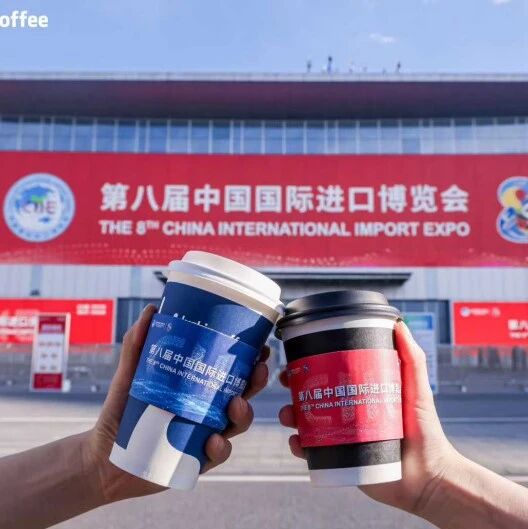
瑞幸咖啡亮相进博会,入驻巴西等多个国家馆
Xin Lang Cai Jing· 2025-11-06 15:18
今年3月,瑞幸携手合作伙伴在印尼设立"瑞幸咖啡专属生椰岛",计划未来5年采购100万吨高标准生 椰,给当地椰农带来稳定可预期的经济保障。同时瑞幸深耕本土,2024年在云南落成首个咖啡鲜果处理 加工厂,并以工厂为基地,面向当地咖农开展咖啡种植、加工等相关培训。瑞幸在云南产区的咖啡豆采 购量呈快速上升趋势,在2023年后意式拼配咖啡豆和咖啡鲜果采购增长显著。 2024年至今,瑞幸举办了两届巴西咖啡文化节,并持续落地巴西咖啡主题店、巴西咖啡博物馆。今年瑞 幸还打造了各类原产地主题活动,推动消费与产地深度连接。 责任编辑:何俊熹 11月6日,近日第八届中国国际进口博览会在上海开幕。作为"进博会推荐咖啡品牌",瑞幸咖啡入驻巴 西、印度尼西亚等多个国家馆,携手全球核心产区呈现咖啡经贸与文化合作成果。 过去几年,以瑞幸为代表的中国本土咖啡品牌持续加大供应链和上游原产地布局。例如2024年11月,瑞 幸与巴西签订五年24万吨、价值100亿元的咖啡豆采购备忘录。目前,瑞幸已成为巴西咖啡豆在中国的 最大买家,仅2024年瑞幸采购就占到整个巴西出口中国咖啡豆的60%左右。 ...
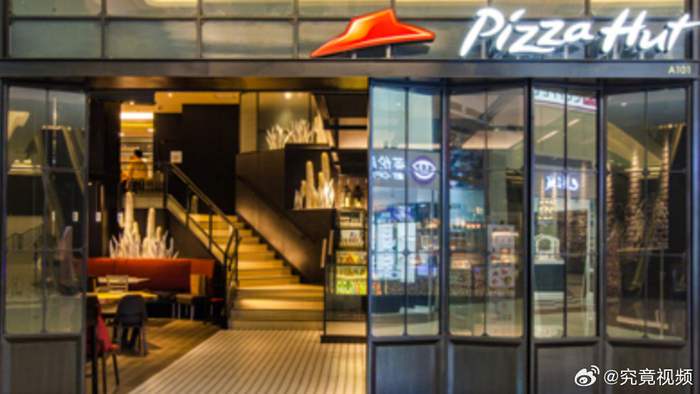
百胜中国回应必胜客出售评估,称不影响中国市场运营
Cai Jing Wang· 2025-11-06 12:55
Core Viewpoint - Yum Brands has initiated a strategic review of the Pizza Hut brand, including a potential sale, but this will not affect Pizza Hut's operations in China, which continues to show strong growth [1] Group 1: Company Performance - Yum China reported a total revenue of $3.2 billion for Q3 2025, representing a year-on-year increase of 4% [1] - The net profit attributable to the parent company for Q3 2025 was $282 million, a decrease of 5% year-on-year [1] - The company added a record 536 new stores in Q3 2025, with 32% of these being franchise stores [1] - As of September 30, 2025, Yum China operates a total of 17,514 stores, including 12,640 KFC locations and 4,022 Pizza Hut locations [1] Group 2: Market Position - Yum China operates KFC, Pizza Hut, and Taco Bell exclusively in mainland China, along with other brands such as Little Sheep hot pot and Huang Ji Huang stewed pot [2]