汽车

Search documents
地缘冲突扰动供应链,内需与通胀走势分化:申万期货早间评论-20260312
申银万国期货研究· 2026-03-12 00:34
Core Viewpoint - Geopolitical tensions are disrupting global supply chains, with the Red Sea crisis affecting shipping operations and domestic demand for automobiles showing signs of pressure, indicating challenges for economic recovery [1] Group 1: Geopolitical and Economic Impact - The Red Sea crisis has led to over a hundred ships being blocked, significantly impacting global trade [1] - Recent attacks in the Strait of Hormuz highlight the escalating regional risks, despite signals of de-escalation from the U.S. [1] - Domestic automobile production and sales have declined year-on-year and month-on-month, reflecting ongoing pressures on internal demand [1] - The U.S. core CPI remains stable, providing room for potential adjustments in monetary policy [1] Group 2: Commodity and Market Analysis - Oil prices saw a 7% increase in the SC night market, influenced by the IEA's announcement to release 400 million barrels from strategic reserves [2][12] - The G7 energy ministers did not reach an agreement on releasing strategic oil reserves, opting for a situation assessment first [2] - U.S. crude oil inventories decreased by 1.7 million barrels as of the week ending March 6, 2026 [13] - The European shipping index (EC) rose by 7.15%, with Maersk maintaining pricing despite seasonal demand challenges [3] - The Dow Jones index experienced a pullback, with market dynamics shifting from "expectation-driven" to "profit-driven" as companies begin to disclose annual and quarterly reports [10] Group 3: Sector-Specific Insights - The automotive sector reported a significant drop in production and sales, with February figures showing a 31.7% and 23.1% decline month-on-month, respectively [7] - The domestic methanol production capacity is under pressure, with a decrease in operational load due to maintenance activities [14] - The rubber market is experiencing a rebound due to seasonal low production, with supply constraints expected to persist until May [15] - The aluminum market is facing supply risks due to ongoing geopolitical tensions, particularly affecting production in the Middle East [22] Group 4: Financial Market Trends - The financing balance in the stock market increased by 9.773 billion yuan, indicating a shift towards sectors with strong earnings potential [10] - The bond market saw a slight decline, with the 10-year treasury yield rising to 1.8175% amid heightened global risk aversion [11] - The overall market sentiment is expected to remain cautious, with a focus on domestic fundamentals and policy adjustments in response to geopolitical developments [10][11]


特朗普:美国对伊朗军事行动“即将结束”……盘前重要消息还有这些
证券时报· 2026-03-12 00:18
Key Points - The People's Bank of China held a meeting focusing on technology work for 2026, emphasizing risk prevention, strong regulation, and high-quality development [2] - The automotive industry saw a significant decline in production and sales in February, with total vehicle production down 31.7% month-on-month and 20.5% year-on-year, while new energy vehicle sales accounted for 42.4% of total new car sales [2] - The International Energy Agency recommended releasing 400 million barrels of strategic oil reserves to alleviate international oil supply tensions [3] - The U.S. Labor Department reported a 2.4% year-on-year increase in the Consumer Price Index (CPI) for February, with core CPI rising 2.5% [3] Company News - Huari Precision announced a price increase for all product lines due to rapidly rising raw material costs [5] - Dingxin Communications is gradually recovering from a market entry ban by State Grid and Southern Power Grid, but bidding processes will take time to resume [6] - New Guodu plans to establish a subsidiary focused on next-generation smart hardware [7] - Anhui Weihe High-tech intends to raise up to 3 billion yuan from its controlling shareholder for projects related to polyvinyl alcohol resin [8] - New Dairy is planning to issue H-shares and list on the Hong Kong Stock Exchange [9] - Fuliwang expects a year-on-year increase of 183.84% to 254.81% in net profit attributable to shareholders for Q1 2026 [10] - Putailai plans to invest $297 million in a production base for negative electrode materials in Malaysia [11]

美国启动大规模301调查,剑指全球制造业“产能过剩”
制裁名单· 2026-03-11 23:41
Core Viewpoint - The U.S. Trade Representative (USTR) has officially launched a "Section 301" investigation targeting 16 major economies, focusing on the issue of "structural overcapacity" in the manufacturing sector, indicating a shift in U.S. trade policy from a country-specific approach to a global industrial competition perspective [1][6]. Investigation Scope - The investigation will cover major manufacturing centers globally, examining whether the practices of the involved economies are "unreasonable or discriminatory" and impose burdens on U.S. businesses [2]. - The economies included in the investigation are: - Asia: China, Japan, South Korea, India, Vietnam, Thailand, Indonesia, Malaysia, Cambodia, Bangladesh, Singapore, and Taiwan [3]. - Europe: European Union, Switzerland, Norway [4]. - North America: Mexico [5]. Core Allegations - The USTR claims that foreign economies exhibit "structural overcapacity and production surplus" in manufacturing, which poses significant challenges to U.S. re-industrialization efforts. This overcapacity is said to crowd out U.S. domestic production and hinder potential investments in U.S. manufacturing [6]. Legal Procedures - Following the initiation of the investigation, the USTR is required to engage in consultations with the governments of the investigated economies. The USTR has formally requested dialogue with the 16 economies [8]. - A public comment period will begin on March 17, 2026, with a deadline for submissions by April 15, 2026. Public hearings are scheduled to start on May 5, 2026 [9][10][11]. Background and Impact - The "Section 301" is a unilateral retaliatory tool in U.S. trade law, allowing the USTR to impose tariffs or import restrictions if foreign trade practices are deemed "unfair." The initiation of this investigation comes after the U.S. Supreme Court recently struck down certain tariffs imposed under the International Emergency Economic Powers Act, prompting the government to seek alternative legal tools to maintain trade pressure [12]. - Analysts suggest that focusing on "overcapacity" indicates a shift in U.S. trade disputes from traditional anti-dumping and countervailing duties to a broader industrial policy and market competition perspective, potentially leading to high tariffs on specific industrial goods from the investigated economies, thereby escalating global trade tensions [12].

特朗普将动用能源储备!甲骨文涨超9%,原油V型反转,白银跌超4%
第一财经· 2026-03-11 23:17
Market Overview - The US stock market showed mixed results, with the Dow Jones Industrial Average falling by 289.24 points (0.61%) to close at 47,417.27 points, while the Nasdaq Composite Index slightly increased by 0.08% to 22,716.13 points [3] - The S&P 500 Index experienced a minor decline of 0.08%, closing at 6,775.80 points [3] Individual Stock Performance - Oracle's stock rose by 9.2% after reporting an increase in adjusted earnings and revenue for Q3, along with a positive outlook for Q4 [4] - Tesla's stock increased by 2.15%, with a reported delivery of 58,600 units from its Shanghai Gigafactory in February 2026, marking a 91% year-over-year growth [4] - Other tech stocks had mixed performances, with Nvidia up by 0.66%, Google by 0.49%, and Facebook by 0.12%, while Apple, Microsoft, and Amazon saw declines [4][5] Private Credit Sector - The private credit industry is under pressure as JPMorgan downgraded the valuations of certain loans held by private credit firms and tightened lending to the sector, leading to declines in Ares Management (down 4.8%) and Apollo Global Management (down 1.9%) [5] Economic Data - The US Consumer Price Index (CPI) for February rose by 0.3% month-over-month, up from 0.2% in the previous month, with a year-over-year increase of 2.4%, aligning with market expectations [6] - Core CPI, excluding food and energy, increased by 0.2% month-over-month, down from 0.3% in the prior month [6] Oil Market Dynamics - Despite the International Energy Agency's announcement to release 400 million barrels of oil reserves, oil prices continued to rise, with WTI crude futures up 4.6% to $87.25 per barrel and Brent crude futures up approximately 4.8% to $91.98 per barrel [10] - The geopolitical situation, particularly the conflict involving Iran, has significantly impacted oil prices, with President Trump announcing the use of the US Strategic Petroleum Reserve to mitigate price surges [9][10] Investor Sentiment - Investors are cautious due to the uncertain geopolitical environment and rising oil prices, which could affect consumer spending and inflation [7] - Market expectations suggest that the Federal Reserve will maintain key interest rates in the upcoming policy meeting, balancing inflation concerns with signs of a slowing job market [7]

【早报】特朗普:对伊朗军事行动“即将结束”;七国集团:原则上支持必要时动用战略储备稳定能源市场
财联社· 2026-03-11 23:10
Industry News - The National Supercomputing Internet announced a limited-time distribution of 10 million Tokens to each OpenClaw user, with a purchase price of 0.1 yuan per million Tokens, reflecting a decrease compared to market average prices [6][10] - A total of 15 brokerage firms have issued internal compliance reminders regarding the use of OpenClaw, prohibiting its installation and use in office networks without prior approval [6][10] - The China Association of Automobile Manufacturers reported that in February, the production and sales of new energy vehicles reached 694,000 and 765,000 units respectively, marking year-on-year declines of 21.8% and 14.2%, with new energy vehicle sales accounting for 42.4% of total new car sales [10] - The Ministry of Industry and Information Technology released recommendations to prevent security risks associated with OpenClaw, emphasizing the use of the latest official version and strict control over internet exposure [10] Company News - Shengke Communication announced that the National Integrated Circuit Industry Investment Fund has reduced its stake in the company by 1% [11] - Sanan Optoelectronics stated on an interactive platform that its Micro LED light source devices have been sent to leading domestic and international companies for module assembly verification [12] - Highgreat announced that its shareholder UnionPay Technology plans to reduce its stake by up to 2.43% [12] - Jinkai Biotechnology reported that shareholders Qilu Investment and Qingsong Investment have collectively reduced their stake by 2.63% [13] - Putailai announced plans to invest 2.051 billion yuan to build a negative electrode material production base in Malaysia [13] - Runtu Co. reported that the price of disperse dye black has recently increased by approximately 24,000 yuan per ton, with current prices around 40,000 yuan per ton [14] - Shiyun Circuit stated that its commercial aerospace-related PCB products are in the research and sampling stage and have not yet entered mass production [15] - Zhejiang Rongtai announced a project change from "7 million sets of robot component production" to "annual production of 7 million sets of industrial wire rods" to meet business layout needs and regulatory requirements [15] - Dingxin Communication announced that the market entry ban period imposed by the State Grid and Southern Power Grid has expired, but the recovery of bidding processes will take time [16] Global Market - The three major U.S. stock indices closed mixed, with the Dow Jones down 0.61%, the Nasdaq up 0.08%, and the S&P 500 down 0.08% [17] - International oil prices rose, with WTI April crude futures closing at $87.25 per barrel, an increase of 4.55%, and Brent May crude futures closing at $91.98 per barrel, an increase of 4.76% [18]


陆家嘴财经早餐2026年3月12日星期四
Wind万得· 2026-03-11 22:49
Group 1 - The National Committee of the Chinese People's Political Consultative Conference successfully completed its agenda, with the 14th National People's Congress closing on March 12 [3] - The International Energy Agency (IEA) agreed to release 400 million barrels of strategic oil reserves, marking the largest coordinated release in its history to address energy supply risks due to the Iran conflict [4] - The Chinese yuan continues to strengthen, with the central parity rate against the US dollar reaching a nearly three-year high [4] Group 2 - The financial regulatory authority reported that as of the end of January, the balance of inclusive loans to small and micro enterprises in China reached 37.6 trillion yuan, a year-on-year increase of 11.4%, outpacing the growth rate of other loans by 5.4 percentage points [6] - The recent surge in interest in "shrimp farming" has led the Ministry of Industry and Information Technology to issue safety risk prevention recommendations [5] Group 3 - The stock market showed mixed results, with the Shanghai Composite Index rising by 0.25% and the Shenzhen Component Index increasing by 0.78%, while the Hang Seng Index fell by 0.24% [7] - The AI industry is experiencing a shift in focus, with significant opportunities emerging in the AI application landscape, particularly in computing infrastructure and hardware [8] Group 4 - Nvidia launched the new open-source model Nemotron 3 Super, designed for enterprise-level multi-agent systems, significantly enhancing processing capabilities [13] - The semiconductor market is undergoing transformative changes driven by AI and digital economy advancements, with projections for a trillion-dollar market size potentially being reached by 2026 [11]

中汽协:2月我国汽车出口同比大增52.4%;比亚迪正式加入国际汽车工作组 | 汽车早参
Mei Ri Jing Ji Xin Wen· 2026-03-11 22:36
Group 1: Automotive Exports - In February, China's automobile exports reached 672,000 units, representing a year-on-year increase of 52.4% but a month-on-month decrease of 1.4% [1] - Chery was the top exporter among the top ten companies, exporting 124,000 units, which is a 44.1% increase year-on-year, accounting for 18.5% of total exports [1] - Tesla showed significant growth in exports, reaching 20,000 units, which is a year-on-year increase of 420% [1] Group 2: Used Car Market - In January, the national used car transaction volume was 1.73 million units, showing a year-on-year increase of 18% but a month-on-month decrease of 8% [2] - The transaction value for used cars was 110.6 billion yuan, reflecting a year-on-year growth of 14.8% [2] - The used new energy vehicle market saw a transaction volume of 158,000 units, with a year-on-year increase of 74% and a penetration rate of 12.2% [2] Group 3: International Standards - BYD has officially joined the International Automotive Task Force (IATF), collaborating with global automotive giants like Volkswagen and General Motors to participate in the formulation of international core standards [3] - This move signifies a significant step for Chinese automotive companies in the realm of international standards [3] Group 4: Next-Generation Aircraft - The U.S. Department of Transportation and the Federal Aviation Administration announced a pilot program for advanced air mobility and electric vertical takeoff and landing aircraft in 26 states [4] - The initiative aims to accelerate the safe integration of next-generation aircraft into the U.S. national airspace system and provide data for future regulatory frameworks [4] - Potential applications for these aircraft include personal travel, regional transportation, cargo delivery, and emergency medical services [4]

3月12日美股成交额前20:英伟达推出开源模型Nemotron 3 Super
Xin Lang Cai Jing· 2026-03-11 20:57
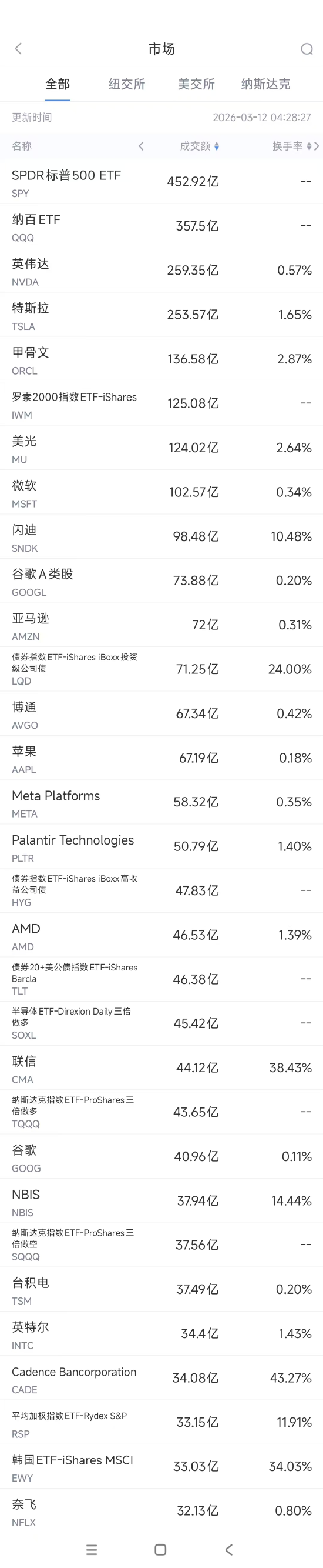
Group 1: Nvidia - Nvidia's stock rose by 0.66% with a trading volume of $25.935 billion, following the launch of the Nemotron 3 Super, an open-source model with 120 billion parameters [1][10] - The Nemotron 3 Super model is optimized for the Blackwell architecture, achieving throughput up to five times that of its predecessor and doubling accuracy [1][10] - The model aims to address high costs associated with "Long Thinking" and "Context Explosion," which have previously hindered the workflow speed of Autonomous Agents [1][10] - Currently, the model supports Google Cloud and Oracle, with upcoming support for Amazon AWS and Microsoft Azure [1][10] Group 2: Tesla - Tesla's stock increased by 2.15% with a trading volume of $25.357 billion, reporting a significant increase in electric vehicle sales in China [1][11] - In February, Tesla sold 58,600 Model 3 and Model Y vehicles produced at its Shanghai factory, marking a 91% year-over-year increase [2][11] - Despite the year-over-year growth, February sales decreased by 15.2% compared to January, influenced by seasonal factors and production disruptions during the Lunar New Year [2][11] Group 3: Oracle - Oracle's stock rose by 9.18% with a trading volume of $13.658 billion, exceeding analyst expectations with $17.2 billion in revenue for Q3 of fiscal year 2026, a 22% year-over-year increase [3][12] - The adjusted earnings per share for Oracle were reported at $1.79, surpassing the expected $1.23 [3][12] - Oracle's remaining performance obligations reached $553 billion, a 325% increase year-over-year, driven by growing demand for AI computing [3][12] Group 4: Micron Technology - Micron's stock increased by 3.86% with a trading volume of $12.402 billion, as Applied Materials announced a partnership to develop next-generation chips critical for AI and high-performance computing [4][13] - The partnership will focus on advancing DRAM, high-bandwidth memory, and NAND technologies, with an investment of $5 billion planned for semiconductor equipment research and development [4][13] Group 5: Nebius - Nebius's stock surged by 16.14% with a trading volume of $3.794 billion, following Nvidia's announcement of a $2 billion investment to develop AI data centers [5][14] - The partnership aims to deploy over 5 gigawatts of Nvidia systems by the end of 2030, sufficient to power approximately 3.8 million households [5][14] - The collaboration will enhance Nebius's existing infrastructure and support the adoption of the latest generation of chips [5][14] Group 6: SanDisk - SanDisk's stock rose by 5.90% with a trading volume of $9.848 billion, as the storage sector continues to thrive amid a "storage super-cycle" [4][13] - Recent supply chain research indicates minimal impact from geopolitical conflicts on the storage industry, with a bullish outlook from fund managers [4][13]


国内高频 | 节后复工偏慢(申万宏观·赵伟团队)
赵伟宏观探索· 2026-03-11 16:03
Group 1: Industrial Production Trends - The industrial production shows weakness, with a decrease in blast furnace operating rates by 2.5% week-on-week and a year-on-year decline of 2.5 percentage points to -0.3% [2][5] - Steel apparent consumption has improved, increasing by 4.4% week-on-week and rising by 10.6 percentage points year-on-year to 4.2% [2][8] - Steel social inventory continues to rise, with an increase of 8.3% week-on-week [2] Group 2: Petrochemical and Construction Industry - In the petrochemical sector, the operating rate of soda ash has increased by 1.7% week-on-week and by 2.5 percentage points year-on-year to -0.5% [12] - The operating rate of PTA has risen by 6.1% week-on-week and by 4.8 percentage points year-on-year to -2.8% [12] - In contrast, the operating rate of polyester filament has decreased by 1.1 percentage points year-on-year to -2.4% [12] - In the construction industry, cement production and demand are showing signs of recovery, with a grinding operating rate increasing by 14.7% week-on-week and a year-on-year increase of 1.5 percentage points to 4.9% [20] - Cement shipment rates have decreased by 0.3 percentage points year-on-year to 3.6% [20] Group 3: Demand and Consumption Trends - The average daily transaction area of commercial housing in 30 major cities has decreased year-on-year to 9.7%, with first, second, and third-tier cities seeing declines of 6.9%, 21.7%, and -13.9% respectively [43] - The freight volume related to domestic demand has increased, with railway freight volume rising by 2.1 percentage points year-on-year to 3.1% and highway freight vehicle traffic increasing by 20.2 percentage points to 26% [54] - Port cargo throughput has also increased year-on-year by 23.4 percentage points to 25.5% [54] Group 4: Price Trends in Agricultural Products - Agricultural product prices are showing a mixed trend, with vegetable and fruit prices decreasing by 3.9% and 0.6% respectively, while egg prices have increased by 1.1% [94] - The industrial product price index has risen by 5.0% week-on-week, with the energy and chemical price index increasing by 8.7% [107] Group 5: Export and Shipping Trends - The CCFI composite index has increased by 0.9% week-on-week, with significant rises in Southeast Asia shipping rates by 6.8% [84] - The BDI shipping rate has decreased by 6.1% [84]

获英伟达20亿美元投资,这只股票暴涨16%!甲骨文大反弹,涨幅14%;理想汽车涨超4%,黄金白银急跌,油价巨震|美股开盘
Mei Ri Jing Ji Xin Wen· 2026-03-11 14:17
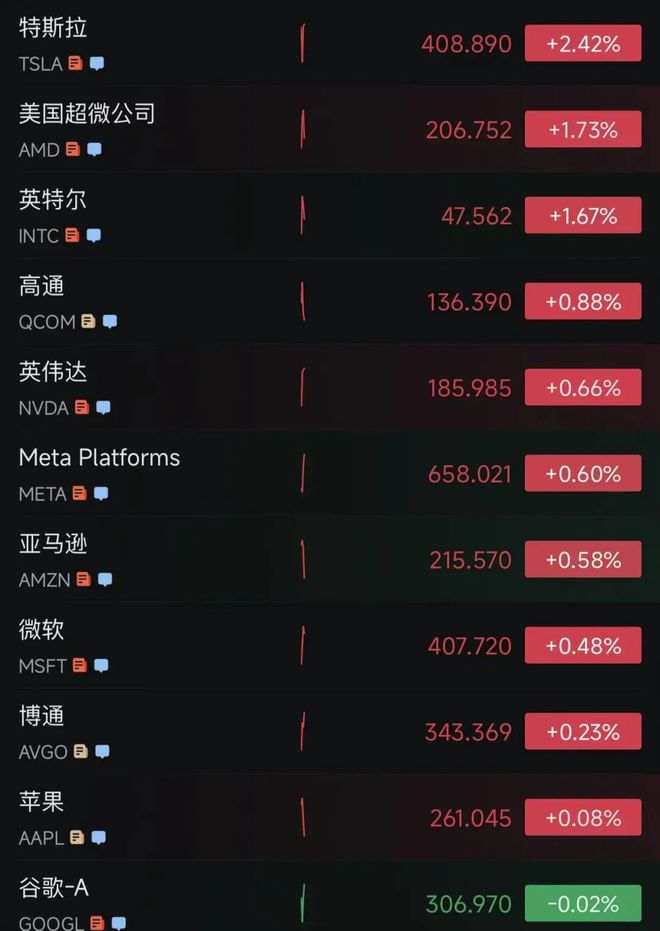
Market Overview - US stock indices showed mixed performance at the opening, with the Dow Jones down 0.16%, Nasdaq up 0.3%, and S&P 500 up 0.13% [1] - By the time of reporting, the Dow Jones had decreased by 0.67%, while the Nasdaq rose by 0.16%, and the S&P 500 fell by 0.1% [1] - A total of 1789 stocks advanced, while 3195 stocks declined [1] Notable Stock Movements - Tesla shares increased by 2.42%, closing at $408.89 [2] - Advanced Micro Devices (AMD) rose by 1.73%, closing at $206.75 [2] - Intel shares gained 1.67%, closing at $47.56 [2] - Oracle Corporation's stock surged over 14% after reporting strong quarterly results and raising its revenue forecast for fiscal year 2027, with adjusted earnings per share of $1.79 against an expectation of $1.70, and revenue of $17.19 billion, a 22% year-over-year increase [2] Chinese Stocks Performance - The Nasdaq China Golden Dragon Index fell by 0.25%, with most popular Chinese stocks declining [7] - Li Auto shares rose by 4.56%, closing at $18.57 [8] Commodity Market - Gold and silver prices experienced a pullback, with spot gold dropping to $5173.67 per ounce, down 0.32% [10] - Spot silver fell by 3.46%, trading at $85.28 per ounce [10] Inflation and Oil Prices - The US Consumer Price Index (CPI) for February rose by 2.4% year-over-year, with core CPI increasing by 2.5% [13] - WTI crude oil prices saw significant volatility, initially rising over 6% before narrowing to a 2.58% increase [13] - The G7 energy ministers expressed support for measures to address the current energy situation, including the potential use of strategic energy reserves [16]