
锂电

Search documents
碳酸锂期货价格猛涨:一场偏离实体需求的危险游戏?
中国能源报· 2026-01-12 02:54
Core Viewpoint - The recent surge in lithium carbonate prices raises questions about whether it reflects genuine demand in the industry or is driven by speculative capital and potential risks, indicating a distortion of price signals and risk transfer within the lithium battery supply chain [3]. Group 1: Market Dynamics - As of January 7, 2026, lithium carbonate futures prices reached 145,000 yuan/ton, with spot market prices also rising sharply, surpassing 120,000 yuan/ton and 130,000 yuan/ton, indicating a continued upward trend since last year [3]. - By December 2025, the capital in the lithium carbonate futures market approached 30 billion yuan, ranking fourth among commodity futures, with speculative funds accounting for 52% of the total, highlighting a market driven more by profit-seeking than risk hedging [5]. - The disparity between futures and spot prices has widened, with futures prices trading at a discount to spot prices, indicating a detachment from the underlying supply-demand fundamentals [5]. Group 2: Supply Chain Insights - Downstream enterprises report that current transactions are primarily driven by essential needs, with no significant stockpiling behavior observed, contrasting sharply with the heated futures market [6]. - The surge in futures prices has led to increased import prices for lithium concentrate, which rose from 617 USD/ton in June 2025 to 1,400 USD/ton by December, a 127% increase, forcing lithium salt manufacturers to pass on costs to downstream products [8]. - The actual global lithium resource situation is not one of scarcity, but rather a structural contradiction in the supply chain, with significant resources concentrated in specific regions, leading to high raw material costs for domestic industries [9]. Group 3: Industry Trends and Predictions - Experts note that while there have been significant changes in the lithium carbonate industry since 2025, the long-term supply-demand balance remains loose, with predictions indicating a slight surplus in 2025 [11]. - Domestic companies are actively expanding production capacity, with new projects being launched, such as a 450,000-ton phosphoric acid lithium project and a 30,000-ton high-purity lithium salt project [12]. - The real issue in the market is not an overall surplus but a structural tension in high-quality battery-grade capacity, with speculation distorting the perception of a general shortage [12]. Group 4: Regulatory Actions and Market Stability - The speculative nature of the market poses significant risks to the health of the industry, leading to distorted business operations and potential over-investment in low-quality capacities [15]. - Regulatory bodies have begun implementing measures to curb excessive speculation, including increasing transaction costs and limiting trading volumes to stabilize the market [15]. - The National Development and Reform Commission has emphasized the need to regulate the lithium battery industry and guide capital back to rationality, ensuring that pricing power remains aligned with fundamental industry conditions [16].


国信证券晨会纪要-20260112
Guoxin Securities· 2026-01-12 01:36
Macro and Strategy - The global commodity market has entered a structural uptrend since the end of 2025, with industrial and precious metals leading the rise, driven by geopolitical uncertainties and a shift in global economic structure [7][8] - The demand for computing power is driving a divergence in commodity prices, with significant increases in copper and oil ratios indicating a new economic growth model centered around "computing power + electricity" [7][8] - The macroeconomic indicators show a recovery in China's economy, with December's manufacturing PMI returning above the expansion threshold, indicating effective policy support [10][11] Industry and Company - The AIDC power equipment sector is expected to benefit from the surge in data center construction, with major tech companies accelerating their investments in AI data centers [26][27] - The solid-state battery industry is experiencing rapid industrialization, with significant improvements in profitability expected for lithium battery companies in 2026 due to ongoing demand for energy storage [26][30] - The global energy storage demand is projected to reach 404 GWh in 2026, a year-on-year increase of 38%, driven by market demand and supportive government policies [28] - Wind power equipment manufacturers are expected to see improved profitability in 2026, with domestic installations projected to grow by 10%-20% [28] - The electric grid equipment sector is anticipated to experience increased demand, particularly with the acceleration of ultra-high voltage approvals and the introduction of new smart meter standards [29]
华泰期货碳酸锂周报:价格再创新高,年底关注回调风险
Xin Lang Cai Jing· 2026-01-12 01:29
Price Trends - The main contract for lithium carbonate showed a "strong surge + high-level fluctuation" this week, with a weekly increase of approximately 17.96%, reaching a peak of 148,500 CNY/ton before closing at 143,420 CNY/ton [2][8] - The domestic industrial-grade lithium carbonate market had a transaction price range of 135,000-141,000 CNY/ton, with an average price of 138,000 CNY/ton, up 17.95% from last week [2][8] - The battery-grade lithium carbonate market had a transaction price range of 137,000-143,000 CNY/ton, with an average price of 140,000 CNY/ton, up 17.65% from last week [2][8] Supply Side - Lithium carbonate production maintained slight growth this week, with a total weekly output of 22,535 tons, compared to 22,420 tons last week [2][8] - The production breakdown includes spodumene lithium carbonate at 13,959 tons, mica at 2,956 tons, salt lake at 3,185 tons, and recycled lithium carbonate at 3,185 tons, all showing minor increases from the previous week [2][8] Demand Side - According to Baichuan data, lithium iron phosphate production increased by 18.26% month-on-month, while ternary materials decreased by 7.86% [3][9] - Demand in the energy storage sector remains strong, although some lithium iron phosphate and hexafluorophosphate lithium producers plan maintenance, and seasonal factors are suppressing short-term raw material procurement [3][9] - Current spot inventory stands at 109,942 tons, with a month-on-month increase of 337 tons [3][9] Profitability - Lithium concentrate prices are following the upward trend of lithium carbonate futures prices, with mining companies showing a strong willingness to maintain prices despite ample imports [4][10] - Integrated companies are enjoying considerable profits, while processing companies relying on purchased raw materials are experiencing relatively thin margins [4][10] Regulatory Environment - On January 7, a joint meeting was held by several government agencies to further regulate the power and energy storage battery industry [4][10] - On January 9, the Ministry of Finance announced a reduction in the VAT export rebate rate for battery products from 9% to 6% starting April 1, 2026, and the complete cancellation of the rebate from January 1, 2027 [4][10] Strategy - The lithium carbonate price continues to rise, but the inventory turning point has been reached, leading to increased divergence in market sentiment; a cautious approach is recommended to avoid high-level chasing risks [5][11] - Short-term strategies include range trading and selling high for hedging [5][11]

光伏、电池出口退税新政出台 对市场有何影响?
Qi Huo Ri Bao· 2026-01-12 00:54
Group 1 - The core viewpoint of the news is that the recent adjustment of export tax rebate policies for photovoltaic and battery products reflects the optimization and transformation of the government's support for the new energy industry, aiming to promote high-quality development in sectors like photovoltaics and lithium batteries [1][2][3] Group 2 - The announcement states that from April 1, 2026, the value-added tax export rebate for photovoltaic products will be completely canceled, marking the first time this has occurred since the policy was introduced in October 2013, where companies previously enjoyed up to a 50% rebate [2][3] - The China Photovoltaic Industry Association noted that the cancellation of export rebates is expected to help stabilize overseas market prices and reduce the risk of trade frictions, while also alleviating the financial burden on the state [3][5] - The adjustment in export tax rebates is seen as a policy to promote high-quality development in the industry, with a warning effect already observed from the previous reduction in rebate rates [3][5] Group 3 - The policy adjustment for battery products includes a phased reduction of the export rebate rate from 9% to 6% starting April 1, 2026, and a complete cancellation by January 1, 2027, aimed at guiding the industry away from mere scale expansion and towards enhancing product technology and value [5][6] - Major battery export companies include CATL, Guoxuan High-Tech, and others, with CATL reporting a domestic gross margin of 23% and an overseas margin of 29% in Q1 2025 [6] - The upcoming changes in export tax rebates may lead to a short-term surge in export orders as companies rush to fulfill shipments before the new rates take effect, potentially benefiting the demand for lithium carbonate [6][7]


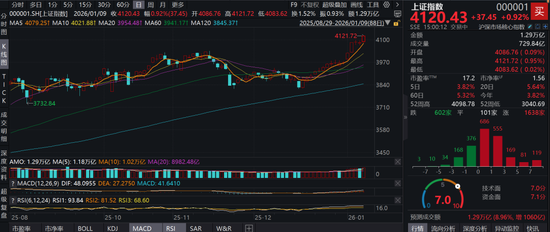
沪指暴力16连阳!机构:热度有望延续,中信看好资源和传统制造
Xin Lang Cai Jing· 2026-01-11 23:37
Core Viewpoint - The A-share market is experiencing a significant upward trend, with the Shanghai Composite Index breaking through 4100 points and achieving a historical 16 consecutive days of gains, driven by sectors such as commercial aerospace, controllable nuclear fusion, brain-computer interfaces, humanoid robots, and resource stocks [1][11]. Group 1: Market Trends - The current market rally is attributed to concentrated inflows from previously cautious funds, with a notable focus on thematic stocks and small-cap stocks rather than traditional allocation strategies [3][13]. - Short-term market sentiment remains high, with no signs of weakening emotional indicators, suggesting that the upward trend in thematic and small-cap stocks may continue until after the Two Sessions [3][13]. - The market is currently characterized by a high level of trading activity, with a significant increase in transaction volume, indicating strong investor confidence [16]. Group 2: Sector Recommendations - Analysts recommend focusing on sectors with high cost-performance ratios, particularly those benefiting from external demand recovery, such as gaming, duty-free, batteries, engineering machinery, and agricultural chemicals [4][14]. - The commercial aerospace sector is highlighted as a key area for investment, with expectations of continued upward momentum despite potential short-term profit-taking pressures [19]. - The resource sector, particularly traditional manufacturing, is advised for increased allocation, with a focus on enhancing pricing power [3][13]. Group 3: Future Outlook - February is anticipated to be a favorable period for the market, with historical data suggesting that significant trading volumes often lead to sustained upward trends [16]. - The market is expected to enter a phase of basic performance evaluation after the annual report disclosures in January, which may provide opportunities for investors to capitalize on growth potential [17]. - The overall sentiment indicates that the upward potential in the market outweighs the risks, with a focus on sectors that align with long-term growth trends, such as AI and semiconductor industries [20].
【光大研究每日速递】20260112
光大证券研究· 2026-01-11 23:03
Group 1: Market Overview - The A-share market experienced a strong start to the year, with major indices showing significant increases, indicating a rise in market risk appetite [5] - The financing amount increased significantly, reflecting a continued optimistic performance in the market [5] - The spring market rally is anticipated to continue, supported by improved market sentiment [5] Group 2: Fixed Income - In the credit bond market, 332 bonds were issued with a total issuance scale of 312.27 billion, marking a 30.6% increase compared to the previous period [6] - Credit spreads varied across industries, with the largest increase in the food and beverage sector (up 2.1 basis points) and the largest decrease in the telecommunications sector (down 8.3 basis points) [6] Group 3: Commodities - The TC spot price reached a historical low, indicating ongoing tightness in copper concentrate procurement, while domestic social inventory continues to grow [7] - Despite the pressure on demand from rising copper prices, the supply-demand situation is expected to remain tight, with a positive outlook for copper prices in 2026 [7] Group 4: Chemical Industry - The small nucleic acid drug market is projected to experience rapid growth in 2026, with key players like Bluestar Technology and Lonza leading breakthroughs in critical areas [8] - The Chinese Ministry of Commerce has introduced measures against Japan, increasing the urgency for domestic substitution of key semiconductor materials [8] Group 5: Renewable Energy and Environmental Protection - The photovoltaic industry is expected to focus on coordination and method restructuring, while the battery industry is advised to prevent oversupply in energy storage batteries [9] - Investment opportunities are identified in domestic computing power, hydrogen energy, and upstream energy storage sectors, with a positive outlook for lithium carbonate prices in the short term [9]
趋势仍在,结构再平衡
Ge Long Hui· 2026-01-11 22:55
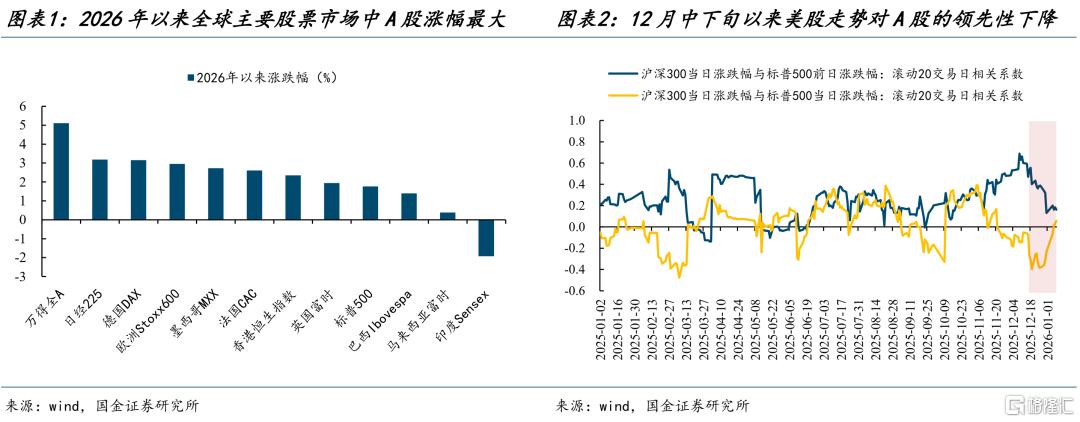
Group 1 - The recent improvement in market liquidity has driven the A-share market's rise, with a notable increase in margin trading balance by over 125 billion yuan in just half a month, leading to a more than 35% increase in trading volume [2][8] - Historical data indicates that similar market conditions have occurred six times in the past decade, with a high probability of continued strength in the A-share market over the next 10, 20, and 250 trading days following such volume increases [9][12] - However, there are signs of structural overheating, particularly in the commercial aerospace index, which has seen a significant increase in turnover rate and trading volume share, indicating a need for fundamental support for such rapid trading concentration [2][9] Group 2 - The negative impact of AI on the U.S. employment market is becoming evident, with December's non-farm payrolls falling short of expectations and a cumulative reduction of 340,000 jobs in sectors heavily affected by AI [3][15] - The ongoing concerns about a prolonged interest rate cut cycle by the Federal Reserve are alleviating fears of a second inflation wave, benefiting commodity prices as the demand-supply gap becomes more pronounced [3][23] - The geopolitical tensions are altering inventory behaviors among market participants, leading to increased stockpiling and a significant rise in copper and silver inventories since 2025 [24][27] Group 3 - Domestic policies aimed at reducing "involution" are being implemented, with industrial PPI showing a positive trend, indicating a shift from price drag to support for corporate revenues [4][35] - The recent regulatory focus on the photovoltaic industry has raised concerns about the commitment to anti-involution policies, but the overall direction remains focused on improving corporate profitability through reasonable policy guidance [4][40] - The market is expected to see improvements in corporate earnings as the anti-involution policies take effect, with a focus on preventing monopolistic practices while fostering innovation [4][42] Group 4 - The report maintains an optimistic outlook for the A-share market, suggesting that the ongoing liquidity improvements and fundamental changes will drive future performance [5][43] - Recommendations include focusing on industrial resource products that resonate with AI investments and global manufacturing recovery, as well as sectors benefiting from domestic consumption recovery [5][43]
投研一体驱动 把握产业趋势
Zhong Guo Zheng Quan Bao· 2026-01-11 20:49
Core Insights - The article emphasizes the importance of understanding industry trends and the potential investment opportunities arising from them, particularly in sectors benefiting from AI and improved supply-demand dynamics in lithium battery materials [1][2]. Group 1: Investment Environment - The A-share market is currently experiencing a positive upward trend, with both A-shares and Hong Kong stocks seen as attractive investment options due to their high yield potential compared to low-risk assets [1][2]. - The economic adjustment in sectors like real estate is nearing completion, reducing its impact on the economy, while China's trade dependency on the U.S. has significantly decreased, with successful expansion into emerging markets [2]. Group 2: Market Dynamics - The policy environment has been exceptionally supportive of the capital market, with strict limits on financing and an increased focus on dividends and share buybacks by listed companies, enhancing investor returns [2]. - Despite a general market recovery, valuations in key sectors such as Hong Kong internet, consumer electronics, and lithium remain reasonable, with companies increasingly prioritizing shareholder returns [2]. Group 3: Investment Focus - The investment strategy focuses on three main lines: technology, new energy, and cyclical sectors. Technology is seen as early-stage development benefiting from AI, while new energy, particularly lithium materials, is expected to enter a new growth cycle due to rising demand [3]. - The cyclical sector is in a stable phase, with strong performance in non-ferrous metals driven by improved supply-demand fundamentals, particularly in copper and aluminum [3]. Group 4: Research and Team Dynamics - The company has reduced the weight of left-side positioning in its investment portfolio to better manage liquidity and enhance investment experience, while maintaining long-term holdings in high-quality companies with strong competitive positions [4]. - The research team has been structured to enhance collaboration across sectors like AI, energy, and consumer goods, improving research depth and efficiency [4][5]. - The dual role of the research head as a fund manager facilitates direct communication of investment ideas to researchers, promoting effective research transformation and timely opportunity identification [5].
重大突破!锂电产业突传利好
Yang Shi Xin Wen· 2026-01-11 15:44
Core Viewpoint - A Chinese research team has achieved a breakthrough in the extraction and separation of lithium resources from salt lakes, overcoming key technical challenges and enabling large-scale industrial application of lithium carbonate production [1] Group 1: Technological Advancements - The research team has developed a green and efficient extraction technology that addresses the limitations of traditional lithium extraction methods, such as poor selectivity for monovalent ions, low separation efficiency, high acid-base consumption, and significant solvent loss [1] - A new lithium-specific extraction agent has been synthesized, which enhances environmental protection, safety, and cost control in the extraction process [1] Group 2: Industrial Application - The world's first industrial demonstration line for extracting lithium from brine mother liquor has been established, capable of producing battery-grade lithium carbonate at a scale of 10,000 tons [1] - The extraction line achieves a lithium recovery rate of over 98%, generating an additional output value of over 600 million yuan, which supports the high-quality development of China's salt lake lithium industry [1] Group 3: Global Positioning - Experts have evaluated the new technology as reaching an internationally leading level, indicating its potential to significantly enhance the efficient recovery and high-value utilization of salt lake lithium resources [1]
A股策略周报20260111:趋势仍在,结构再平衡-20260111
SINOLINK SECURITIES· 2026-01-11 13:41
Group 1: Market Liquidity and A-Share Performance - The improvement in market liquidity has been a direct catalyst for the recent rise in A-shares, with margin trading balances increasing by over 125 billion yuan in just half a month, leading to a more than 35% increase in trading volume across the A-share market [3][13][22] - Historical data shows that similar situations, where the A-share market rose by nearly 10% over 16 trading days with trading volume expanding by over 30%, have occurred six times in the past decade, predominantly at the beginning of the year [3][18][22] - The recent surge in the commercial aerospace index has led to a significant increase in turnover rates and trading volume proportions, indicating a potential structural overheating in the market [3][22] Group 2: AI Impact on Employment and Economic Policy - The U.S. job market continues to face pressure, with December's non-farm payrolls adding only 50,000 jobs, below expectations, and a downward revision of 76,000 jobs for October and November [4][26][33] - The adoption of AI by large U.S. companies has significantly suppressed employment growth, particularly in the information, finance, and professional services sectors, which have collectively lost 344,000 jobs over the past three years [4][26][33] - The Federal Reserve's extended rate-cutting cycle is expected to benefit commodity markets, as inflation concerns related to AI investments are easing [4][40][41] Group 3: Domestic Economic Recovery and Policy Optimization - The Producer Price Index (PPI) for industrial enterprises in December showed a year-on-year increase, indicating a shift from price drag to price support for corporate revenues [5][56] - The Consumer Price Index (CPI) has also risen, with the core CPI maintaining its highest level in five years, reflecting a smoother transmission of prices from enterprises to consumers [5][56] - The ongoing anti-involution policies are expected to enhance corporate profitability, with regulatory measures aimed at preventing monopolistic practices and promoting fair competition [5][62] Group 4: Rebalancing and Investment Recommendations - The report suggests a positive outlook for A-shares, driven by improved liquidity and favorable domestic and international economic conditions [6][63] - Recommended investment areas include industrial resource products like copper, aluminum, and lithium, as well as sectors benefiting from the recovery of domestic manufacturing and consumer spending [6][63] - The report emphasizes the importance of capturing opportunities in sectors such as aviation, duty-free, and food and beverage, which are expected to benefit from increased consumer income and tourism recovery [6][63]