水产养殖

Search documents
走出稻蟹产业链升级新路径
Xin Hua Ri Bao· 2025-10-20 22:01
Core Viewpoint - Yixing has been selected for the National Modern Agricultural Industrial Park project, focusing on the rice-crab industry to enhance agricultural modernization and rural revitalization [1] Group 1: Industry Development - The Yixing National Modern Agricultural Industrial Park is leveraging its industrial cluster advantages to create a comprehensive supply chain for high-quality rice and healthy river crabs, integrating production, processing, and sales [2] - The rice processing capacity in the industrial park has reached 1.9 million tons annually, with a processing-to-agricultural output value ratio of 3.8:1 and a processing conversion rate of 92% [2] - The park has established 227,400 acres of high-standard farmland and 19 leading rice enterprises, along with 70 rice processing companies [2] Group 2: Technological Innovation - The Yixing Modern Aquaculture Seed Industry Center is under construction, aiming for a seedling survival rate of over 85% and utilizing IoT sensors for real-time monitoring of water quality [3] - The park has initiated 16 research projects in collaboration with higher education institutions, with over 300 million yuan invested in research and development [4] - The park has achieved a good seed coverage rate of 99% and has been granted multiple patents for agricultural innovations [4] Group 3: Economic Growth and Employment - The industrial park is innovating mechanisms to integrate resources across six townships, enhancing collective economic growth and creating a collaborative development model [5][6] - The park has created employment for 29,400 farmers, with an average collective income of 7.37 million yuan per village [6] - The park aims to embed farmers into various stages of the agricultural value chain, enhancing productivity and income opportunities [6]
海鲜“消费地图”拓展的启示(评论员观察)
Ren Min Ri Bao· 2025-10-20 22:01
Core Insights - The article emphasizes the importance of leveraging China's vast economic landscape to continuously unlock the potential of its large-scale market, with a focus on improving logistics and transportation systems as a key driver for consumption growth [1][2]. Group 1: Consumption Trends - There is a notable shift in consumer behavior, with traditional consumption areas revealing new potential, such as the increased availability and consumption of seafood in inland areas due to improved logistics [1][2]. - Data indicates that during the recent National Day and Mid-Autumn Festival holidays, sales of certain seafood items, like king crabs, surged by 185% year-on-year, particularly in second-tier and lower-tier cities [1][2]. Group 2: Economic Strategies - President Xi Jinping's call to actively expand domestic demand and create more consumption scenarios is highlighted, indicating a strategic focus on meeting the evolving needs of consumers [2][3]. - The article discusses the trend of "seafood going rural," supported by an increasingly efficient logistics network, which has led to significant price reductions for certain seafood items, enhancing consumer access [2][3]. Group 3: Innovation in Consumption - The integration of new technologies and innovative consumption models is crucial for tapping into new growth points, with examples from various cities showcasing how events and new retail formats attract consumers [3]. - Traditional sectors, such as dining, are also evolving with new offerings and experiences that cater to the upgraded consumer demand for quality over quantity [3]. Group 4: Quality and Supply - The article emphasizes the importance of quality in meeting consumer demands, citing examples like the development of high-quality aquaculture in Xinjiang, which is expected to produce over 5,000 tons of salmon by 2024 [3]. - The expansion of the seafood consumption market into central and western regions reflects the broader economic stability and potential within China, aligning with consumer expectations for higher quality living [3][4].
大好“食”机,无限商机!汕尾展团邀您来深圳食博会抢“鲜”机
Nan Fang Nong Cun Bao· 2025-10-20 09:04
Core Insights - The article highlights the upcoming 2025 Global High-end Food and Quality Agricultural Products Expo in Shenzhen, showcasing the Shantou exhibition group and its diverse offerings [5][6][61] - Shantou aims to leverage its unique marine and agricultural products to attract global customers and enhance its market presence [10][59] Group 1: Event Overview - The expo will take place from October 22 to 24 at the Shenzhen Convention and Exhibition Center, featuring a comprehensive exhibition area of 540 square meters [5][9] - Shantou will present an "1+8+N" strong lineup, including eight themed activities and numerous independent exhibitions to showcase its industrial landscape and flavor strengths [7][10] Group 2: Product Offerings - The Shantou exhibition area will feature nearly 20 representative enterprises from sectors such as aquaculture, agriculture, and livestock, presenting over a hundred products [13][14] - Visitors can experience a variety of Shantou's seafood, including "Shantou Three Delicacies" (morning island oysters, sea bass, and mackerel), with educational sessions on their cultivation and cooking methods [16][17] Group 3: Cultural Experience - The expo will include cultural activities, such as a hands-on experience of the Hakka Lei Tea non-heritage production technique, allowing visitors to learn and taste this traditional beverage [32][34] - Performances featuring local folk songs and dances will enhance the cultural atmosphere of the event, creating a unique blend of tradition and modernity [41][44] Group 4: Business Opportunities - The event aims to establish an efficient platform for production and sales connections, promoting high-quality agricultural development in Shantou [47][48] - A dedicated "2025 Shantou Specialty Agricultural Products Supply and Demand Matching Conference" will facilitate direct interactions between suppliers and buyers, employing a one-on-one matching model for effective business connections [54][56]


清风徐来润淅川
Zhong Guo Jing Ji Wang· 2025-10-20 03:35
Core Points - The implementation of a new public reception mechanism in Henan Province has streamlined processes and standardized practices, significantly reducing the burden on local officials [1] - The county has made substantial progress in water quality protection, rural revitalization, and improving people's livelihoods, demonstrating a strong correlation between discipline and high-quality development [1] Group 1: Ecological Protection - The "River Chief+" mechanism was activated in response to illegal dumping, leading to the restoration of natural shorelines within a week [2] - A comprehensive water protection system has been established, utilizing satellite monitoring, electronic fences, and over 8,000 water protectors for effective surveillance [2] - Collaborative efforts across provinces have enhanced enforcement capabilities, addressing cross-border environmental issues [2] Group 2: Rural Revitalization - The establishment of a modern water plant in Wudian Village has transformed local resources into active assets, generating significant income for the community [3] - The county has expanded agricultural initiatives, including the development of medicinal herbs and improved livestock farming, contributing to economic growth [4] Group 3: Public Welfare - The opening of a wetland park swimming area has provided a safe recreational space for families, reflecting a shift from restrictive measures to proactive community engagement [6] - Various public welfare projects have been implemented, including free public transport during holidays and the establishment of cooling stations during heatwaves [7] - Educational reforms have led to improved academic performance, with a notable increase in students entering prestigious universities [7]
蓝龙出“金峡”,游出富民兴村新路子㉔丨聚焦兴农“新”力量
Nan Fang Nong Cun Bao· 2025-10-20 03:32
Core Insights - The article highlights the successful introduction of Australian blue shrimp farming in Panlong Village, Heshan City, which has become a sustainable economic model for local farmers, significantly improving their income and reducing environmental pollution [4][10][23]. Group 1: Economic Impact - The blue shrimp, known as "Heshan Jinxia Blue Dragon," has a meat yield that is 50% higher than ordinary shrimp, with lower costs and higher profitability [5][22]. - The farming area has reached 305 acres, with over 50 households participating, leading to stable production [6][7]. - The annual economic benefit from blue shrimp farming is estimated to exceed ten million yuan after deducting costs, establishing it as a pillar industry for the village [23]. Group 2: Farming Techniques and Support - The establishment of the Jinxia Aquaculture Farmers' Cooperative has facilitated knowledge sharing and technical support among farmers, including hands-on training and regular experience exchange meetings [17][20]. - The cooperative has provided over 500,000 yuan worth of shrimp seedlings and has partnered with insurance companies to mitigate risks [19][21]. Group 3: Brand Development and Market Expansion - The cooperative has created the "Heshan Jinxia Blue Dragon" brand and signed guaranteed purchase agreements with Jiangnan Aquatic Products Company, ensuring stable sales [24][25]. - The blue shrimp has gained recognition in major markets such as Guangzhou and Shenzhen, and has also entered the Hubei market, a stronghold for shrimp farming [26]. Group 4: Diversification and Community Development - The cooperative is exploring deep processing of blue shrimp, including the development of pre-prepared dishes and effective utilization of shrimp shells [30][31]. - The blue shrimp industry has spurred the development of agritourism, creating attractions such as shrimp-themed parks and culinary festivals, enhancing community engagement and economic growth [35][38]. Group 5: Future Prospects - The cooperative plans to deepen its involvement in blue shrimp farming technology development and expand its talent pool, aiming to further enhance the "Heshan Jinxia Blue Dragon" brand and its market presence [39][40].
“至少便宜10%”,大闸蟹开始大量上市
Sou Hu Cai Jing· 2025-10-19 10:28
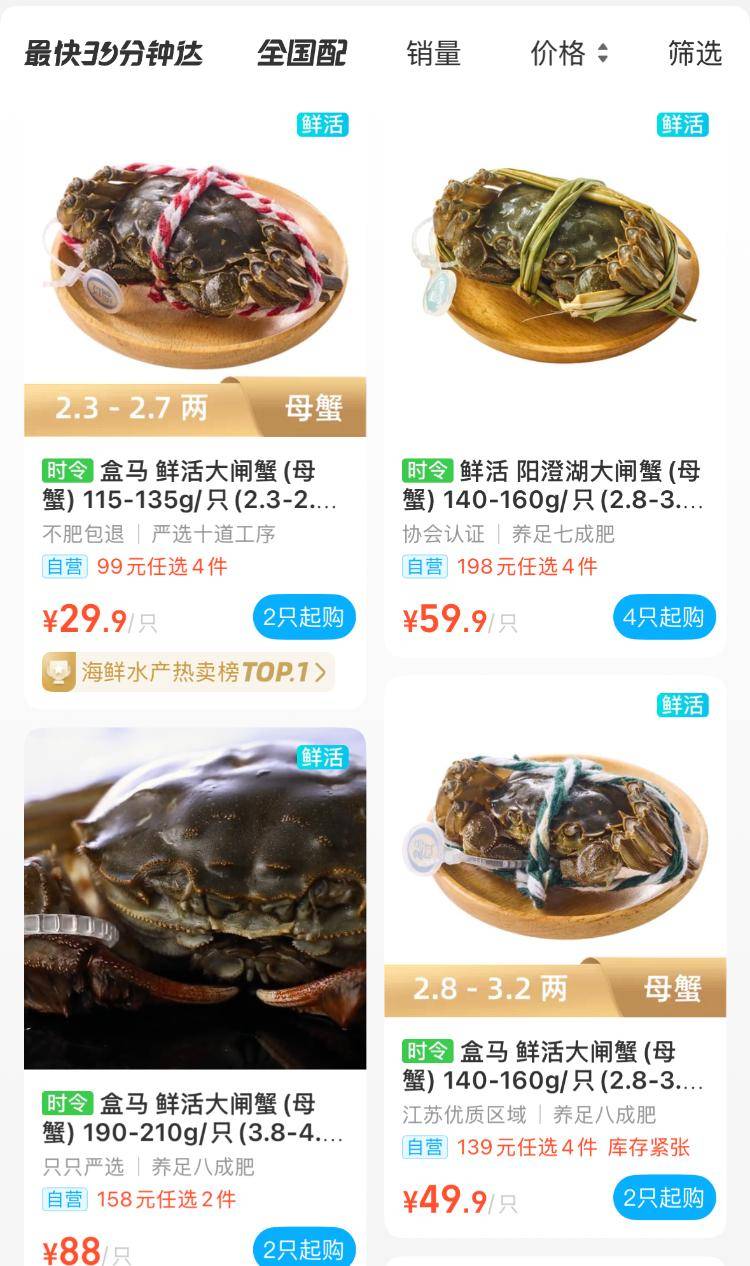
中新经纬10月18日电 (闫淑鑫)近期,大闸蟹开始大量上市。今年的大闸蟹价格如何? 比去年便宜? 17日,中新经纬在北京某盒马门店内看到,有多种规格的阳澄湖大闸蟹在售,其中2.8-3.2两的母蟹,售价 59.9元/只;2.3-2.7两的母蟹36.9元/只。其他产区的鲜活大闸蟹,2.3-2.7两的母蟹29.9元/只,2.8-3.2两的母 蟹49.9元/只。 10月17日,盒马平台上售卖的大闸蟹 来源:盒马App 据盒马门店工作人员介绍,店内所售大闸蟹整体比去年便宜。"去年这个时候,2.8-3.2两的阳澄湖母蟹是 69.9元/只,2.3-2.7两的阳澄湖母蟹是39.9元/只。算下来,今年这两种规格分别比去年便宜了10元/只、3元/ 只。" 在北京另一连锁超市内,除阳澄湖外,还有产自辽宁盘锦的大闸蟹在售,其中2.8-3.2两的阳澄湖母蟹69.9 元/只,2.3-2.7两的阳澄湖母蟹49.9元/只;2.2-2.6两的辽宁盘锦母蟹39.9元/只。 北京某连锁超市内售卖的大闸蟹 中新经纬 闫淑鑫摄 在批发端,据北京新发地官网披露,10月16日,2.5两左右的母蟹,批发均价为62.5元/斤;3两左右的母 蟹,批发均价为67 ...
秋满神州“丰”景万里 多视角解锁“海上粮仓”丰收新场景、新变化
Yang Shi Wang· 2025-10-19 03:29
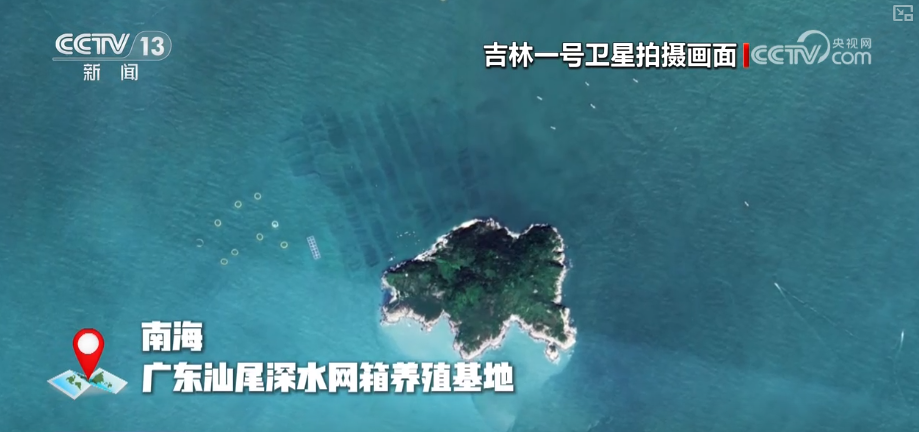
Group 1: Agricultural Production and Harvest - The autumn season has brought a large-scale harvest of autumn grains and important agricultural products in major production areas, as observed from the Jilin-1 satellite [1] Group 2: Aquaculture Innovations - The "Guoxin 1号2-1" is the world's first 150,000-ton large-scale aquaculture vessel, which began operations in April 2025, currently harvesting large yellow croaker [8] - This aquaculture vessel features 15 standard breeding compartments, with an annual fish production capacity of approximately 3,600 tons, making it a significant player in deep-sea aquaculture [10] - The vessel maintains a dark environment to enhance the color quality of the fish, with staff using red light for operations to ensure optimal appearance before harvesting [12][14] - Unlike traditional net cage farming, the vessel can avoid adverse conditions such as temperature drops and typhoons, creating a stable environment for fish growth, with an increase in breeding water volume from 80,000 cubic meters to 100,000 cubic meters, resulting in a 20% increase in production [16] Group 3: Seafood Processing and Market Expansion - The seafood market is diversifying, with companies accelerating their transformation to enhance product offerings [17] - A tuna processing company in Shandong is producing around 15,000 tons annually, with processed products significantly increasing the value of the catch [19] - The company has upgraded its production line and developed over ten types of tuna products, including pet food from processing by-products, receiving positive market feedback [21] - In the first nine months of 2025, the output value of large-scale marine food enterprises in Rongcheng reached 8 billion yuan, supported by a complete ocean fishery industry chain [23] Group 4: Research and Development in Aquaculture - The quality improvement and variety expansion of aquatic products rely on seed sources and advancements in breeding technology [28] - Researchers at the Yellow Sea Fisheries Research Institute are working on breeding new aquatic species suitable for large-scale farming, including breakthroughs in artificial breeding techniques for high-value tropical fish [30][32] - The institute has developed the first fish disease-resistant breeding gene chip in China, which helps in selecting disease-resistant fish for breeding, thereby enhancing production and economic benefits [34] - The National Marine Fisheries Germplasm Resource Bank in Qingdao has preserved nearly 140,000 marine biological germplasm resources, contributing to biodiversity and resource exploration [35][36] - The Yellow Sea Fisheries Research Institute has led the development of 20 new aquaculture species and completed genomic mapping for various marine species [37][38]
在创新创造中挥洒青春汗水(校园观察@大学生)
Ren Min Ri Bao· 2025-10-18 22:02
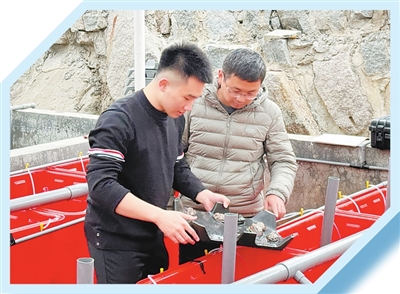
Core Insights - The article highlights the importance of innovation and entrepreneurship among university students, showcasing successful projects from the China International College Students Innovation and Entrepreneurship Competition 2025 [6][15]. Group 1: Entrepreneurship Projects - A project led by Lin Xinzhe from Minjiang University developed high-temperature resistant abalone seedlings, addressing a significant market bottleneck in southern abalone farming [7][8]. - The project achieved a survival rate increase of abalone seedlings from 35% to 70% through optimized oxygen supply technology, significantly reducing transportation losses [8]. - The successful cultivation and promotion of the "Fubao" variety have created a complete model of research, production, supply, and sales, benefiting local farmers [8]. Group 2: Innovation Capability Enhancement - The "pipeline doctor" inspection robot, developed by a team led by Chen Junxi from Beijing Jiaotong University, can save approximately 90% of downtime compared to traditional inspection methods [9][10]. - Participation in innovation and entrepreneurship competitions has helped students transition from technical thinking to user and product-oriented thinking, enhancing their practical skills [10][11]. - The university's entrepreneurship center has incubated 134 student enterprises across various sectors, providing essential support for student-led startups [12]. Group 3: Building Support Platforms - Zhejiang University has been actively engaging in research and exchange activities to foster innovation and entrepreneurship among students, with a focus on creating a supportive ecosystem [13][14]. - The university's collaboration with local industries and the establishment of innovation platforms aim to facilitate the commercialization of research outcomes and support student startups [14]. - The emphasis on cultivating innovative spirit and entrepreneurial skills is seen as crucial for preparing students to meet national and societal needs [14].
水上发电,水下养殖!浙江舟山青蟹迎来大丰收→
Sou Hu Cai Jing· 2025-10-18 13:47
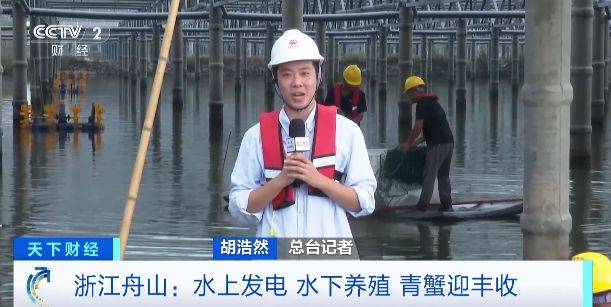
Group 1 - The peak season for harvesting blue crabs on Dengbu Island in Zhoushan, Zhejiang, coincides with the first batch of blue crabs from the aquaculture ponds integrated with photovoltaic projects [1][3] - The average weight of the blue crabs is between 0.7 to 1 pound, with over 100 pounds harvested in a single morning [3] - The total expected production for this year is projected to exceed 40,000 pounds [3] Group 2 - The photovoltaic project consists of 12,991 solar panels covering an area of approximately 560,000 square meters, generating an annual electricity output of about 85 million kilowatt-hours [5] - The project contributes to a reduction of 69,100 tons of carbon emissions [5] - The design of the solar panel supports allows for a height of 3.5 meters above the water surface, providing a spacious environment for aquatic life and facilitating easier access for workers [7] Group 3 - The survival rate of aquatic species in the experimental ponds has increased by over 5%, while labor efficiency has improved by 50% [9] - The integration of smart aquaculture practices revitalizes the fishing industry on the island [9]
都要穿羽绒服了 大闸蟹怎么还没上市?
Xin Lang Cai Jing· 2025-10-18 08:48
Core Insights - The market for hairy crabs in China is experiencing a delayed peak season due to extreme summer temperatures affecting growth and supply [3][5][6] - The best period for purchasing crabs is expected from late October to mid-November, when supply will be abundant and prices for smaller crabs may decrease significantly [7][9] Market Trends - The current market is characterized by a lack of large crabs during the Mid-Autumn Festival, leading to a quieter market atmosphere [3][5] - There is a noticeable price differentiation, with high-quality large crabs maintaining strong prices due to scarcity, while smaller crabs are more affordable and plentiful [6] Seasonal Dynamics - A second sales peak is anticipated from late November to before the Spring Festival, driven by reduced inventory and increased demand for gifts and gatherings [9] Regional Developments - The trend of "southern crabs raised in the north" is emerging, as northern regions offer favorable conditions for crab farming, including less extreme heat and better water quality [10][11] Quality Focus - The crab industry is shifting towards a focus on quality, with an emphasis on size, fullness of crab roe, and meat texture, necessitating the establishment of a unified quality grading standard [12][13][14]