资本市场

Search documents
行业ETF风向标丨中证A500指数快速反弹,华泰柏瑞中证A500ETF(563360)规模突破200亿元,跃居同类产品第一
Mei Ri Jing Ji Xin Wen· 2025-06-30 07:07
Core Viewpoint - The A-share market has seen a strong rebound with a significant inflow of funds into ETFs, reaching a total scale of over 4.3 trillion yuan, marking a historical high and a year-to-date increase of 15% [1] Group 1: ETF Performance - The Huatai-PineBridge CSI A500 ETF (563360) has attracted substantial capital, with a net inflow of 11.279 billion yuan over just five trading days, achieving an average daily trading volume of 2.55 billion yuan [1] - As of June 27, 2023, the Huatai-PineBridge CSI A500 ETF's scale surpassed 20.256 billion yuan, making it the largest in its category, with a total share count of 19.898 billion [1] - The fund's share count increased by 2.613 billion shares year-to-date, reflecting a change rate of 15.12% [1] Group 2: Investment Logic - Global allocation funds have reached historical highs in U.S. equities, while China's position remains at the bottom, creating potential for long-term capital inflow into Chinese stocks if macroeconomic conditions continue to improve [2] Group 3: Fund Characteristics - The Huatai-PineBridge CSI A500 ETF offers a low-cost investment option with a management fee of 0.15% per year and a custody fee of 0.05% per year, making it one of the most competitively priced equity index products in the A-share market [3] - The fund has a quarterly dividend assessment mechanism, providing investors with flexible capital management options [3] Group 4: Index Composition - The CSI A500 Index selects 500 securities with larger market capitalizations and better liquidity from various industries, focusing on sectors such as electronics, power equipment, pharmaceuticals, and national defense [4] - The index's major weighted stocks include Kweichow Moutai, CATL, and Ping An Insurance, among others, reflecting a diverse industry representation [5] Group 5: Growth and Dividend Attributes - The CSI A500 Index exhibits superior dividend growth characteristics, with higher levels of dividend yield and a greater proportion of companies distributing cash dividends compared to the broader index [8] - The index includes leading companies across various sectors, which are expected to benefit from China's modernization process and increased market concentration due to government policies [8]


当前科技金融发展的挑战与策略
Jin Rong Shi Bao· 2025-06-30 03:18
Core Insights - The importance of technological innovation and financial support for high-quality economic development is emphasized, highlighting the need for a synergistic relationship between technology, industry, and finance [1][2][3] Group 1: Importance of Technological Innovation - Technological innovation and its industrialization are seen as the core drivers of societal progress, capable of generating new industries and economic models [2] - Major technological breakthroughs have historically led to significant productivity leaps and societal transformations, with AI projected to contribute approximately $7 trillion to the global economy [2] Group 2: National Competition and Technological Innovation - Technological innovation has become a focal point in global competition, with countries increasing investments to secure technological supremacy [3] - The ability to convert technological advantages into economic strength is crucial for nations to maintain competitiveness in the global market [3] Group 3: Economic Transformation in China - For China, technological innovation is essential for transitioning from an investment-driven to an innovation-driven growth model, especially as traditional growth methods face challenges [4] - The need for independent innovation is highlighted as China seeks to cultivate new economic growth points [4] Group 4: Role of Technology Finance - Technology finance serves as a critical support system for innovation, addressing the funding needs of startups and managing the high risks associated with technological development [5] - Various financial instruments, including venture capital, are tailored to meet the unique demands of technology innovation and its industrialization [5] Group 5: Current State of Technology Finance in China - The technology finance ecosystem includes venture capital, capital markets, technology loans, and technology insurance, providing comprehensive financial services throughout the innovation lifecycle [7][8][9][10] - Venture capital has seen a structural shift, with early-stage investments rising to 67.43% of the market, indicating a focus on supporting nascent technology firms [7] Group 6: Challenges Facing Technology Finance - Weak identification capabilities for early-stage technology projects hinder effective funding allocation, exacerbating information asymmetry in the market [11] - The lack of patient capital poses a challenge, as the high-risk nature of technology innovation conflicts with the profit-driven tendencies of private investors [12] Group 7: Policy Recommendations - Enhancing talent and technology collaboration is essential for precise capital allocation, including the establishment of cross-disciplinary evaluation networks [15] - Cultivating patient capital through government-led initiatives and diversified funding sources is crucial for supporting long-term technology investments [16] - Creating a "closed-loop" mechanism for investment and exit strategies can stimulate private capital engagement in technology innovation [17][18] - Optimizing the investment environment by improving policy guidance and competitive dynamics will boost private sector confidence in technology investments [19] - Institutional innovation is necessary to ensure high-quality development of technology finance, including tailored regulatory frameworks and comprehensive monitoring systems [20]
沪深北港四大交易所释放多维度改革信号 支持科技创新和新质生产力发展
Zheng Quan Shi Bao· 2025-06-29 17:48
李辉透露,创业板改革过程着力做到"三个突出":一是突出服务大局。立足适应百年未有之大变局和支 持经济高质量发展的战略全局,通过推进新一轮改革,增强创业板制度包容性适应性,更好服务科技创 新和新质生产力发展。二是突出问题导向。系统梳理制约创业板市场功能发挥的堵点难点,聚焦市场主 体急难愁盼的问题,拿出更多硬招实招,增加改革含金量、市场获得感。三是突出改革协同。统筹好多 层次资本市场各板块协同,坚持错位发展、办出特色,借鉴吸收好的经验做法,充分考虑创业板自身特 点,形成差异化的制度安排,推进投融资综合改革。 面对市场新形势,北交所副总经理周箴表示,北交所将统筹抓改革、优服务、强生态等各项工作举措, 促进北交所市场平台功能更好地发挥,助力中小企业跨入高质量发展新阶段。具体措施包括保持高质量 企业供给,坚持严监严管提升公司质量、支持企业利用并购重组等市场工具发展壮大和鼓励支持机构投 资者积极参与北交所市场等。 在近日举行的2025上市公司论坛上,沪深北港四大交易所相关负责人就资本市场服务科技创新和新质生 产力发展、新一轮改革举措落地等话题纷纷发声,释放多维度改革信号。 上交所副总经理王泊在论坛上表示,证监会近日推出进 ...
陕西强化金融服务保障 助力打好重点领域攻坚硬仗
Shan Xi Ri Bao· 2025-06-26 22:52
Group 1 - Shaanxi Province's financial system has implemented a moderately loose monetary policy, effectively meeting the financing needs of the real economy, with RMB deposits reaching 7.43 trillion yuan, a year-on-year increase of 8.55% as of the end of May [1] - The loan balance in Shaanxi Province reached 6.06 trillion yuan, with a year-on-year growth of 8.30%, surpassing the national average by 1.2 percentage points [1] - From January to May, Shaanxi Province issued 151 non-financial enterprise bonds, totaling 123.65 billion yuan, contributing positively to the province's economic stability [1] Group 2 - The Provincial Financial Office has organized six financing matchmaking conferences, successfully matching financial resources for 110 technology enterprises and 256 key foreign trade enterprises, with on-site credit agreements exceeding 60 billion yuan [2] - Shaanxi Province is set to establish a 10 billion yuan provincial-level science and technology innovation mother fund, enhancing support for technological enterprises [2] - The loan balance for technology enterprises in Shaanxi reached 363.54 billion yuan, with a year-on-year growth of 28.45%, significantly higher than the provincial average [2] Group 3 - Shaanxi Province has 14 companies listed on the Sci-Tech Innovation Board, ranking 11th nationwide, and is one of the first ten pilot provinces for the "Technology Board" in the interbank bond market [3] - The province has successfully launched four pilot funds under the Financial Asset Investment Company (AIC) initiative, with a total scale of 7.4 billion yuan [3] - Two qualified foreign limited partner (QFLP) pilot funds have been established in Xi'an, with a combined scale of nearly 500 million yuan [3]
中国资本市场三个核心特点
集思录· 2025-06-26 13:43
我们必须看到,A股的赌民正在慢慢的专业化,或者被动的被消灭,或者主动的求提升,市场 的有效性正在提高,就像一个人,读书读到了四年级,就再也不会倒回到一年级的水平。同 时,国家队已经大量买入各种宽基指数,而A股的衍生品数量,也在逐步的增多中。 追求利润的经济体,利润可能会变成无源之水,而追求规模的经济体,未来也可能会通过规 模来调节利润。时代的齿轮正在转动,涓涓细流汇向大海。在未来,我们会迎来更专业,更 理性的投资者,会迎来更有效的市场,那么,那时候的A股生态又会变成什么样子呢?那时候 的土地,又会开出来什么样的花朵呢?我们有什么办法提前拿到未来的入场券么? 最后用一首杜荀鹤的《小松》结束此文 自小刺头深草里, 而今渐觉出蓬蒿。 时人不识凌云木, 直待凌云始道高。 关注集思录微信 我以为,中国资本市场真正的特点有三个: 1.拥有全球最大规模的"赌民" 2.中国上市公司整体盈利能力偏低 3.中国缺少做空工具 一、中国拥有全球最大规模的"赌民"。这样的人群,广泛分布在我们的周围,我的亲戚 A,B,C,我的同学D,E,我的朋友F,G,都是这样的人。这样的人作为一个群体,拿着自己起早 贪黑的钱,就敢赌妖股,听消息,押重 ...

稳定币潜力有多大?券商怎么看,普通投资者如何通过ETF参与
Sou Hu Cai Jing· 2025-06-26 13:12
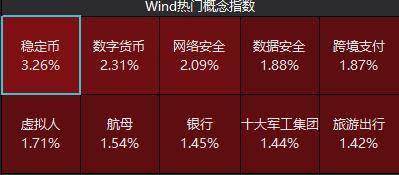
那么,稳定币究竟为何能引起如此大的市场轰动呢? 早在本月初,随着美国第二大稳定币USDC的发行商cirlce正式在美股市场上市,稳定币行情就从美股市 场迅速蔓延到了港股和A股。6月初,香港《稳定币条例》的立法落地,随后,京东与蚂蚁集团相继宣 布在全球主要市场申请稳定币牌照。 稳定币独特的魅力和广泛的应用前景引发了市场的广泛关注与热烈讨论。截至6月26日收盘,Wind稳定 币指数收涨3.26%,该指数年内至今已涨超71%!稳定币相关概念ETF更是集体爆发,包揽了近五日涨 幅榜,多只ETF累积涨超10%。 | | | Wind热门概念指数 | | | | --- | --- | --- | --- | --- | | 稳定币 3.26% | 数字货币 2.31% | 网络安全 2.09% | 数据安全 1.88% | 跨境支付 1.87% | | 虚拟人 | 航母 | 银行 | 十大军丁集团 | 旅游出行 | | 1.71% | 1.54% | 1.45% | 1.44% | 1.42% | | | | 1876.16 +59.17 +3.26% | | | | --- | --- | --- | --- | - ...
关税阴云退散+降息空间重塑 亚洲资产迎来“逆袭时刻”
智通财经网· 2025-06-26 10:58
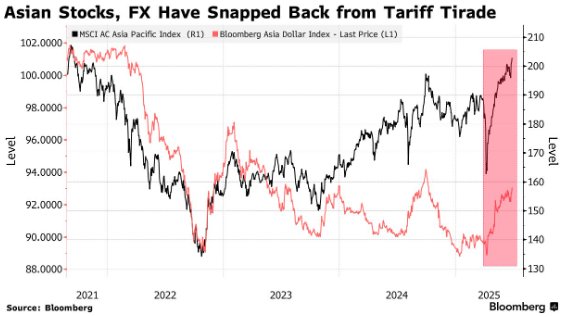
智通财经APP获悉,亚洲交易大厅再度热闹非凡,该地区逐渐摆脱关税冲击,凭借稳健增长前景吸引着 投资者的目光。股票、货币到信贷市场皆自4月市场动荡低谷迎来强势反弹。摩根士丹利资本国际 (MSCI)亚洲股指已飙升25%,创四年新高;美元走弱则推动亚洲货币指标升至去年10月以来最强水平。 企业纷纷抢抓市场复苏机遇,加速融资。 这与数月前的市场恐慌形成鲜明反转,当时,对全面贸易战的担忧、对失控通胀限制央行政策空间的顾 虑,沉重压制亚洲资产。如今,美元走弱为亚洲多国降息创造空间,而美联储预期中的宽松政策,料将 进一步助力。 "股市从4月低点强劲反弹,投资者意识到,此前对特朗普关税的悲观或许过头了。" 景顺资产管理全球 市场策略师Tomo Kinoshita表示,"特朗普在贸易政策上展现出更多灵活性,这提振了乐观情绪。" 从港股到日本的大规模股票发行热潮已直观体现市场热度。彭博数据显示,截至目前,包括首次公开募 股(IPO)在内,亚洲地区此类融资已超900亿美元,较去年同期增长25% 。 香港主导大型交易的同时,日本资本市场本周也活力满满,IPO规模创3月中旬以来新高。 亚洲债券资本市场也在波动高峰时的交易荒后,强势复苏 ...
“代币化”--下一代货币和金融体系?
Hua Er Jie Jian Wen· 2025-06-26 09:04
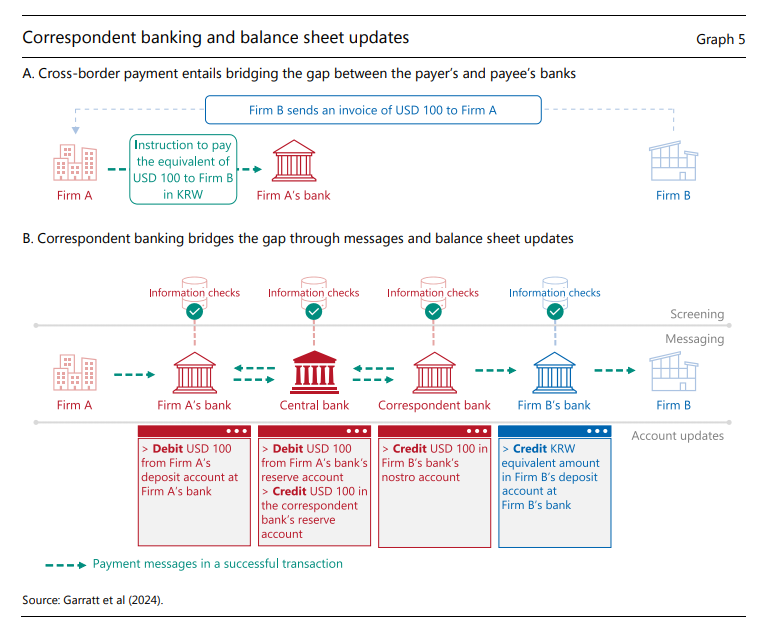
Core Insights - The International Bank for Settlements (BIS) report highlights the transformative potential of tokenization in the evolution of the monetary and financial system, emphasizing the need for a triad of central bank digital reserves, commercial bank digital currencies, and tokenized government bonds as foundational elements of the future financial system [1][2][4] Group 1: Tokenization and Financial System - Tokenization represents a significant innovation in the monetary and financial system, transferring asset rights from traditional ledgers to programmable platforms, enabling integrated operations for information transfer, reconciliation, and asset transfer [2] - The core advantage of tokenization lies in its ability to execute conditions automatically, reducing counterparty risk and minimizing custody requirements through mechanisms like Delivery versus Payment (DvP) [3] Group 2: Central Bank's Role and Stablecoins - Central banks are positioned as catalysts for the transformation of the financial system, with BIS outlining four ways they can drive change [4] - Stablecoins have been evaluated against three critical tests: - They failed the unitary test, as they represent liabilities of specific issuers rather than a stable monetary unit [4] - They failed the elasticity test, as their issuance is constrained by the need for full upfront payment from holders, limiting liquidity support [4] - They failed the integrity test, as their use in public blockchains can facilitate illicit activities due to anonymity [4] Group 3: Market Dynamics and Regulatory Framework - The stablecoin market is rapidly growing but is highly concentrated, with USDT and USDC dominating the market, accounting for over 99% of stablecoins being dollar-denominated [5] - BIS emphasizes the need for a regulatory framework to ensure the safe development of tokenized finance, including compliance with anti-money laundering and counter-terrorism financing regulations [10]
多措并举 广东发布工作方案促经济稳预期
Zhong Guo Zheng Quan Bao· 2025-06-25 20:27
Group 1 - The Guangdong Provincial Government has issued a work plan to promote sustained economic improvement and strengthen domestic circulation, focusing on stabilizing employment, enterprises, markets, and expectations [1] - The work plan outlines seven key tasks, including precise support for enterprises, stabilizing employment, and boosting consumption [1][5] - The plan emphasizes the efficient allocation of resources and the high-quality development of capital markets, particularly supporting the Shenzhen Stock Exchange's comprehensive reform of the ChiNext board [2] Group 2 - The work plan includes specific policies to support financial investments, such as pilot programs for bank financial asset investment companies and insurance funds for long-term equity investments [2] - It aims to enhance the technology innovation bond product system and optimize the issuance management process for these bonds [2] - The plan also mentions the establishment of data property registration trials and the development of data trading markets in Guangzhou and Shenzhen [2] Group 3 - The work plan focuses on fostering innovation by implementing major technology projects and enhancing the integration of technological and industrial innovation [3] - It proposes a series of technology special projects in fields like artificial intelligence, integrated circuits, and new energy [3] - The plan encourages the development of a "hardware + software" ecosystem and the application of artificial intelligence across various sectors [3] Group 4 - The work plan aims to identify high-growth and high-potential new sectors by September 2025, with specific policies for commercial aerospace, low-altitude economy, and nuclear medicine [4] Group 5 - The work plan emphasizes actions to boost consumption, including promoting upgrades in major consumption categories and stimulating service consumption [5] - It encourages local governments to provide housing subsidies and consumption vouchers to support first-time homebuyers and families with multiple children [5][6] - The plan also includes measures to facilitate the replacement of old products, such as cars and home appliances, and to expand the recycling channels [6]
深圳综改有望试点红筹股二次上市,资本市场迎新变
Sou Hu Cai Jing· 2025-06-25 08:28
Group 1 - Shenzhen's capital market has seen a significant policy breakthrough allowing companies from the Guangdong-Hong Kong-Macao Greater Bay Area listed on the Hong Kong Stock Exchange to also list on the Shenzhen Stock Exchange [1] - The pilot program aims to provide a more efficient listing channel for technology innovation enterprises, with specific listing rules being developed [3] - The return of red-chip companies to A-shares is expected to break existing financing barriers and enhance domestic market valuations, with 17 eligible red-chip companies identified in the Greater Bay Area [3] Group 2 - The pilot program addresses long-standing challenges such as complex shareholding structures and regulatory differences between regions, utilizing mechanisms like the issuance of depositary receipts (CDR) [5] - The policy is anticipated to strengthen Shenzhen's position as an industrial financial center and promote collaboration between Hong Kong's international financial center and Shenzhen's industrial finance [5] - The return of red-chip stocks is projected to enhance the technological content of A-shares and optimize market structure, with the Greater Bay Area emerging as a global capital hub [5]