
会计

Search documents
把“人才之渴”转化为“发展之能”
Xin Hua Ri Bao· 2025-10-16 23:31
Core Insights - The article highlights the transformation of public service roles in Changshu, emphasizing the importance of high-quality, specialized civil servants in driving economic development [1][2][3] Group 1: Professional Civil Servants - Changshu has recruited 12 specialized civil servants since 2022, focusing on high-demand professional talent, which has led to the establishment of 4 new listed companies and over 70 key projects, attracting approximately 31.8 billion yuan in investments [1] - The introduction of a "6+" service model by civil servants has facilitated the successful listing of 4 companies, resulting in a 34.5% increase in the total market value of listed companies in Changshu [2] Group 2: Innovation and Talent Development - The number of talent project applications in Changshu is expected to double by 2025, driven by specialized civil servants who provide comprehensive support to enterprises [3] - The establishment of an open learning platform has fostered collaboration between appointed and hired civil servants, enhancing overall governance capabilities [5] Group 3: Cross-Disciplinary Expertise - The hiring of civil servants with diverse backgrounds has filled professional gaps and stimulated innovation within the public service sector, leading to improved service delivery [5][6] - The success of the "Yucheng Cultural Atlas" video initiative demonstrates the effectiveness of cross-disciplinary talent in enhancing cultural promotion and heritage preservation [7] Group 4: Future Directions - Changshu plans to refine the management and assessment systems for hired civil servants to better support high-quality development in the region [7]
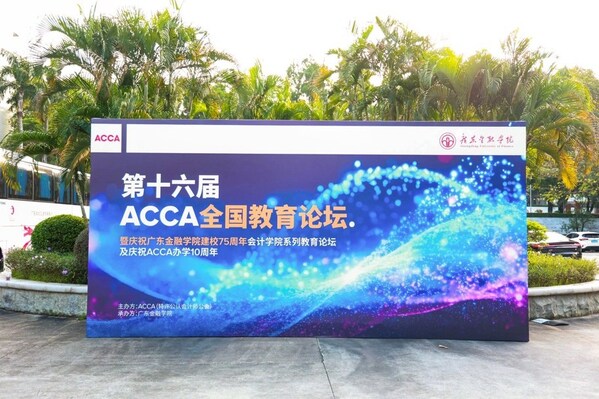
ACCA加码大湾区财会人才建设,第十六届全国教育论坛在穗举办
Xiao Fei Ri Bao Wang· 2025-10-14 08:41
Group 1 - The ACCA (Association of Chartered Certified Accountants) and Guangdong University of Finance and Economics co-hosted the 16th ACCA National Education Forum, celebrating the 75th anniversary of the university and the 10th anniversary of ACCA's educational partnership [1][4] - The forum focused on the theme "Digital Empowerment and Sustainable Development: Reshaping Accounting Education and Talent Cultivation Ecosystem," addressing the urgent demand for high-end accounting talent in the Guangdong-Hong Kong-Macao Greater Bay Area [4][5] - ACCA aims to enhance its resource investment in the Greater Bay Area to align with regional economic development and high-end accounting talent supply, contributing to China's influence in international financial markets [4][5] Group 2 - ACCA has announced a comprehensive overhaul of its professional qualification system by 2025, ensuring that its exam syllabus and teaching content meet the latest industry development requirements [7] - The accounting industry is undergoing significant changes, with employers seeking professionals who possess skills in emerging fields such as sustainable development and data science, beyond traditional accounting knowledge [7][8] - ACCA will introduce new subjects, including "Digital Technology and Innovation" and "Data Science Expert," to help students maintain professional value in a rapidly changing market environment [7][8] Group 3 - The forum featured industry leaders who provided insights on the evolving talent requirements in accounting roles, offering practical suggestions for reforming accounting education [6] - ACCA emphasizes the importance of ethics and sustainable development in its training modules, responding to the increasing significance of accountants' roles in corporate sustainability and regulatory requirements [8] - ACCA's vision is to contribute to global economic sustainable development by cultivating professionals with international perspectives, digital capabilities, sustainable development concepts, and strong ethical standards [8]

出海专班释放积极信号
Jing Ji Ri Bao· 2025-10-11 22:18
Core Viewpoint - The Hong Kong Special Administrative Region (SAR) government has launched a dedicated team to assist mainland enterprises in expanding overseas, addressing various aspects such as legal, tax, and supply chain considerations, thereby enhancing Hong Kong's role as a premier platform for international business [1][2]. Group 1: Overview of the Outbound Initiative - The Hong Kong SAR government officially initiated the "Mainland Enterprises Outbound Task Force" on October 6, with over 100 participants from various sectors including law, finance, and professional associations [1]. - The task force consolidates Hong Kong's external offices, creating a one-stop platform to provide diverse solutions for enterprises looking to expand internationally [2]. Group 2: Investment Trends and Data - From January to May this year, mainland China's non-financial direct investment abroad reached $61.6 billion, a year-on-year increase of 2.3%, with investments in Belt and Road Initiative countries growing by 20.8% to $15.52 billion [2]. - A survey indicated that 85% of mainland enterprises plan to expand into overseas markets, with 28% targeting the Middle East and 27% focusing on South Asia [2]. Group 3: Unique Features of the Task Force - Unlike traditional service providers, the outbound task force actively seeks clients rather than waiting for them to approach, leveraging past experiences in investment promotion [3]. - The task force also aims to enhance the legal environment and business conditions in overseas countries, facilitating partnerships and investments [3]. Group 4: Training and Development - The Hong Kong SAR government has established the Hong Kong International Legal Talent Training Institute to provide high-level training and knowledge sharing for legal professionals, particularly in Belt and Road countries [3].
为国际经贸往来提供更加畅通的制度保障——“一带一路”国家会计准则合作倡议深入推进
Sou Hu Cai Jing· 2025-10-11 06:32
Core Insights - The initiative to strengthen accounting standards cooperation among Belt and Road countries has achieved significant results over the past six years, promoting trade and capital flow in the region [1][2]. Group 1: Mechanism Consolidation - The establishment of a mechanism for the Belt and Road accounting standards cooperation forum was formalized in November 2019, focusing on technical information exchange, policy promotion, capacity building, and collaborative research [2]. Group 2: Capacity Building - Since 2019, nearly 100 training and seminar activities have been conducted by national accounting institutes in Beijing, Shanghai, and Xiamen, with participation from nearly 10,000 individuals from Belt and Road countries [3]. Group 3: Network Expansion - The number of initiative members has doubled from 10 to 21, with observer countries increasing from 0 to 8, expanding the network's reach across five continents [4]. - The upcoming seventh Belt and Road accounting standards cooperation forum in Shanghai is expected to be the largest to date, with nearly 30 participating countries and over 130 attendees [4].
吴清发声!谈了这些!
Guo Ji Jin Rong Bao· 2025-09-30 13:50
Core Viewpoint - The meeting emphasized the need for high-quality planning for the "15th Five-Year" capital market strategy, building on the achievements of the "14th Five-Year" period, and focusing on comprehensive reforms in the capital market [1][2]. Group 1: Achievements and Developments - During the "14th Five-Year" period, China's capital market experienced significant growth in both quantity and quality, particularly after the implementation of the new "National Nine Articles" and the "1+N" policy framework [1]. - The foundational systems and regulatory logic of the capital market have been comprehensively restructured, leading to a more complete multi-level market system and enhanced market resilience [1]. Group 2: Proposed Reforms and Strategies - Suggestions for the "15th Five-Year" capital market planning include deepening reforms in areas such as issuance, refinancing, and mergers and acquisitions, while enhancing policy execution mechanisms to increase market attractiveness and inclusivity [2]. - There is a call for greater support for listed companies to improve their performance, encouraging them to increase dividend payouts and share buybacks, and enhancing the role of institutional investors in corporate governance [2]. - The development of high-quality securities and fund companies is encouraged to create top-tier investment banks and institutions, alongside promoting the high-quality development of intermediary institutions like accounting and law firms [2]. - The proposal includes enriching the A-share market product service system with more indices, ETFs, and derivatives to better serve the preservation and appreciation of residents' wealth [2]. - Enhancing cross-border investment and financing convenience and increasing the institutional openness of the capital market are also highlighted as key areas for reform [2]. Group 3: Leadership and Governance - The importance of adhering to the Party's comprehensive leadership and prioritizing high-quality development and effective market governance is emphasized [2]. - Listed companies, industry institutions, and intermediaries are urged to focus on their core businesses, enhance their functions, and improve governance to elevate their professional capabilities and market reputation [3].
反洗钱小课堂 | 遏制洗钱犯罪 守护金融安全——新《反洗钱法》要点解读
中泰证券资管· 2025-09-24 11:33
Core Viewpoint - The article discusses the revisions to the Anti-Money Laundering (AML) Law, emphasizing the enhancement of AML objectives, obligations for financial institutions, and the introduction of stricter penalties to combat money laundering activities effectively [2][3][11]. Group 1: AML Objectives and Concepts - The revised AML Law aims to strengthen and standardize AML efforts, ensuring the maintenance of financial order, public interest, and national security [2]. - It retains the focus on seven key upstream criminal activities related to money laundering while expanding the scope to include the concealment of proceeds from other crimes [2]. Group 2: Obligations of Financial Institutions - Financial institutions are required to establish robust internal control systems for AML, conduct customer due diligence, and maintain records of customer identities and transaction histories [3]. - They must report large and suspicious transactions, implement risk-based management measures, and ensure confidentiality of AML information [3][4]. Group 3: Non-Financial Institutions' AML Obligations - Specific non-financial institutions, such as real estate developers and intermediaries, are also mandated to fulfill AML obligations based on their operational characteristics and risk profiles [4][5]. Group 4: Data Security and Personal Information Protection - The revised law emphasizes the protection of AML-related data and personal information, ensuring confidentiality and compliance with data protection regulations [7][8]. Group 5: Advocacy for AML Prevention and Reporting - The AML authorities will collaborate with relevant agencies to enhance public awareness and reporting capabilities regarding money laundering activities [10]. - Individuals and organizations are encouraged to report suspected money laundering activities, with protections in place for whistleblowers [10]. Group 6: Beneficial Ownership Regulations - The law establishes a system for managing beneficial ownership information, requiring entities to maintain and update this information regularly [10]. Group 7: Increased Penalties for Non-Compliance - The revised law introduces new penalties for non-compliance, including higher fines for financial institutions and specific non-financial institutions that fail to identify or update beneficial ownership information [11]. - The maximum penalty for individuals involved in violations has been raised to 500,000 yuan [11]. Group 8: Risk Management Framework - Financial institutions are mandated to integrate risk management into their daily operations, including the establishment of dedicated teams for AML efforts [12]. - They must assess and monitor new technologies and products for potential money laundering risks [12].

澳洲会计师公会会长戴宾图:AI解放基础工作 财务人员不会被替代 | 服贸会
Zhong Guo Jing Ying Bao· 2025-09-18 17:05
Core Insights - Australia showcased its largest delegation at the 12th China International Fair for Trade in Services, highlighting cooperation potential in finance, education, and professional services [1] - The bilateral trade between China and Australia is significant, with a 2.6% growth projected for the 2023-2024 fiscal year, reaching 325 billion AUD (approximately 1.5 trillion RMB) [1] Group 1: Trade Relations - China remains Australia's largest trading partner, particularly in iron ore, coal, and natural gas, holding a substantial share of Australia's export market [1] - The trade relationship between the two countries has been improving, with a notable increase in trade volume [1] Group 2: Service Trade Cooperation - There is immense potential for cooperation in knowledge-intensive services such as accounting, finance, law, and consulting between China and Australia [2] - Initiatives to jointly cultivate international talent and enhance mutual recognition of professional qualifications are expected to further promote connectivity in the professional services sector [2] Group 3: Impact of Government Policies - China's recent measures to open up the service trade market signal a positive shift towards integrating into the global service economy [2] - The transformation of China's trade structure from goods to services, including AI, digital economy, finance, education, and tourism, is noteworthy [2] Group 4: Talent Development in Finance - The Australian CPA has developed a competency framework for finance professionals, focusing on six core competencies: ethical integrity, professional financial skills, adaptive thinking, big data and digitalization, business acumen, and self-motivation with interpersonal leadership [2][3] - Emphasis is placed on the ability to translate professional knowledge into cross-disciplinary collaboration and practical application, aligning with future employer demands [3] Group 5: Role of Artificial Intelligence - AI is reshaping the finance industry by enabling faster, smarter, and more resilient business development, enhancing compliance risk control, optimizing cash flow management, and establishing data-driven decision-making mechanisms [3] - The challenge lies not in AI itself but in finance professionals' ability to continuously learn and adapt their skills to meet new industry demands [3]
澳洲会计师公会会长戴宾图:AI解放基础工作,财务人员不会被替代 服贸会
Zhong Guo Jing Ying Bao· 2025-09-18 14:13
Core Viewpoint - Australia showcased its largest delegation at the 12th China International Fair for Trade in Services, highlighting cooperation potential in finance, education, and professional services with China [2] Group 1: Trade Relations - China remains Australia's largest trading partner, particularly in iron ore, coal, and natural gas, accounting for a significant share of Australia's export market [2] - The bilateral trade volume between China and Australia is projected to grow by 2.6% in the 2023-2024 fiscal year, reaching AUD 325 billion (approximately RMB 1.5 trillion) [2] Group 2: Service Trade Cooperation - There is substantial potential for cooperation in knowledge-intensive services such as accounting, finance, law, and consulting between China and Australia [3] - China's recent initiatives to open up its service trade market signal a shift from a goods-focused trade structure to include sectors like artificial intelligence, digital economy, finance, education, and tourism [3] Group 3: Talent Development - The Australian CPA has developed a competency framework for accounting talent, which includes six core competency modules: ethical integrity, professional financial skills, adaptive thinking, big data and digitalization, business acumen, and self-motivation with interpersonal leadership [4] - The framework aims to enhance the ability to translate professional knowledge into cross-disciplinary collaboration and practical application, aligning with future employer demands in the accounting sector [4] Group 4: Impact of Artificial Intelligence - Artificial intelligence is reshaping the finance industry by automating routine tasks, allowing finance professionals to transition from traditional controllers to value creators [5] - The challenge lies not in AI itself but in finance professionals' ability to continuously learn and adapt their skills to meet new industry demands [5]

利润率暴涨3倍,硅谷爆火的AI Rollup,要把传统公司改成“AI工厂”
3 6 Ke· 2025-09-16 23:46
Core Insights - The rise of AI Rollup strategy involves investment firms helping AI application companies acquire traditional small businesses to enhance efficiency and profitability through AI integration [1][4][7] - A notable example is Crescendo, which acquired PartnerHero, integrating AI with human support to achieve a profit margin four times that of traditional call centers, with an ARR exceeding $100 million [2][3][13] Group 1: AI Rollup Strategy - AI Rollup is not a new concept; it has historical roots in private equity consolidating small companies into larger platforms for scale and synergy [4] - The current iteration leverages AI to significantly improve productivity and profitability, as seen in the accounting sector where AI can reduce costs and double profit margins [5][6] - The strategy creates a "snowball effect" where increased profits and cash flow from AI integration can fund further expansion [6][18] Group 2: Investment Trends - There is a surge of capital flowing into AI Rollup strategies, with General Catalyst allocating $1.5 billion from an $8 billion fund specifically for this purpose [3][6] - A total of 105 startups are currently implementing AI Rollup strategies, primarily in labor-intensive sectors like accounting, insurance, and logistics, where efficiency gains are substantial [9][10] Group 3: Case Studies - Eudia, an AI legal platform, acquired Johnson Hana for $42 million, integrating AI to enhance legal services and operational efficiency [11][12] - Crescendo's acquisition of PartnerHero allowed it to transform into a full-stack customer experience platform, achieving a gross margin of 60-65% and significantly improving customer satisfaction [13][14] - Dwelly in the UK has doubled its EBITDA margin through AI integration in property management, enhancing tenant experiences and operational efficiency [14] - Crete PA plans to invest over $500 million in acquiring accounting firms, embedding AI tools to streamline operations and reduce repetitive tasks [15] Group 4: Competitive Advantages - AI Rollup companies can quickly capture market share by offering lower prices, especially in industries with high customer retention [17] - Acquisitions provide access to valuable first-party data, which is crucial for training AI models, creating a competitive edge in vertical AI applications [18] Group 5: Implementation Strategy - General Catalyst outlines a three-step approach for executing AI Rollup: identifying high-value industries, assembling the right teams, and developing AI products and services [19][22] - The strategy emphasizes a gradual integration of AI into existing workflows to minimize resistance and demonstrate immediate results [24] - The combination of capital, technology, and cross-disciplinary teams is essential for the successful implementation of AI Rollup strategies [24]
财政部公布会计规章 可持续披露及反洗钱
Zhong Guo Xin Wen Wang· 2025-09-16 06:24
Group 1 - The Ministry of Finance of China has jointly developed guidelines for corporate sustainable disclosure and anti-money laundering management for accounting firms [1][2] - The sustainable disclosure guidelines include eight sections related to the value chain and emphasize the need for companies to reassess their sustainable risks and opportunities in the event of significant changes [1] - The guidelines aim to inform various stakeholders, including governments and other interested parties, about the actual and potential impacts of corporate activities on economic, social, and environmental sustainability [1] Group 2 - The anti-money laundering management measures consist of five chapters and thirty-two articles, requiring accounting firms to establish internal controls that align with their risk profiles [2] - Accounting firms must regularly identify and assess money laundering risks and implement appropriate risk management measures based on these assessments [2] - Enhanced due diligence measures are mandated for clients from high-risk countries, those under investigation for money laundering, and politically exposed persons, among others [2]