
数据交易

Search documents
“十四五”拼经济闯改革 市场主体逐步繁荣 产业结构进一步优化 浦东五个经济指标突破“万亿”
Jie Fang Ri Bao· 2025-08-21 01:49
Core Insights - The article highlights the significant economic achievements of Pudong during the "14th Five-Year Plan" period, with five economic indicators surpassing the trillion-yuan mark, indicating robust growth and development in the region [1][2]. Economic Performance - Pudong's GDP is projected to reach 1.78 trillion yuan in 2024, which is 1.34 times that of 2020, accounting for 32.9% of the city's total [2] - The total industrial output value is expected to be 1.32 trillion yuan, 1.27 times that of 2020, representing 33.6% of the city's total [2] - The service industry revenue is anticipated to be 1.25 trillion yuan, 1.61 times that of 2020, making up 21.2% of the city's total [2] - The total import and export volume is projected at 2.61 trillion yuan, 1.25 times that of 2020, constituting 61.1% of the city's total [2] - Online retail sales are expected to reach 5.88 trillion yuan, 1.34 times that of 2020, accounting for 37.3% of the city's total [2] - From 2021 to mid-2023, Pudong has established 219,000 new market entities, reflecting a thriving business environment [2]. Industry Development - The three leading industries—integrated circuits, biomedicine, and artificial intelligence—have achieved a combined scale of 832.3 billion yuan, representing 46% of the city's total, with an average annual growth rate of 11.7% over the past three years [3]. - The proportion of strategic emerging industries in industrial output has increased from 48.4% to 53.6% [2]. Policy and Reform Initiatives - Pudong has effectively implemented three national strategic tasks, achieving a 93% implementation rate, which has led to innovative reforms and open policies [4]. - Key reforms include the first national pilot for the import of remanufactured products and the implementation of localized management for imported medical device labeling [4]. - The region has introduced various talent support policies, offering up to 7 million yuan for top talents and 1 billion yuan for projects [5]. Environmental and Urban Development - Pudong has invested 374.22 billion yuan in public welfare over the past five years, with a focus on ecological improvements [6]. - The "Five Rings" water system project aims to enhance urban ecology and connectivity, covering an area of approximately 199.4 square kilometers and benefiting around 2.3 million residents [6]. - The region has completed significant urban renewal projects, benefiting 38,600 households and enhancing living conditions [7].
深圳:海陆空铁齐发力,打造全球要素流通新网络!
Sou Hu Cai Jing· 2025-08-20 02:52
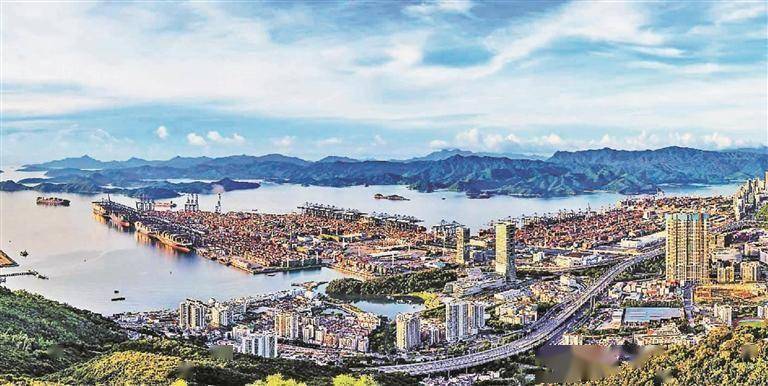
Group 1: Transportation Network - Shenzhen has established a comprehensive transportation network that enhances its international competitiveness and contributes significantly to global trade [1] - Shenzhen Port, as the fourth largest container port globally, achieved a container throughput of 17.23 million TEUs in the first half of the year, marking a year-on-year increase of 10.8% [1] - The port operates 270 foreign trade container routes, connecting Shenzhen with 12 major shipping regions across six continents, including 30 cross-border e-commerce shipping lines [1] Group 2: Rail Transport - The China-Europe Railway Express (Shenzhen) has opened 27 export routes, with 85 trains dispatched in the first half of the year, carrying 44,000 tons of goods [3] - The launch of the China-Kyrgyzstan-Uzbekistan international rail and road transport significantly improved customs efficiency by over 30%, reducing transportation time [3] - The "Bay Area" China-Europe Railway Express has successfully operated over 500 trains since its inception in 2020, transporting goods valued at over $2 billion [3] Group 3: Air Transport - Shenzhen Airport achieved record highs in passenger throughput, cargo and mail throughput, and flight operations in the first half of the year [3] - The airport has expanded its international cargo routes, increasing the number of cities served to 43, thereby enhancing its global cargo network [3] - Shenzhen Airport is focusing on the cross-border e-commerce transportation market by collaborating with international cargo airlines and leading cross-border e-commerce companies [3] Group 4: Digital and Information Flow - In 2024, Shenzhen's cross-border data transaction volume is projected to reach 312 million yuan, maintaining its position as the national leader [4] - The He Tao Shenzhen Park has achieved significant results in the cross-border flow of innovative elements, with the Shenzhen Data Exchange completing data transactions exceeding 15 billion yuan [4] - Recent products launched by Qianhai for cross-border data between Shenzhen and Hong Kong have enhanced the efficiency of data flow and provided new momentum for Shenzhen's digital economy [4]

深圳构建全球要素流通网络
Sou Hu Cai Jing· 2025-08-20 00:38
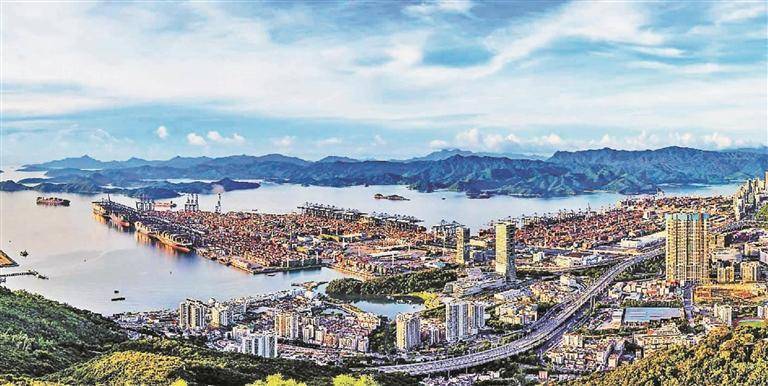
Group 1: Overview of Shenzhen's Logistics Network - Shenzhen has established a comprehensive hub system integrating sea, land, air, and rail, enhancing its global competitiveness and becoming a key node in global supply chains and innovation networks [2][3] Group 2: Maritime Transport - Shenzhen Port, the fourth largest container port globally, achieved a container throughput of 17.23 million TEUs in the first half of the year, marking a 10.8% year-on-year increase, leading the growth among major ports in China [3] - The port operates 270 foreign trade container routes covering 12 major shipping areas across six continents, with 30 cross-border e-commerce shipping lines contributing to new growth [3] - Saltian Port is a crucial hub for China's maritime exports, handling over 25% of the country's exports to the U.S. [3] Group 3: Land Transport - The China-Europe Railway Express (Shenzhen) has opened 27 export routes, with 85 trains dispatched in the first half of the year, carrying 44,000 tons of goods [4] - The value of goods transported by the 731 trains scheduled for 2024 is estimated at $2.5 billion, providing strong support for global business expansion [4] - The opening of the China-Kyrgyzstan-Uzbekistan international rail and road transport has improved customs efficiency by over 30% [4] Group 4: Air Transport - Shenzhen Airport recorded a passenger throughput of 32.57 million, a 10.9% increase year-on-year, and a cargo throughput of 98,300 tons, up 14.1% [5] - The airport has expanded its international cargo routes, adding three new routes to Miami, Delhi, and Jakarta, and increasing its international cargo destinations to 43 [5] - In the first half of the year, the airport's international and regional cargo volume reached nearly 500,000 tons, reflecting a 16.3% year-on-year growth [5] Group 5: Data and Information Flow - Shenzhen's cross-border data transaction volume reached 312 million yuan in 2024, ranking first in the country [6] - The He Tao Shenzhen Park has facilitated the cross-border flow of personnel, materials, funds, and data, with the Shenzhen Data Exchange completing over 15 billion yuan in data transactions [6] - The establishment of cross-border data products aims to enhance data infrastructure connectivity between Shenzhen and Hong Kong, reducing costs for Hong Kong enterprises [7] Group 6: Conclusion - Over 40 years of reform and opening up, Shenzhen has built a global element circulation network through its integrated hub system, significantly enhancing its international competitiveness and contributing positively to global trade and China's economic development [7]
海陆空铁一体联动枢纽体系 高效智能绿色网络重要节点 深圳构建全球要素流通网络
Shen Zhen Shang Bao· 2025-08-19 16:40
Core Viewpoint - The construction of a comprehensive logistics network integrating sea, land, air, and rail has significantly enhanced Shenzhen's international competitiveness, establishing it as a crucial node in global supply chains and innovation networks [1]. Maritime Transport - Shenzhen's port system is renowned for its extensive capacity and efficient shipping routes, with the port handling a container throughput of 17.23 million TEUs in the first half of the year, marking a year-on-year increase of 10.8%, leading the growth among major ports in China [2]. - The port operates 270 foreign trade container routes covering six continents and twelve major shipping areas, with 30 cross-border e-commerce shipping lines emerging as new growth points [2]. - The port serves as a vital hub for China's maritime exports, with the Yantian Port area being a preferred docking site for ultra-large container ships, handling over 25% of the national export volume to the U.S. [2]. Land Transport - The China-Europe Railway Express (Shenzhen) has become a key logistics channel connecting Asia and Europe, with 27 export routes established and 85 trains dispatched in the first half of the year, carrying 44,000 tons of goods [3]. - The value of goods transported by the 731 trains scheduled for 2024 is projected to reach $2.5 billion, with stable operations of 2-3 trains per week supporting global business expansion [3]. - The opening of the China-Kyrgyzstan-Uzbekistan international rail and road transport has improved customs efficiency by over 30%, reducing transportation times [3]. Air Transport - Shenzhen Airport achieved a passenger throughput of 32.57 million in the first half of the year, a year-on-year increase of 10.9%, and a cargo and mail throughput of 983,000 tons, up 14.1% [4]. - The airport has expanded its international cargo routes, adding three new routes to Miami, Delhi, and Jakarta, and increasing the number of international cargo destinations to 43 [4]. - The airport has established stable connections with 63 global cargo destinations, enhancing its international freight network [4]. Data and Information Flow - Shenzhen leads the nation in cross-border data transaction volume, reaching 312 million yuan in 2024, with the Shenzhen Data Exchange completing over 15 billion yuan in data transactions [5]. - The Qianhai area has launched three major cross-border data products, enhancing data infrastructure connectivity between Shenzhen and Hong Kong [6]. - The development of data as a new production factor is positioning Shenzhen's digital economy for growth, with a focus on compliance and risk assessment for businesses expanding overseas [6]. Conclusion - Over the past 40 years, Shenzhen has built a global logistics network through its integrated transport system, enhancing its international influence and contributing positively to global trade and China's economic development [6].
江苏省一体化数据市场建设行动方案出炉
Xin Lang Cai Jing· 2025-08-19 04:29
Core Viewpoint - The Jiangsu Provincial Data Exchange has launched a comprehensive plan to cultivate a data trading ecosystem, aiming to enhance the marketization of data resources in the province [1] Group 1: Data Market Development - The "Hundred Million" plan has been initiated to build a high-quality data trading zone across various sectors including healthcare, meteorology, industry, modern agriculture, and finance [1] - The Jiangsu Data Exchange, established in early 2023, is positioned as the core hub for data circulation in Jiangsu Province [1] Group 2: Platform Performance - As of now, the platform has listed a total of 3,837 data products, with a trading volume of 99.1 million yuan [1] - The platform aims to serve as a major channel for the market-oriented allocation of data resources in the province [1]
全省一体化数据市场建设行动方案出炉
Xin Hua Ri Bao· 2025-08-18 22:05
Core Viewpoint - The establishment of a comprehensive data trading ecosystem in Jiangsu Province is underway, with the launch of the "Hundred Million" plan aimed at enhancing data circulation and utilization across various industries [1] Group 1: Data Trading Development - The Jiangsu Data Exchange, located in Nanjing, has launched 3,837 data products and achieved a trading volume of 99.1 million yuan, positioning itself as a key player in the province's data market [1] - The data exchange focuses on three main categories: data sets, data services, and data applications, facilitating the market-oriented allocation of data resources [1] Group 2: Industry Applications - The "Hundred Million" plan aims to create high-quality data trading zones in sectors such as healthcare, meteorology, industry, modern agriculture, and finance, providing essential data for artificial intelligence companies [1] - The initiative is expected to enhance the overall data ecosystem by addressing barriers to data flow and fostering a collaborative environment among over a thousand upstream and downstream enterprises [1]

从“亿元级”到“千亿级”:中国数据交易市场的十年飞跃
Sou Hu Cai Jing· 2025-08-12 09:49
Core Insights - The data exchange market in China has rapidly evolved since 2015, with over 50 data trading institutions established by July 2025, and the trading scale projected to exceed 300 billion yuan by 2025 [2][4][19] - Data exchanges serve as a regulated marketplace for data, allowing for the standardized transformation of data products and facilitating compliance and quality assurance [3][5] - The market is characterized by a diverse range of participants, including government entities, data service providers, and large internet companies, with buyers spanning various industries such as finance, healthcare, and AI [5][6] Group 1: Market Development - The trading scale has grown from "billion-level" in 2015 to "trillion-level" by 2024, indicating significant growth in both quantity and quality of data transactions [2][19] - The market is expected to reach approximately 2.841 trillion yuan by 2025, with a compound annual growth rate of 46.5% from 2021 to 2025 [19][34] - The introduction of policies and frameworks, such as the "Data Element ×" three-year action plan, aims to enhance the coordination between on-site and off-site trading by 2026 [6][10] Group 2: Key Players and Institutions - Major data exchanges include Beijing International Data Exchange, Shanghai Data Exchange, Shenzhen Data Exchange, and Guizhou Data Exchange, which are leading the market [4][7][12][15] - By June 2025, Beijing International Data Exchange had achieved a trading scale of 2,250 TB, with an annual growth rate exceeding 200% [12] - Shanghai Data Exchange reported over 2,000 signed data merchants and a trading amount exceeding 50 billion yuan in 2024 [13] Group 3: Emerging Trends and Technologies - The data trading landscape is expanding into new fields such as AI model training, medical diagnostics, and scientific research, reflecting the increasing importance of data in driving technological and economic development [20][34] - The introduction of advanced technologies like blockchain and privacy computing is enhancing the security and traceability of data transactions [22][28] - Data assetization is becoming a significant trend, with projections indicating that the market for data assets will reach 8,278 billion yuan by 2030 [19][34] Group 4: Case Studies - Notable case studies include the successful assetization and financing of data by companies like BAIC New Energy and the implementation of the "U235" framework by Shanghai Data Exchange, which utilizes blockchain for transparency and efficiency [24][27] - Shenzhen Power Supply Bureau's data product for enterprise electricity behavior was successfully traded, showcasing the application of privacy computing in data transactions [31] - The collaboration between Southern Power Grid and a chemical group demonstrates the practical benefits of data trading in optimizing production and reducing costs [32]

七十七条试点措施向全国复制推广 这里有份“上海自贸经验”
Ren Min Ri Bao· 2025-08-10 21:46
Group 1: Policy and Regulatory Developments - The State Council issued a notice in July to replicate and promote 77 pilot measures from the Shanghai Free Trade Zone, aiming to release institutional innovation dividends on a larger scale [1] - The Shanghai Free Trade Zone continues to explore institutional breakthroughs, providing "free trade experience" for expanding institutional openness [1] Group 2: Innovations in Logistics and Trade - The "direct release" model allows companies to bypass customs declaration, significantly improving clearance efficiency for exporting electric vehicles [2] - The international transshipment cargo proportion at Yangshan Port increased from 12.6% to 18.6%, with overall operation time reduced by 50% due to regulatory innovations [2] - Approximately 52,000 bonded transshipment vehicles were shipped using a shared shipping method in the first half of the year, lowering logistics costs [2] Group 3: Data Trading and Digital Economy - The Shanghai Data Exchange has established a framework for cross-border data trading, with transaction amounts exceeding 3 billion yuan in the first half of the year, a year-on-year increase of over 50% [3] - The establishment of a negative list for data export and operational guidelines aims to facilitate cross-border data flow for enterprises [4] Group 4: Financial Sector Innovations - Shanghai Free Trade Zone has established the first foreign-controlled joint wealth management company and the first wholly foreign-owned public fund [5] - Innovations in cross-border capital pools and international payment services are being optimized to enhance the convenience of inbound payments for tourists [6] - The Shanghai International Reinsurance Registration Trading Center has introduced standardization and digitization in reinsurance transactions, improving operational efficiency [6]
七月数据交易市场热度回升 产品结构优化显著
2 1 Shi Ji Jing Ji Bao Dao· 2025-08-06 16:43
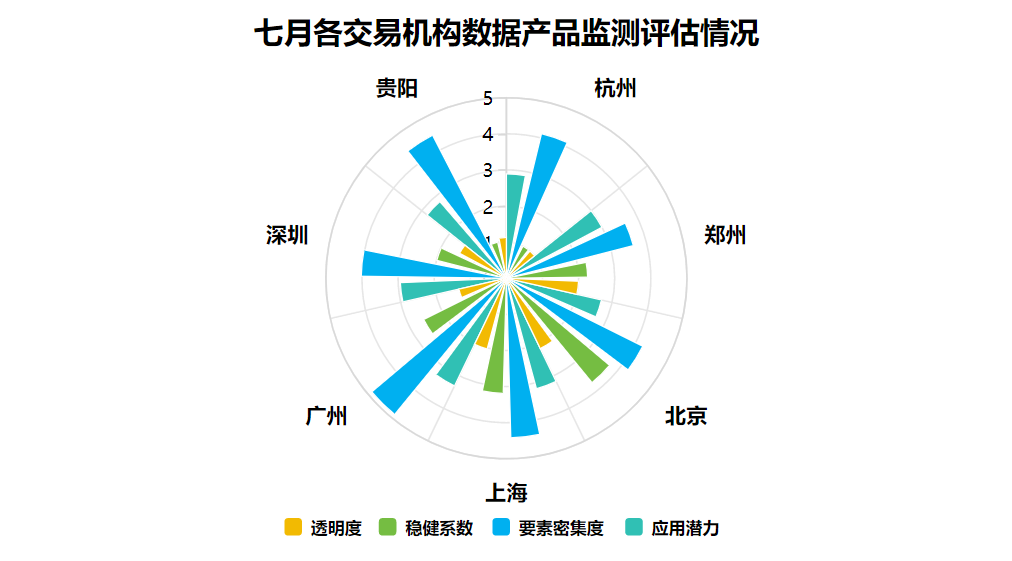
Core Insights - The data trading market has shown signs of recovery in July, with a total of 315 data products launched by seven data trading institutions, reflecting enhanced competitiveness and standardized construction of data trading platforms [3][4] - The "element density" score increased significantly by 14.25% from 3.72 to 4.25, indicating a shift towards a more diverse and complete product system driven by data [3][4] - The "application potential" score decreased by 2.62%, highlighting the need for data trading institutions to improve product lifecycle management and update efficiency [4] Element Density - The "element density" scores of various data trading institutions have generally maintained high levels, with Zhengzhou Data Trading Center showing a remarkable increase of 62.9% in "data participation" score from 2.25 to 3.67, indicating a focus on structured data resources [8] - Guangzhou Data Trading Center's score in "data integration" rose significantly from 3.79 to 5.00, reflecting improvements in data type and comprehensiveness [8] Transparency - The scores for "basic information disclosure" and "price transparency" showed significant divergence, with Zhengzhou Data Trading Center achieving a score of 3.00, a 200% increase from June [10] - Overall, the "price transparency" scores remained low, ranging from 1.00 to 2.06, indicating shortcomings in pricing logic and comparison mechanisms in the data trading market [10] Stability Coefficient - The "stability coefficient" dimension showed varied performance, with Zhengzhou Data Trading Center nearing full marks in "data grading," indicating strong governance in data classification [13] - Shanghai Data Exchange, Beijing International Data Exchange, and Guangzhou Data Trading Center led in "data source" scores, reflecting high compliance in data collection and original data tracing [13] Application Potential - The "application potential" scores are composed of update frequency, attention, and reusability, with attention scores generally high, indicating active market exposure [16] - However, the update frequency scores were notably low, suggesting that the current product iteration mechanisms are inadequate, which may hinder the vitality of data product lifecycles [16]
要素市场化配置改革:加速破壁清障释放发展活力
Zhong Guo Fa Zhan Wang· 2025-07-27 05:47
Group 1: Market Reform and Development - The smooth flow and efficient allocation of factor resources are essential for promoting high-quality development [1] - The reform of data factor marketization is a large-scale systemic project, with significant progress made since the implementation of relevant policies in 2020 [2][4] - The Shenzhen Data Exchange has emerged as a pioneer in the national data trading field, breaking regional barriers and accelerating the realization of data value [3] Group 2: Data Factor Market - The national data market transaction scale is expected to exceed 160 billion yuan in 2024, with a year-on-year growth of over 30% [4] - The establishment of a data factor market is crucial for enhancing the efficiency of factor flow and reducing institutional costs [4] - The Shenzhen Data Exchange has achieved a compound annual growth rate of over 50% in transaction scale since its establishment [3] Group 3: Electricity Market Reform - The unified electricity market in southern China has started trial operations, marking a significant step towards a national unified market [6] - The southern regional electricity market covers over 22,000 registered entities and has a daily trading volume of 3.8 billion kilowatt-hours [6] - The electricity market reform aims to enhance market-driven pricing mechanisms, with market transactions expected to account for 63% of total electricity consumption by 2024 [5] Group 4: Talent and Land Factor Flow - Promoting the rational and orderly flow of talent is a key aspect of factor marketization, with policies encouraging urban talent to return to rural areas [8][9] - The efficient circulation and revitalization of land factors are also essential, with online platforms facilitating the leasing of previously idle projects [9][10] - Recent reforms have led to significant improvements in the flow of labor, land, capital, and technology factors, enhancing the overall market efficiency [10]