新兴产业

Search documents
四中全会公报传递何种信号?百分百布局新质生产力的——双创龙头ETF(588330)单日吸金1068万元
Xin Lang Ji Jin· 2025-10-24 01:32
Group 1 - The Fourth Plenary Session held from October 20 to 23, 2025, in Beijing, emphasized the "14th Five-Year Plan" and highlighted the importance of "accelerating high-level technological self-reliance and leading the development of new quality productivity" [1] - The inclusion of "new quality productivity" in the planning framework marks a shift towards prioritizing quality and efficiency in economic development, with various analysts predicting a transformative leap in China's economy under this guidance [1] - The A-share market is expected to focus on technology as the main theme, with significant capital inflow into technology stocks driven by the AI wave since September 2024 [1] Group 2 - Emerging industries encompass sectors such as new-generation information technology, high-end equipment manufacturing, new materials, biotechnology, new energy vehicles, new energy, energy conservation and environmental protection, and digital creativity [2] - Analysts believe these emerging industries represent China's advantageous technology sectors or those that require breakthroughs amid technological competition, indicating vast development potential [2] Group 3 - The "Chuangxin Longtou ETF" (588330) is designed to reflect the performance of strategic emerging industries by selecting 50 large-cap stocks from the Sci-Tech Innovation Board and the Growth Enterprise Market [1][3] - The ETF aims to mitigate risks by diversifying investments across various technology sectors, thus avoiding concentration in a single stock or sector [5] - The ETF is positioned as a high-elasticity tool to capture technology market trends, with a low investment threshold allowing entry at less than 100 yuan [6]

划重点:二十届四中全会公报对A股投资的启示
Yin He Zheng Quan· 2025-10-23 12:11
Core Insights - The report emphasizes the importance of high-quality economic development during the "15th Five-Year Plan" period, highlighting the need for significant improvements in technological self-reliance and national security [2][6] - The "15th Five-Year Plan" suggests favorable conditions for various themes and industries, including the construction of a modern industrial system, development of new quality productivity, and expansion of domestic demand [2][7] Summary by Sections 1. Main Content of the 20th Central Committee's Fourth Plenary Session - The session reviewed and approved the "Suggestions on Formulating the 15th Five-Year Plan for National Economic and Social Development" [4] 2. Deep Impact on the A-Share Market - Short-term, the session provides new policy expectations and investment clues for the A-share market, potentially boosting market confidence and attracting incremental capital [10] - Long-term, the strategic direction outlined in the session reinforces confidence in the long-term resilience of the Chinese economy, particularly in key areas like modern industrial system construction [10] 3. Theme Investment Opportunities - New Quality Productivity: The focus on enhancing technological self-reliance is a key investment theme, with technology companies that align with national strategies expected to be significant investment targets [11] - Consumption Sector: The emphasis on expanding domestic demand and promoting consumption indicates that consumer sectors, especially new consumption trends, will be critical areas for investment [12][13] - "Two Heavy" Projects: The report highlights the importance of major strategic projects and infrastructure development, which will benefit related sectors such as construction and machinery [13][14] - Anti-Overcompetition: The report discusses the need to address disordered competition, which will enhance the long-term investment value of related sectors [14] - Real Estate Chain: The focus on promoting high-quality development in real estate suggests potential trading opportunities within the real estate sector [15]
“十五五”规划前瞻
Guo Tai Jun An Qi Huo· 2025-10-20 08:32
1. Report Industry Investment Rating There is no information provided in the report regarding the industry investment rating. 2. Core Viewpoints of the Report - The "15th Five - Year Plan" is expected to be gradually implemented in three steps: the core content will be announced on October 23, 2025; the full text of the Party's "15th Five - Year Plan Outline Suggestions" will be released in the following days; the full text of the "15th Five - Year Plan Outline" will be officially released after being approved by the Fourth Session of the 14th National People's Congress in March 2026. The plan will inherit and innovate on previous goals, especially in key areas such as economic growth, technological innovation, and institutional reform [1]. - Five - year plans have a profound impact on the macro - underlying logic, economic context, and capital markets. They often lead to significant stock market rallies and clearly define core investment tracks. They also affect the supply and demand of commodities, thereby influencing prices [2]. 3. Summary According to the Table of Contents 3.1 "15th Five - Year Plan" Later Implementation Process and Main Nodes - The implementation process will follow three steps: on October 23, 2025, the "Fourth Plenary Session" will release a communiqué with the core content of the "15th Five - Year Plan"; in the following days, the Party's "15th Five - Year Plan Suggestions" will be released, along with an explanation by the General Secretary; the State Council will compile the final version of the plan based on the Party's suggestions and submit it to the National People's Congress for approval in March 2026 [1][6]. 3.2 Five - Year Plan Document Framework Content Overview - The "Five - Year Plan Outline" includes a general introduction (covering economic situation judgment, guiding ideology, principles, and goals), specific area discussions (detailing key tasks in various fields), and a conclusion (emphasizing Party leadership, implementation, and guarantee mechanisms). Quantitative indicators in previous plans mainly cover five areas: economic development, people's well - being, ecological environment, innovation drive, and security [10]. 3.3 "15th Five - Year Plan" Key Content Outlook 3.3.1 Economic Growth Target Setting - Long - term growth targets require China to reach the level of a high - income country by the end of the "14th Five - Year Plan" and double its economic aggregate or per - capita income by 2035. As of 2024, China's per - capita GDP was $13,300. To reach the minimum threshold of a moderately developed country ($24,000) by 2035, the average nominal growth rate from 2026 - 2035 should be no less than 5.6% (assuming a 4.5% nominal growth rate in 2025). The actual GDP growth rate from 2026 - 2035 should be around 4%. Market expectations suggest setting a target of around 5% in 2026 and gradually reducing it to 4.8% [17][18][23]. 3.3.2 Key Work Task Deployment - The "15th Five - Year Plan" will continue to focus on economic, institutional, industrial, innovation, people's well - being, and ecological fields. Key areas include institutional reform, technological innovation, domestic demand expansion, green development, and industrial chain security. New quality productivity development is expected to accelerate, and the plan will also address issues such as effective demand shortage and international competition [24][29][30]. 3.4 Five - Year Plan's Market Impact 3.4.1 Five - Year Plans as Investment Mainlines - Five - year plans reshape the economic underlying logic, clarify development priorities, and provide clear investment tracks for the capital market. Different periods have seen different industries thrive, such as traditional cyclical industries during the "11th Five - Year Plan" and technology industries during the "12th" and "13th Five - Year Plans" [33]. 3.4.2 Stock Market Impact - Historically, stock markets have often rallied around the release of five - year plans. Currently, the technology - growth sector has outperformed the market, with some sub - themes like optical modules and AI computing power showing significant excess returns. If the "15th Five - Year Plan" has unexpected content, it will create short - term trading opportunities and support medium - term technology and reform - related investments [35][37]. 3.4.3 Commodity Market Impact - Five - year plans affect commodity supply and demand through national economic logic, industrial policies, and resource security strategies. They have led to a shift in demand from traditional commodities like steel and cement to manufacturing and new - energy - related metals. Supply - side reforms and national policies also influence commodity prices [40].
深圳领跑前三季度城市外贸,单月增速转负
Di Yi Cai Jing· 2025-10-20 08:29
Core Insights - Shenzhen's foreign trade showed resilience in the first three quarters of 2024, maintaining its position as the leading city for foreign trade in mainland China with a total import and export value of 3.36 trillion yuan, a year-on-year increase of 0.1% [1][2] - In September, however, Shenzhen experienced a decline in monthly trade for the first time in four months, with total trade dropping by 1.3% to 403.6 billion yuan, driven by geopolitical factors and fluctuations in the international shipping market [1][2] - The overall decline in September was less severe compared to the same month last year, where the year-on-year drop in total trade was 4.2% [1] Trade Composition - General trade accounted for over half of Shenzhen's foreign trade, with a total of 1.81 trillion yuan, representing 53.8% of the total trade value [2] - Private enterprises dominated the trade landscape, contributing 2.32 trillion yuan, or 68.9% of the total, while foreign-invested enterprises saw a 12.7% increase in trade [2] - The top ten trading partners accounted for nearly 80% of Shenzhen's trade, with significant growth in exports to regions such as Hong Kong, Taiwan, and the EU [2] Sector Performance - The traditional electronics sector maintained a competitive edge, with exports of electromechanical products reaching 1.54 trillion yuan, a 4.5% increase, making up 75.7% of total exports [2][3] - Key products in the electronics sector included computers and components, with exports of 236.65 billion yuan and 67.53 billion yuan, respectively, showing growth rates of 10.6% and 6.3% [3] - Emerging industries also performed well, with lithium batteries and 3D printers seeing export growth of 36.6% and 14%, respectively [4] Import Trends - Imports of electromechanical products grew by 10.7% to 1.08 trillion yuan, accounting for 81.4% of total imports, driven by the rapid application of artificial intelligence technology [4] - Integrated circuits were a significant import category, totaling 591.75 billion yuan, reflecting a 17.7% increase [4] - Agricultural imports also saw growth, with total imports of agricultural products reaching 75.23 billion yuan, a 9.3% increase [4] Long-term Growth - Shenzhen's foreign trade has demonstrated strong resilience, with an average annual compound growth rate of 10.2% over the past five years, surpassing the national average by 2.1 percentage points [4] - The city is projected to surpass 3 trillion yuan in trade in 2023 and 4 trillion yuan in 2024, contributing over 30% to national foreign trade growth [4]
上交所副理事长霍瑞戎:三方面促进上市公司高质量发展,支持中长期资金入市
Guo Ji Jin Rong Bao· 2025-10-19 01:07
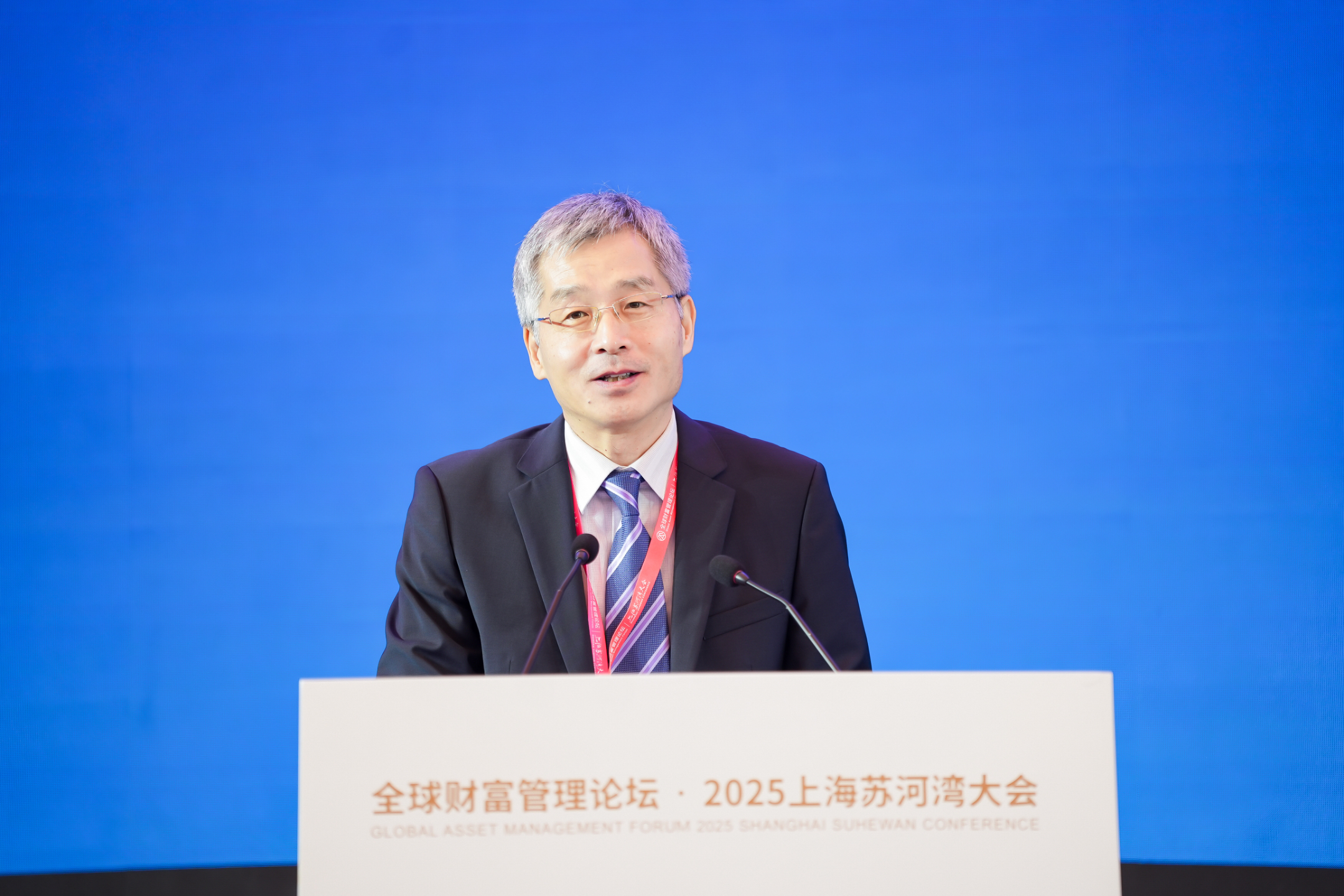
Core Viewpoint - The Shanghai Stock Exchange (SSE) is promoting high-quality development of listed companies through three main strategies: stability, progress, and coordinated development of investment and financing [1][2][3][4] Group 1: Stability - SSE is focusing on solidifying the long-term positive trend of listed companies by implementing the "Three-Year Action Plan to Improve the Quality of Listed Companies" [1] - In the first half of the year, the net profit attributable to shareholders of listed companies in Shanghai reached 2.39 trillion yuan, showing positive growth [2] - Emerging industries such as electronics, communications, pharmaceuticals, and rail transit equipment saw revenue growth rates of 7.5%, while consumer sectors like food and beverages and home appliances achieved revenue growth rates of 12% [2] - SSE is enhancing the standardized operation and governance levels of listed companies by revising rules and guidelines, protecting minority shareholders' rights, and promoting sustainable development practices [2] - Over 60% of listed companies in Shanghai are participating in a special action to improve quality and returns, with more than 400 companies announcing interim dividends totaling 555.2 billion yuan, a historical high [2] Group 2: Progress - SSE is supporting innovation-driven development by leveraging major reforms such as the establishment of the Sci-Tech Innovation Board [3] - In the first half of the year, companies on the Sci-Tech Innovation Board invested 84.1 billion yuan in R&D, exceeding 2.8 times their net profits [3] - Traditional industries like steel and machinery are transitioning to high-end intelligent production, with net profits increasing by 235% and 21%, respectively [3] - SSE is actively facilitating mergers and acquisitions, with 602 asset restructuring announcements this year, including 76 major restructurings, representing increases of 19% and 117% year-on-year [3] Group 3: Coordinated Development of Investment and Financing - SSE is enhancing the market structure to support long-term capital inflow by diversifying products and improving the market ecosystem [4] - The scale of ETFs in Shanghai has grown from less than 1 trillion yuan in 2020 to over 4 trillion yuan, with an increasing proportion of institutional investors [4] - SSE has published 272 indices this year to provide a rich product support for long-term capital investment [4] - The exchange has conducted over a hundred visits to institutional investors to better understand their needs and enhance the willingness and sustainability of long-term capital inflow [4]
三维度解析上市公司“量”“质”齐升
Zheng Quan Ri Bao· 2025-10-08 23:12
Core Insights - The article discusses the five-year progress since the release of the "Opinions on Further Improving the Quality of Listed Companies" by the State Council, highlighting improvements in both the quantity and quality of listed companies in China [1][2]. Group 1: Company Quality Improvement - The number of listed companies has increased by 34.22% to 5,444 since the release of the "Opinions," while the total market capitalization has grown by 46.92% to 106.03 trillion yuan [1]. - The governance of listed companies has been enhanced through revisions to information disclosure regulations and the implementation of independent director systems, leading to more transparent and standardized operations [2][3]. - The new Company Law emphasizes the responsibilities of major shareholders and management, aiming to regulate the behavior of the "key minority" in listed companies [2][3]. Group 2: Market Structure and Investment Value - The proportion of technology companies in the A-share market has surpassed 25%, indicating a shift in market structure towards high-tech industries [1]. - The number of new listed companies in emerging industries has steadily increased, with over 90% being technology-related, reflecting a focus on innovation and high-quality growth [6]. - The total cash dividends paid by A-share listed companies reached 10 trillion yuan over the past five years, which is double the amount raised through IPOs and refinancing during the same period [7][8]. Group 3: Regulatory Enhancements - The China Securities Regulatory Commission (CSRC) has implemented measures to strengthen the management of shareholder reductions and improve corporate governance [3][4]. - A series of reforms have been introduced to enhance the effectiveness of mergers and acquisitions, with over 2,100 asset restructuring disclosures in the past year [7]. - The CSRC has adopted a "zero tolerance" approach towards major violations, significantly increasing the costs of illegal activities and improving market integrity [9][10].
美国经济展现超预期韧性:向凌云教授解读增长逻辑与全球战略机遇
Sou Hu Cai Jing· 2025-09-28 10:38
Economic Resilience - The U.S. economy has demonstrated unexpected resilience, with the second quarter real GDP annualized growth rate revised to 3.8%, surpassing the previous expectation of 3.3% [1][4] - Nominal GDP grew approximately 6.0% during the same period, indicating dual expansion in economic activity both in price and real terms [1] Consumer Spending and Imports - The upward revision in GDP is primarily attributed to strong consumer spending and a statistical effect from declining imports, which contributed positively to GDP [4] - Continued active household consumption serves as a solid support for economic growth [4][5] Inflation and Monetary Policy - The latest PCE data for August shows overall inflation at 2.7% year-on-year, with core inflation at 2.9%, remaining above the Federal Reserve's 2% target [5] - The market anticipates a modest interest rate cut of 25 basis points by the Federal Reserve in October [5] Federal Reserve's Approach - The Federal Reserve's room for maneuver has reopened, but high housing and service prices suggest a cautious and gradual approach to monetary easing rather than an aggressive shift [6] Global Business Implications - The U.S. economy's "time-sensitive execution" advantage is emerging, where companies that can quickly bring R&D results to market will achieve exceptional returns [6] - Global companies face both challenges and opportunities, as tariffs and supply chain restructuring will compel multinational corporations to accelerate their U.S. or nearshore operations [6] Capital Market Predictions - If the Federal Reserve enters a rate-cutting cycle, capital-intensive sectors such as AI, semiconductors, and medical technology are expected to benefit directly [6] - Investment will favor projects that can quickly generate cash flow and demonstrate scalability, indicating a selective approach to capital allocation [6] Strategic Outlook - The latest GDP report highlights the structural resilience of the U.S. economy, providing new strategic references for global capital and businesses [6] - Companies that can leverage the rapid response mechanisms of the U.S. market, optimize supply chain flexibility, and utilize capital markets for scaling are likely to convert short-term resilience into long-term advantages [6]

构建企业主导的融合型人才培育生态
Xin Hua Ri Bao· 2025-09-25 00:09
Group 1: Core Insights - The integration of technological innovation and industrial innovation is crucial for high-quality regional economic development, as emphasized in the 2025 Government Work Report and by President Xi Jinping [1] - For Jiangsu, seamless integration of the innovation chain and industrial chain is key to advancing intelligent manufacturing and moving up the global industrial chain [1] - The shortage of interdisciplinary talent is a significant challenge in Jiangsu's industrial upgrade, affecting efficiency in smart manufacturing, innovation speed in emerging industries, and equipment utilization in traditional industries [1] Group 2: Challenges in Talent Development - The cultivation of integrated talent faces challenges such as institutional barriers that limit the full potential of enterprises, including overlapping responsibilities in policies and cumbersome approval processes for faculty to engage with businesses [2] - There is a mismatch between educational supply and industrial demand, with higher education institutions lagging in setting up new programs that align with industry upgrades [2] - Jiangsu's talent cultivation efforts need to establish a more mature and efficient closed-loop system between enterprise demand and talent supply [2] Group 3: Advantages of Integrated Talent - Integrated talent serves three core functions: acting as a "converter" for technology commercialization, a "glue" for promoting talent flow between academia and industry, and a "catalyst" for enhancing management and technical integration [3] - Establishing an enterprise-led talent cultivation system is essential to ensure that training aligns closely with market needs and enhances practical experience [3] Group 4: Building an Enterprise-led Ecosystem - To enhance integrated talent cultivation, it is necessary to strengthen the role of enterprises, creating a new ecosystem that forms a "demand-supply" closed loop [4] - Implementing a model where enterprises present challenges, universities solve them, and market validation occurs is crucial for effective talent development [4] - Initiatives such as establishing shared training centers and expanding the coverage of industry professors are recommended to improve training outcomes [4] Group 5: Incentive Systems for Talent Development - An innovative talent incentive system that emphasizes market recognition is proposed, including a four-dimensional evaluation method in key sectors [5] - The system aims to eliminate rigid academic requirements in talent evaluation and focus on industry relevance, providing comprehensive support for integrated talent cultivation [5] - Establishing collaborative innovation frameworks among leading enterprises, supporting small and medium-sized enterprises, and creating shared training resources are essential for overcoming talent development challenges [5][6] Group 6: Practical Experience in Talent Development - Integrated talent is best developed through practical engagement with real industry challenges rather than traditional classroom settings [7] - Jiangsu's enterprise-led talent cultivation ecosystem is positioned to seize opportunities in the new technological revolution and industrial transformation, contributing to national and global supply chain stability [7]
长城基金刘疆:中期看好市场行情 关注算力基础设施与AI应用
Xin Lang Ji Jin· 2025-09-24 01:45
Group 1 - The market is experiencing high volatility with increased short-term divergence and accelerated sector rotation, but the long-term upward trend in technology remains intact [1] - After the unexpected rise in August, the market may face short-term fluctuations, yet the overall trend is positive, indicating structural opportunities that should be actively seized [1] Group 2 - Investment focus is on four main areas: 1. Computing infrastructure, which continues to see rising demand, particularly in sectors like computing chips, optical communication, PCB, and liquid cooling [2] 2. The explosive potential of AI applications, with the ongoing improvement of AI infrastructure and technology leading to the emergence of blockbuster products in both edge and cloud applications [2] 3. Embodied intelligence scenarios, including humanoid robots, autonomous vehicles, and drones, which are expected to benefit from advancements in AI capabilities [2] 4. Emerging industries supported by policy, especially those highlighted in the "14th Five-Year Plan," which will be important for medium to long-term investment [2] - Future market dynamics, such as style rebalancing and the performance of small-cap stocks, will be key areas of focus [2]
美联储降息25个基点,人民币强势崛起,中国成大赢家?
Sou Hu Cai Jing· 2025-09-21 07:47
Group 1 - The Federal Reserve announced a 25 basis point cut in the benchmark interest rate, reducing the range from 4.25%-4.50% to 4.00%-4.25%, which is expected to have widespread implications for the financial markets [2][3] - The term "risk management rate cut" was introduced, indicating that while the U.S. economy is still functioning, there are warning signs that necessitate preemptive measures to avoid larger issues [3][5] - The employment data for August showed only 22,000 new jobs added, significantly below the normal range of 150,000 to 200,000, indicating companies are tightening their hiring practices [5][9] Group 2 - The unemployment rate increased from 4.1% to 4.3%, marking the highest level in nearly four years, which suggests a tougher job market for Americans [5][21] - The Fed's decision to cut rates is influenced by political pressures, particularly from former President Trump, who has been vocal about the need for more aggressive rate cuts [7][9] - The Fed also indicated potential future rate cuts, with predictions of two additional 25 basis point cuts by 2025, suggesting a prolonged period of loose monetary policy [9][25] Group 3 - The stock market typically reacts positively to preventive rate cuts, as lower borrowing costs can facilitate business expansion and attract investors seeking higher returns [11][13] - There has been a significant influx of foreign capital into the Chinese market, with foreign holdings of A-shares reaching 2.57 trillion yuan, indicating renewed international interest in China's economic prospects [14][20] - The bond market is expected to benefit from the rate cut cycle, as existing bonds with higher yields become more valuable compared to new issues [16][21] Group 4 - The Fed's rate cut is seen as a turning point for the global financial landscape, prompting a reassessment of asset values and capital flows [25] - China's economic environment is expected to improve as external pressures from previous aggressive Fed rate hikes diminish, allowing for a more favorable investment climate [18][23] - The long-term outlook for China's economy remains stable due to its large domestic market, complete industrial chain, and advancing technological capabilities, which are attractive to long-term capital [23][25]