新型显示

Search documents
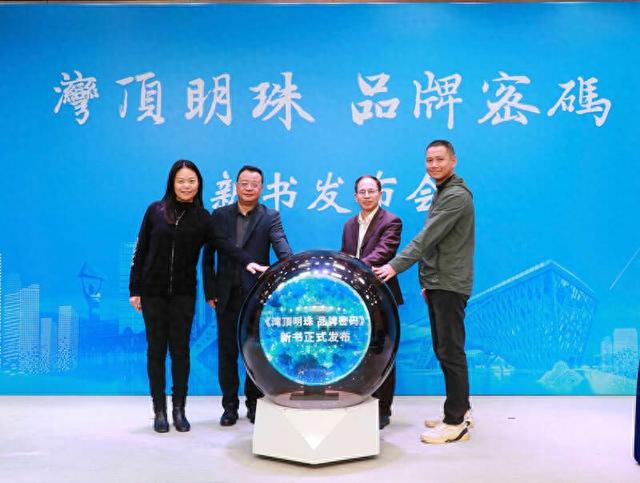
《湾顶明珠 品牌密码》新书发布,记录广州开发区中小企业创新实践
Xin Lang Cai Jing· 2026-01-01 16:39
Core Insights - The book "Bay Top Pearl Brand Code" showcases the development stories of over 40 enterprises in Guangzhou Development Zone, highlighting innovative practices across nine industrial sectors [1][3] - The book is structured with a dual narrative of "industrial track + innovation paradigm," focusing on business environment innovations and specific industries such as automotive manufacturing and biotechnology [3] Summary by Categories Business Environment - The first chapter emphasizes innovations in the business environment, setting the stage for the subsequent industry-specific discussions [3] Industry Sectors - The remaining nine chapters are categorized by industries, including automotive manufacturing, new displays, and biotechnology, with a concluding chapter on "future industries" featuring case studies from five companies [3] Company Selection Criteria - Selected companies meet three critical criteria: filling domestic gaps, setting international standards, and restructuring industrial chains, ensuring the cases are both representative and empirical [3] Small and Medium Enterprises (SMEs) - Over 80% of industrial enterprises and high-tech companies in Guangzhou Development Zone and Huangpu District are SMEs, contributing to more than 80% of invention patents and innovation outcomes [3] - By the end of 2025, the district aims to cultivate 38 national-level key "little giant" enterprises and 209 national-level specialized and innovative "little giants," with total revenue exceeding 70 billion [3] Economic Commentary - Renowned economist Zheng Yongnian praises the book as a collection of growth cases for SMEs and a record of innovation-driven development in national economic development zones, providing valuable insights for similar SMEs [3]

新型显示行业系列观察报告之一:Mini LED 技术的渗透率预计将不断提升
GUOTAI HAITONG SECURITIES· 2025-12-31 02:47
Investment Rating - The investment rating for the Mini LED industry is "Overweight" [4]. Core Insights - The Mini LED technology is expected to experience significant growth, with a projected 122% year-on-year increase in sales of Mini LED TVs in China by 2025, reaching a penetration rate of over 25% [2][4]. - The report highlights that the Mini LED technology is entering a rapid development phase due to advancements in technology and decreasing costs, allowing it to compete directly with OLED in the mid to high-end TV market [4]. - The Mini LED technology is also expanding into the mid to low-end TV market, as well as automotive and direct display applications [2][4]. Summary by Sections Industry Overview - Mini LED technology refers to LED chips sized between 100-300 microns, with a pitch of 0.1-1mm, used primarily in RGB displays or as backlighting for LCDs [4]. - The technology has faced challenges in the past, being perceived as a transitional solution to extend the life of LCD panels, but has shown significant growth potential in recent years [4]. Market Projections - By 2025, the total shipment of Mini LED TVs in China is expected to reach 9.23 million units, representing a 122% increase year-on-year, with a global shipment forecast of over 13 million units, a 70.6% increase [4]. - The report anticipates that as technology matures and scales, the prices of RGB Mini LED products will decrease, leading to an expansion of the brand ecosystem and accelerated market penetration by 2026 [4]. Company Focus - The report suggests paying attention to Xinyi Chang (新益昌), which is positioned to benefit from the growth in the Mini LED sector [4].

统筹推进科技创新产业创新和金融服务,培育发展新质生产力
Shan Xi Ri Bao· 2025-12-31 00:49
Core Viewpoint - The articles collectively emphasize the importance of high-quality development in Shaanxi province, focusing on technological innovation, industrial transformation, and financial services as key drivers for economic growth and modernization. Group 1: Economic Development Strategy - The provincial economic work conference outlines a blueprint for economic and social development in Shaanxi by 2026, emphasizing the integration of technological and industrial innovation with financial services [1] - The "14th Five-Year Plan" is highlighted as a critical period for achieving substantial progress in various sectors, including solar energy, new displays, commercial aerospace, and biomedicine [1][2] Group 2: Innovation and Talent Development - The integration of education, technology, and talent development is crucial for strengthening high-quality technological supply, with initiatives aimed at creating innovation hubs and enhancing research capabilities [3] - The focus is on collaborative innovation between universities, research institutions, and enterprises to produce original research outcomes and foster a robust talent development ecosystem [3] Group 3: Reform and Financial Support - The synergy between "three reforms" and technological financial reforms is essential for overcoming systemic barriers and energizing innovation, thereby supporting industrial upgrades and high-quality development [4] - Establishing a comprehensive service network for the transformation of technological achievements is prioritized, along with enhancing the effectiveness of technology transfer from universities and state-owned enterprises [4] Group 4: Industrial Optimization and Future Industries - The strategy includes optimizing and upgrading the industrial system to solidify the foundation of the real economy, with a focus on developing trillion-level industrial clusters in modern energy, advanced manufacturing, and strategic emerging industries [5] - Emphasis is placed on seizing opportunities in artificial intelligence and other future industries to drive digital transformation and high-end development in traditional sectors [5]

新型显示从“链式生态” 迈向“AI+显示”新纪元
Shang Hai Zheng Quan Bao· 2025-12-30 23:55
据中国光学光电子行业协会液晶分会预测,2025年,中国新型显示产业的产值规模将接近8000亿元,同 比增速在5%左右,全球市场占比近54%。 (文章来源:上海证券报) 人民财讯12月31日电,车载前挡玻璃实时显示导航和商铺信息;客厅墙面随语音指令瞬间切换为高清巨 幕;会议室桌面可直接"生长"出三维立体模型……2025年,显示技术不断突破传统屏幕的物理形态,深 度融合各类介质,成为无处不在的智慧界面。同时,国内新型显示产业通过融合柔性电子、全息成像等 前沿技术,持续推动产业升级,不仅深刻改变人机交互模式,也为开拓万亿级市场注入新动能。 "十五五"规划建议为产业发展明确了核心方向:"加强原始创新和关键核心技术攻关""坚持智能化、绿 色化、融合化方向""构建以先进制造业为骨干的现代化产业体系"。对于新型显示产业而言,如何在上 述方向中锚定坐标,并实现从技术"领先"到生态"引领"的跨越,是必须面对和思考的关键命题。 ...
多部门划重点,2026年这么干
Zhong Guo Zheng Quan Bao· 2025-12-30 14:03
Group 1 - The government is focusing on optimizing the implementation of the old-for-new policy for consumer goods and expanding service consumption to boost overall consumption [1] - There is an emphasis on promoting employment and income growth through various channels, enhancing public service levels, and ensuring the stability of essential goods prices [1] - Measures will be taken to stabilize investment and promote major engineering projects as part of the "14th Five-Year Plan" [1] Group 2 - The development of emerging industries such as integrated circuits, new displays, and biomedicine is being prioritized, along with support for artificial intelligence and 6G technology research [2] - Efforts are being made to enhance regional integration and promote rural revitalization in a classified and orderly manner [2] - High-quality urban renewal initiatives are being implemented, focusing on community improvements and public space enhancements [2] Group 3 - The inclusion of flexible employment workers and migrant workers in maternity insurance coverage is being promoted, with efforts to reduce out-of-pocket expenses for childbirth [3] - The government is encouraging commercial health insurance to cover more reasonable medical expenses outside the basic medical insurance directory [3] - There is a commitment to increasing the share of renewable energy, with plans for significant additions in wind and solar power capacity [3]
国内首条、全球首批第8.6代AMOLED生产线首款产品在成都高新西区正式点亮
Mei Ri Jing Ji Xin Wen· 2025-12-30 10:50
Core Insights - The successful lighting of the first product from BOE's 8.6-generation AMOLED production line marks a significant breakthrough in China's high-generation AMOLED sector, expected to drive high-quality development in the regional new display industry [2][3] - The project, with a total investment of 63 billion yuan, is the largest single industrial project in Sichuan province, covering approximately 1,400 acres and designed to produce 32,000 glass substrates per month [2][3] Group 1: Project Overview - The BOE 8.6-generation AMOLED production line is set to achieve mass production by 2026, primarily focusing on high-end touch OLED displays for smart terminals such as laptops and tablets [2][3] - The project will directly promote the collaborative upgrade of over 200 upstream and downstream enterprises, enhancing local supply chain capabilities [3] Group 2: Industry Impact - The production line is expected to enable "Chengdu-made" flexible displays to capture over 20% of the global market and over 50% of the national market share, solidifying Chengdu High-tech Zone's core position in the new display industry [3] - The establishment of a comprehensive industrial ecosystem around leading projects like BOE's is part of Chengdu High-tech Zone's strategy to enhance local industry clusters [4] Group 3: Local Support and Infrastructure - Chengdu High-tech Zone has formed a dedicated service team to ensure the efficient progress of the BOE project, providing comprehensive support in utilities, logistics, and inter-departmental collaboration [2][3] - The region has seen an increase in local supply rates, with over 40 new display-related enterprises established, creating a closed-loop industrial chain from upstream materials to downstream applications [4]


多举措助力产业科技创新能力提升
Ren Min Ri Bao Hai Wai Ban· 2025-12-30 01:50
Core Insights - The article emphasizes the importance of applying technological innovations to specific industries and supply chains to enhance industrial competitiveness. The recent national industrial and information technology conference outlined key initiatives for 2026 aimed at accelerating the transformation of technological innovations into productive forces, signaling a deep integration of technological and industrial innovation [1]. Group 1: Focus on Core Technologies - The conference highlighted the need to "overcome a batch of core technologies that drive industrial development," indicating a strong focus on innovation guided by industrial needs and applications. This approach is crucial for building a modern industrial system [2]. - The strategy involves targeting current needs for "precision" innovation while aligning with broader industrial transformation trends. Strengthening key common technologies, frontier leading technologies, modern engineering technologies, and disruptive technology innovations is essential for establishing a solid technological foundation for industrial development [2]. Group 2: Manufacturing Pilot Platforms - China has established over 2,400 pilot platforms for manufacturing in recent years. Statistics show that the industrialization success rate of technological achievements verified through pilot testing can reach over 80%, compared to only 30% for those that have not undergone such validation [3]. - The conference called for enhancing high-level manufacturing pilot platforms and emphasized the creation of a national manufacturing pilot service network that encourages multi-party participation and resource sharing, aiming to address the "last mile" challenge in technology transfer [3]. Group 3: Market-Oriented Technology Transfer - The conference proposed a "pay after use" reform pilot for technology achievements by 2026, aimed at lowering the barriers for technology transfer and reducing innovation risks for enterprises. This initiative is expected to increase the willingness and motivation of companies to engage with technological innovations [4]. Group 4: Cultivating New Industries - The focus on new industries includes the development of emerging pillar industries such as integrated circuits, new displays, new materials, aerospace, low-altitude economy, and biomedicine. Support for artificial intelligence breakthroughs and the orderly launch of satellite IoT commercial trials are also highlighted [5]. - The Ministry of Industry and Information Technology plans to nurture high-quality enterprises, including new "little giant" companies and manufacturing champions, while also addressing overdue payments to businesses and creating public service demonstration platforms for small and medium-sized enterprises [5].
工信部部署2026年十项重点工作 将培育一批重点行业智能体
2 1 Shi Ji Jing Ji Bao Dao· 2025-12-29 23:09
Core Viewpoint - The national industrial and information technology conference emphasizes the need to consolidate the positive momentum of the industrial economy as the primary task for 2026, shifting focus from promoting stable growth to ensuring quality improvement [2][3]. Group 1: Industrial Economy - The conference highlights the importance of stabilizing the industrial economy, with expectations for telecommunications and software business revenues to grow by approximately 9% and 12% year-on-year, respectively, in 2025 [2]. - The shift in focus from "promoting stable growth" to "consolidating a positive momentum" reflects a deeper policy transition from stabilizing the economy to enhancing quality [2][3]. - The conference outlines ten key areas of focus for 2026, with the first being the consolidation of the industrial economy's positive momentum [2]. Group 2: Supply and Demand - The conference plans to increase the supply of green products, trendy products, and products for the elderly, responding to market demand trends [3]. - The emphasis on domestic demand as a priority aligns with the need for relevant supply to stimulate demand, indicating a policy shift towards domestic market strengthening [3]. Group 3: Technological Integration - The conference promotes the "Artificial Intelligence + Manufacturing" initiative, aiming to cultivate key industry intelligent entities and original intelligent enterprises [4][5]. - The transition from "digital empowerment" to "intelligent empowerment" signifies a deeper integration of intelligent technologies into traditional industries, enhancing efficiency and value creation [6]. Group 4: Emerging Industries - The conference outlines plans to develop emerging pillar industries such as integrated circuits, new displays, new materials, aerospace, low-altitude economy, and biomedicine [8][9]. - The focus on these industries is seen as a strategic move to address key technological challenges and enhance new productive forces, aligning with national strategic needs [10]. Group 5: Quality Enterprises - The conference emphasizes the cultivation of high-quality enterprises, including "little giant" enterprises and manufacturing champions, while addressing issues of overdue payments to businesses [12]. - The goal is to enhance the service capabilities of the information and communication industry, with significant growth in 5G infrastructure, reaching 4.758 million base stations by the end of October 2025 [12]. Group 6: Low-altitude Economy - The conference highlights the low-altitude economy as a new growth point, with the introduction of frequency development guidelines to support the industry [13]. - This initiative aims to facilitate the commercial operation of low-altitude logistics and aerial tourism, ensuring resource allocation and regulatory clarity [13].
2026重点工作:芯片被提及
半导体芯闻· 2025-12-29 10:26
Core Viewpoint - The primary task for 2026 is to "consolidate the stable and positive trend of the industrial economy," reflecting a shift in policy focus from short-term growth to long-term quality improvement [3][4][5]. Group 1: Industrial Economy - The meeting emphasizes the need to support industrial provinces and stabilize effective investment in manufacturing [4]. - The industrial economy is expected to show resilience and vitality, with telecommunications and software business revenues projected to grow by approximately 9% and 12% respectively [3]. - The shift from "promoting stable growth" to "consolidating a stable and positive trend" indicates a deeper understanding of the current industrial economic situation [4]. Group 2: Supply and Demand - The focus on increasing the supply of green products, trendy products, and products for the elderly aligns with market demand trends [4]. - The emphasis on domestic demand as a primary driver of economic growth reflects a strategic shift towards building a strong domestic market [5]. Group 3: Technological Integration - The meeting highlights the importance of "AI + manufacturing" initiatives, aiming to cultivate key industry intelligent entities and original intelligent enterprises [7][10]. - The transition from "digital empowerment" to "intelligent empowerment" signifies a deeper integration of intelligent technologies into traditional industries [8]. Group 4: Emerging Industries - The conference outlines plans to develop emerging pillar industries such as integrated circuits, new displays, new materials, aerospace, low-altitude economy, and biomedicine [10][11]. - These industries are seen as crucial for addressing "bottleneck" issues and fostering new productive forces, with a focus on high value-added and high-tech characteristics [12]. Group 5: Quality Enterprises - The meeting stresses the need to cultivate high-quality enterprises, including "little giant" companies and manufacturing champions, while addressing issues of overdue payments to businesses [15][17]. - The goal is to enhance the service capabilities of the information and communication industry, with significant growth in 5G infrastructure [15]. Group 6: Governance and Competition - The meeting calls for improved governance efficiency in the industrial and information sectors, aiming to curb "involution" competition and promote high-quality standards [17]. - Strengthening policy coordination across industries, finance, and taxation is essential for fostering productive cooperation [17].
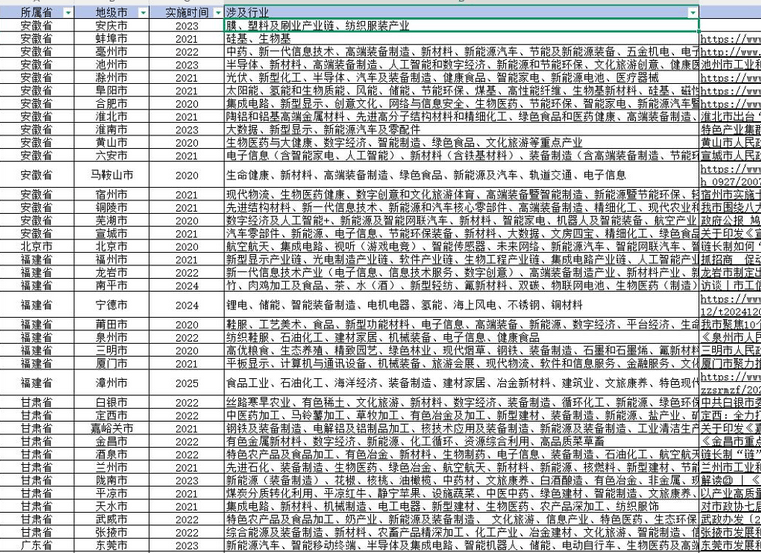
上市公司、地级市链长制数据(2009-2024年)
Sou Hu Cai Jing· 2025-12-29 04:06
Core Insights - The "Chain Leader System" is an industrial governance mechanism where local government leaders act as "chain leaders" to enhance the modernization of industrial chains through resource coordination, technology improvement, and investment promotion [1][2]. Group 1: Implementation Overview - The system is implemented by local governments, with a focus on specific industries, and has been adopted in various cities across China since 2009 [1]. - A detailed search was conducted to identify the specific implementation dates and industries covered by the "Chain Leader System" in different cities [1]. Group 2: Data Collection - A dual difference-in-differences (DID) dataset is being constructed, covering enterprise-level and city-level data from 2009 to 2024 [1]. - The dataset includes various indicators such as province, city, implementation time, involved industries, and financial metrics like ROA, ROE, and cash flow [2].