
生命健康

Search documents
中共武汉市委关于制定全市国民经济和社会发展第十五个五年规划的建议
Chang Jiang Ri Bao· 2025-12-22 08:49
Core Viewpoint - The "14th Five-Year Plan" period has seen significant achievements in Wuhan's development, with a focus on high-quality growth and resilience against challenges, setting the stage for the "15th Five-Year Plan" to further enhance the city's modernization and strategic position in the region [2][5]. Group 1: Achievements During the "14th Five-Year Plan" - Wuhan has experienced a remarkable economic recovery, with its GDP surpassing 2 trillion yuan, and key economic indicators maintaining leading growth rates among peer cities [2][5]. - The city has made substantial progress in establishing itself as a national center for technological innovation, with a notable increase in the number of academicians and significant breakthroughs in major independent innovations [2][5]. - Urban infrastructure and environmental quality have improved, with a successful reduction in major pollutants and the establishment of Wuhan as the world's first international wetland city with a population exceeding 10 million [2][5]. - Social welfare has been enhanced, with increased public service accessibility and a steady rise in per capita disposable income for residents [2][5]. Group 2: Strategic Opportunities and Challenges in the "15th Five-Year Plan" - The "15th Five-Year Plan" period is characterized by a critical phase for Wuhan, aiming to build five key centers and achieve significant advancements in modernization [4][5]. - The city is positioned to leverage strategic opportunities amid complex global changes, including technological revolutions and shifts in the geopolitical landscape [5][6]. - Despite the opportunities, challenges such as insufficient effective demand and the need for industrial transformation remain prominent [5][6]. Group 3: Development Goals and Principles for the "15th Five-Year Plan" - The guiding ideology for Wuhan's development emphasizes the integration of Marxist principles with Xi Jinping's thoughts, focusing on high-quality growth and comprehensive reforms [7][9]. - Key goals include achieving a GDP of over 3 trillion yuan, enhancing innovation capabilities, and establishing a modern industrial system [10][11]. - Principles such as maintaining party leadership, prioritizing people's needs, and fostering high-quality development are central to the city's strategy [9][10]. Group 4: Economic and Industrial Development Strategies - The plan emphasizes the importance of a modern industrial system, focusing on the integration of traditional industries with emerging sectors and future industries [13][14]. - Strategies include enhancing the competitiveness of existing industries, fostering new and future industries, and promoting the development of modern service sectors [15][16]. - The city aims to become a leader in the digital economy, with initiatives to integrate artificial intelligence across various sectors [16][18]. Group 5: Infrastructure and Urban Development - Urban development will focus on optimizing spatial layouts, enhancing infrastructure, and promoting sustainable urban renewal [34][35]. - The city plans to improve its transportation network, including the construction of high-speed rail and international logistics hubs [38][37]. - Efforts will be made to enhance the quality of urban management and public services, ensuring a high standard of living for residents [36][37].
广州“十五五”规划建议:构建赛马产业经济圈
Xin Lang Cai Jing· 2025-12-22 03:54
Core Viewpoint - The Guangzhou Municipal Committee has released recommendations for the 15th Five-Year Plan for national economic and social development, focusing on enhancing innovation and collaboration in the Greater Bay Area, particularly between Guangzhou, Shenzhen, and Hong Kong [1] Group 1: Innovation and Collaboration - The plan emphasizes the construction of the Guangzhou-Shenzhen-Hong Kong and Guangzhou-Zhuhai-Macao technology innovation corridors, leveraging platforms like the National Comprehensive Science Center for joint innovation [1] - It aims to enhance the capabilities of cooperation platforms such as the Guangzhou-Hong Kong Intelligent Manufacturing Cooperation Zone and the Guangzhou-Macao Innovation Park, promoting a globally leading innovation cluster [1] Group 2: Industry Development - The strategy includes deepening cross-border industrial chain construction between Guangzhou and Hong Kong, establishing a key base for the life and health technology industry, and promoting the formation of a capital management platform in the Greater Bay Area [1] - There is a focus on developing the horse racing industry, creating an economic circle around the horse racing industry, and leveraging the Hong Kong Jockey Club's resources [1] Group 3: Sports and Events - The plan aims to enhance the gaming industry in Guangzhou by attracting international esports events and improving the esports industry chain, positioning Guangzhou as an international esports capital [1] - It also promotes the development of various sports events, including water sports, automotive culture, low-altitude sports, and outdoor activities [1]
《经济日报》重磅聚焦:武汉“五谷”丰登产业图强
Jing Ji Ri Bao· 2025-12-22 03:25
Core Viewpoint - Wuhan is leveraging its "Five Valleys" innovation strategy to enhance its industrial competitiveness and drive economic growth through advancements in various high-tech sectors, including aerospace, automotive, digital security, and healthcare [1][5][10]. Group 1: Innovation and Technological Advancements - The "One Kilometer High-Speed Maglev Test Line" developed by the Wuhan Donghu Laboratory achieved a world record speed of 650 km/h, showcasing Wuhan's innovation capabilities [1]. - The Jiufengshan Laboratory has become a significant platform for research and testing in the compound semiconductor field, attracting over 50 upstream and downstream enterprises and more than 30,000 semiconductor talents [2]. - The automotive sector in Wuhan has seen rapid advancements, with the Lanzhou Automotive Smart Factory producing a new vehicle every 63 seconds and achieving breakthroughs in solid-state battery technology [3]. Group 2: Industrial Clusters and Economic Impact - The "Car Valley" has attracted 9 vehicle manufacturers and over 1,200 auto parts companies, significantly contributing to the transformation of traditional fuel vehicles to new energy vehicles [3]. - The "Star Valley" is recognized as the first national commercial aerospace industry base in China, capable of producing 50 rockets and 240 satellites annually, leading the country in launch frequency and satellite deployment [3]. - The "Network Valley" is projected to reach an industry scale of 25 billion yuan this year, with significant advancements in cybersecurity technologies [4]. Group 3: Collaborative Innovation and Talent Development - Wuhan is establishing a collaborative innovation mechanism across its "Five Valleys," with initiatives to support synergistic development among various sectors [6][8]. - The city has implemented talent attraction policies, resulting in a net inflow of over 300,000 university graduates annually, enhancing its workforce in high-tech industries [7]. - The high-tech industry’s value added to GDP is expected to rise from 26.2% to 30.4% during the 14th Five-Year Plan period, indicating robust growth in this sector [7]. Group 4: Regional Economic Integration - The automotive industry corridor extending from Wuhan to surrounding cities is evolving from a manufacturing to an innovation corridor, enhancing collaboration and efficiency across the region [10]. - The integration of industries such as display technology and semiconductor manufacturing is creating a "screen-chip" ecosystem in Wuhan, further solidifying its position in the high-tech landscape [10][11]. - The establishment of industry alliances and the deepening of industrial ecosystems in neighboring cities are contributing to the overall economic growth of Hubei province [11].
党建链助力产业链!在武汉,三支党员服务队链接40多家车企
Chang Jiang Ri Bao· 2025-12-22 01:04
延伸组织链条,推动"两个覆盖"有形有效 "过去,园区企业如同散落的珍珠,难以串联成链;如今,产业链党建搭台,让企业在更大的平台上实现资源共享、协同创新。"2月26 日,江夏区大健康产业链党建工作首次联席会议上,企业代表感慨万千。 产业发展到哪里、党建的组织和工作就要跟进到哪里。 今年,武汉市依托职能部门、链主企业、产业园区,在30条市区重点产业链牵头建立党建工作协调委员会,覆盖上下游企业925家, 链接相关职能部门和科研单位163个,构建市委统一领导、组织部门统筹协调、相关部门密切配合的工作格局。实施新兴领域"两个覆盖"集 中攻坚行动,通过链主企业带建、上下游联建、大中小共建等方式,推动产业链"三有"非公企业党组织应建尽建,实现党的组织和工作向 产业链上下游延伸覆盖。 精准纾困解难,确保惠企服务直达快享 "过去企业有问题,不知道该找谁。现在协调委员会就像'产业管家',一链通办、快速响应。"岚图汽车采购高级总监罗志浩感慨道。 企业的痛点难点,就是我们工作的重点。 "依托智能网联汽车产业链党建工作协调委员会机制,我们链接上下游9家整车企业、40余家核心零部件企业,组建创新链、供应链、 消费链三支党员服务队,让智能 ...

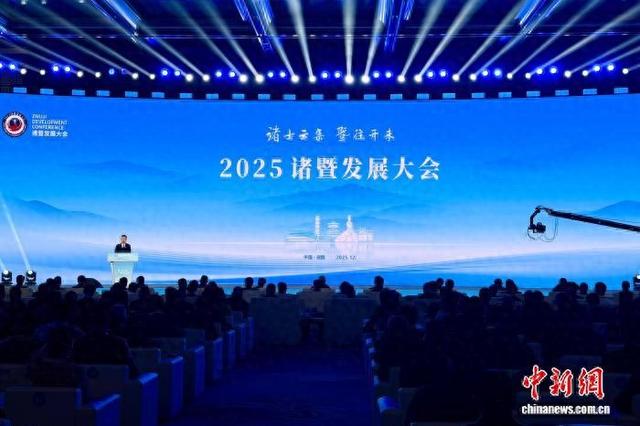
近五年来浙江诸暨“累计吸引在外诸暨人总投资金额超300亿元”
Xin Lang Cai Jing· 2025-12-20 11:52
Core Insights - The 2025 Zhuji Development Conference was held in Zhuji City, Zhejiang Province, where significant investment and development initiatives were announced [1][3] Group 1: Investment and Economic Growth - Over the past five years, Zhuji has attracted more than 2,000 prominent individuals from the area, resulting in total investments exceeding 30 billion yuan [1] - Zhuji's GDP has increased from 154 billion yuan in 2021 to 186 billion yuan in 2024, marking a significant growth trajectory [3] - The local government has identified 144 internal projects with investments over 100 million yuan, accounting for one-third of the annual manufacturing investment [3] Group 2: Industrial Development and Projects - The conference featured the signing of 18 industrial projects with a total planned investment of 26.8 billion yuan, focusing on sectors such as intelligent vision, aerospace, life health, new energy, and high-end manufacturing [5] - Six major industrial platforms were promoted, including the High Lake Future New District and the Xishi Basketball Center area, aimed at accelerating the establishment of a modern industrial system [5] Group 3: Talent and Education Initiatives - A donation ceremony was held where multiple companies contributed 41 million yuan to support local talent development, reinforcing the foundation for industrial growth [5]
武汉科技大学启动科创种子基金
FOFWEEKLY· 2025-12-19 09:59
Group 1 - The "Wuhan University of Science and Technology Innovation Seed Fund" has been launched with a total scale of 200 million RMB, aimed at accelerating the transformation of scientific achievements from "shelves" to "market" and from "laboratories" to "application fields" [1] - The fund is initiated by Wuhan University of Science and Technology in collaboration with Changjiang Industrial Group and Qingshan Investment Group, leveraging capital and industry insights from provincial strategic investment platforms, as well as policy and application scenarios from regional industrial bases [1] - The fund will focus on key areas such as materials science, intelligent manufacturing, and life health, adhering to the principle of "investing early, investing small, and investing in technology" to address the funding bottleneck in the initial stage of technology achievement transformation [1]

县域基金群的诞生:昆山高新区的创新资本之路
2 1 Shi Ji Jing Ji Bao Dao· 2025-12-18 09:48
Core Insights - The article discusses how Kunshan High-tech Zone is reshaping its innovation capital ecosystem through a fund system, focusing on the transition from manufacturing to technological innovation [1][2][3] Group 1: Fund System and Investment Strategy - Kunshan High-tech Zone has established a comprehensive innovation capital system over the past decade, despite not being located in a first-tier city or provincial capital [1][2] - Kunshan High-tech Venture Capital is exploring a collaborative model of "direct investment + market-oriented funds + mother funds" to support new productivity projects and industrial upgrades [1][3] - As of October 2023, Kunshan High-tech Venture Capital has established 32 funds, showcasing significant scale advantages and a diverse organizational structure [1][2] Group 2: Role of Local Government and Fund Management - The core goal of local state-owned assets is not just financial returns but to ensure key technologies and enterprises are established in Kunshan [2][3] - Kunshan High-tech Venture Capital acts as a "visible hand" in the local innovation ecosystem, coordinating resources and supporting early-stage teams in their transition from labs to commercialization [2][3] Group 3: Collaborative Ecosystem and Future Directions - The fund system serves as a tool for organizing resources, fulfilling three key tasks: supplementing the industrial chain, opening doors for new productivity, and seizing opportunities in future sectors [3][4] - The company is developing a fund brand called "Yujian" to bridge capital, technology, and industry, aiming to attract more venture capital institutions to the high-tech zone [4][5] - The collaboration with leading institutions enhances Kunshan High-tech Venture Capital's understanding of the fund system, focusing on long-term innovation cooperation and ecosystem building [5][6] Group 4: Comprehensive Service Model - The company is expanding its service model to include "fund + base + incubation," addressing the challenges of project landing and resource coordination [6][7] - A typical example is the robotics industrial park, where the company not only participates as an investor but also entrusts the operation rights to an incubation team [6][7] - This integrated approach creates a virtuous cycle of "fund attraction—project landing—industrial upgrading," distinguishing Kunshan High-tech Zone's strategy from other regions [7][8] Group 5: Future Aspirations - The company aims to anchor its investments in strategic emerging industries, expanding investment scale and enhancing investment quality [8] - The long-term vision is to create a technology innovation ecosystem that is high in quality, depth, and warmth [8]
生态协同成为大健康产业新趋势,金水方解读区域一体化发展机遇
Sou Hu Cai Jing· 2025-12-16 10:10
Core Insights - The health industry in China is transitioning from single technological breakthroughs to a new stage of ecological collaboration, as evidenced by various significant events held in December [3][10] Group 1: Regional Collaboration - Various regions are increasingly positioning themselves in the health industry based on their resource advantages, with Shanghai becoming a key node for global innovation and international cooperation in the life and health sector [3][4] - Xiong'an New Area is focusing on health communication, aiming to establish a health communication base that integrates health brands and creates industry clusters [3][4] - Ningde has explored paths for integrating the health industry with traditional industries, showcasing diverse development models that provide more options for entrepreneurs [4] Group 2: Technological Integration - Artificial intelligence (AI) and large model technologies are deeply integrated into various aspects of the health industry, enhancing diagnostic, treatment, and health management processes [5][8] - The emergence of city-level medical model clusters, such as Shenzhen's "Yizhi Fangzhou," aims to consolidate health data for public health services [5] - AI is evolving from a supportive tool to a core driver of innovation, facilitating faster clinical trials for new drugs [5][8] Group 3: Ecological Co-construction - The establishment of collaborative mechanisms within the health industry is evident, with initiatives like the "Health Communication Ecological Co-creation Alliance" bringing together diverse stakeholders [6][7] - The "Global Life and Health Innovation Service Platform" launched in Shanghai aims to create a high-level international cooperation network across key industry segments [6] Group 4: Shift to Comprehensive Health Management - Health services are shifting from a treatment-centric model to a full-cycle health management approach, driven by advancements in digital technology [8] - Personalized health management is becoming feasible, with AI enabling tailored medical solutions based on genetic analysis [8] - Consumers are increasingly seeking comprehensive health management solutions that cover prevention, treatment, and rehabilitation, creating new market demands [8] Group 5: Entrepreneurial Opportunities - New entrepreneurial directions are emerging in the health sector, with a focus on vertical specialization and innovative integration [9] - Companies like Natong Technology Group are developing specialized medical devices, while others are applying AI in mental health services [9] - Platform-based models are lowering barriers for entrepreneurs, allowing them to leverage existing resources and focus on core competencies [9][10]
上海下一个爆点!曾经爱搭不理的这个郊区,正在成为最强潜力股!
Sou Hu Cai Jing· 2025-12-12 18:06
Core Insights - Songjiang has transformed from a perceived remote area to a key engine of Shanghai's innovation, with strategic emerging industries accounting for nearly 60% of its economy, significantly higher than the city average [1] - The region's strong R&D investment intensity of 7.24% is comparable to developed countries, with 92% of this funding coming from enterprises, indicating a robust belief in profitability and effective industry-academia collaboration [1] - Songjiang's economic structure is characterized by a "2+4" system, featuring two trillion-yuan industries in new-generation information technology and high-end equipment, alongside four hundred-billion-yuan industries, including advanced materials and life health [2] Industry Development - The new-generation information technology sector includes smart terminals, intelligent computing services, and satellite internet, while high-end equipment encompasses new energy facilities and instrumentation, indicating vast future growth potential [2] - The region is home to significant advancements in satellite internet, with plans to produce 300 satellites annually by 2027, and it accounts for half of the city's computing power, positioning itself in the "future computing" sector [2] - Songjiang University Town has evolved into a "source of innovation," fostering industry-academia integration, with notable research outputs and rapid technology transfer, including 55 Shanghai Science and Technology Awards from 2023 to 2024 [2] Infrastructure and Investment - A major transportation hub is being developed in Songjiang, expected to handle 21 million passengers annually, enhancing connectivity to over 80% of cities in the Yangtze River Delta [4] - Vanke has invested 2.5 billion yuan in the second phase of the Songjiang Impression City project, aiming to create Shanghai's largest single commercial complex, reflecting confidence in Songjiang's development prospects [4] - Songjiang has been recognized as a national model for rural revitalization, achieving top assessments for five consecutive years, with its rice brand gaining national geographical indication protection [4] Future Outlook - The five-year goal for Songjiang is to establish itself as an internationally influential innovation corridor and a comprehensive node city in the Yangtze River Delta, emphasizing the importance of industrial vitality and innovation [6] - The transformation of Songjiang serves as a case study for other suburban areas, highlighting that development should focus on internal dynamics rather than geographical location [8] - The narrative of Songjiang illustrates a story of transformation, innovation, and opportunity, encouraging other regions to seek similar paths to success [8]

浙江第三极,押注“都市圈”战略
Guo Ji Jin Rong Bao· 2025-12-12 14:34
随着GDP即将突破万亿元大关,温州正迎来城市发展的关键跃升期。 产业与创新领域,依托民营经济优势,重点布局智能装备、生命健康、新能源等战略性新兴产业, 提出打造超两千万大孵化器集群、建成人工智能创新发展先行市等目标,推动产业向高端化、智能化、 绿色化转型。另外,生态与公共服务领域,坚守"山江海"生态基底,推进基本公共服务一体化改革,让 都市圈既有"规模"更有"温度"。 按照规划,温州将打造交通圈、科技圈、产业圈、生态圈、公共服务圈于一体的都市圈功能体系, 强化与台州、丽水及闽北地区的设施互通、产业协作,高水平建设温台海洋经济产业带,引领浙南闽北 赣东更大范围协同发展,打造长三角"南大门"与对接闽台海西"桥头堡"。 据专家测算,温州都市圈可涵盖温州全域及周边24个县(市、区),区域规模超过多个现有国家级 都市圈,发展潜力巨大。 徐浩平分析,温州地处浙南闽北赣东交汇地带,既面临长三角一体化与海西经济区双重辐射,也存 在区域发展不均衡的挑战。都市圈战略通过构建"六大共同体"与"1小时通勤圈",打破行政边界限制, 推动要素自由流动与产业错位发展,既能放大民营经济优势,又能激活周边区域发展动能,形成"核心 引领、全域联 ...