
电解铝

Search documents
电解铝:宏观基本面共振铝价实现开年红
Yin He Qi Huo· 2026-01-12 00:59
电解铝 :宏观基本面共振 铝价实现开年红 研究员:陈婧 期货从业证号:F03107034 投资咨询从业证号:Z0018401 铝策略展望 GALAXY FUTURES 1 227/82/4 228/210/172 181/181/181 87/87/87 文 字 色 基 础 色 辅 助 色 137/137/137 246/206/207 ◼ 宏观:地缘政治风险叠加去美元化预期推动资金青睐实物资产有色金属,资金流入推动价格上涨。后续关注美国就业数据及美国对对等关 税的裁决。同时关注伊朗地区地缘政治风险。 ◼ 产业供应:近期无超预期变动,供给端刚性预期明显,越南电解铝项目投产预期从二季度推迟至7月初。负基差较大带动短期铸锭增加、 铝棒加工费短期转负,后续持续关注铝水就地转化率。 ◼ 产业需求:表观需求短期有所走弱,但下游仍逢低积极备货,出库端无显著异动。光伏出口退税取消,一季度抢出口窗口期预计对铝需求 有一定影响。 ◼ 库存:本周铝锭及铝棒社库厂库合计109.61万吨,环比显著增加,但增量主要与期现基差较大、存套利机会有关,后续预计仓单有所增 加。 ◼ 交易逻辑:铝在供给端全球持续存缺口且供给弹性较低、需求端在能 ...
最新!马杜罗在美首次出庭 委内瑞拉下令!特朗普威胁!有色板块爆发
Qi Huo Ri Bao· 2026-01-06 00:16
Group 1 - Venezuelan President Maduro and his wife appeared in a U.S. court, denying all charges and claiming he is still the president of Venezuela [3][5] - The Venezuelan government issued a decree to search for and arrest individuals supporting U.S. military actions, implementing emergency defense measures [7][8] Group 2 - U.S. President Trump threatened to increase tariffs on Indian products if India does not limit its purchase of Russian oil, with tariffs potentially rising to 50% [9][10] - Federal Reserve official Kashkari indicated that the Fed is close to stopping interest rate cuts, emphasizing the need for more data on inflation and the labor market [11] Group 3 - The geopolitical instability following the U.S. control of Maduro has led to a surge in gold and silver futures prices, with gold rising over 3% and silver over 7% [11] - The base metals sector saw significant gains, with copper up 4.19% and aluminum up 2.32%, driven by concerns over resource supply stability due to the Venezuelan situation [12][14] Group 4 - The domestic market for non-ferrous metals showed strong performance post-New Year, with aluminum prices rising due to supply concerns linked to the Venezuelan crisis [14][15] - The tightening supply of electrolytic aluminum is a key driver for rising aluminum prices, with domestic production capacity reaching its limit [15][17] Group 5 - Analysts express optimism for the long-term outlook of the non-ferrous metals sector, citing potential improvements in global liquidity and ongoing supply disruptions [17][18] - Despite the strong performance, there are warnings about potential short-term volatility due to weak demand and seasonal factors affecting aluminum prices [18]


申万宏源研究晨会报告-20260105
Shenwan Hongyuan Securities· 2026-01-05 01:24
Group 1: Nanshan Aluminum (南山铝业) - Nanshan Aluminum is positioned as a rare growth target in the electrolytic aluminum sector, with a focus on dividends and share buybacks, reflecting confidence in its growth potential [4][12] - The company is expected to achieve net profits of CNY 5.0 billion, CNY 5.46 billion, and CNY 5.84 billion for the years 2025, 2026, and 2027, respectively, corresponding to P/E ratios of 12x, 11x, and 10x [4][12] - The report anticipates a 15% upside potential based on a target P/E of 13x for 2026, indicating a favorable valuation compared to peer companies [4][12] - Key assumptions include increased alumina production from Indonesia, with projected sales volumes of 2.76 million tons in 2025, 4.36 million tons in 2026, and 4.56 million tons in 2027 [12] - The report highlights that domestic electrolytic aluminum capacity is nearing its peak, while global supply growth is slowing, suggesting a favorable supply-demand balance for the industry [12] Group 2: Hanhigh Group (悍高集团) - Hanhigh Group is expected to achieve revenues of CNY 3.595 billion, CNY 4.525 billion, and CNY 5.653 billion for 2025, 2026, and 2027, respectively, with net profits of CNY 706 million, CNY 942 million, and CNY 1.237 billion [4][15] - The company is rated as "Buy" based on its current valuation being below the average of comparable companies for 2026 [4][15] - Hanhigh Group's growth is driven by cost reduction and brand strength, with a CAGR of 29% in revenue and 59% in net profit from 2019 to 2024 [12][13] - The company focuses on product innovation and cost efficiency, leveraging its own production capacity to enhance profitability [12][13] Group 3: Market Overview and Investment Strategy - The report identifies a favorable market environment for the spring season, with expectations of continued upward momentum in the stock market due to improved economic indicators and liquidity [22] - The "Top Ten Gold Stocks" for January 2026 include companies like Hualu Hengsheng, Lingyi Zhi Zao, and Alibaba, indicating a diversified investment strategy across sectors [14][22] - The automotive industry is highlighted for its recovery potential, particularly with the introduction of new subsidies and the expected improvement in demand for mid-range vehicles [24]
谈谈过去一年的教训和经验
雪球· 2026-01-04 08:04
Core Viewpoint - The article reflects on past investment experiences, emphasizing the importance of market trends alongside fundamental analysis and valuation in making investment decisions [4][11]. Group 1: Lessons from Profitable Stocks - The success with China Hongqiao was attributed to its favorable fundamentals, low valuation, and positive market trends, which were initially overlooked, leading to insufficient position size [5][6]. - The analysis of market trends, fundamental changes, and valuation is crucial; when two out of three factors indicate a better choice, decisive action should be taken [5][6]. Group 2: Lessons from Unprofitable Stocks - Chengdu Bank's disappointing third-quarter report highlighted the risk of ignoring market signals, leading to a misguided decision to buy against market trends [7]. - The experiences with Gree Electric and thermal power stocks underscored the necessity of having strong confidence in fundamentals before investing, as lack of confidence can lead to panic selling during market corrections [8]. Group 3: Key Investment Strategies - Identifying opportunities where fundamentals, low valuation, and positive market trends align is rare; when such opportunities arise, significant investment should be made [11]. - When market trends confirm investment logic, it is essential to increase position size decisively, as demonstrated by the successful investment in Shenhuo [10][11]. - A lack of confidence in fundamentals can lead to poor investment decisions, especially during market adjustments, resulting in losses [11]. Group 4: Future Focus - The company plans to concentrate on analyzing firms with strong cash flow, low valuations, and a commitment to sharing value with minority shareholders, while continuing to explore the thermal power sector [12].



云南省不断加快经济社会发展全面绿色转型
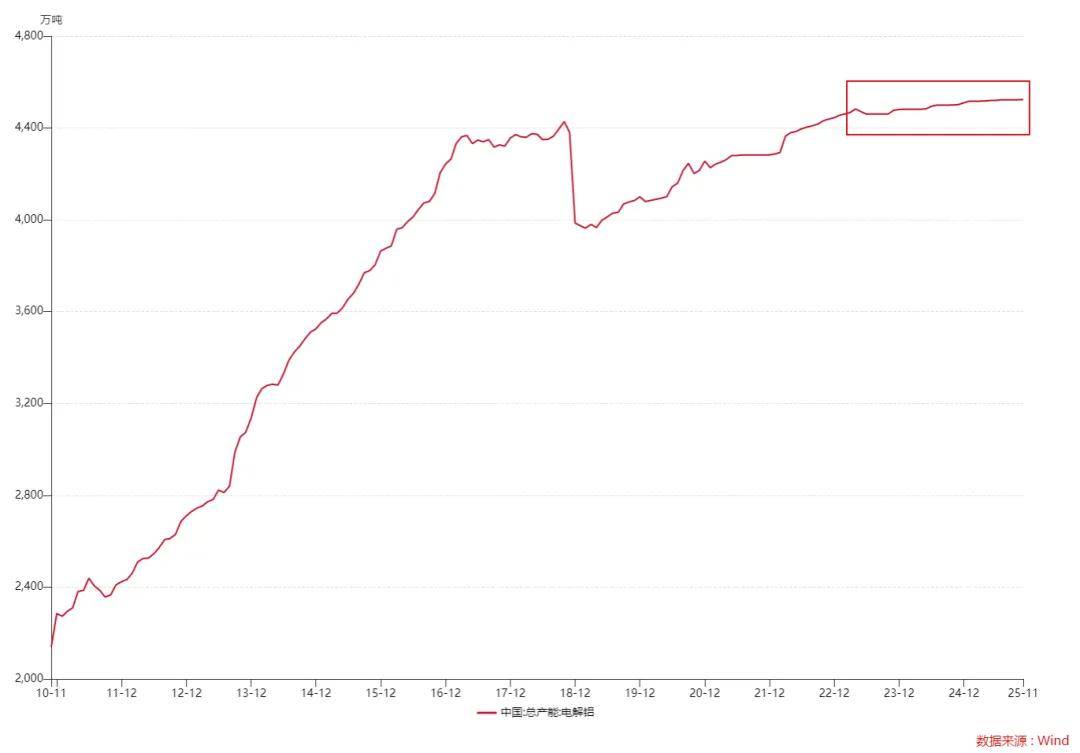
Xin Lang Cai Jing· 2026-01-01 15:41
用绿电生产绿品,正是云南以绿色能源赋能产业转型升级的生动实践。从电解铝到硅光伏、新能源电 池,从鲜花、咖啡到文旅康养,源源不断的绿电有力支撑传统产业转型升级,特色产业做大做强,新兴 产业加快崛起,助力企业认证绿色产品、创建绿色工厂、打造零碳园区,全方位赋能经济社会发展全面 绿色转型。 不仅如此,我省一批零碳园区加快建设,其中,大理祥云经开区、曲靖经开区入选国家级零碳园区建设 名单;首批确定4个绿电直连项目,将推动绿电就地就近消纳约11亿千瓦时,满足企业绿色用能需求, 提升云南制造出海竞争力;依托通信时延优势,我省加快布局"绿电+智算"新赛道,推动绿色能源与数 字产业深度融合。 滚滚江水上、崇山峻岭间,水电站机组高速运转,"大风车"迎风旋转,光伏板"逐光生金",源源不断的 绿电跨越千里点亮万家灯火;智慧工厂、零碳园区,"以绿制绿"正重构产业生态,各行业以更低能耗、 更少排放加速绿色蜕变。 从降碳、减排到治污、增绿,云南高质量发展的强劲脉搏里涌动着浓浓绿意。 "要建立健全绿色低碳循环发展经济体系,加快产业、能源、交通、城乡建设、消费等重点领域绿色转 型。""加快绿色低碳发展,拓宽绿水青山向金山银山转换的渠道",省 ...
【百亿基金内参】2026春季行情展望:电解铝、煤炭压舱,化工供给侧受益,聚焦价值与避险的确定性机会
Sou Hu Cai Jing· 2025-12-31 16:02
★年底结汇潮过后,人民币升值动能将减弱,明年或进入6.8-7.1的拉锯震荡区间 ★人民币升值受益板块明确,成本降毛利升 ★有色行情下半场:从追逐泡沫到拥抱价值 ★避险情绪升温,电解铝凭借低波动率与价格位置成为"压舱石" 第一财经资讯2025-12-31 22:14:42 【本期重点】 ★一致看多下的隐忧:全球权益资产估值已高,警惕"黑天鹅"波动 ★煤价区间锁定,高股息凸显:煤炭板块仍是优质的"压舱石"资产 ★穿越内卷:如何筛选化工板块中,兼具供给侧改革与需求弹性的品种? 本期会谈邀请数位买方机构的基金经理,对大盘、政策、以及后市投资机会等进行深度交流。 ...
盐和铝-电解铝行业2026年度投资策略
2025-12-31 16:02
Summary of Key Points from the Conference Call Industry Overview - The conference call focuses on the aluminum industry, particularly the electrolytic aluminum sector, and its investment strategy for 2026, highlighting the impact of various macroeconomic and geopolitical factors on aluminum supply and demand [1][2]. Core Insights and Arguments - **Supply Constraints**: China's electrolytic aluminum production capacity is limited by dual carbon policies, power shortages, and technological constraints, leading to a long-term tight supply situation that supports high aluminum prices [1][2]. - **Global Manufacturing Recovery**: The global manufacturing PMI has remained above 50 for four consecutive months, indicating a recovery in manufacturing activity, particularly in Europe and emerging industrialized countries, which is expected to drive aluminum demand [4]. - **Geopolitical Risks**: Increased geopolitical risks and environmental uncertainties are raising the demand for strategic resource reserves, leading to more conservative mineral investments and stricter export controls, which further exacerbate supply uncertainties [1][5]. - **Interest Rate Impact**: A declining interest rate cycle typically boosts industrial metal prices. With low global inventory levels, a sustained decline in interest rates is expected to stimulate restocking, positively impacting aluminum prices [6]. - **North American Supply Issues**: Energy supply constraints in North America, exacerbated by AI development, may lead to further production cuts in the U.S. and Canada, affecting global supply-demand balance [12]. - **Recycling Challenges**: Progress in aluminum recycling is slow, with reduced subsidies for scrap aluminum and a lack of significant increases in scrap supply, maintaining a tight balance in domestic and international supply [15]. Additional Important Insights - **Historical Price Comparisons**: The aluminum market shows similarities to historical salt price trends, where both commodities have abundant reserves but face price pressures due to technological and regulatory constraints [3]. - **Future Demand Trends**: The demand for industrial metals, including aluminum, is expected to steadily increase in the coming years, driven by developments in AI, renewable energy, and infrastructure upgrades [4][8]. - **Valuation and Investment Outlook**: The aluminum sector has undergone debt repair, with an average dividend yield of 5%, making it attractive for long-term investments. The sector's valuation is currently around 8-9 times earnings, with potential to rise to 13-15 times [16][18]. - **Company Recommendations**: For companies with strong resilience, recommendations include Tianshan, Hongchuang, and Nanshan Aluminum, which are noted for their cost advantages and integrated operations [20]. For companies with flexibility, Yun Aluminum and Zhongfu are highlighted due to their benefits from marginal changes [19]. Conclusion - The aluminum industry is poised for growth due to a combination of supply constraints, recovering demand, and favorable macroeconomic conditions. Investment opportunities exist in companies with strong fundamentals and strategic positioning within the sector [21][22].
霸榜前五!有色金属2025年表现最佳,2026年怎么看?
格隆汇APP· 2025-12-31 10:35
Core Viewpoint - The article highlights the significant performance of the non-ferrous metal sector, particularly precious metals like gold and silver, which have outperformed other sectors in 2025, with non-ferrous metals rising by 94.73% throughout the year [2]. Group 1: Market Performance - Precious metals, including silver and gold, saw price increases of over 130% and 40% respectively, with silver experiencing extreme volatility due to regulatory interventions [5]. - In the stock market, non-ferrous metals such as copper, aluminum, cobalt, lithium, and rare earths also entered a strong upward cycle, with leading companies in the sector seeing their stock prices double [5]. - The Hong Kong stock market's non-ferrous sector outperformed other industries, with copper stocks soaring over 261%, and gold and precious metals rising by 197.85% [7][8]. Group 2: Company Performance - Zijin Mining (02899.HK) saw its stock price increase by over 163%, outperforming its A-share counterpart, with a current market capitalization exceeding 940 billion HKD [9]. - Luoyang Molybdenum (03993.HK) surged by over 287%, while China Hongqiao (01378.HK) recorded a 203.7% increase, with both companies showing strong earnings growth [11][22]. - China Hongqiao's revenue for the first half of the year reached 81.04 billion RMB, a 10.12% increase, with net profit rising by 35.02% [22]. Group 3: Future Outlook - Institutions expect the non-ferrous metal sector to continue its upward trajectory in 2026 due to favorable monetary conditions and a tight supply-demand balance [6]. - The article discusses the structural supply-demand gap in copper, with a projected global copper concentrate deficit of 848,000 tons in 2025, indicating a tightening market [32][33]. - The performance of leading companies like Zijin Mining and China Hongqiao is expected to remain strong, supported by their resource reserves and integrated industrial chains [34].

电价下跌利好谁?一些优先受益方向都在这
Sou Hu Cai Jing· 2025-12-30 21:09
Core Viewpoint - The decline in electricity prices is primarily affecting the industrial sector, creating significant investment opportunities, particularly in the electrolytic aluminum industry, which benefits the most from lower electricity costs [1][2]. Group 1: Impact on Industries - The electrolytic aluminum industry is the most positively impacted, as electricity accounts for approximately 30% of production costs, with about 13,500 kWh required to produce one ton of aluminum. The industry's electricity consumption represents about 7-8% of total social electricity usage [2]. - The chemical industry is also positively affected, as it requires substantial electricity for production, such as 14,000 kWh for one ton of yellow phosphorus and 6,000 kWh for one ton of PVC. However, unlike electrolytic aluminum, the chemical industry's capacity is not strictly limited, which may lead to profit dilution as costs decrease [4]. - The steel industry faces challenges despite lower electricity costs, primarily due to weak demand from the real estate sector, which constitutes about 25% of steel demand. The decline in new housing starts has significantly reduced steel consumption [4]. Group 2: Market Reactions and Trends - The recent drop in electricity prices has led to a continued sell-off in power stocks, with companies like Huaneng International, Huadian International, and Guodian Power experiencing declines of 3.8%, 2.4%, and 3% respectively [1]. - The robot industry is gaining traction, with suppliers meeting Tesla to discuss production capacity and pricing, indicating a shift from speculative interest to tangible orders, which has resulted in a 4.3% increase in the robot ETF [6]. - The precious metals market has seen significant volatility, with gold and silver prices dropping 4.4% and 10% respectively due to increased margin requirements on futures contracts, leading to a withdrawal of speculative positions [7].
沪指10连阳,化工、有色比翼双飞!港股硬科技反攻,首只重仓“港股芯片链”的港股信息技术ETF放量大涨2%
Xin Lang Cai Jing· 2025-12-30 11:59
Market Overview - On December 30, 2025, A-shares experienced a significant rally, with the Shanghai Composite Index achieving a "10 consecutive days of gains," marking the longest streak of the year [1] - The market's trading volume exceeded 20 trillion yuan for the third consecutive day, indicating strong investor interest [1] Sector Performance - The chemical and non-ferrous metals sectors opened lower but rebounded strongly, with the chemical ETF (516020) reaching a new three-year high, gaining 2.5% intraday [1][34] - The chemical ETF (516020) recorded a year-to-date increase of over 40%, significantly outperforming major indices like the Shanghai Composite [35] - The non-ferrous ETF (159876) also saw a rise of 1.75% after hitting a historical high, reflecting strong investor confidence in the sector [1][16] Technology Sector - The technology sector remained active, with the "AI twins" (entrepreneurial AI ETFs) continuing to rise, showcasing the strength of the domestic AI industry chain [1] - The Hong Kong information technology ETF (159131), focused on the semiconductor industry, surged by 2%, outperforming other technology indices [27][34] Investment Opportunities - The semiconductor market in China is projected to reach $206.7 billion by 2025, driven by domestic policy support and international dynamics [32] - The valuation of the Hong Kong information technology ETF (159131) is attractive, with a price-to-earnings ratio of 33.25, indicating significant upside potential compared to other major technology indices [32][34] Notable Stocks - Semiconductor stocks like SMIC saw a rise of over 4%, indicating strong market performance [27] - In the chemical sector, stocks such as Hengyi Petrochemical and New Fengming experienced significant gains, with some stocks hitting their daily limit [35]
