跨境支付

Search documents
万里汇x雨果跨境共同发布|外贸趋势增长洞察报告
Jin Tou Wang· 2025-12-12 00:57
Core Insights - The report analyzes the current state and future trends of China's foreign trade through the lens of the 138th Canton Fair, highlighting a shift from "scale expansion" to "value competition" in foreign trade practices [1][5] Group 1: Market Dynamics - Over 310,000 overseas buyers attended the 138th Canton Fair, with 74,500 exhibition booths and more than 32,000 participating companies, marking a historical high [3] - The fair showcased over 10,000 high-quality enterprises recognized for advanced technology and innovation, with smart products, green energy-efficient appliances, and intelligent robots being the main highlights [3] - Emerging markets are becoming the growth engine for China's foreign trade, with a 14.1% increase in pre-registered buyers, particularly from Belt and Road Initiative countries, which saw a 9.4% growth [5][7] Group 2: Technological Empowerment - AI is becoming a core driver for the development of the foreign trade industry, enhancing user experience and enabling businesses to transition from merely using AI tools to integrating into the AI ecosystem [7][9] Group 3: Compliance and Risk Management - Compliance has become a necessity for long-term profitability in an increasingly complex international trade environment, with 43% of cross-border traders prioritizing compliance as a core focus [9][12] - The instability of tariff policies poses systemic shocks to the foreign trade payment system, necessitating real-time adjustments in transaction prices [9][12] Group 4: Branding and Market Strategy - The market for self-built websites in China reached 1.4 trillion yuan in 2022, with market share expected to grow from 9.8% in 2016 to 41%-50% by 2025, indicating a shift towards brand building in overseas markets [14][16] - Companies are increasingly recognizing the importance of establishing long-term relationships with consumers rather than focusing solely on one-time transactions [14][16] Group 5: Future Trends - The foreign trade landscape is evolving along three clear trends: value reconstruction, deep localization, and compliance resilience, which are essential for companies to find stable growth in changing circumstances [16][18]


依托Swift网络 蚂蚁国际和汇丰银行测试代币化存款全新跨境支付方案
Bei Jing Shang Bao· 2025-12-11 15:26
Core Insights - The collaboration between Swift, Ant International, and HSBC has successfully completed a proof of concept (POC) for tokenized deposit cross-border transfers based on the ISO 20022 standard [1] - This project aims to enhance liquidity, enable programmable finance, and provide 24/7 real-time settlement services [1] - Ant International and HSBC have integrated Ant International's blockchain infrastructure with the Swift network, facilitating cross-border real-time fund management [1] Group 1 - The POC marks a significant step in unlocking the potential of tokenized deposits for enterprises [1] - The standardized protocol developed in collaboration with Swift and HSBC allows Ant International to efficiently utilize bank tokenized deposit services without establishing bilateral AML and compliance arrangements with each banking partner [1]

AI时代的超级连接器:蚂蚁国际想象Fintech 3.0
Xin Lang Cai Jing· 2025-12-11 10:10
Core Insights - The core mission of fintech in the Asia-Pacific region is to connect transactions and enable all markets and businesses to overcome long-term economic turbulence, gaining access to global reach previously reserved for multinational corporations [2][20]. Group 1: Financial Services Challenges - Emerging markets, particularly in the Asia-Pacific region, face multiple financial service challenges, including high local payment barriers, fragmented global liquidity, and decreased visibility in multi-market fund management [2][18]. - These obstacles particularly hinder small and medium-sized enterprises (SMEs), widening the competitive gap with large multinational companies [2][18]. Group 2: Fintech 3.0 Vision - Ant Group is accelerating investments in a Fintech 3.0 vision characterized by an open ecosystem, multi-dimensional payment innovations, and trusted security technology [5][20]. - The focus is on establishing cross-border and cross-system connectivity to create a compliant, low-friction, and high-efficiency global payment ecosystem [6][21]. Group 3: Payment Innovations - Ant Group's Alipay+ has partnered with 40 major e-wallets and over 10 national QR code networks, covering more than 100 markets, allowing over 150 million merchants to seamlessly access mainstream payment methods in the Asia-Pacific region [6][21]. - The introduction of real-time payment pathways between mobile payment systems and traditional card banking systems is a significant breakthrough, enabling users to make contactless payments through NFC technology [7][22]. Group 4: AI and Payment Technology - AI and blockchain technologies are driving profound changes in the payment sector, with Ant Group focusing on agentic payments that assist in complex tasks beyond simple transactions [9][24]. - The company is developing an AI service platform, GenAI Cockpit, to provide customized solutions for fintech companies in countries like Malaysia and Pakistan [10][25]. Group 5: Real-Time Payment and Forex Management - Real-time global payment settlement (RTP) is a key area of focus, allowing businesses to achieve 24/7 settlement and significantly reduce delays and costs associated with traditional banking networks [10][26]. - Ant Group's AI model, Falcon, is designed to manage foreign exchange needs, processing $15 trillion in funds by 2025 and helping clients reduce hedging costs by 40% [11][26]. Group 6: Security and Trust - Ant Group is investing in advanced privacy computing architectures to ensure data protection while sharing business insights securely [15][30]. - The introduction of the Alipay+ GlassPay smart glasses payment solution incorporates advanced biometric verification methods, enhancing security in digital transactions [12][27]. Group 7: Empowering SMEs - The launch of the AI operational app EPOS 360 aims to provide SMEs with insights and responsiveness comparable to large institutions, representing a significant opportunity for inclusive financial growth [16][31].
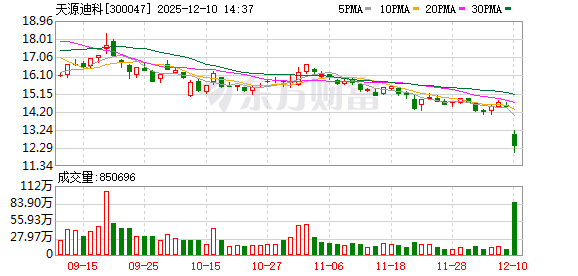
跨境支付板块下跌 天源迪科下跌14.97%
Mei Ri Jing Ji Xin Wen· 2025-12-10 06:36
Group 1 - The cross-border payment sector experienced a decline on December 10, with notable drops in stock prices [2] - Tianyuan Dike saw a significant decrease of 14.97% [2] - Shenzhou Information and China Merchants Bank also reported declines of 3.79% and 2.86% respectively [2] Group 2 - Agricultural Bank of China and Industrial and Commercial Bank of China both fell by over 3% [2]




跨境支付市场再现超大融资:空中云汇完成3.3亿美元G轮融资,估值达80亿美元
Hua Xia Shi Bao· 2025-12-09 09:38
Core Insights - Airwallex has completed a Series G funding round, raising $330 million, with a valuation of $8 billion, reflecting a nearly 30% increase from its previous funding round [2][3] - The funding will enhance Airwallex's technological edge and expand its strategic presence in the U.S. and other key global markets [2] - The company reported an annualized revenue exceeding $1 billion in October, a 90% year-on-year increase, and a transaction volume surpassing $235 billion, doubling year-on-year [3] Funding Details - The Series G round was led by Addition, with participation from T. Rowe Price, Activant, Lingotto, Robinhood Ventures, and TIAA Ventures [2][4] - Airwallex plans to establish a second global headquarters in San Francisco, aiming to double its U.S. team to over 400 within the next 12 months [4] Market Position and Growth - Airwallex has become a prominent player in the fintech sector, with nearly 40% of its revenue now coming from North America and Europe [5] - The company holds 80 licenses globally, enabling operations in over 200 countries, which supports its multi-currency settlement capabilities [3][5] Industry Context - The cross-border payment sector is experiencing significant growth, driven by globalization and the rapid expansion of cross-border e-commerce [9] - Investment in cross-border payment firms is increasing due to the demand for localized manufacturing and the inadequacy of traditional banking services to meet the needs of local businesses [9] - Regulatory support and advancements in compliance technology are enhancing market confidence in the cross-border payment industry [8]

再融3.3亿,Airwallex今天估值80亿美元了丨36氪独家
36氪· 2025-12-09 00:27
Core Insights - Airwallex has successfully completed a Series G funding round of $330 million, achieving a valuation of $8 billion, which represents a nearly 30% increase from the previous round [4] - The funding will accelerate Airwallex's expansion in the U.S. and key global markets, with significant participation from notable investors such as Addition, T. Rowe Price, and Lingotto [4] - Airwallex's annual revenue is projected to exceed $1 billion by October 2025, with a year-on-year growth of 90%, and its annual transaction volume is expected to double to $235 billion [5] Funding and Growth - The company has secured over 80 licenses globally, enabling operations in over 200 countries, and currently serves more than 200,000 clients [5] - Airwallex plans to establish a second global headquarters in San Francisco, aiming to double its U.S. team to over 400 people within a year [5] - The contribution of North America and Europe to Airwallex's revenue has increased to nearly 40%, a significant rise from being negligible a few years ago [5] Company History and Challenges - Founded in a Melbourne café, Airwallex has evolved into a prominent fintech unicorn, nearing an IPO [6] - The company faced multiple near-death experiences and rejections from investors, highlighting the challenges of building a global financial infrastructure [6][7] - The initial investment of $1 million from Lucy Liu, which was made without formal contracts, marked the beginning of Airwallex's journey [13] Key Investment Rounds - The Series A round was critical, with investments from Sequoia China and Tencent, which provided essential backing and opened doors to Asian and global markets [22][24] - Airwallex experienced a dramatic increase in transaction volume in 2018, driven by the rapid expansion of global financial infrastructure and the surge in cross-border e-commerce [26] - The company rejected a $1.2 billion acquisition offer from Stripe, choosing instead to focus on building a comprehensive financial platform [30] Recent Developments - By 2023, Airwallex achieved profitability, maintaining an annual growth rate of over 100% since its inception [36] - The company has successfully navigated various funding rounds, with significant investments from firms like DST Global and Hedosophia, further solidifying its market position [34][35] - Airwallex's journey reflects a blend of visionary entrepreneurship and strategic investment decisions that have shaped its trajectory in the fintech landscape [36]


独家丨再融3.3亿,Airwallex今天估值80亿美元了
暗涌Waves· 2025-12-08 05:03
Core Viewpoint - Airwallex has successfully completed a Series G funding round of $330 million, achieving a valuation of $8 billion, which represents a nearly 30% increase from the previous round. This funding will accelerate its expansion in the U.S. and other key global markets [3][4]. Funding and Growth - The Series G funding was led by Addition, with participation from T. Rowe Price, Activant, Lingotto, Robinhood Ventures, and TIAA Ventures. Addition's founder, Lee Fixel, is known for his investments in technology and finance, having previously invested in companies like Facebook and LinkedIn [3]. - Airwallex's annualized revenue is projected to exceed $1 billion by October 2025, reflecting a 90% year-over-year growth, while its annualized transaction volume is expected to double to $235 billion [4]. - The company currently holds 80 licenses globally and supports businesses in over 200 countries, serving more than 200,000 customers, with a customer acquisition rate in Q3 doubling compared to the beginning of the year [4]. Strategic Developments - Airwallex plans to establish a second global headquarters in San Francisco, focusing on core products, engineering, strategic partnerships, and marketing teams, with plans to double its U.S. team to over 400 people within a year [4]. - The company aims to invest over $1 billion in the U.S. market from 2026 to 2029 for strategic positioning [4]. Historical Context and Challenges - Airwallex's journey began in a Melbourne café, and it has evolved into a prominent fintech unicorn, now on the verge of an IPO. The company faced multiple near-death experiences and rejections from investors, highlighting the challenges of building a global financial infrastructure [5][26]. - The initial investment of $1 million from Lucy Liu, made without formal contracts, marked the beginning of Airwallex's funding journey, showcasing a high level of trust and belief in the company's vision [7]. Key Partnerships and Investor Dynamics - The A round of funding in 2017 was critical, with Sequoia Capital and Tencent entering the picture. Despite initial hesitations from Tencent, a pivotal meeting with James Mitchell led to their investment, which opened doors to Asian and global markets [12][13]. - The refusal of a $1.2 billion acquisition offer from Stripe in 2018 demonstrated the company's commitment to its long-term vision, with a team vote overwhelmingly against the sale [19][20]. Financial Performance and Future Outlook - By 2023, Airwallex achieved profitability, maintaining an annual growth rate of over 100% since its inception in 2015. The company has successfully navigated through various crises and is now positioned for continued growth [25][26].

聚焦高质量出海:派安盈携一站式金融全栈亮相2025亚马逊全球开店跨境峰会
Sou Hu Cai Jing· 2025-12-05 12:01
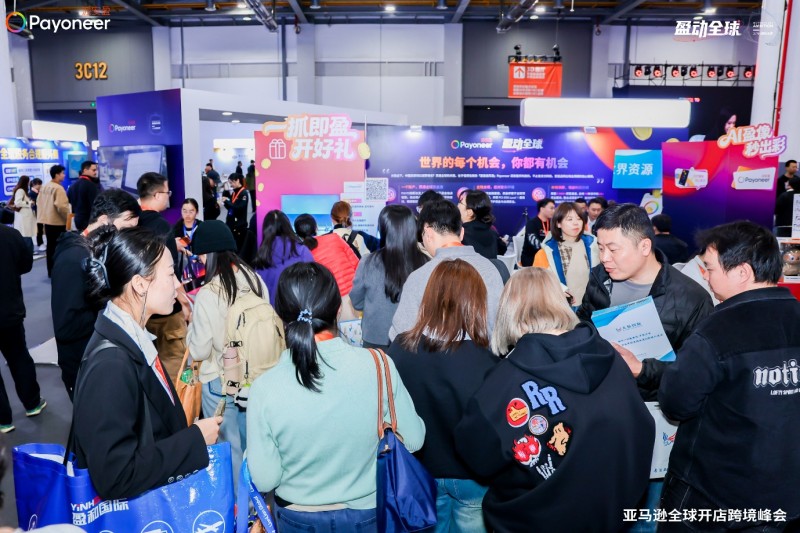
Core Insights - The 2025 Amazon Global Store Cross-Border Summit was held in Hangzhou, attracting over 10,000 participants from the cross-border e-commerce industry [1] - Payoneer showcased its comprehensive financial ecosystem, providing end-to-end support for Amazon sellers, including payment processing and fund management [1][3] Group 1: Event Overview - The summit celebrated the 10th anniversary of Amazon Global Store's operations in China, focusing on themes of "excellence, innovation, and globalization" [3] - The event featured strategic releases and six parallel forums addressing key topics such as supply chain management, AI applications, product selection, branding, global site expansion, and compliance [3] Group 2: Payoneer's Role - Payoneer has been a partner of Amazon for ten years, providing stable and efficient financial management and operational support to sellers [3] - The company is enhancing its financial stack and compliance risk control systems to help sellers navigate challenges and uncertainties in international markets [5] Group 3: Financial Solutions - Payoneer offers a one-stop financial stack that supports localized payments for Amazon's global multi-site and multi-currency operations, creating a closed-loop for payment, receipt, and growth [7] - The Payoneer card allows sellers to settle advertising costs in their original currency, reducing currency conversion losses and improving profitability [7] Group 4: Ecosystem and Support - Payoneer's "Olive Branch Program" has established partnerships with over 40 cross-border e-commerce platforms, facilitating sellers' entry into new markets [7] - The company focuses on four core financial service capabilities: collection, management, growth, and expansion, providing tailored cross-border payment solutions and integrated support for SMEs [8]



派安盈亮相2025亚马逊全球开店跨境峰会,以一站式金融全栈助力卖家高质量出海
Sou Hu Wang· 2025-12-05 09:30
Core Insights - The 2025 Amazon Global Store Cross-Border Summit was held in Hangzhou from December 4 to 7, attracting over 10,000 participants from the cross-border e-commerce industry [1] - Payoneer showcased its comprehensive financial ecosystem at the summit, providing Amazon sellers with end-to-end support for payment processing, fund management, and resource integration [1][3] Group 1: Event Overview - The summit celebrated the 10th anniversary of Amazon Global Store's operations in China, focusing on themes of "Excellence, Innovation, and Globalization" [3] - The event featured strategic releases and six parallel forums addressing key topics such as supply chain management, AI applications, product selection, branding and traffic, global site expansion, and compliance [3] Group 2: Payoneer's Role - Payoneer has been a partner of Amazon for ten years, being one of the first to join the PSPP payment service provider program and SPN service provider network [3] - The company aims to assist sellers in navigating risks and challenges by building a more complete financial stack and compliance risk control system [5][6] Group 3: Financial Solutions - Payoneer offers a one-stop financial stack that supports localized payments for Amazon's global multi-site and multi-currency operations, creating a financial closed loop for sellers [8] - The Payoneer card allows sellers to settle Amazon advertising costs in their original currency, reducing currency conversion losses and enhancing fund management [8] Group 4: Risk Management and Support - Payoneer has developed an intelligent risk control system using machine learning and AI technology to safeguard sellers' operations [8] - The "Olive Branch Program" has established partnerships with over 40 quality cross-border e-commerce platforms, facilitating sellers' entry into new markets [8] Group 5: Future Directions - Payoneer is committed to enhancing its cross-border payment infrastructure and expanding its product offerings to empower more Chinese SMEs to seize global opportunities [9] - The company focuses on providing integrated support through localized customer service, market insights, growth financing, and ecosystem collaboration [9]
【11月25日 财经信息差 】行业机会与风险预警全解析
Sou Hu Cai Jing· 2025-11-25 02:19
Group 1 - The Ministry of Industry and Information Technology of China has initiated the creation of national emerging industry development demonstration bases, covering nine major fields including new generation information technology and new energy, with a target of establishing 100 park-type and 1,000 enterprise-type bases by 2035, which will receive policy and resource support [2] - The Federal Reserve officials have signaled a potential interest rate cut in December, with an 82.9% probability of a 25 basis point cut according to CME FedWatch, leading to a 2.69% increase in the Nasdaq and a broad rise in technology stocks [2] - Former President Trump signed an executive order for the AI "Genesis Plan," opening federal scientific data sets, while Amazon plans to invest $50 billion to expand AI and supercomputing infrastructure for the U.S. government, benefiting AI-related companies [2] Group 2 - The European Union has approved a budget of €192.8 billion for 2026, focusing on defense and high-end manufacturing, with €716 million reserved for emergency funds, which will create procurement opportunities for related industries [3] - The Bank of Israel has lowered the benchmark interest rate from 4.5% to 4.25%, allowing businesses in the Middle East to optimize their capital allocation [3] Group 3 - The Nasdaq Golden Dragon China Index rose by 2.82%, with Hesai Technology increasing by over 12%, indicating strong capital interest in Chinese tech companies like Baidu and Alibaba, which will benefit their supply chain partners [4] - Spot gold has surpassed $4,140 per ounce, and WTI crude oil has risen above $59 per barrel, providing profit opportunities for energy and precious metals companies [4] Group 4 - The European Central Bank has warned about the risks of stablecoins diverting retail deposits in the Eurozone, urging companies involved in crypto assets to manage compliance costs [5] - The U.S. pressured the EU to amend digital regulations in exchange for lowering steel and aluminum tariffs, which was rejected, creating tariff volatility risks for related import-export businesses [6] - Bitcoin has surpassed $89,000, and Thailand's Bitkub plans to raise $200 million through a Hong Kong IPO in 2026, highlighting opportunities in the Hong Kong digital asset hub [6]