激光雷达

Search documents
9.26犀牛财经早报:机构大举增持主动权益基金 黄仁勋连续4个月卖出英伟达
Xi Niu Cai Jing· 2025-09-26 01:40
Group 1 - The A-share market is recovering, leading to significant profits for fund investors, with 2.15 billion fund investors on the Ant Fund platform achieving cumulative profits [1] - Institutional investors have notably increased their holdings in active equity funds, with a rise of 54.1 billion yuan in asset scale and an increase of 27.1 billion fund shares by the end of the first half of the year [1] - West China Fund confirmed that a fund manager was caught gambling and has been dismissed from their position following administrative penalties [1] Group 2 - The China Coking Industry Association recommends a 30% production cut across the coking industry to maintain reasonable profit levels and healthy development [2] - Coking prices are set to increase, with specific price adjustments for various types of coke effective from September 26 [2] Group 3 - The global average selling price (ASP) of smartphones is projected to rise from $370 in 2025 to $412 in 2029, driven by high-end trends and the adoption of 5G technology [3] Group 4 - The Robotaxi sector is experiencing a surge in stock prices, with leading companies like Pony.ai and Baidu seeing significant increases in their stock values due to accelerated commercial applications [4] - The cobalt market is tightening due to export bans from the Democratic Republic of Congo, leading to a nearly 40% increase in cobalt prices this year [4] Group 5 - Starbucks plans to close underperforming stores in North America, reducing the number of company-operated stores by approximately 1% by fiscal year 2025, while also cutting about 900 non-retail positions to invest in store operations [5] Group 6 - ByteDance has denied rumors of preparing for an IPO in Hong Kong, urging caution against misinformation regarding "Byte concept stocks" [6] Group 7 - Shanghai Forever Bicycle Company has stated that products like "Forever Rabbit" are not associated with the company and will pursue legal action against unauthorized use of its trademark [7] Group 8 - Horizon Robotics plans to raise approximately 6.339 billion HKD through a share placement to expand its overseas market and support advanced driver assistance solutions [9] Group 9 - Dragon Big Food announced that 0.70% of shares held by its controlling shareholder are under judicial freeze, but this will not affect the company's operations or governance [10] Group 10 - Zhaochi Co. has completed the R&D design of its 1.6T OSFP DR8 optical module, with plans to launch samples by the end of 2025 [11] - Jingchen Co. has submitted an application for H-share listing on the Hong Kong Stock Exchange [12]


多赛道竞速升级 激光雷达行业“卡位战”正酣
Shang Hai Zheng Quan Bao· 2025-09-25 18:14
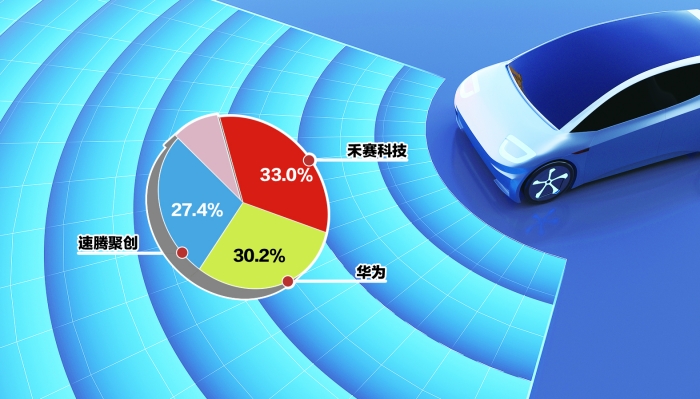
Core Insights - The laser radar industry is transitioning from technological breakthroughs to competition for application scenarios, with companies racing to establish their presence in the market before it solidifies [2][3]. Group 1: Market Dynamics - Major laser radar manufacturers are announcing significant orders and partnerships to capture the autonomous driving market, particularly in the Robotaxi sector [3][4]. - Hesai Technology has secured a $40 million overseas order and strategic partnerships for its laser radar products, indicating a clear production timeline with expected mass production by 2026 [3][4]. - The market share of leading companies in the vehicle-mounted auxiliary driving sector is closely contested, with Hesai, Huawei, and Suteng JuChuang holding 33.0%, 30.2%, and 27.4% respectively, showing a competitive landscape [5]. Group 2: Technological Advancements - The industry consensus is shifting towards equipping L3 and L4 autonomous driving solutions with multiple laser radars, enhancing the perception capabilities of autonomous vehicles [3]. - Suteng JuChuang is focusing on digital high-line laser radar and has integrated its products with NVIDIA's DRIVE platform, aiming for mass production by the end of the year [4]. Group 3: Strategic Collaborations - Companies are forming strategic partnerships to enhance their market positions, with Hesai collaborating with Motional and others to supply laser radars for Robotaxi models [3][4]. - Suteng JuChuang has established collaborations with multiple Robotaxi companies, including a significant partnership with Didi Autonomous Driving, targeting mass production by 2025 [4]. Group 4: Expansion into New Markets - The competition is expanding beyond passenger vehicles into commercial vehicles, with companies like Tudatong targeting the autonomous truck market and forming partnerships for mass production [5][6]. - The growth in the robotic sector is notable, with Hesai and Suteng JuChuang launching products specifically for applications like lawn mowing, indicating a diversification of their product offerings [6].


美股异动|禾赛盘前涨超2%,获高盛看高至36美元并上调盈测
Ge Long Hui· 2025-09-24 08:28
Core Viewpoint - Hesai (HSAI.US) shares rose over 2% to $29.86, driven by a Goldman Sachs report predicting accelerated adoption of lidar technology in China and large-scale production by global automakers by 2026-2027, with an expected shipment of 3 million ADAS lidar units overseas by 2030 [1] Group 1: Company Insights - Goldman Sachs forecasts that by 2030, overseas ADAS customers will contribute 10% of Hesai's shipments, 20% of its revenue, and 23% of its gross profit, with a gross margin 10 percentage points higher than domestic products [1] - The target price for Hesai has been raised from $26.3 to $36, with a "Buy" rating assigned [1] Group 2: Industry Trends - The report highlights the rapid proliferation of lidar technology in the Chinese market, indicating a significant shift in the automotive industry towards advanced driver-assistance systems (ADAS) [1] - The anticipated large-scale production of lidar units by 2026-2027 is expected to reshape the competitive landscape in the automotive sector [1]
【银行理财】理财公司加码指数化布局:跟踪现有指数、自主构建双策并行——银行理财周度跟踪(2025.9.15-2025.9.21)
华宝财富魔方· 2025-09-23 12:57
Core Viewpoints - The article discusses the increasing trend of wealth management companies in China to develop index-based financial products, driven by the ongoing transformation towards net value management and the acceleration of medium to long-term capital entering the market [3][7]. Regulatory and Industry Dynamics - Wealth management companies are actively launching index-based financial products, with an increase in both the number and issuance of such products in the market [3][7]. - Major banks like 招银理财 and 交银理财 have introduced new index products, with 招银理财 launching its self-developed "湾区全球资产优选配置指数" and 交银理财 collaborating with 中诚信指数服务 to create a new index [7][8]. - The core motivations for this shift towards index-based products include reducing active management risks, enhancing strategy transparency, and meeting customized client demands [8]. Innovations in the Industry - 华夏理财 and 华夏基金 have signed a memorandum to deepen cooperation in the index business, aiming to build a market-influential "双华夏" index ecosystem [9][10]. - 中邮理财 participated in the successful IPO of 禾赛科技, marking it as the largest Chinese concept stock IPO in Hong Kong in four years, reflecting a strategic move towards IPO investments [11][12]. - 浦银理财 launched its first "上海科创金融主题" financial product, raising 220 million yuan, with 80% of the funds directed towards bonds issued by quality technology enterprises in Shanghai [13][14]. Performance of Financial Products - The annualized yield of cash management products was recorded at 1.29%, remaining stable, while money market funds saw a slight increase to 1.19% [15][17]. - The yield on 10-year government bonds slightly increased to 1.80%, influenced by market sentiment and the Federal Reserve's dovish rate guidance [17][19]. Tracking of Net Value - The net value break rate for bank wealth management products decreased to 2.04%, down by 0.61 percentage points, with credit spreads also narrowing [22]. - The relationship between break rates and credit spreads indicates that if credit spreads continue to widen, it may put upward pressure on break rates [22].

银行理财周度跟踪(2025.9.15-2025.9.21):理财公司加码指数化布局:跟踪现有指数、自主构建双策并行-20250923
HWABAO SECURITIES· 2025-09-23 08:58
Investment Rating - The report does not explicitly provide an investment rating for the industry Core Insights - The report highlights a significant trend in the banking wealth management sector, with companies increasingly focusing on index-based products to enhance their offerings and meet market demands [4][11] - The collaboration between financial institutions, such as the partnership between Huaxia Wealth and Huaxia Fund, aims to create a robust index ecosystem to support high-quality development in asset management [13][14] - The report notes the successful IPO of Hesai Technology, marking a significant event in the market, with postal wealth management participating in this investment [15][16] - The introduction of the Shanghai Sci-Tech Financial Theme Wealth Management Product by Puyin Wealth Management reflects a strategic move to align with national innovation policies and support local tech enterprises [18] Summary by Sections 1. Regulatory and Industry Dynamics - Wealth management companies are actively launching index-based products, with an increase in both the number and issuance of such products in the market [4][11] - The core motivation for this shift includes reducing active management risks, enhancing strategy transparency, and meeting customized client demands through self-constructed indices [12] 2. Peer Innovation Dynamics - Huaxia Wealth and Huaxia Fund have signed a memorandum to deepen cooperation in the index business, aiming to build a market-influential index ecosystem [13][14] - Puyin Wealth Management has launched a new product focused on technology finance, raising 220 million yuan to support quality tech enterprises in Shanghai [18] 3. Yield Performance - Cash management products recorded a 7-day annualized yield of 1.29%, remaining stable compared to the previous week, while money market funds saw a slight increase to 1.19% [19][20] - The report indicates a general recovery in annualized yields for fixed-income products across various maturities [23][27] 4. Net Value Tracking - The net value ratio of banking wealth management products decreased to 2.04%, down by 0.61 percentage points, indicating a positive trend in credit spreads [29][32]

高盛:首予禾赛-W“买入”评级 目标价281港元
Zhi Tong Cai Jing· 2025-09-23 05:54
Group 1 - Goldman Sachs reports that the adoption of LiDAR technology in the Chinese market is accelerating this year, with large-scale production expected globally by 2026-2027, predicting that overseas ADAS LiDAR shipments will reach 3 million units by 2030, equivalent to the scale of the Chinese market in 2025 [1] - Goldman Sachs initiates a "Buy" rating for Hesai (02525, HSAI.US) with a target price of HKD 281, and raises the US stock target price from USD 26.3 to USD 36, maintaining a "Buy" rating [1] - The firm forecasts that by 2030, overseas ADAS customers will contribute 10% of Hesai's shipments, 20% of revenue, and 23% of gross profit, with a gross margin 10 percentage points higher than domestic products [1] Group 2 - Current projections estimate Hesai's revenue and net profit to reach RMB 14 billion and RMB 3 billion respectively by 2030, with a net profit margin expected to be 21%, and net profit forecasts for 2026-2027 have been raised by 11% to 17% [1]
高盛:首予禾赛-W(02525)“买入”评级 目标价281港元
智通财经网· 2025-09-23 05:50
Group 1 - Goldman Sachs reports that the adoption of LiDAR technology in the Chinese market is accelerating this year, with large-scale production expected globally by 2026-2027, predicting that overseas ADAS LiDAR shipments will reach 3 million units by 2030, equivalent to the scale of the Chinese market in 2025 [1] - Goldman Sachs initiates a "Buy" rating for Hesai (02525, HSAI.US) with a target price of HKD 281, and raises the US stock target price from USD 26.3 to USD 36, maintaining a "Buy" rating [1] - The firm forecasts that by 2030, overseas ADAS customers will contribute 10% of Hesai's shipment volume, 20% of revenue, and 23% of gross profit, with a gross margin 10 percentage points higher than domestic products [1] Group 2 - The projected revenue and net profit for Hesai by 2030 are expected to reach RMB 14 billion and RMB 3 billion, respectively, with a net profit margin estimated at 21% [1] - The net profit forecast for 2026-2027 has been raised by 11% to 17% [1]
大行评级|高盛:首予禾赛H股“买入”评级及目标价281港元
Ge Long Hui· 2025-09-23 03:53
Group 1 - Goldman Sachs reports that the adoption of LiDAR technology in the Chinese market is accelerating this year, with large-scale production expected globally by 2026-2027 [1] - The forecast indicates that by 2030, overseas ADAS LiDAR shipments will reach 3 million units, equivalent to the scale of the Chinese market in 2025 [1] - It is projected that by 2030, overseas ADAS customers will contribute 10% of Hesai's shipments, 20% of its revenue, and 23% of its gross profit, with a gross margin 10 percentage points higher than domestic products [1] Group 2 - Goldman Sachs predicts Hesai's revenue and net profit will reach 14 billion and 3 billion respectively by 2030, with a net profit margin of 21% [1] - The net profit forecast for 2026-2027 has been raised by 11% to 17% [1] - Goldman Sachs has initiated a "Buy" rating for Hesai's H-shares with a target price of 281 HKD, and has increased the target price for its US shares from 26.3 USD to 36 USD, maintaining a "Buy" rating [1]
禾赛科技 CEO 李一帆:“每天早上起来,我都在想昨天的自己的傻”
晚点LatePost· 2025-09-22 17:28
Core Viewpoint - The article discusses the journey of Hesai Technology, highlighting the importance of adapting to market needs and the evolution of its CEO, Li Yifan, from a technology-focused entrepreneur to a savvy business leader who understands the significance of sales and marketing in the tech industry [4][10]. Group 1: Company Background and Evolution - Hesai Technology was founded by Li Yifan, Sun Kai, and Xiang Shaoqing, who have impressive academic backgrounds and experience in technology [6]. - The company initially focused on detecting hazardous gases using lidar technology but pivoted to the automotive lidar market, where it has become a leader with a market share of over 100% in China [6][10]. - The first product was designed to be high-performance and cost-effective, significantly undercutting competitors like Velodyne [6][10]. Group 2: Market Challenges and Strategies - Since 2016, lidar prices have plummeted by 99.5%, leading to intense price competition [7]. - Li Yifan learned the importance of understanding customer needs and effectively communicating the value of lidar technology, especially in the face of skepticism from industry leaders like Elon Musk [7][10]. - The company emphasizes the need for a strong brand identity and product differentiation rather than merely competing on price [21][25]. Group 3: Leadership and Management Philosophy - Li Yifan's leadership style evolved from a technical focus to a more holistic approach that includes understanding market dynamics and customer relationships [11][14]. - The company values a culture of ownership among employees, encouraging them to think beyond their immediate roles [33]. - Li Yifan believes that maintaining a balance between innovation and operational efficiency is crucial for long-term success [18][31]. Group 4: Future Outlook and Market Position - Hesai Technology aims to maintain a competitive edge by investing at least 30% more in R&D compared to its closest competitor [26]. - The company recognizes the importance of the Chinese automotive market while also exploring opportunities in higher-margin sectors like robotics [25][26]. - The focus remains on delivering high-quality, high-performance products while ensuring that pricing remains reasonable to avoid losing customers to competitors [25][26].

对话禾赛李一帆:长期没面子的公司不可能挣大钱
晚点Auto· 2025-09-22 15:57
Core Viewpoint - The article emphasizes the importance of balancing technical innovation with market understanding and sales strategies for long-term success in the competitive landscape of the lidar industry [2][5][17]. Company Background - Hesai Technology, founded by a team with strong academic backgrounds, initially focused on hazardous gas detection before pivoting to automotive lidar technology [4][12]. - The company has achieved significant milestones, including becoming the market leader in automotive lidar with a market capitalization in the billions and partnerships with major automotive manufacturers [5][9]. Market Dynamics - The lidar market has seen a drastic price reduction of 99.5% since 2016, leading to increased pressure on pricing from customers and competitors [5][9]. - Hesai's first product was designed to be high-performance and competitively priced, significantly undercutting the leading competitor Velodyne by nearly 50% [4][5]. Sales and Marketing Strategy - The CEO learned the importance of understanding customer needs and effectively communicating the value of lidar technology, moving from a purely technical focus to a more sales-oriented approach [10][21]. - The company recognizes that simply having superior technology is not enough; effective marketing and brand positioning are crucial for success [9][10]. Product Development - Hesai's product strategy involved creating unique offerings that differentiate from competitors, such as the Pandar series, which aimed to establish a strong brand identity rather than being seen as a low-cost alternative [15][17]. - The company invested approximately 1 billion yuan in building a state-of-the-art R&D and manufacturing facility, emphasizing the integration of research and production to enhance innovation speed [7][28][29]. Competitive Landscape - The lidar industry is characterized by intense competition, with many players vying for market share. Hesai has managed to maintain a leading position by focusing on quality and performance rather than solely competing on price [22][23]. - The company has successfully transitioned from being a niche player to a key supplier for major automotive brands, demonstrating the importance of strategic partnerships in scaling operations [21][22]. Leadership and Management - The CEO's evolution from a technically focused entrepreneur to a more well-rounded leader highlights the necessity of adaptability in leadership roles within the tech industry [25][32]. - The company culture promotes a sense of ownership among employees, encouraging them to think beyond their immediate responsibilities to contribute to the overall success of the organization [30].