
农业种植

Search documents
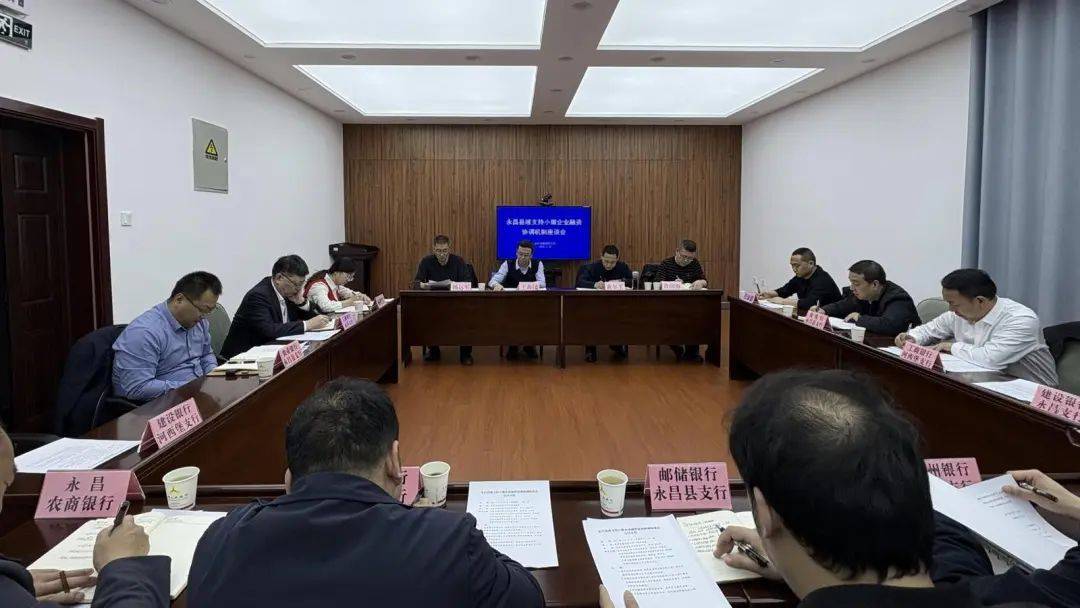
【金昌】创新融资协调机制 永昌金融监管支局引活水解小微之“渴”
Sou Hu Cai Jing· 2025-08-23 23:35
Group 1 - Small and micro enterprises play a crucial role in driving local economic development, despite their individual small size [1] - Long-standing issues such as high financing costs and difficulties in obtaining guarantees have hindered the growth of small and micro enterprises [3][7] - The Yongchang Financial Regulatory Bureau has actively explored diversified credit enhancement methods to facilitate financing for small and micro enterprises [7][10] Group 2 - Traditional collateral requirements have acted as barriers for many small and micro enterprises seeking loans, leading to a lack of financing options [7] - The Yongchang Financial Regulatory Bureau has guided banks to simplify approval processes, reducing waiting times for loan approvals and enabling quicker access to funds for enterprises [7][10] - Innovative measures, such as the combination of credit enhancement and interest rate reduction, have been implemented to support enterprises like the Green Heng Vegetable Cooperative, increasing their credit limit and lowering loan rates [8][10] Group 3 - The Gansu Huayu Agricultural Technology Co., Ltd. faced financial pressures due to rising costs and was able to secure additional funding through a loan extension, allowing it to maintain production stability [10] - The financial support provided to these enterprises not only addresses their immediate financing challenges but also injects significant momentum into the local economy [10][11] - The Yongchang Financial Regulatory Bureau aims to continue innovating financial service models to provide high-quality and efficient services to more small and micro enterprises [11]

优化休耕空间布局保障可持续发展
Jing Ji Ri Bao· 2025-08-23 22:18
Core Viewpoint - The article discusses the need for optimizing fallow land scale and spatial layout in China from the perspective of the "three-in-one" protection of arable land quantity, quality, and ecology, highlighting the importance of establishing a systematic approach to fallow land management to ensure food security [1] Group 1: Fallow Land Scale and Predictions - The maximum fallow land scale predictions for China by 2030 are estimated to be 32.3731 million hectares, 26.7897 million hectares, and 21.2064 million hectares under 90%, 95%, and 100% food self-sufficiency rates, respectively [1] - The study employs system dynamics and grey prediction models to construct a maximum fallow scale prediction model [1] Group 2: Urgency of Fallow Land Implementation - There are significant differences in the urgency of fallow land implementation across provinces, with higher urgency levels observed in Shanghai, Inner Mongolia, Hainan, Gansu, and Qinghai, while lower urgency is noted in Sichuan, Guangxi, Yunnan, Guizhou, and Jilin [1] - The urgency evaluation system is based on a "pressure-state-response" model to assess the need for fallow land [1] Group 3: Spatial Layout and Regional Disparities - Key fallow areas are identified in the northwest, north, and southeastern coastal provinces, where ecological environments are under significant pressure or economic development is intense [1] - There are substantial disparities in fallow land scale among regions, with larger scales in Inner Mongolia and Gansu, and smaller scales in Beijing and Shanghai [1]
一般纳税人取得免税收入,怎么填写增值税申报表?
蓝色柳林财税室· 2025-08-23 08:54
Core Viewpoint - The article discusses tax incentives for enterprises engaged in agriculture, forestry, animal husbandry, and fishery projects, highlighting exemptions and reductions in corporate income tax for specific activities [9][10]. Tax Incentives - Enterprises involved in the following activities are exempt from corporate income tax: 1. Cultivation of vegetables, grains, tubers, oilseeds, legumes, cotton, hemp, sugar crops, fruits, and nuts [9]. 2. Breeding of new varieties of crops [9]. 3. Cultivation of traditional Chinese medicinal materials [10]. 4. Cultivation and planting of timber [10]. 5. Raising livestock and poultry [10]. 6. Collection of forest products [10]. 7. Services related to agriculture, forestry, animal husbandry, and fishery, including irrigation, initial processing of agricultural products, veterinary services, agricultural technology promotion, and machinery operation and maintenance [10]. 8. Ocean fishing [10]. Reduced Tax Rates - Enterprises engaged in the following activities are subject to a 50% reduction in corporate income tax: 1. Cultivation of flowers, tea, and other beverage crops and spice crops [10]. 2. Marine aquaculture and inland aquaculture [10]. Policy Basis - The tax incentives are based on the following legal provisions: 1. Article 27(1) of the Corporate Income Tax Law of the People's Republic of China [11]. 2. Article 86 of the Implementation Regulations of the Corporate Income Tax Law of the People's Republic of China [11].

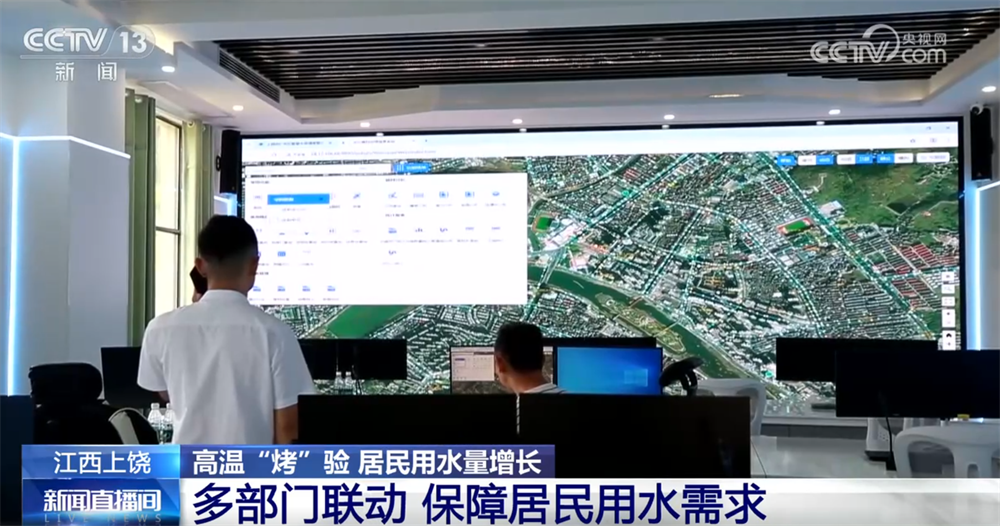
应急体系、“扁担公交”专线、“输液式”滴灌 来看应对高温“烤”验生动实践
Yang Shi Wang· 2025-08-22 03:48
Water Supply Management - Jiangxi Province's Shangrao City Guangfeng District has implemented multiple water supply measures to meet the increased demand due to high temperatures [1] - The district has established a 24-hour emergency system for water supply, including repair, monitoring, and scheduling, to ensure adequate supply during peak times [1] - Strict water quality testing standards are enforced, including daily and monthly checks, to ensure safety [3] Infrastructure Development - Guangfeng District is accelerating the construction of two modern water plants with a capacity of 10,000 tons each, expected to be operational by the end of 2025 [5] Agricultural Support - In Anhui's Hefei City, a dedicated bus line named "Bamboo Pole Bus" has been launched to support farmers during high temperatures, facilitating the transport of agricultural products to urban markets [6][10] - The new bus line connects multiple vegetable production areas to major markets, reducing transportation time by 30% [10] Irrigation Techniques - In Shandong's Heze City, a "drip irrigation" system is being utilized to provide precise water supply to corn crops during critical growth periods, addressing water scarcity due to high temperatures [11] - Farmers report significant water savings, using only about 20 cubic meters of water per acre, which is half the usual amount [13] - Agricultural experts are providing on-site guidance to monitor crop health and mitigate the effects of high temperatures [15]
“8+4”经济政策助力杭州经济稳进提质
Hang Zhou Ri Bao· 2025-08-22 03:18
Core Viewpoint - The article highlights the implementation and impact of Hangzhou's "8+4" economic policy, which aims to stimulate economic growth, enhance public services, and promote rural-urban integration through various supportive measures [11][12][14]. Economic Policy Implementation - Hangzhou has introduced a comprehensive "8+4" economic policy package consisting of 57 policy measures to boost economic stability and growth [11]. - As of mid-year, the city has disbursed 26.2 billion yuan under this policy, achieving a 52.2% completion rate of the funding disbursement target [11]. Rural Development and Integration - The article describes successful rural initiatives, such as the "bee + rice + cultural tourism" model in Dalu Village, which has led to increased tourism and local economic activity [13]. - The establishment of a 600-acre rice-frog base in Langchuan Township exemplifies innovative agricultural practices, yielding 900 kg of frogs per acre and supplying major cities [13][14]. Innovation and Technology - The Hangzhou Optical Precision Machinery Research Institute has incubated over 60 companies, with a total valuation exceeding 25 billion yuan, showcasing the city's commitment to fostering innovation [15][16]. - The "Anxinbao" system introduced by the Xiaoshan District aims to enhance trust between enterprises and innovation platforms, facilitating research and development projects [17]. Public Services and Employment Support - The "Qinghe Station" initiative provides free short-term accommodation for job seekers, with 90 stations and 3,975 rooms established to support new residents [18][19]. - The city has launched a comprehensive skill training network, establishing 13 training bases and 23 stations to enhance workforce skills [19]. Overall Impact - The "8+4" economic policy is designed to enhance public service quality and accessibility, ultimately improving the well-being and confidence of the local population [20].
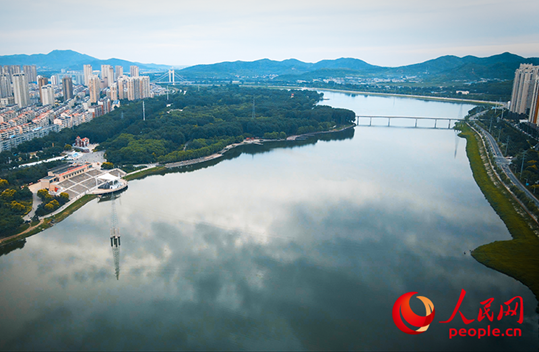
辽宁:绿水青山底色更亮,金山银山成色更足
Ren Min Wang· 2025-08-22 01:08
Group 1: Ecological Improvements - Liaoning has made significant progress in ecological restoration and pollution prevention since the start of the 14th Five-Year Plan, transforming the environment from polluted to vibrant [1][3][19] - The water quality of the Liao River has improved, achieving good quality status, with a national assessment showing a 90% excellent rate for river water quality by 2024, an improvement of 6.7 percentage points since 2021 [3][10][18] - The province has completed the remediation of over 10,000 river pollution outlets, contributing to the overall ecological safety and the construction of a "Beautiful Liaoning" [3][4][10] Group 2: Economic Development through Ecological Initiatives - The ecological improvements have led to a significant increase in tourism, with a 25% year-on-year increase in visitor numbers and nearly 30% growth in tourism revenue in Jinzhou [3][4][19] - The province aims to develop 77 additional "Happy Rivers and Lakes" by 2030, covering a total river length of 4,700 kilometers, which will further integrate ecological and economic benefits [5][10] - The green transformation of industries, such as the steel and automotive sectors, has resulted in substantial investments in environmental projects, with Baosteel investing approximately 12.7 billion yuan in environmental protection from 2021 to 2025 [14][18] Group 3: Innovative Agricultural Practices - In Fuxin, innovative practices like silkworm farming using local plants have emerged, generating significant income for farmers, with an average yield of 2,000 yuan per mu [6][10] - The area has seen a reduction in desertification and an increase in forested land, demonstrating the dual benefits of ecological restoration and economic gain [6][10] Group 4: Industrial Transformation - The steel industry in Liaoning has shifted towards green production, with Baosteel's low-carbon automotive steel achieving a 30% reduction in carbon emissions and gaining market competitiveness [14][18] - The province has established a high standard for green factories, with over 75% of mining operations now classified as green, showcasing a commitment to sustainable industrial practices [10][18]
从中原腹地到世界屋脊——跨越山河 双向奔赴
He Nan Ri Bao· 2025-08-22 00:29
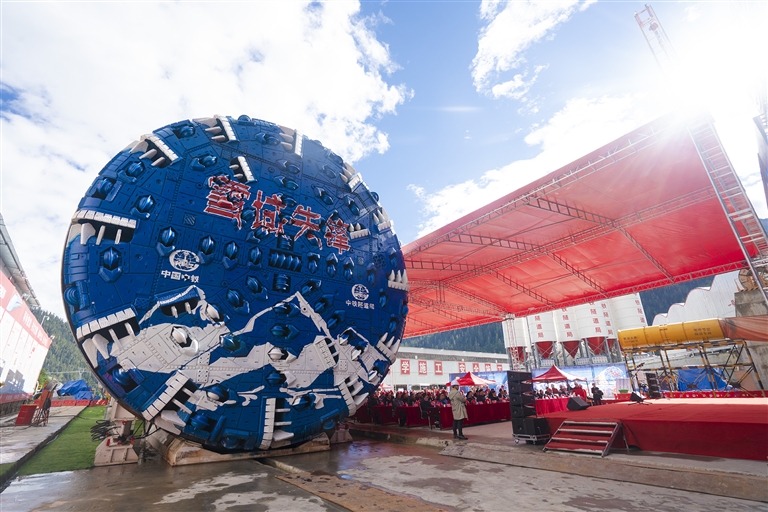
■核心提示 今年是西藏自治区成立60周年,在这片绽放新生的雪域高原上,有一份来自中原大地的深厚情谊。河南与西 藏,从中原腹地到世界屋脊,一场跨越山河的双向奔赴正在书写:从点亮万家灯火的"电力天路"到田间地头 传授技术的农业专家,从助力高原重大工程的中原盾构到20余年接力支教的青年力量……这份绵延不断的豫 藏情缘,正是全国支援西藏、共同谱写中国式现代化的绚丽雪域篇章的生动写照。本报特推出一组报道,记 录这段跨越千山万水、情系世界屋脊、传递深情厚谊的协作实践。 世界海拔最高 河南承建拉萨换流站扩建工程全面竣工 "天路"送电照万家 初秋的青藏高原,清风送爽。拉萨的大街小巷披红挂彩,处处洋溢着庆祝西藏自治区成立60周年的喜悦氛 围。 这份喜悦,同样涌动在拉萨±400千伏换流站的每一个角落。距离拉萨市区一个半小时车程,就抵达首条通往 西藏的"电力天路"——青藏直流联网工程的受端站。值此庆祝活动之际,该站传来重大喜讯:8月20日,由国 网河南省电力公司承建的拉萨±400千伏换流站扩建工程(以下简称"拉萨扩工程")全面竣工,为下一步启动 直流站系统带电调试、9月底投入运行奠定坚实基础。 "一年多以来,我们全力应对雪域高原高 ...
广西构建标准化交流合作机制解决涉东盟合作堵点
Zhong Guo Xin Wen Wang· 2025-08-21 17:42
Group 1 - The core viewpoint of the articles highlights Guangxi's efforts to enhance standardization cooperation with ASEAN countries, addressing existing challenges in policy communication and collaboration [1][2] - Guangxi has established the ASEAN National Standardization Cooperation Exchange Center to facilitate standardization negotiations and improve cooperation with ASEAN [1] - The center has participated in the negotiation of the standardization chapter of the China-ASEAN Free Trade Area 3.0 agreement and strengthened collaboration with the International Organization for Standardization (ISO) [1] Group 2 - In the first half of 2025, Guangxi's cross-border e-commerce import and export volume exceeded 25 billion RMB, with a year-on-year growth of over 140%, and nearly 70% of this trade involved ASEAN countries [2] - Guangxi is addressing issues related to differing cross-border express delivery standards and challenges in returning cross-border e-commerce goods by implementing logistics service standard enhancement projects [2] - In agriculture, Guangxi has initiated standardized demonstration projects in Vietnam, resulting in a 51% increase in rice yield through standardized planting and agricultural technology training [2]
苏垦农发上半年营收净利同比双降
Bei Ke Cai Jing· 2025-08-21 15:20
Core Viewpoint - Su Kuan Agricultural Development's 2025 semi-annual report indicates a decline in both revenue and net profit due to low agricultural product prices and overall decrease in agricultural material prices [1][2]. Financial Performance - In the first half of 2025, the company achieved an operating income of approximately 4.588 billion yuan, a year-on-year decrease of 9.26% [1]. - The net profit attributable to shareholders was about 213 million yuan, reflecting a year-on-year decline of 27.71% [1]. Reasons for Performance Change - The decline in performance is attributed to the narrow fluctuations in low agricultural product prices and the overall downward trend in agricultural material prices, which led to a reduced gross profit margin for key products such as rice and wheat [2]. Business Expansion - The company announced plans to expand its business scope to include "sales of smart agricultural machinery, software development, artificial intelligence application software development, and leasing of land use rights; non-residential real estate leasing" to enhance service functions and accelerate the transformation of technological achievements [2].

苏垦农发:聚焦“一核双擎”做强主业 推出中期分红回馈投资者
Zhong Zheng Wang· 2025-08-21 10:38
Core Viewpoint - Su Keng Agricultural Development (苏垦农发) reported a revenue of 4.588 billion yuan and a net profit of 213 million yuan for the first half of 2025, emphasizing its commitment to food security and achieving annual goals through focused strategies [1] Business Performance - The company operates in the agricultural sector, primarily engaged in the cultivation of staple crops like rice and wheat, with products sold as raw grains or processed into seeds, rice, and malt [2] - The total summer grain production reached 1.351 billion jin, with wheat yield per mu at 1163 jin, marking the third highest yield in history [2] - The company has established 16 county-level full agricultural service centers in Jiangsu province, providing comprehensive services to large-scale farmers [2] Business Expansion - Subsidiaries like Dahuazhongye are enhancing their technological capabilities, with four new regional experimental bases established [3] - Su Keng Rice Industry is advancing product development and marketing reforms, opening five new sales centers [3] - Su Keng Agricultural Services has been recognized for five consecutive years as a key agricultural supply enterprise [3] Competitive Strategy - The company aims to build a modern agricultural "aircraft carrier" with a focus on core industries and dual engines of technological innovation and capital operation [4] - A vertically integrated management model has been established to enhance operational efficiency and reduce internal communication costs [4] - The company has secured high-quality arable land and maintains a robust agricultural infrastructure, contributing to high agricultural output rates [4] Quality and Safety Management - Su Keng Agricultural Development has implemented a comprehensive agricultural product quality safety control system, utilizing modern technology for lifecycle management of products [4] - The company is committed to enhancing the standards of product quality management and food safety across its entire supply chain [4] Technological Innovation - The company focuses on agricultural technological innovation, integrating production, learning, research, and promotion to accelerate the conversion of scientific research into productive forces [5]