数据中心

Search documents
借款议案获得股东大会通过 *ST宇顺资金保障进一步夯实
Xin Hua Cai Jing· 2025-12-26 01:35
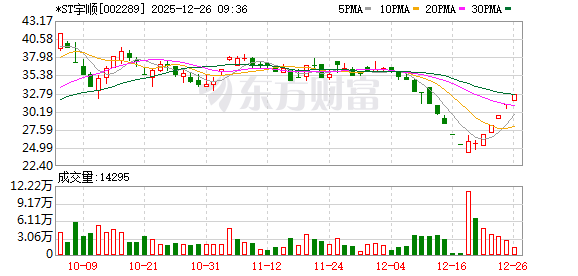
Core Viewpoint - *ST Yushun has successfully passed a resolution to increase the borrowing limit from its controlling shareholder, which strengthens the financial foundation for its transformation into the IDC sector, attracting positive market sentiment and investment interest [2][3]. Group 1: Borrowing Resolution - The company has increased the borrowing limit from Shanghai Fengwang Industrial Co., Ltd. from 2.5 billion to 3.1 billion yuan, with a loan term of 36 months and interest rates aligned with the People's Bank of China’s LPR, without requiring collateral [2]. - The purpose of this additional 600 million yuan borrowing is to support the company's operational development and broaden its funding sources to meet financial needs [2]. Group 2: Market Response and Company Transformation - Following the announcement, *ST Yushun's stock rose by 4.99% to close at 31.14 yuan, elevating its market capitalization to over 8.7 billion yuan, reflecting positive investor sentiment regarding the company's ongoing asset restructuring [3]. - The company initiated a cash acquisition of three data technology firms for a total transaction price of 3.35 billion yuan, having already paid approximately 1.709 billion yuan, which has allowed it to gain control over the target companies and start financial consolidation [3]. - The successful advancement of this transaction has significantly enhanced investor expectations for *ST Yushun's business transformation, transitioning from traditional electronics manufacturing to a dual-driven model of "data center + cloud computing" [3].


AI巨头1200亿美元“幽灵债务”
3 6 Ke· 2025-12-26 01:24
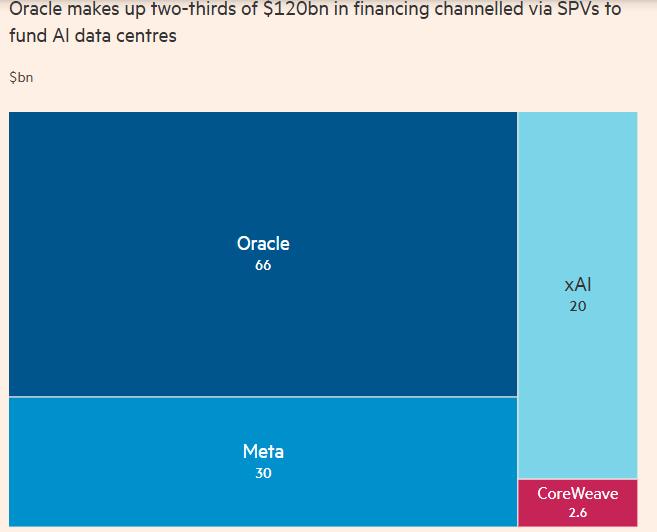
Group 1 - Major tech companies are utilizing Special Purpose Vehicles (SPVs) to offload over $120 billion in data center expenditures from their balance sheets, raising concerns about financial risks associated with their significant investments in artificial intelligence [1][4] - Companies like Meta, xAI, Oracle, and CoreWeave are leading this complex financing strategy to shield themselves from the substantial borrowing required for AI data center construction [1][4] - Financial institutions such as Pimco, BlackRock, Apollo, and major banks like JPMorgan have provided at least $120 billion in off-balance-sheet debt and equity financing for these tech firms' computing infrastructure [1][4] Group 2 - SPVs are independent legal entities established for specific purposes, such as asset securitization and risk isolation, allowing tech companies to separate their credit and bankruptcy risks from their underlying assets [3][4] - The use of SPVs for financing is becoming common, potentially obscuring the risks faced by tech companies and complicating the identification of who bears responsibility if AI demand falters [3][4] - A significant influx of private capital into SPVs for data center construction has been noted, with a large financial institution executive stating that this was unimaginable a year and a half ago, highlighting the tech sector's ability to secure capital far exceeding other industries [3][4] Group 3 - Meta completed the largest private credit data center deal in October, securing a $30 billion agreement for its Hyperion facility in Louisiana, with $27 billion sourced from loans and $3 billion in equity [4][5] - Oracle has also engaged in structured financing to support its commitments to lease data center power from OpenAI, collaborating with various builders and financial institutions to construct multiple data centers [4][5] - Oracle's off-balance-sheet financing transactions include significant loans for data centers in Texas and Wisconsin, with agreements allowing lenders to reclaim data center assets in case of default [5][6] Group 4 - The rapid increase in funding for AI infrastructure is putting pressure on tech companies' cash reserves, leading to a growing trend of raising off-balance-sheet debt through SPVs [5][6] - Morgan Stanley estimates that tech companies' AI initiatives will require $1.5 trillion in external financing support [5][6] - Investors believe that if AI service demand declines, the financial risks will ultimately fall on the tech companies leasing the facilities [6][8] Group 5 - The proliferation of SPVs raises concerns about the potential for simultaneous financial pressure on multiple AI companies, which could lead to a lack of transparency and risk spreading to private credit funds [7][8] - UBS projects that tech companies will borrow approximately $450 billion from private equity funds by early 2025, with a significant increase in project financing transactions [7][8] - The data center construction sector is increasingly reliant on the private credit market, which is experiencing rapid growth but also facing issues such as asset valuation spikes and high borrower concentration [7][8] Group 6 - The AI data center boom is heavily dependent on a few key clients, with OpenAI alone securing over $1.4 trillion in long-term computing resource commitments from major players [8] - If any major tenant encounters issues, multiple data center lenders may face similar risks, compounded by uncertainties in power supply and regulatory changes [8] - There is a trend towards more opaque structures in data center transactions, including the securitization of AI debt, which spreads loan risks across a broader investor base [8][9]


AI巨头1200亿美元“幽灵债务”
财联社· 2025-12-26 01:02
Core Viewpoint - Major tech companies are utilizing Special Purpose Vehicles (SPVs) to offload over $120 billion in data center expenditures from their balance sheets, raising concerns about the financial risks associated with their significant investments in artificial intelligence [1][4] Group 1: SPV Financing and Its Implications - Companies like Meta, xAI, Oracle, and CoreWeave are leading the way in complex financing transactions through SPVs to shield themselves from the substantial borrowing required for AI data centers [1][4] - Financial institutions such as Pimco, BlackRock, Apollo, and major banks like JPMorgan have provided at least $120 billion in off-balance-sheet debt and equity financing for these tech groups' computing infrastructure [1] - The use of SPVs allows these companies to maintain high credit ratings and improve financial metrics while concealing potential risks associated with AI demand fluctuations [4][6] Group 2: Specific Company Transactions - Meta completed a $30 billion private credit deal for its Hyperion facility in Louisiana, creating an SPV named Beignet Investor, which raised $30 billion, with $27 billion from loans and $3 billion in equity [5][6] - Oracle has engaged in structured financing to support its commitments to lease data center power from OpenAI, involving significant debt financing for multiple data centers [6][7] - xAI is raising $20 billion, including up to $12.5 billion in debt financing, using a similar SPV structure to acquire NVIDIA GPUs for leasing [7] Group 3: Market Trends and Risks - The private credit market, valued at $1.7 trillion, is rapidly expanding, with significant concerns about asset valuation, liquidity, and borrower concentration [10] - UBS projects that tech companies will borrow approximately $450 billion from private equity funds by early 2025, reflecting a $100 billion increase from the previous year [8][10] - The proliferation of SPVs may lead to a lack of transparency and potential cascading financial pressures if multiple AI companies face challenges simultaneously [8][10] Group 4: Future Outlook - The increasing reliance on a few major clients, such as OpenAI, for AI data center commitments poses risks to lenders if any single tenant encounters issues [10] - The emergence of more opaque structures in data center transactions, including AI debt securitization, is being observed, with estimates of such transactions reaching several billion dollars [10][11] - While investors view the strong balance sheets of large tech firms as a positive, the use of SPV financing may ultimately lower the overall credit quality of these companies [12]

美国AI基建遭遇“缺钱”和“缺电”双重困境:私募信贷成新“金主”,独立天然气发电成首选方案
Mei Ri Jing Ji Xin Wen· 2025-12-25 14:46
Core Insights - A trillion-dollar investment race in AI infrastructure is unfolding globally, driven by major tech companies' demand for clean energy and concerns over potential investment bubbles [1][6] Group 1: Investment Landscape - Major tech firms like Amazon, Google, Microsoft, and Meta are responsible for approximately 90% of global clean energy purchases for data centers, raising questions about whether this is a necessary investment for productivity or a high-risk bubble driven by FOMO [1] - S&P Global predicts that global data center investment demand will exceed $900 billion by 2029, while JPMorgan estimates that the entire AI infrastructure sector may require $5 trillion in investment, with a $1.4 trillion funding gap needing to be filled by private credit or government funds [1][2] - Traditional financing methods are insufficient for the massive capital needs, leading tech giants to explore new financing paths, with private credit markets becoming key players [1][2] Group 2: Risk Transfer and Construction Challenges - The new financing structure effectively shifts AI infrastructure investment risks from tech giants' balance sheets to the private credit market, ultimately affecting ordinary investors like pension funds and mutual funds [2] - Data center operators are taking on more construction risks, with some offering completion guarantees for large AI projects, while tenants (often backed by wealthy tech firms) may have the right to terminate contracts due to construction delays, creating significant credit risks for operators [2] Group 3: Power Supply Constraints - The rapid growth of AI is putting pressure on multiple supply chain segments, with data center construction being the fastest-growing source of electricity demand, potentially reshaping global electricity demand patterns [3] - The core challenge in power supply lies in the lengthy construction cycles of new power generation assets, which can take five years or more, far exceeding the typical construction timelines for tech company data centers [3][4] - Over 70% of U.S. transmission lines are over 25 years old, and the slow upgrade of the grid could lead to significant delays in integrating new renewable energy projects [3] Group 4: Alternative Energy Solutions - "Behind-the-Meter" (BTM) solutions are emerging as a preferred option, allowing data centers to obtain power independently through methods like natural gas generation, bypassing lengthy grid approval processes [4] - However, some BTM solutions lack the performance records necessary to support high-density AI loads, which could result in tech giants incurring substantial leasing obligations without achieving stable data center operations [5] Group 5: Market Dynamics and Bubble Concerns - Despite numerous constraints, demand for AI-driven data centers remains strong, with Bain & Company forecasting a 13% to 20% annual increase in global IT power capacity by 2030 [6] - Concerns about a potential bubble are rising, particularly due to uncertainties in energy supply, with fears of overbuilding leading to unutilized power generation assets [6][7] - The physical limitations of the power grid may act as a regulator rather than a breaker, with operators seeking creative solutions to balance growth and system stability [7]
阿莱德:公司正积极开拓数据中心、光模块等领域的新客户
Zheng Quan Ri Bao Wang· 2025-12-25 11:44
证券日报网讯12月25日,阿莱德(301419)在互动平台回答投资者提问时表示,公司正积极开拓数据中 心、光模块等领域的新客户,目前已有批量供货的客户如华工正源,相关业务进展请及时关注公司在指 定信披媒体发布的公告。 ...

南网数字:公司绿色低碳高效液冷技术显著降低数据中心能耗
Zheng Quan Ri Bao· 2025-12-25 11:12
Core Viewpoint - The company has developed a green, low-carbon, and efficient liquid cooling technology that significantly reduces energy consumption in data centers [2] Group 1 - The new data center architecture is characterized by low energy consumption, high compatibility, and strong adaptability [2] - The technology enables dynamic and precise control of cooling capacity, overcoming the limitations of traditional media [2] - Detailed product information can be found in the company's prospectus [2]
当“养老钱”遇上“AI热”:全球养老基金大举押注数据中心基建有什么风险?
Hua Er Jie Jian Wen· 2025-12-25 10:21
"泡沫何在?" 毫无疑问,机器学习和人工智能将在未来几十年深刻影响全球经济。为了实现这一目标,科技公司目前 正在进行大规模融资,以建设所需的昂贵数据中心和发电厂。AI倡导者认为,这些项目将提供包括 水、道路、桥梁和电信网络在内的必要基础设施。因此,利用项目融资来支持AI基建被视为是在构建 支撑未来投资的实体资产。 历史的回响:从日本泡沫到私募隐忧 随着人工智能(AI)热潮席卷全球金融市场,长期追求稳定回报的养老基金与保险资金正加速涌入数 据中心等AI基础设施领域,试图在这一新兴科技浪潮中分一杯羹,但这引发了市场对于公共储蓄资金 安全性的深度担忧。 软银集团高管近日表示,其在美国规模高达5000亿美元的"Stargate"数据中心项目,潜在支持者可能包 括人寿保险公司和养老基金等长期投资者。软银创始人孙正义对此持极度乐观态度,认为鉴于AI未来 对全球经济的巨大贡献,即便投入巨资也能迅速收回成本。 与此同时,加拿大养老金计划投资委员会也宣布了与澳大利亚Goodman Group的合作计划,双方将联手 向欧洲的数据中心项目投资数十亿美元。分析认为,这一系列动作表明,尽管AI技术的未来盈利模式 尚存不确定性,但急需资 ...
宝信软件:截至目前,“宝之云”数据中心已合计交付机柜数总计超35000个
Mei Ri Jing Ji Xin Wen· 2025-12-25 10:16
Group 1 - The company has delivered over 35,000 data center cabinets as of December 25, indicating significant infrastructure development [2] - The data centers are primarily located in Shanghai, Wuhan, Zhangjiakou, and Ma'anshan, showcasing a service capability that covers the Yangtze River Delta and radiates nationwide [2] - Some core nodes of the data centers are now equipped to deploy AI computing power modules, aligning with the growing demand for AI capabilities [2]

三个视角看美国AI投资
HTSC· 2025-12-24 07:01
Report Industry Investment Rating The provided content does not mention the report industry investment rating Core Viewpoints of the Report - Concerns about local AI bubbles still occasionally disrupt the market, with the core contradiction lying in the investment side. The report examines the sustainability of AI investment from three perspectives: default risk, return on investment, and the macro - environment. Overall, the AI investment in the industry is accelerating, and the AI technology narrative is strengthening, but there may be fluctuations in expectations and valuations due to uncertainties in the supply and demand sides [2] - From the perspective of default risk, the credit risk concerns of AI are only present in a few new cloud providers, and the probability of actual default is low. Leading technology companies are operating stably [2] - In terms of return on investment, in the current environment of short - supply of computing power, the return on investment of a single data center is relatively high, but the core pain point lies in whether the application side can generate revenues several times the capital expenditure to ensure investment sustainability [2] - Regarding the macro - environment, the leverage ratio of the US private sector is healthy, the liquidity is generally loose, and the credit environment is gradually improving, lacking the macro - foundation to burst the bubble [2] Summary by Relevant Catalogs 1. Market Condition Assessment - **Domestic**: High - frequency data shows that external demand remains resilient, prices are generally falling, domestic demand needs to be restored, and the production side is showing a differentiated trend. Consumption, real estate, and production indicators all have their own characteristics. For example, real - estate transaction heat has slightly recovered, but overall, new and second - hand housing is weak [50] - **Overseas**: Last week, US employment data was mixed, inflation was lower than expected. The Bank of Japan raised interest rates dovishly as expected, the Bank of England cut interest rates, and the European Central Bank kept interest rates unchanged [4][51] 2. Three Perspectives on US AI Investment Default Risk - **New Cloud Providers**: New cloud providers such as Oracle and CoreWeave have large negative free cash flows, rely heavily on external financing, and face challenges in covering large - scale capital expenditures with existing revenues. However, the probability of actual default is relatively low. For example, Oracle's free cash flow in the second fiscal quarter of fiscal year 2026 was - $10 billion, and its capital expenditure was $12 billion [8][10] - **Super Cloud Providers**: Super cloud providers have relatively limited credit risks, with most of their capital expenditure to operating cash flow ratios below 1. They mainly rely on their own cash flows for investment, and AI technology applications can improve their existing businesses [16] Return on Investment - **Micro - level**: A fully - loaded AI data center has a relatively high return on investment, and the pay - back period is estimated to be about 2 - 4 years. For example, an 8 - card H100 chip server can generate an annual income of about $300,000, and the pay - back period is about 2 years [25] - **Macro - level**: To ensure the sustainability of the $5 trillion in total AI capital expenditure from 2025 - 2030, the application side may need to generate incremental revenues of over $10 trillion, which means the AI technological revolution may need to have a greater economic impact than previous technological revolutions [28] Macro and Credit Environment - The US is in the early stage of a credit expansion cycle. The corporate leverage ratio is at a low level, monetary easing is being transmitted, and the overall credit environment is improving. However, attention should be paid to vulnerable points such as the private credit market [31][40] 3. Allocation Recommendations - **Large - scale Assets**: With the resolution of external uncertainties, the market risk appetite is gradually recovering. Overseas markets expect a Christmas rally, and domestic investors' sentiment is slightly warming. It is recommended to deploy for the spring market on dips [5] - **Domestic Bond Market**: Interest rates at the short - end are stable, there are opportunities in the medium - term, and the long - end is cautious but with an upper limit. It is advisable to focus on certificates of deposit, short - duration credit bonds, and interest - rate bonds within 5 - 7 years [46] - **Domestic Stock Market**: The view on the spring market is still positive, but expectations for the rhythm and space are weakened. It is recommended to deploy on dips and pay attention to sectors such as the deepening of the AI chain, export - oriented stocks, precious metals, and resource products [48] - **US Treasury Bonds**: In the short - term, US Treasury bonds maintain a certain probability of success, showing a narrow - range oscillation pattern. In the long - term, the yield curve may continue to steepen. It is recommended to conduct band operations [48] - **US Stocks**: AI investment continues to accelerate, and the demand side remains strong. Upstream industrial commodities, energy and power, and hardware are the most directly beneficial areas. However, there are risks of supply falling short of expectations and potential valuation corrections [49] - **Commodities**: Gold's short - term upward momentum is strong, and it is recommended to follow the trend while setting stop - loss levels. The long - term upward trend of copper prices remains unchanged, and it is recommended to deploy during adjustments. The upward space of oil prices is limited, and attention should be paid to incremental policies for black - series commodities [49] 4. Follow - up Concerns - **Domestic**: The 4th regular press conference of the Ministry of Commerce in December, China's official manufacturing PMI for December, and China's RatingDog manufacturing PMI for December [67] - **Overseas**: US initial jobless claims for the week ending December 20, Japan's unemployment rate in November, US pending home sales index monthly rate in November, US Dallas Fed business activity index in December, US FHFA house price index monthly rate in October, US Chicago PMI in December, and US initial jobless claims for the week ending December 27 [67]

【掘金行业龙头】数据中心+半导体+英伟达,拥有制冷压缩机全系列产品,与英伟达产业链企业深度合作
财联社· 2025-12-24 05:02
Core Viewpoint - The article emphasizes the importance of timely and professional information interpretation in the investment landscape, particularly focusing on significant events, industry chain companies, and key policy insights [1] Group 1: Company Insights - The company has launched a full range of refrigeration compressors and has deep collaborations with enterprises in the NVIDIA supply chain [1] - The company’s semiconductor vacuum pumps have been introduced to the market, indicating a strong product offering in this sector [1] - In the photovoltaic vacuum product field, the company serves major clients including Longi and Tongwei, showcasing its position among leading manufacturers [1]