煤炭

Search documents
双焦周报2026/03/10:短暂爆发能源属性后回归本色-20260312
Zi Jin Tian Feng Qi Huo· 2026-03-12 09:07
1. Report Industry Investment Rating - Not provided in the content 2. Core Views 2.1 Core View of Coking Coal - The coking coal market is expected to be weak with fluctuations. After the decline of the futures price, the spot trading activity decreased. On the supply side, coal mines have resumed production stably, and the production has basically returned to normal. The customs clearance volume of Mongolian coal is relatively high, and the supply remains abundant. On the demand side, downstream enterprises have completed replenishment. After the futures price rose, speculative traders entered the market, but they mainly sold off after the price decline. The sales of coal mines have weakened, and the inventory is at a low level. Downstream enterprises are not willing to replenish inventory and mainly consume the previous inventory. Coking coal was affected by the sentiment of the energy sector and rose, but it lacks fundamental support, so it quickly declined after the energy sector corrected. Currently, thermal coal has also entered the off - season, providing insufficient driving force for coking coal [3]. 2.2 Core View of Coke - The coke market is also expected to be weak with fluctuations. A round of price cuts of 50 - 55 yuan/ton has been implemented. Currently, coke enterprises are still profitable. On the supply side, the production enthusiasm of independent coke enterprises is high, and the capacity utilization rate is 73.95%, a week - on - week decrease of 0.41%, but still at a high level. On the demand side, the average daily output of molten iron of 247 steel mills is 227.6 tons, a week - on - week decrease of 5.7 tons. In the short term, the molten iron output has dropped significantly. Steel mills currently have sufficient raw material inventory and weak replenishment enthusiasm. The supply - demand driving force of coke is weak, and the resumption of molten iron production should be monitored [4]. 3. Summary by Related Catalogs 3.1 Coking Coal 3.1.1 Spot Market - After the rapid rise of the futures price, the market trading activity increased, and some coal prices stopped falling and rebounded. However, as the futures price declined, the quotes also followed suit. The price of low - sulfur main coking coal in Anze, Shanxi dropped to 1460 yuan/ton, a week - on - week decrease of 110 yuan/ton, and the price of medium - sulfur main coking coal in Jinzhong is 1400 yuan/ton. The Mongolian coal port quotes rose briefly and then declined again, with the price of Mongolian No. 5 raw coal at 1050 - 1060 yuan/ton [10][16]. 3.1.2 Spread - The current conversion of Mongolian coal quotes into warehouse receipts is about 1150 yuan/ton, and the futures price is slightly at a discount [35]. 3.1.3 Basis and Calendar Spread - Recently, the futures price has fluctuated and declined, and the basis has strengthened [3]. 3.1.4 Supply - The capacity utilization rate of coal mines has rebounded to 85.3%, a week - on - week increase of 16.33%. The capacity utilization rate in Shanxi has rebounded to 90.55%, a week - on - week increase of 22.08%. Currently, coal mines are resuming production stably, but the resumption speed is slightly slower compared with the same period in the lunar calendar. The average daily customs clearance volume of Mongolian coal last week was 1379 vehicles, and the supply pressure is still high [3]. 3.1.5 Demand - The procurement enthusiasm of downstream coke and steel enterprises is weak [3]. 3.1.6 Inventory - The inventory of upstream coal mines is low, but the sales have weakened. Downstream coke and steel enterprises mainly consume the previous inventory, and the current inventory pressure of Mongolian coal is relatively large [3]. 3.2 Coke 3.2.1 Spot Market - Coke enterprises have implemented the first - round price cut of 50 - 55 yuan/ton. The price of quasi - first - grade coke at Rizhao Port is 1480 yuan/ton, a week - on - week increase of 10 yuan/ton. The price of quasi - first - grade dry - quenched coke in Shanxi is about 1465 - 1480 yuan/ton. The wet - quenched warehouse receipt price of coke at the port is 1600 yuan/ton, and the quasi - first - grade dry - quenched warehouse receipt price is 1670 yuan/ton [4][92]. 3.2.2 Basis and Calendar Spread - Recently, the futures price has fluctuated and declined, at a discount to the dry - quenched warehouse receipt price. The 5 - 9 calendar spread has fluctuated [98]. 3.2.3 Supply - Coke enterprises are still profitable, and their production enthusiasm is high [4]. 3.2.4 Demand - The average daily output of molten iron of 247 steel mills is 227.6 tons, a week - on - week decrease of 5.7 tons. The blast furnace operating rate of 247 steel mills is 80.22%, a week - on - week increase of 0.09%. Steel mills' profitability is at a relatively low level compared with the same period, and the molten iron output has dropped significantly in the short term [4][103]. 3.2.5 Profit - After the first - round price cut, coke enterprises still have good profitability. Currently, the overall profitability of coking is estimated to be 50 - 100 yuan/ton [4]. 3.2.6 Inventory - The sales of coke enterprises have weakened, and inventory has accumulated. Downstream procurement enthusiasm is not strong, and inventory is sufficient [4]. 3.3 Balance Sheet 3.3.1 Coking Coal Balance Sheet - The balance sheet shows the production, import, export, consumption, surplus, inventory, production year - on - year change, and consumption year - on - year change of coking coal from July 2025 to July 2026 [140]. 3.3.2 Coke Balance Sheet - The balance sheet shows the production, import, export, consumption, surplus, inventory, production year - on - year change, and consumption year - on - year change of coke from July 2025 to July 2026 [142].
暴涨!2000亿龙头狂飙,股价创18年新高!涨价潮来袭,这些板块逆市拉升...
雪球· 2026-03-12 08:23
Market Overview - The market showed signs of recovery with the three major indices narrowing their declines by the afternoon, closing with the Shanghai Composite Index down 0.1%, the Shenzhen Component down 0.63%, and the ChiNext Index down 0.96% [1] Trading Volume and Stock Performance - The trading volume in the Shanghai and Shenzhen markets was 2.44 trillion yuan, a decrease of 66.5 billion yuan compared to the previous trading day, with nearly 3,900 stocks declining [2] - The green electricity concept surged, with stocks like Green Power and Huadian Energy achieving three consecutive trading limits, while the chemical sector also performed strongly with over ten stocks hitting the limit [2] Coal Sector Strength - The coal sector outperformed the market, with a rise of over 4%, led by stocks such as Yanzhou Coal Mining and Zhengzhou Coal Electricity, both hitting the limit [5] - Yanzhou Coal Mining's market capitalization exceeded 220 billion yuan, while China Coal Energy reached a new high with a market value of 256.6 billion yuan [8][9] Oil Price Impact - International oil prices rose significantly, with ICE Brent crude oil increasing by over 10% to surpass 100 USD per barrel, and WTI crude oil also rising by 10% [11] - The International Energy Agency (IEA) member countries agreed to release 400 million barrels of strategic oil reserves, but this was deemed insufficient to offset disruptions in oil flow from the Strait of Hormuz [11] Chemical Sector Developments - The chemical sector continued to rise, with stocks like Jinniu Chemical achieving five trading limits in nine days, and several other chemical stocks also hitting the limit [13] - The rise in international oil prices has led to increased costs for basic chemical raw materials, with 58% of the 336 tracked chemical products seeing price increases in the first week of March [17] Green Energy Sector Activity - The green energy sector remained active, with stocks like Huadian Energy and Green Power recording three consecutive trading limits [21] - The government work report this year emphasized the implementation of large-scale intelligent computing clusters and the synergy of computing and electricity, marking the first time "computing and electricity synergy" was included in the report [24]


煤炭板块大爆发,千亿巨头中煤能源创18年新高
Cai Jing Wang· 2026-03-12 08:13
Group 1 - The A-share coal sector is experiencing a significant upward trend, with leading stocks like China Coal Energy hitting a historical high since February 2008, reaching 19.66 yuan per share, a 9.77% increase, and a total market capitalization of 234.2 billion yuan [1] - Other coal stocks such as Zhengzhou Coal Electricity, Yanzhou Coal Mining, and Jinneng Technology also saw strong performance, with several stocks in the sector rising over 4% [1] - The ongoing crisis in the Strait of Hormuz is contributing to market volatility, with reports of attacks on foreign oil tankers in Iraq, leading to heightened geopolitical tensions [1] Group 2 - The International Energy Agency (IEA) announced the release of 400 million barrels of strategic oil reserves to address global oil supply concerns due to military actions involving the US and Israel against Iran, although this has not alleviated market anxiety [2] - Oil prices have surged, with Brent crude futures rising over 8% to above $100, indicating that unless the security of the Strait of Hormuz is ensured, policy measures may have limited impact on oil prices [2] - The rising oil prices are driving demand for coal as a substitute fuel, with estimates suggesting that if the Strait of Hormuz remains blocked, global coal demand for electricity could increase by 84-86 million tons annually, and domestic coal consumption in China could rise by nearly 50 million tons [2] Group 3 - Supply-side disruptions are also supporting coal prices, with Indonesia reducing coal production quotas, leading to tighter coal supply for China and increased prices for Australian coal imports [3] - The uncertain supply outlook from Indonesia, combined with ongoing geopolitical tensions, is likely to create a phase of tight global coal supply and demand, further strengthening price support [3]

煤炭化工股狂欢,电力股集体直线涨停,一股封单近100万手,风电概念股一览
21世纪经济报道· 2026-03-12 07:59
Market Overview - On March 12, A-shares saw a collective decline, with the Shanghai Composite Index down by 0.1%, and both the ChiNext and Sci-Tech Innovation indices falling by approximately 1%. A total of 3,672 stocks declined while 1,482 rose [1]. Sector Performance - The ongoing crisis in the Strait of Hormuz has led to a surge in coal stocks, with Huadian Energy achieving three consecutive trading limits, and Zhengzhou Coal Electricity, Yanzhou Coal Mining, and Shanxi Black Cat hitting their daily limits. China Coal Energy reached an 18-year high [4]. - The chemical sector also saw significant gains, with over ten constituent stocks hitting their daily limits. Jinniu Chemical achieved five trading limits in nine days, while Luohua Technology, Sanfangxiang, and Hebang Bio also reached their daily limits [4]. - Power concept stocks experienced notable movements, particularly in the wind power sector. Shuangyi Technology hit a 20% limit up, with Hai Li Wind Power and Sany Heavy Energy rising over 10%. Jin Kai New Energy saw a single order peak at nearly 1 million hands, with a share price of 10.87 yuan, totaling a market value of 21.71 billion yuan [4]. News Impact - According to reports, the UK will eliminate 33 import tariffs on wind power components starting April 1, aiming to release £22 billion in investments and accelerate the deployment of offshore wind installations in the North Sea. Guojin Securities believes that the fluctuations in natural gas prices due to the US-Israel-Iran conflict have heightened Europe's sensitivity towards energy independence, making offshore wind a key focus for European governments [4]. Investment Opportunities - Key companies in the wind power sector include: - Dajin Heavy Industry and Haili Wind Power, benefiting from tight offshore wind single pile capacity [5]. - Tiensun Wind Power, with domestic companies accelerating overseas expansion [5]. - Dongfang Cable and Yaotong Optical, focusing on high-voltage flexible direct current technology penetration [5]. - Jinlei Co. and Weili Transmission, involved in wind turbine components [5]. - The nuclear fusion concept is also gaining traction, with Rongfa Nuclear Power hitting its daily limit, and companies like Lansi Heavy Industry, China Nuclear Engineering, and Changfu Co. seeing significant increases. Guosheng Securities anticipates that China's fusion industry could exceed expectations by 2026, with project order bidding expected to grow fivefold [5]. Declines in Other Sectors - The military, energy equipment, machinery, and precious metals sectors experienced the largest declines, with commercial aerospace, computing hardware, space photovoltaics, humanoid robots, rare metals, and AI application concept stocks all undergoing corrections [6]. - Major Asia-Pacific stock indices collectively fell, with Hong Kong tech stocks mostly declining. The Nikkei 225 index closed down 1.04%, the Korean Composite Index down 0.48%, and the Australian S&P 200 index down 1.31% [6].

粤开市场日报-20260312
Yuekai Securities· 2026-03-12 07:51
Market Overview - The A-share market indices all closed lower today, with the Shanghai Composite Index down 0.10% at 4129.10 points, the Shenzhen Component down 0.63% at 14374.87 points, the Sci-Tech 50 down 1.24% at 1383.65 points, and the ChiNext Index down 0.96% at 3317.52 points [1][10] - Overall, there were 1492 stocks that rose and 3891 stocks that fell, with a total market turnover of 24,419 billion yuan, a decrease of 665 billion yuan compared to the previous trading day [1][10] Industry Performance - Among the Shenwan first-level industries, coal, public utilities, and agriculture, forestry, animal husbandry, and fishery sectors showed the highest gains, with increases of 4.24%, 1.89%, and 1.32% respectively [1][10] - Conversely, the defense and military industry, machinery and equipment, telecommunications, and media sectors experienced the largest declines, with decreases of 2.33%, 1.86%, 1.53%, and 1.30% respectively [1][10] Concept Sector Performance - The leading concept sectors in terms of gains today included central enterprise coal, selected coal mining, chemical fiber selection, wind power generation, electric power stocks, photovoltaic inverters, thermal power, major infrastructure central enterprises, hydropower, aluminum industry, stablecoins, industrial gases, selected animal health, sodium-ion batteries, and energy going abroad [2]
超3800只个股下跌,风电设备、煤炭、电力板块涨幅居前
第一财经· 2026-03-12 07:40
Market Overview - On March 12, A-shares saw a collective decline across the three major indices, with the Shanghai Composite Index down 0.1%, the Shenzhen Component Index down 0.63%, and the ChiNext Index down 0.96% [3][4] - The total market saw over 3,800 stocks decline, indicating a broad market downturn [3] Sector Performance - The coal sector experienced significant gains, with stocks such as Zhengzhou Coal Electricity, Yanzhou Coal Mining, and Shaanxi Black Cat reaching their daily limit up [5][6] - The military equipment sector faced adjustments, with stocks like Hangya Technology and Western Superconducting seeing declines of over 6% [6][7] Trading Volume - The trading volume in the Shanghai and Shenzhen markets was 2.44 trillion yuan, a decrease of 66.5 billion yuan compared to the previous trading day [8] Capital Flow - Main capital flows showed net inflows into sectors such as public utilities, construction decoration, and basic chemicals, while there were net outflows from defense, electronics, and communications sectors [9] - Specific stocks like China Energy Construction and Sanan Optoelectronics saw net inflows of 5.755 billion yuan and 2.648 billion yuan, respectively [9] Institutional Insights - Huatai Securities suggests that hydrogen energy may experience a nonlinear growth inflection point due to domestic and international policy resonance [11] - CICC expresses cautious optimism regarding the sustainability of excess returns for active equity funds [12] - CITIC Securities continues to recommend investments in the global electricity shortage supply chain [13]





创业板反弹,各主力合约均深度贴水【股指分红监控】
量化藏经阁· 2026-03-12 07:09
Group 1: Dividend Progress of Constituent Stocks - As of March 11, 2026, in the SSE 50 Index, 0 companies are in the proposal stage, 0 in the decision stage, 0 in the implementation stage, 1 company has distributed dividends, and 3 companies do not distribute dividends [1] - In the CSI 300 Index, 9 companies are in the proposal stage, 0 in the decision stage, 0 in the implementation stage, 2 companies have distributed dividends, and 24 companies do not distribute dividends [1] - In the CSI 500 Index, 8 companies are in the proposal stage, 1 in the decision stage, 0 in the implementation stage, 0 companies have distributed dividends, and 65 companies do not distribute dividends [1] - In the CSI 1000 Index, 9 companies are in the proposal stage, 0 in the decision stage, 1 in the implementation stage, 0 companies have distributed dividends, and 223 companies do not distribute dividends [1] Group 2: Dividend Yield Comparison by Industry - The current dividend yields of disclosed dividend proposals show that the banking, coal, and steel industries rank the top three in terms of yield [1][3] Group 3: Realized and Remaining Dividend Yields - As of March 11, 2026, the realized dividend yield for the SSE 50 Index is 0.00%, with a remaining yield of 2.77% [1][7] - The realized dividend yield for the CSI 300 Index is 0.00%, with a remaining yield of 2.12% [1][7] - The realized dividend yield for the CSI 500 Index is 0.00%, with a remaining yield of 1.10% [1][7] - The realized dividend yield for the CSI 1000 Index is 0.00%, with a remaining yield of 0.86% [1][7] Group 4: Tracking of Index Futures Premiums and Discounts - As of March 11, 2026, the annualized discount for the IH main contract is 2.09%, for the IF main contract is 15.09%, for the IC main contract is 20.91%, and for the IM main contract is 24.50% [1][3] - The tracking of index futures premiums and discounts considers the impact of constituent stock dividends on index point levels [2][25] Group 5: Methodology for Dividend Point Estimation - The methodology for estimating dividend points considers the difference between price indices and total return indices, where dividends lead to a natural drop in index points [25][31] - The estimation process involves calculating the dividend points based on the dividend amounts, total market capitalization, and index closing prices of constituent stocks [31][33]

存量市场博弈,板块轮动继续
Hua Tai Qi Huo· 2026-03-12 04:55
1. Report Industry Investment Rating - Not provided in the given content 2. Core View of the Report - Although the war has shifted to a low - intensity level, it may not end soon, and its impact on the market has emerged, triggering periodic theme trading. Sectors such as energy (including traditional and new energy) and military industry are repeatedly active. It is recommended to pay attention to changes in market trading volume, and in the short term, stock index futures will continue the range - repair trend [3] 3. Summary by Relevant Catalogs Market Analysis - **Macro - economic situation**: The Fourth Session of the 14th National Committee of the Chinese People's Political Consultative Conference closed on the morning of March 11. The Fourth Session of the 14th National People's Congress will hold a closing meeting on the afternoon of March 12. As of the end of January, the balance of inclusive small and micro - enterprise loans in China was 37.6 trillion yuan, a year - on - year increase of 11.4%, 5.4 percentage points higher than the growth rate of all loans. In January, the average interest rate of newly issued inclusive small and micro - enterprise loans was 3.67%, 0.16 percentage points lower than the annual average interest rate in 2025. Geopolitically, Trump said that there were "almost no targets left to strike" in Iran, and the US military action against Iran was "about to end", but US and Israeli officials said they had not received internal instructions to stop military operations [1] - **Stock market performance**: In the spot market, the three major A - share indexes fluctuated upwards. The Shanghai Composite Index rose 0.25% to close at 4133.43 points, and the ChiNext Index rose 1.31%. Among industries, the coal, power equipment, basic chemicals, and public utilities sectors led the gains, while the national defense and military industry, media, and electronics sectors led the losses. The daily market turnover was 2.5 trillion yuan. Overseas, the three major US stock indexes closed mixed, with the Dow Jones Industrial Average falling 0.61% to 47417.27 points and the Nasdaq rising 0.08% to 22716.13 points [2] - **Futures market situation**: In the futures market, the basis of stock index futures declined. In terms of trading volume and open interest, both the trading volume and open interest of stock index futures decreased [2] Strategy - Pay attention to the trading opportunities brought by the war. Although the war situation has entered a low - intensity stage, it may not end soon, which will lead to periodic theme trading in sectors such as energy and military industry. It is recommended to focus on changes in market trading volume, and in the short term, the stock index will continue the range - repair trend [3] Chart Summary - **Macro - economic charts**: Include charts showing the relationship between the US dollar index and A - share trends, US Treasury yields and A - share trends, RMB exchange rate and A - share trends, and US Treasury yields and A - share style trends [6][8][10] - **Spot market tracking charts**: The daily performance of major domestic stock indexes on March 11, 2026, shows that the Shanghai Composite Index rose 0.25%, the Shenzhen Component Index rose 0.78%, the ChiNext Index rose 1.31%, etc. There are also charts of the trading volume of the Shanghai and Shenzhen stock markets and the margin trading balance [13][14] - **Stock index futures tracking charts**: Include data on the trading volume and open interest of IF, IH, IC, and IM contracts, the basis of stock index futures, and the inter - period spreads of stock index futures, as well as corresponding charts [17][35][44]
煤炭板块暴涨!
证券时报· 2026-03-12 04:35
Group 1 - The A-share market experienced an overall adjustment in the morning, with the coal sector rising significantly, becoming the biggest highlight with an increase of over 3% [1][4] - The coal sector saw notable gains, with stocks like Zhengzhou Coal Electricity and Yanzhou Coal Mining hitting the daily limit, while companies such as China Coal Energy, Shanxi Black Cat, and Lu'an Environmental Energy rose by more than 5% [4] - The geopolitical tensions have led to a sharp increase in oil prices, which has heightened market attention on coal and other alternative energy sources [6] Group 2 - The Hong Kong stock market also saw a surge in coal-related stocks, with some stocks experiencing intraday increases of over 20% [2][11] - China Xuyang Group, a major player in the coal industry, saw its stock price soar by over 20% during intraday trading, with a significant increase in trading volume [13] - The company operates multiple production parks across various regions and is involved in the management of several coal-related projects [13] Group 3 - The oil and petrochemical sectors also performed well, with stocks like Guanghui Energy and Donghua Energy rising by over 5% [7] - Domestic futures markets saw a significant rise in low-sulfur oil futures, which surged over 19%, reaching a new high for the year [15][16] - Crude oil futures also experienced a substantial increase, with the main contract rising by over 18% [17]

创业板指半日跌超1% ,煤炭板块逆势爆发,中煤能源创18年新高丨A股早盘
Mei Ri Jing Ji Xin Wen· 2026-03-12 04:08
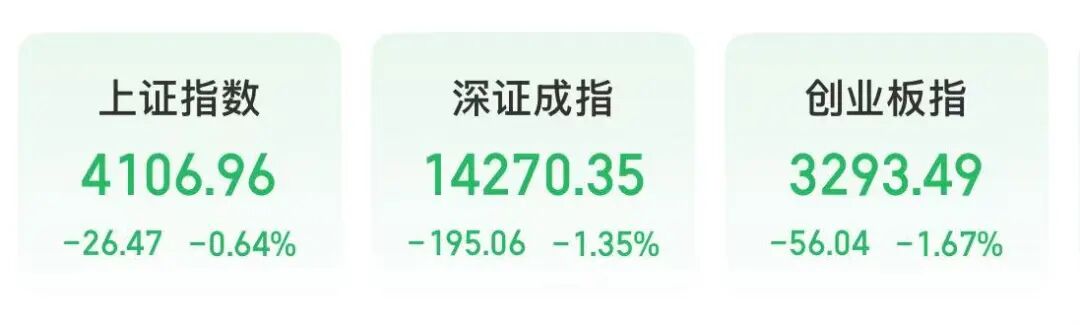
Market Overview - The market experienced fluctuations with the Shanghai Composite Index turning negative, while the ChiNext and Shenzhen Composite Index both fell over 1% [1] - The total trading volume in the Shanghai and Shenzhen markets was 1.59 trillion, a decrease of 738 billion compared to the previous trading day [1] - Nearly 4,200 stocks in the market declined, with the Shanghai Composite Index down 0.64%, the Shenzhen Composite Index down 1.35%, and the ChiNext Index down 1.67% [1] Coal Sector Performance - The coal sector saw significant gains, with China Coal Energy hitting the daily limit and reaching its highest level since February 2008 [3] - Zhengzhou Coal Electricity and other leading stocks in the coal sector also experienced substantial increases, with Zhengzhou Coal Electricity closing at 5.14, up 10.06% [4] - Other notable performers included Shanxi Black Cat and Lu'an Environmental Energy, which rose by 7.87% and 6.47% respectively [5] Energy Sector Highlights - The energy sector showed strong performance, with companies like Guanghui Energy and New Natural Gas seeing increases of 8.25% and 7.52% respectively [7] - Green Power and Energy Saving Wind Power also achieved significant gains, with Green Power closing at 12.51, up 10.03% [8] Declines in Military Sector - The military sector faced declines, with companies such as Hangya Technology and West Superconducting experiencing notable drops of 7.74% and 5.92% respectively [10] - Other companies in the military sector, including Aerospace Technology and Aerospace Hongtu, also reported losses, indicating a broader trend of weakness in this industry [10]