量子计算

Search documents
SIM体系抗量子密码迁移行业市场全景调研分析及投资可行性研究预测报告(2025版)
Sou Hu Cai Jing· 2025-06-23 08:27
Core Insights - The report by CICC International Consulting focuses on the development and risks associated with quantum computing and its implications for the SIM (Subscriber Identity Module) system, particularly in the context of quantum-resistant cryptography. Group 1: Industry Overview - Quantum computing is currently in the NISQ (Noisy Intermediate-Scale Quantum) era, with mainstream quantum computers achieving thousands of physical qubits but lacking fault tolerance, necessitating quantum error correction for enhanced computational capabilities [4] - Various global technological routes in quantum computing are competing, including superconducting, ion trap, photonic, and topological approaches, each with its advantages and disadvantages [4] - The domestic acceleration in quantum computing research has led to the introduction of superconducting and photonic quantum computers, with applications being explored in finance and pharmaceuticals [4] Group 2: Threats to Traditional Public Key Cryptography - Quantum computing poses a significant threat to public key cryptography, particularly through Shor's algorithm, which can solve problems like integer factorization and discrete logarithms in polynomial time [5] - Research indicates that the physical qubit requirement to break RSA2048 can be reduced from 20 million to approximately 13,000 with quantum storage, suggesting potential attack capabilities by around 2030 [5] - The vulnerability of elliptic curve cryptography (ECC) is also notable, with lower qubit requirements for breaking ECC384 compared to RSA2048, indicating that ECC systems widely used in mobile devices and blockchain are at risk [5] Group 3: SIM System Importance - The SIM system has evolved beyond traditional communication roles to become a foundational element in modern society, serving as a key identifier in the Internet of Things (IoT) and ensuring secure interactions in digital spaces [8] - SIM cards are critical for identity verification and data encryption, supporting essential services in communication, public service, and financial transactions [8] - The unique and immutable nature of the SIM card identification system underpins the operational stability of communication networks and public safety, making it a vital infrastructure component [8] Group 4: Industry Development and Trends - The report outlines the current state and future trends of the SIM system's transition to quantum-resistant cryptography, with a focus on market dynamics from 2019 to 2024 and projections for 2025 to 2031 [9][10] - It includes an analysis of the supply and demand situation in the Chinese SIM system market, highlighting the industry's growth potential and competitive landscape [11][13] - The report also discusses the investment environment and strategic recommendations for navigating the challenges and opportunities presented by quantum computing advancements [17][18]

科创成长层对机构投资者提出的挑战
Shang Hai Zheng Quan Bao· 2025-06-22 17:24
正是上述原因,此次科创板改革还试点引入资深专业机构投资者制度,希望借助这些机构投资者的专业 判断、真金白银的投入,帮助审核机构、投资者增强对企业科创属性、商业前景的判断,更加有效地识 别优质科技型企业。 对于机构投资者来说,真正考验他们专业能力的时候来了。 6月18日,中国证监会正式发布《关于在科创板设置科创成长层增强制度包容性适应性的意见》,在科 创板内部新设科创成长层,为未盈利但前景广阔的科技型企业开辟专属上市通道。科创成长层企业股票 简称后添加"U"(Unprofitable),作为特殊标识。 科创成长层的推出,大幅提升了资本市场对科技创新企业的包容性与适应性,为人工智能、商业航天、 低空经济等更多前沿领域注入源头活水,体现资本市场服务科技创新的应有之义。 需要指出的是,当资本市场向未来科技敞开大门时,当"U"标识企业持续涌入资本市场时,新的投资机 遇实际上也对投资者的专业投资能力也提出了更高的要求和更大的挑战。 科创成长层企业的"U"标识,暗含着企业更难以评估的价值。实事求是地说,很多未盈利科技企业有技 术理论的支撑,但其价值更多被寄望于未来的市场潜力,而非眼前实实在在的利润,投资者不能沿用传 统的市 ...
吴清按下“重启键”恰逢其时 | 经观社论
Sou Hu Cai Jing· 2025-06-21 07:36
Group 1 - The China Securities Regulatory Commission (CSRC) has proposed the establishment of a growth tier on the Sci-Tech Innovation Board (STAR Market) and the reintroduction of the fifth listing standard for unprofitable companies [2][3] - The fifth standard allows technology companies that meet national strategic goals and have high market recognition to go public with a minimum expected market value of 4 billion yuan, even if they are not profitable [2][3] - Currently, 39 hard-tech companies have opted for the fifth standard to apply for listing, with 20 of them being innovative biopharmaceutical firms that have raised substantial funds for new drug development [2][3] Group 2 - The emergence of companies like Deepseek and Yushu Technology signifies China's breakthroughs in key technologies across various sectors, including AI, low-altitude economy, biotechnology, quantum computing, commercial aerospace, and chip development [3] - These companies typically have long investment periods and may struggle to achieve profitability initially, necessitating continuous high-intensity funding to maintain their exploratory capabilities and competitive edge [3][4] - The reintroduction of the fifth listing standard is timely, as it allows these companies to access capital markets and avoid missing critical development opportunities [3][4] Group 3 - Listing not only serves the purpose of financing but also opens new avenues for technology companies, enabling them to leverage various capital market tools for exponential growth [4] - The CSRC's initiative to support high-quality unprofitable innovative companies is a necessary step to enhance the attractiveness of the capital market for investors [4][5] - The introduction of index products linked to a basket of quality technology growth tier stocks is recommended to diversify investment risks and attract long-term capital to support the growth of China's technology industry [4] Group 4 - The global competition in capital markets means that if these companies cannot list in A-shares, they may seek opportunities elsewhere, which could deprive Chinese investors of growth dividends from domestic quality firms [5] - A comprehensive deepening of capital market reforms and an increase in institutional inclusivity and adaptability are essential to support innovation and face global competition effectively [5]

朱雀三号一级动力系统试车试验成功;错误率降低1000倍!微软量子计算重大技术突破,可商用丨智能制造日报
创业邦· 2025-06-21 03:02
Group 1 - Microsoft has achieved a significant breakthrough in quantum computing with the introduction of the 4D topological quantum error correction code, which reduces error rates by 1000 times compared to 2D codes, enhancing coding efficiency and error correction capabilities [1] - The first domestically built 16,000 TEU methanol dual-fuel container ship, "Zhongyuan Shipping Yangpu," has been delivered, marking three historic breakthroughs in the construction of large methanol dual-fuel container ships in China [1] - The successful ground test of the first-stage propulsion system of the Zhuque-3 reusable rocket by Blue Arrow Aerospace represents the largest and most automated test of its kind in China to date [1] Group 2 - The use of 3D printing technology in rocket engines has significantly reduced manufacturing costs from 500,000 to less than 50,000, achieving a cost reduction of 80% [1] - The global chip foundry market is undergoing a transformation, with SMIC rapidly closing the gap with Samsung Electronics, whose market share has dropped to 7.7%, while SMIC's has risen to 6% [1] - SMIC's growth is attributed to its proactive inventory strategy in response to U.S. tariffs and domestic policies, allowing it to thrive amid a market slowdown, while Samsung's decline is linked to delivery issues leading to customer loss [1]


本周精华总结:Meta发布世界模型,下一个ChatGPT时刻何时来临?
老徐抓AI趋势· 2025-06-19 16:47
欢迎大家 点击【预约】 按钮 文字版速览 预约 我 下一场直播 本文重点 观点来自: 6 月 16 日本周一直播 【 强 烈建议直接看】 本段视频精华,逻辑更完整 自动驾驶系统要像老司机一样理解复杂的交通场景,不仅是识别路况,更要对潜在风险做出预判——例 如,看到前车旁边有人过马路被遮挡,系统要能预测行人可能出现的位置,从而保证行车安全和平稳。 没有对物理世界和事件的深刻理解,自动驾驶无法实现真正的安全与智能。 更广泛来看,具备成熟世界模型的机器人将极大提升生产力,推动经济飞速发展,带动运输、物流、公 共和私人交通等行业变革。我认为,拥有这一技术优势的企业将成为未来市场的最大受益者,提前布局 相关机会尤为重要。 此外,量子计算技术也在加速发展。黄仁勋最近在欧洲演讲中提到,量子计算的拐点即将到来,这将进 一步促进科学研究和AI进步,加速人类科技革命的步伐。我认为,这场科技革命的节奏将越来越快, 未来几年内我们可能迎来多次类似蒸汽机或电力革命级别的突破,全球经济和社会结构都将因此发生深 刻变革。 以上内容仅为案例展示,不构成投资建议,投资有风险,交易需谨慎。 注:基金投顾服务由盈米--小帮投顾服务团队提供!投资有 ...

量子算力跨越临界点
2025-06-19 09:46
Summary of Quantum Computing and Communication Conference Call Industry Overview - The conference focused on the **quantum computing** and **quantum communication** industries, highlighting their current status, challenges, and future potential [1][2][16]. Key Points and Arguments Quantum Computing - **Quantum Computing Basics**: Quantum computing utilizes quantum bits (qubits) that can exist in multiple states simultaneously, allowing for exponential speedup in specific algorithms compared to classical computing [5][14]. - **Current Technologies**: The main technologies in quantum computing include: - **Superconducting**: Used by companies like Google and IBM, known for high gate fidelity and long coherence times [6]. - **Trapped Ions**: Represented by companies like INQ, offering higher fidelity but facing scalability challenges [6]. - **Neutral Atom Optical Tweezers**: Lower environmental requirements but longer operation times [6]. - **Industry Stage**: The quantum computing industry is still in its early stages, primarily serving the education and research markets, with potential applications in materials, chemicals, biomedicine, and finance [1][21]. Quantum Communication - **Key Technologies**: Quantum communication includes: - **Quantum Key Distribution (QKD)**: Ensures secure key distribution using quantum properties, making interception detectable [9][33]. - **Quantum Teleportation**: Transfers quantum states using entangled particles, with significant implications for future information transmission [10]. - **Advantages**: Quantum communication offers enhanced security due to its fundamental properties, although it still relies on classical channels for information transmission [15]. Challenges and Development - **Key Issues**: The development of quantum computing faces challenges such as: - Environmental noise affecting qubits [17]. - The need for quantum error correction to achieve fault-tolerant quantum computing [4][53]. - Weak upstream supply chains, particularly for dilution refrigerants [17][18]. - **Measurement Systems**: Current measurement systems require optimization for low-temperature environments, and specialized equipment is needed for effective quantum control [19]. Market and Future Outlook - **Market Applications**: The primary market for quantum technologies is currently in education and research, but significant potential exists in materials science, biomedicine, and finance due to their complex computational needs [21][28]. - **Future Projections**: By 2025-2030, specialized quantum computers for optimization problems are expected to emerge, with general-purpose quantum computers gradually becoming more prevalent [23]. - **Technological Maturity**: Technologies like quantum key distribution and quantum random number generators are nearing practical application, particularly in high-security sectors [24]. Notable Companies and Developments - **Leading Companies**: Key players in the quantum computing space include IBM, Google, and IONQ, with significant advancements in superconducting and trapped ion technologies [30][32]. - **Investment Trends**: The potential for breakthroughs in quantum technology could lead to significant shifts in funding towards successful companies, particularly if major milestones are achieved [46]. Additional Important Content - **Quantum Measurement**: Quantum measurement technologies are advancing rapidly, with applications in military and research fields [27]. - **Economic Challenges**: Each technology route faces unique economic challenges, and the lack of a decisive breakthrough currently prevents a clear funding shift [46]. - **Security and Commercial Value**: Enhancing security through quantum technologies can create commercial value, particularly in sectors requiring high security [47]. This summary encapsulates the key insights from the conference call, providing a comprehensive overview of the quantum computing and communication landscape, its challenges, and future opportunities.
声称美国制造的特朗普手机“Trump Mobile”实际上是中国制造;我国首款千比特超导量子计算测控系统完成交付丨智能制造日报
创业邦· 2025-06-18 03:13
Group 1 - TSMC's Arizona factory has produced its first chip wafers for Apple, Nvidia, and AMD, marking a significant step towards localized semiconductor manufacturing in the U.S. However, advanced packaging capacity remains primarily in Taiwan [1] - Trump's "Trump Mobile" is claimed to be "Made in America," but analysts suggest it is actually manufactured in China, indicating a potential discrepancy in branding versus actual production [2] - Beijing's automotive industry is undergoing a transformation towards electrification and smart manufacturing, with a projected output value exceeding 440 billion yuan in 2024, reflecting a growth rate of over 15% [3] - China's first superconducting quantum computing measurement and control system, designed for a thousand-bit scale, has been delivered, laying a foundation for future development of larger-scale quantum computers [4] - LG Display plans to invest 1.2 trillion KRW (approximately 880 million RMB) to enhance its OLED technology competitiveness, as part of its long-term capital expenditure strategy [5]
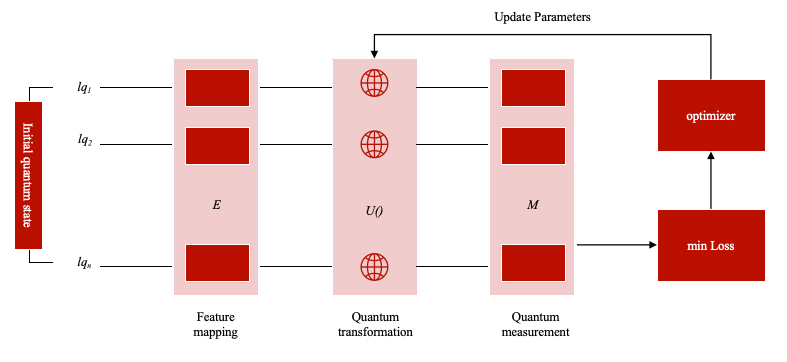
微算法科技(NASDAQ:MLGO)采用量子卷积神经网络(QCNN),检测区块链中的DDoS攻击
Zhong Guo Chan Ye Jing Ji Xin Xi Wang· 2025-06-18 02:18
Core Viewpoint - The article discusses the increasing security issues in blockchain technology, particularly focusing on DDoS attacks and how quantum convolutional neural networks (QCNN) developed by Micro Algorithm Technology (NASDAQ: MLGO) can enhance detection and response capabilities against these threats [1][7]. Group 1: Quantum Convolutional Neural Network (QCNN) Development - Micro Algorithm Technology has innovatively improved QCNN for detecting DDoS attacks in blockchain networks by optimizing quantum bit initialization and control methods, enhancing stability and reliability [1][7]. - The structure of QCNN has been adjusted to better handle blockchain transaction data and network status information, making it more suitable for the specific characteristics of blockchain data [1][7]. - Specialized quantum state reading and parsing technologies have been developed to accurately extract features related to DDoS attacks from quantum computation results [1][7]. Group 2: Data Collection and Preprocessing - Data collection involves gathering various types of data from the blockchain network, including transaction data, node status information, and network traffic data, using APIs and monitoring tools [3]. - Preprocessing of collected data is crucial for the effective operation of QCNN, involving data cleaning, noise reduction, and standardization to ensure data quality [3]. - Feature extraction is performed to identify characteristics related to DDoS attacks, such as transaction frequency and network traffic changes, which serve as inputs for the QCNN [3]. Group 3: Quantum Operations - Quantum bit initialization ensures that quantum bits are in a stable initial state, balancing the number of quantum bits with computational complexity [4]. - Quantum convolution operations utilize the properties of quantum bits to extract features and recognize patterns from input data through a series of quantum gate operations [4]. - Quantum pooling operations reduce data dimensions while retaining important features, employing a measurement-based pooling method to select the most probable quantum states [5]. Group 4: Classification and Output - After quantum convolution and pooling, a quantum fully connected layer processes the low-dimensional quantum state for DDoS attack classification and detection [6]. - The output from the quantum fully connected layer is a quantum state representing classification results, which is converted into a readable format using specialized quantum state reading techniques [6]. - If the probability distribution indicates a high likelihood of a DDoS attack, alerts are generated to notify network administrators for appropriate defensive actions [6]. Group 5: Applications and Future Prospects - The QCNN developed by Micro Algorithm Technology can monitor blockchain networks in real-time, promptly detecting signs of DDoS attacks and issuing alerts for immediate defensive measures [7]. - This technology can be integrated with other security measures, such as encryption and access control, to create a more secure blockchain environment [7]. - As quantum computing technology advances, the application prospects for QCNN in detecting DDoS attacks will expand, potentially enhancing computational power and accuracy [7].

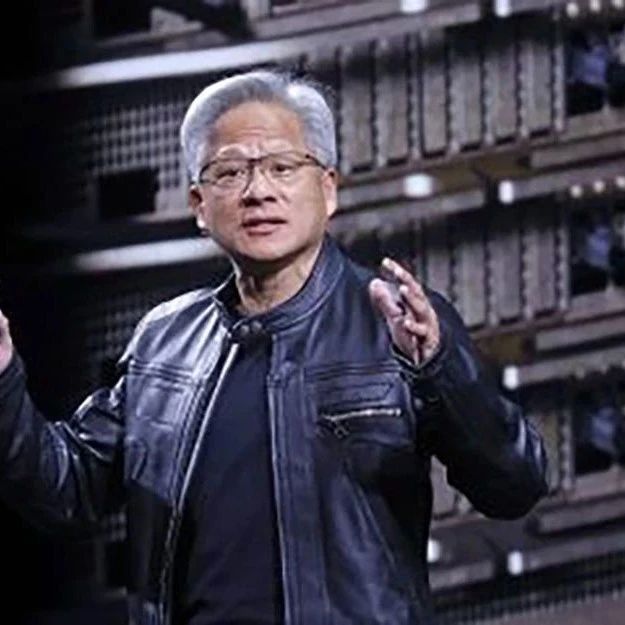
黄仁勋:量子计算正迎来“拐点”
财富FORTUNE· 2025-06-17 13:03
Core Viewpoint - Jensen Huang, CEO of Nvidia, disagrees with Dario Amodei's predictions regarding the impact of advanced AI on job automation, emphasizing the importance of responsible development and transparency in AI technology [1][2]. Group 1: AI Predictions and Job Impact - Huang challenges Amodei's assertion that AI could automate up to 50% of entry-level office jobs within five years, stating that while jobs will change, new positions will also emerge as productivity increases [3][4]. - Amodei has expressed concerns about AI's potential to create survival risks and its impact on entry-level jobs, urging lawmakers to prepare for these changes [2][3]. Group 2: Nvidia's Initiatives and Quantum Computing - Nvidia is establishing over 20 "AI factories" across Europe and is committed to resolving GPU shortages for researchers and startups [6]. - Huang highlighted Nvidia's exploration in quantum computing, introducing the hybrid quantum-classical platform CUDA-Q, and stated that quantum computing is approaching a "turning point" that could address real-world problems in the coming years [6].

集成度提高约10倍 我国首款千比特超导量子计算测控系统完成交付
Zheng Quan Ri Bao· 2025-06-17 12:41
Core Viewpoint - The launch of the ez-Q®Engine 2.0 marks a significant advancement in superconducting quantum computing technology in China, enabling the operation of quantum computers with thousands of qubits and laying a foundation for future developments in error-corrected superconducting quantum computers [1][2]. Company Summary - The ez-Q®Engine 2.0, developed by GuoDun Quantum Technology Co., Ltd. and other units, is designed for a qubit scale of thousands and provides over 5,000 qubits of measurement and control services [1]. - The new system has improved integration by approximately 10 times compared to its predecessor, the ez-Q®Engine 1.0, and features domestically designed core components, making it the smallest and most efficient product in its category in China [2]. - The system can control up to 128 data qubits and 256 coupled qubits in a single chassis, significantly reducing costs compared to foreign products, which previously required substantial investment for large-scale quantum computing [2]. Industry Summary - Quantum computing is approaching a pivotal point, with the potential for the number of logical qubits to increase tenfold every five years and a hundredfold every ten years, similar to Moore's Law [3]. - The global quantum computing industry is projected to grow at a compound annual growth rate (CAGR) of 44.8% from 2023 to 2028, with an expected market size of $811.7 billion by 2035 [3].