国际贸易

Search documents
菲律宾关税被上调至20%,美国前官员先气坏了:还要不要跟中国竞争
Guan Cha Zhe Wang· 2025-07-10 07:22
Core Points - The article discusses the announcement by U.S. President Trump regarding a new round of tariffs on products from eight countries, specifically increasing the tariff on Philippine products to 20% from the previously announced 17% [1][2] - The increase in tariffs is seen as a move to address the trade deficit with the Philippines, which reached $4.9 billion last year, a 21.8% increase from the previous year [1] - The article highlights the dissatisfaction expressed by experts regarding the sudden change in tariff rates, which could undermine the credibility of the U.S. as a negotiating partner [2][3] Summary by Sections Tariff Announcement - Trump announced a new tariff rate of 20% on Philippine products, effective August 1, which is higher than the previously stated 17% [1] - The rationale behind the increase is unclear, but it may be related to a framework agreement reached with Vietnam, which saw its tariff reduced from 46% to 20% [1][2] Trade Deficit Context - The U.S. trade deficit with the Philippines was $4.9 billion last year, with imports from the Philippines significantly exceeding exports [1] - In contrast, the trade deficit with Vietnam was much larger at $123.5 billion [1] Expert Opinions - Gregory Poling from CSIS speculated that the new tariff rate might be a benchmark based on the agreement with Vietnam [1] - Henrietta Levin criticized the U.S. for undermining trust with the Philippines, emphasizing the need for the U.S. to be a reliable partner in Southeast Asia to effectively compete with China [2] Philippine Response - The Philippine ambassador to the U.S. indicated that further negotiations would take place to lower the 20% tariff [2][3] - The Philippines had previously planned to increase imports of U.S. products to negotiate lower tariffs, but the new rate may dampen optimism regarding these efforts [3] Comparison with Other Countries - The tariffs imposed on the Philippines are significantly lower than those on Brazil, which faces a 50% tariff, and other countries facing tariffs as high as 30% [5][6] - Trump's tariff decisions appear to be influenced by personal grievances rather than purely economic considerations, as seen in the case of Brazil [5][6]

特朗普第二波征税函剑指“摇摆大国”?
Sou Hu Cai Jing· 2025-07-10 04:14
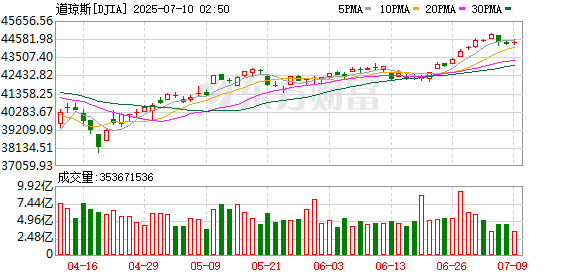
Group 1 - The new tariffs imposed by the Trump administration on Brazil and other countries are significantly higher than previous levels, with Brazil facing a 50% tariff starting August 1, 2025, compared to the earlier 10% [3][4] - The tariffs are part of a broader strategy to address perceived unfair trade relationships, particularly highlighting a trade deficit with Brazil, which Trump claims is unsustainable [3][5] - Brazil's government has responded by stating that the increased tariffs are unjustified and could harm the U.S. economy, emphasizing that Brazil has a trade surplus with the U.S. [3][4] Group 2 - The Center for a New American Security (CNAS) has identified Brazil, along with five other countries, as "global swing states," which are crucial in shaping future geopolitical dynamics [5] - The report suggests that the U.S. should strengthen cooperation with these swing states to maintain the current international order, which is undergoing significant changes [5] - Trade experts note that countries like Brazil have expressed strong opposition to U.S. tariff policies, indicating a targeted approach by the Trump administration in its trade negotiations [5][6] Group 3 - Following the announcement of new tariffs, U.S. stock indices showed minimal volatility, with the Nasdaq and S&P 500 experiencing slight increases [6] - The Philippines, one of the countries affected by the new tariffs, exported approximately $14.1 billion worth of goods to the U.S. last year, indicating its importance as a trade partner [6] - The Federal Reserve's recent meeting minutes reveal differing opinions among officials regarding the long-term impact of tariffs on inflation, with some believing they will have a lasting effect [11]
特朗普征税函新一波来袭 对菲律宾等七国征收最高30%关税 警告巴西
Hua Er Jie Jian Wen· 2025-07-09 18:51
Group 1 - The U.S. will impose new tariffs on products from several countries starting August 1, 2025, with rates of 25% for Brunei and Moldova, 30% for Algeria, Iraq, and Libya, and 20% for the Philippines [1][2] - The Philippines is the only country among the seven mentioned that is in the top 50 U.S. trading partners, exporting approximately $14.1 billion worth of goods to the U.S. last year, including electronics, auto parts, and textiles [2][4] - The total import value from the other six countries combined was less than $15 billion, with Iraq accounting for about half of that amount [4] Group 2 - Following the announcement of new tariffs, the Brazilian real hit a monthly low, with the USD/BRL exchange rate rising to over 5.4960 [6] - Trump indicated that the tariff rates were determined based on common sense, trade deficits, and historical data [5] - The new tariffs will be independent of any industry-specific tariffs, and companies from these countries can avoid tariffs by manufacturing in the U.S. [11]
欧盟寻求本月与美国达成贸易协议 特朗普周三将发出更多关税信函
智通财经网· 2025-07-09 13:45
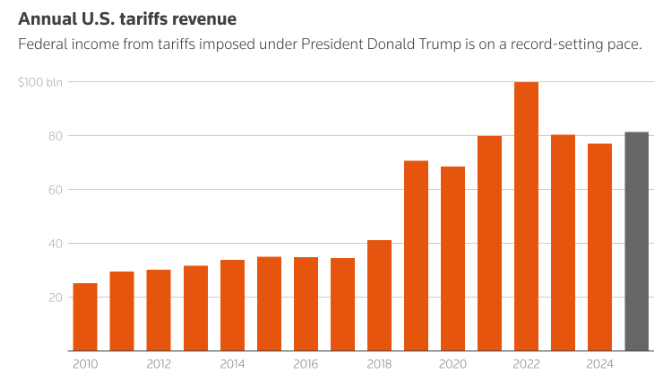
Group 1 - The EU is working to reach a trade agreement with the US by the end of the month, while President Trump plans to announce further tariffs on unspecified countries [1][2] - Trump announced a 50% tariff on imported copper and plans to implement tariffs on semiconductors and pharmaceuticals, escalating trade tensions and impacting global economic outlook [1] - The US has seen its effective tariff rate rise to 17.6%, the highest level in nearly 90 years, following Trump's announcement of increased tariffs on imports from 14 countries [3] Group 2 - The US Treasury has reported approximately $100 billion in tariff revenue so far, with an expectation of an additional $300 billion by the end of the year [6] - Historically, the US has generated around $8 billion annually from tariffs, but recent measures have significantly increased this revenue [6] - Despite promises of reaching 90 agreements within 90 days, only two agreements have been made with the UK and Vietnam, with negotiations with India nearing completion [7]
警惕全球贸易“逆风”,两大国际机构发声
凤凰网财经· 2025-07-09 13:28
Core Viewpoint - The World Trade Organization (WTO) has revised its global trade outlook from an expected expansion to a downward adjustment due to increasing trade tensions and geopolitical uncertainties [1][3]. Group 1: Global Trade Assessment - The WTO's latest report indicates that global trade policy activities have increased, with rising tensions among major trading partners contributing to a more volatile and unpredictable trade environment [1]. - The United Nations Conference on Trade and Development (UNCTAD) forecasts a $300 billion increase in global trade for the first half of the year, but warns of significant obstacles in the second half due to U.S. trade policy uncertainties and geopolitical tensions [1][4]. Group 2: Trade Barriers and Policy Recommendations - The WTO calls for countries to reduce tariffs and other trade barriers to promote trade liberalization and economic growth, emphasizing the need for transparency in trade policies [2]. - The report highlights that retaliatory measures, such as those taken by Canada and the EU against U.S. trade policies, are likely to exacerbate trade tensions and lead to a decline in global trade volume [2]. Group 3: Trade Growth Projections - Earlier projections for global trade growth in 2025 and 2026 have been significantly downgraded due to U.S. tariff policies, with expectations for merchandise trade growth now revised downward [3]. - The WTO's Goods Trade Barometer indicates a slight increase in the global goods trade index, but a decline in new export orders suggests a slowdown in trade growth later this year [4]. Group 4: Trade Imbalances and Risks - The report notes an increase in global trade imbalances, particularly with the U.S. experiencing a widening trade deficit over the past four quarters [5]. - The potential for further unilateral actions by the U.S. could escalate trade tensions and disrupt global supply chains, increasing the risk of trade fragmentation [5].

景顺:美元疲软为亚洲各央行放宽政策添灵活性
Zhi Tong Cai Jing· 2025-07-09 12:31
Group 1 - The latest delay in the implementation of US tariffs provides an opportunity for further negotiations, with 14 countries, including Japan and South Korea, facing tariffs ranging from 25% to 40% [1] - Vietnam recently reached a trade agreement with the US, avoiding an initially proposed 46% tariff, with many goods now subject to a 20% tariff, while transshipped goods will incur a 40% tariff [1] - Japan and South Korea are the largest exporters to the US among the countries receiving tariff notifications, with export totals of $148 billion and $131.5 billion respectively [1] Group 2 - Emerging markets are significantly influenced by the dollar in their export or import pricing, with most investment inflows in these markets being dollar-based [2] - If the US imposes higher tariffs on Asian countries, the Asia-Pacific region appears more capable of withstanding the resulting economic pressure [2] - A weaker dollar should provide greater flexibility for Asian central banks to ease policies to support their economies without excessive concern over currency depreciation [2]
警惕全球贸易“逆风”!两大国际机构发声
Zheng Quan Shi Bao· 2025-07-09 10:34
Group 1 - The World Trade Organization (WTO) has revised its global trade outlook from "expansion" to "downward adjustment" due to increasing trade policy activities and geopolitical tensions among major trading partners [1][3] - The WTO report indicates that global trade uncertainty is rising, influenced by regional conflicts and geopolitical tensions, leading to increased volatility and unpredictability in the global trade environment [1][2] - The United Nations Conference on Trade and Development (UNCTAD) reported that while global trade is expected to grow by $300 billion in the first half of the year, it will face significant headwinds in the second half due to U.S. trade policy uncertainties and global geopolitical tensions [1][4] Group 2 - The WTO calls for countries to reduce tariffs and other trade barriers to promote trade liberalization and economic growth, emphasizing the need for transparency in trade policies [2][5] - The WTO's previous forecast in April predicted a 0.2% decline in global goods trade by 2025, with a 2.5% growth expected in 2026, but this outlook has been revised downward due to U.S. tariff policies [2][3] - The global goods trade barometer showed a rise in the index from 102.8 to 103.5, but a decline in new export orders indicates a potential slowdown in trade growth later this year [4][5]
警惕全球贸易“逆风”!两大国际机构发声
证券时报· 2025-07-09 10:29
Core Viewpoint - The World Trade Organization (WTO) has revised its global trade outlook from an expected expansion to a downward adjustment due to increasing trade tensions and geopolitical uncertainties [1][4]. Group 1: Global Trade Assessment - The WTO's latest report indicates a rise in global trade policy activities, with escalating tensions among major trading partners contributing to increased trade uncertainty [1]. - The United Nations Conference on Trade and Development (UNCTAD) forecasts a $300 billion increase in global trade for the first half of the year, but warns of significant obstacles in the second half due to U.S. trade policy uncertainties and geopolitical tensions [1][7]. Group 2: Trade Policy and Measures - Since the beginning of the year, the U.S. has implemented various bilateral and global trade measures, prompting some economies to introduce trade facilitation measures while others have announced retaliatory measures, primarily involving tariff increases [3]. - The WTO calls for countries to reduce tariffs and other trade barriers to promote trade liberalization and economic growth, emphasizing the need for transparency in trade policies [3]. Group 3: Trade Volume Predictions - The WTO's earlier predictions for global trade growth in 2025 and 2026 have been significantly downgraded due to U.S. tariff policies, with expectations for a 0.2% decline in goods trade and a slower growth outlook for services trade [4]. - The WTO's Goods Trade Barometer shows a rise in the global goods trade index from 102.8 to 103.5, but a decline in new export orders indicates a potential slowdown in trade growth later this year [6]. Group 4: Trade Imbalances and Risks - The UNCTAD report highlights a worsening trade imbalance, with the U.S. trade deficit continuing to expand over the past four quarters, raising concerns about the fragmentation risks associated with recent U.S. tariff measures [7]. - The report warns that if U.S. "reciprocal tariffs" are fully implemented or if trade policy uncertainty spreads globally, a contraction in trade could occur [7].

特朗普关税政策搅动贸易格局 美国难成赢家
Zhong Guo Qing Nian Bao· 2025-07-09 06:39
Group 1 - The U.S. government is set to send notifications regarding tariffs to approximately 100 countries, threatening higher rates if no action is taken by August 1 [1][2] - The unilateral actions by the U.S. are expected to impact both domestic financial markets and the global trade system, exacerbating international trade tensions [1][3] - Countries such as Japan and South Korea are actively seeking negotiations to avoid escalation into a full-blown trade war, indicating a significant diplomatic response to U.S. tariff threats [2][3] Group 2 - Trump's tariff policies are undermining consumer and investor confidence in the U.S. economy, potentially leading to increased inflation and economic instability [3][4] - The additional costs from tariffs are likely to impact Southeast Asian economies, particularly affecting U.S. companies operating in the region, especially in the apparel and footwear sectors [4][5] - The current trade dynamics are shifting, with countries increasingly looking towards China and multilateral cooperation as the U.S. becomes a less reliable partner [5][6]
东南亚多国被特朗普投送关税信函,“待遇”为何不同?
第一财经· 2025-07-09 03:18
Core Viewpoint - The article discusses the implications of the Trump administration's decision to impose tariffs ranging from 25% to 40% on imports from 14 countries, including several Southeast Asian nations, highlighting the potential impact on trade relations and economic strategies in the region [1][3]. Group 1: Tariff Details - The tariffs imposed on Southeast Asian countries include 25% for Malaysia, 32% for Indonesia, 36% for Thailand and Cambodia, and a maximum of 40% for Laos and Myanmar [3][4]. - Cambodia's tariff was reduced from 49% to 36%, while Laos and Myanmar still face high tariffs of 40% and 44% respectively [3][6]. Group 2: Trade Negotiations - Southeast Asian countries are expressing a willingness to negotiate, but the changes in tariff rates are minimal, with Malaysia's rate increasing from 24% to 25% [4]. - U.S. Secretary of State Rubio's visit to Malaysia is expected to address tariff issues, marking his first visit to an Asian country outside of traditional allies Japan and South Korea [4]. Group 3: Cambodia's Trade Agreement - Cambodia may become the second Southeast Asian country to reach a trade agreement with the U.S. after Vietnam, with a joint statement on "reciprocal tariffs" expected soon [6]. - In 2024, Cambodia's total exports are projected to reach $26.2 billion, with nearly 40% of its exports going to the U.S., making it the largest export destination for Cambodia [6]. Group 4: Other Southeast Asian Countries - Thailand is accelerating trade negotiations with the U.S., proposing a new trade plan to reduce the 36% tariff and aiming for a significant reduction in trade surplus with the U.S. over the next five to eight years [6]. - Indonesia's Economic Coordinating Minister is traveling to the U.S. to continue discussions on the tariff issue, emphasizing the government's commitment to active negotiations [7].